Look at attached word document for images :)
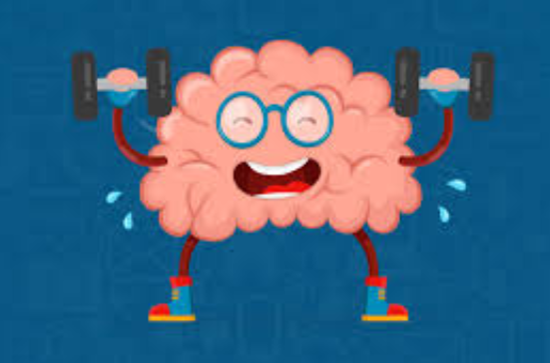
BRAIN FIT CHALLENGE
Are you tired of this brain fat you carry on since so long? Would you like to join a program that will finally make your brain fit, able to stay away from fake news and ready to understand what is going on in the world? Then welcome to our Brain fit challenge program!
We will feed your brain only with 100% healthy knowledge!
Words we will use in this dev pitch:
- Disinformation: Information that is false and deliberately created to harm a person, social group, organisation or country
- Misinformation: Information that is false but not created with the intention of causing harm (source: https://en.unesco.org/fightfakenews)
THE PROBLEM our project intends to solve
Misinformation is created by people If the problem is people, the solution is also people
Fact checking organisation, AI and other mechanisms shows its great capacity on detecting fake news in the overloaded information society, the dissemination of fake news still goes faster than the fact-check process. Easily accepting the fake news relates to our thinking patterns that rely on existing cognitive biases installed in our brains, ignorance to the expertise, and tiredness to verify information in the overloaded information society. We hence argue the more fundamental problem is ‘how’ the public deals with fake news in their brains when they are reading or listening.
IMPORTANT: Pre existing narratives and notions of identities – race, religion, language, country, ideologies affect our bias, and our solution aims to help people understand the cognitive biases and look at it from a different point of view.
Tone: We are not here to preach, or have a holier than thou attitude, we will have a collaborative tone, on the lines of ‘Let’s get together, to help us through the pandemic, together’ ‘Be a fake news warrior’
THE SOLUTION we bring to the table
A tool kit organized to train our brain and learn how to not fall in misinformation world of pitfalls. Our brain usually goes for the easy way and reacts to the traps such as "cognitive bias" and "disrupt" frames which tends to simplify an issue, and making us prone to more frequent fake news and disinformation. The toolkit will additionally teach us to trust experts and scientific thinking.
We aim to look at existing channels and platforms, since our analysis and work from the hackathon showed that misinformation/ disinformation is created by a set of people who work on the current social media and cross-platform instant messaging applications.
For Whom:
Government should take the "drive seat" and bring together experts and influences
Why the Government? Because in a pandemic, public healthcare should take focus, people should be following rules and regulations set up by authorities, but we are witnessing a concerted effort by fake news spreaders to add to the stress on the public systems – from health to police, from news to communication. The rise of fake news / misinformation is making system more vulnerable to potential civil unrest and series of new problems. If the fake news/ misinformation is contained – streamlined into trusted, reliable and accurate information in the form of news, infotainment and facts, the public systems would have the space to work more efficiently.
So, what should government actually do? Bring together expert and influences and enable the “Brain fit Challenge”!
- experts: have the role to prepare content for our "Brain training" -> teach us methods to train our brain
- influencers: have the role to take content from experts and beautify the content to make it understandable and easy to share with their followers in a form of “challenge” (i.e. Instagram or/and Twitter or/and or TikTok or/ and Linkedin)
Result:
- sparkle light in brains of people about mistakes we currently do in judging information but that we are not aware about
- increase trust in scientific experts and official institution
- give the chance to influencer to easily find to idea for ready to share content with social / educational/ infotainment scope
- teach how to look for reliable information for long term, and make them feel responsible leaders
Our innovation factor:
Create a bridge between experts and influencers
Education in scientific and media literacy may reduce people’s propensity to believe and share disinformation.
- people who hold expertise may lack public interest and trust
- trusted influencers may lack specialised knowledge, and the time necessary to develop it.
Our approach is to influence the influencers
Brain Fit Challenge offers influencers a content toolkit. It provides knowledge that influencers can use to re-craft facts and information, and adapt to their audience and style.
Who are how stakeholders?
For a one-year plan, we will be looking at these key stakeholders to measure success
- WHO – speak to public comms department and consult them on out comes
- Governments of countries where the misinformation / disinformation campaigns have been severely affecting the pandemic response in line with the countries we reach out to
- Social media analytics experts and academics who have been studying and researching this issue
- Consult fact checking organisations and networks to keep a critical eye on : what mediums/ messages they receive – quality and quantity which have the ‘virality’ factor. For example, recently fact checkers reported a surge in misinformation related to health related content – medication consumed to stop COVID-19 which can potentially harm people OR more fact checks on Tik Tok home made videos to spread hate and incite violent speeches, create panic in communities against race, religion ( campaigns targeting people from Asian countries ) They have a better sense of platforms which are most used, and it’s important to know the end cycle stage of disinformation to understand how to fix the root cause
We do not tell people what to think. We want to teach them how to think.
Examples:
First Concept: Experts have the knowledge power to bring sparkle to your brain!
“Confirmation Bias” is the tendency to seek out evidence that supports our beliefs and deny, dismiss, or distort evidence that contradicts them. In particular it is important to distinguish “correlation vs. Causation” -> Just because two things are associated with each other this doesn´t mean that one must cause the other A deep understanding of this general concept (tool) can, for example, help people to doubt about the news – Example – towards end of March 2020
Islam sect called 'Tabliqi Jamat' hosted a religious congregation in New Delhi, India before countrywide lockdown was announced - but the govt had issued advisory that 'large religious gatherings should not happen'. A few days later, after the event was over, it was reported in news that many attendees were from overseas, and COVID19 positive, the infected ones in India became focal points of the spread in the coming days, but what was portrayed in the media was - people from the religion are spreading the virus on purpose - fuelling further Islamophobia
Second Concept: Influencers have big power in sharing news with their followers
Example 1. “Flattering the curve” -> understanding why is COVID-19 so dangerous was not easy. Many people believed for long time that COVID019 is NOT as dangerous as flu. i. The shut down of China was not sufficient to show people that extreme social distancing measures were needed – someone said “well China is too far, too different, we don ́t understand what they do anyhow....” ii. The shut down of Italy was not sufficient – someone said “well these Italians maybe “needed a siesta”....
SO What DID help in fighting the fake news? FLAT THE CURVE CAMPAIGN -> influencer took the easy explained concept, adapted it to their public and spread it extremely successfully convincing people staying at home
Example 2. Cristiano Ronaldo with his post on instragram about washing hands. The post generated 7.9 million likes and 97,200 comments. If these performances are below other Cristiano publications, they are far superior to those of the official WHO account. When Cristiano Ronaldo relays WHO content, he generates 40 times more engagement than the official WHO account. In terms of visibility, the visibility of the two posts is estimated to be 666.4 Million impressions. If the WHO had wished to generate the same level of visibility via its count, it would have been necessary to have recourse to an advertising campaign of an amount estimated at 1,153 Million euros. Meaning that thanks to Cristiano Ronaldo, WHO guidelines have benefited from a media plan worth € 1.15M
What we have done during the weekend
- We understood that disinformation/ misinformation serves psychological needs
- We realised that our solutions must serve the same needs.
- We resolved to employ existing knowledge, networks and trust relations.
- We will not build new ones from scratch.
- We have harnessed existing connections in Italy to initiate a ‘prototype’ influencer relationship.
- We have created an end to end cycle of fake news content
Next Steps
In the coming weeks, we will:
- Refine our influencer working relationship model.
- Develop our content and methodology.
In the coming months, we will:
- Develop a scalable template.
- Expand geographically.
- Find evaluation and success milestones
- And, develop “Brain fit challenge” as an online resource.
TEAM fastFacts
- Ruhie Kumar
- Eddie Brennan
- Jiun-Chi Lin
- Sara Amendola


Log in or sign up for Devpost to join the conversation.