-
-
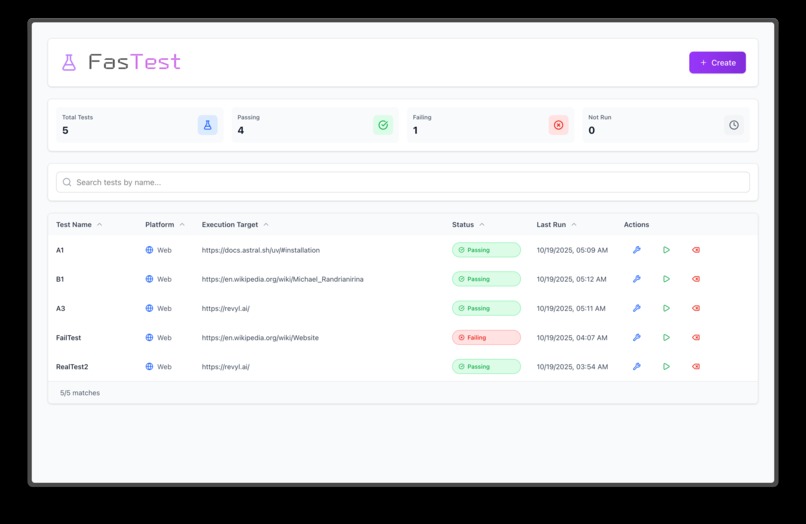
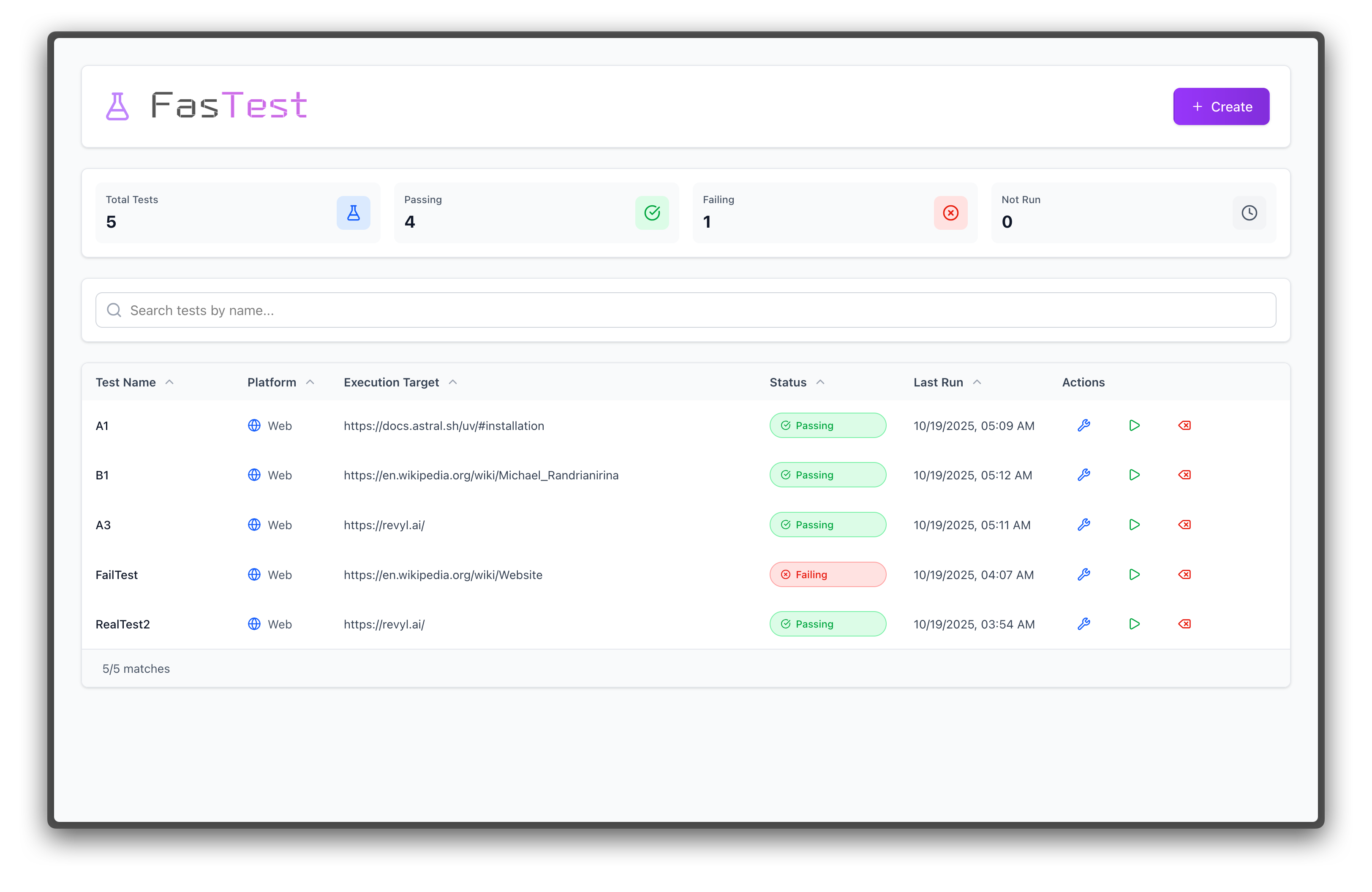
Webapp Test Cases Screen
-
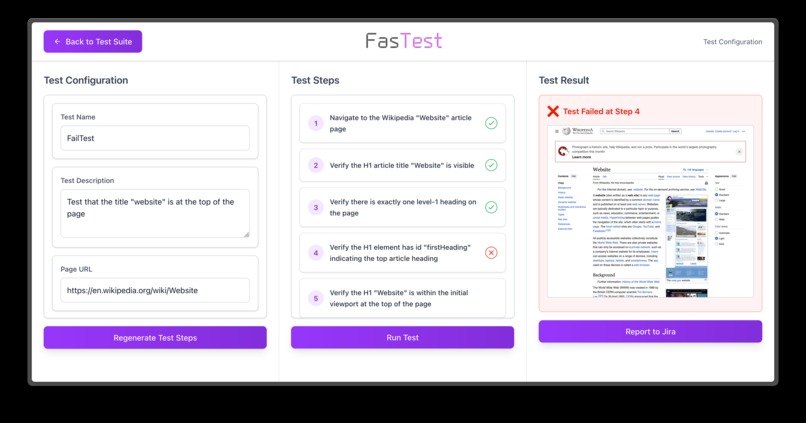
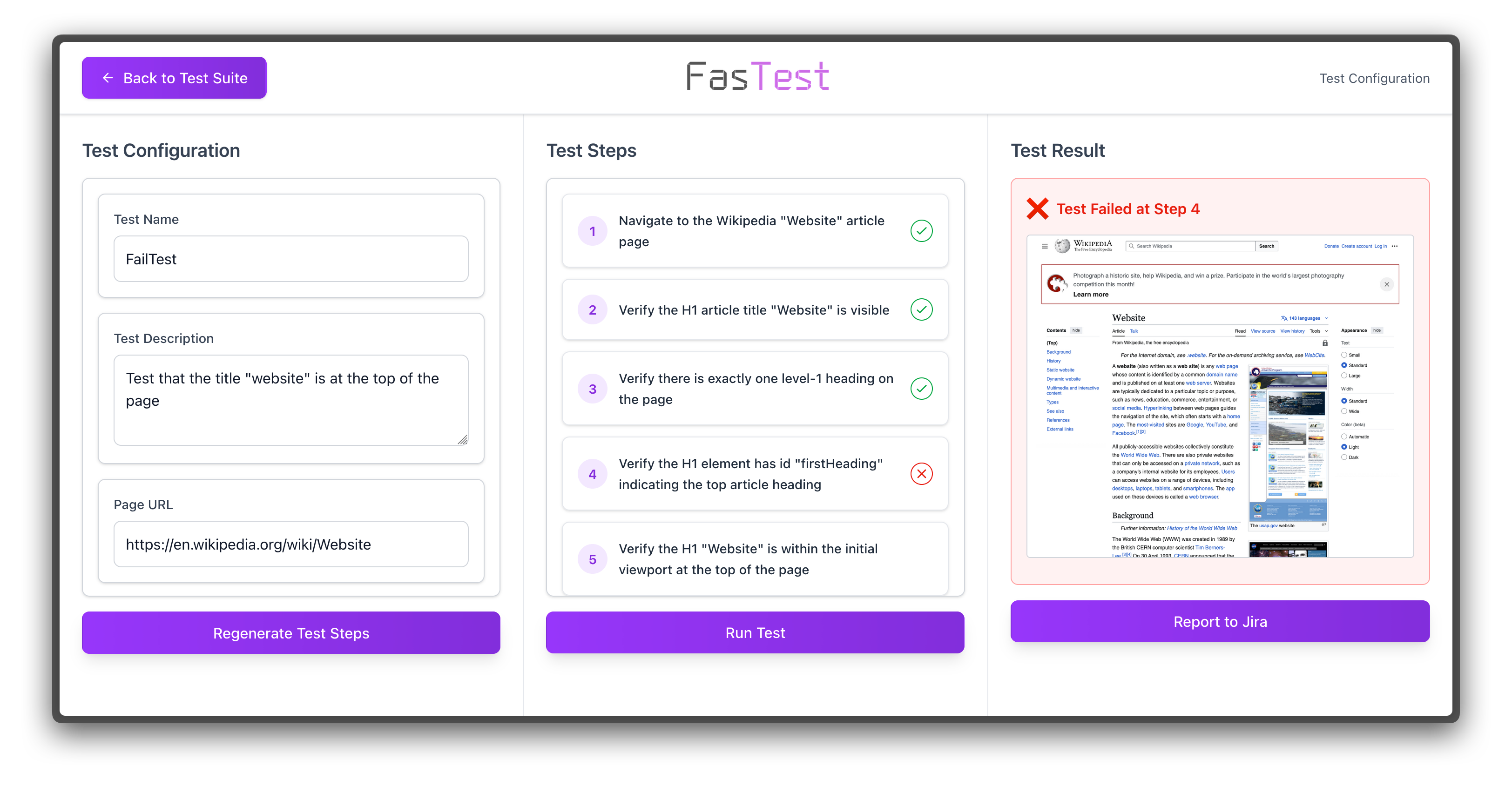
Webapp Test Runner Screen
LOOM 3 MIN DEMO: https://www.loom.com/share/eb2159f315b54264b9222407b7a72aec?sid=f5b29414-72c9-4cb4-9a33-a90fdf6eacc2
We were really passionate about this project and have longer, more fun project use case submission: https://youtu.be/7CrGDBgXsGk
The above video was also created on Loom but then uploaded to YouTube afterwards :)
Inspiration
Software developers spend roughly 25% of their work time on testing. We want people to spend more time building, not stare at failing tests.
What it does
We built a platform that helps automate tests for fast-paced teams. Developers can define each test in a single sentence, then run them as a concrete test script. This makes tests stable and dependable, while allowing developers to regenerate tests in a single click to match updated UIs. Our goal was to match the natural developer workflow, which is why we integrated with Jira, allowing us to instantly notify developers for failing tests with live bug reporting.
How we built it
We combined OpenAPI agents and the playwright MCP to allow an LLM to analyze test situations in depth, and then save concrete playwright tests based on their exploration. We deploy a containerized service to run these playwright tests remotely so that our developers never spend time setting up test environments. These tests stay in sync with Jira, creating issues for each failing test case to integrate directly into the developer workflow. Finally, we send these test results to our frontend, along with screenshots of failing test states and natural language descriptions of each failing test step.
Challenges we ran into
We faced many challenges in building this project, from reliably uploading test data to the cloud to scaling playwright MCP so it could handle many isolated instances at once. To make it production ready, we added strict validation on uploads and introduced a queue pool to allow safe parallel runs.
Accomplishments that we're proud of
We are proud we were able to execute our project idea which at first seemed like an ambitious goal, which we narrowly finalized for testing on real websites and forms within 24 hours.
What we learned
The past 24 hours were packed with learning. We went into depth with Atlassian's world class tools, integrating Jira and automatically turning failing tests into Jira issues. More than the tech, we learned how long 24 hours really are. You can really achieve a lot if you lock in, and schedule your time.
What's next for FasTest
We hope to take FasTest out of the hackathon to actually publishing a it as a polished hosted service, providing a secure option for companies to use this automated tool. We want to cut developers testing time so they can spend more time building features.


Log in or sign up for Devpost to join the conversation.