Inspiration
Last week, my brother sprained his foot and we had to make a visit to the ER. Upon visit, we were told that the wait time was for 9.5 hours. Although we didn’t want to wait, we had no other choice. Turns out I was not the only one who faced this issue, it has been flagged all over Canada. In fact, just in the past month, several articles were written on this exact issue. Taking a look at this specific article from CTV News (https://kitchener.ctvnews.ca/patients-admitted-to-hospital-from-er-waiting-average-of-over-20-hours-at-some-waterloo-region-hospitals-1.6070298), it reports that this issue is prevalent right here in Waterloo, Ontario, with wait times reported being over 20+ hours. Having this as a communal experience, we can say with confidence that this is a major problem. This leads to increased COVID exposure, crowded and uncomfortable wait areas, and people may choose to not even go to the ER due to this, which only deteriorates their health condition.
What it does
Due to this issue that we have all personally experienced, we were inspired to create FastER. FastER is an online web application that streamlines this process through a virtual cue for ER wait times. This way, patients with non-life threatening injuries can “wait” in the ER from the safety and comfort of their own homes. The application is only to be used for non-life threatening injuries, such as fractures, dislocations, rashes, etc.
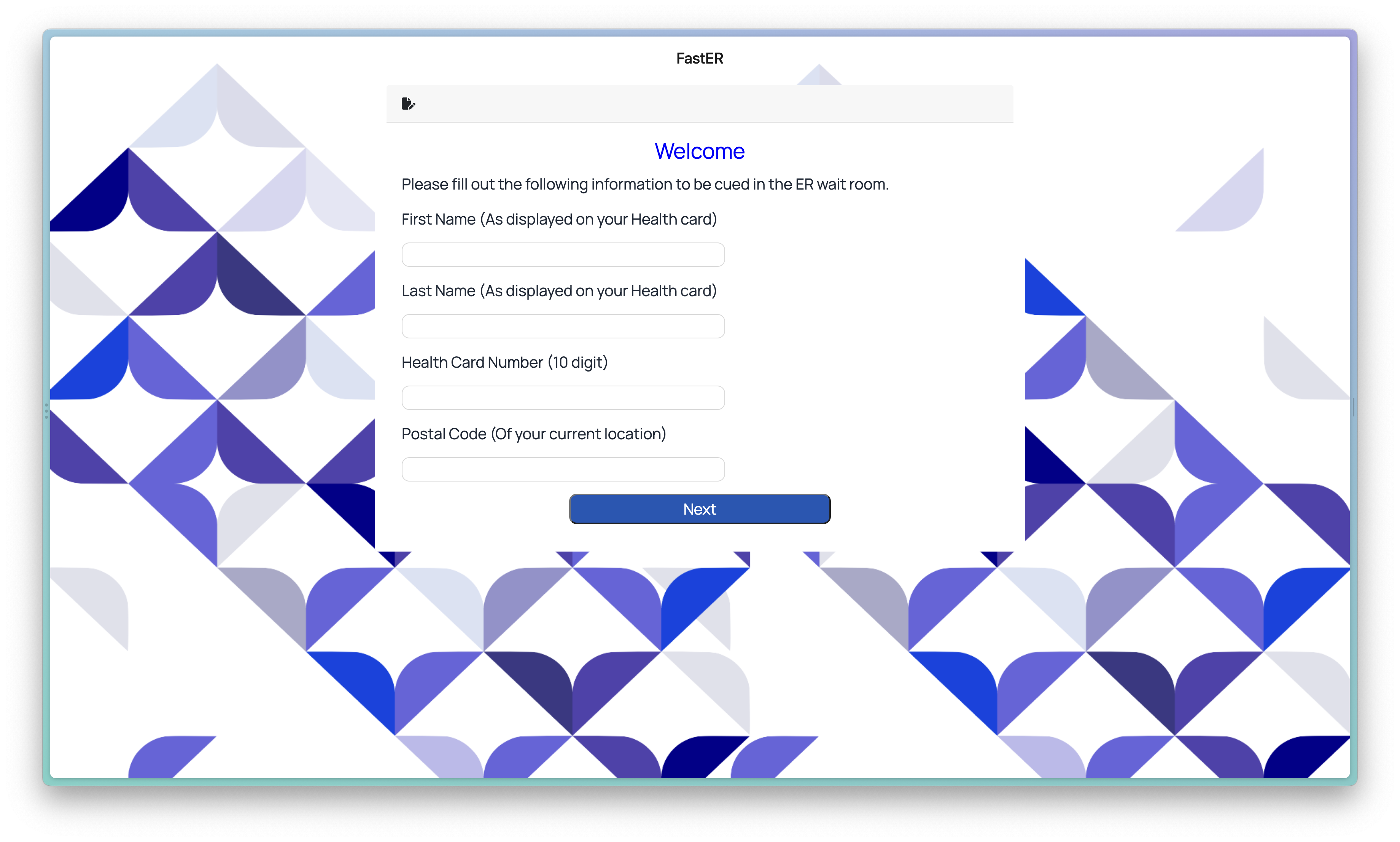
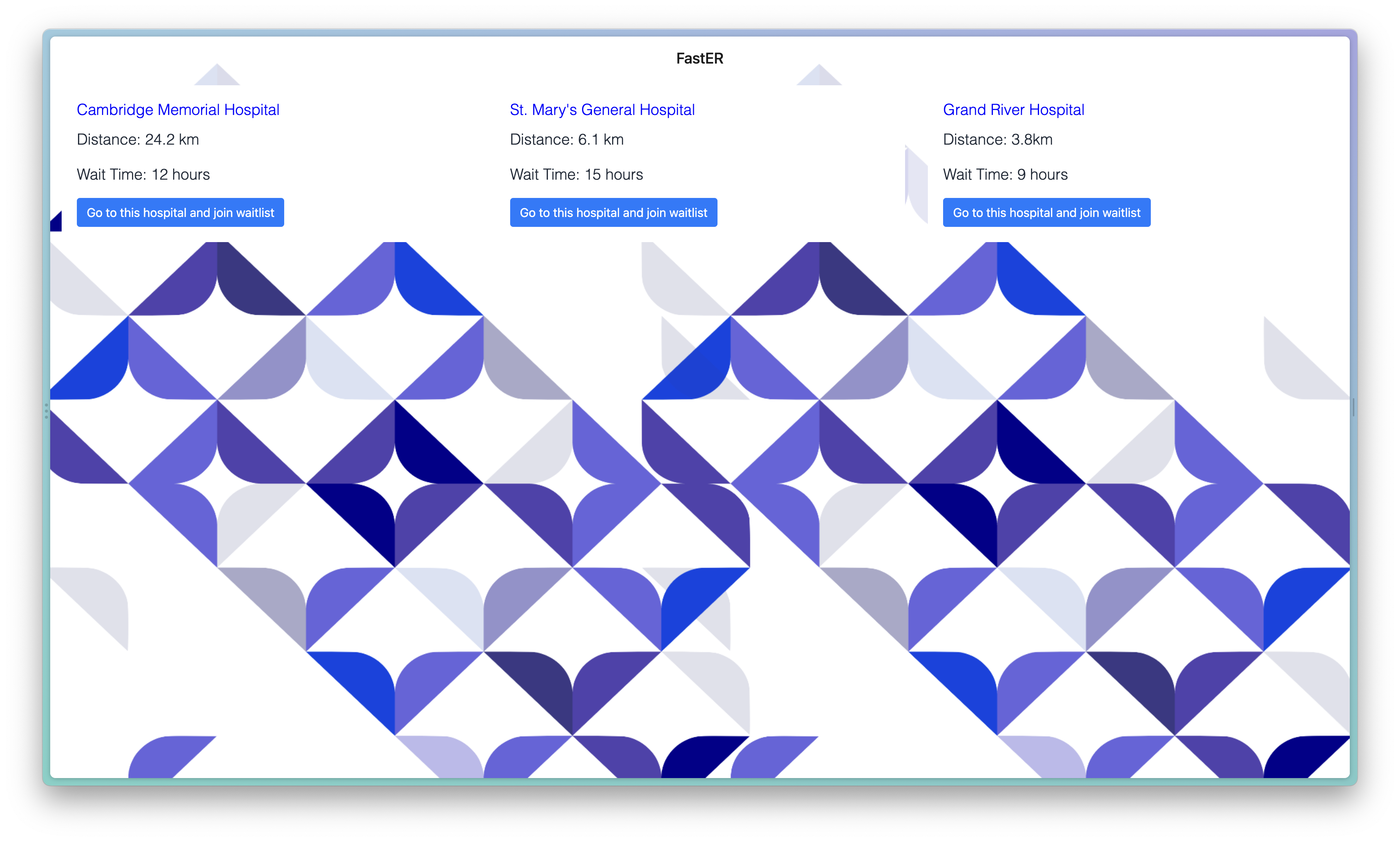
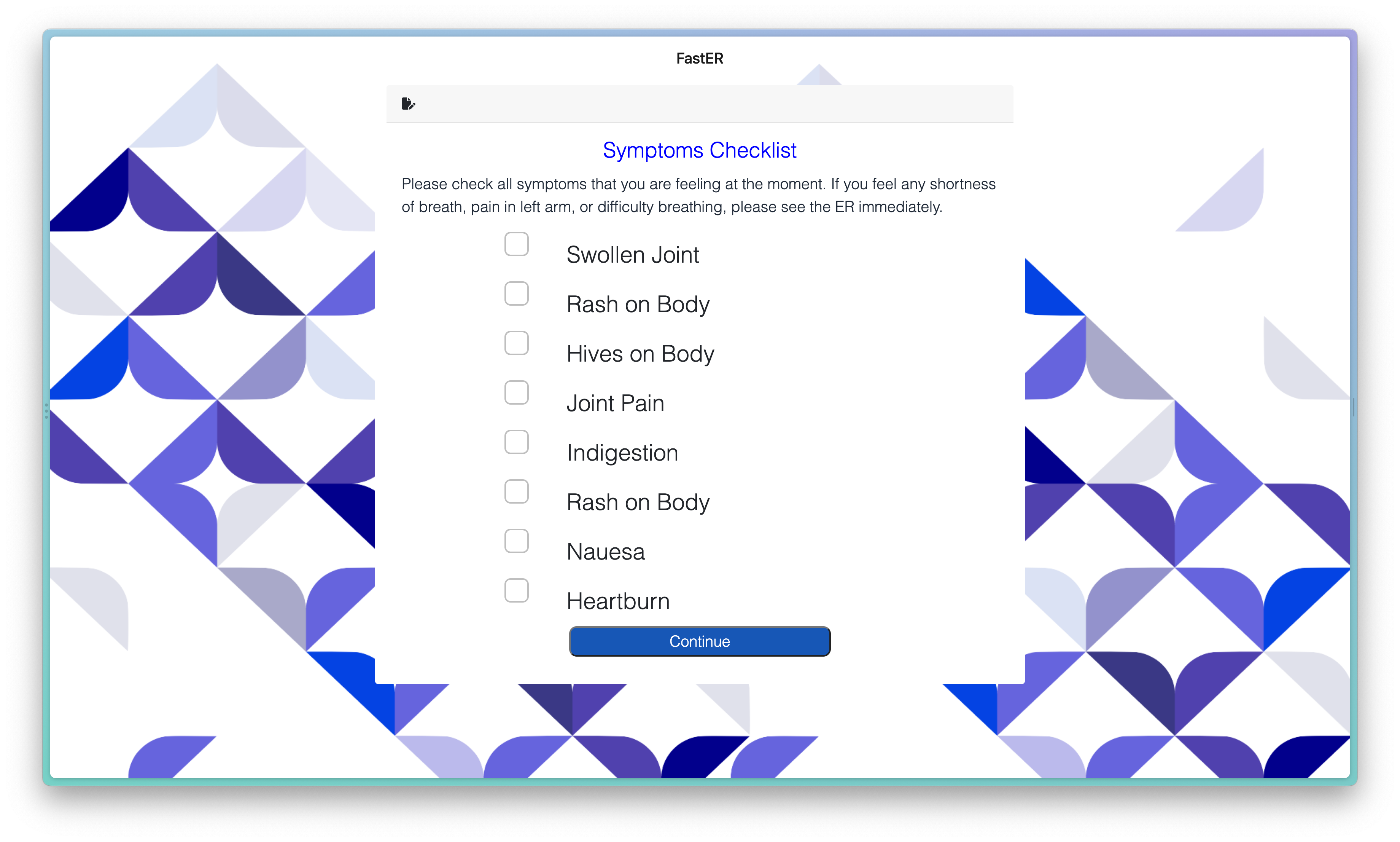
FastER will be connected directly to the Ontario healthcare system's database, so that patients are aware of wait times in ER, and can add their name in it for non-life threatening injuries remotely. To use this application, individuals open the web application, write their names, health card number, and postal code, and the product prompts them to enter their symptoms in a checklist (warning them that for specific symptoms such as shortness of breath, they should see the ER immediately). Then the product provides them with 3 hospitals/ER rooms nearby, including information on their distances and wait times. An algorithm also exists so the product recommends/highlights a hospital that they go to by highlighting it green in the application, based on the distance and wait time information. It updates the wait times in real time through a pre-established connection to health Canada, and notifies the user when the wait time is increased and when the user should leave for the ER to make it on time.
How we built it
We built this application together using HTML, CSS (bootstrap), javascript, and figma. As we do not have access to Health Canada's database, we created fake data to test this with as well.
Challenges we ran into
A challenge we ran into was the front-end was quite difficult as we wanted to build an application that is as user-friendly as possible. We solved this through asking other hackers how they went about similar issues. Another challenge we ran into was a late start. Our team was originally 2 people each as our previous teams dropped out Saturday morning, and therefore we were all without a team and stressed. However, we posted on the Slack that we were looking for 2 members and explained our situation, and found each other. We worked hard and together to finish the project on time.
Accomplishments that we're proud of
- working well and finishing a project even with the late start
- working and collaborating well with new team members
What we learned
- finding a good team is crucial to building a well thought-out project
- the importance of a good front-end as well as back end
What's next for FastER
- talking to Health Canada to partner up!

Log in or sign up for Devpost to join the conversation.