-
-
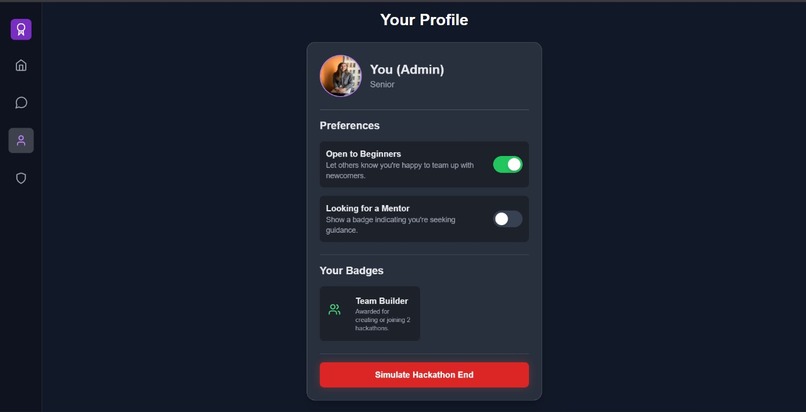
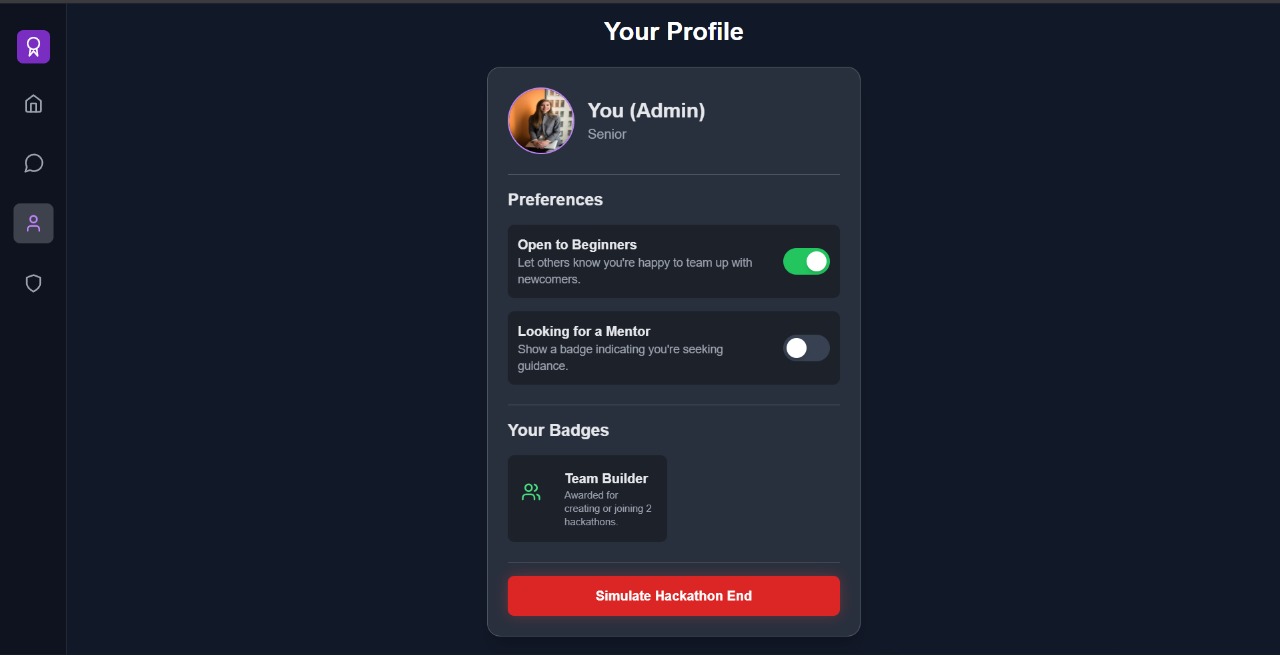
Profile
-
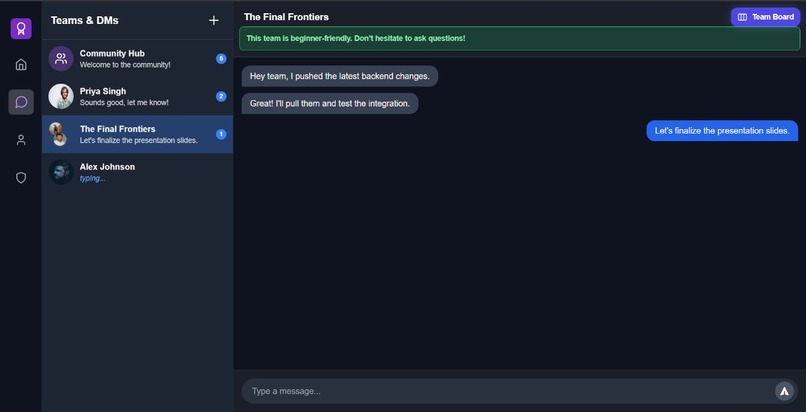
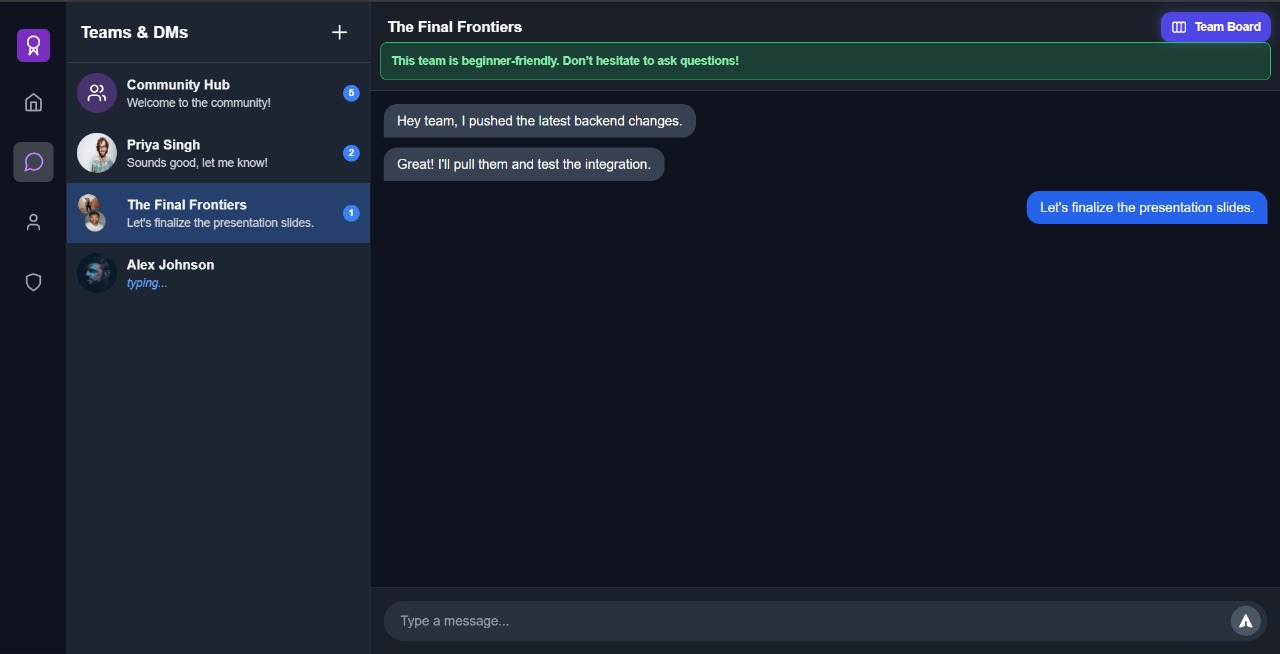
Chat
-
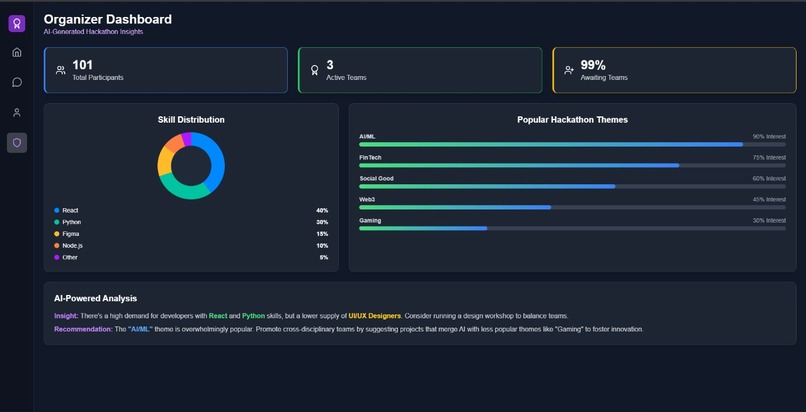
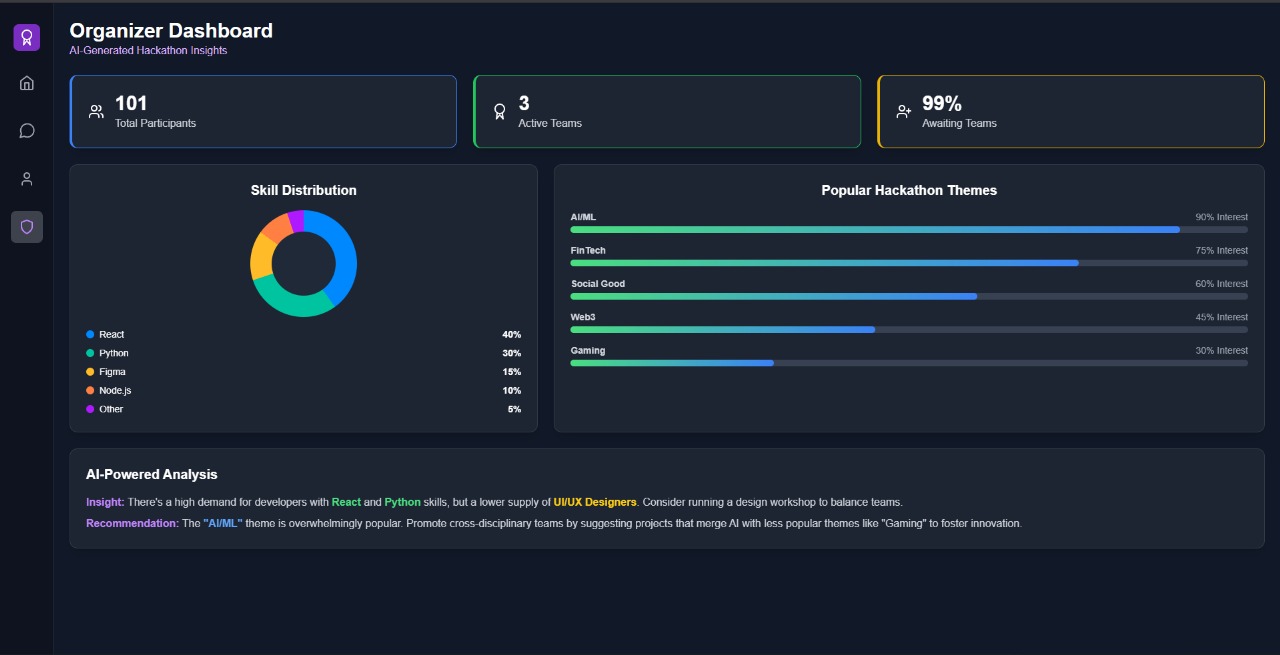
Dashboard
-
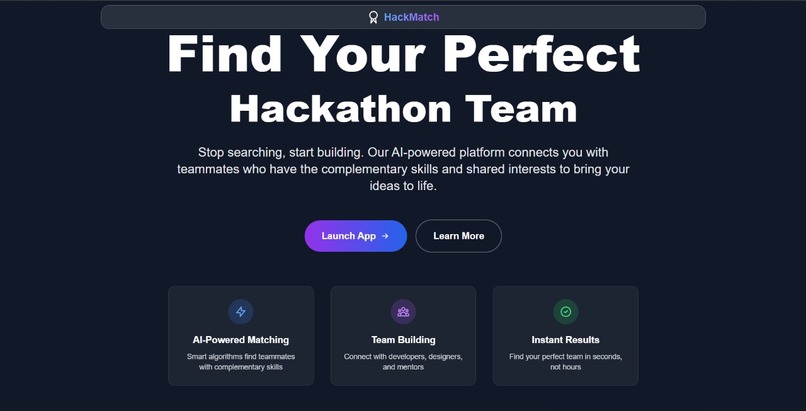
Login
-
Home
##Inspiration
The inspiration for HackMatch came from a personal and recurring frustration experienced at numerous hackathons: the chaotic and inefficient process of team formation. Too often, finding the right teammates boils down to last-minute scrambling, awkward introductions, or pure luck. We envisioned a platform that would bring the simplicity and effectiveness of modern matching apps to the hackathon world. We wanted to replace the chaos with a data-driven, enjoyable experience that helps participants find teammates based on complementary skills, shared interests, and project goals, ensuring that great ideas are backed by great teams from the very beginning.
What it does
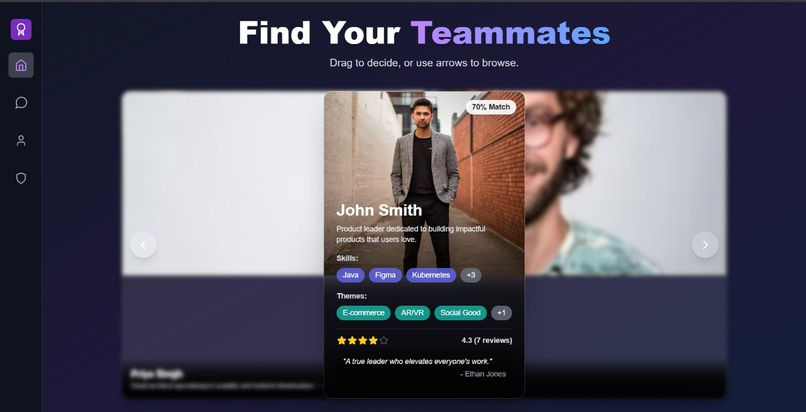
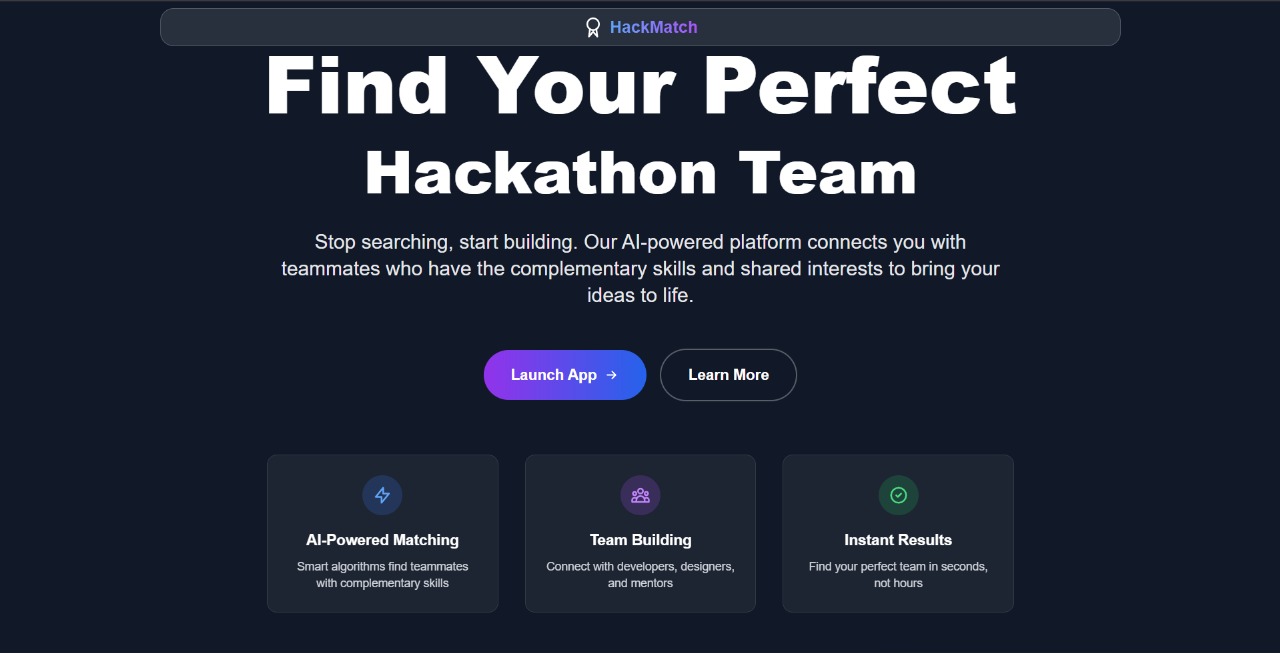
HackMatch is a high-fidelity, interactive prototype of a web application designed to streamline hackathon team building. At its core, it features an AI-powered matching system presented through a familiar, intuitive "swipe-to-match" interface.
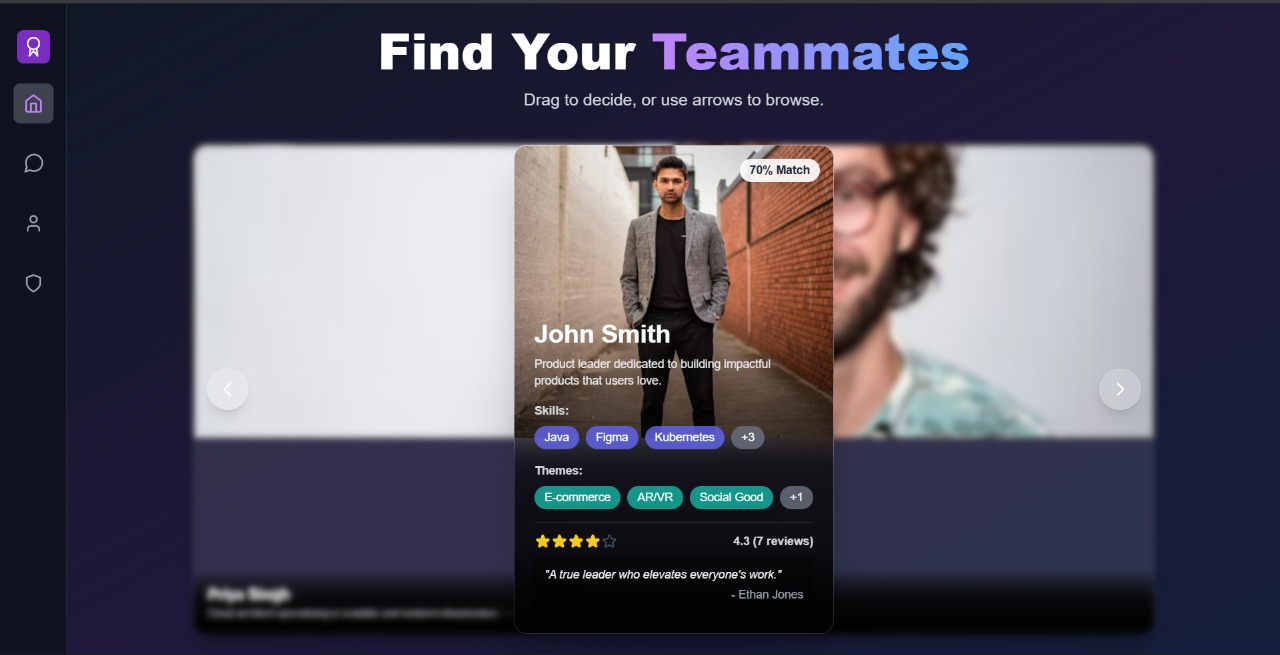
Discover & Match: Users can browse through profiles of potential teammates, curated by an AI algorithm. Dragging a card right ("Compile") signifies interest, while dragging left ("Bug") passes on the profile.
Comprehensive Profiles: Each profile card displays crucial information like skills, preferred hackathon themes, experience level, and even user reviews to help make informed decisions.
Integrated Chat System: Once a match is made, users can connect through a built-in chat system that supports direct messages, team chats, and a global "Community Hub" for all hackathon participants.
Team Management: Users can form teams, which then get a dedicated "Team Board"—a simple Kanban-style project management tool to track tasks.
Organizer Dashboard: The platform includes an admin-level dashboard that provides organizers with AI-generated insights into the event, such as skill distribution, popular themes, and the number of participants still looking for teams.
How we built it
HackMatch was built as a self-contained, browser-based application to prioritize rapid prototyping and a seamless demo experience.
Frontend Framework: We used React with functional components and hooks (useState, useEffect, useCallback) to manage the application's state and UI logic.
Styling: Tailwind CSS was used for its utility-first approach, allowing us to build a modern, responsive, and visually consistent design quickly.
Animations & Gestures: The fluid, app-like feel is powered by Framer Motion. It was instrumental in creating the card swipe animations, page transitions, and micro-interactions that make the user experience so engaging.
Data Simulation: All user, team, and chat data is currently mocked on the client-side. We created robust data generation functions to simulate a realistic and diverse user base for demonstration purposes.
In-Browser Compilation: To ensure the project is easy to run without a complex setup, we used the Babel Standalone package to transpile JSX directly in the browser.
Challenges we ran into
Building a complex application in a single file presented several challenges:
The Race Condition: Our most persistent bug was a ReferenceError where the application would try to run before the Framer Motion library had fully loaded from the CDN. After multiple failed attempts, we solved this by implementing a robust initializer function that actively checks for the presence of all required libraries before attempting to render the React application.
Carousel and Swipe Logic: Getting the discovery page's card carousel to feel right was a major challenge. Orchestrating the animations for the central, draggable card while simultaneously showing the previous and next cards in the queue required careful state management and precise animation control with Framer Motion's AnimatePresence component.
State Management: Managing the application's entire state—from the current view to chat messages and user profiles—without a dedicated state management library like Redux was complex. We relied on lifting state up and passing callbacks down through multiple layers of components, which required careful planning to avoid bugs and performance issues.
Accomplishments that we're proud of
We are incredibly proud of creating a prototype that feels like a fully-realized, polished product. The UI/UX is smooth, intuitive, and aesthetically pleasing, effectively communicating the vision for the application. The core swipe-to-match interaction, which is central to the app's concept, works flawlessly and feels satisfying to use. Finally, overcoming the persistent script loading bug was a significant technical victory that taught us a great deal about browser behavior.
What we learned This project was a deep dive into building interactive frontends. We gained significant experience with Framer Motion, learning how to implement complex, gesture-based animations. The debugging process taught us invaluable lessons about race conditions and the importance of defensive programming when dealing with external scripts. Most importantly, we learned how to architect and manage a feature-rich application in React, reinforcing our understanding of component structure and state flow.
What's next for HackMatch
The vision for HackMatch extends far beyond this prototype. The immediate next steps are:
Backend & Database Integration: Replace the mock data with a real backend using a service like Firebase or Supabase. This will enable user authentication, persistent data storage for profiles and teams, and a real-time database for the chat functionality.
Develop the AI Matching Algorithm: Build and train a server-side matching algorithm that goes beyond shared skills to analyze project interests, past collaborations, and user preferences for truly intelligent recommendations.
Expand Team Tools: Flesh out the "Team Board" into a more robust project management tool with features like deadline tracking, member assignments, and integration with GitHub.
Partnerships: Collaborate with major hackathon organizations to integrate HackMatch as the official team-building platform for their events, gathering real-world user feedback to guide future development.
Built With
- babel
- css
- javascript
- react
- tailwind


Log in or sign up for Devpost to join the conversation.