-
-
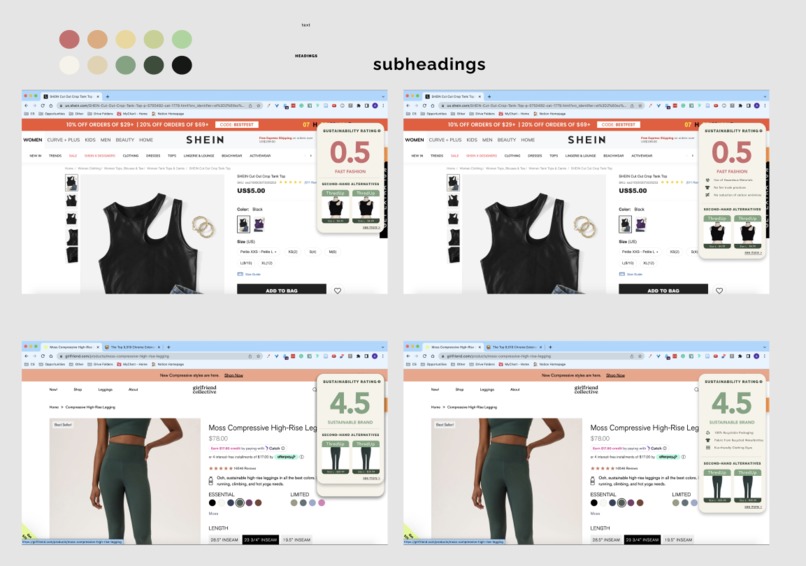
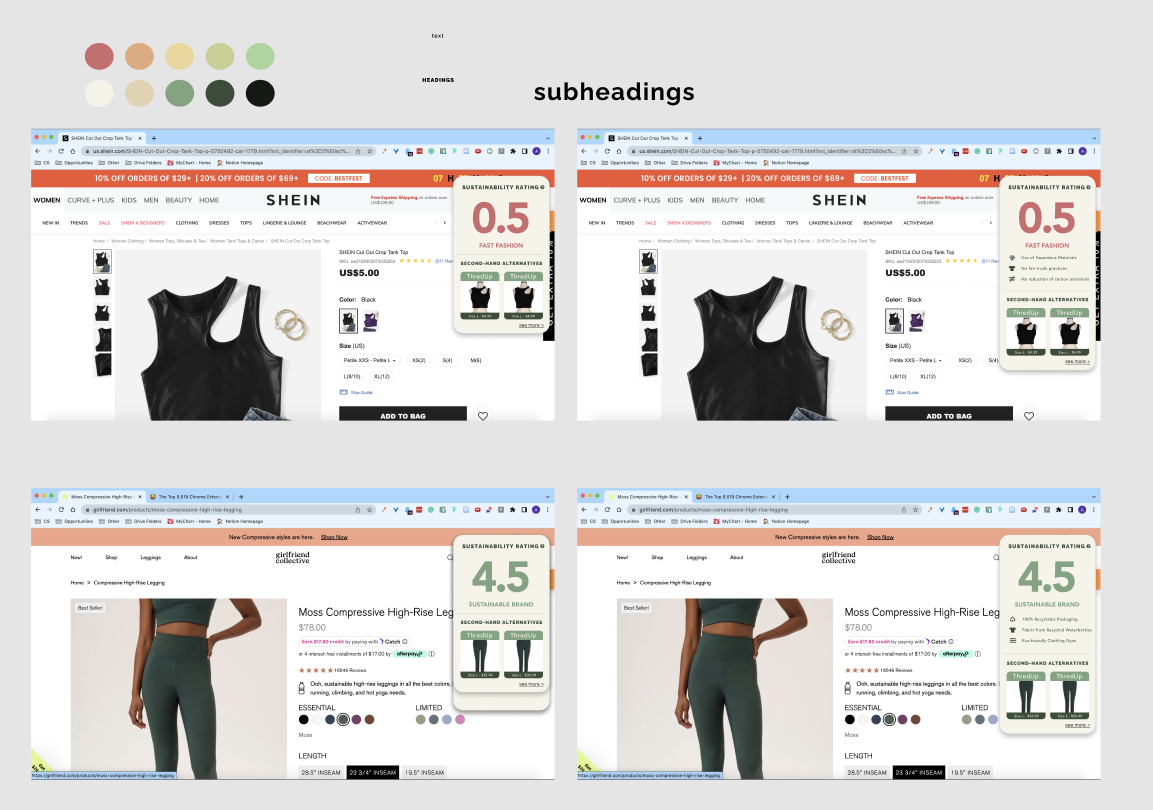
Figma for EcoStyle
Inspiration
As members of Gen-Z, we were interested in tackling the issue of fast fashion. Fashion is central to young adult identity and expression -- but in today's world, it's coming at a price. Fast fashion is the growing global phenomenon of companies mass-producing and selling cheap, inexpensive clothing at rapid rates to match short-lived trends. Fast fashion is responsible for the following environmental consequences:
- 11 million tons of clothing is thrown out of the U.S. each year
- The average American generates 82 pounds of textile waste each year
- Clothing production is the 3rd biggest manufacturing industry in the world, right behind automobiles and technology, contributing more to environmental waste than aviation and international shipping combined
Clothing companies are incentivized to participate in fast fashion to maximize their profits -- and it's difficult for consumers to combat the growing influence of fast fashion. It's often the burden of the consumer to determine which clothing pieces to buy, and the ability to make affordable and informed fashion choices is hindered by 1) little readily available information and 2) a lack of convenience.
Therefore, we wanted to help consumers be able to easily and conveniently incorporate awareness of fast fashion into their everyday choices. We specifically wanted to target online shopping, a growing industry that has now outpaced the sales of traditional, in-person shopping.
What it does
Our product, EcoStyle, is a Chrome extension that helps users identify whether a specific clothing listing is rated as "unsustainable" or a product of fast fashion and suggests more environmentally friendly and secondhand alternatives to these items. We designed a visual prototype through Figma and built a basic front-end. Our idea was to scrape information from "GoodOnYou," a tool that gives ethical and sustainable brand ratings based on their manufacturing practices, in order to provide ratings and information about the brand
How we built it
We built our Chrome extension by using Javascript for the back-end, utilizing the Chrome Developer guide and with the Chrome Development Environment. We used HTML/CSS for front-end, basing it on our Figma prototype.
Challenges we ran into
We had some difficulty incorporating web scraping into our final design, so instead, we decided to focus on building a clean front-end and developing a detailed prototype through Figma of our vision. If given more time to work on this project, we would love to use web scraping in our GoodOnYou assessments as well as alternate eco-friendly clothing suggestions tool.
Accomplishments that we're proud of
This is our first hackathon, and we learned how to make a Google Chrome extension, something that we've never done before! We were able to work together to apply our computer science knowledge and work to apply it to a practical context with real-world social impact through environmentalism. We also all brought different skills and experiences to the team, as computer science students with varying experiences and of different class years, and we were all able to contribute to the collaboration effort in different ways.
What we learned
We mainly used how to write code and build a Chrome extension for the first time. We all had some HTML/CSS/JS knowledge, and we learned how to practically apply it to our extension.
What's next for EcoStyle
We plan on using web scraping to further develop the tools of clothing recommendations and provide in-depth ratings and information on individual clothing pieces!

Log in or sign up for Devpost to join the conversation.