-
-
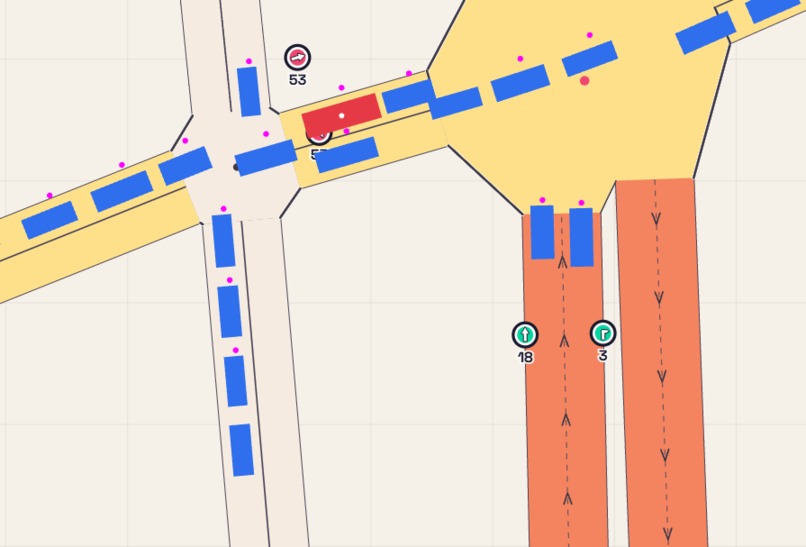
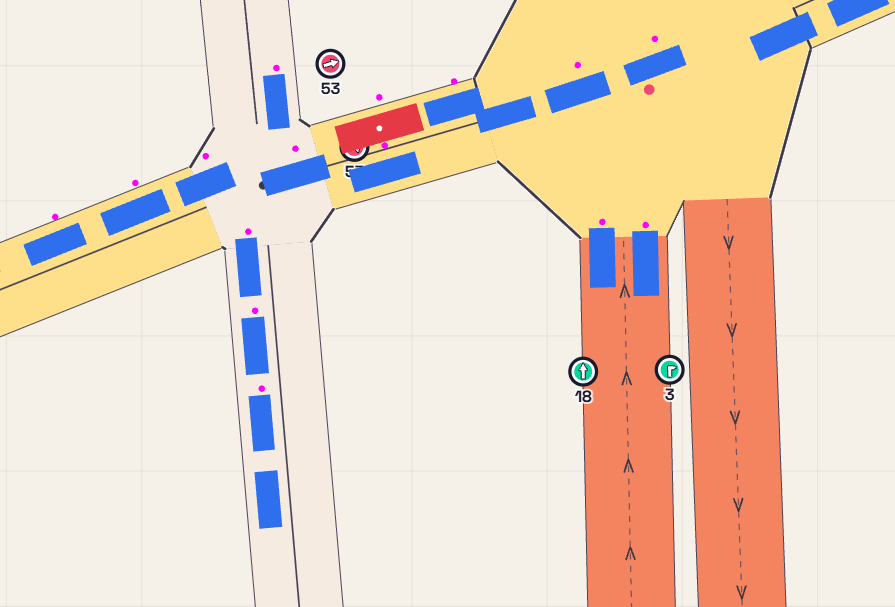
our improvement criteria
-
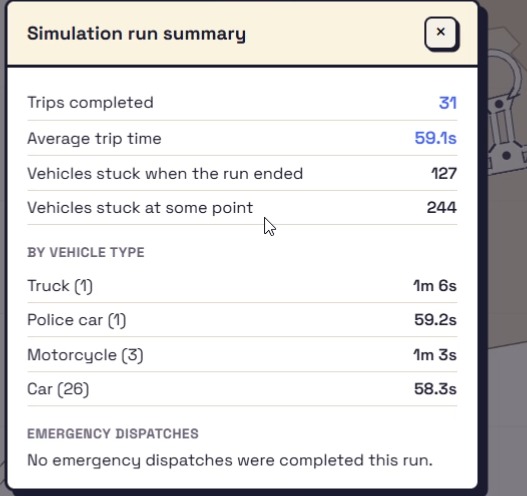
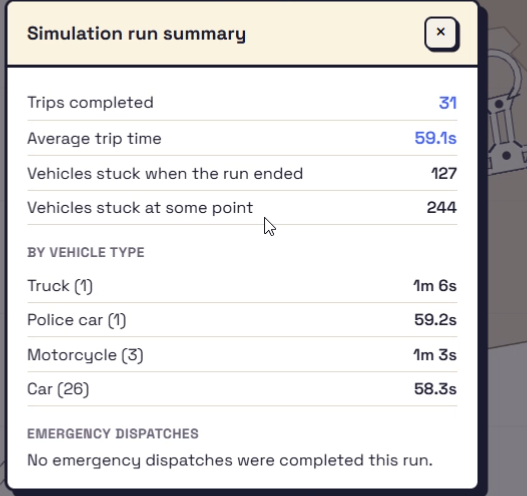
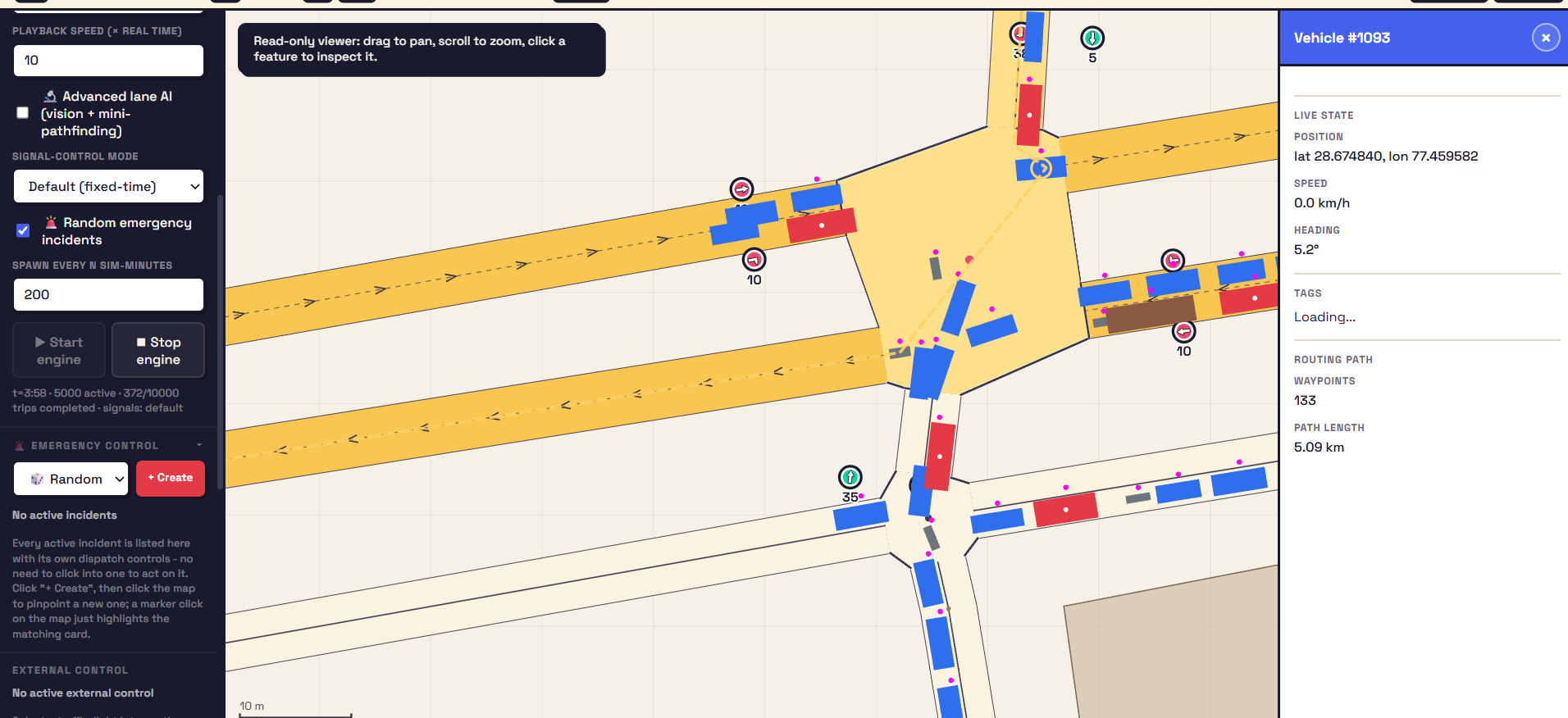
statistics after one simulation
-
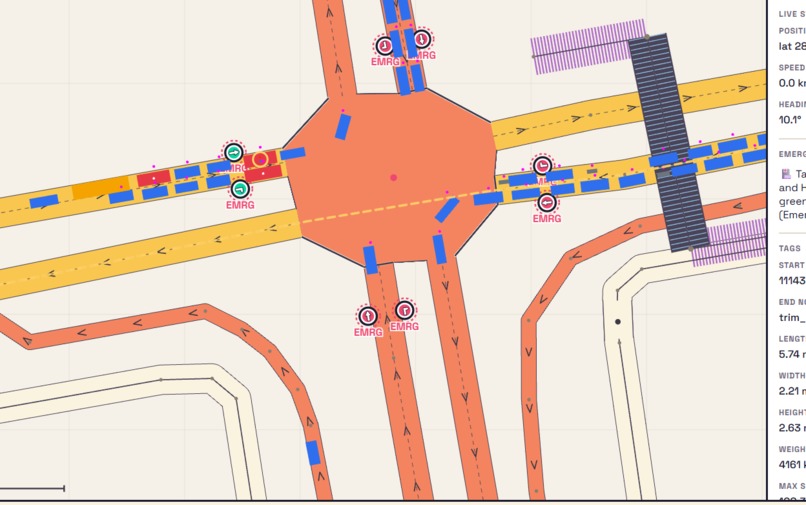
initial simulation with current government setup
-
-
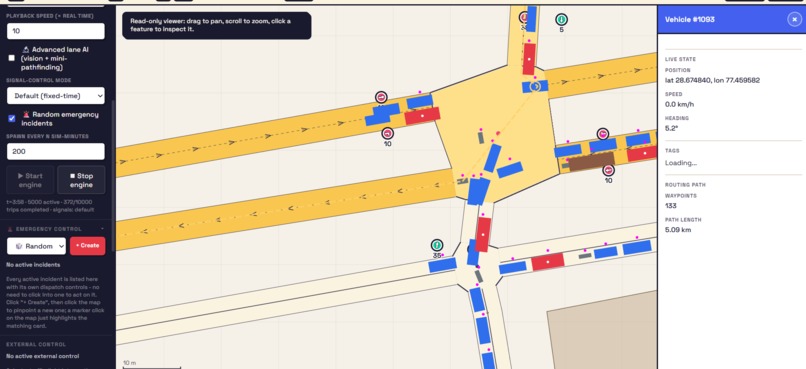
baseline without traffic lights
-
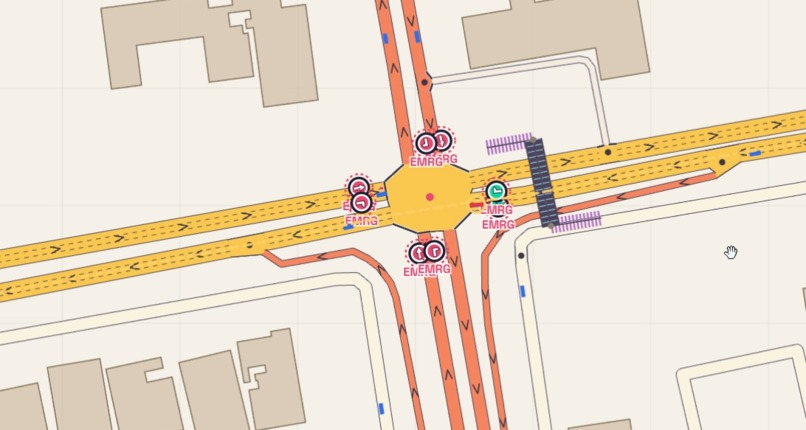
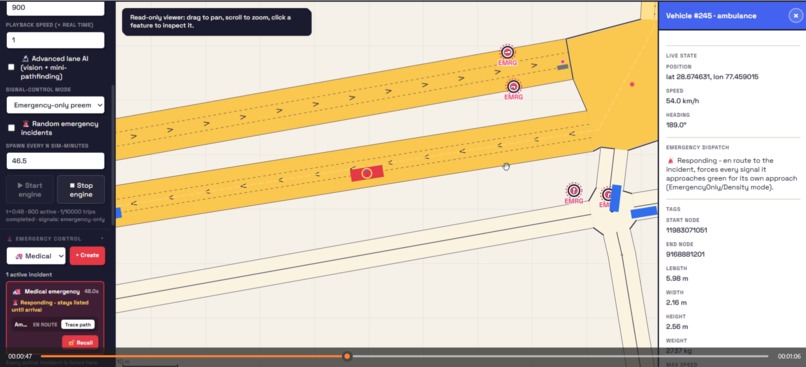
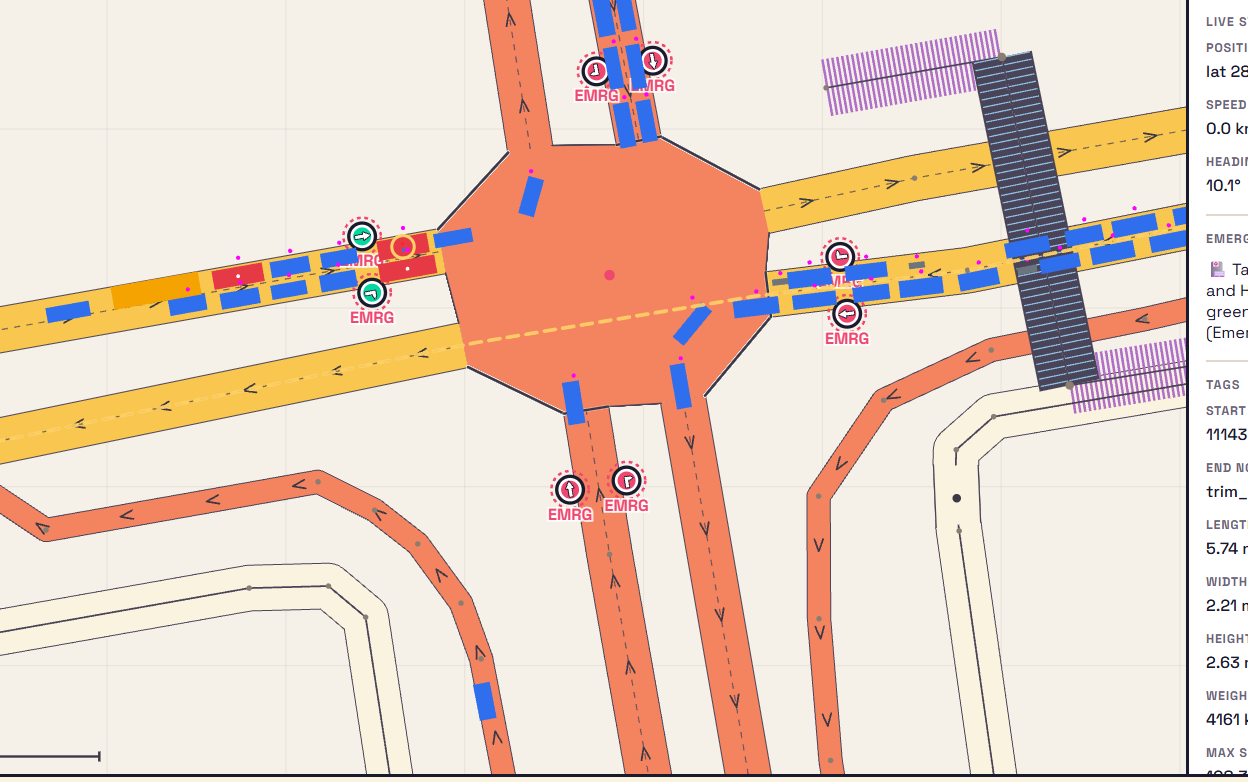
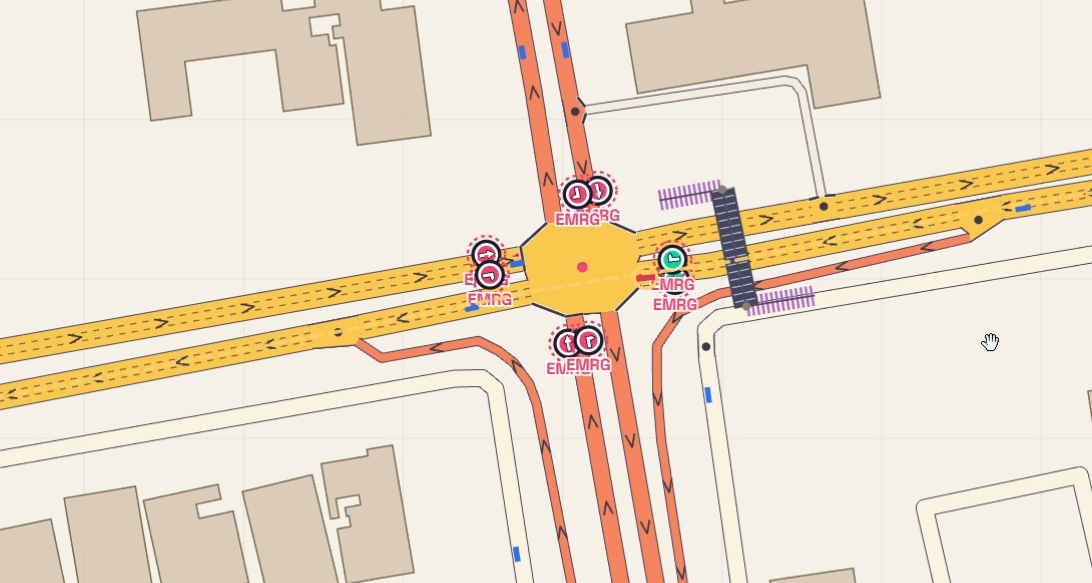
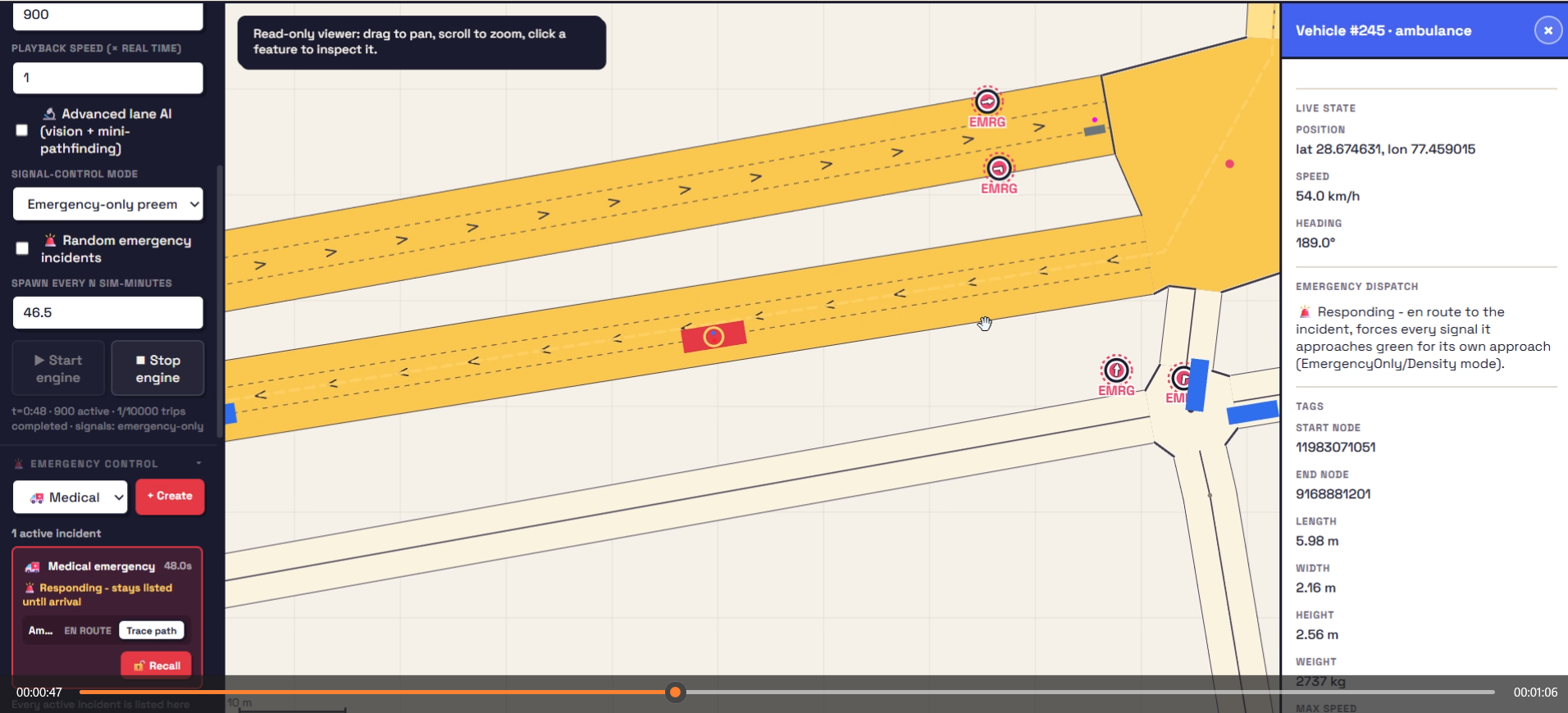
emergency preemption
-
-
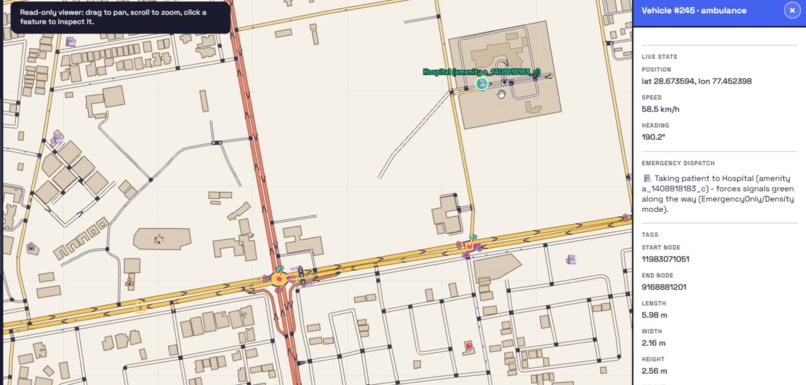
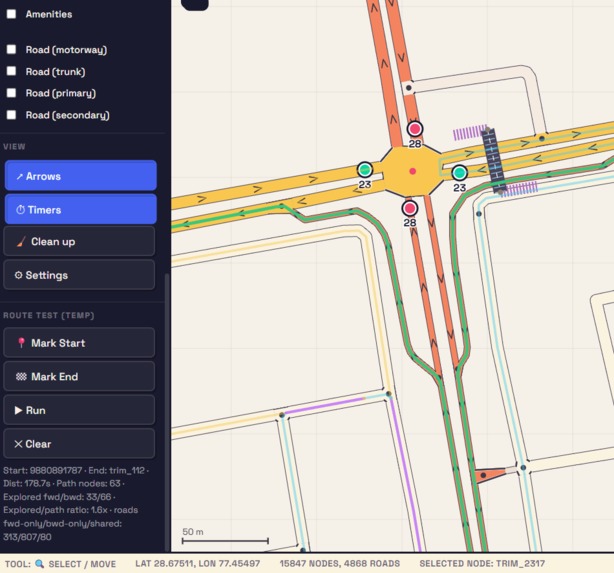
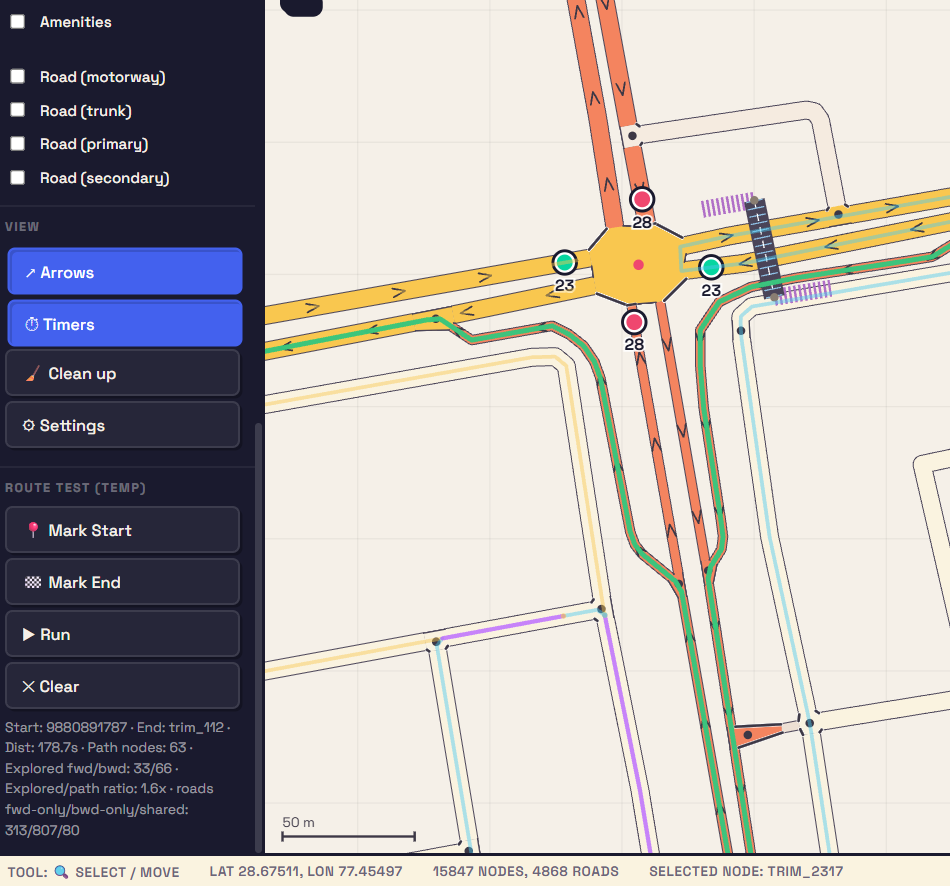
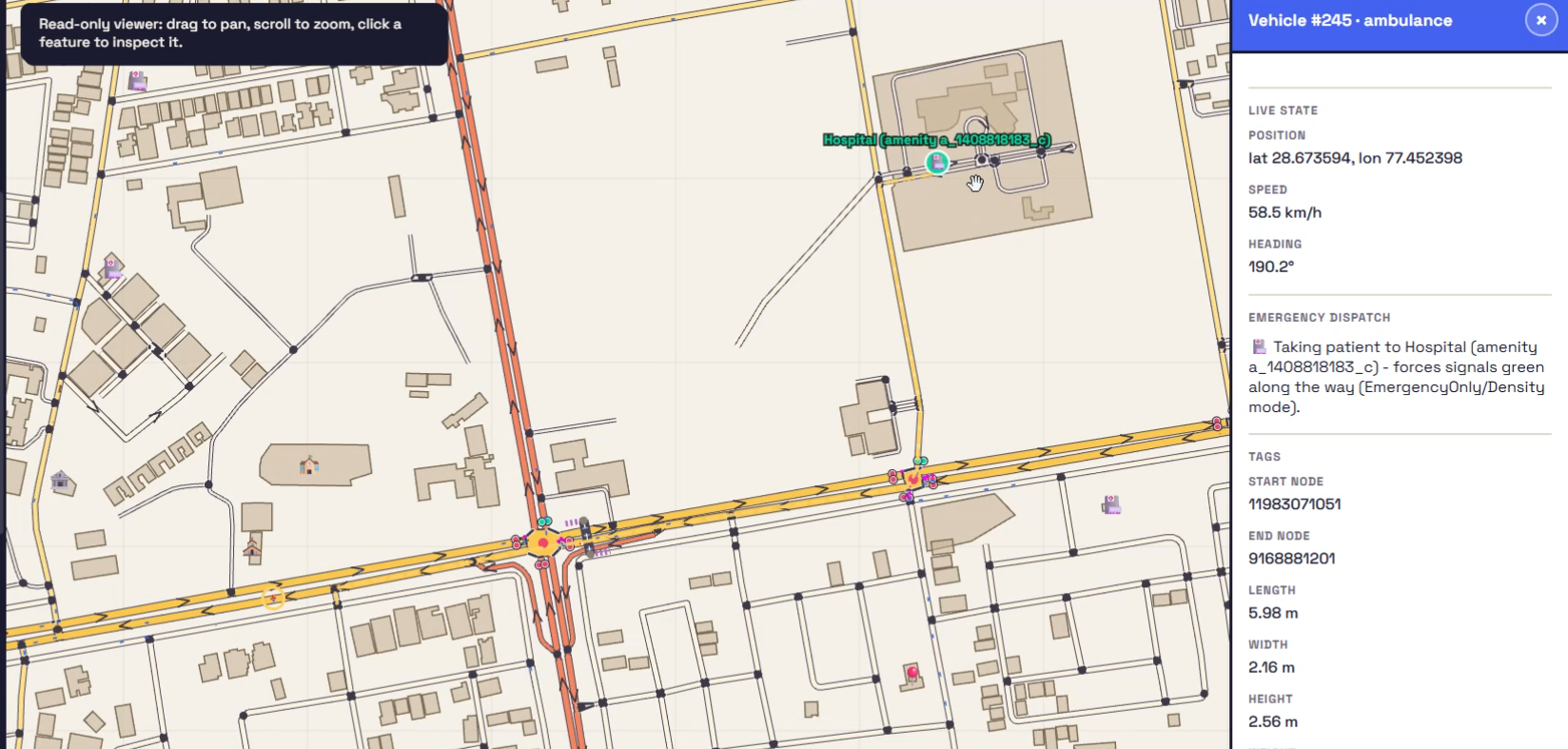
overall map and the traffic vehicle going to the hospital
Inspiration
FEAR (Fast Emergency and Action Response System) was inspired by a problem we had been researching for several years: emergency vehicles losing critical time in traffic. An ambulance, fire engine, or police vehicle can have a clear route on a map but still be delayed by congested roads and traffic signals.
We wanted to explore how technology could make emergency response more intelligent by connecting vehicle routing, real-time traffic conditions, and traffic-signal prioritization into one system.
What it does
FEAR is a smart traffic and emergency-response platform designed to reduce delays faced by emergency vehicles.
The system combines:
- Real-time vehicle tracking and route visualization
- Intelligent routing based on road and traffic conditions
- Emergency-vehicle priority routing
- Traffic-signal prioritization for emergency vehicles
- Traffic simulation and visualization
- A dashboard for monitoring vehicles and traffic conditions
- Data that can eventually support broader smart-city and mobility applications
The long-term vision is to move beyond emergency response and create a platform capable of understanding and optimizing city-scale vehicle movement.
How we built it
We designed FEAR as a combination of a mobile routing application, backend services, traffic intelligence, and a web-based monitoring/simulation dashboard.
The system uses digital road networks to represent roads and intersections as a graph. Vehicles can then be assigned routes while the system considers factors such as distance, traffic density, road characteristics, and emergency priority.
For emergency vehicles, the routing layer can identify an appropriate path while the traffic-control layer can prioritize upcoming intersections. For normal traffic, the system can analyze vehicle density and signal states to improve traffic flow.
We are building the platform incrementally:
- Vehicle tracking and routing
- Emergency-priority routing
- Traffic-signal simulation and optimization
- Large-scale traffic simulation
- Real-world smart-city deployment
We also conducted field research with fire stations and hospitals to understand operational constraints and validate the problem from the perspective of people working in emergency-response environments.
Challenges we ran into
One of the biggest challenges was realizing that emergency response is not simply a shortest-path problem. A route that looks optimal on a map can become ineffective because of congestion, road conditions, traffic signals, or unexpected vehicle behavior.
We also had to think about how to represent real-world roads accurately enough for simulation while keeping the system computationally manageable.
Another challenge was designing the system so that it could eventually scale from a small prototype to thousands of simultaneously simulated vehicles without making the routing and visualization layers impractical.
Our field research also exposed challenges that are difficult to discover from software development alone, particularly the gap between how a system is designed technically and how emergency services actually operate.
Accomplishments that we're proud of
We are proud that FEAR has progressed beyond being only an idea.
- Developed the initial software architecture and working prototype
- Built the project around a real-world emergency-response problem
- Conducted surveys and discussions with fire stations and hospitals
- Used stakeholder feedback to refine the system and its proposed features
- Developed the routing, vehicle, backend, and visualization components
- Expanded the original emergency-vehicle concept toward a broader intelligent traffic-management platform
- Began designing the system with large-scale simulation and future smart-city deployment in mind
Most importantly, our research helped us identify what needs to be solved before such a system can realistically move from a prototype to real-world deployment.
What we learned
We learned that solving a real-world problem requires much more than building a technically interesting prototype. Stakeholder validation is just as important as the technology itself.
We also learned how interconnected traffic systems are: routing, vehicle behavior, road networks, traffic signals, emergency operations, and human decisions all affect one another.
Technically, the project pushed us to think about graph-based routing, real-time systems, APIs, simulation, databases, scalability, and the challenges of connecting multiple software components into one platform.
Most importantly, we learned to treat the prototype as an evolving system rather than assuming that our first implementation was the final solution.
What's next for FEAR
Our next goal is to strengthen the prototype and integrate the different components into a more complete end-to-end system.
We plan to improve:
- Real-time traffic and vehicle simulation
- Emergency route optimization
- Adaptive traffic-signal control
- Large-scale multi-vehicle simulation
- Dashboard-based traffic monitoring
- More realistic road-network modelling
- AI/ML-based traffic prediction and optimization
- Testing with increasingly realistic city scenarios
Ultimately, we want FEAR to evolve from an emergency-response prototype into a scalable intelligent mobility platform that can help cities respond faster to emergencies while making better use of their existing transportation infrastructure.
Built With
- c++
- dart
- dsa
- fastapi
- flutter
- javascript
- machine-learning
- python
- websockets

Log in or sign up for Devpost to join the conversation.