Inspiration
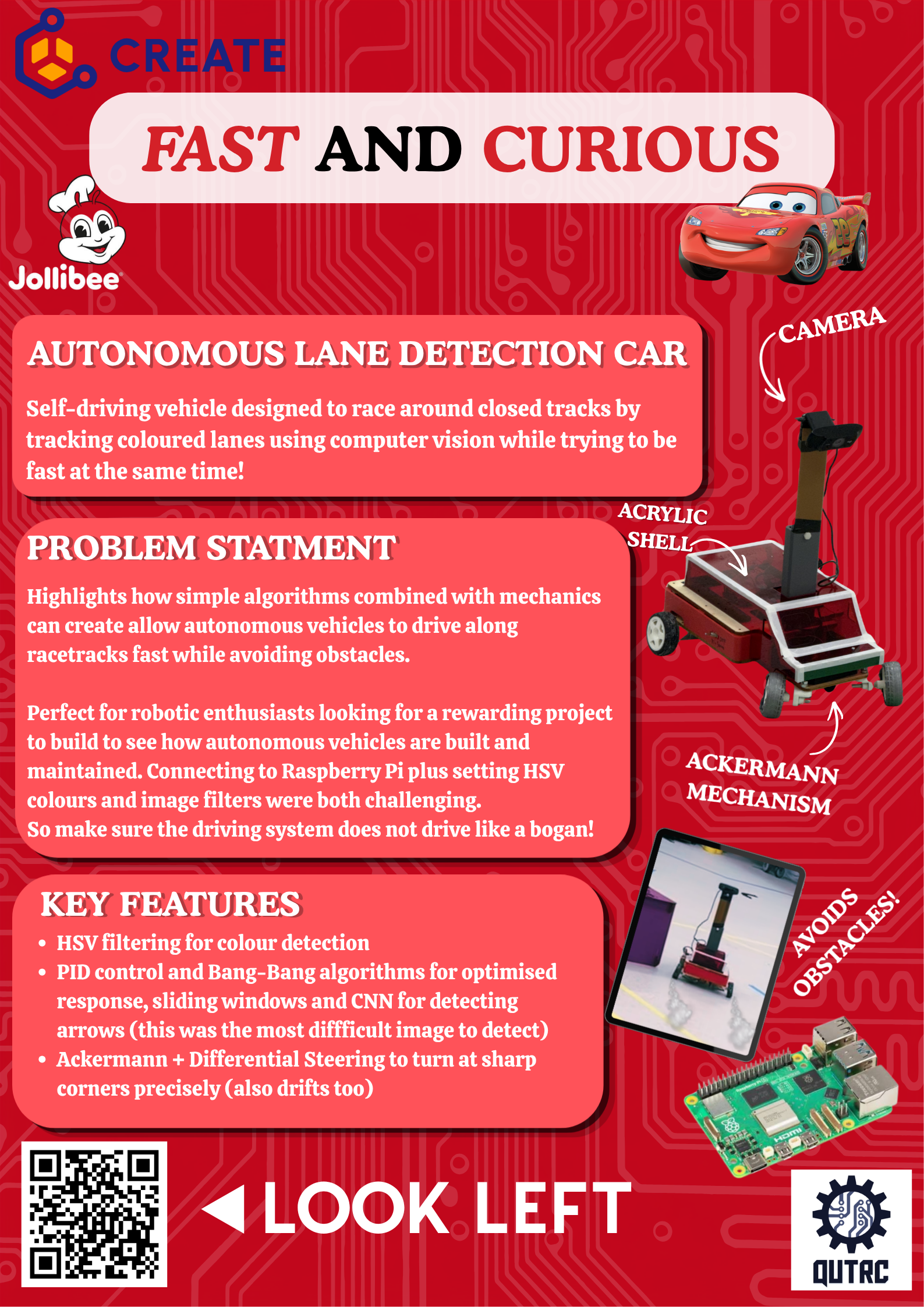
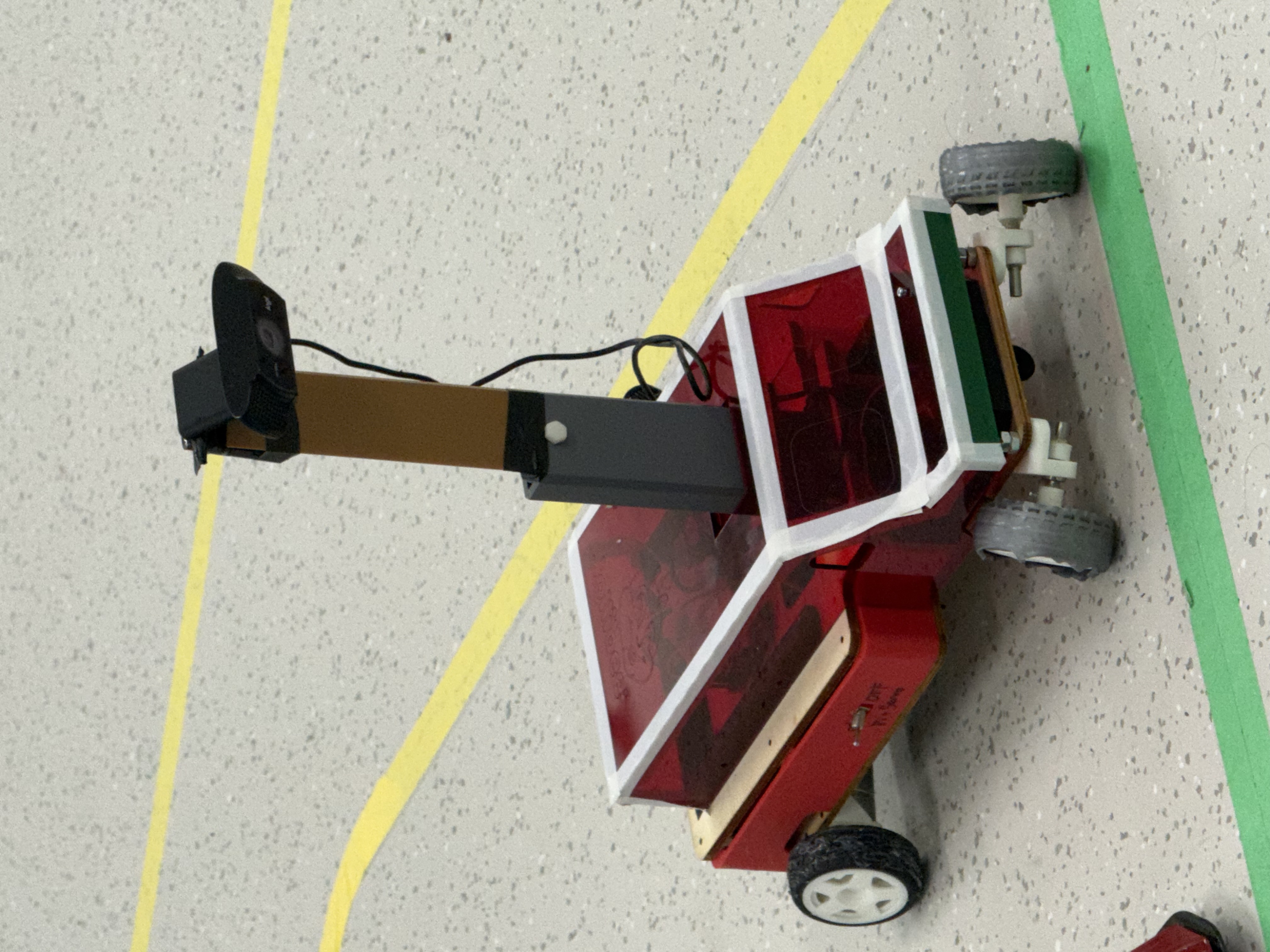
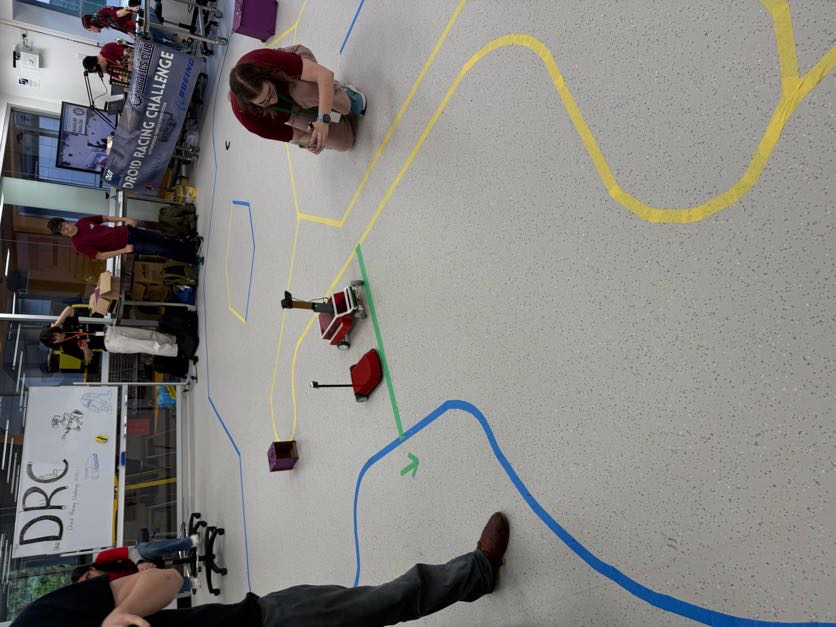
Our vehicle was developed for the annual Droid Racing Competition, hosted by the Queensland University of Technology (QUT) Robotics Club. Engineering-wise, the chassis features an Ackermann steering geometry to optimize cornering efficiency.
Wanting to stand out with a unique form factor, we pivoted toward a truck chassis. To satisfy the competition's requirement for a red vehicle, we explored various red-themed aesthetics, initially looking at major fast-food chains like McDonald's and KFC. Ultimately, we found our core inspiration in the vibrant branding of Jollibee, leveraging their iconic red mascot and delivery truck aesthetic to establish a distinct, high-visibility theme for our autonomous racing platform.
What it does
It simply races around a closed track trying to obtain the best lap time while also maintaining its position between the lanes without touching the lines or hitting obstacles.
How we built it
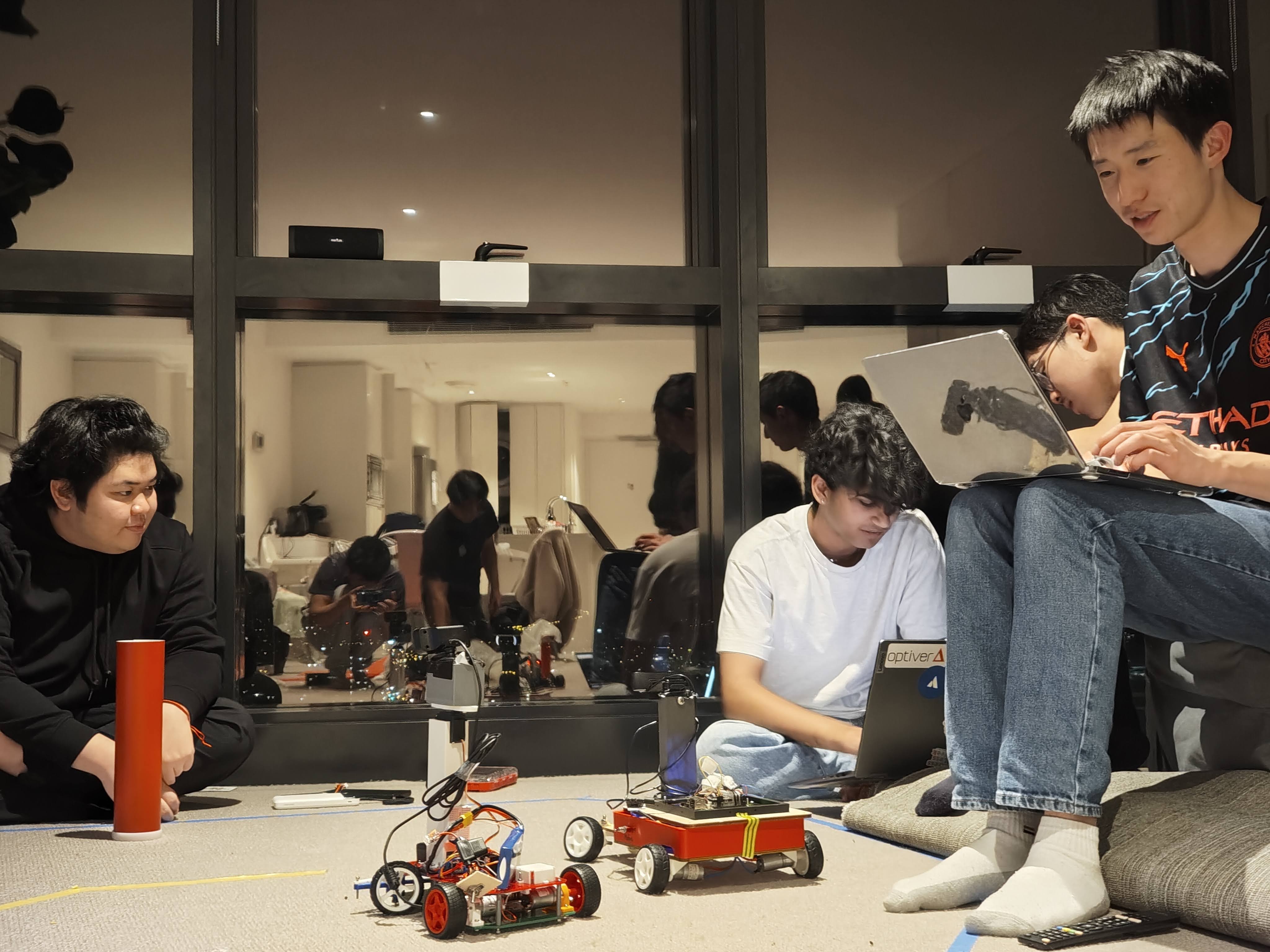
We started the process by discussing which components needed to go where, with the mechanical and electrical sub-teams collaborating to map out the weight distribution. Our main goals were to keep a low center of gravity (COG) by placing the heavy parts like batteries and motors as close to the ground as possible, while still mounting the primary camera high enough to get a clear look-ahead distance for our vision algorithms. We also had to make sure the overall footprint would keep the car stable and unable to topple over during sharp turns. Once we agreed on this layout, we moved into CAD to model the Ackermann chassis and base plate around these exact component placements to ensure everything fit perfectly before fabrication.
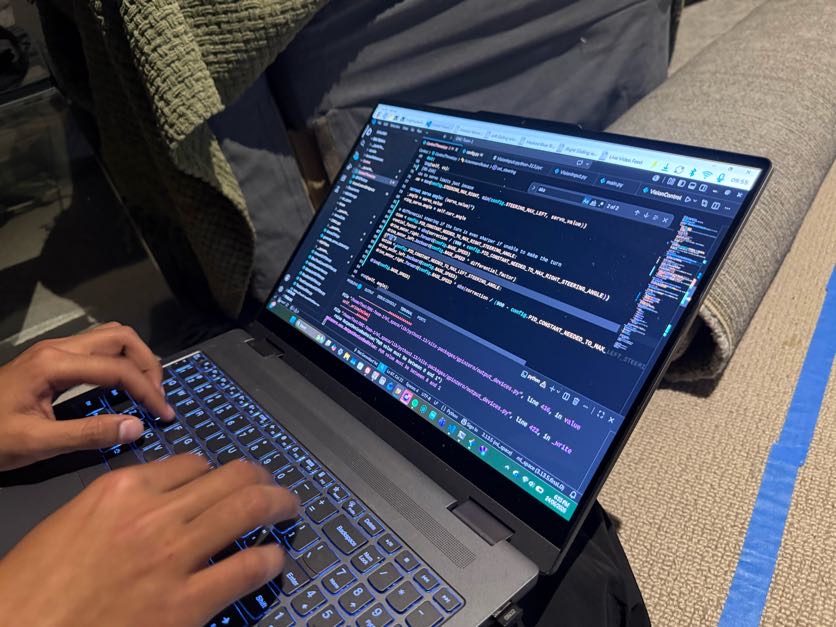
On the software side, we structured the codebase using Object-Oriented Programming (OOP) in Python to keep the system fully modular. By encapsulating our data filtering and encoder processing logic into separate classes, we can adjust and tune filter parameters on the fly. This eliminates the need to guess numbers or hardcode variables, letting us calibrate the software quickly and efficiently right at the track using our custom Filter Manager GUI.
The modularisation in our software is mirrored in our modularisation in our circuits. All powered by a single LiPo battery, our main circuit consists of many sub circuits, each providing the required functionality for a major part of our DRC. This way, we could isolate circuits to focus on debugging and testing a certain part, and more easily and consistently identify and solve any hardware issues.
Challenges we ran into
PID tuning was the most difficult step we endured during our preparation because we lacked a simulation model to provide the optimal gains. Instead, we had to rely on extensive manual track testing to tune the parameters.
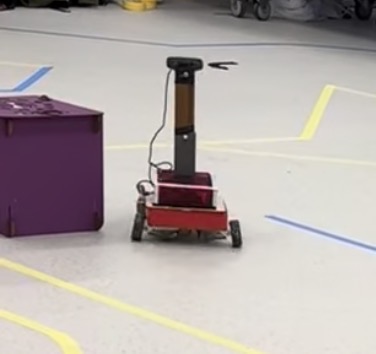
We also faced significant challenges ensuring the vehicle avoided the purple obstacles due to numerous edge cases. For instance, if the gap between a lane line and an obstacle was too narrow, we had to carefully calibrate the logic so the steering servo would turn away from it in time rather than trying to fit through. Additionally, implementing a Convolutional Neural Network (CNN) to detect the arrows proved difficult, as the error rates failed to decrease after the first few training epochs.
During the actual races, we encountered mechanical issues with nuts and bolts vibrating loose, though this happened far less frequently than it did during our initial testing phases back at UNSW. Wheel traction was another persistent issue; the tyres slipped significantly on the track surface. To combat this, we applied rosin to the tyres to improve their tackiness and supplemented this with double-sided tape, which successfully increased grip and prevented the robot from sliding during tight turns.
Accomplishments that we're proud of
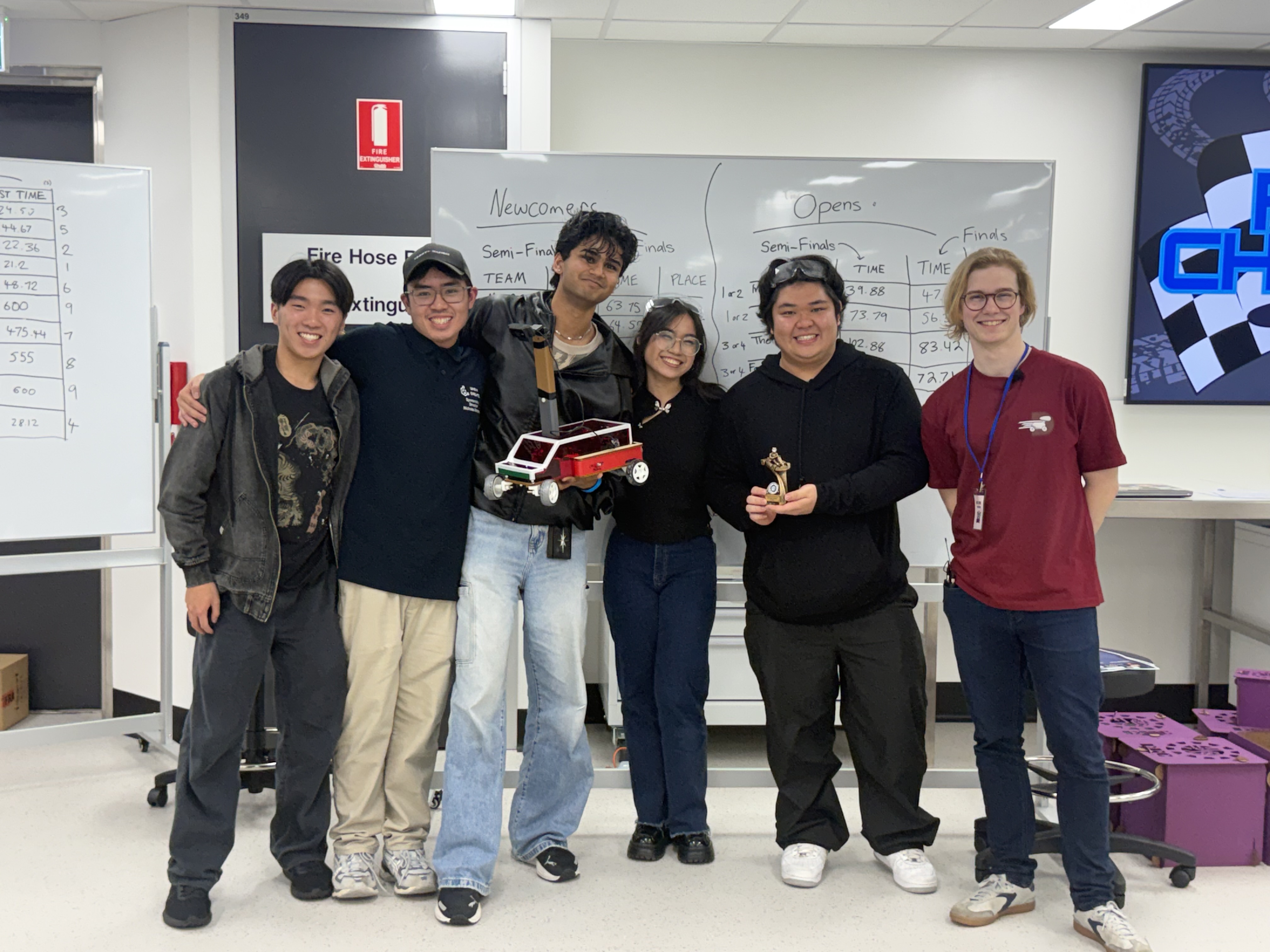
Overall, traveling to Brisbane and placing 3rd in our category was an incredible experience. We were particularly proud of the vehicle's ability to consistently maintain its lane, as well as the team's ability to remain composed under the immense stress of the competition.
On the technical side, we successfully refined our object detection and avoidance logic, ensuring that when the gap between a lane line and an obstacle narrowed, the vehicle would reliably steer in the opposite direction. Regarding the physical build, the final mechanical design ultimately did the job and kept the car stable enough to finish the race without losing critical components like the wheels. However, the experience highlighted a lot of areas where we definitely need to improve in future iterations to make the platform truly robust.
What we learned
The project provided the team with valuable hands-on experience across mechanical, electrical, and software engineering. On the mechanical side, we realized firsthand that relying on friction fits for every component is a bad idea, teaching us the importance of proper mechanical fastening systems for durability under racing conditions. On the software side, we pushed our boundaries by implementing a convolutional neural network (CNN) for computer vision. Additionally, this project underscored the immense value of software modularity, demonstrating how a structured, object-oriented codebase saves critical time when debugging and adapting code under high-pressure situations.
What's next for Fast and Curious
We will hone the hardware and software skills developed during this project and transfer them to future initiatives, focusing on software optimization and building improved iterations of autonomous vehicles and drones. Additionally, this experience has motivated us to continue expanding our skill sets outside our primary fields of study. For example, team members focusing on computer science aim to further develop their understanding of electrical systems, ensuring a more well-rounded, cross-disciplinary approach to future engineering challenges.
Built With
- computer-vision
- hsv-colour-filtering
- mechanical
- python
- raspberry-pi
