-
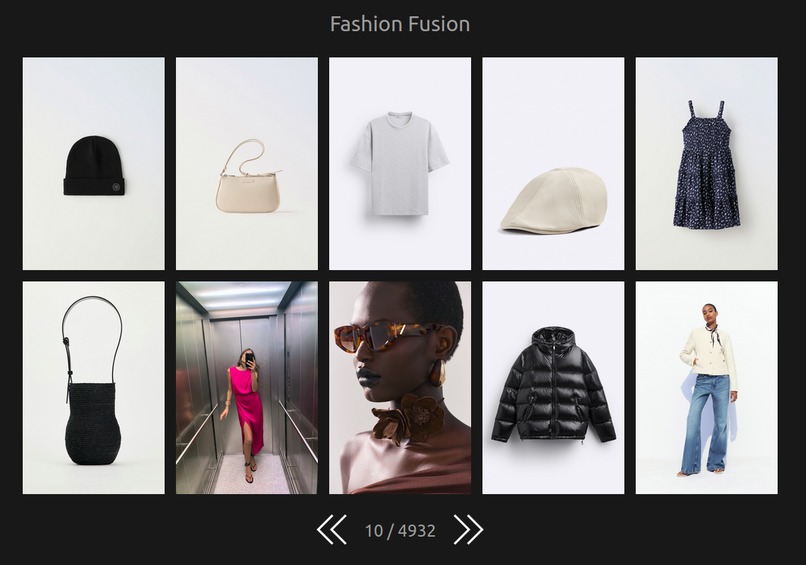
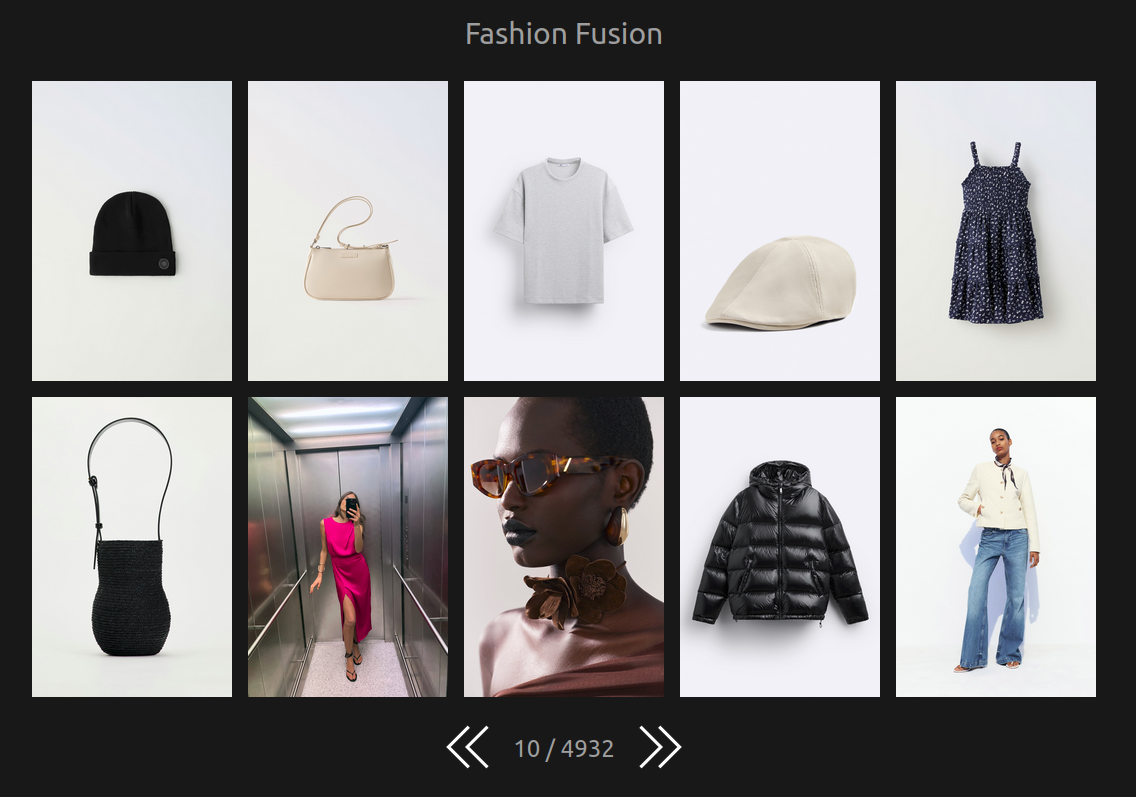
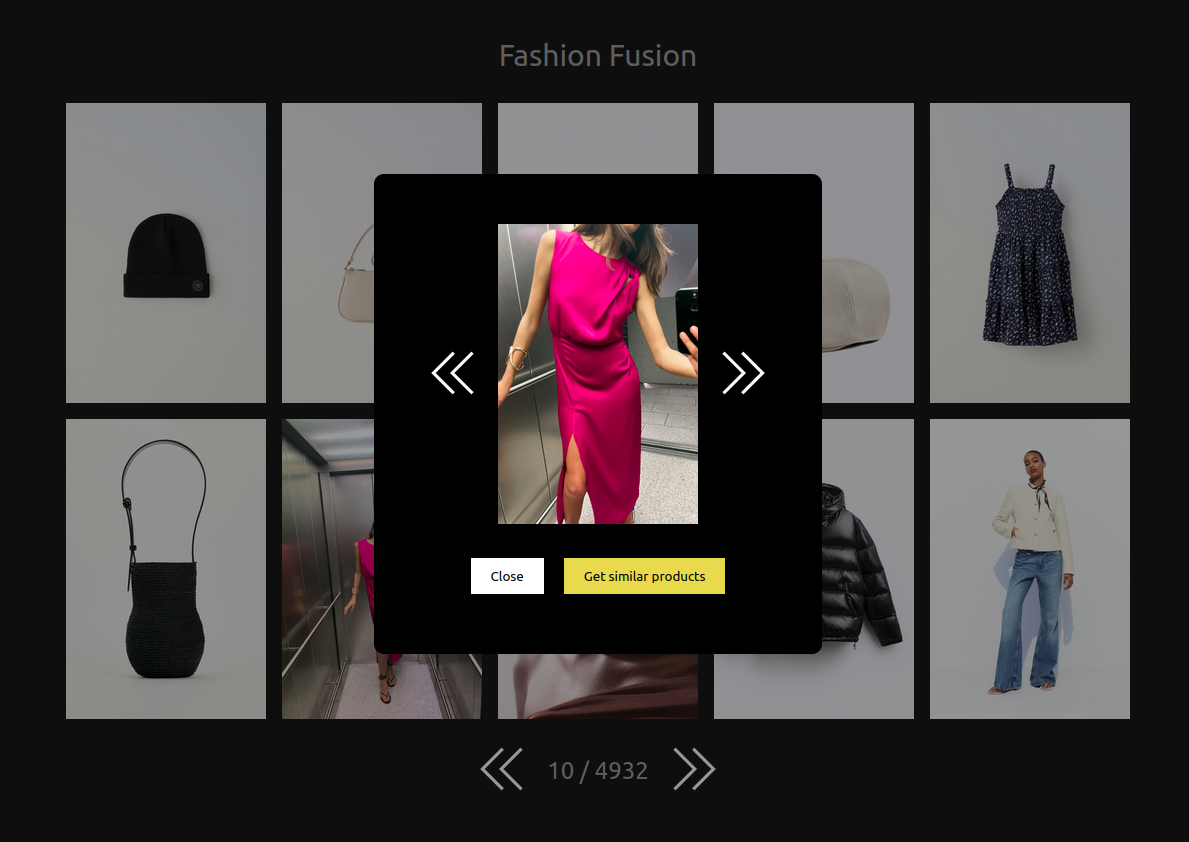
List of items in the database
-
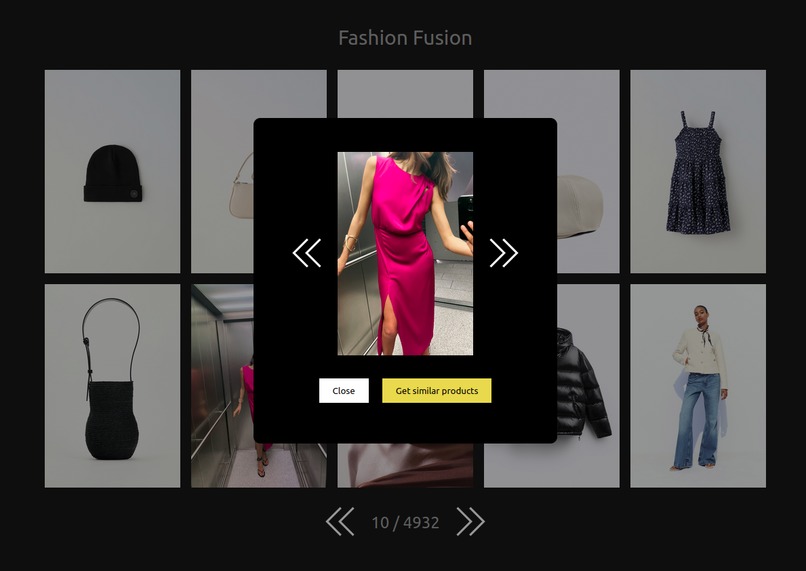
Different variations of an item. The user can navigate to similar images
-
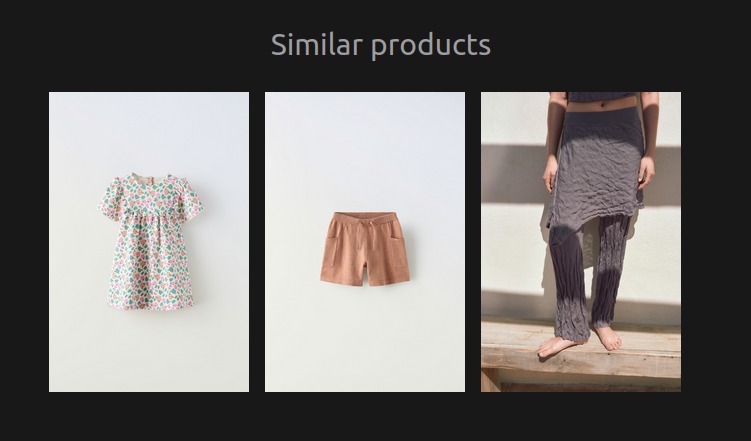
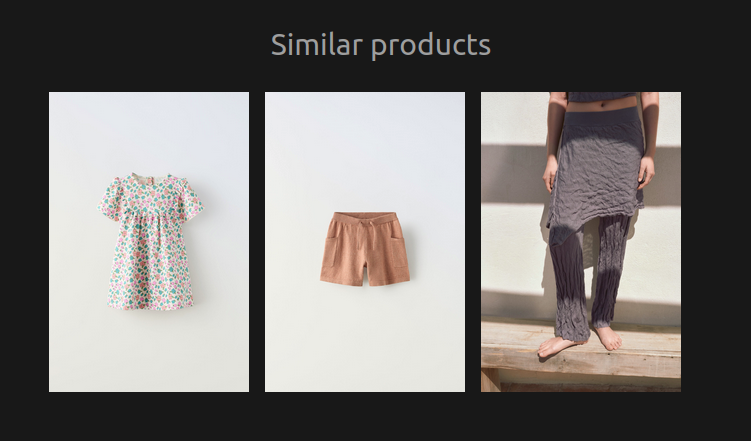
List of items that are similar to the queried item
Good data is like a well-tailored suit – it sets the foundation for success. However, no matter how hard we try, sometimes the wardrobe gets cluttered. That's where Fashion Fusion steps in. Leveraging computer vision and deep learning, it swiftly identifies duplicate clothing items within your inventory. Say goodbye to manual checks and hello to efficiency. With Fashion Fusion, your database stays pristine, saving you time and resources.
Inspiration
We've all had to fight against poor or duplicate data in our past projects, so the idea of being able to clean up a database automatically seemed very appealing.
What it does
The application has a web frontend that displays the items in the dataset. The user can browse through those items and see their images. When the user selects an item, they have the option to view the items that the system considers similar, allowing them to detect possible duplicates.
This is done using image embeddings generated a priori using ResNet. These are compared to the reference item by first searching those sharing the same categories (season, product type...) and then comparing the embeddings using the distance method of choice (e.g. Euclidean) and a defined threshold.
How we built it
We divided the members into 2 teams. One of those teams was responsible for developing the web frontend, while the other focused on gathering the data and developing the deep learning pipeline.
Challenges we ran into
The main challenge we faced was to download and manage such an amount of data. We considered many different alternatives in order to optimize the process of acquiring the required images, since it was our biggest bottleneck.
Accomplishments that we're proud of
We're proud of achieving such a good result in a small time period.
What we learned
We learned a lot about the vue framework, as well as python backends and creating embeddings for images.
What's next for Fashion Fusion
In the future, Fashion Fusion could reduce the amount of interaction with the user, by proactively finding items that could be related, instead of relying on a user to perform that task.


Log in or sign up for Devpost to join the conversation.