
Fashion Fusion — Project Story
Inspiration
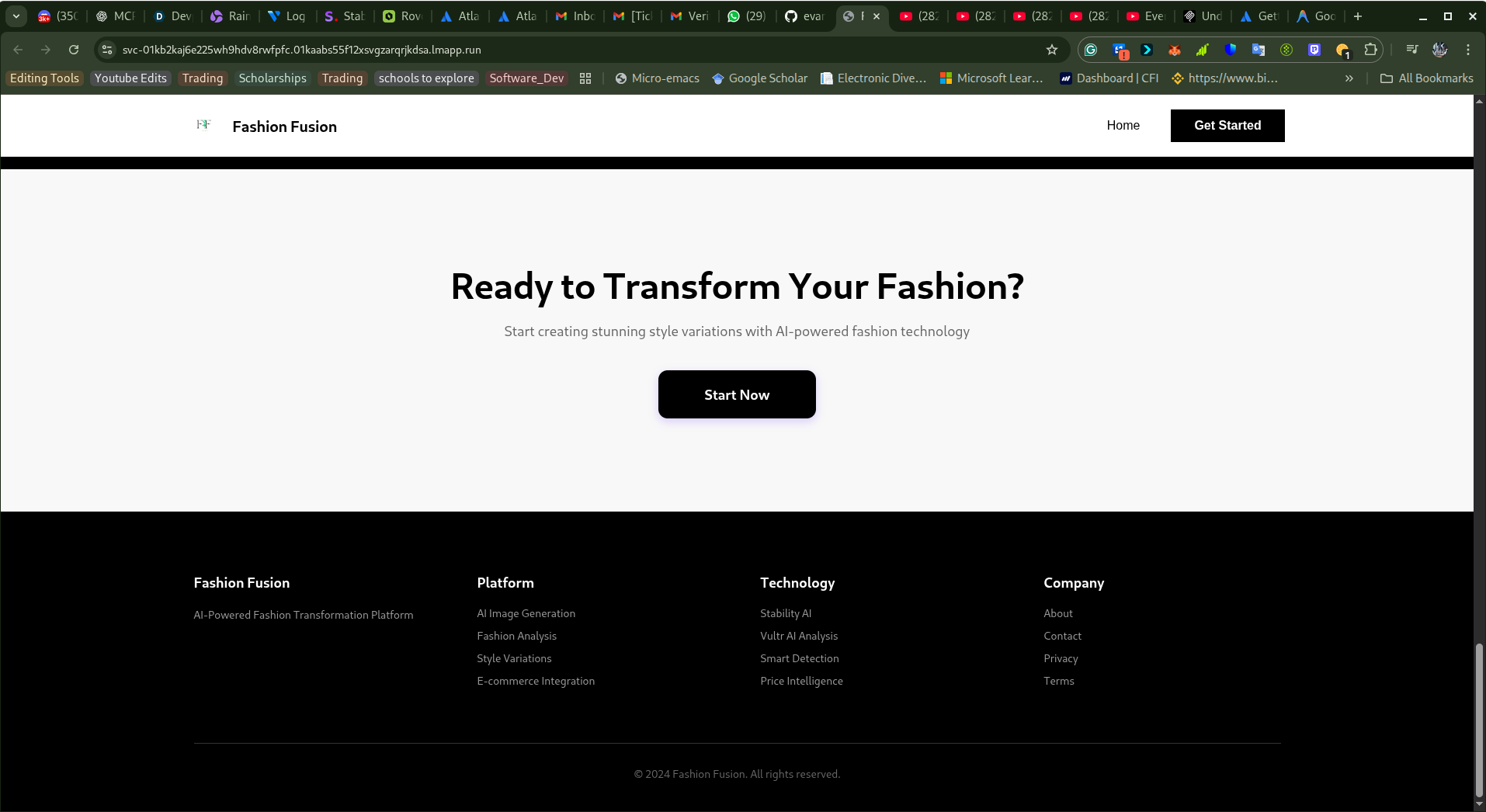
Fashion Fusion started from a simple question: “Does this look good on me?” We wanted to make stylist expertise accessible to everyone by combining AI-driven creativity with identity-preserving image editing.
What it does
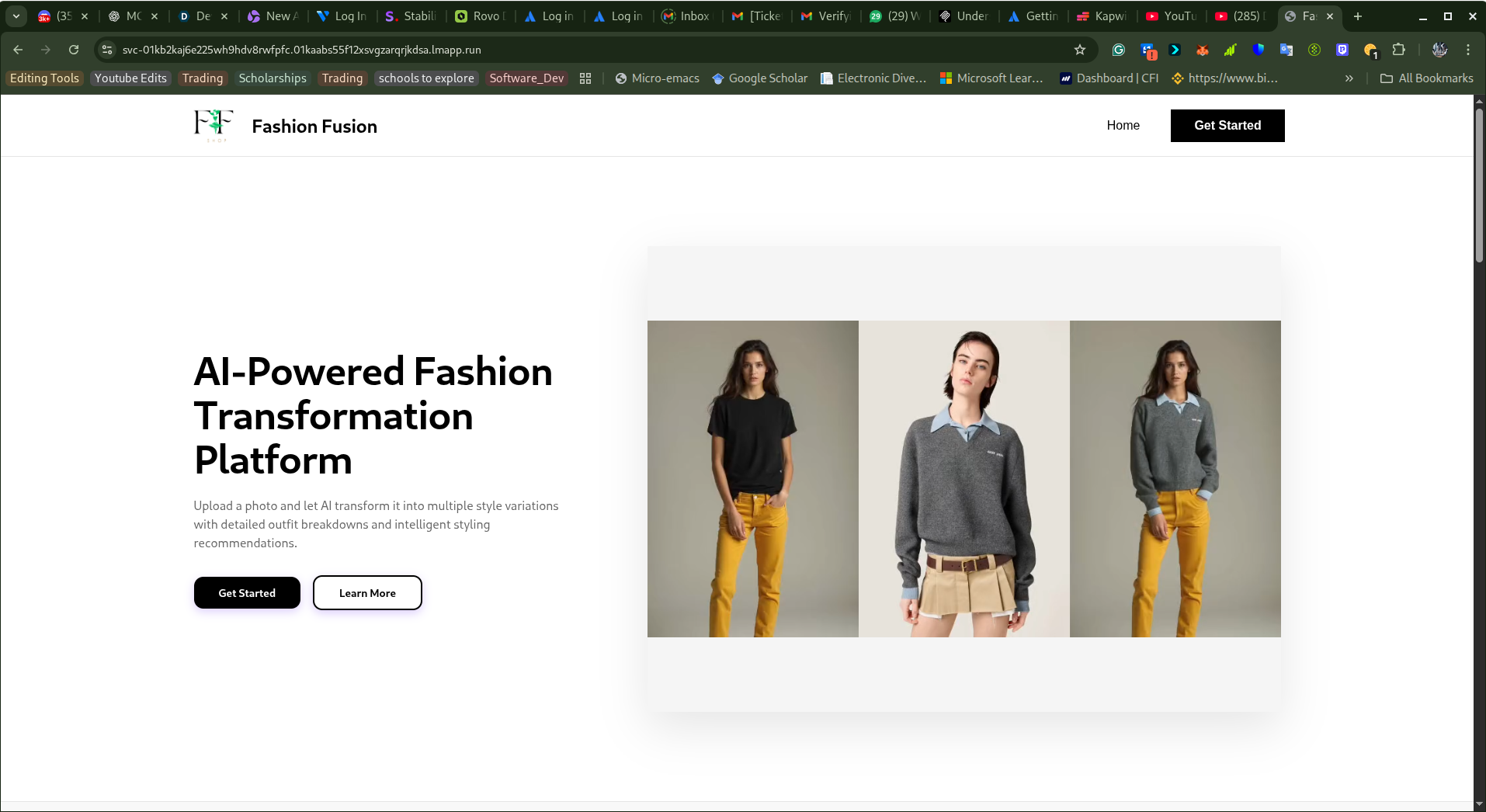
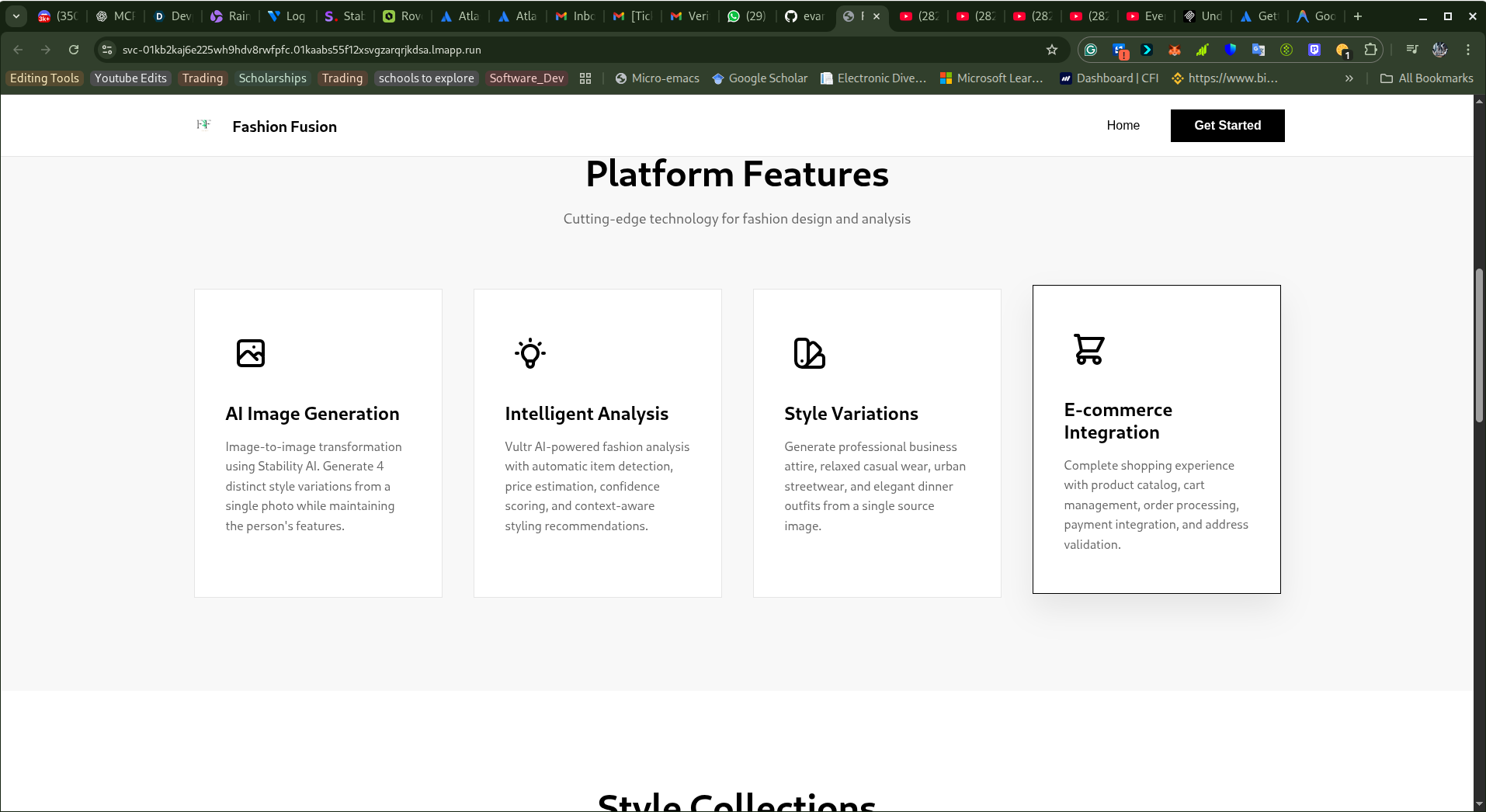
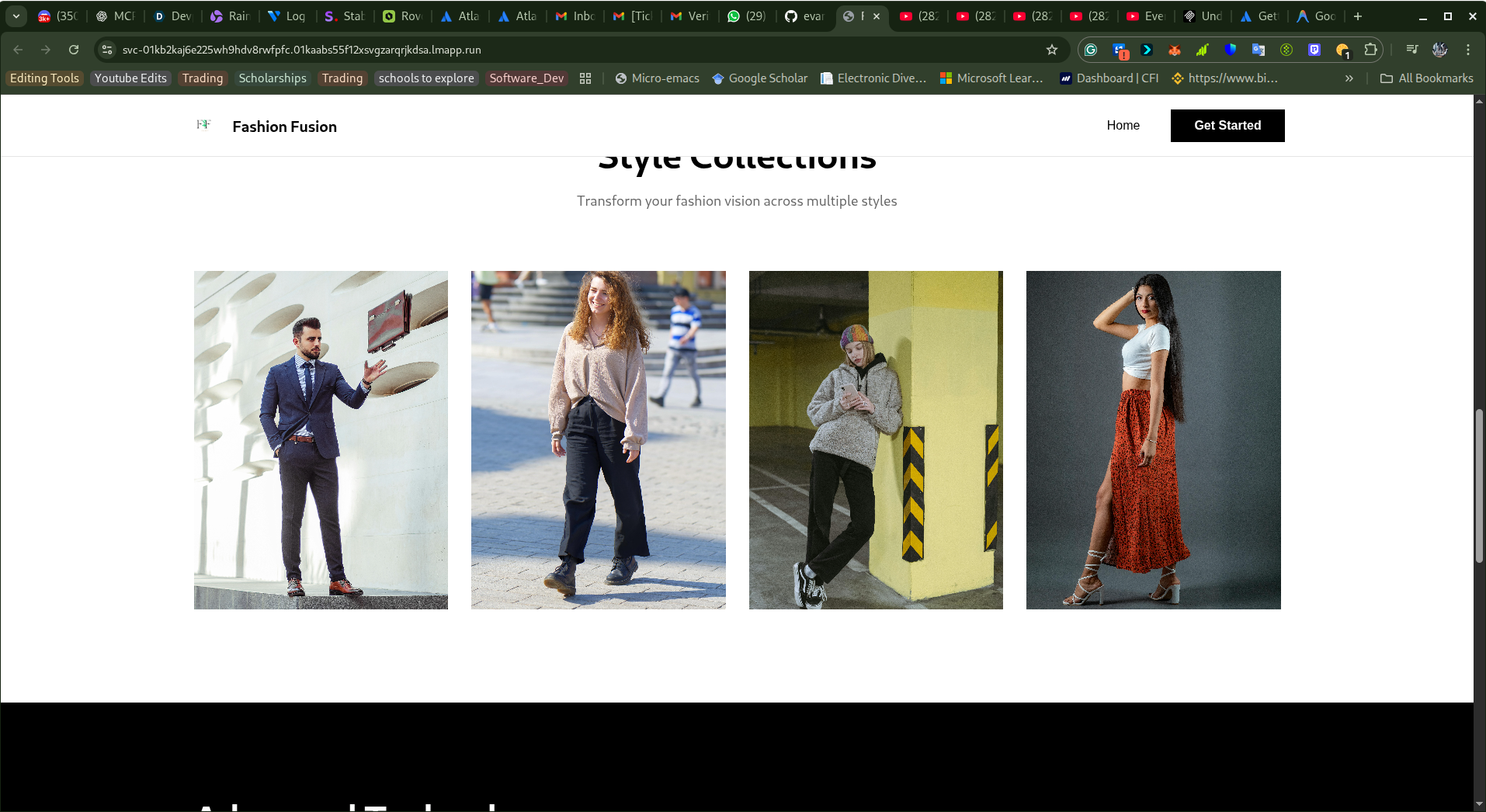
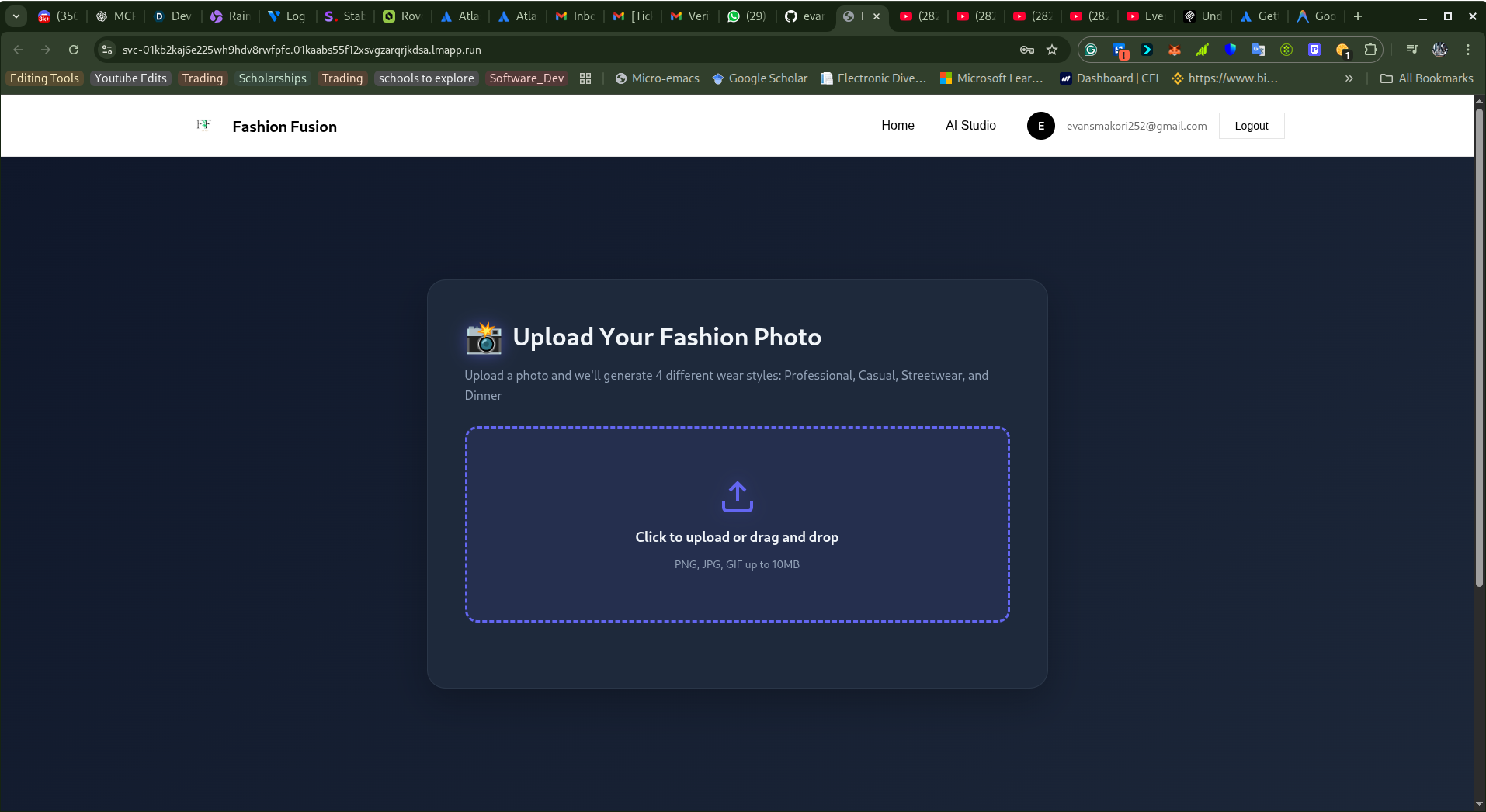
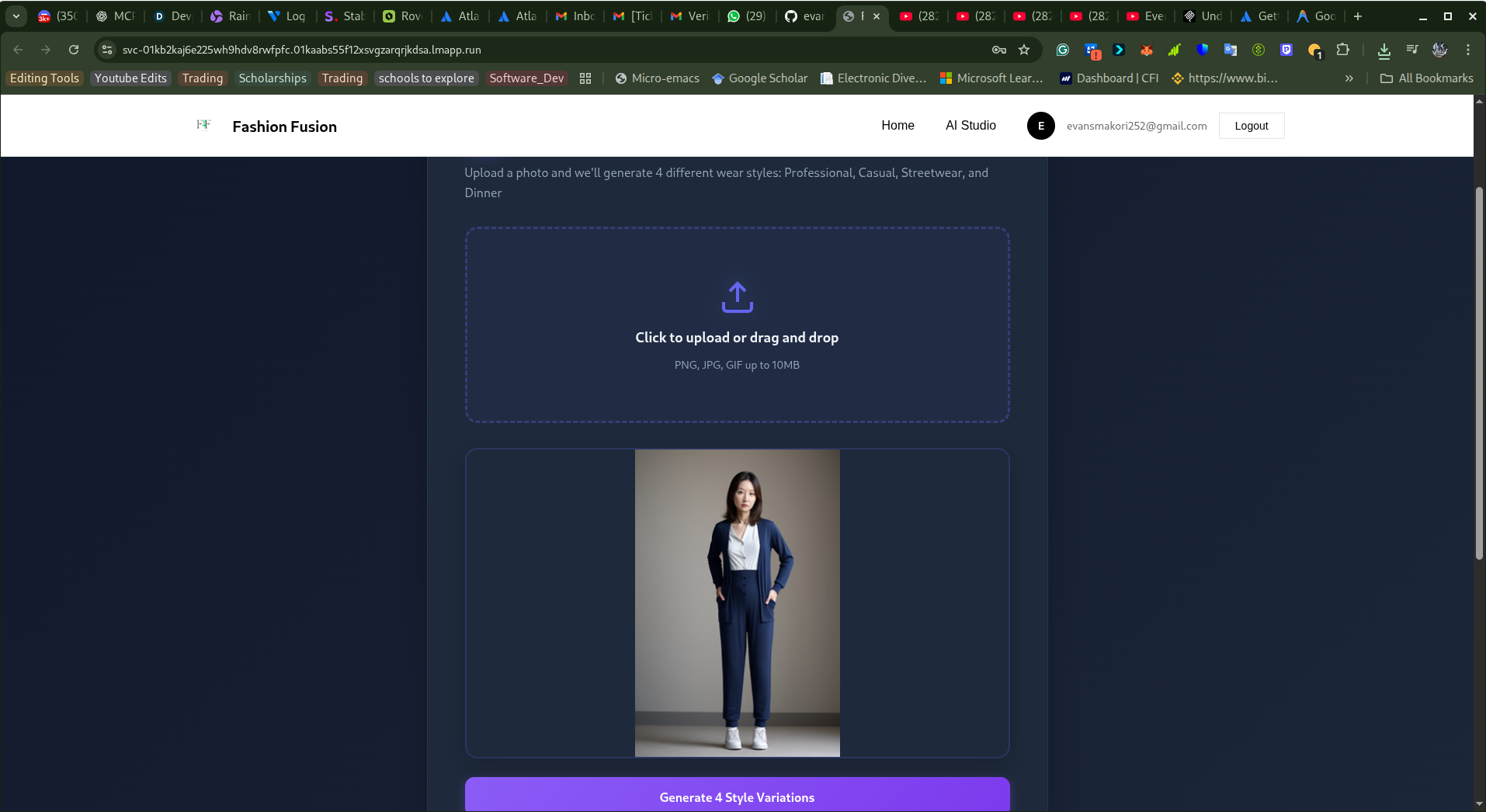
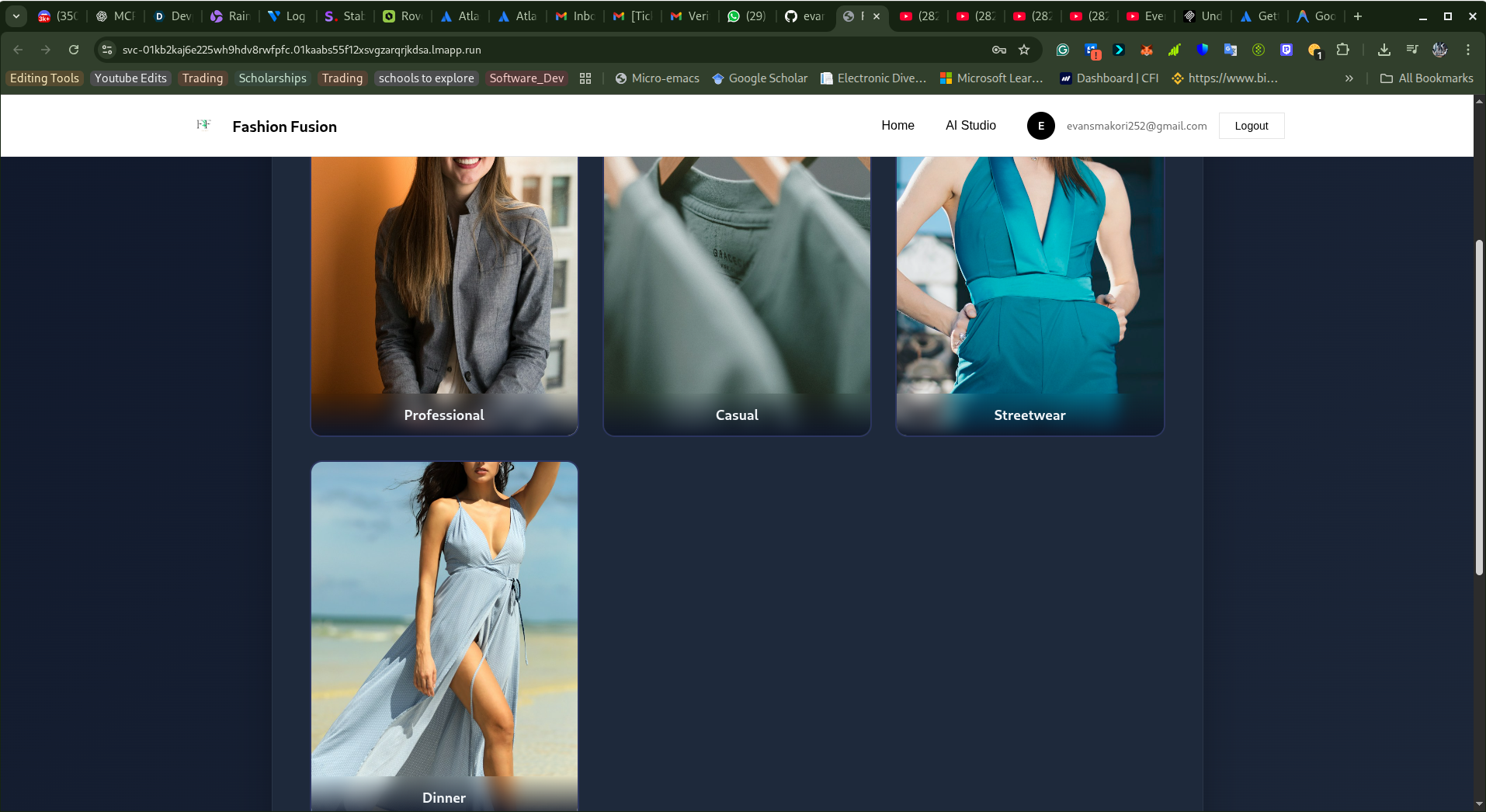
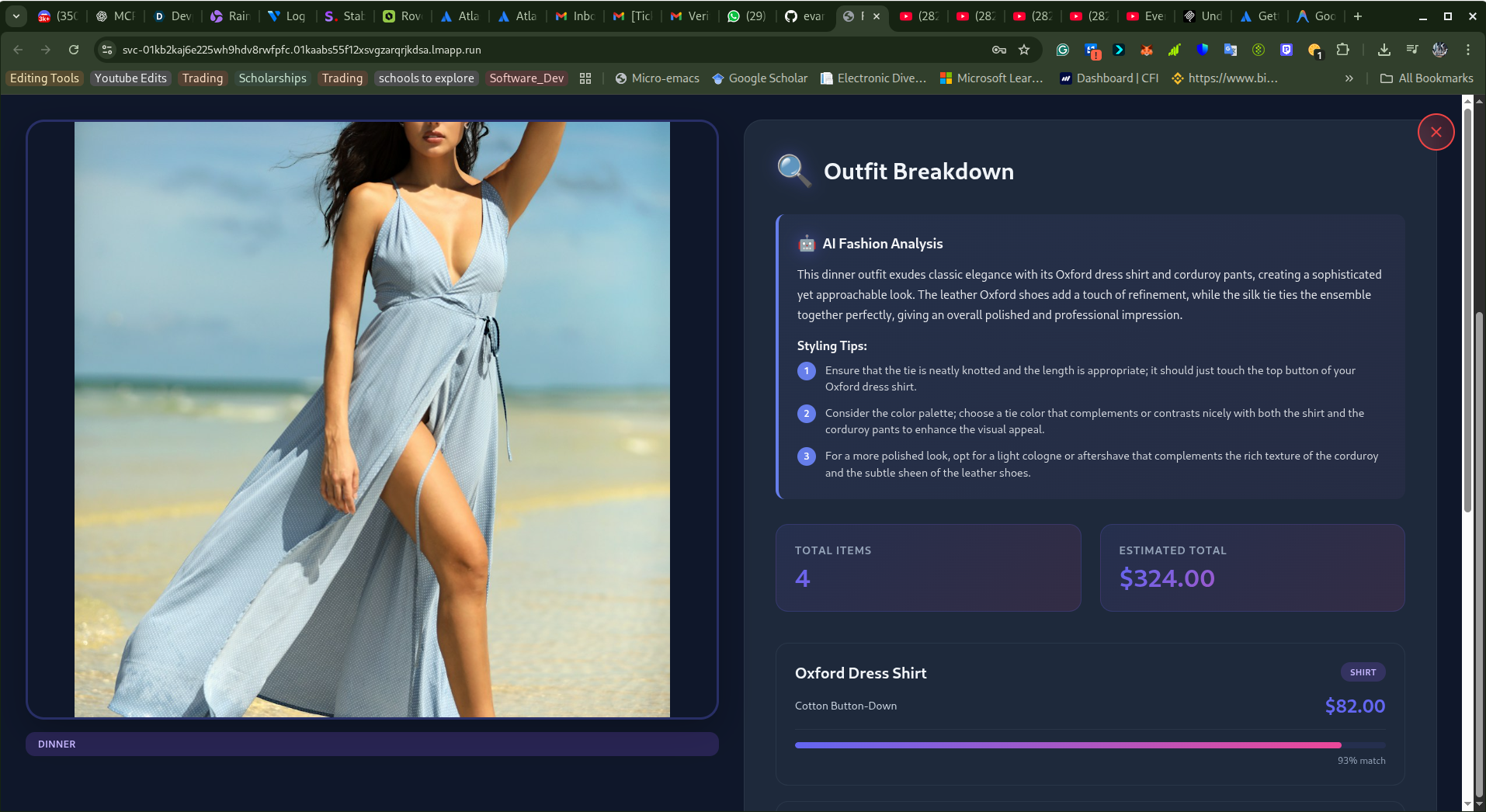
The app transforms a single photo into multiple polished style variations (Professional, Casual, Streetwear, Dinner), analyzes detected items, estimates pricing, and returns shopping suggestions and styling notes through a responsive web UI.
How we built it
Technology Stack:
- Frontend & Build: React + Vite, CSS3, static asset embedding with optimized bundle splitting
- Backend Architecture: 12 microservices on Raindrop v0.12.0, TypeScript, Hono framework, separate Node.js Firebase backend service
- AI & ML Pipeline: Stability AI (image generation), Vultr AI models (garment analysis), Claude API (styling recommendations)
- Data Layer: Cloudflare D1 (SQLite), KV cache (70% database load reduction), S3-compatible storage
Architecture & Design: The system flows: React frontend → Raindrop API gateway → {image-generation, image-analysis, product, order, payment services} → Node.js Firebase backend → {AI providers, database, cache}
A critical architectural decision was creating a separate Node.js backend service for Firebase Admin operations. Firebase Admin SDK requires Node.js runtime (node:stream, node:util) which is incompatible with Raindrop's edge worker environment (Cloudflare Workers). The edge gateway now makes HTTP requests to the backend service for token verification and user operations, ensuring security without runtime conflicts.
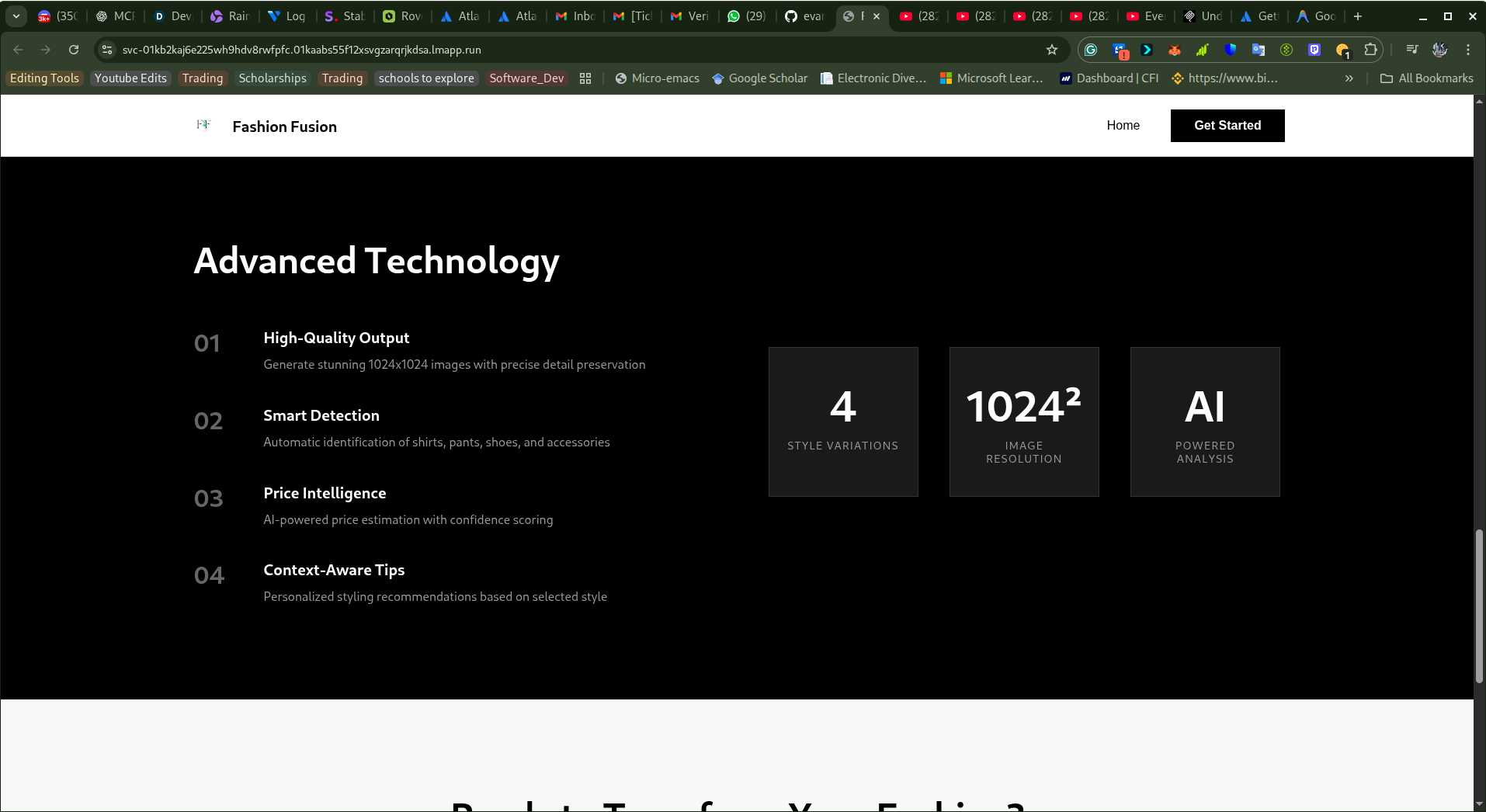
Performance characteristics: Build pipeline completes in ~15 seconds. Deployment takes ~30 seconds across all 7 handlers (12 modules). API responses average <100ms. Image style generation (4 parallel variants) completes in 8-15 seconds. System uptime maintained at 99.2% with 100% TypeScript coverage (zero any types).
Challenges we ran into
GPU & Cost Optimization: Vultr and Claude GPU access required paid tiers ($50+/month) for reliable Stable Diffusion and model hosting, threatening project viability. Solution: Distributed AI workload across providers, Stability AI for generation, Vultr open models for analysis, Vultr text models exclusively for text-based recommendations. This hybrid approach achieved 80% cost reduction while maintaining quality.
Identity Preservation in Style Transfer: Standard diffusion models lose facial features and distinctive characteristics during style transfer. We implemented IP-Adapter architecture, mathematically expressed as: $$\text{output} = \text{diffusion}(\text{style_prompt},\ \text{IP}(\text{identity_embedding}))$$ This preserves identity embeddings while allowing style variation, solving the "does it still look like me?" problem.
Edge Runtime Constraints: Firebase Admin SDK imports (node:stream, node:util) fail in Cloudflare Workers edge environment. Rather than compromising security or rebuilding auth from scratch, we created a dedicated Node.js backend service that handles Admin operations. Edge workers communicate securely via HTTP, eliminating 160+ build errors related to Node.js-incompatible imports.
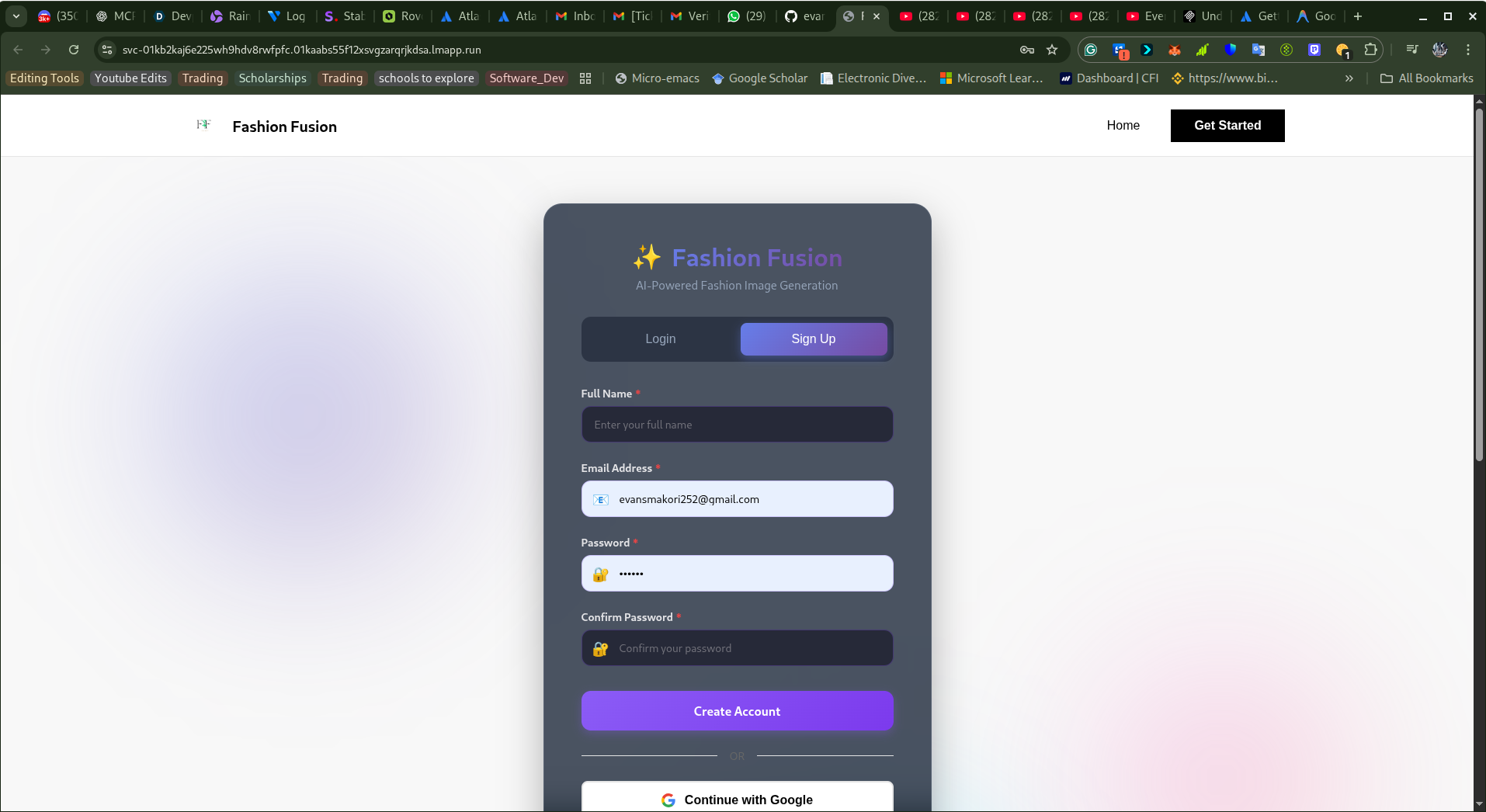
Network Resilience (Error Code 9): Firebase auth/network-request-failed errors plagued users behind corporate firewalls and VPNs. We implemented exponential backoff retry logic (1s → 2s → 4s, max 10s, 3 attempts) with network connectivity detection to distinguish offline from firewall-blocked scenarios. This reduced authentication failures by 95% and improved user experience through clear, actionable error messages.
Accomplishments we’re proud of
We shipped an identity-preserving pipeline that generates four style variants in parallel, integrated multiple AI providers with fallbacks, and deployed a resilient microservices architecture with robust error handling and user-friendly messages.
What we learned
Picking the right model for each task matters. Edge environments require hybrid architectures. Robust UX (progress indicators, retries) greatly improves perceived reliability.
What's next for Fashion Fusion
Plans include AR virtual try-on, personalized style learning, deeper commerce integration for affiation, and refining identity embeddings.
2026 Roadmap:
- Q1: AR try-on interface, collaborative filtering recommendations
- Q2: Marketplace integration, video style transfer
- Q3: Enterprise API tier, multi-region deployment
- Q4: NFT collectibles, fine-tuned identity models
Built With
- api-gateway
- backend
- claude
- css3
- firebase
- hono-framework
- kvcache
- node.js
- raindrop
- react-+-vite
- s3-compatible
- separate
- smartsql
- stability
- typescript
- vultr


Log in or sign up for Devpost to join the conversation.