-
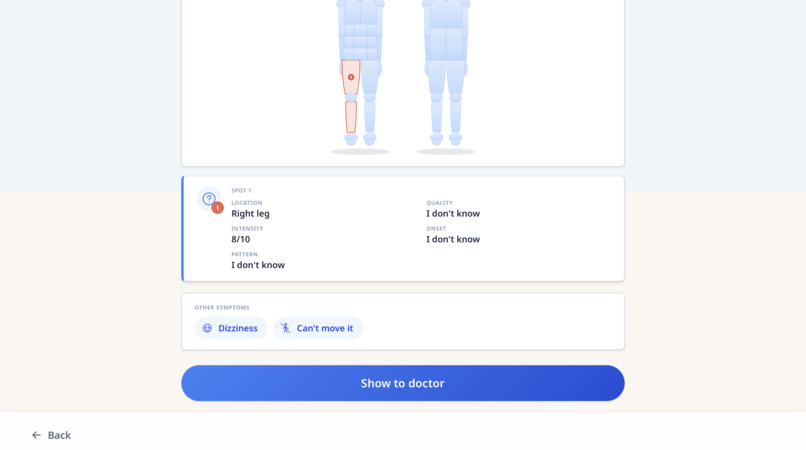
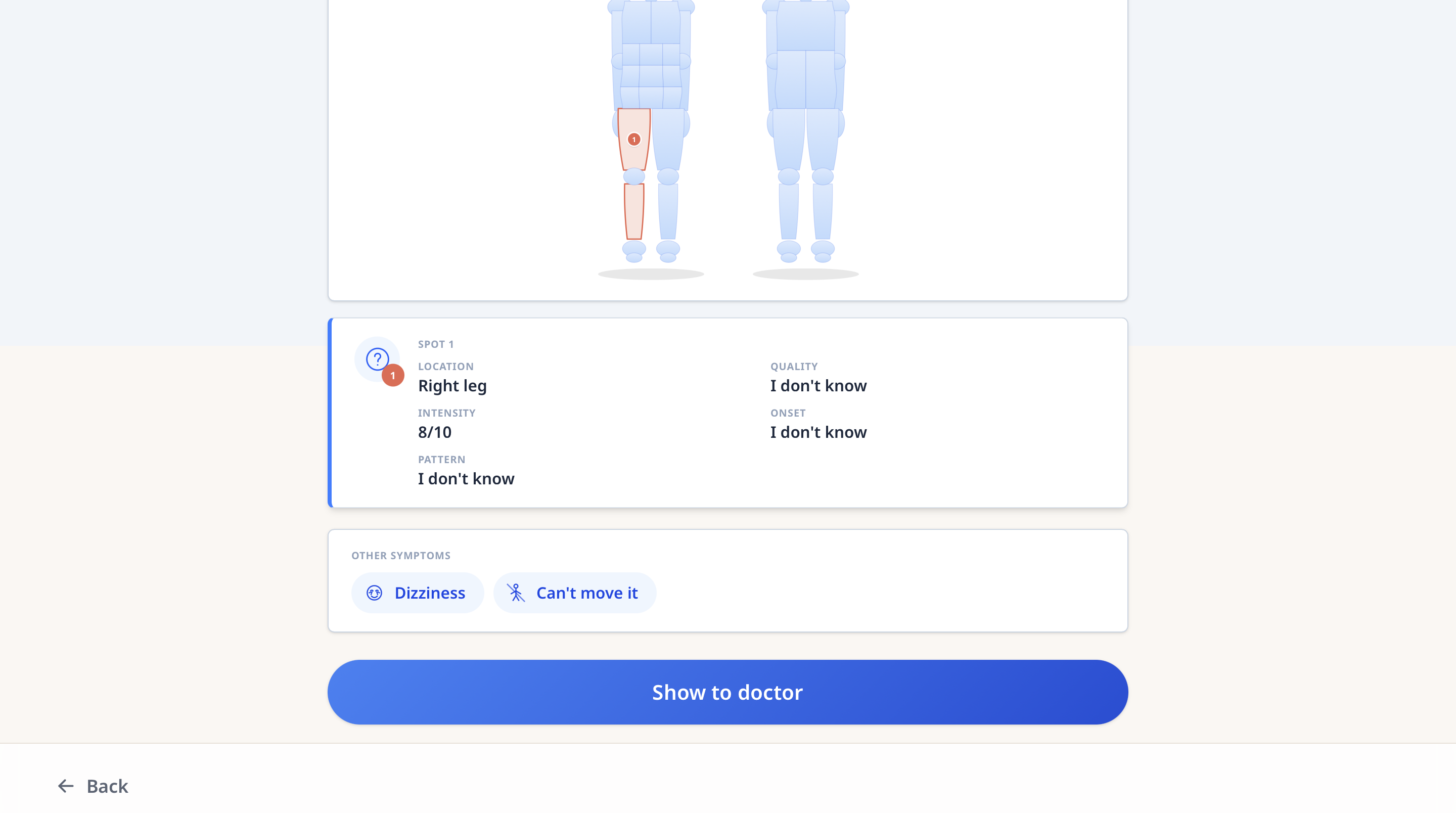
Sending the details for the doctor
-
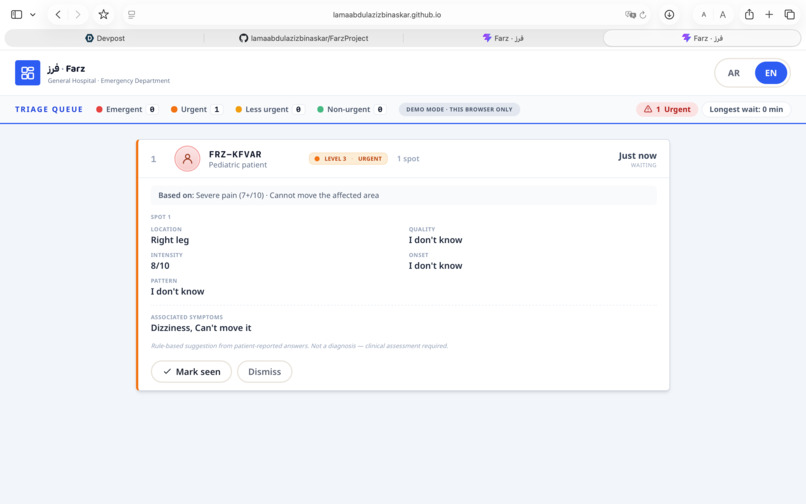
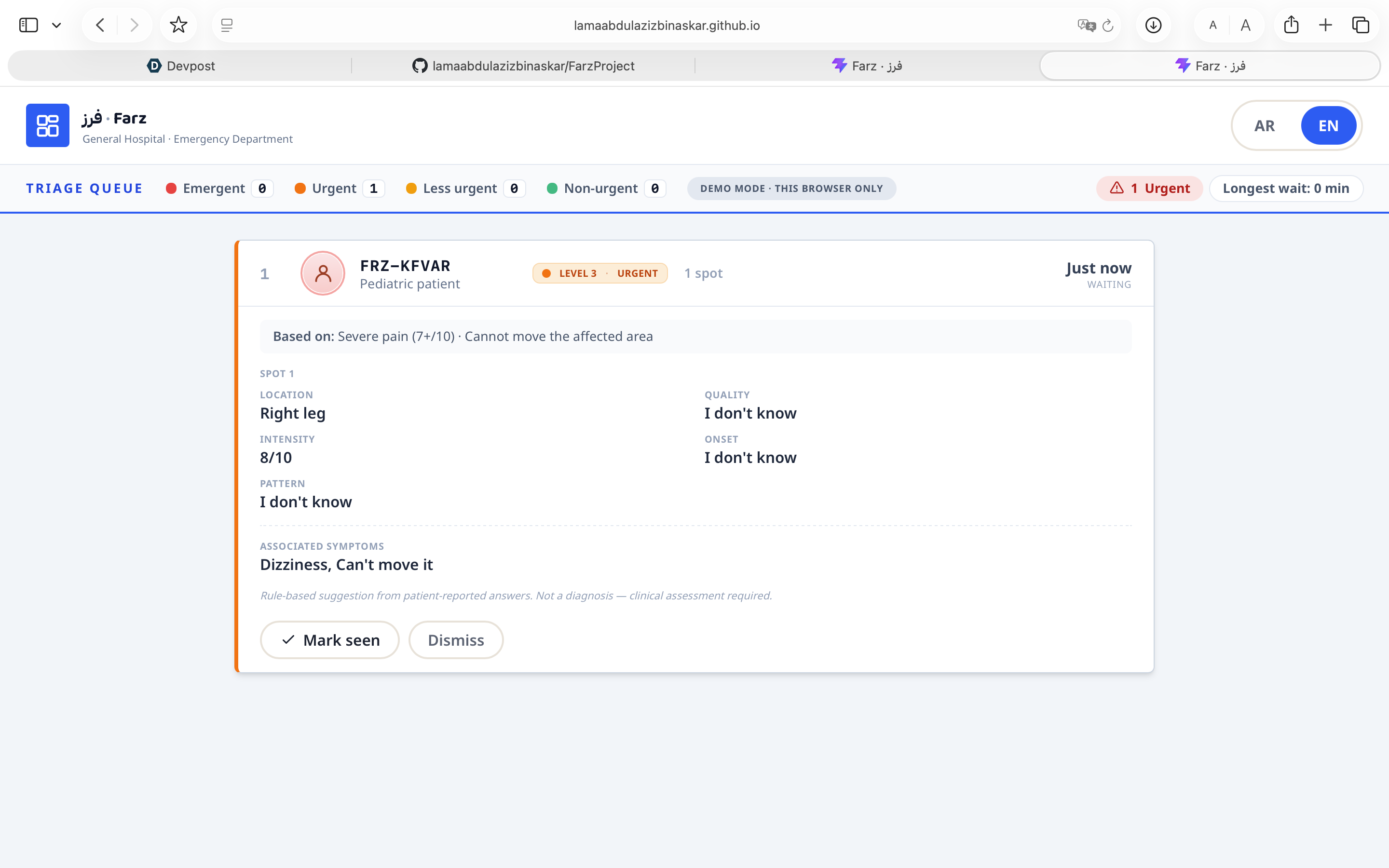
The doctor dashboard page
-
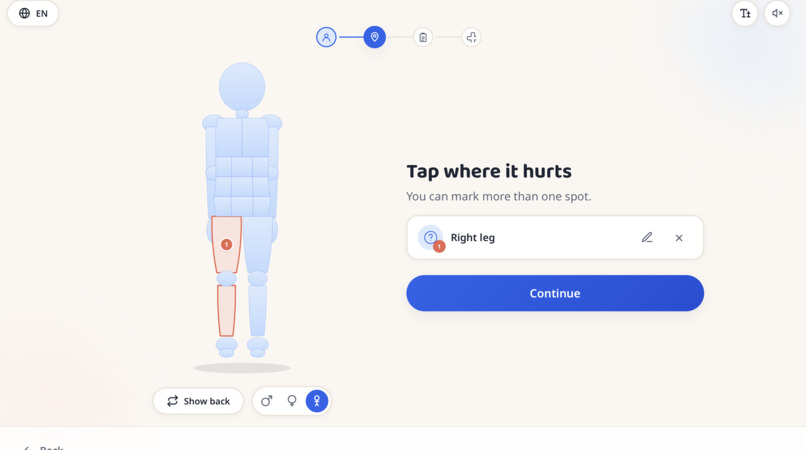
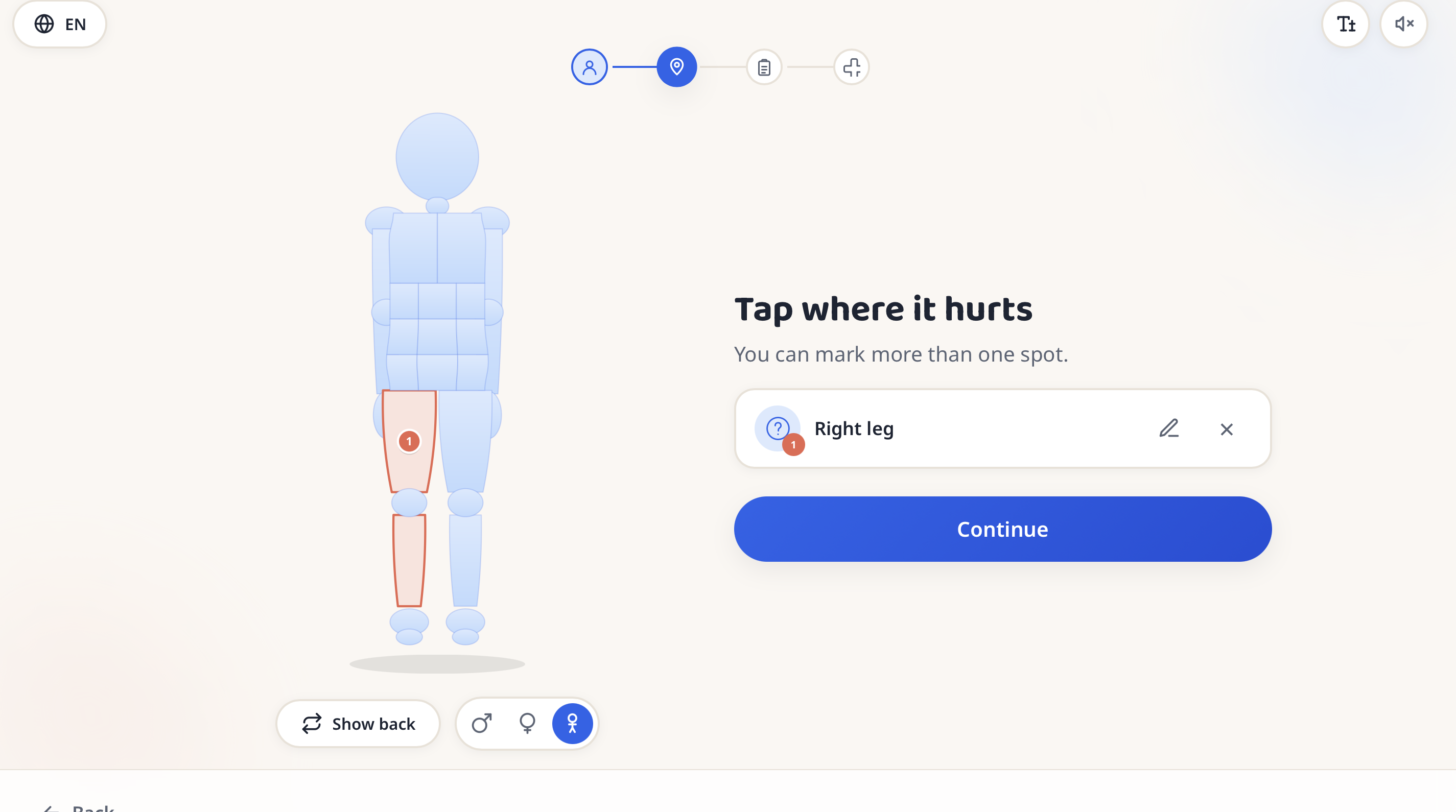
Adding where it does hurt for the patient
-
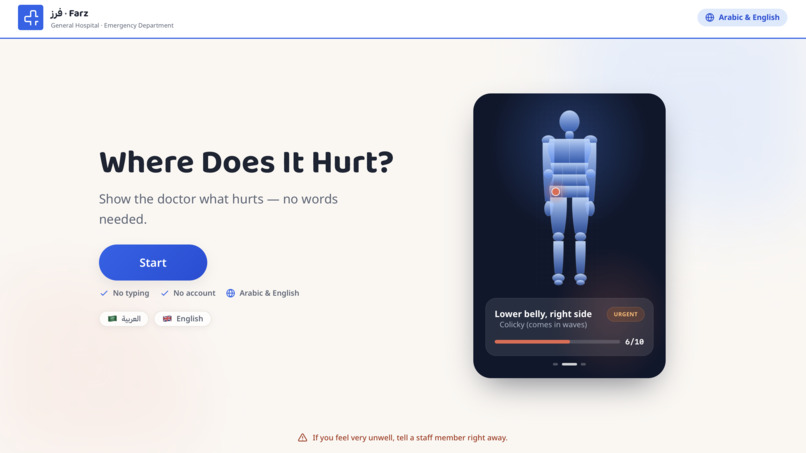
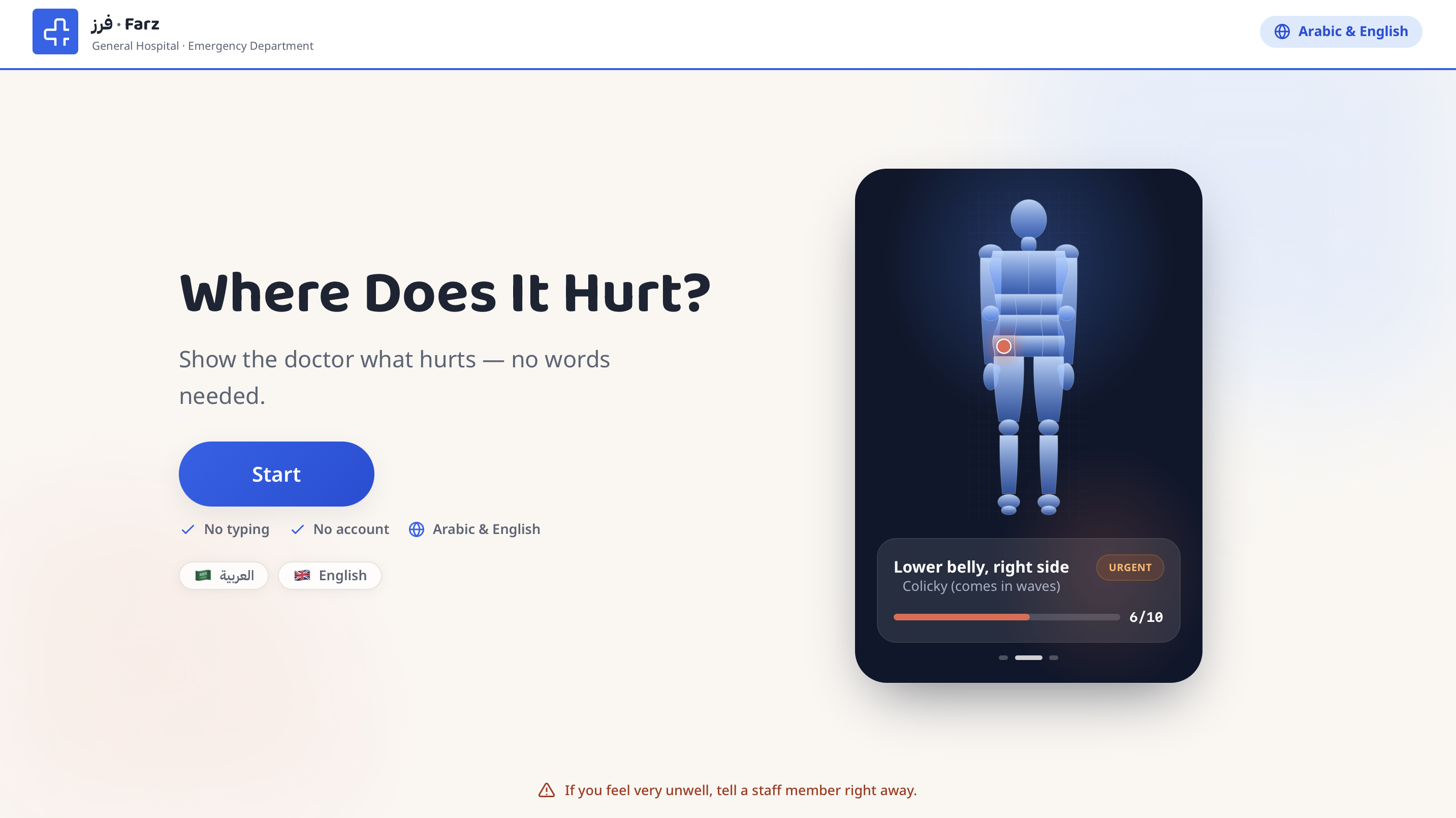
The main page for the patient
Inspiration
In an emergency department, the first question is always the same: where does it hurt?
When the patient can't answer it, everything stops. A four-year-old doesn't have the words for her own body. An elderly patient after a stroke can't find them. A construction worker who speaks neither Arabic nor English has the words — just not ones the nurse understands.
What happens next is improvised and unsafe. Interpreters aren't available at 3 a.m. Family members end up translating intimate medical detail. Staff resort to pointing and guessing, and the result is a vague history for exactly the patients least able to advocate for themselves.
So we asked a design question instead of a medical one: what if the patient never had to use words at all?
What it does
Farz (فرز — Arabic for triage) is a wordless intake. The patient never types a single character.
- Tap where it hurts on an anatomical body map — front and back
- Answer four questions with pictures — what it feels like, how strong, since when, how it comes
- Hand the phone to the clinician, who sees a structured chart in both languages at once, plus a triage priority with the reasons behind it
The clinician also gets a live board where waiting patients are ordered by acuity first, longest wait second.
How we built it
The body map is the product, so it got the most attention. It's hand-built SVG generated from a proportion model — not a traced illustration. Torso silhouettes are interpolated between anatomical landmarks with a cosine ease so the outline curves naturally, and limbs are tapered tubes. That model is what makes three different figures possible from one system.
Four decisions did the heavy lifting:
Clinical regions, not blobs. The abdomen is split into the standard nine-region grid — epigastric, umbilical, hypogastric, hypochondriac, lumbar, iliac — following the silhouette rather than sitting on it as a flat rectangle. Joints like the elbow and knee are their own regions, because "my elbow hurts" is a different complaint from "my arm hurts."
A child is not a small adult. Male, female, and child figures have genuinely different proportions — the child has a far larger head relative to the body, narrow shoulders, short soft limbs. Selecting "my child" switches the figure automatically. A parent pointing at a toddler's belly on an adult silhouette lands in the wrong place.
The vocabulary follows the body. Pain qualities change with the region. The abdomen offers colicky and cramping (مغص، تقريص); the head offers throbbing and pressure (نابض، ضغط). Fewer options, better answers, more useful to the clinician.
Two registers, not two translations. The patient picks "around the navel." The chart records Umbilical region / المنطقة السرّية. Same data, rendered simultaneously in plain language for the patient and clinical terminology for the clinician.
Triage is deliberately rule-based and transparent, modelled on the five-level CTAS scale, and it always shows the reasons that produced the level:
// Level 2 — Emergent
if (extras.includes('breathing')) reasonKeys.push('triage.reasons.breathing');
if (chestPainSevere)              reasonKeys.push('triage.reasons.chestPain');
if (maxIntensity >= 10)           reasonKeys.push('triage.reasons.maxPain');
if (reasonKeys.length > 0) return { level: 2, reasonKeys };
What we learned
Validate domain assumptions against authoritative references, not intuition. Our most serious bug looked completely correct until we held it next to a real clinical diagram.

There’s a difference between believing a design is accessible and proving it. Computing contrast ratios and measuring targets found failures our eyes had passed straight over.

Constraints clarify design. “No text input, in any language, for anyone” eliminated a hundred mediocre options and left a few good ones.

Transparency beats sophistication in clinical tools. A simple rule that explains itself is more useful to a nurse than a clever model that doesn’t.

What’s next for Farz
Clinical validation with emergency staff — the triage rules need real-world review before going anywhere near a patient
More languages, done properly — with medical translators, not machine translation
Hospital system integration so intakes flow into the patient record instead of a standalone board
Pediatric-specific scales, like FLACC, for children too young even to tap
Offline-first, so it works in an ambulance or a field clinic with no connection
Built With
- css
- express.js
- github
- node.js
- react
- react-i18next
- svg
- tailwindcss
- typescript
- vite
- web-speech-api
- zustand

Log in or sign up for Devpost to join the conversation.