-
-
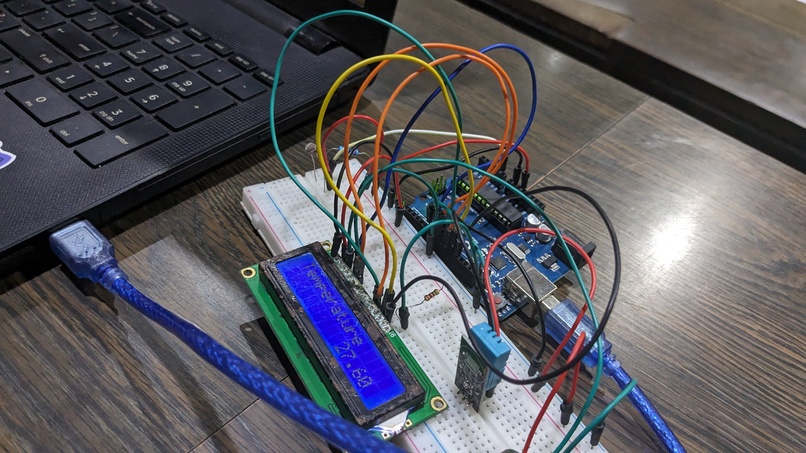
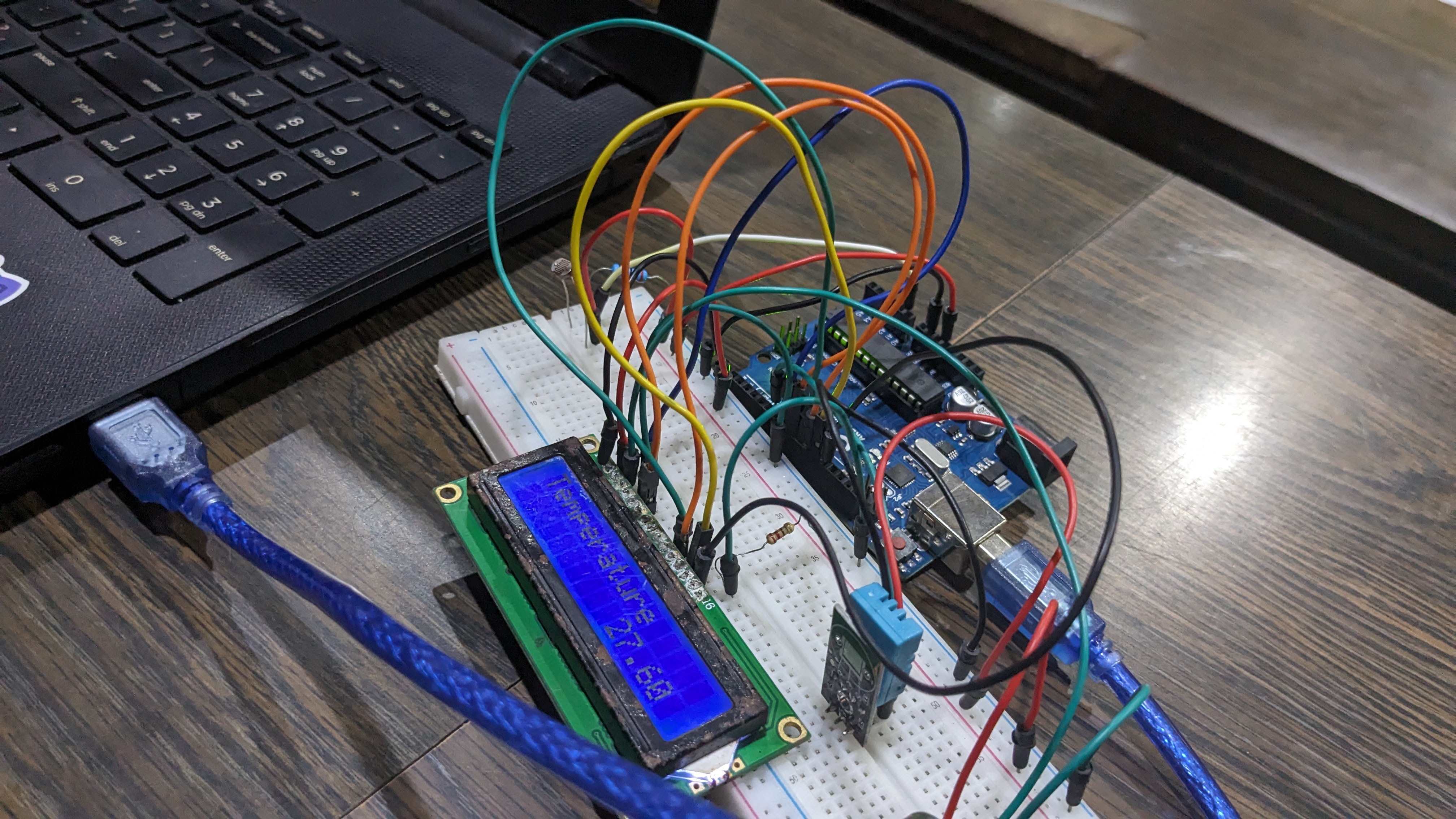
The Hardware prototype of FarmTracka showing the Temperature as read by the DHT sensor
-
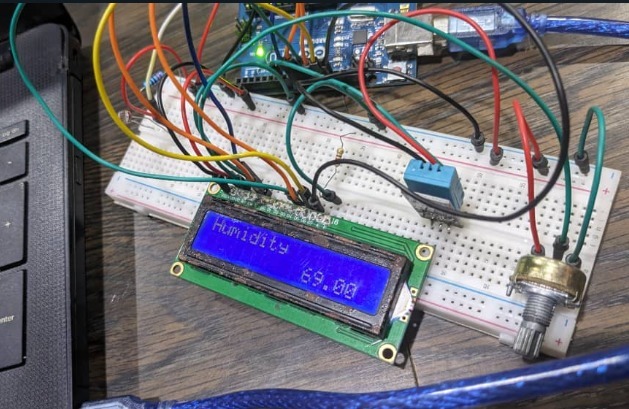
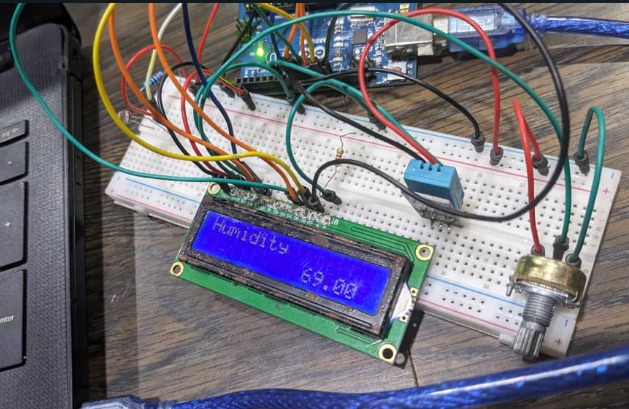
The Hardware prototype of FarmTracka showing the Humidity as read by the DHT sensor
-
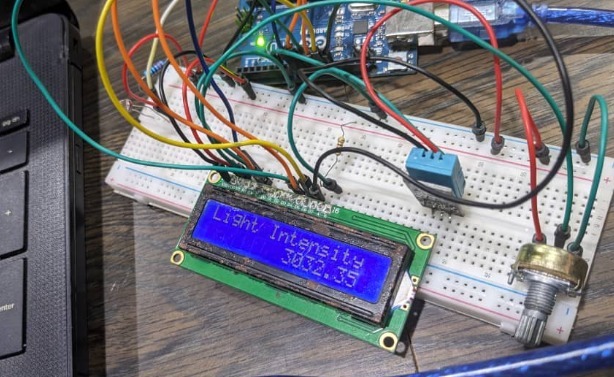
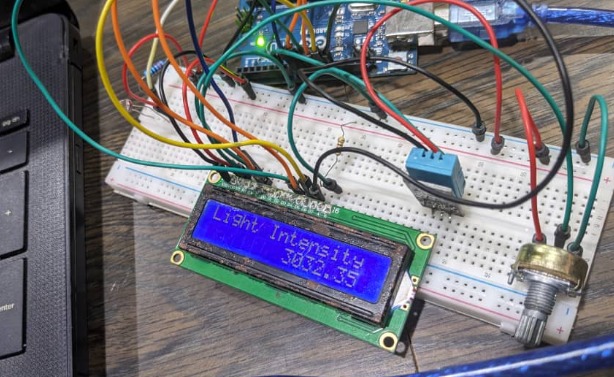
The Hardware prototype of FarmTracka showing the Light Intensity as read by the photoresistor sensor
-
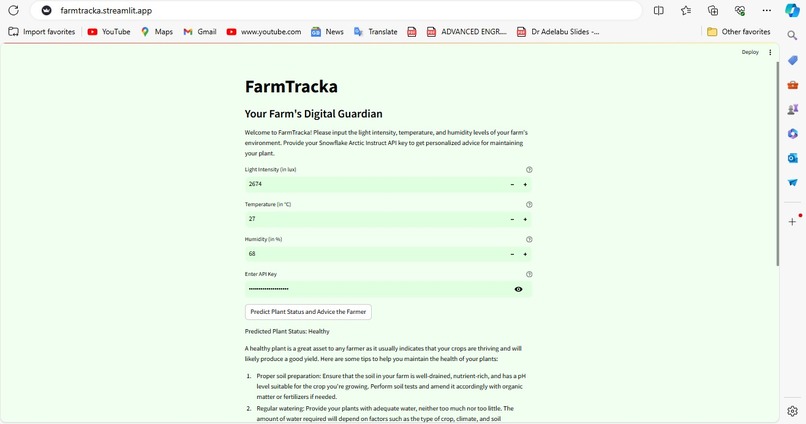
FarmTracka: Your Farm’s Digital Guardian
Aim: Improving Farmer’s Yield using Machine Learning/Artificial Intelligence and Embedded Systems
Inspiration
Salim remembers his aunt’s final days. He recalls that although she was a farmer, a profession often described with reference to its noble status, her last days were marked with a financial struggle as she was burdened by debts. The wilted leaves in her farmland tell the tales of her farm’s struggles. This alongside the team’s passion for solving problems around us was the motivation behind building this solution called FarmTracka.
Our team, united by a shared vision and a burning desire for innovation, embarked on a journey that we believe can help farmers like Salim’s aunt and shape the future of agriculture in our beloved nation. Furthermore, we were guided by the beacon of the United Nations Sustainable Development Goals with the mission to realize the vision of a sustainable and equitable future for all. Inspired by Goal 2: Zero Hunger and Goal 9: Industry, Innovation, and Infrastructure, we committed ourselves to crafting a solution that would not only enhance crop management and productivity but also foster resilience and inclusivity within rural communities and beyond.
Finally, we understand that AI is currently at the most open it has ever been, and as such, the onus is us all to leverage AI to solve the problems around us.
What it does
FarmTracka is a comprehensive agricultural monitoring platform that leverages sensor data and machine learning algorithms to predict plant health and provide actionable recommendations to farmers, ultimately enhancing crop yield and sustainability. By integrating hardware sensors, data analytics, and AI-driven insights, FarmTracka empowers farmers to make informed decisions and optimize agricultural practices for improved crop management and productivity.
How we built it
Our project's journey commenced with meticulous planning and research, driven by a shared commitment to revolutionizing agriculture through technology. Leveraging our collective expertise in electronics, programming, and data science, we carefully selected the hardware components essential for our mission.
At the core of our system lies the Arduino Uno microcontroller—a versatile platform serving as the foundation of our sensor network. Complementing this, we integrated a suite of sophisticated sensors, each meticulously chosen to capture crucial environmental data for plant health monitoring. These included the DHT11 Temperature and Humidity Sensor for climate monitoring, a Light Intensity Sensor (commonly known as a Photoresistor or LDR) for ambient light measurement, and an LCD screen for real-time data visualization.
With resistors, wires, and a breadboard facilitating seamless circuit connections, our hardware setup evolved into a robust sensor network capable of capturing, processing, and transmitting essential data points for informed decision-making in agriculture. Simultaneously, we trained a machine-learning model using the data obtained from the hardware prototype’s setup. Using Python, we fine-tuned our model architecture to achieve optimal performance, even initially training multiple models and only picking the best-performing one - the RandomForest Classifier.
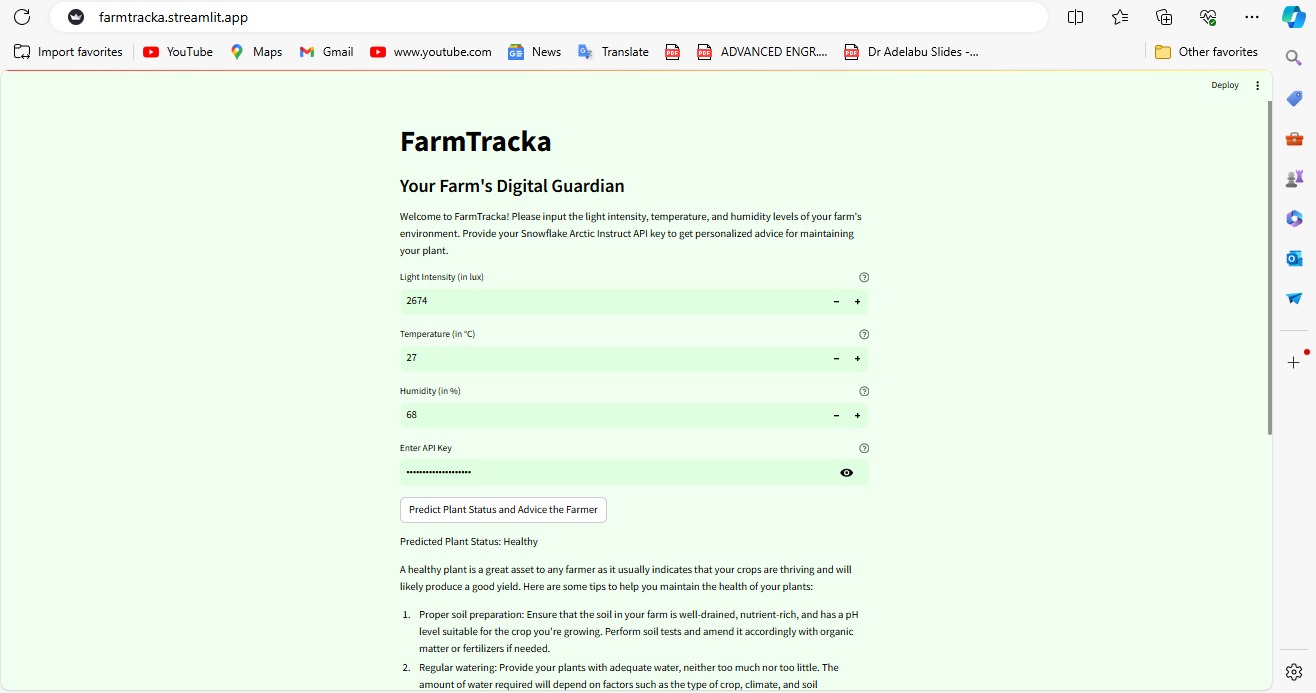
In parallel, we designed what we have since referred to as the hardware part of the solution. To enhance intelligence and responsiveness, we integrated the Snowflake Arctic— Snowflake's truly open large language model that pushes the frontiers of cost-effective training and openness such that the farmer could have a recommendation/call to action based on the status of their plant.
Challenges we ran into
Our journey was not without its trials—each obstacle was a testament to the resilience of our team and the depth of our commitment to overcoming adversity. As with any group project, we encountered a number of challenges that tested our problem-solving skills and perseverance, pushing us to innovate and adapt in the face of adversity.
One significant challenge we faced was reconciling our team's diverse skill sets and perspectives to ensure effective communication and collaboration. With both of us spread across different locations, coordinating tasks and managing time constraints became a herculean task that required careful planning and coordination. Technical hurdles also seemed to loom large on our path, demanding ingenuity and resourcefulness at every turn. Optimizing the performance of our machine-learning model also proved to be a formidable task, requiring creative solutions and meticulous fine-tuning. Yet, our persistence paid off as we achieved remarkable accuracy—>90% —with our chosen model, the random forest algorithm. But perhaps the greatest challenge lay in using the photoresistor — a seemingly innocuous sensor tasked with measuring light intensity in terms of relative resistance. Converting these readings into lux — the standard unit of illuminance—proved to be a daunting task, requiring a deep dive into calibration and data manipulation. Yet, with determination and perseverance, we cracked the code, unlocking the true potential of our sensor network to accurately capture environmental nuances in real-world agricultural settings.
Amidst these technical and logistical challenges, our team's diversity emerged as a source of strength, with each member bringing a unique perspective and expertise to the table. Hailing from diverse backgrounds across Nigeria, our shared commitment to our common goal served as a unifying force, driving us forward in our quest to empower farmers with actionable insights and transform agriculture in our nation.
Accomplishments that we're proud of
The team places a premium on innovation, and as such, one accomplishment that we are both proud of is that we thought to work on something this innovative.
Also, in our early meetings, a common fear we both shared was the possibility of having an idea this good and due to one challenge or the other, not getting it out there. As such, the biggest accomplishments for the team came when the solution was deployed.
What we learned
The biggest lesson in my opinion was realizing how amazing Streamlit as a technology is. I remember Kamal casually saying "Whoa, God bless whoever came up with this technology as an idea."
Also, at this point, we had understood the problem statement and what the solution we were trying to solve looked like - the next phase was researching and learning so much along the way. Each twist and turn brought forth a wealth of knowledge and discovery—a testament to the transformative potential of artificial intelligence (AI) and the Internet of Things (IoT) in reshaping agriculture. As we delved deep into hardware integration, sensor calibration, and machine learning model development, we discovered the profound impact these technologies wielded in revolutionizing farming practices and by extension, the world. Through rigorous experimentation and especially the feature engineering phase, we witnessed firsthand the remarkable capabilities of machine learning algorithms in detecting patterns, forecasting outcomes, and empowering farmers with actionable insights to optimize crop management practices.
But our journey didn't stop there. Intertwined with the capabilities of AI was the transformative potential of IoT—a network of interconnected sensors, devices, and data streams that brought our vision of smart agriculture to life. From the temperature sensors to the monitoring of humidity levels, each component of our IoT ecosystem served as a sentinel, vigilantly tracking environmental conditions and providing real-time information.
What's next for FarmTracka
After successfully developing FarmTracka, the next steps would involve:
Field Testing and Validation: Deploying FarmTracka in real farming environments to validate its effectiveness and gather feedback from farmers.
Iterative Development: Continuously refining and improving the solution based on feedback received during field testing. This could involve enhancing predictive models, optimizing hardware components, and refining user interfaces.
Scaling Up: Expanding the reach of FarmTracka to serve a larger number of farmers across Nigeria and potentially beyond. This could involve partnerships with agricultural organizations, government agencies, or private sector entities.
Community Engagement: Engaging with farming communities to raise awareness about FarmTracka and provide training and support for its use. This could involve organizing workshops, demonstrations, and educational campaigns.
Overall, the future of FarmTracka involves a combination of continued development, testing, and collaboration to realize its full potential in improving farmer yields and promoting sustainable agriculture in Nigeria and beyond.
Built With
- arduino-ide-for-microcontroller-programming
- arduino-uno-board-as-a-microcontroller
- machine-learning
- python
- streamlit


Log in or sign up for Devpost to join the conversation.