

Inspiration
We were inspired by a video of a start-up company that created a weed-removal robot using a mini flamethrower. This sparked an idea for us to iterate on that solution and develop a high-powered laser to destroy the weeds. The laser would vaporize and dry out the weeds effectively.
What it does
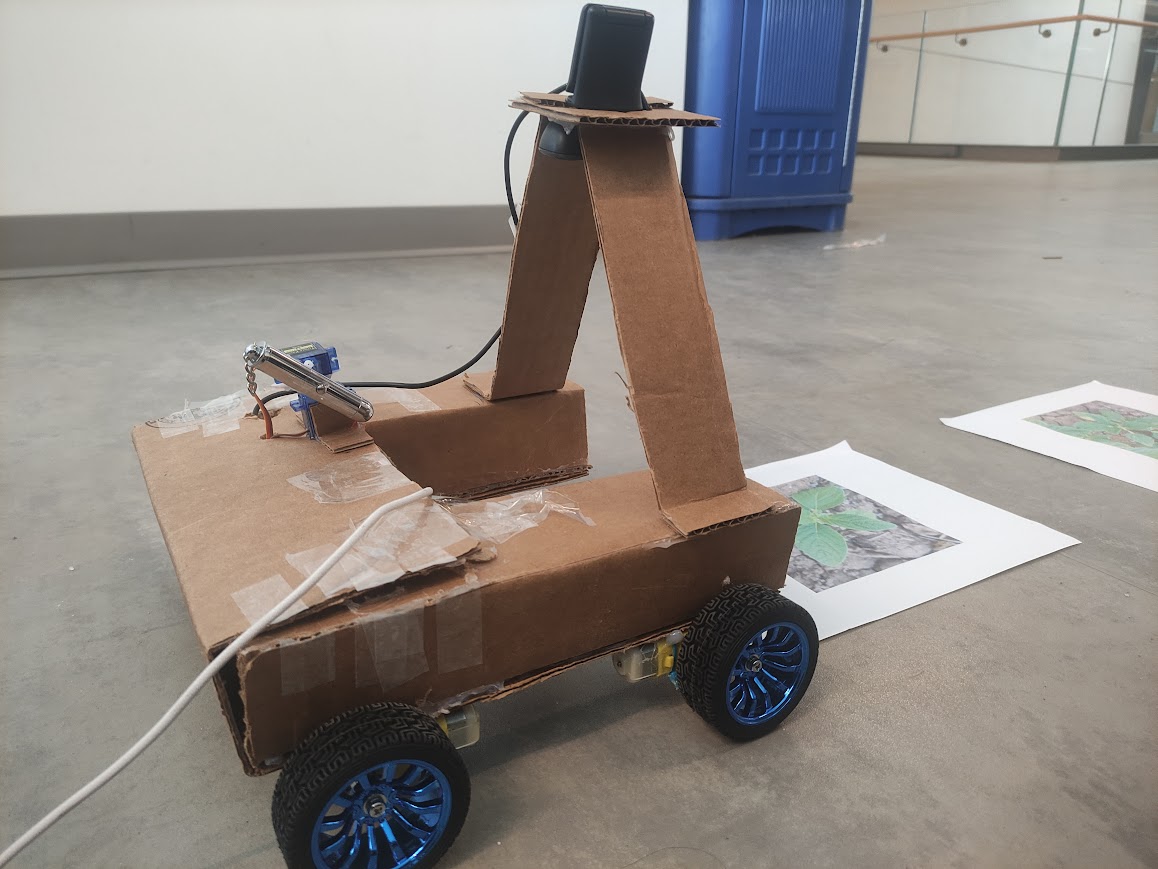
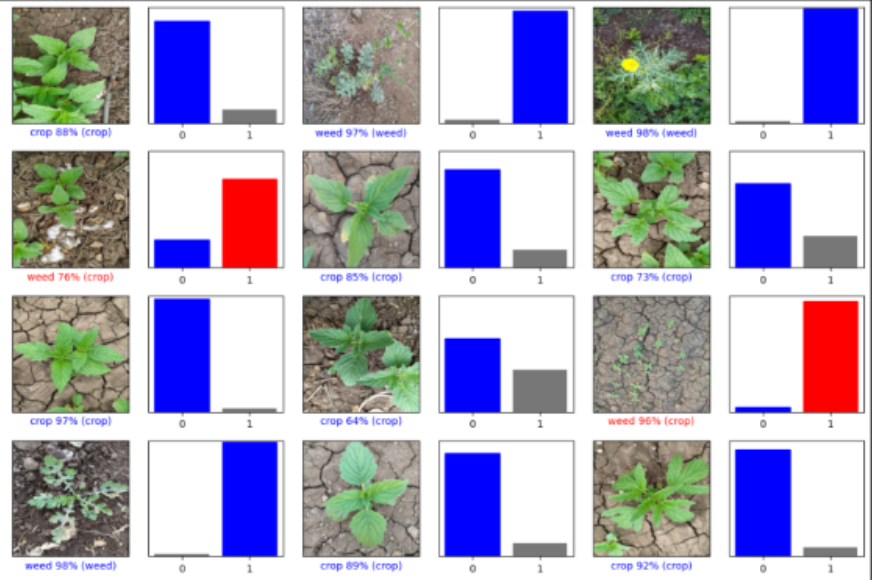
The robot is built on a four-motor chassis, which enables it to navigate through the rows of crops on a farm. A webcam is mounted above the robot's drivetrain, angled downward to monitor the crop rows. This camera uses a computer vision model to identify the presence of plants and distinguish between crops and weeds. When a weed is detected, the robot stops, determines its location, and fires a laser beam to eliminate it by burning it. Additionally, the robot can be controlled via a mobile web app, allowing for manual navigation or setting it to detection mode, where it automatically destroys weeds in the current row.
How We Built It
Building FarmRay required integrating multiple hardware and software components, rigorous testing, and creative problem-solving.
Hardware Integration Raspberry Pi Setup: We configured the Raspberry Pi as the primary control hub, managing data from the camera and sensors while communicating with motor drivers and servos. Camera and Image Capture: Installed and calibrated a Logitech USB 720p webcam for high-resolution image capture. Motor and Navigation Systems: Mapped GPIO pin configurations to control motors responsible for robot movement. Developed and optimized PWM signals for precise speed control and turning mechanisms to navigate varied terrain. Servo Mechanism for Laser Positioning: Configured servos to position the laser precisely for weed targeting. Calibrated servo angles to maintain a safe operational distance while ensuring accurate weed removal.
Software Development: Remote Monitoring and Control Interface: Created a Flask-based web interface to allow remote control, monitoring, and data visualization. Integrated live image streaming and manual movement overrides for real-time feedback and testing. Safety Protocols: Implemented safety measures for laser control, including emergency stop protocols and restricted operating angles to prevent unintended damage to crops or hazards.
Challenges we ran into
Wiring Issues: Throughout the project, wires frequently came undone, leading to connectivity and functionality problems. These issues required constant troubleshooting and quick fixes to ensure the robot's components were connected correctly and operational.
Neural Network Setup: Setting up the neural network for crop and weed identification proved a significant challenge. Training the model to distinguish between crops and weeds required collecting sufficient labelled data and fine-tuning the model to ensure accuracy. Balancing speed and precision in real-time detection was another obstacle we had to overcome.
Accomplishments that we're proud of
We're proud to have completed this project, which was an extremely challenging project that tested the limits of our capabilities—building an electromechanical system, testing and wiring, and also building a machine learning model which can identify crops and weeds in the Raspberry Pi interface.
What's next for FarmRay - Autonomous Weed Removal Robot
In the future, I would like to build a large-scale operational version that can use a high-powered laser in an agricultural setting, potentially pursuing a venture with this idea.


Log in or sign up for Devpost to join the conversation.