Inspiration
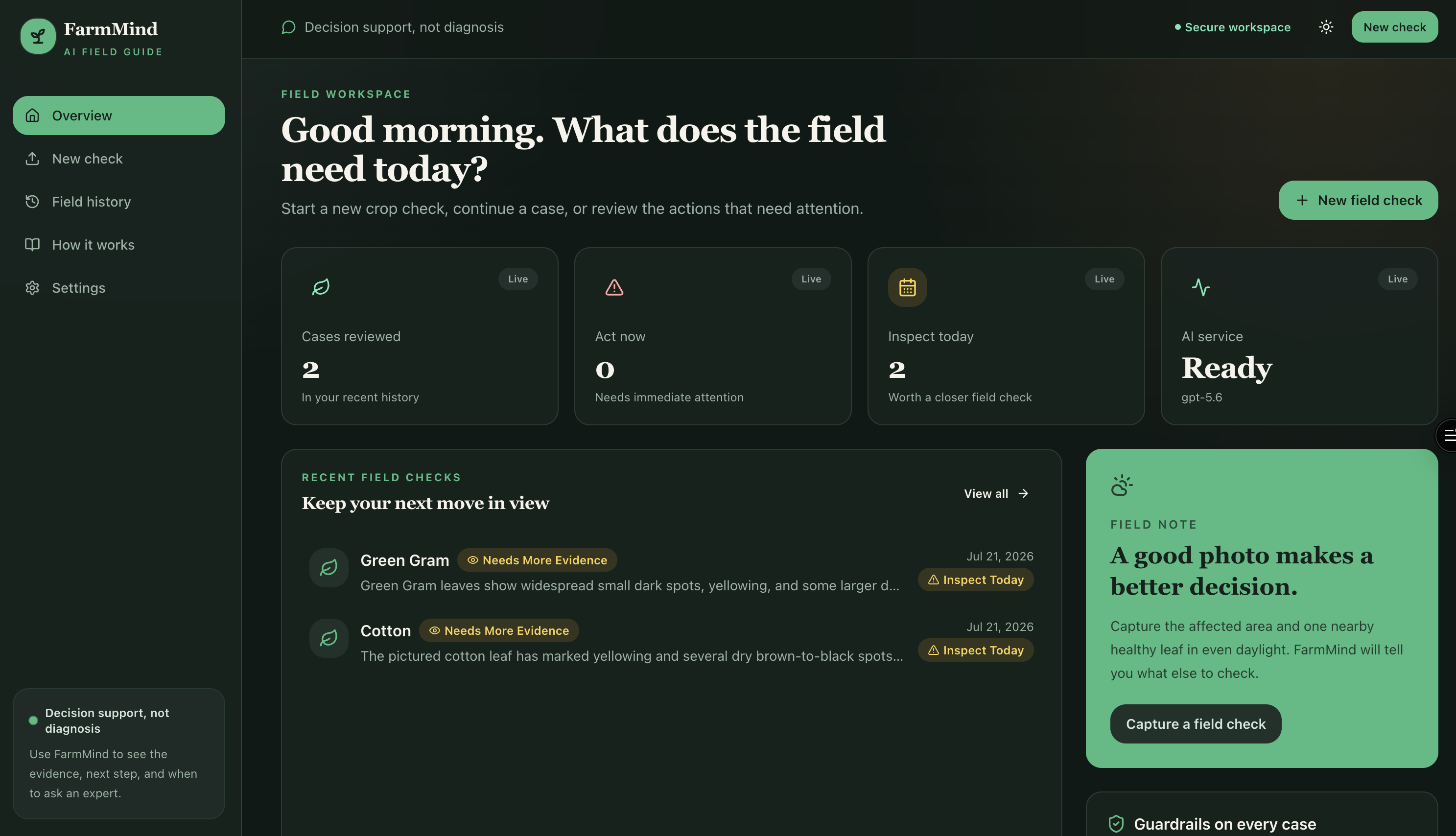
I was inspired by the reality that many farmers can take a photo of a crop problem but may not know what action to take next. Most crop-disease tools stop at naming a possible issue. I wanted to build something more practical: an AI assistant that helps farmers understand uncertainty, decide what to inspect today, and plan what to monitor during the week.
What it does
FarmMind AI is an AI Farm Decision Agent. A user uploads crop photos and adds basic field context such as crop type, growth stage, region, and recent changes. It analyzes visible evidence, explains what it can and cannot determine, identifies possible causes, and generates a prioritized action plan. It includes today’s actions, tomorrow’s actions, weekly monitoring, risk assessment, possible crop impact, prevention tips, recovery timeline, confidence level, and follow-up questions. Users can also chat with the AI about a specific field case, generate reports, review previous analyses, and choose Indian local languages including Hindi, Kannada, Tamil, Telugu, and Marathi.
How we built it
I built FarmMind AI with a Next.js and TypeScript frontend using Tailwind CSS, shadcn-style components, React Query, and Framer Motion. The backend uses FastAPI, Python, SQLAlchemy, Pydantic, and SQLite. GPT-5.6 Vision powers image analysis and structured decision-making through the OpenAI Responses API. I used strict JSON schemas so that AI responses remain consistent, validated, and safe for the user interface. I used Codex throughout development to design the architecture, build the frontend and backend, create prompts, improve testing, polish the UI, and prepare the project for deployment. The frontend is deployed on Vercel and the backend is deployed on Render.
Challenges we ran into
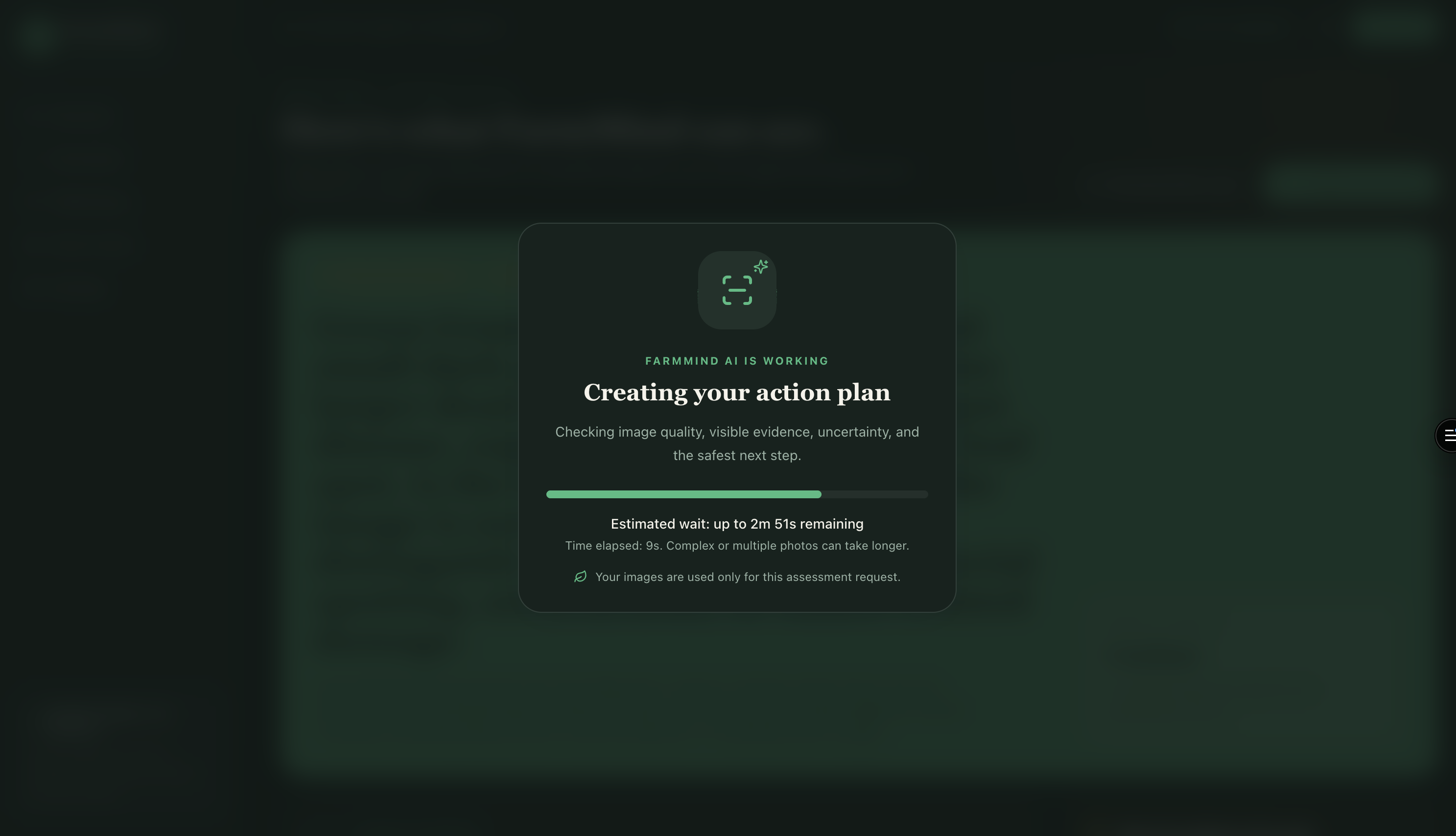
One major challenge was making AI output useful without making it sound overly certain. Crop photos alone cannot confirm every disease or predict yield loss accurately. I designed the prompts and response schema to clearly separate visible observations, possible causes, uncertainty, confidence, and escalation advice. Another challenge was handling slow or intermittent AI vision requests. I added time estimates, loading states, controlled request timeouts, and retry-friendly error messages so users are not left confused. Supporting local Indian languages was also challenging because the entire decision plan—not just the user interface—needed to be understandable to farmers in their preferred language.
Accomplishments that we're proud of
I am proud that FarmMind AI is not just another image classifier. It turns an uncertain crop photo into a cautious decision workflow. I am especially proud of: Structured AI outputs instead of unstructured chat responses Practical plans for today, tomorrow, and the coming week Clear uncertainty and confidence communication Safe recommendations that avoid pesticide doses or unsafe certainty Multilingual farmer-friendly AI responses A polished, responsive SaaS-style interface Real deployment with GPT-5.6 Vision integration
WI learned that the hardest part of AI product development is not calling a model API—it is designing the right user experience around uncertainty.
I also learned that image analysis needs strong guardrails, structured outputs, validation, and clear error handling. A good AI product should tell users not only what it thinks, but also what it does not know and what evidence is still needed. I learned how important local language support is when building technology for real users, especially in agriculture.hat we learned
What's next for FarmMind
Next, I want to add secure farmer accounts, persistent PostgreSQL storage, weather-aware recommendations, regional crop knowledge, agronomist escalation, voice input, and WhatsApp-based access. I also want to improve offline and low-bandwidth support for rural users, add multilingual speech responses, and build a field-level timeline so farmers can compare crop photos over time. The long-term goal is to make FarmMind AI a trusted, accessible farm decision companion—not a replacement for agricultural experts, but a tool that helps farmers act earlier and make better-informed decisions.
Built With
- gpt-5.6
- next.js
- python
- sqlalchemy
- sqlite
- typescript

Log in or sign up for Devpost to join the conversation.