Inspiration
Growing up in a small town in Oregon, I always loved weekend trips to the local farmers’ market—but I’d often show up too late for the freshest berries or miss markets that only opened on odd weekends. I realized so many people in my community (and beyond) struggled to connect with local markets effectively. That spark led me to build a tool that makes discovering and navigating farmers’ markets intuitive, rooted in the real needs of food lovers, families, and travelers who value local, seasonal food.
What it does
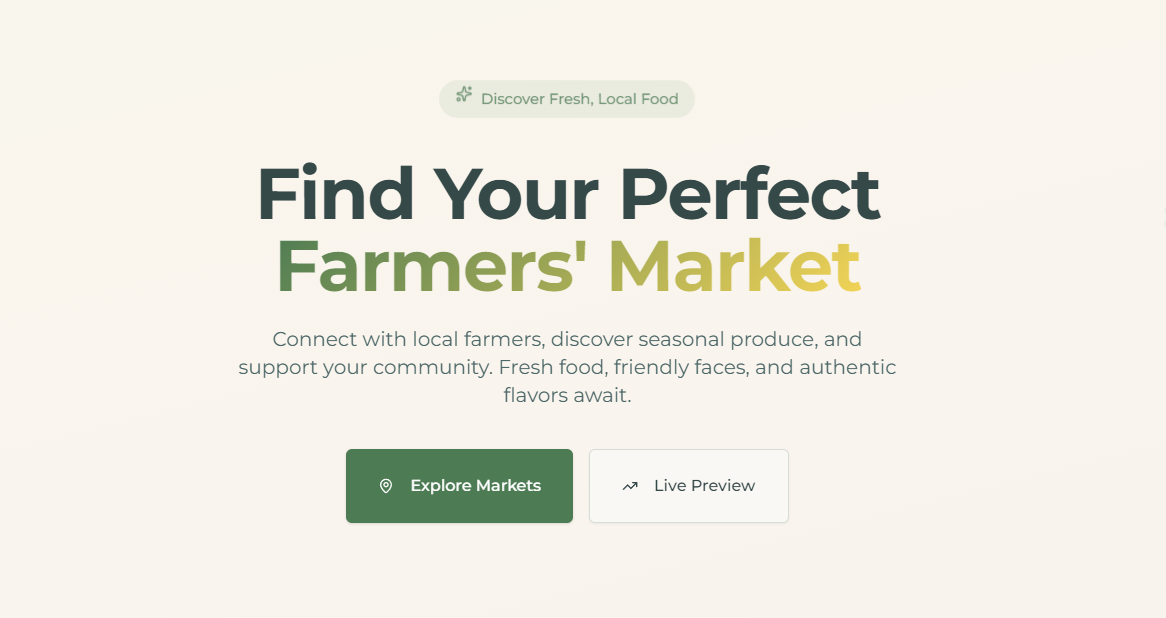
FarmersMarket Finder is a mobile web app that helps users find nearby farmers’ markets sorted by proximity, check up-to-date schedules, explore seasonal produce (with flavor profiles and usage tips), browse rated vendors, and access practical visit tips like parking and crowd guidance. It’s all about making local food shopping seamless and enjoyable.
How we built it
We started by mapping core user needs—location detection, schedule filtering, seasonal content—and built a React-based frontend for mobile responsiveness. We integrated geolocation to sort markets by distance, used Google Maps API for interactive maps, and built custom logic to auto-update seasonal produce based on the calendar. We focused on clean UI/UX to keep the app easy to use on phones and tablets.
Challenges we ran into
The biggest hurdle was handling location permission denials—we had to design a fallback that still delivered value (showing all markets without distance sorting) while encouraging users to enable location. We also struggled with making seasonal content update flawlessly across different regional growing seasons in the US and Europe, requiring careful date-based logic testing.
Accomplishments that we're proud of
We created an app that’s fully responsive and intuitive—users can switch between list/map views in one tap, filter markets by day/time accurately, and access detailed market info without login. We’re most proud of how it centers real community needs: no fluff, just practical tools for connecting with local food systems.
What we learned
I deepened my understanding of geolocation API limitations and user privacy considerations. I also learned how to balance dynamic data (like seasonal produce) with static content for a smooth experience, and the importance of testing edge cases (e.g., closed markets, no rating data) to keep the app user-friendly. Most importantly, I learned to prioritize real user stories over technical features.
What's next for this project
Next, we want to add user-submitted tips (like best stalls for honey or gluten-free goods) and integrate public transit routes for urban markets. We also plan to expand regional seasonal produce data to cover more European countries, and add a feature to save favorite markets for quick access—all while keeping the app simple and focused on local food connection.
Built With
- css
- html
- javascript
- next.js
- react

Log in or sign up for Devpost to join the conversation.