-
-
Logo
-
Inspiration
Growing up in the RGV of Texas, where drought is a constant worry and pesticide residue on food is a real concern. Farmers there often spray a whole field because they can't see where the problem actually is, and by the time they notice drought stress or disease, it has already spread to the farm next door. We wanted to give small farmers the early warning that big agribusiness pays for, using free data and the equipment they already own.
What it does
Farmers for Farmers is a Google Maps-style crop health map for US farmland.
- Satellite crop health: every field is colored by Sentinel-2 satellite indices for vegetation health (NDVI), nitrogen (NDRE) and moisture (NDMI), with a timeline to compare dates across the season.
- Neighbor comparison: each field is compared against the same crop within about 1.6 miles, so a field falling behind its neighbors stands out even in a bad year for everyone.
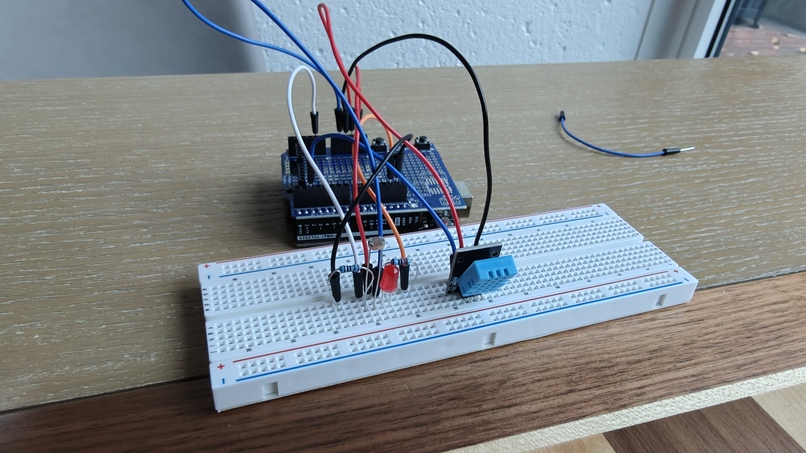
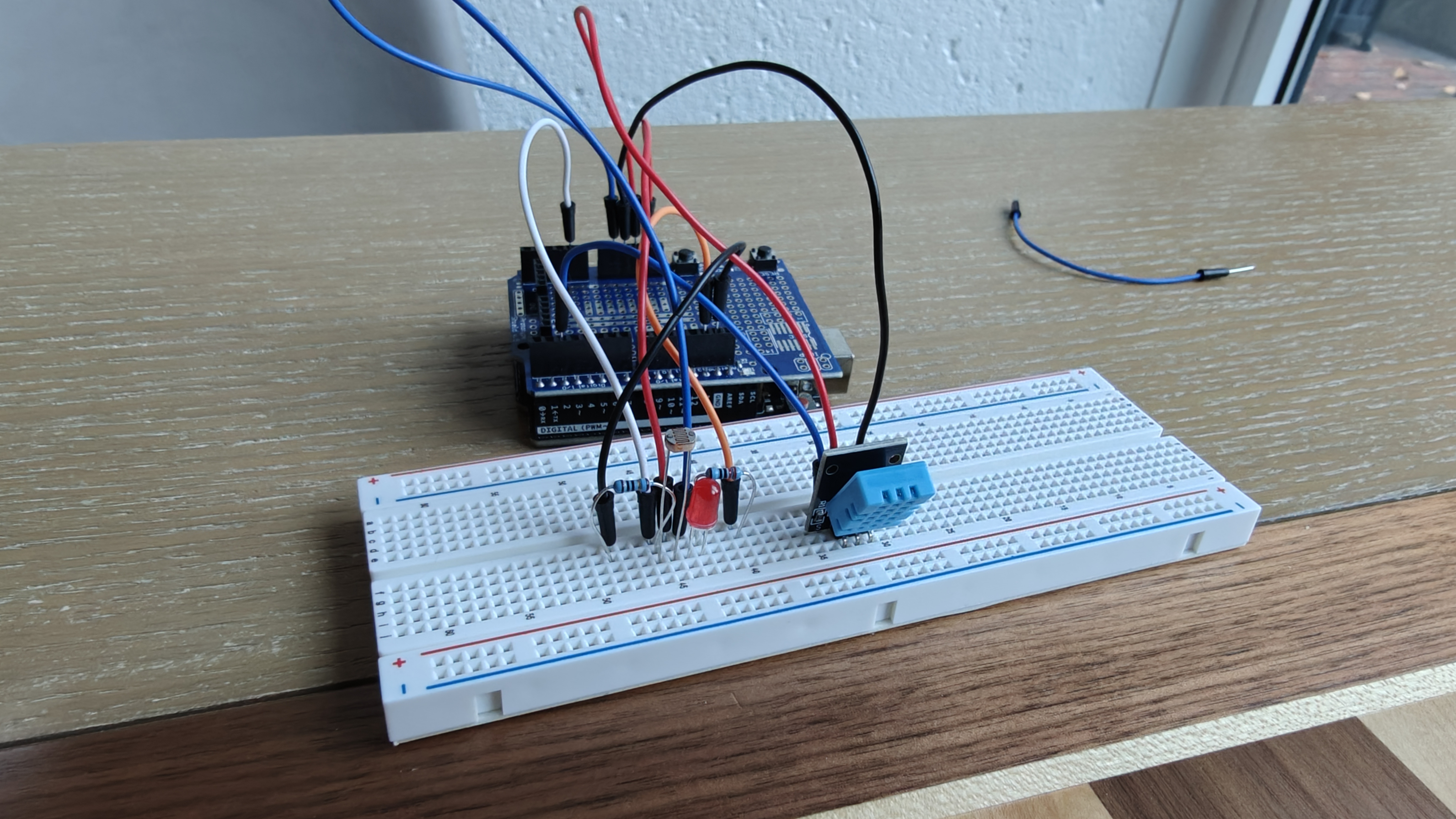
- Retrofit field sensors: a low-cost Arduino kit that mounts on tractors farmers already own reads humidity, temperature and light. High humidity flags fungal disease risk, and the photocell switches the attachment on automatically at night, when dew makes disease spread fastest. Readings stream live into the map.
- Neighbor alerts by text: when a field spots pests, drought or disease, nearby farmers who opted in get a text through Photon. They can reply STATUS, ALERTS or REPORT to check their field or report a problem themselves.
- Shared data: every report a farmer adds becomes data for the neighbors around them, so the map gets better the more farmers use it.
How we built it
- Frontend: MapLibre GL and Turf.js with a Material/Google Maps UI, hosted on GitHub Pages.
- Satellite data: Sentinel-2 L2A imagery from Microsoft Planetary Computer (free, no API key), with field boundaries from USDA NASS Crop Sequence Boundaries and crop types from the Cropland Data Layer.
- Drone comparison: we processed real drone multispectral imagery to show what centimeter-scale resolution adds over 10 m satellite pixels.
- Hardware: an Arduino Uno with a DHT11 humidity/temperature sensor, a photocell and an LED alert. It streams JSON to the browser over the Web Serial API, with no app or drivers needed.
- Messaging: a Node.js agent on the Photon 2.0 API handles opt-in (JOIN), status replies, farmer reports and broadcast alerts to neighbors, with rate limits and an invite-only phone allowlist.
Challenges we ran into
- Reliable hardware: sensors read nan or 0 because of single-hole wiring mistakes, the photocell gave unpredictable readings until we calibrated day/night thresholds, and serial ports got locked by the IDE.
- Finding free data: most agricultural data is paywalled or needs keys. We stitched together Sentinel-2, USDA boundaries and crop data that's free nationwide, and had to handle cloudy scenes, a satellite reflectance offset that skewed our numbers, and imagery that loads lazily as you pan.
- Messaging: we only had iMessage (SMS needed a credit card), a shared line can't text someone first, and RCS rejected threaded replies, so we designed a JOIN opt-in flow.
Accomplishments that we're proud of
- Working electronics that stream live into the website: breathe on the sensor and the map flags disease risk.
- Real text alerts landing on our phones when a neighboring field reports a problem.
- Live satellite crop health for any field in the US, with no API keys and zero cost.
What we learned
- How Photon and two-way messaging agents work, and how to design alerts that farmers will opt into rather than ignore.
- The real problems farmers face: drought, fungal disease, input costs, and how expensive "smart" equipment like autonomous tractors has failed them. That's why we went with retrofit, not replace.
- Plenty about remote sensing, and that hardware debugging takes longer than you think.
What's next for Farmers for Farmers
- Database backend: replace the local agent state so reports, alerts and sensor history persist and scale.
- Pilot with real farmers: starting in [hometown/region].
- Grow through the alert network: every alert invites the neighbors around a field, so each new farmer brings in the next ones.
- Hardened sensor kit: a weatherproof, solar-powered tractor mount that adds soil moisture.
Built With
- api

Log in or sign up for Devpost to join the conversation.