-
-
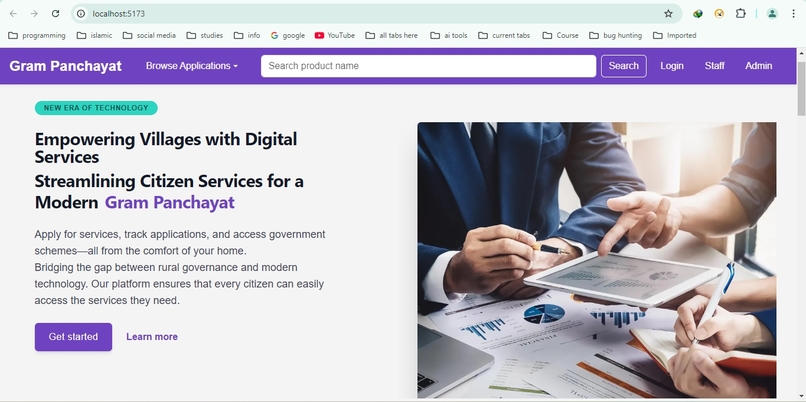
Home/LandingPage
-
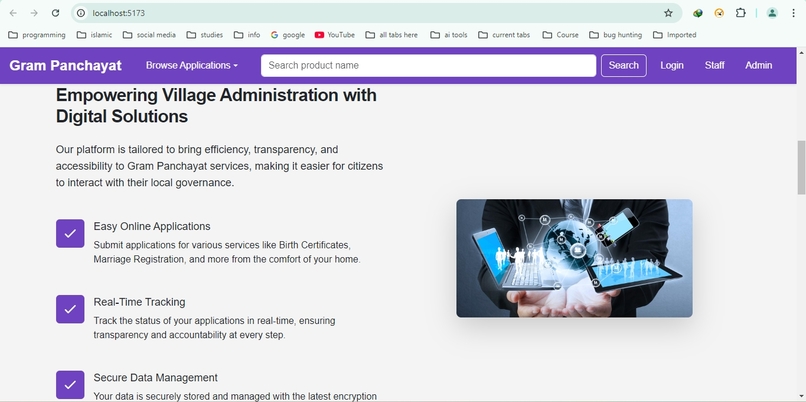
FeatureSection
-
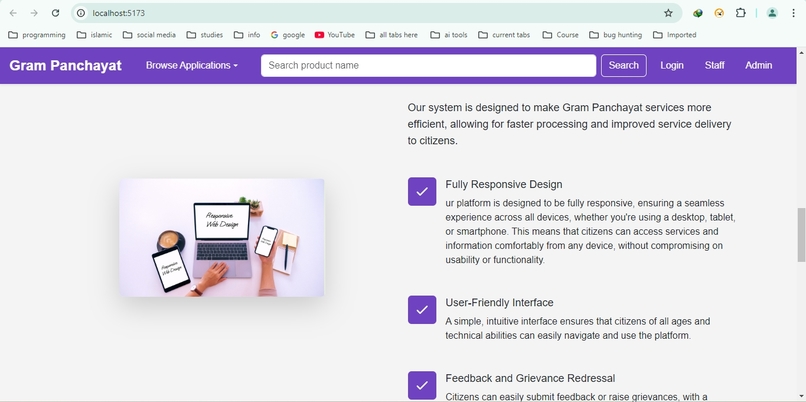
FeatureSection2
-
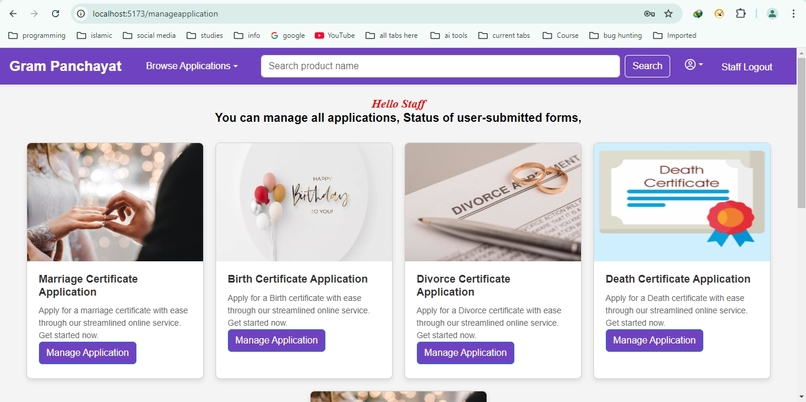
Services
-
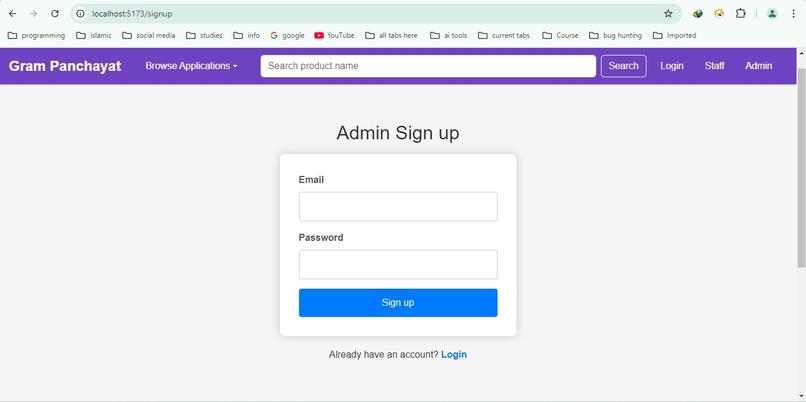
SignupPage
-
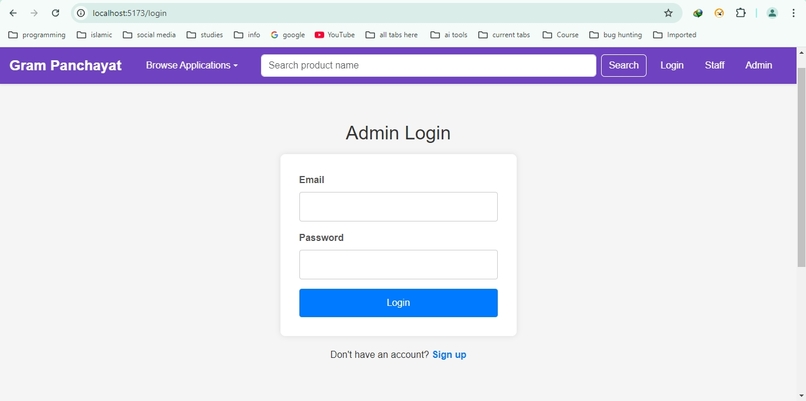
LoginPage
-
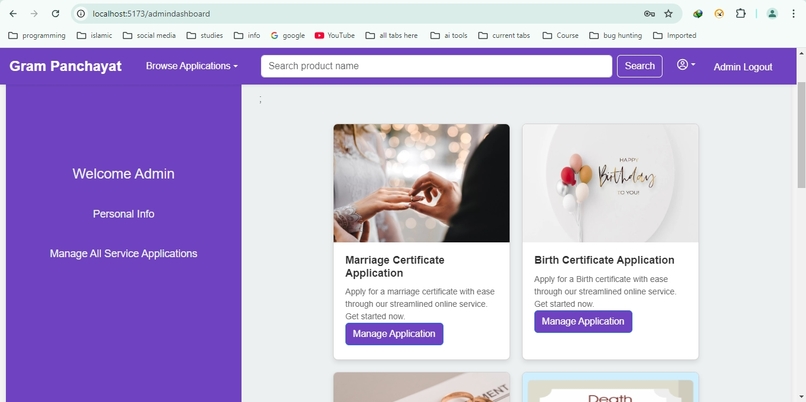
AdminDashboard
-
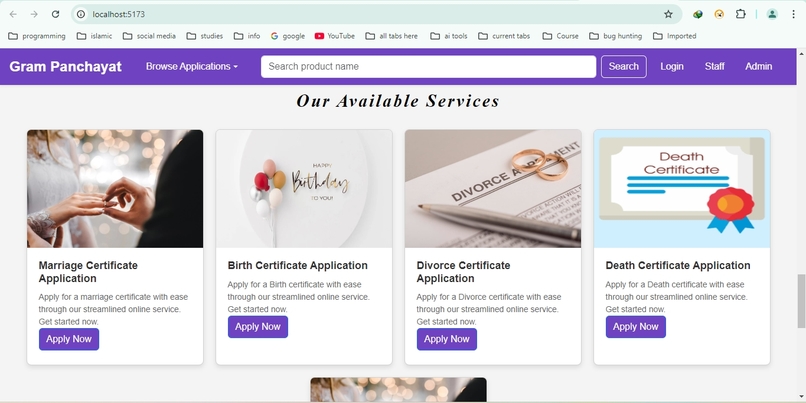
Manage Applications Services By Admin
-
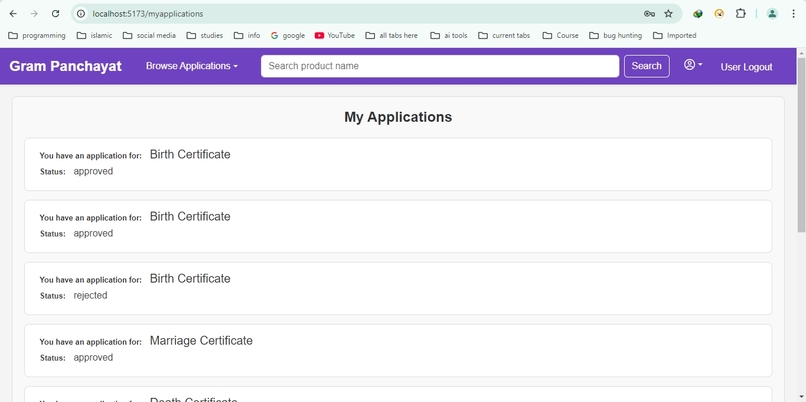
User Can Track Their Applications
-
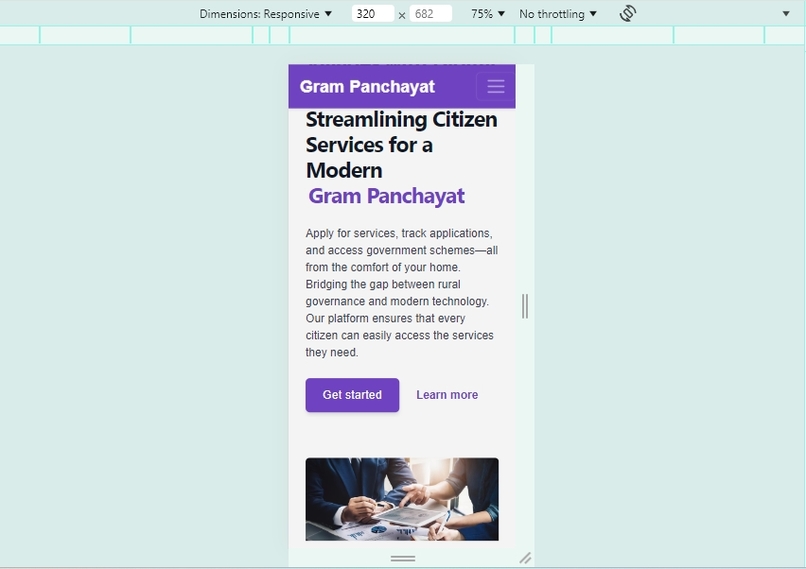
Gram Panchayat Web Application is Fully Responsive


Digital E Gram Panchayat Project Report
About the Project
The Digital E Gram Panchayat project was conceived to enhance the accessibility and efficiency of local governance in rural areas. Driven by the challenges citizens face in accessing essential services such as marriage and birth certificates, I aimed to create a platform that streamlines these processes and empowers communities.
Throughout this project, I deepened my understanding of full-stack development, focusing on React for the frontend and Firebase for the backend. The journey presented several challenges, particularly in designing a system that could conditionally render components based on user roles (Admin, Staff, User). To address this, I implemented a robust state management strategy using React Context.
The development process included several phases: researching user needs, designing wireframes, developing the application, and conducting rigorous manual testing. By integrating user feedback at each stage, I was able to enhance the overall user experience significantly.
Inspiration
The inspiration for Digital E Gram Panchayat arose from the difficulties rural communities encounter in accessing government services. Observing long queues and bureaucratic delays highlighted the potential for digital solutions to transform local governance. I envisioned a platform that empowers citizens to access essential services from the comfort of their homes, fostering transparency and efficiency.
What It Does
Digital E Gram Panchayat serves as a centralized platform where citizens can:
- Apply for essential services online, such as birth and marriage certificates.
- Track the status of their applications in real-time.
- Access relevant government information and schemes easily.
- Enable administrators to manage service applications, approvals, and updates seamlessly.
How We Built It
The project was developed using a modern tech stack:
- Frontend: Built with React.js for dynamic user interfaces, styled using Tailwind CSS and React Bootstrap for a responsive design.
- Backend: Utilized Firebase for user authentication and real-time database management, ensuring seamless data handling.
Challenges We Ran Into
- Conditional Rendering: Designing a system that adjusts the user interface based on user roles (Admin, Staff, User) proved complex. I effectively managed this using React Context.
- State Management: Ensuring a consistent state across various components posed challenges. I utilized React Context to create a global state for user roles and application statuses.
- User-Friendly Forms: Developing intuitive forms for different service requests required careful planning and design to enhance user experience.
What We Learned
This project reinforced the importance of user-centered design and iterative development. Understanding user needs through feedback was crucial in shaping the platform's functionality and usability. Additionally, I gained valuable experience in state management and responsive design, both of which are essential for modern web applications.
Conclusion
The Digital E Gram Panchayat project not only addresses the accessibility challenges faced by rural citizens but also serves as a model for future digital governance initiatives. By leveraging technology, we can significantly improve the efficiency of local governance and empower communities.

Log in or sign up for Devpost to join the conversation.