-
-
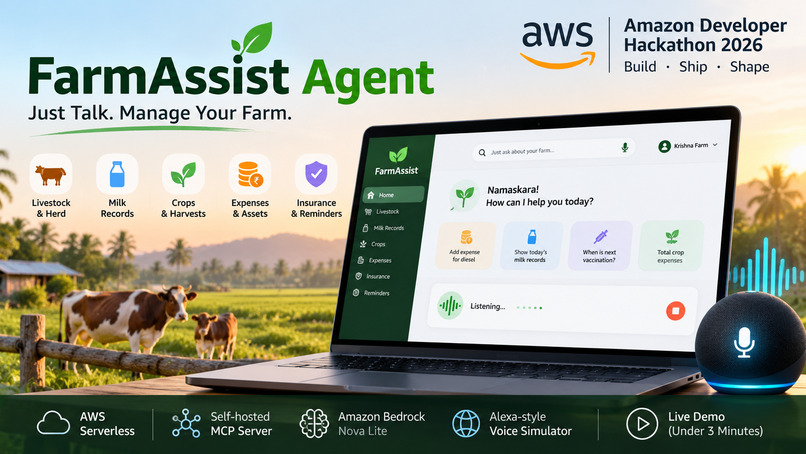
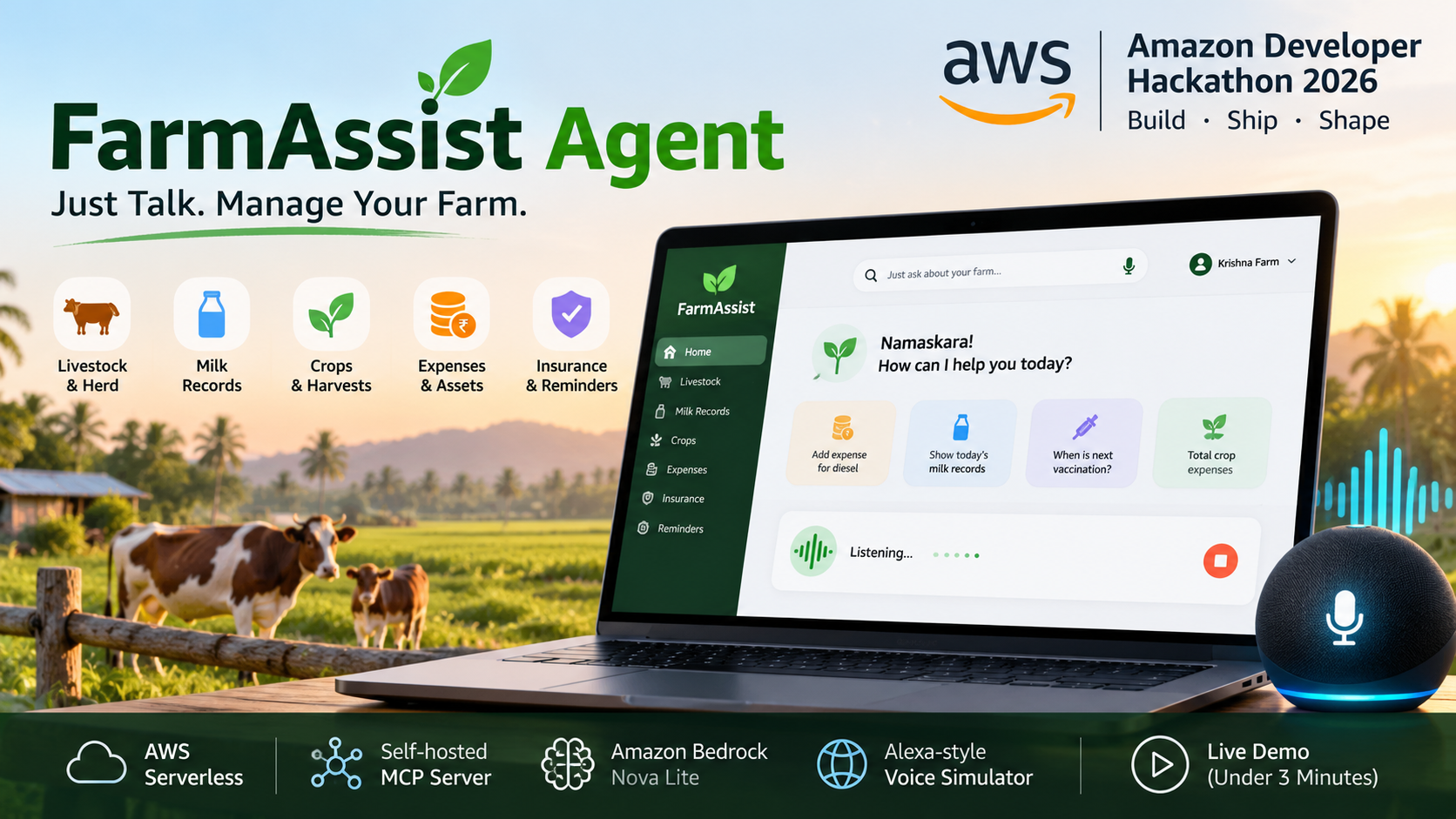
FarmAssist Agent: a voice-first AI farm companion built with AWS serverless services and an Alexa-style voice simulator.
-
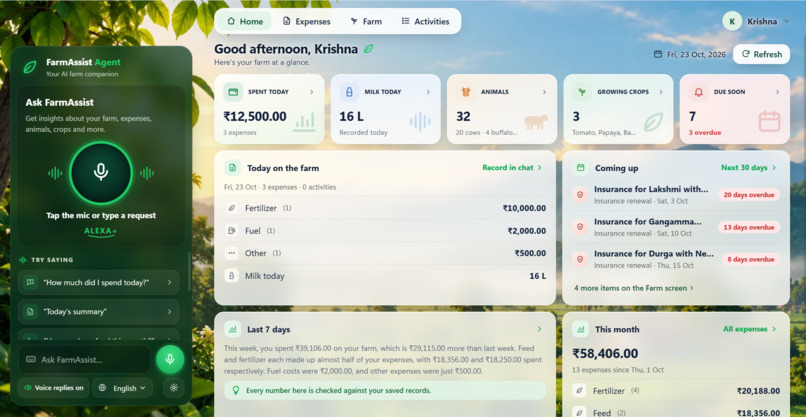
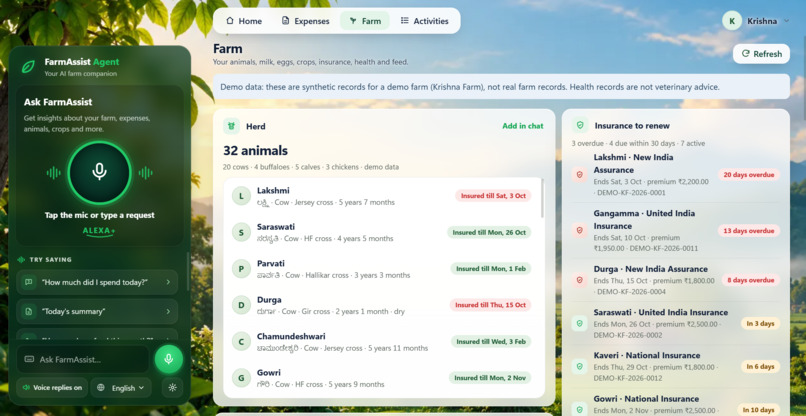
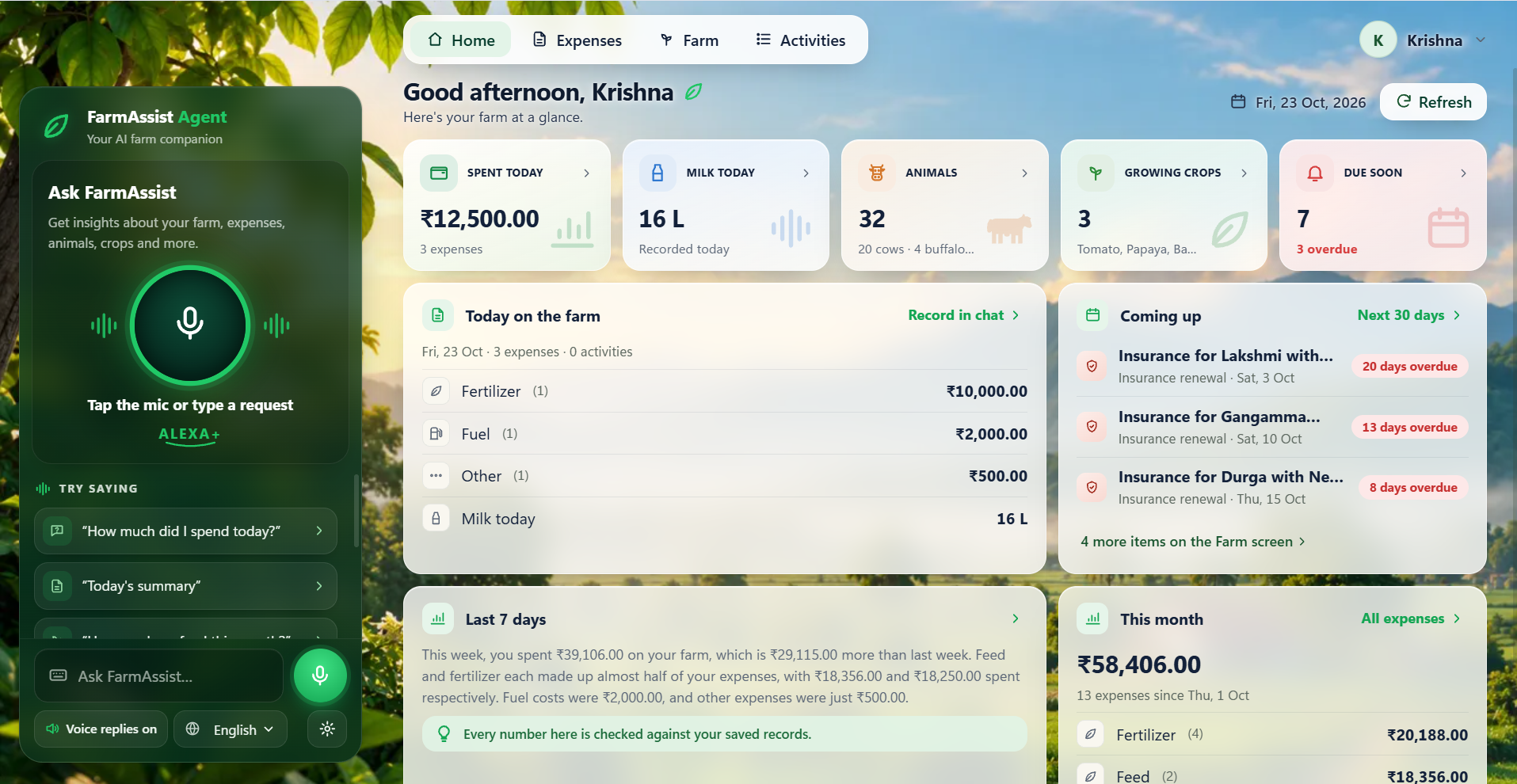
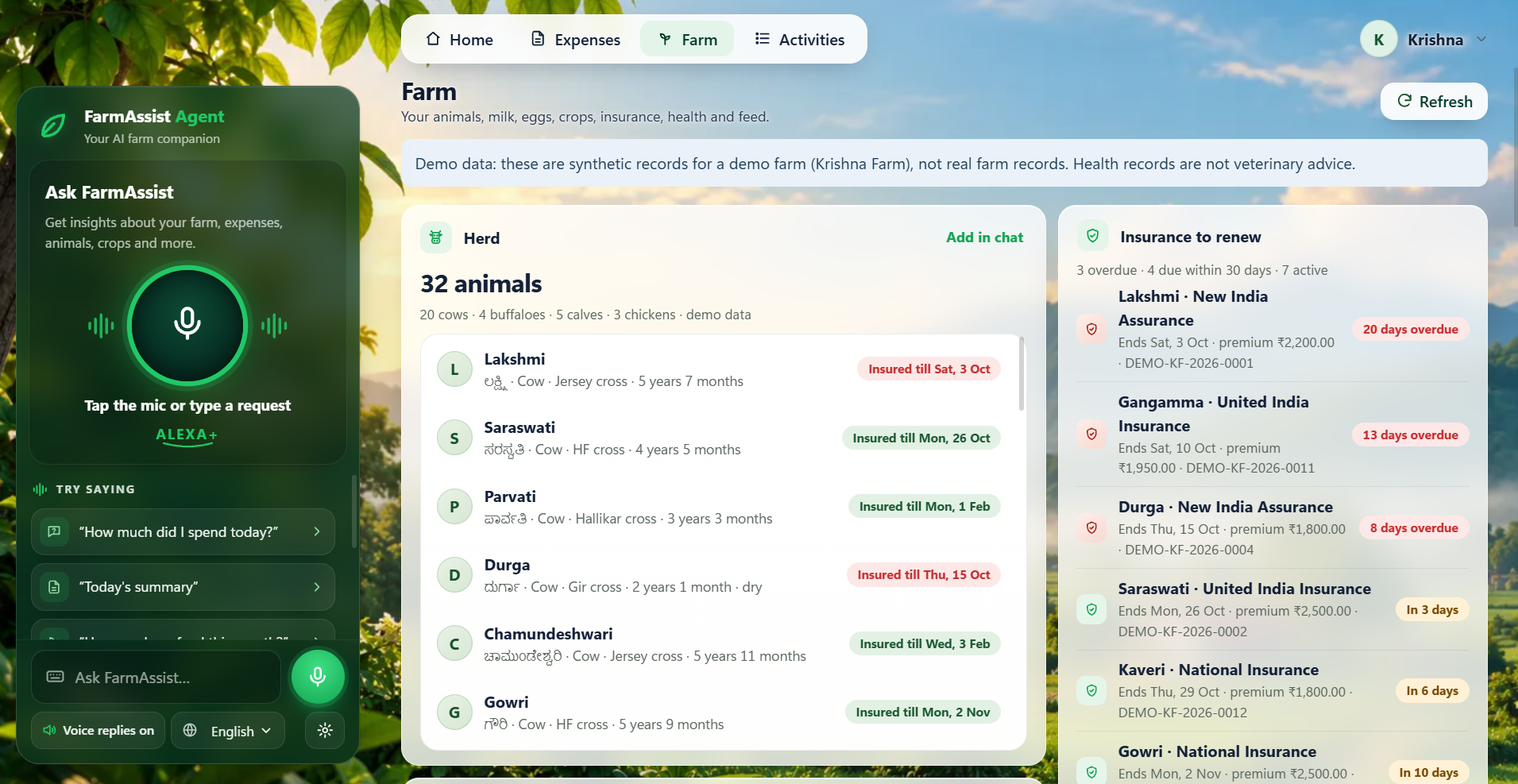
Manage cattle, buffaloes, calves, milk production, crops, feed, and insurance records in one place using synthetic demo farm data.
-
Keep farm activities and operational records organized, making it easier to review day-to-day farm operations.
-
Keep farm activities and operational records organized, making it easier to review day-to-day farm operations.
Inspiration
Small dairy and crop farmers often manage livestock, milk production, cultivation, harvests, expenses, insurance, and reminders using paper records or memory. Keeping everything organized is difficult, and important details can be missed.
FarmAssist Agent was inspired by the idea that managing a farm should be as simple as having a conversation. Instead of navigating complicated forms, farmers should be able to ask questions and record activities using natural language and voice.
What it does
FarmAssist Agent is a conversational farm ledger designed for small farmers.
Livestock management: Maintain animal records and related information.
Milk production: Record milk entries associated with individual animals.
Crop and harvest tracking: Organize cultivation activities and harvest records.
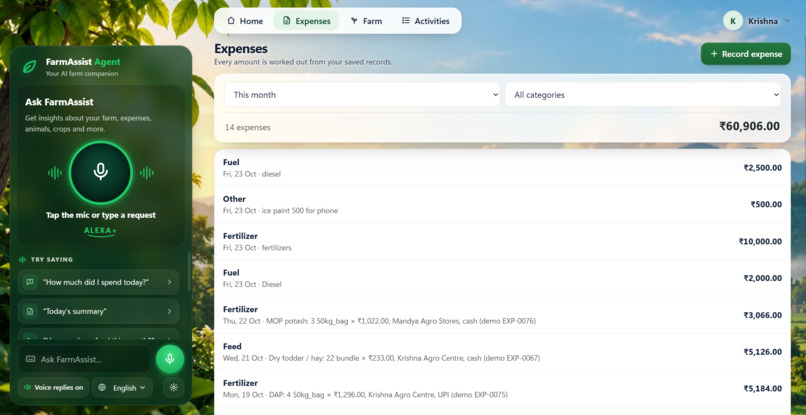
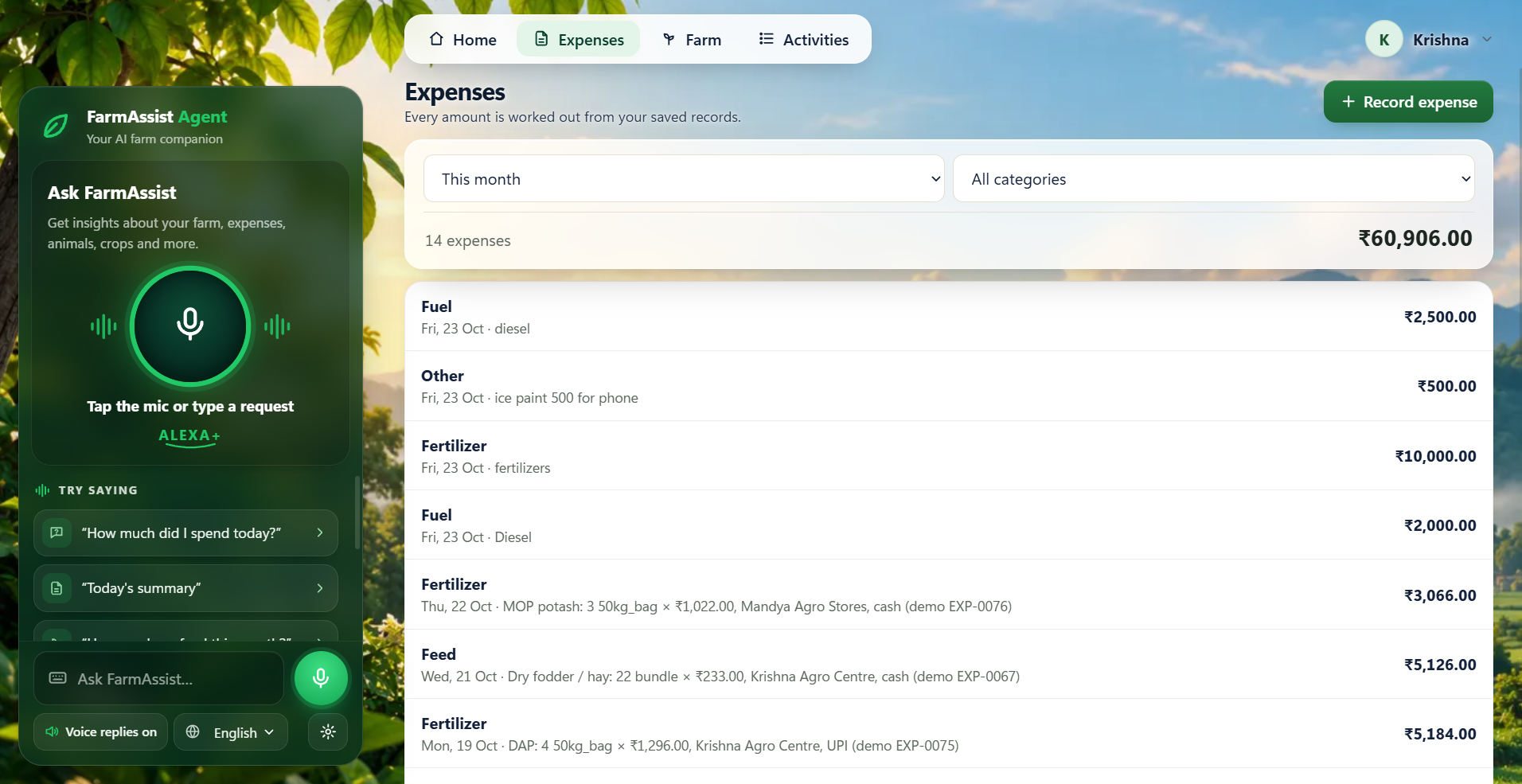
Expense management: Track spending on cattle feed, fuel, fertilizer, machinery rental, and other farm activities.
Insurance and reminders: Keep track of due dates and important follow-ups.
Farm insights: Ask questions about recorded farm information.
Voice interactions: Speak requests, review interpreted entries, and confirm actions before saving.
The application uses fictional Krishna Farm data for demonstration purposes.
How we built it
FarmAssist Agent combines an AWS serverless backend with a conversational agent and a web-based voice experience.
The backend uses AWS Lambda and Amazon DynamoDB for farm operations and records. Amazon Cognito supports authentication, Amazon S3 stores photos, and AWS Systems Manager Parameter Store stores the MCP token. Infrastructure is managed using AWS SAM and AWS CloudFormation.
The agent uses Amazon Nova Lite through Amazon Bedrock for supported interactions. A self-hosted Model Context Protocol (MCP) server implements protocol version 2025-11-25 using Streamable HTTP and exposes 27 farm-operation tools. Zod validation helps enforce input constraints.
The web application also includes an Alexa-style voice simulator that demonstrates conversational interaction with FarmAssist. This is a web-based simulation, not a native Alexa+ skill or a connection to a physical Alexa device.
Challenges we ran into
One of the biggest challenges was working with AWS account verification, model quotas, and deployment constraints while integrating the agent with the backend. Access to partner-only Alexa+ tooling was another limitation.
These constraints encouraged us to build a self-hosted MCP integration and an Alexa-style web simulator, allowing us to demonstrate the conversational experience without depending on physical Alexa hardware.
We also learned that language models can produce incorrect calculations, invent values, or describe actions that did not actually succeed. This reinforced the importance of validating inputs, checking tool results, and relying on backend logic for calculations and saved records.
Accomplishments that we're proud of
Built a farm-management experience around natural conversation rather than requiring users to navigate multiple forms.
Developed a self-hosted MCP server using Streamable HTTP and the specified MCP protocol version.
Exposed 27 tools for farm-related operations through the MCP integration.
Connected AWS serverless services to support farm records and application functionality.
Created a web-based Alexa-style voice simulator to demonstrate the conversational experience.
Prepared a synthetic farm dataset covering livestock and other farm-management scenarios for a repeatable demonstration.
Added validation and safeguards to reduce the risk of incorrect or duplicate operations.
What we learned
We learned how to integrate an MCP server with an AWS serverless application and how to build a conversational workflow around structured farm data.
We also learned that a reliable AI application needs more than a language model. Server-side validation, deterministic calculations, tool-result verification, and clear confirmation flows are important for maintaining trustworthy records.
Finally, we learned to design around real platform constraints. When direct access to a particular developer platform was unavailable, a self-hosted MCP server and web simulator provided an alternative way to demonstrate our approach.
What's next for FarmAssistAgent
Our next steps are to strengthen end-to-end voice testing, improve the fallback experience when the AI service is unavailable, and expand the range of farm operations that can be handled reliably.
We also plan to improve farm insights, test model-generated outputs against more scenarios, and explore image-assisted crop and livestock information with appropriate validation and expert guidance.
Our long-term goal is to make FarmAssist a practical, accessible digital assistant that helps farmers maintain better records and make informed decisions.
Demo data notice: Krishna Farm and its demonstration records are synthetic and do not represent real farm records.
Built With
- amazon-bedrock
- amazon-cloudfront
- amazon-cloudwatch
- amazon-cognito
- amazon-dynamodb
- amazon-nova
- amazon-route-53
- amazon-web-services
- aws-cloudformation
- aws-lambda
- aws-sam
- aws-systems-manager-parameter-store
- model-context-protocol
- node.js
- speechapi
- typescript
- vitest
- web
- zod

Log in or sign up for Devpost to join the conversation.