-
-
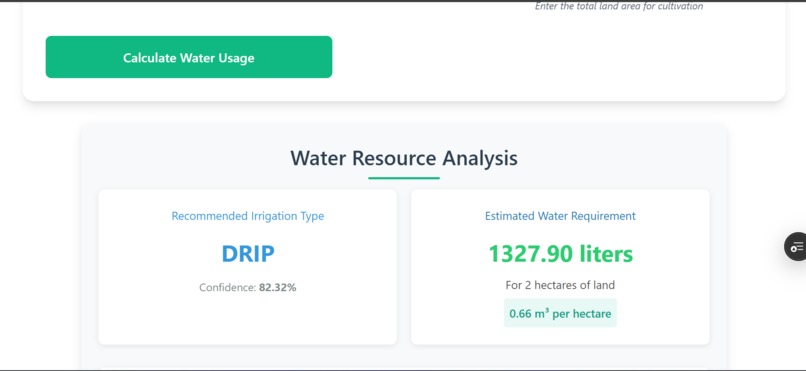
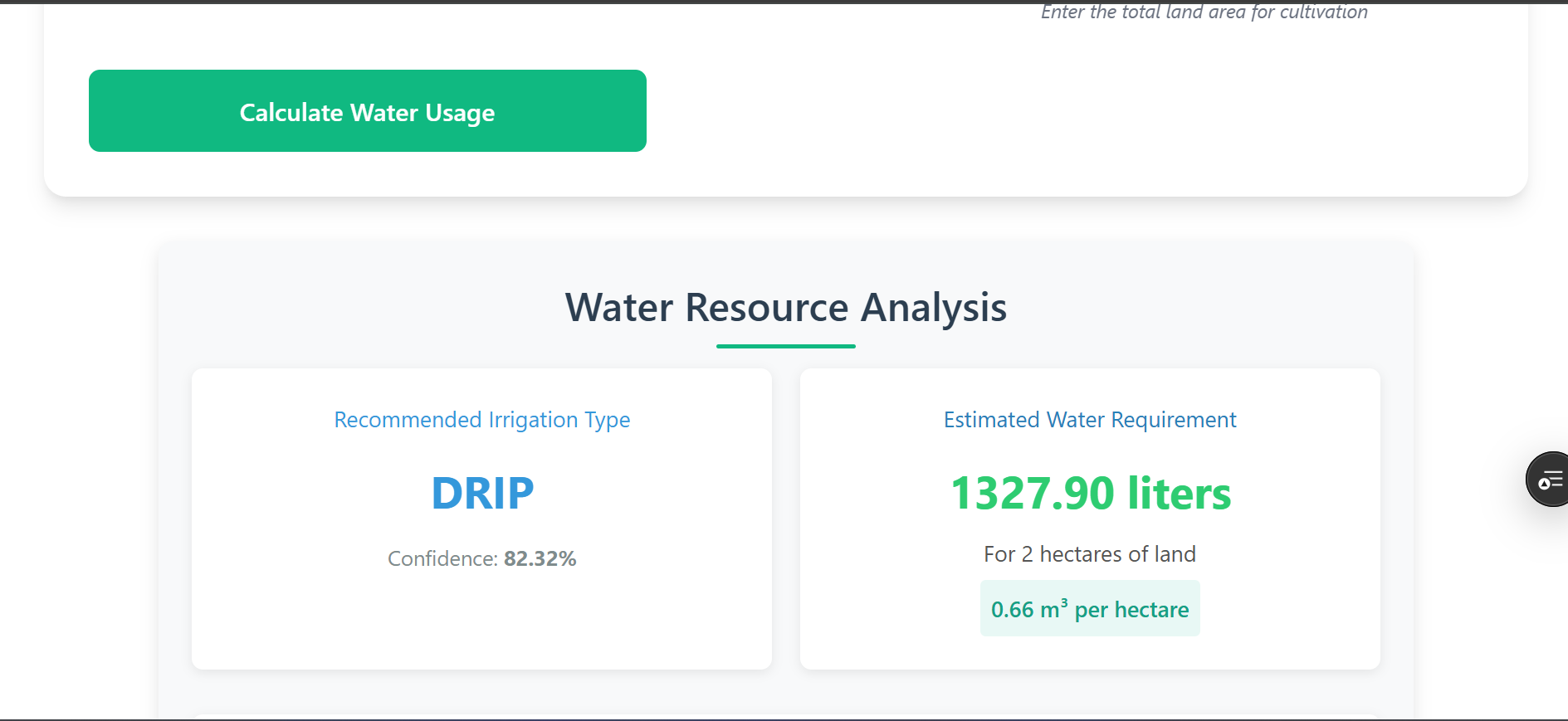
results
-
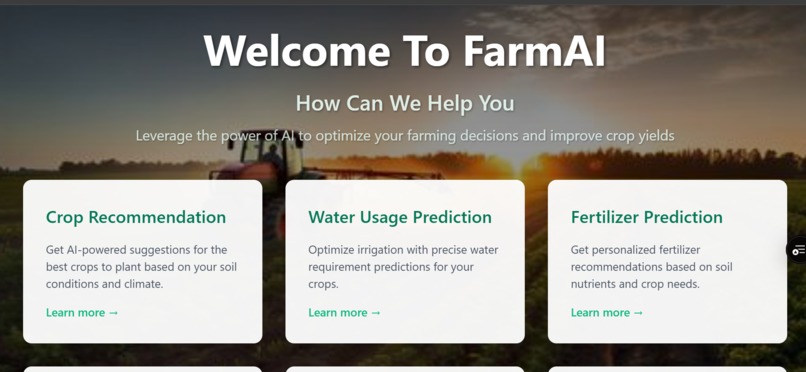
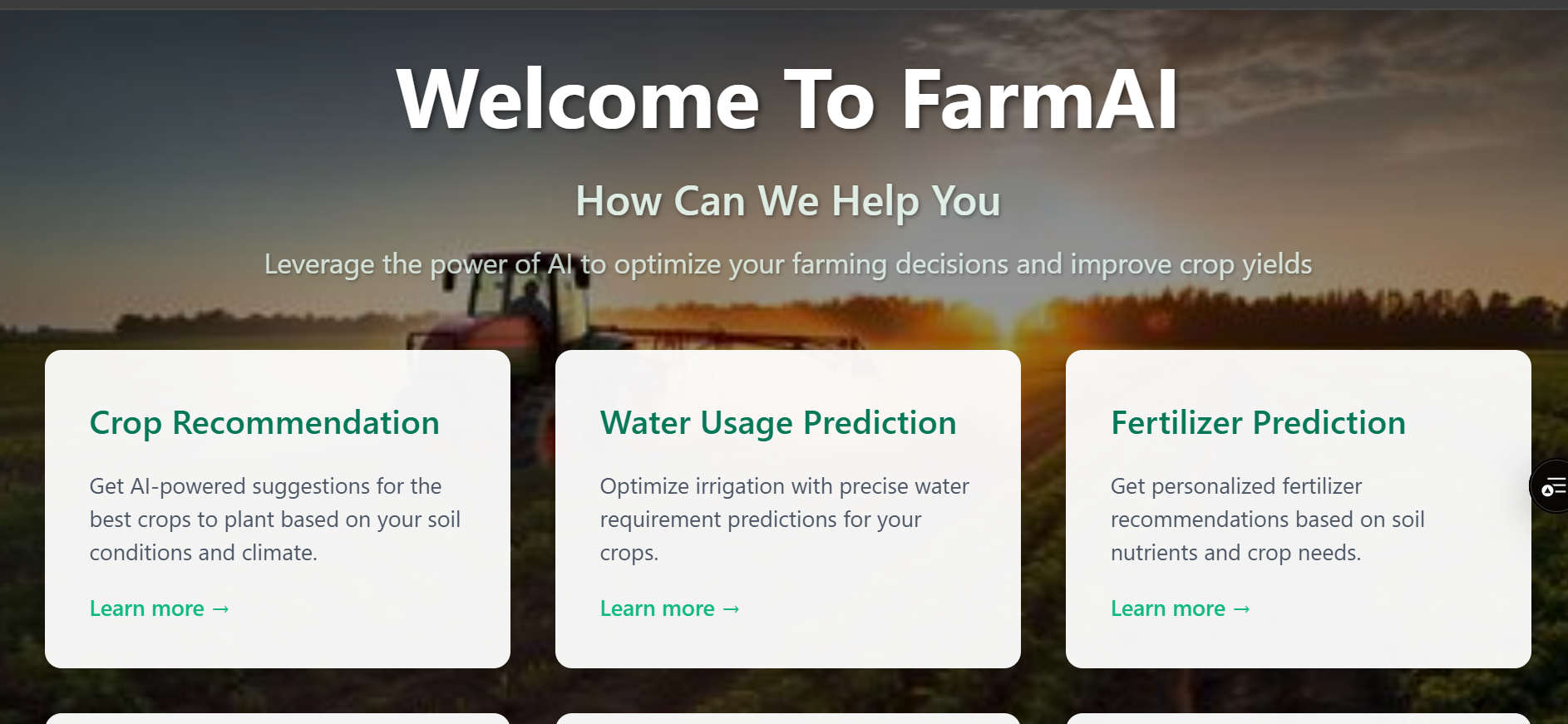
home page
-
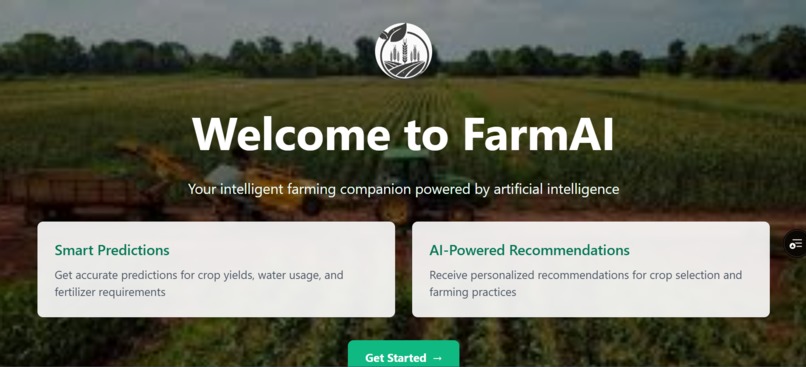
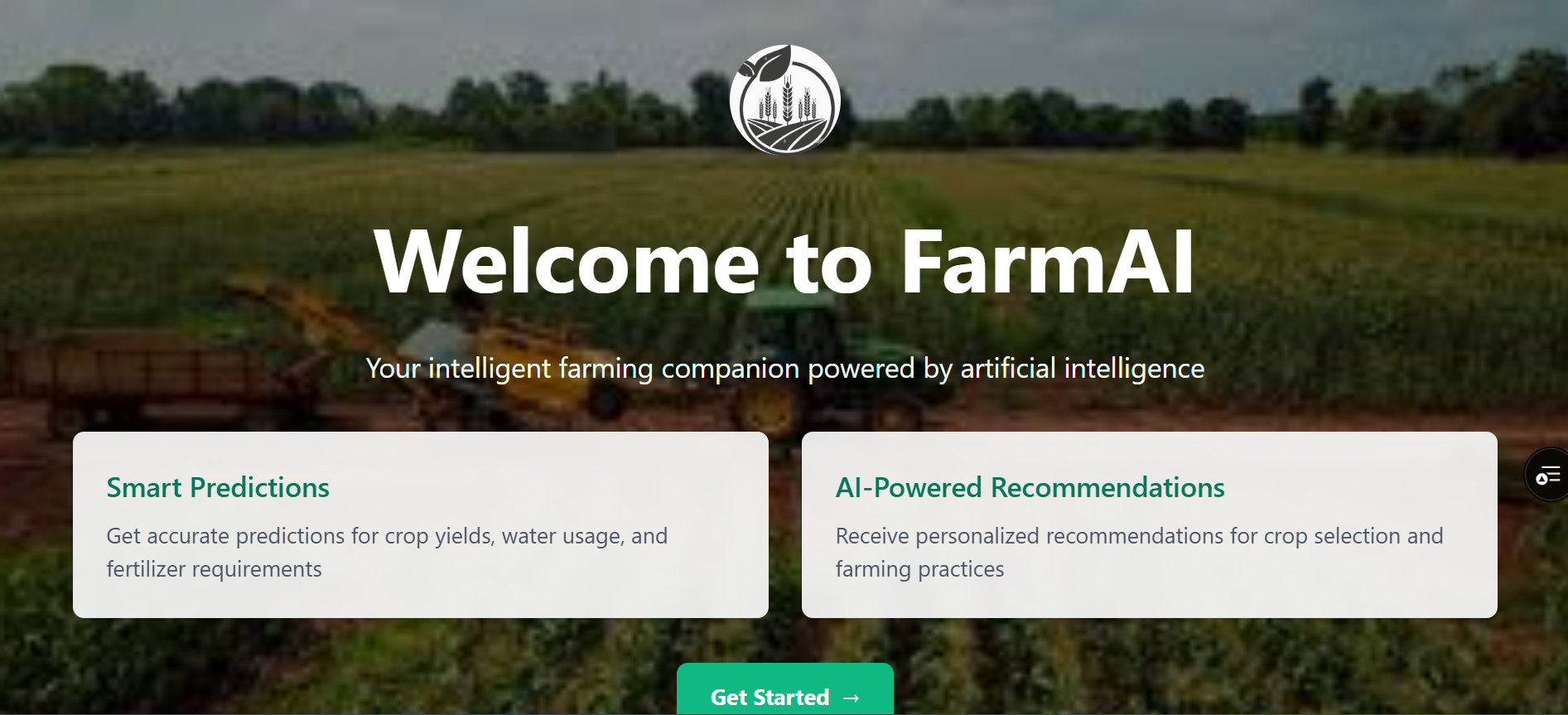
index page
-
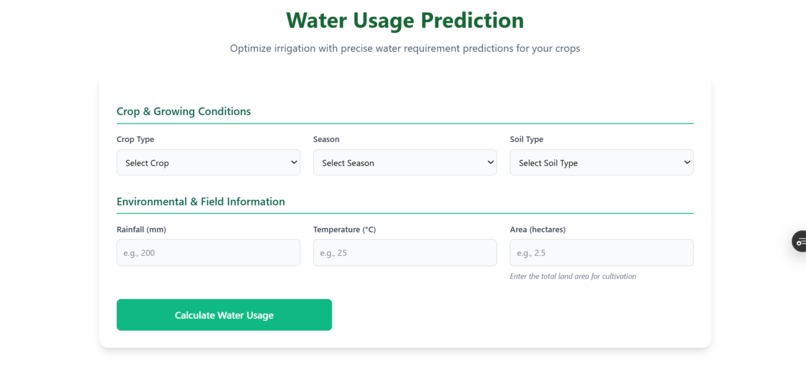
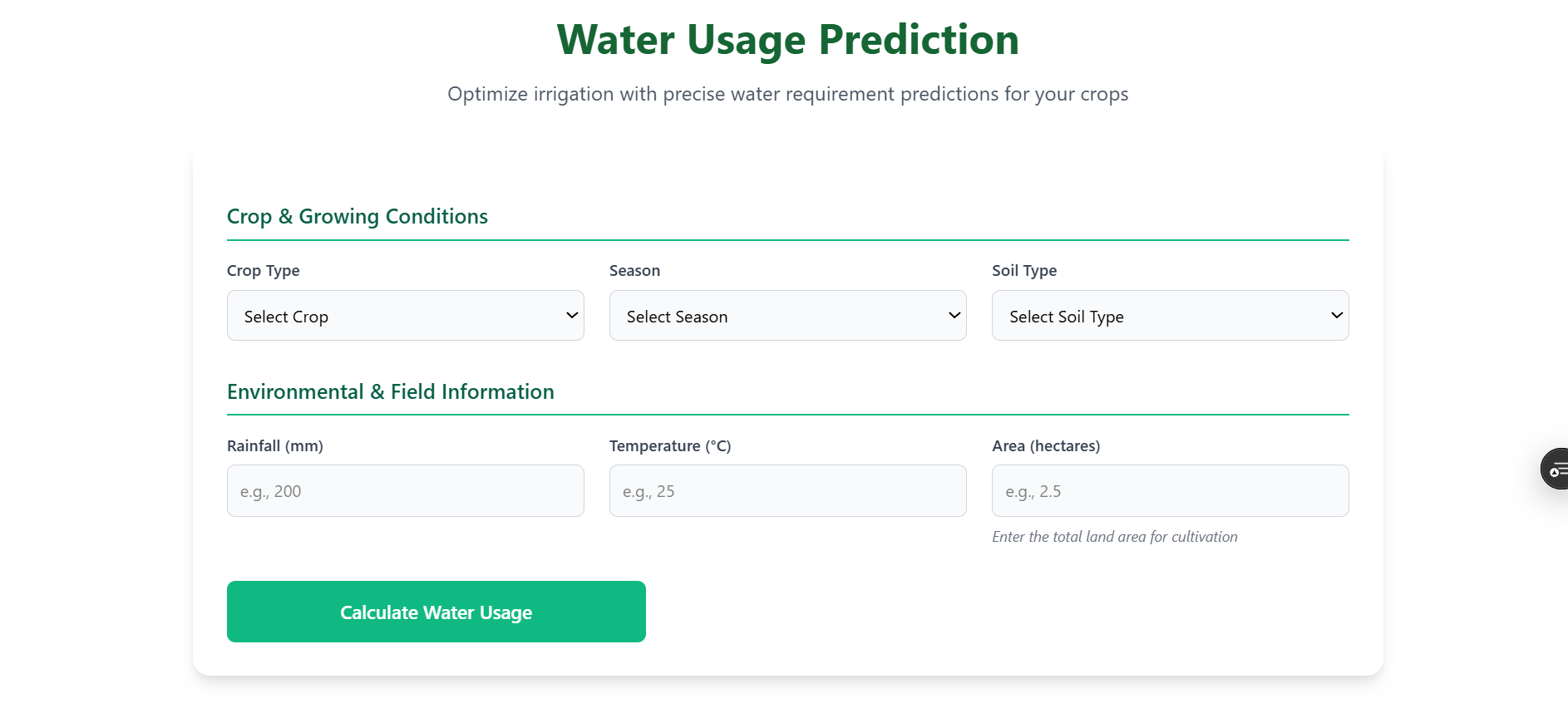
Details form
-
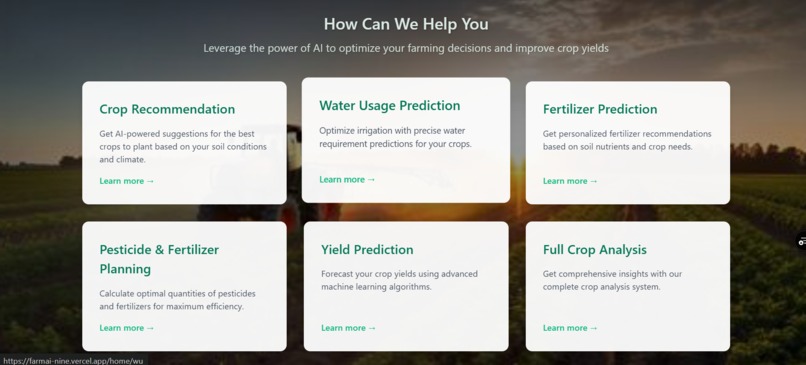
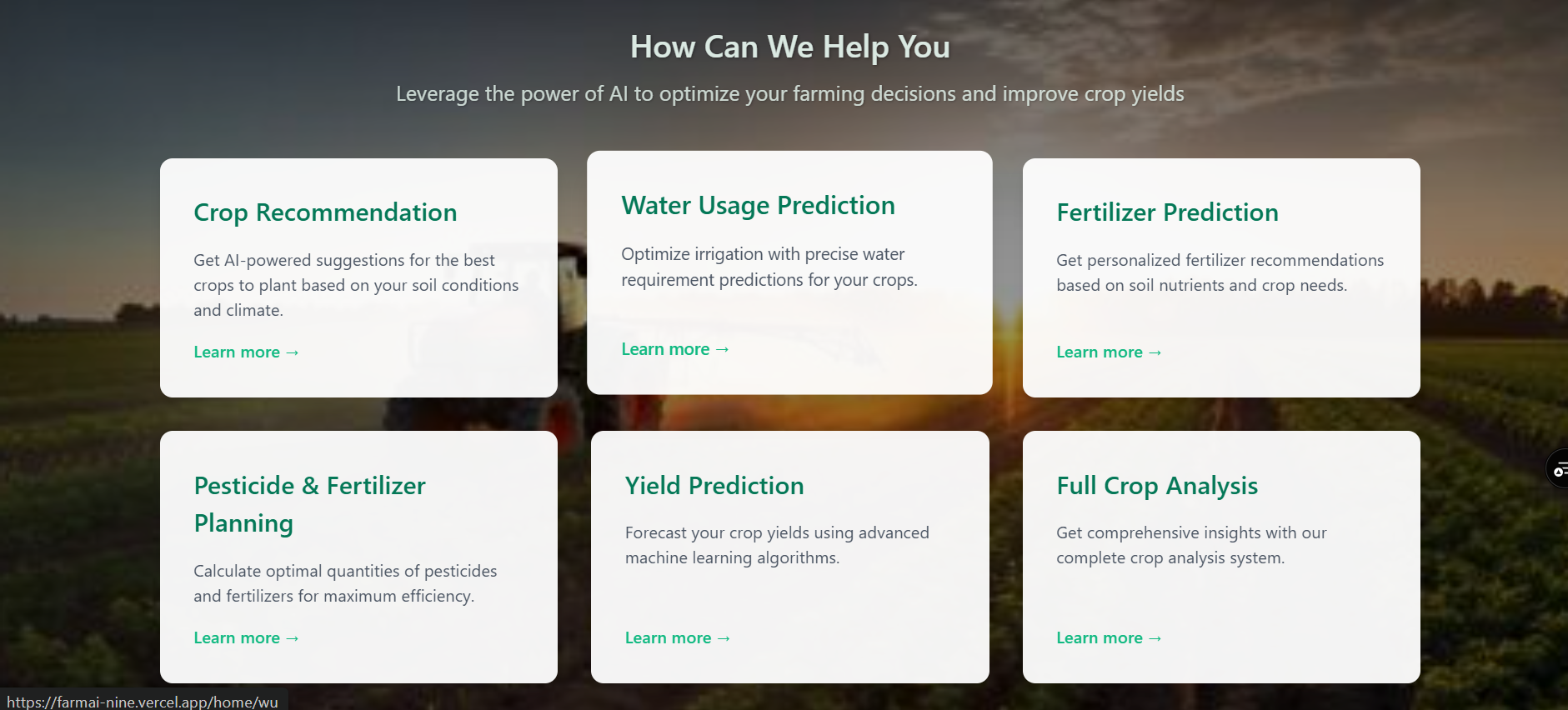
All features
Inspiration
Growing up, I saw how many farmers in rural areas struggled with unpredictable weather, poor crop yields, and limited access to expert advice. This deeply inspired me to create a solution that could empower them with the right information at the right time. I’ve always been passionate about technology and artificial intelligence, and I wanted to apply these tools to solve real-world problems.
The idea of combining AI with agriculture came from observing how data-driven systems are transforming industries, while agriculture still faces huge gaps in access to information. I realized that even small changes—like recommending the right crop or identifying pests early—could have a big impact on a farmer’s income and food security. That’s what motivated me to build this AI-based platform: to support farmers, reduce resource waste, and make agriculture smarter and more sustainable.
What it does
This project is an AI-powered farming assistant that helps farmers make smart, data-driven decisions to increase productivity and reduce waste. Based on inputs like weather, soil type, pH, NPKC levels, and farm size, it performs the following key functions:
Crop Recommendation: Suggests the most suitable crop using an Artificial Neural Network (ANN), based on soil and environmental conditions.
Irrigation & Water Prediction: Uses ANN to recommend the best irrigation method and estimate the right amount of water needed.
Yield Prediction: Predicts potential crop yield using ANN, helping farmers plan better.
Fertilizer Recommendation: Uses a Random Forest model to recommend the correct type of fertilizer based on nutrient levels and crop type.
Fertilizer & Pesticide Quantity Estimation: An ANN model calculates the exact amount of fertilizer and pesticide needed, avoiding overuse and reducing costs.
The platform uses a Next.js frontend for user interaction and a FastAPI backend to process the inputs and return AI-generated recommendations. It aims to make farming more precise, efficient, and accessible for all.
How we built it
We built this project using a modern and scalable tech stack, combining machine learning models with a full-stack web application.
Frontend: We used Next.js to build a responsive and interactive frontend that allows farmers to input data such as soil type, pH, NPKC levels, weather details, and farm size. The interface is designed to be user-friendly and mobile-compatible for easy access.
Backend: The backend is powered by FastAPI, a fast and efficient Python web framework. It handles incoming requests, processes data, communicates with the machine learning models, and returns predictions to the frontend.
Machine Learning Models:
Crop Recommendation: Built using an Artificial Neural Network (ANN) to analyze environmental and soil parameters.
Irrigation and Water Requirement: An ANN predicts the most suitable irrigation method and how much water the crop will need.
Yield Prediction: Another ANN model estimates the potential yield based on input factors.
Fertilizer Recommendation: A Random Forest classifier determines the best fertilizer based on soil nutrients and crop type.
Fertilizer & Pesticide Quantity: An ANN model calculates precise quantities required to avoid overuse.
Training & Data: We trained our models using agricultural datasets containing soil, weather, and crop data. Each model was evaluated and fine-tuned to improve accuracy and generalization.
All components are integrated seamlessly, ensuring that users get real-time, reliable insights through a web-based interface.
Challenges we ran into
Building this AI-powered farming assistant as a solo developer was a challenging yet rewarding experience. I encountered several obstacles throughout the development process:
Data Collection & Cleaning: Finding accurate, real-world agricultural datasets was difficult. I had to combine multiple sources and spend time cleaning, organizing, and preprocessing the data to make it suitable for model training.
Choosing the Right Models: Selecting the best algorithms for different tasks required experimentation. I tried various models before finalizing ANN for crop prediction, water estimation, and yield prediction, and Random Forest for fertilizer recommendations. Fine-tuning them to get good accuracy without overfitting took time.
Feature Selection: Understanding which input features (like pH, NPKC, farm size, etc.) were most relevant for each prediction task was a major challenge. I had to study agricultural practices and test combinations to get meaningful outputs.
Frontend-Backend Integration: Connecting the Next.js frontend with the FastAPI backend was tricky. I ran into CORS issues and had to carefully manage API routing and request handling to make the data flow smooth and responsive.
Balancing Accuracy & Simplicity: While aiming for high model accuracy, I also had to ensure the system remained simple enough for farmers to use. It was tough to design a system that’s both powerful and practical.
Designing a User-Friendly Interface: I had to make the UI intuitive, clean, and usable even on mobile devices, keeping in mind that many users may not be tech-savvy. Creating a smooth user experience took multiple design iterations.
Working alone pushed me to learn, adapt, and solve problems independently, and this experience helped me grow both technically and personally.
Accomplishments that we're proud of
Built a Complete AI Solution from Scratch: I successfully designed and developed an end-to-end AI system that predicts crops, irrigation needs, fertilizer types, and yield using real agricultural data.
Integrated Full Stack Technologies: I built a fully functional frontend using Next.js and connected it seamlessly to a FastAPI backend, managing both UI design and backend logic on my own.
Trained Multiple ML Models: I implemented and trained multiple machine learning models (ANN and Random Forest) tailored for specific agricultural predictions, achieving good accuracy and real-world usability.
Designed a Clean, Usable Interface: I created a user-friendly web interface that’s responsive and accessible, ensuring ease of use even for farmers with limited technical knowledge.
Learned & Applied Real-World Problem Solving: I tackled real-world issues like data inconsistency, model selection, and feature engineering, and found effective solutions through research and persistence.
Stayed Consistent & Self-Motivated: As a solo developer, I’m proud that I stayed committed, organized, and motivated through each phase—from planning and coding to testing and deployment.
What we learned
Throughout this project, I gained valuable experience and technical skills across multiple areas:
Applied Machine Learning in Agriculture: I learned how to train and evaluate ML models like ANN and Random Forest for real-world agricultural use cases, including crop prediction, yield estimation, and fertilizer recommendations.
Full-Stack Development: I improved my skills in both frontend and backend development using Next.js and FastAPI, learning how to integrate APIs, manage state, and build responsive, user-friendly interfaces.
Data Handling & Preprocessing: I learned the importance of clean, relevant data. I developed skills in data cleaning, normalization, and feature engineering to prepare datasets for model training.
Model Optimization & Evaluation: I gained hands-on experience in tuning hyperparameters, avoiding overfitting, and improving model accuracy and generalization.
Problem-Solving & Debugging: I faced many technical challenges, especially in backend integration and model deployment, which taught me to troubleshoot issues methodically and stay persistent.
User-Centric Thinking: Designing an interface with farmers in mind taught me the value of simplicity and accessibility in tech solutions.
This project gave me the confidence to build practical AI tools and showed me how technology can make a real difference in critical fields like agriculture.
What's next for FarmAI
FarmAI is already live and deployed at farmai-nine.vercel.app, providing farmers with AI-powered recommendations. But this is just the beginning. Here's what's next for FarmAI:
Frontend Enhancements & New Features: Continue improving the user interface for a better user experience, adding new functionalities, and optimizing the app for faster loading times.
Multilingual Support: Add support for regional languages to make the platform more accessible to farmers from different areas, especially those in rural regions.
Integration with Real-Time APIs: Incorporate real-time weather and soil data APIs to provide more accurate predictions based on live environmental conditions.
Database Expansion: Add more crop varieties, soil types, and fertilizer profiles to ensure the system caters to a broader set of geographical areas and farming needs.
Mobile App Development: Develop a mobile version of FarmAI with offline capabilities to make it accessible to farmers in areas with unreliable internet connectivity.
IoT Integration (Future Scope): Explore integration with IoT-based sensors for real-time monitoring of soil health, moisture levels, and other vital parameters to automate data collection and improve decision-making.
FarmAI is committed to revolutionizing agriculture by providing data-driven solutions to farmers, and the future holds even more potential for growth and impact.
Built With
- ann
- javascript
- nextjs
- python
- randomforest
- sk-learn
- tailwind
- tenserflow

Log in or sign up for Devpost to join the conversation.