-
-
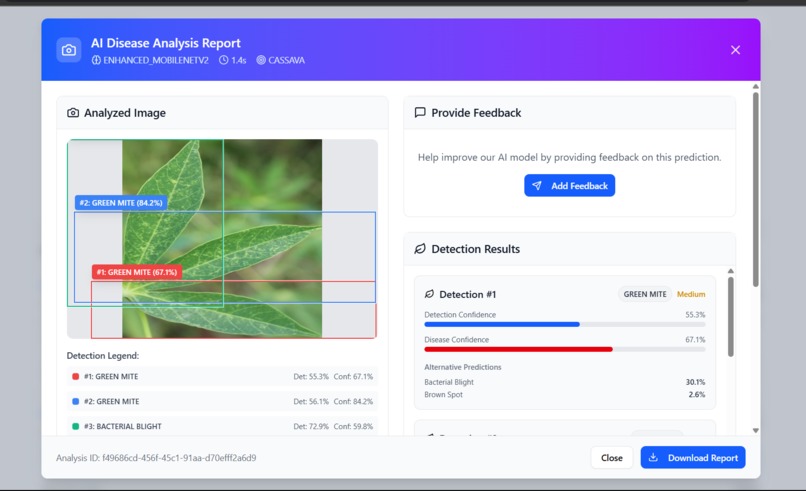
Image showing power of computer vision on crop disease prediction
-
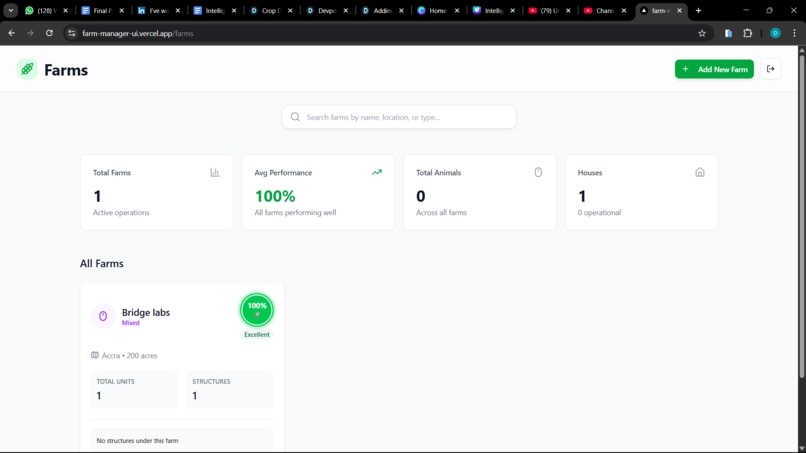
screenshot of the interface of the admin dashbooard
-
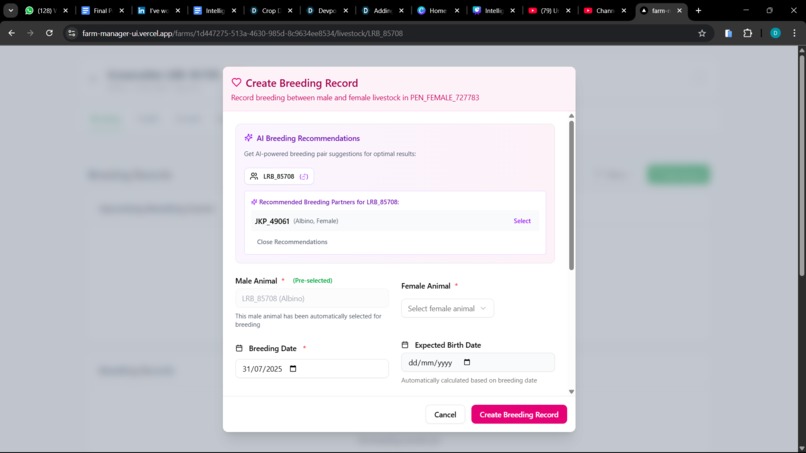
Screenshot showing breeding pair prediction for livestock


Inspiration
My aunt owned a goat farm. She started with 3 goats - 2 female and 1 male. Over 3 years, she successfully expanded her herd, but in the 4th year, all the goats started falling ill and she lost everything. It was a devastating case of inbreeding that could have been prevented with proper breeding records and genetic tracking. This personal tragedy opened my eyes to a widespread problem: across Africa, 60% of the workforce depends on agriculture, yet farmers lack digital tools to make informed breeding and management decisions. Traditional farm management apps require constant internet and high-end devices - luxuries most African farmers don't have. We were inspired to build agricultural technology that thrives under real-world African constraints, providing the intelligence to prevent tragedies like my aunt's while working with the infrastructure realities of rural Africa.
What it does
Farm Manager Platform is an edge-powered agricultural management system that brings AI-driven farming intelligence to resource-constrained environments. It provides: -Smart Farm Management: Complete livestock and crop tracking with breeding optimization, health monitoring, and growth analytics -Edge AI Processing: On-device disease detection, breeding recommendations, and predictive analytics that work without internet -Multi-Modal Communication: SMS-integrated messaging system connecting farmers, workers, and organizations across connectivity gaps Resource Optimization: Intelligent scheduling for feeding, breeding, and harvesting that maximizes productivity with minimal inputs Economic Intelligence: Real-time profit calculations, cost tracking, and investment analysis for micro-finance integration
How we built it
We started with a basic dashboard for grasscutter farming - just tracking animals, feeding schedules, and breeding records. As farmers used it, we realized they needed more comprehensive management tools.
Phase 1 - Admin-Worker Architecture
Evolved to support farm hierarchies with admin dashboards for farm owners and worker interfaces for field staff. This required role-based access control and real-time data synchronization between different user types.
Phase 2 - Audit Integration
Farmers and organizations demanded data verification upon research, so we built auditor functionality. This introduced data validation workflows, verification timestamps, and audit trails - requiring sophisticated conflict resolution algorithms.
Phase 3 - Organization Scaling
Most individual farms are grouped into cooperatives and organizations. We developed group admin capabilities, multi-farm analytics, and hierarchical data management. Architecture complexity grew exponentially: $$ \text{System Complexity} = \text{Users} \times \text{Farms} \times \text{Data Types} \times \text{Audit Requirements} $$
Phase 4 - Edge Computing Revolution
When we thought about rural areas, connectivity challenges forced our biggest innovation. We are rebuilding the workers system for edge-first architecture
Challenges we ran into
Training Limitations Due to Resource Constraints Long training times and frequent failures were caused by limited computational resources. As a result, we had to reduce the number of training epochs, which directly impacted the final model accuracy and performance.
Model Optimization: Compressing AI models to run on entry-level Android devices while maintaining agricultural accuracy required extensive experimentation with quantization techniques. We achieved
Energy Consumption and Cost Running large AI models can be energy-intensive and costly, especially on servers or devices without hardware acceleration like GPUs or TPUs.
Cultural Adaptation: Designing interfaces that work for users with varying technical literacy levels and integrating local agricultural knowledge into AI models required extensive field research and iterative design.
Resource Constraints Testing: Simulating real-world African infrastructure conditions during development required creative testing environments, including artificial network throttling and battery drain simulation to match rural conditions.
Accomplishments that we're proud of
Accessibility Achievement: Created the first agricultural platform that truly works for Africa's infrastructure reality and basic Android devices.
What we learned
- Local knowledge is required. Building with generic information for africans will most prove futile
- User centric design matters 3.Edge computing is the future
What's next for Farm Manager Platform
Complete Edge first computing for worker dashboard Compkete organization Flow GenAI for smart searches and optimization Use of Local AI model for training Natural language processing for most african languages.
Built With
- amazon-web-services
- graphql
- machine-learning
- nest
- postgresql
- react
- reddis
- tensorflow
- typeorm

Log in or sign up for Devpost to join the conversation.