Inspiration
What it does
How we built it
Inspiration
What it does
How we built it
Challenges we ran into
Accomplishments that we're proud of
What we learned
FARKINDA AI — Living Home Intelligence
Your Home Notices What You Miss.
Inspiration
What if our homes could understand our daily needs before we even noticed them?
Every day, households face small but important challenges: pet food runs low unexpectedly, changes in a pet's eating habits go unnoticed, groceries expire before they are used, and essential household supplies are forgotten.
Although smart home technology has advanced significantly, many solutions still operate independently. Pet feeders track feeding schedules, inventory applications manage groceries, and voice assistants respond to individual commands.
We wanted to explore a different approach: What if one intelligent system could connect these signals, understand their relationships, and help people make better decisions?
That question inspired FARKINDA AI.
Our mission is to create a proactive household awareness assistant that helps people care for their pets, reduce food waste, and manage everyday household needs.
What It Does
FARKINDA AI brings three essential capabilities together.
1. Household Awareness
The system tracks household inventory, estimates consumption rates, and identifies products that may run out soon.
For example, if a household has 900 ml of milk remaining and consumes approximately 300 ml per day, FARKINDA estimates that the supply will last three more days.
2. Pet Welfare Intelligence
FARKINDA records pet feeding activity and compares recent consumption with expected feeding patterns.
It can identify unusual changes in recorded food intake and suggest that the owner review the pet's feeding routine.
The system does not diagnose medical conditions or replace veterinary advice.
3. Food Waste Prevention
The application monitors food expiration dates and remaining quantities to identify products that should be used soon.
It helps households prioritize food consumption and reduce unnecessary waste.
Connected Household Planning
The most important capability is the Connected Planner.
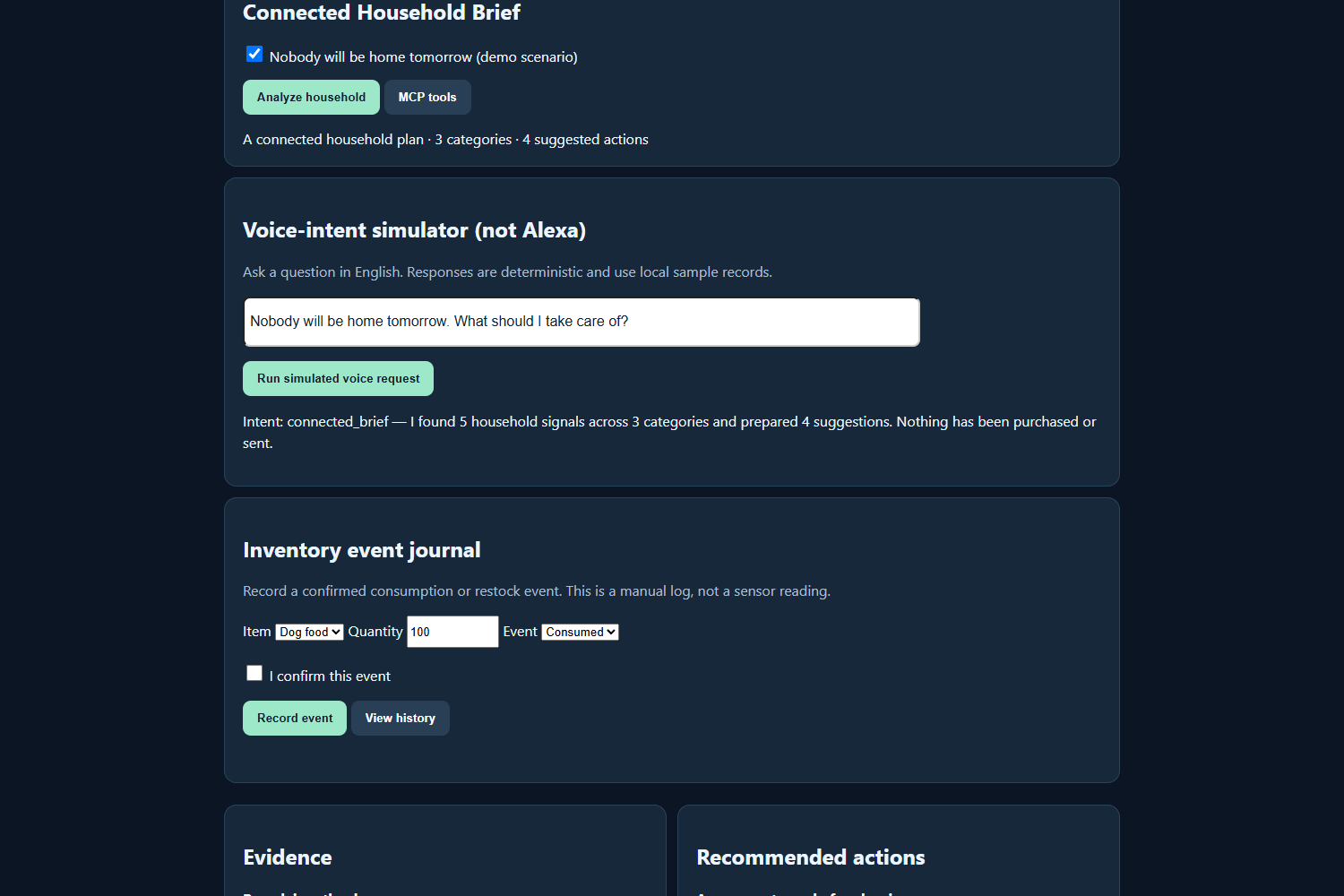
Instead of generating unrelated notifications, FARKINDA combines multiple household signals into one actionable plan.
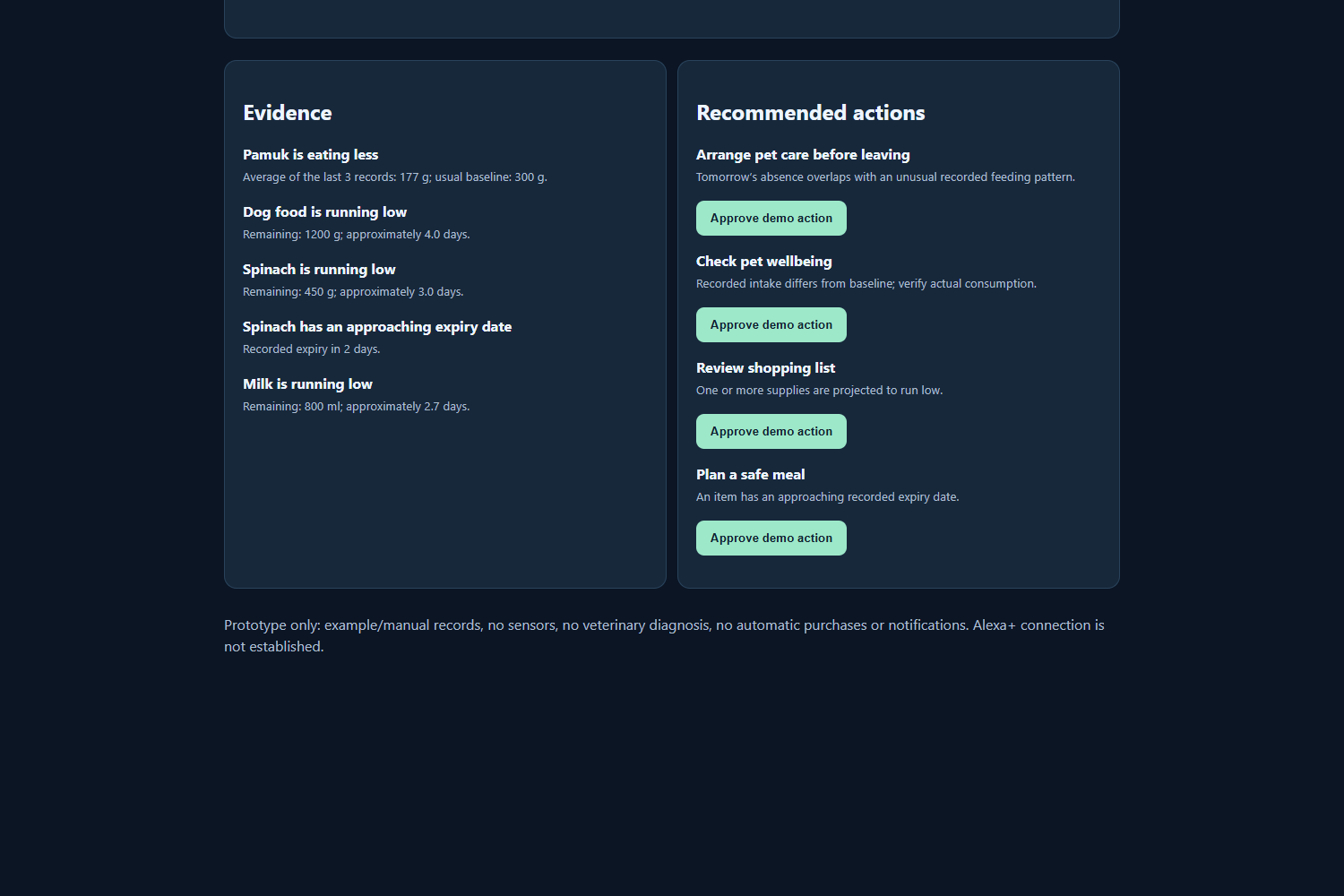
For example, if a family is leaving home tomorrow, pet food supplies are running low, and vegetables are approaching their expiration date, the system can recommend a coordinated preparation plan.
FARKINDA does not simply report information. It connects information to help users decide what to do next.
How We Built It
We developed FARKINDA AI as a modular Python application with a lightweight web interface.
Our current prototype uses:
- Python for backend logic and household analysis.
- SQLite for inventory, feeding records, and activity history.
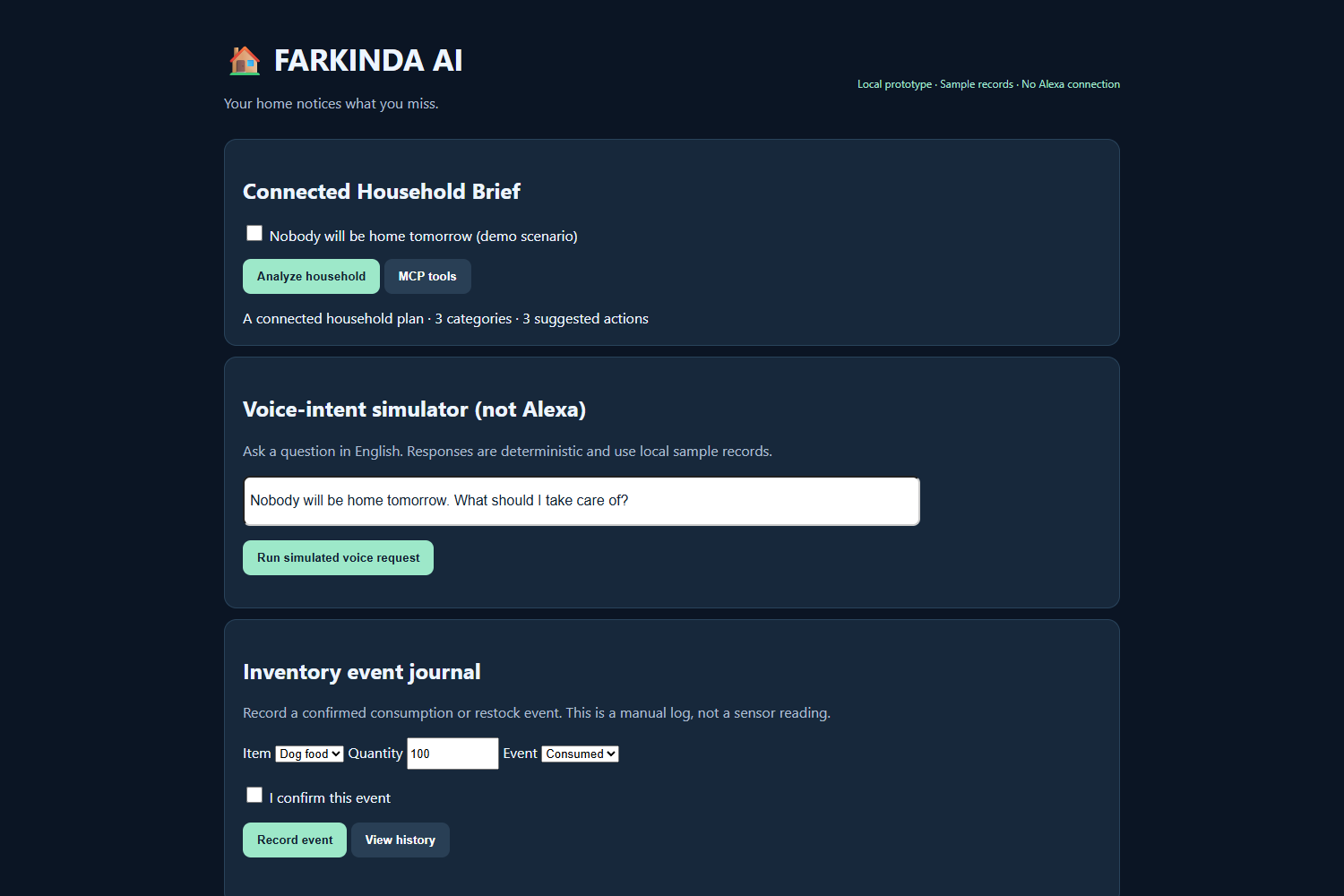
- HTML, CSS, and JavaScript for the interactive web dashboard.
- JSON-RPC and Model Context Protocol (MCP)-oriented tools for structured assistant interactions.
- Rule-based forecasting for inventory depletion and food expiration awareness.
- Connected planning logic to combine household signals into actionable recommendations.
- Automated unit tests to validate core functionality.
We implemented tools that retrieve household summaries, analyze inventory forecasts, review pet feeding information, and prepare suggested actions.
The application also includes an English-language command simulator to demonstrate how natural-language requests could be mapped to household operations.
Our current prototype uses sample household data and local application records. It does not claim to read real smart-home sensors or connect directly to a live Alexa+ account.
Challenges We Faced
Connecting Different Types of Data
Pet feeding records, grocery inventories, and household routines have different structures and meanings.
Our challenge was to transform these independent signals into a consistent decision-making process.
Avoiding Unnecessary Alerts
An intelligent assistant should not overwhelm users with warnings.
We focused on generating explainable recommendations and combining related alerts into practical action plans.
Building Trust and Safety
Household information can be sensitive, and automated actions can have real-world consequences.
We designed the prototype around user approval for state-changing operations and clear distinctions between observed information, calculated estimates, and recommendations.
Preparing for Voice Assistant Integration
Designing structured tools that could eventually support conversational assistants required separating business logic from the user interface.
We introduced an MCP-oriented tool layer and a local command simulator. Full Alexa+ connectivity and production-grade Streamable HTTP MCP deployment remain future integration milestones.
What We Learned
This project reinforced an important principle:
The value of an intelligent assistant is not measured by how many questions it answers, but by how effectively it connects information to meaningful decisions.
We also learned that trustworthy predictions require transparent assumptions, reliable data, and clear user control.
A useful home assistant should explain why it recommends an action rather than simply presenting a warning.
What Makes FARKINDA Different?
FARKINDA focuses on connected household awareness rather than isolated smart-home functions.
Its distinguishing design principles are:
- Cross-domain reasoning across household inventory, pet care, and food waste.
- Proactive identification of emerging household needs.
- Explainable predictions based on recorded consumption.
- Consolidated action plans instead of fragmented notifications.
- User-controlled actions with recorded approval.
- A modular architecture designed for future voice assistant and IoT integration.
What's Next?
Our roadmap includes:
- Implementing and validating production-compatible Streamable HTTP MCP integration.
- Exploring Alexa+ conversational workflows.
- Connecting supported smart feeders, weighing sensors, and inventory devices.
- Introducing personalized consumption forecasting.
- Supporting multiple household members and pets.
- Improving food waste prevention through meal-planning recommendations.
- Adding privacy-focused household data controls.
Our long-term vision is a home that does more than respond to commands.
A home that understands patterns, recognizes overlooked needs, and helps people act at the right moment.
FARKINDA AI — Your Home Notices What You Miss.

Log in or sign up for Devpost to join the conversation.