-
-
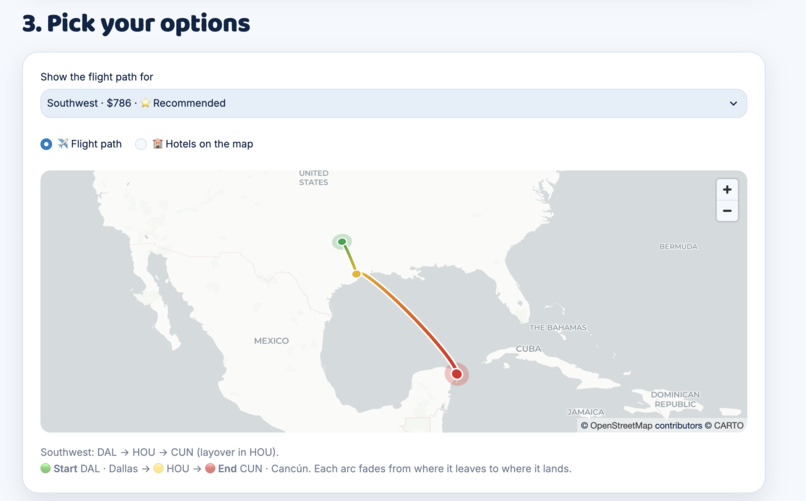
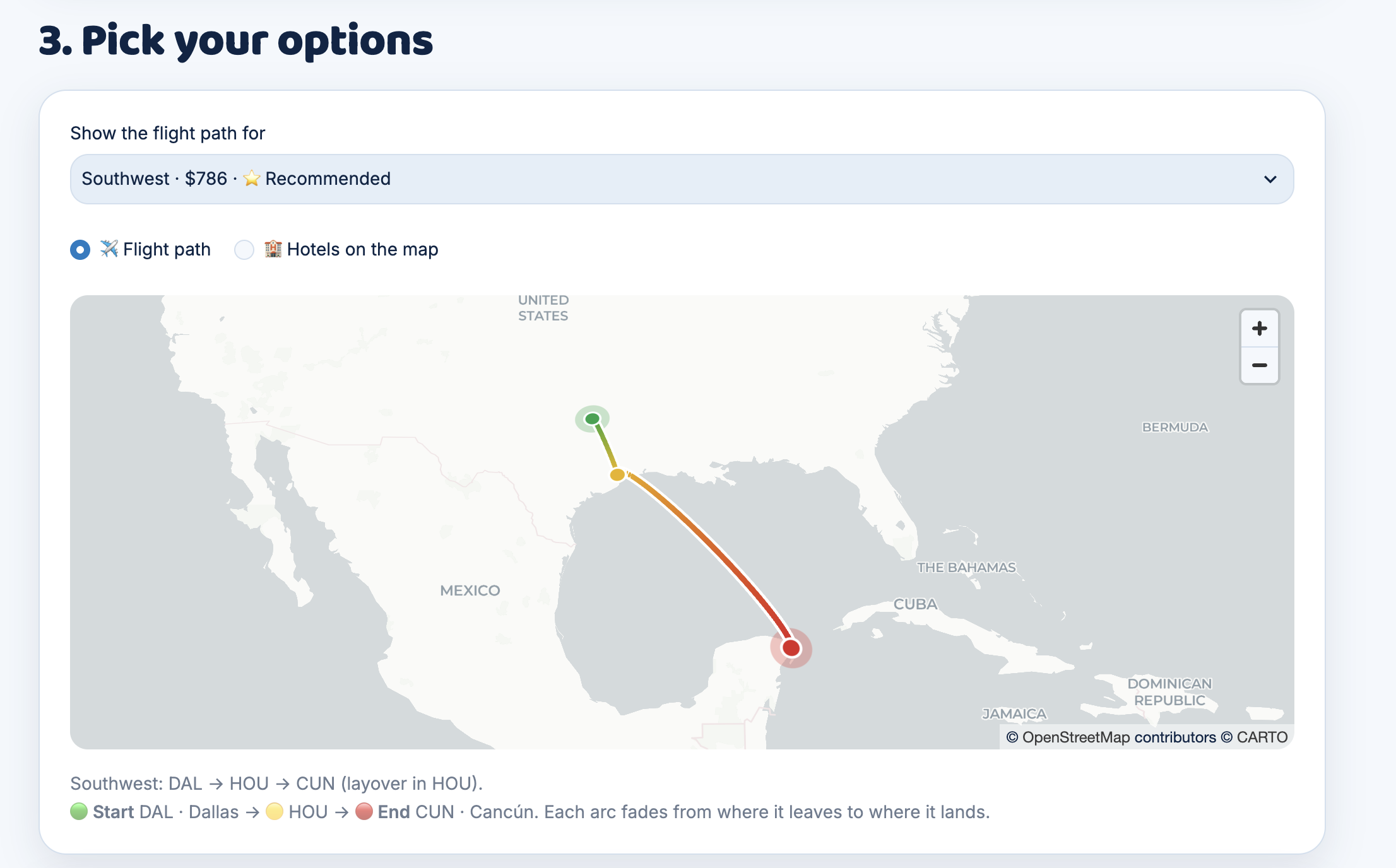
Flight Map
-
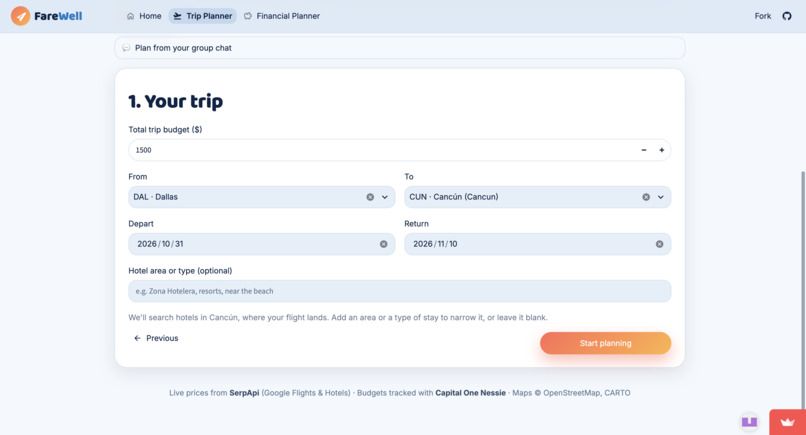
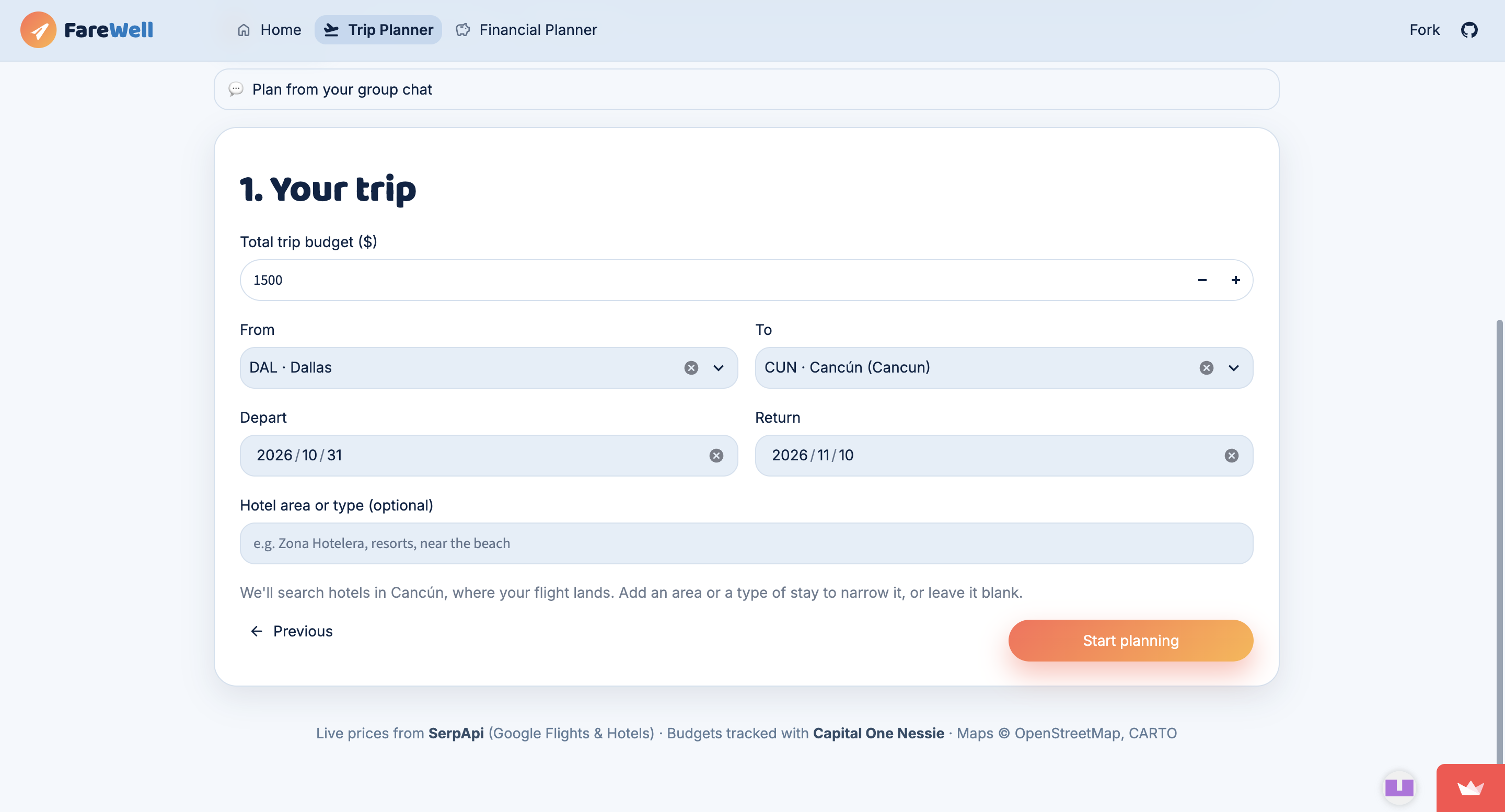
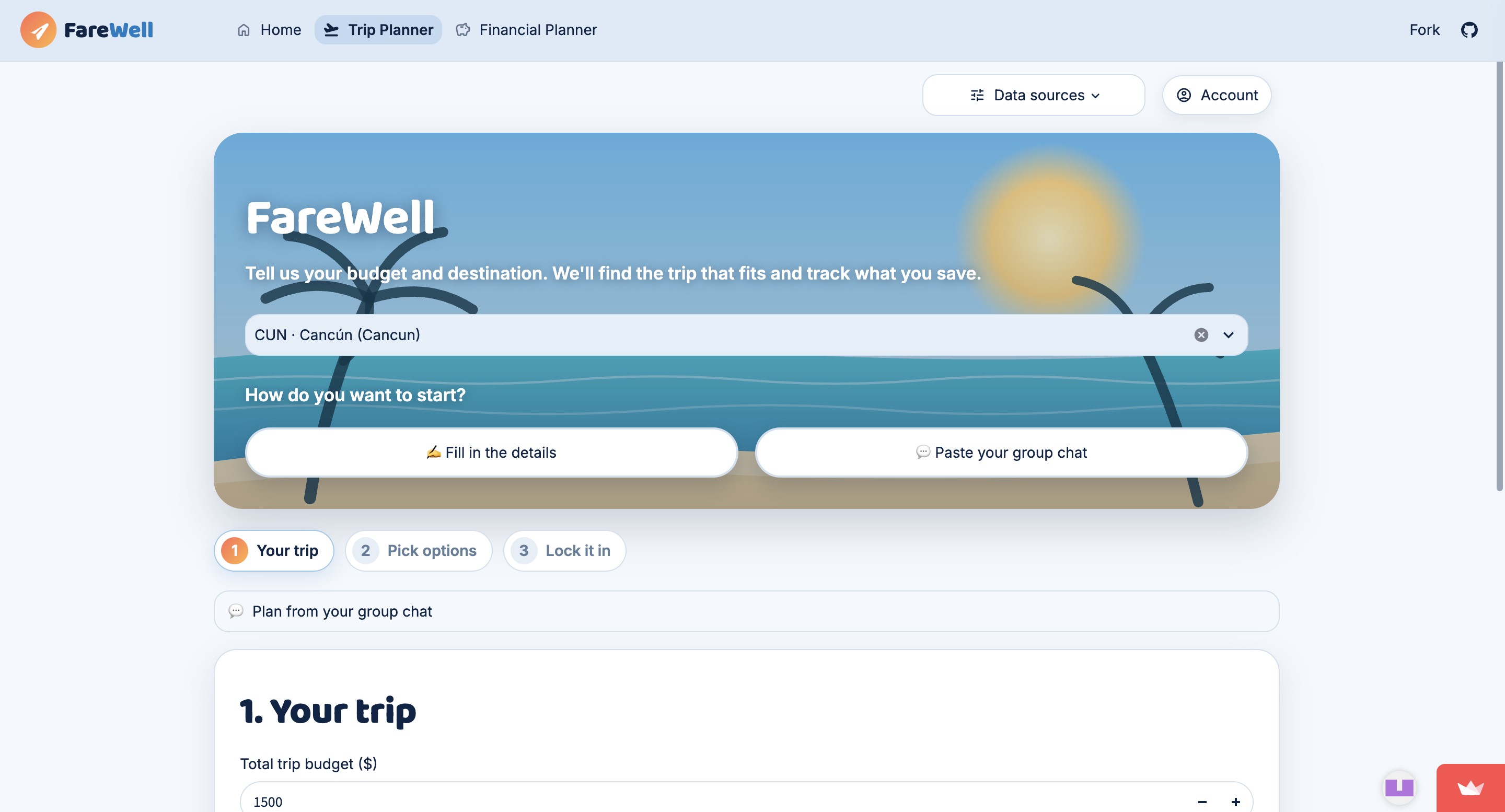
Enter trip details or enter screenshot
-
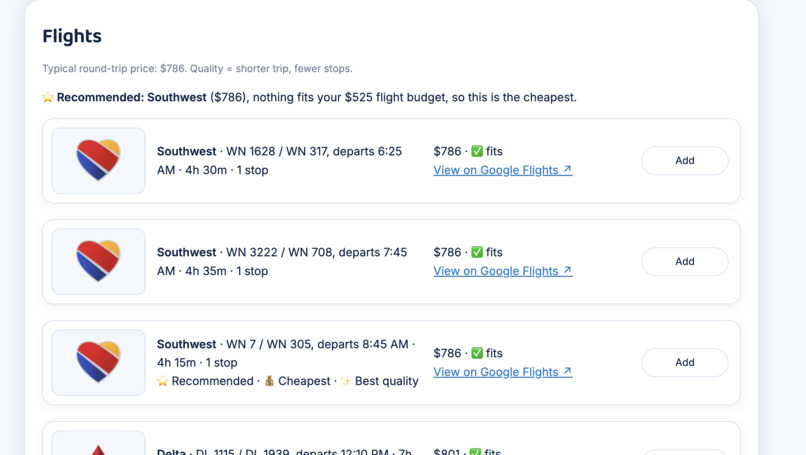
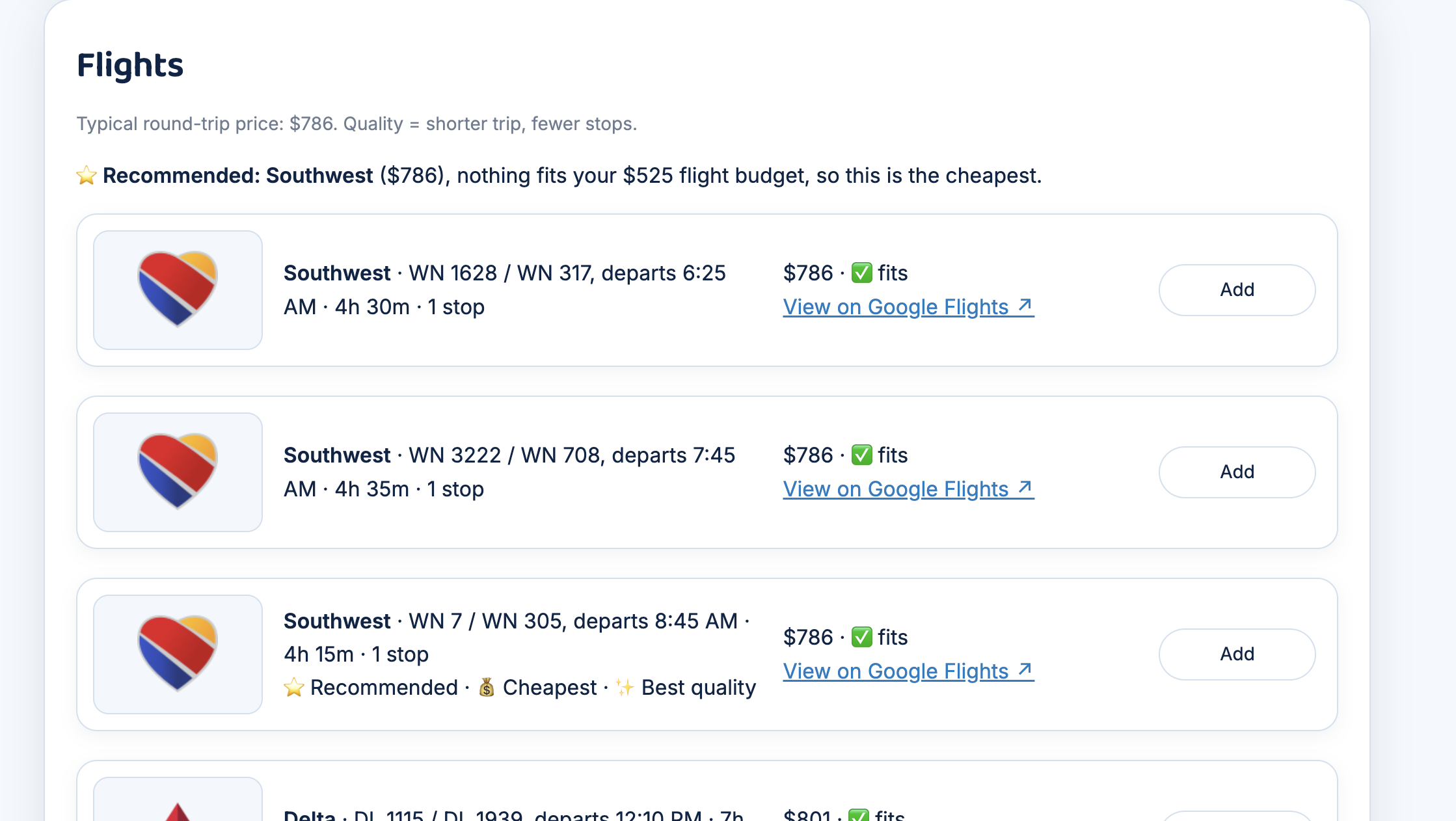
Flight results
-
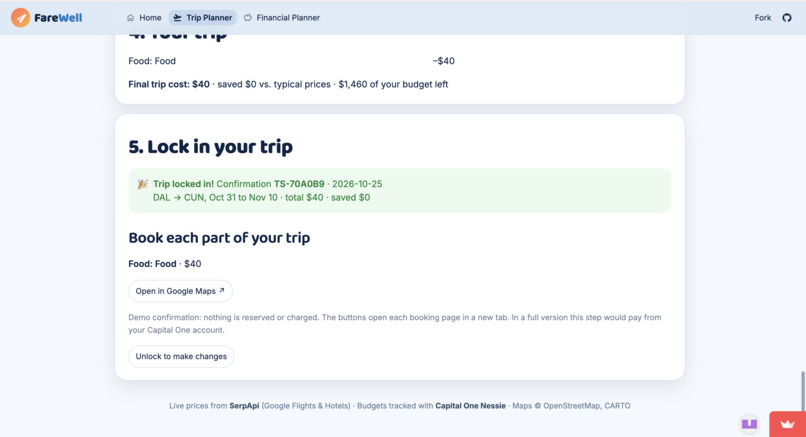
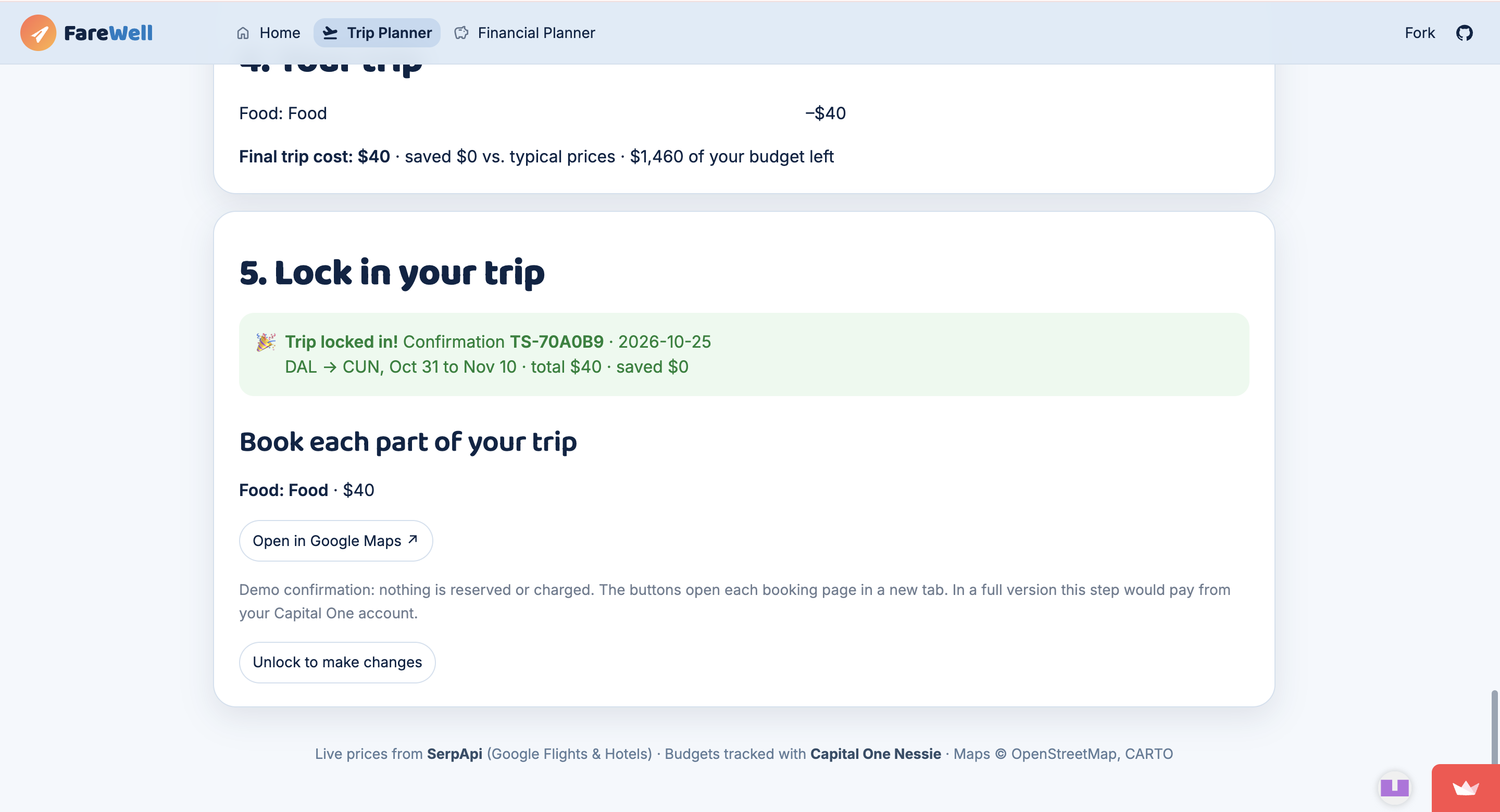
Finalize trip details to see summary
-
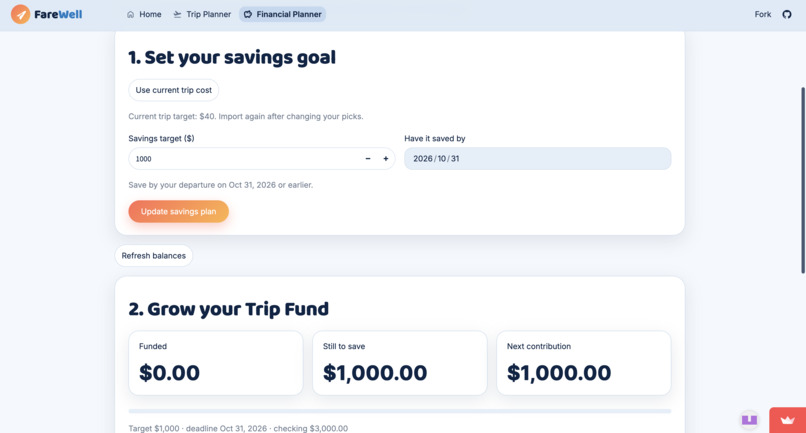
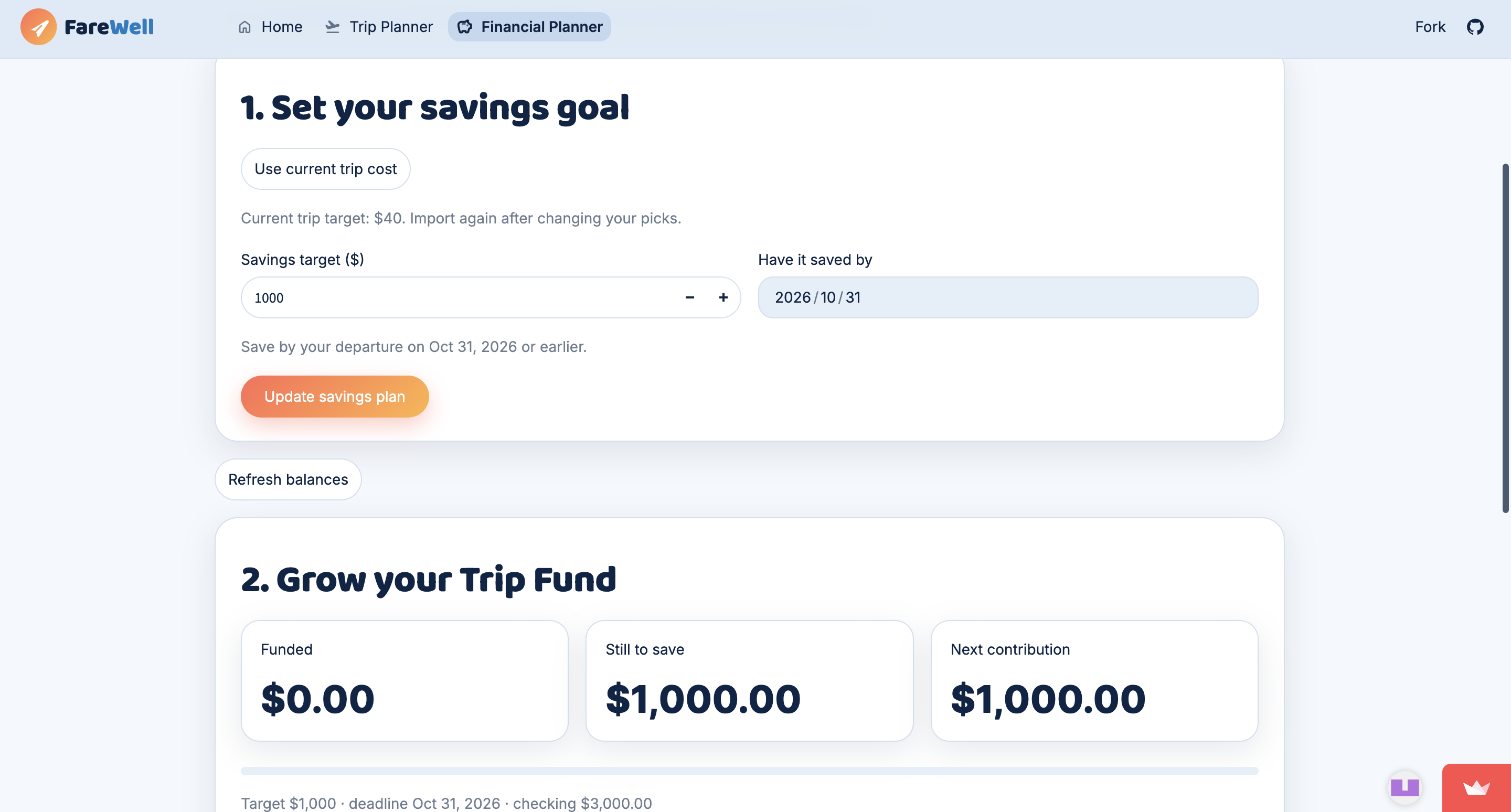
Set financial saving goals and receive a plan
-
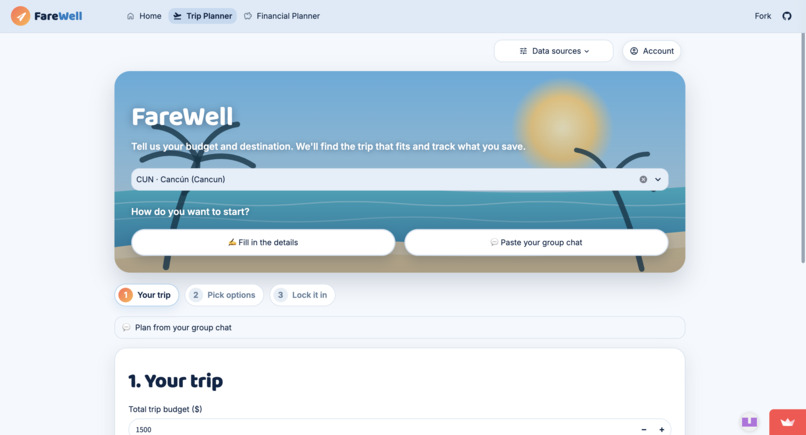
Plan the trip
-
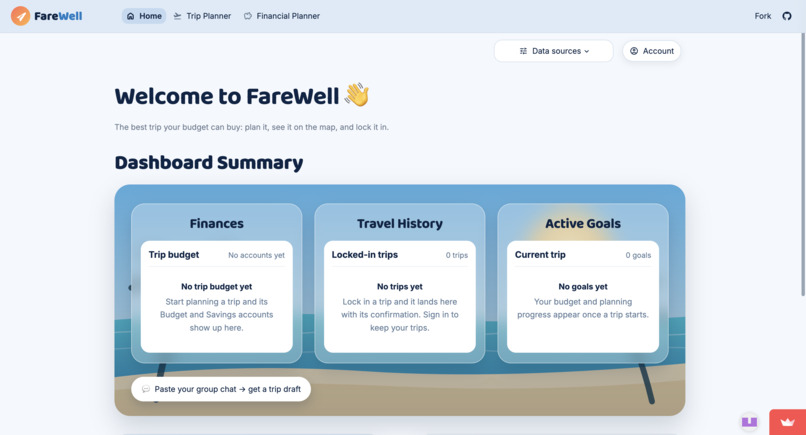
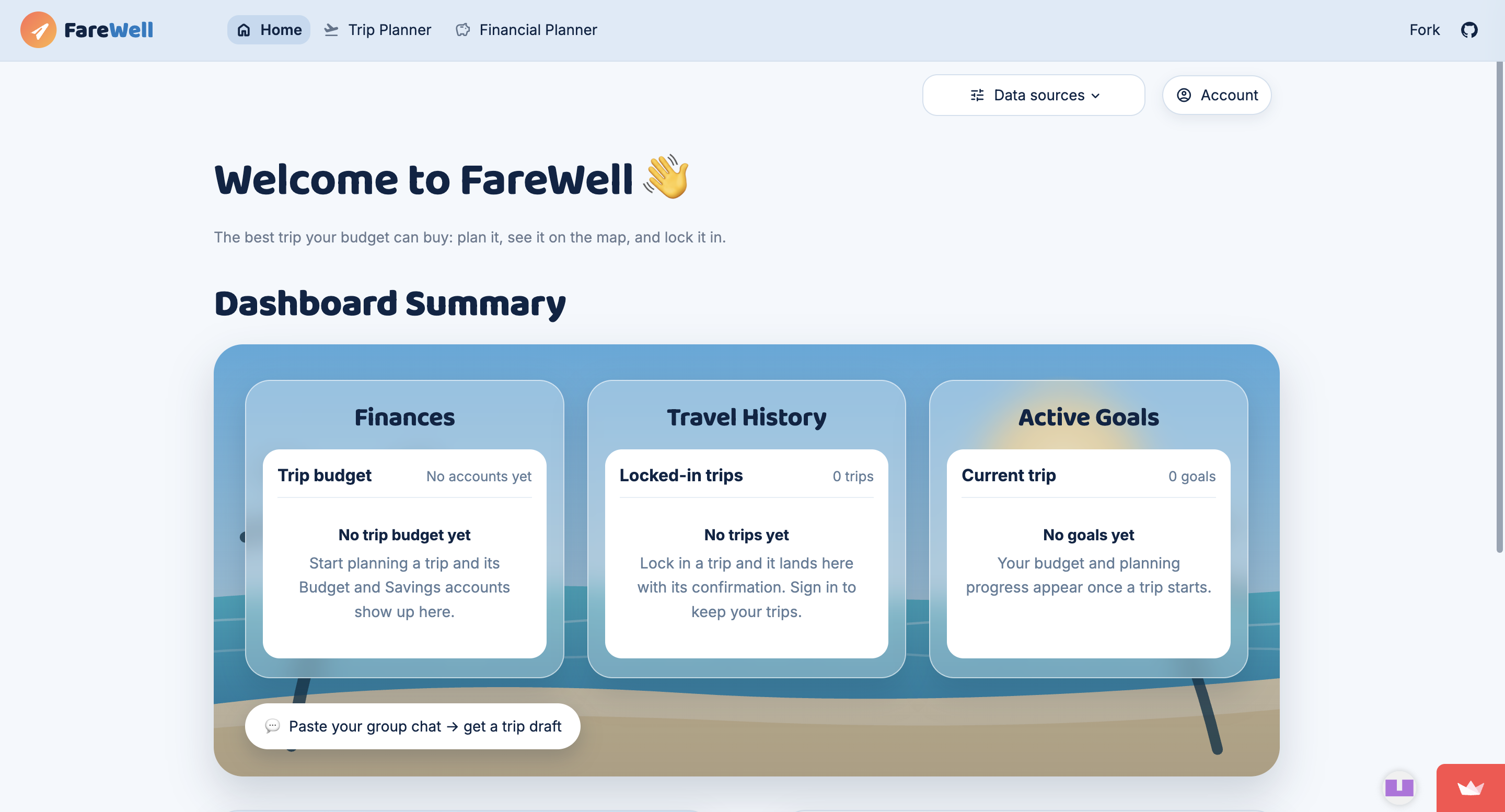
Homescreen
-
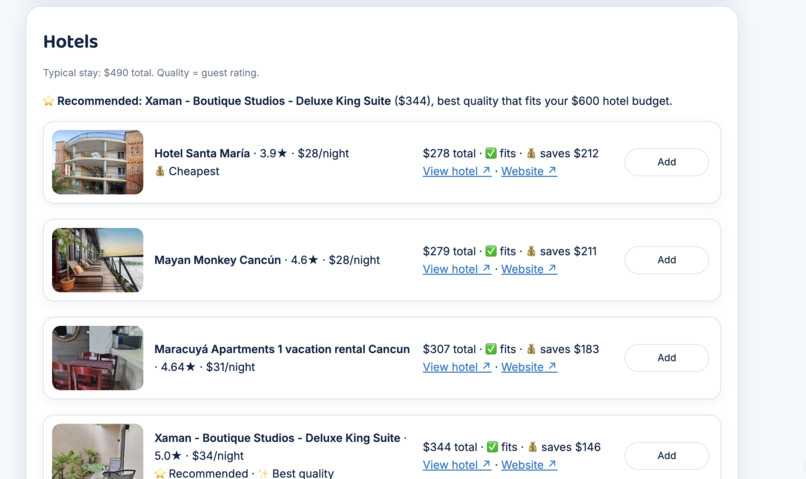
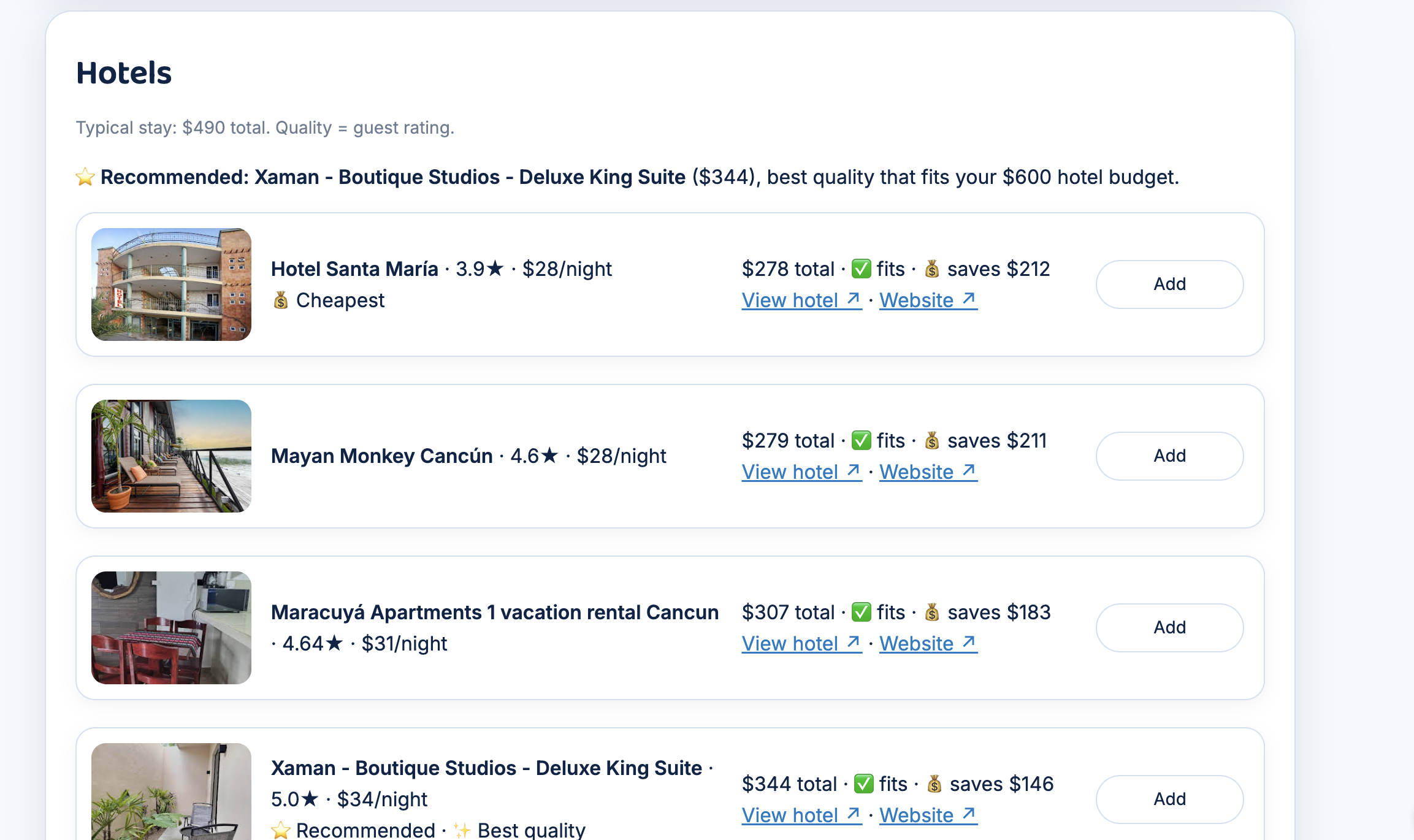
Hotel results
-
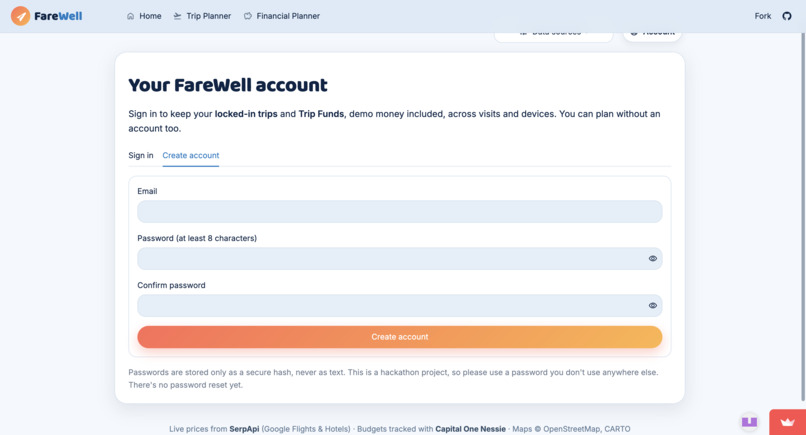
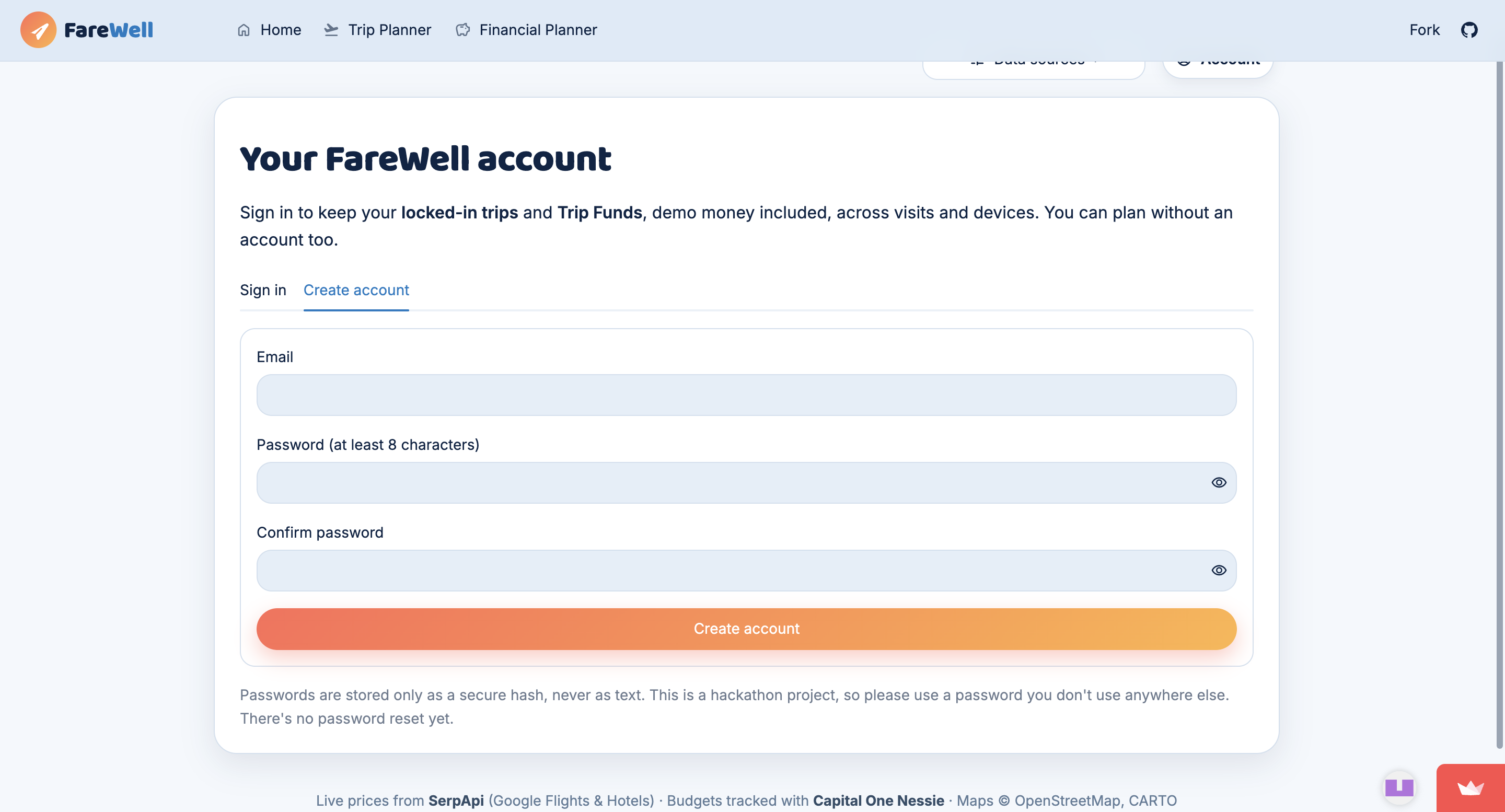
Create account or sign in
-
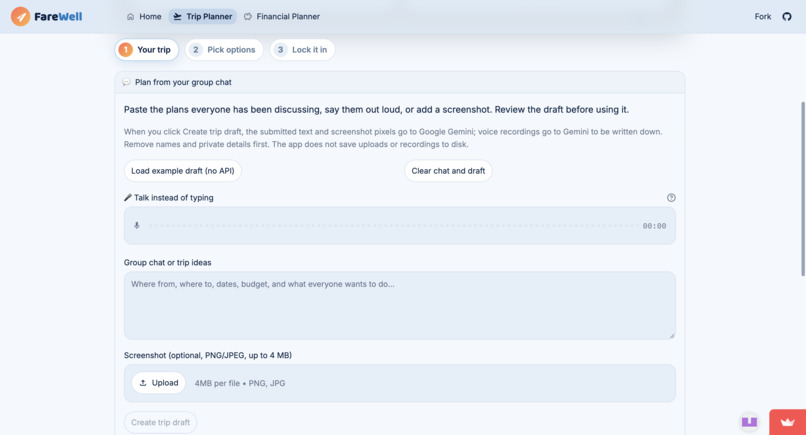
Voice modulation, screenshot upload, or type trip details powered by Gemini

Inspiration
Planning a trip with friends often starts with an excited group chat, but turning those ideas into a realistic plan is harder. Destinations, dates, and budgets get buried in messages, while comparing travel options means jumping between websites.
We built FareWell to connect travel planning with budgeting—helping users decide where to go and how to save toward getting there.
What it does
FareWell brings trip discovery, expense tracking, and weekly funding into one experience. Users can paste a group chat or upload a screenshot to generate an editable trip draft with Gemini.
After reviewing the details, users can compare flights and hotels, explore interactive maps, and add expenses such as food, activities, and transportation. Recommendations highlight affordable options and show how each choice affects the remaining budget.
The Financial Planner turns a savings target and deadline into a weekly contribution plan. Users can track their progress and make simulated transfers into a Trip Fund.
All banking uses simulated money, and locking in a trip does not reserve flights or hotels.
How we built it
As a team of four at our first hackathon, we chose Python and Streamlit to keep development manageable while delivering a complete demo.
We integrated:
- SerpApi for flight and hotel search results.
- Google Gemini for extracting travel preferences from conversations and screenshots.
- Capital One’s Nessie API for simulated accounts, expenses, and funding contributions.
- Pydeck for interactive flight routes and hotel maps.
We used AI coding assistance for scaffolding, debugging, and testing. Sample travel data and a local demo bank keep the core experience usable when live services are unavailable.
Challenges we faced
Our biggest challenge was making several integrations behave consistently. Travel responses sometimes lacked usable prices, while Nessie’s sandbox required calculating balances from transaction records and handling whole-dollar amounts.
We also addressed partial transfer failures, stale totals after editing confirmed trips, and a map tooltip bug that behaved differently across teammates’ setups. Tracing the tooltip coordinates revealed that the cards were being positioned outside the map.
What we learned
We learned that reliable integration requires more than successful API calls: it needs validation, failure handling, and clear feedback.
We also learned to distinguish savings compared with typical travel prices from money contributed toward a trip. Keeping those concepts separate made our calculations and interface clearer.
Dividing responsibilities, integrating frequently, and testing complete user flows helped us turn a broad idea into a working first-hackathon prototype.
What’s next
We want to add persistent shared trips, group voting, accurate pricing for multiple travelers and shared rooms, and savings reminders. Our goal is to help groups turn scattered ideas into an affordable trip they can follow through on.
Built With
- claude
- codex
- nessie
- python
- serpapi
- streamlit

