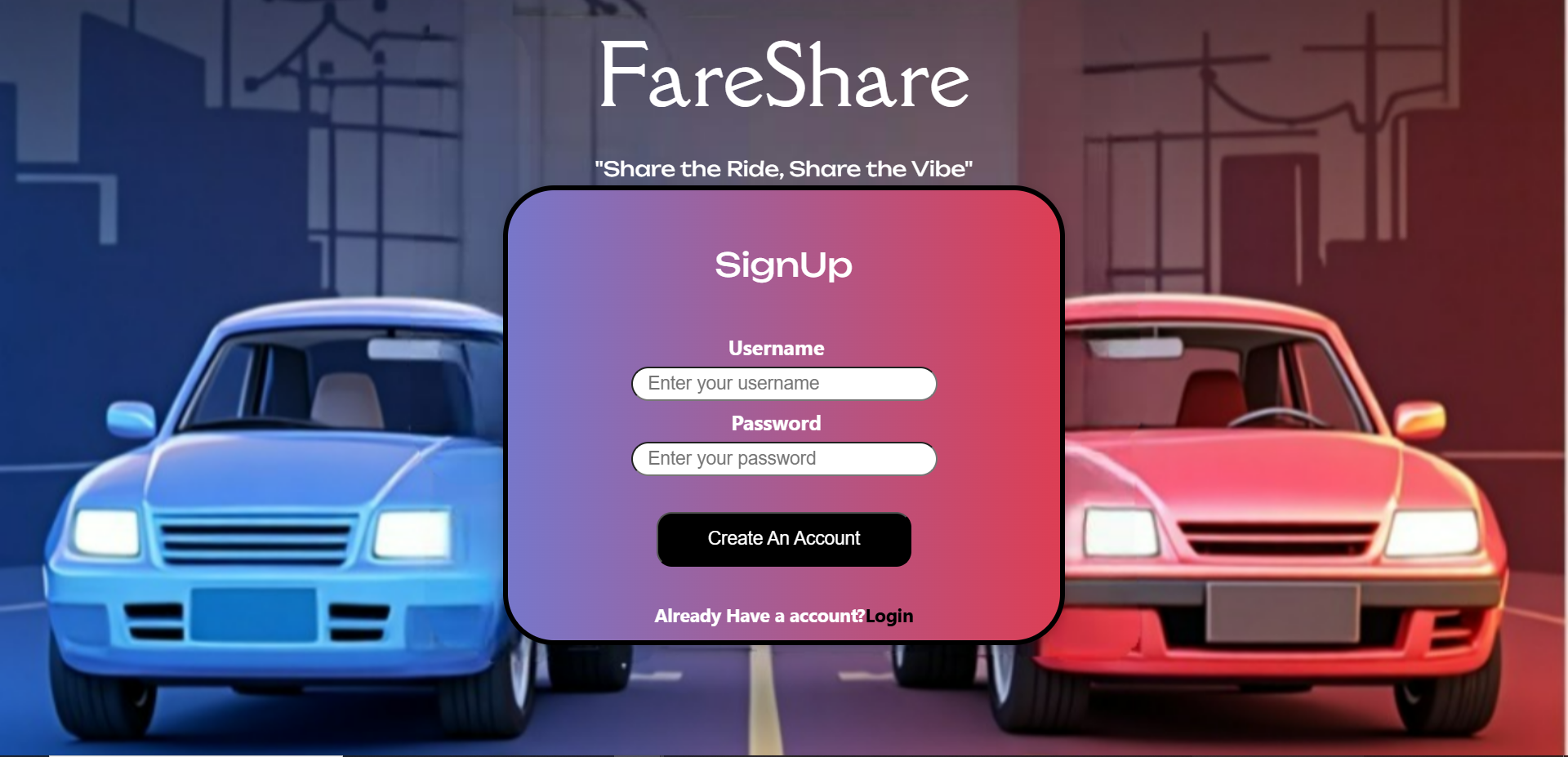
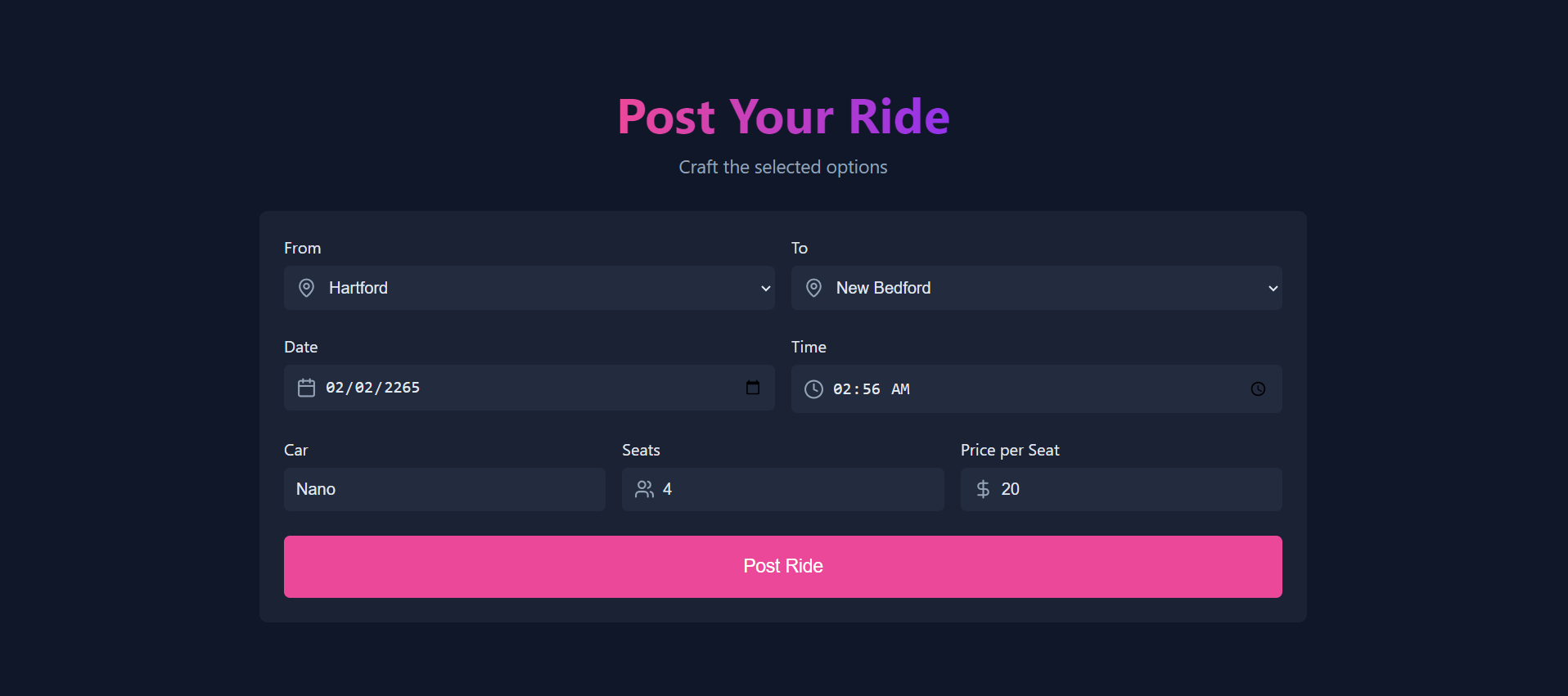
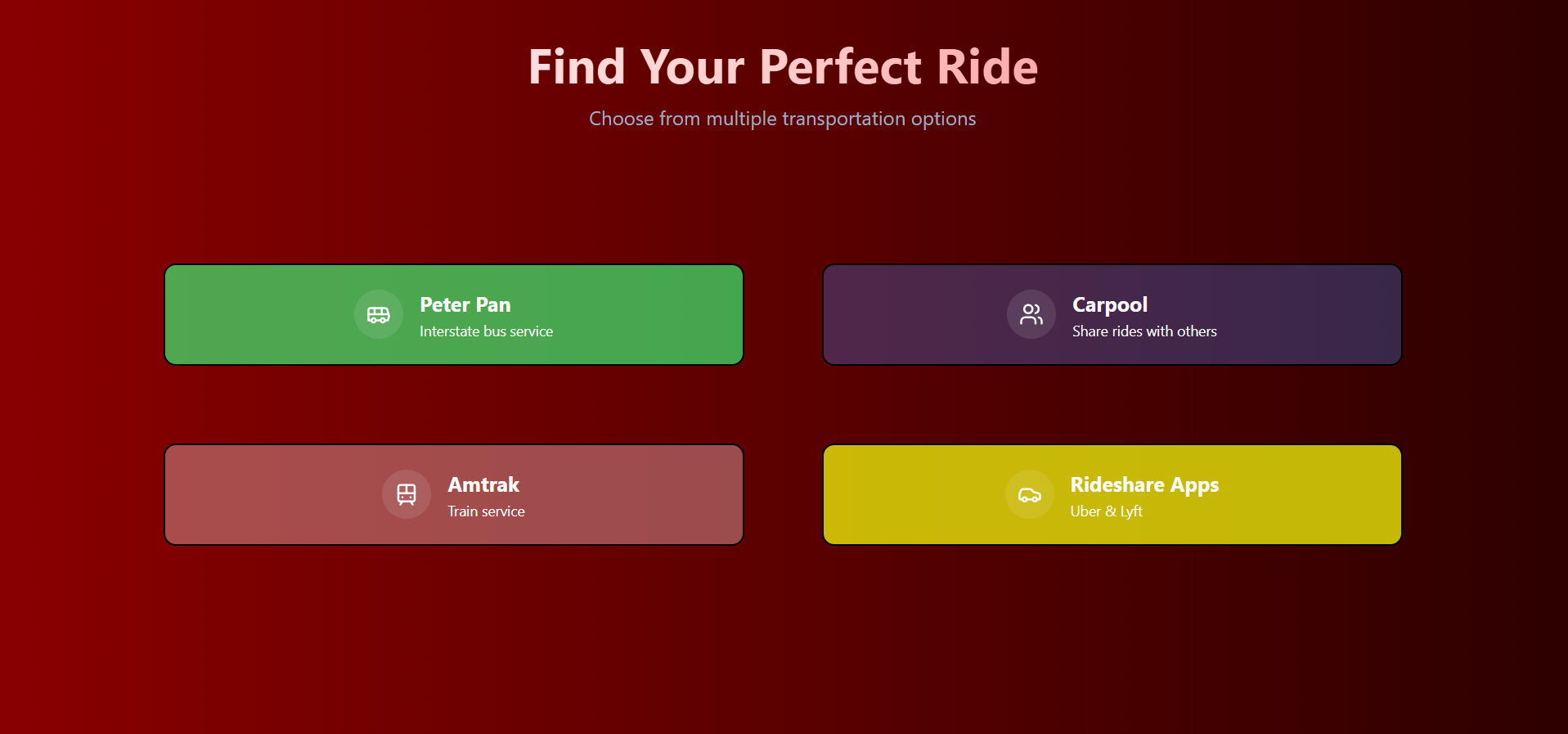
Inspiration & The Journey Behind FareShare
As international students traveling in a new country, socialization is an essential part of our journey. Moving between places, especially long-distance travel, can be isolating and expensive. One of the most significant challenges we face is commuting back to Amherst from the airport. There is an inefficient communication system for carpooling, leaving many students scrambling to find last-minute rides. Rideshare services like Uber and Lyft often charge exorbitant rates, making solo travel financially burdensome. However, we realized that many people are traveling the same route at the same time—we just weren’t connected efficiently.
That’s where FareShare was born.
We wanted to create a system that not only optimizes ride-sharing but also fosters meaningful connections between people traveling the same path. The idea quickly grew beyond just carpooling. Public transportation, like buses and trains, can be long and tedious, especially for new students or travelers unfamiliar with the area.
What if we could make these journeys more engaging and social?
What if people could meet fellow travelers, make friends, and have a more enjoyable experience rather than sitting in silence with strangers?
With FareShare, we aim to make travel more connected, cost-effective, and eco-friendly. By promoting group travel options and reducing the number of single-rider cars on the road, we not only help cut costs for individuals but also contribute to reducing carbon emissions. Encouraging the use of buses and trains also aligns with sustainability goals while making the experience more welcoming for students and travelers alike.
Building the Project & Overcoming Challenges
Developing FareShare was an exciting challenge. We had to create a seamless matching system that connects people based on their travel routes and schedules while ensuring an intuitive user experience. Building the real-time group chat feature was another crucial aspect, as it allows travellers to coordinate their journeys smoothly.
One of the biggest challenges we faced was figuring out how to integrate multiple modes of transport in a way that feels natural and efficient. Unlike traditional carpooling apps, FareShare had to consider shared public transport rides, train journeys, and even airport shuttle arrangements. We also had to ensure that the platform felt safe and inclusive—traveling with strangers can be daunting, so incorporating verification and trust-building mechanisms was a key focus.
The Impact & What We Learned
Through FareShare, we’ve learned that travel is more than just reaching a destination—it’s an opportunity to connect, share experiences, and build friendships. The act of pooling rides, whether in a car or on a bus, isn’t just about saving money—it’s about fostering a sense of community among travellers. By reducing solo rides, we contribute to lowering carbon footprints, making sustainable choices, and enhancing the overall travel experience.
Ultimately, FareShare is about bringing people together in motion. It transforms commutes into social opportunities, making every journey more meaningful. We believe that with the right tools, we can turn long rides into lasting friendships while making travel smarter, cheaper, and better for the planet.

Log in or sign up for Devpost to join the conversation.