-
-
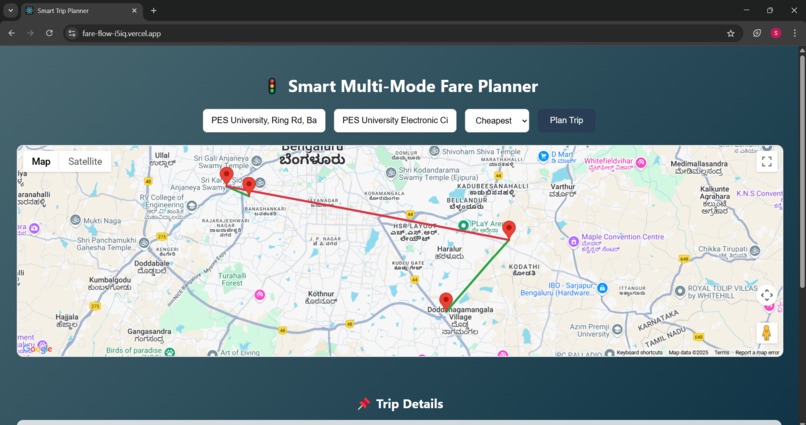
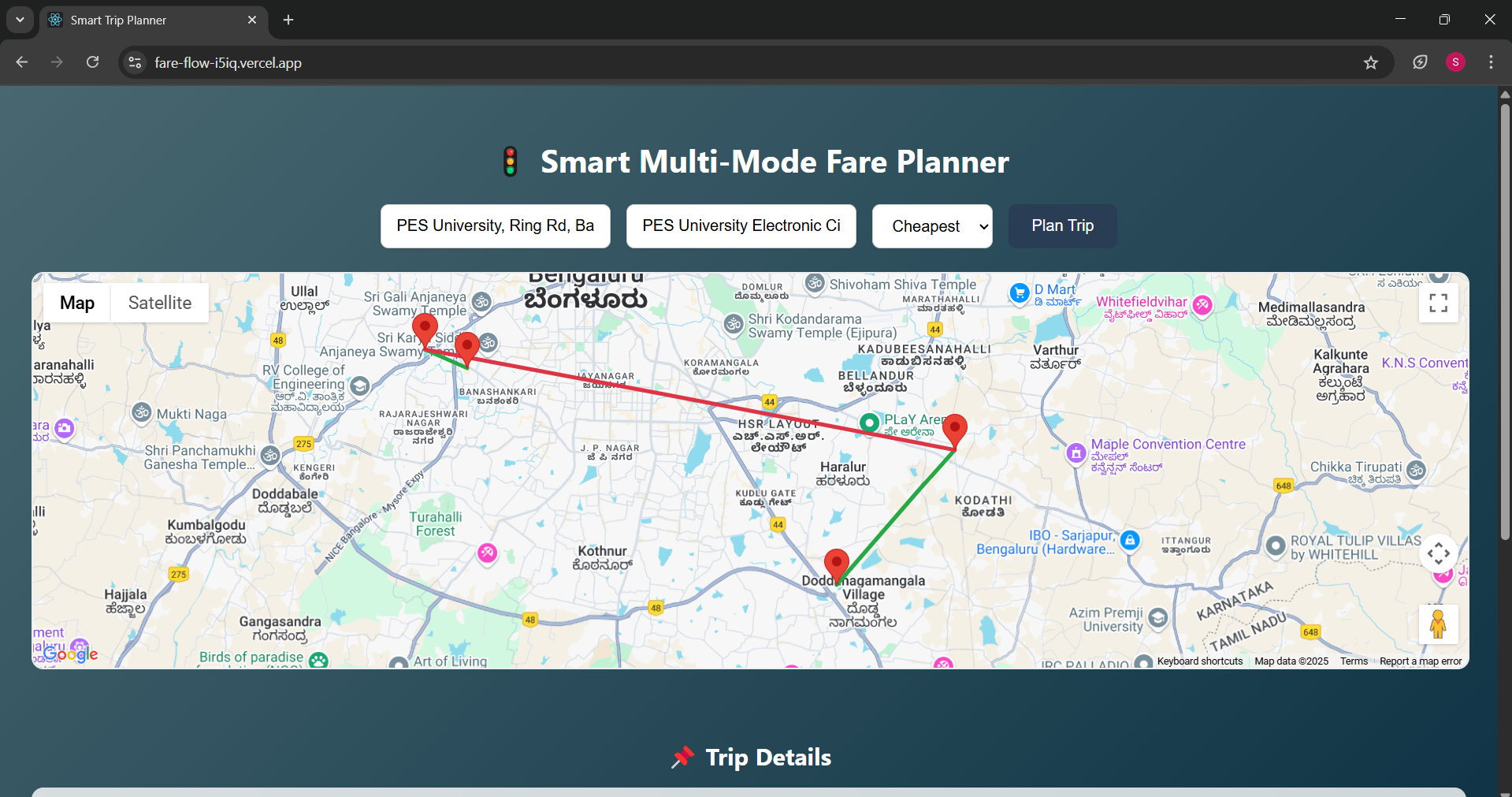
demo of intra city travel
-
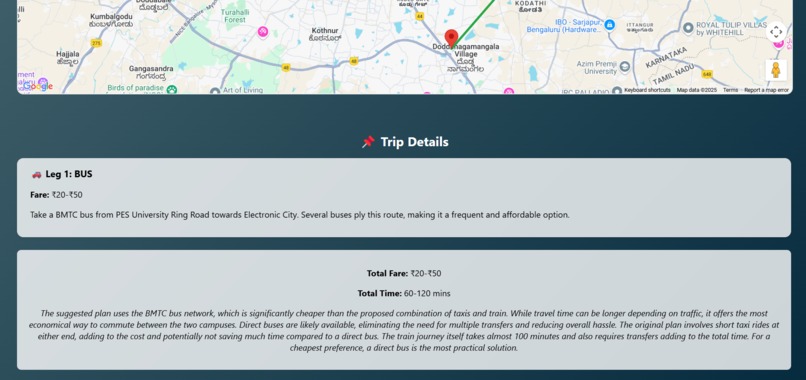
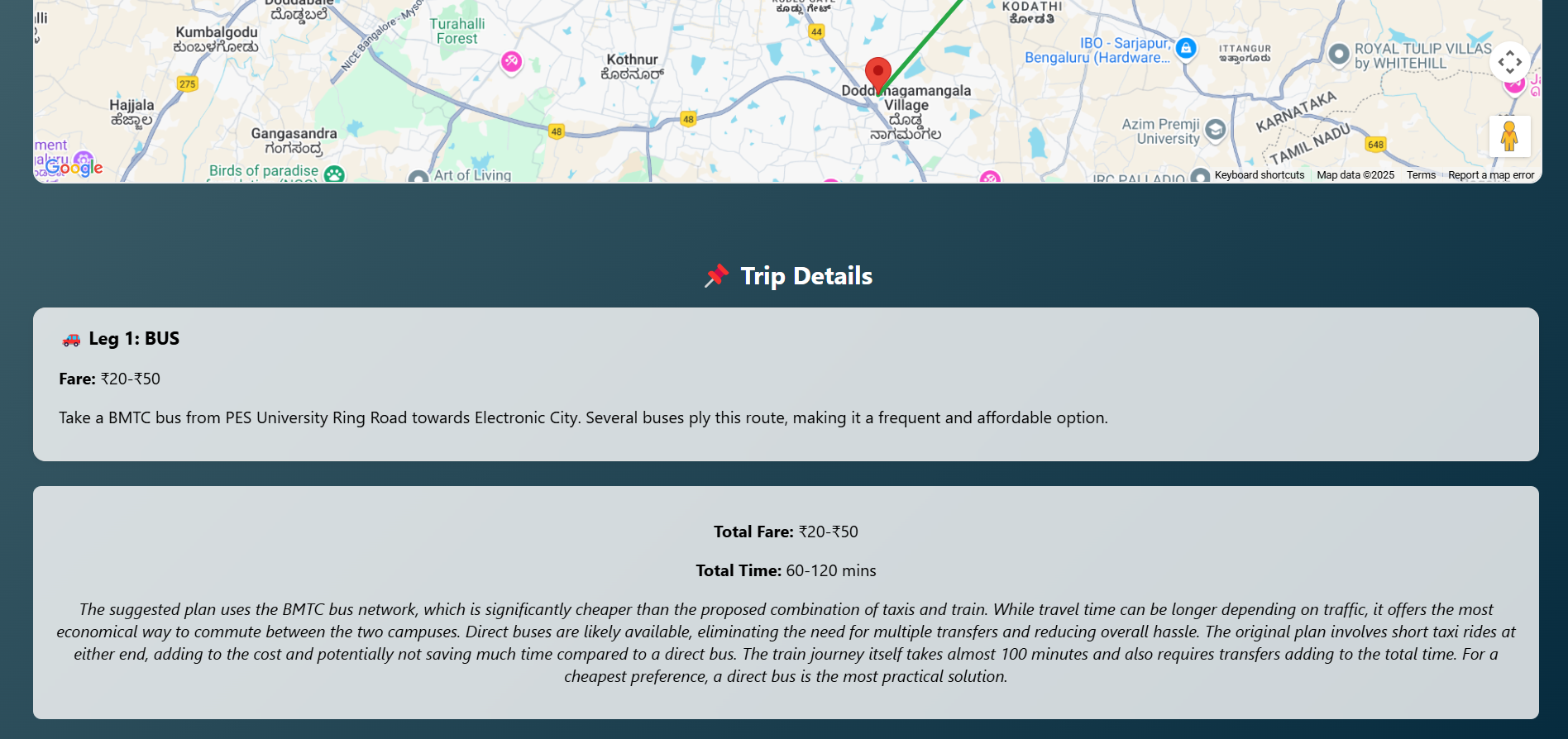
predicted travel plan
-
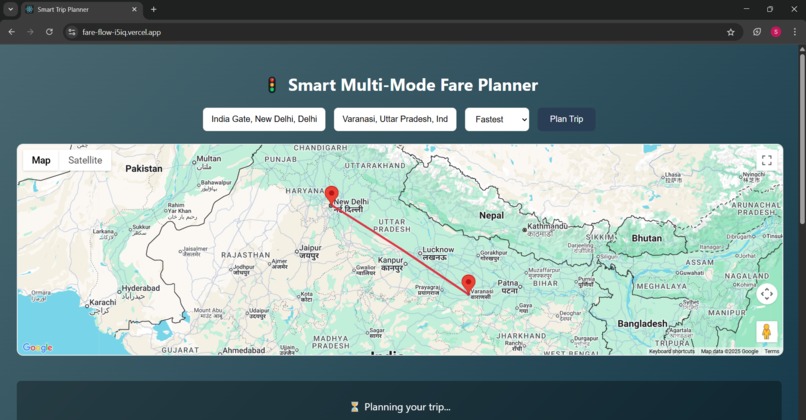
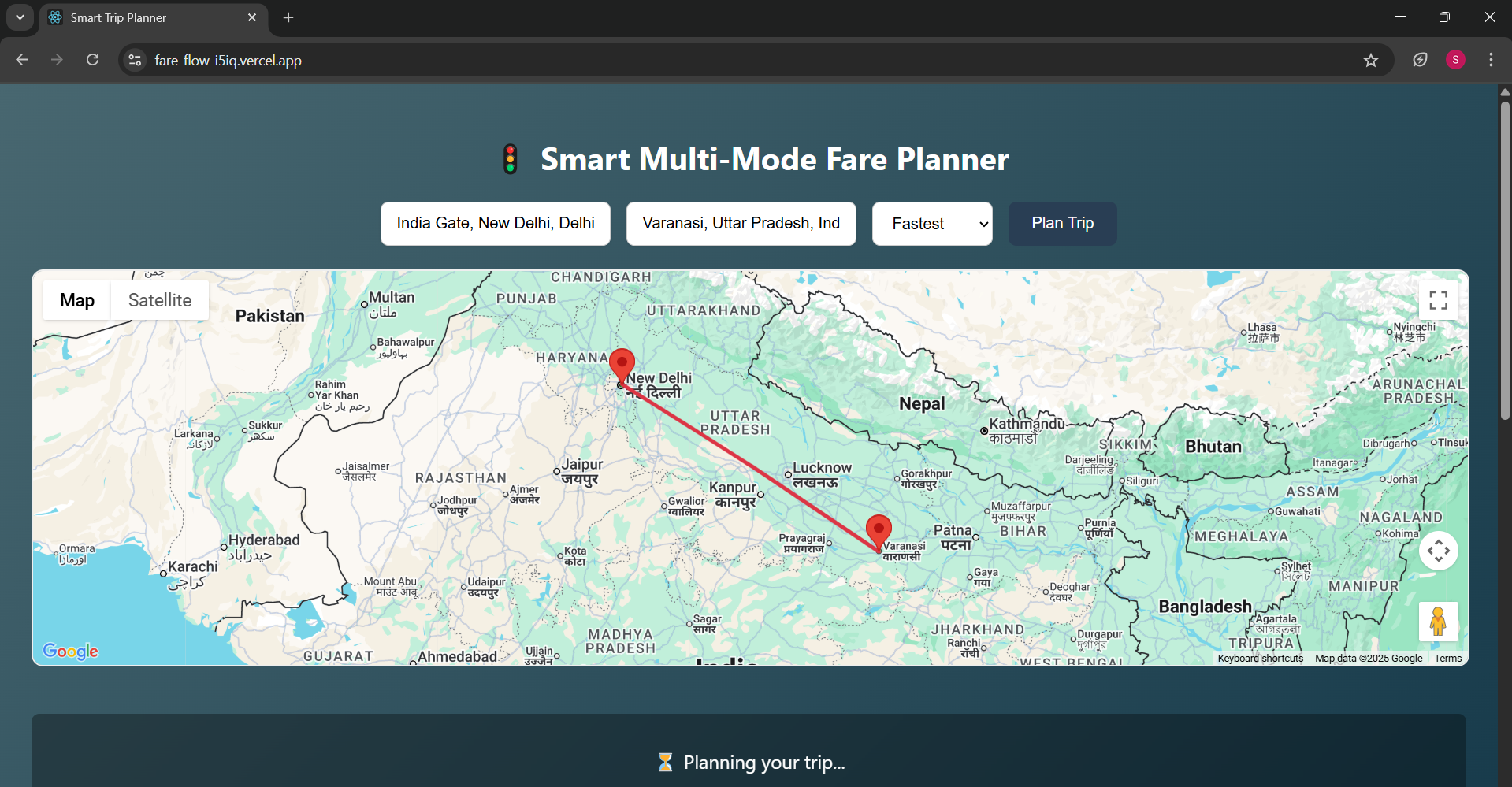
demo of intercity travel
-
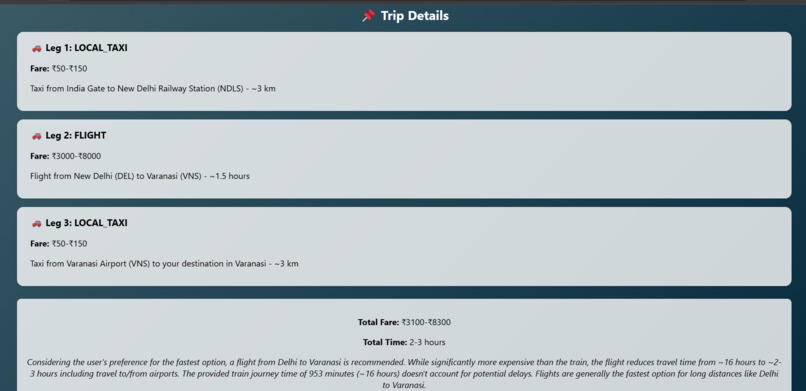
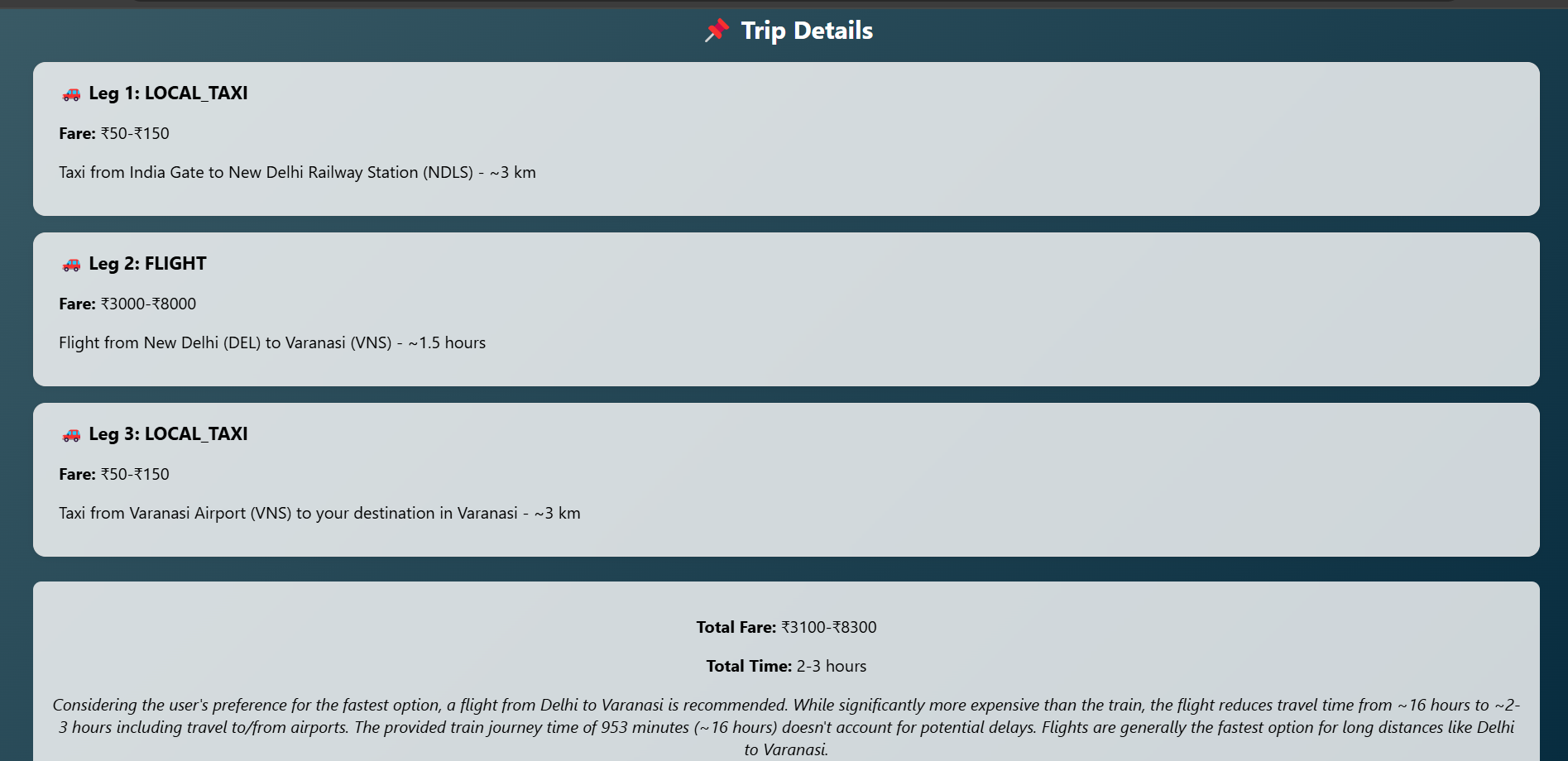
recommended trip for intercity trip
Inspiration
Traveling between cities in India often means juggling multiple modes of transport — cabs, trains, buses — and checking fares on different apps. I wanted to build something that does this planning for us, in one place, smartly and visually.
What it does
FareFlow lets you plan multi-mode trips between two places. It finds nearby transit stations, connects them with local taxis, trains, metro, or buses, visualizes the entire route on an interactive Google Map, and uses AI to suggest the best route and estimate total fares — whether you prefer the cheapest or the fastest option.
How we built it
The frontend was built with React and by integrating Google Maps JavaScript API, Places API, Distance Matrix API, and Directions API to find places, stations, distances, and transit routes. The backend is built with Node.js and Express, deployed on Railway, and uses Google’s Gemini API to generate fare estimates and travel advice. The full app runs live on Vercel (frontend) and Railway (backend).
Challenges we ran into
Combining multiple Google Maps Platform services smoothly in one React app was tricky — especially coordinating nearby searches, distance calculations, and drawing dynamic routes. Getting consistent, valid JSON responses from Gemini for fare estimates also needed careful prompt engineering and testing.
Accomplishments that we're proud of
Turning a complicated real-world idea into a functional prototype that combines Google Maps Platform features with AI was an achievement — it works end-to-end, from map interaction to smart fare planning in just one click.
What we learned
I learned how to fully unlock the power of Google Maps Platform APIs in a real project — combining Autocomplete, Places, Distance Matrix, and Directions. This also deepened my skills in deploying full-stack apps quickly and integrating Generative AI for meaningful, structured outputs.
What's next for FareFlow
Next, FareFlow aims to include live fare data, more transport modes, booking integration, and user accounts to save planned trips. The UI will also be refined for mobile use, making it easy for anyone to plan a multi-mode journey on the go, powered by Google Maps Platform.
Built With
- css
- dotenv
- express.js
- geminiapi
- google-directions
- google-distance-matrix-api
- google-maps-javascript-api
- google-places
- googlegenerativeai
- html
- javascript
- node.js
- railway
- react.js
- vercel

Log in or sign up for Devpost to join the conversation.