-
-
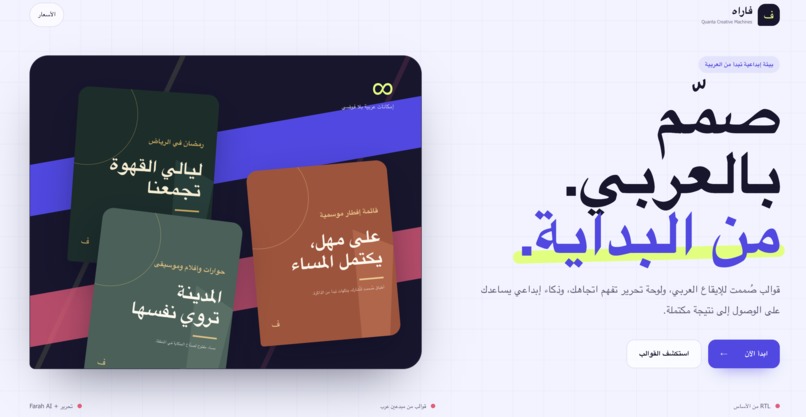
01
-
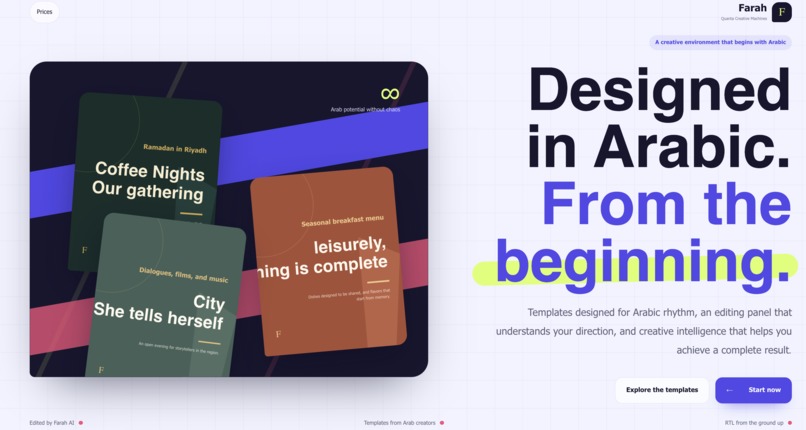
02
-
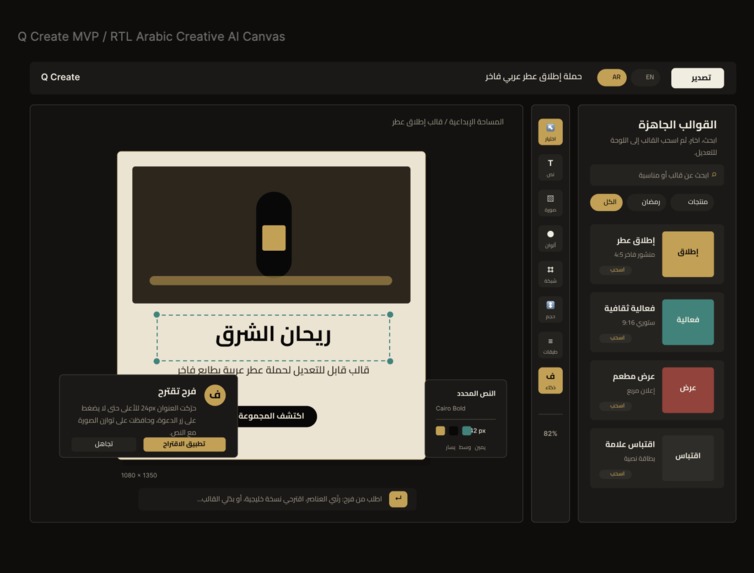
03
-
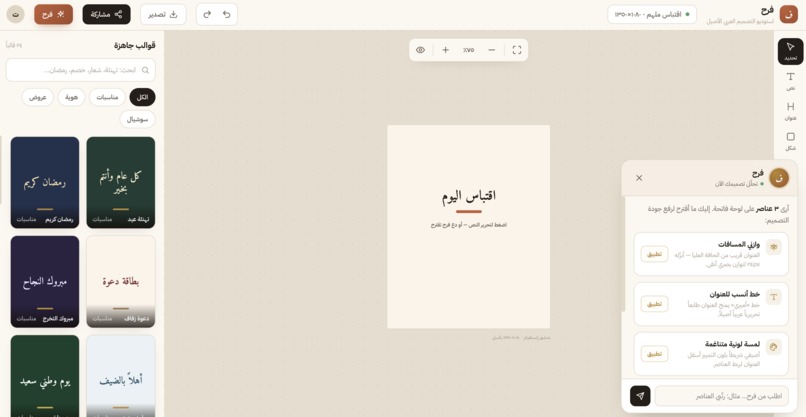
04
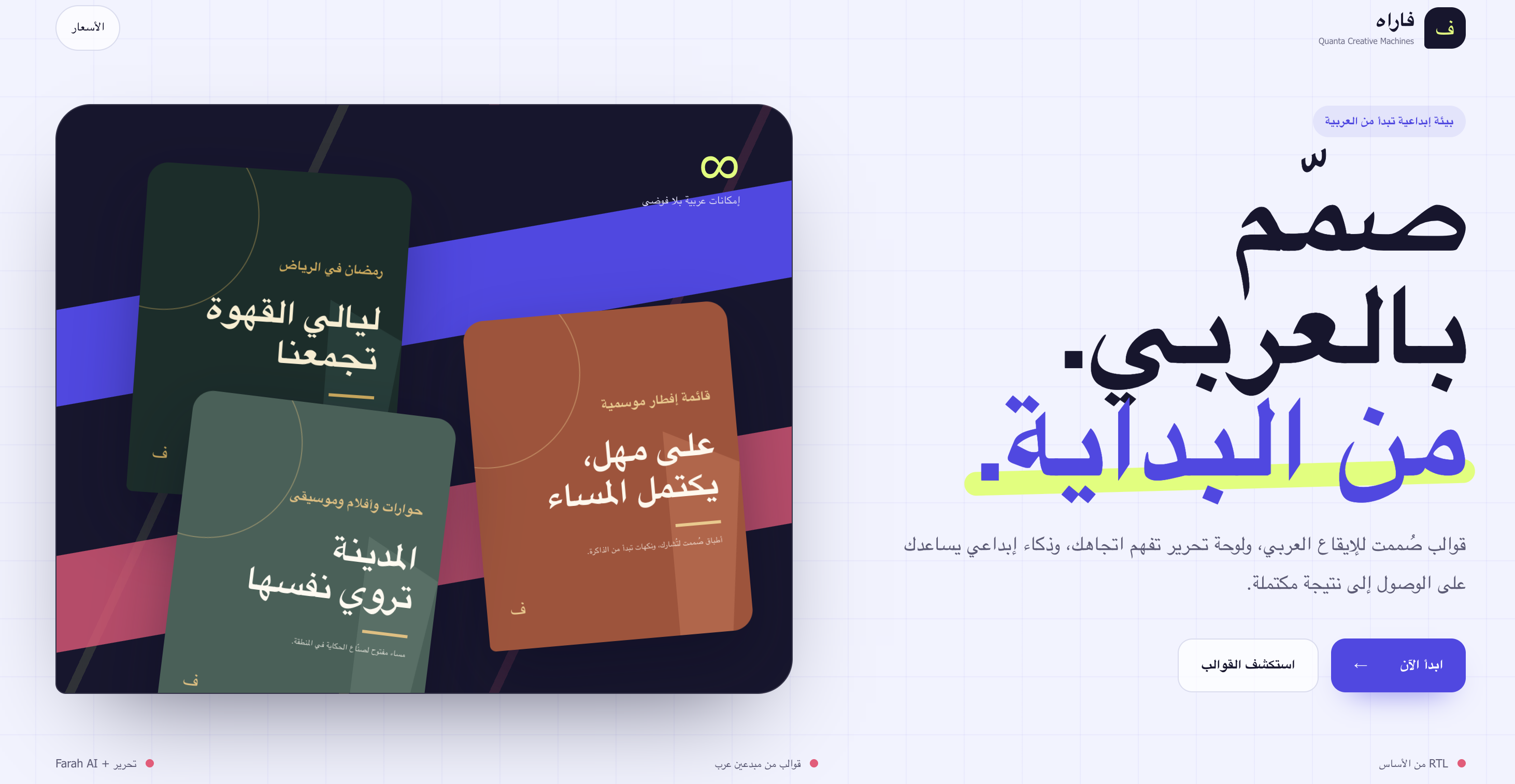
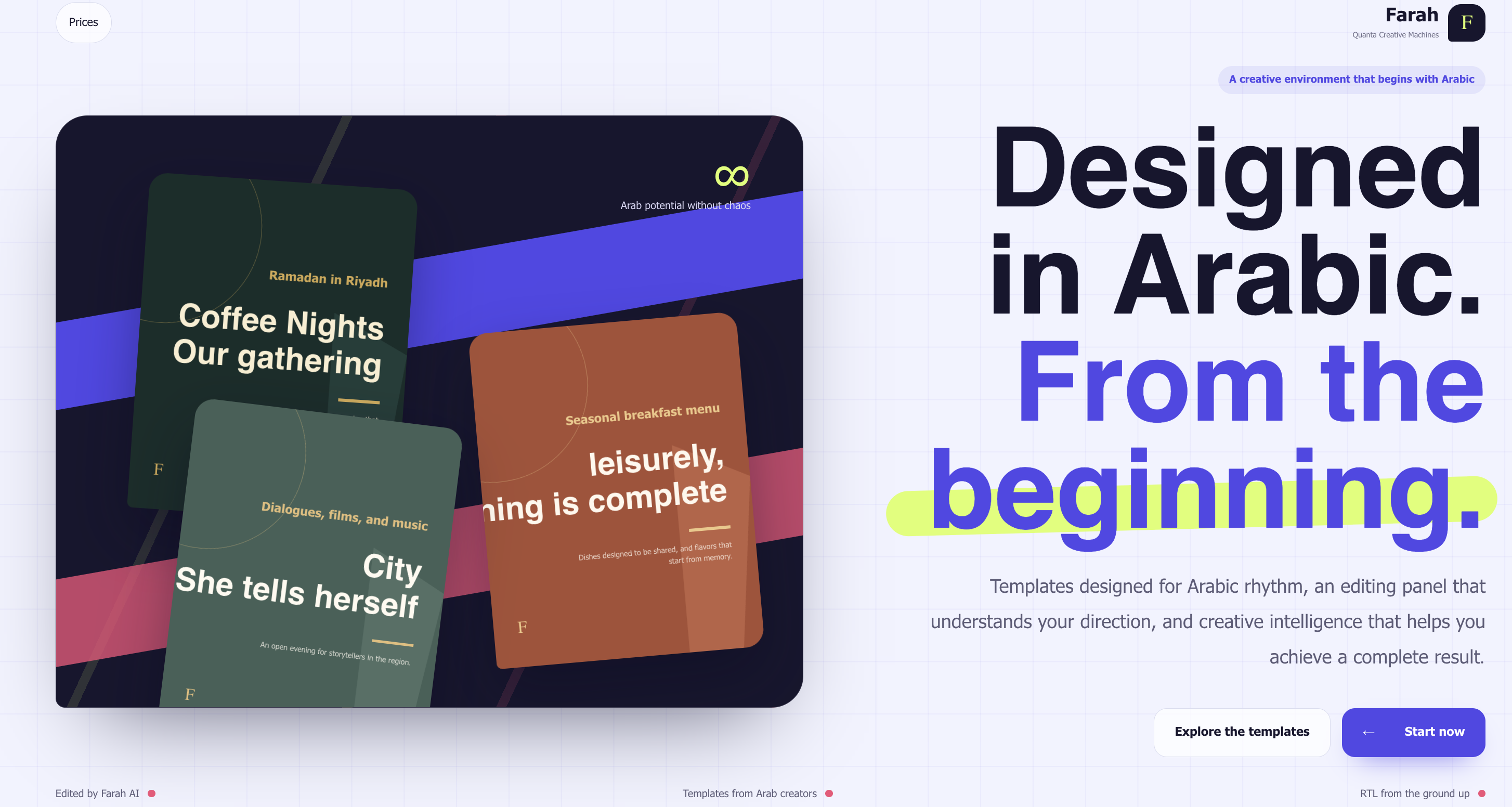
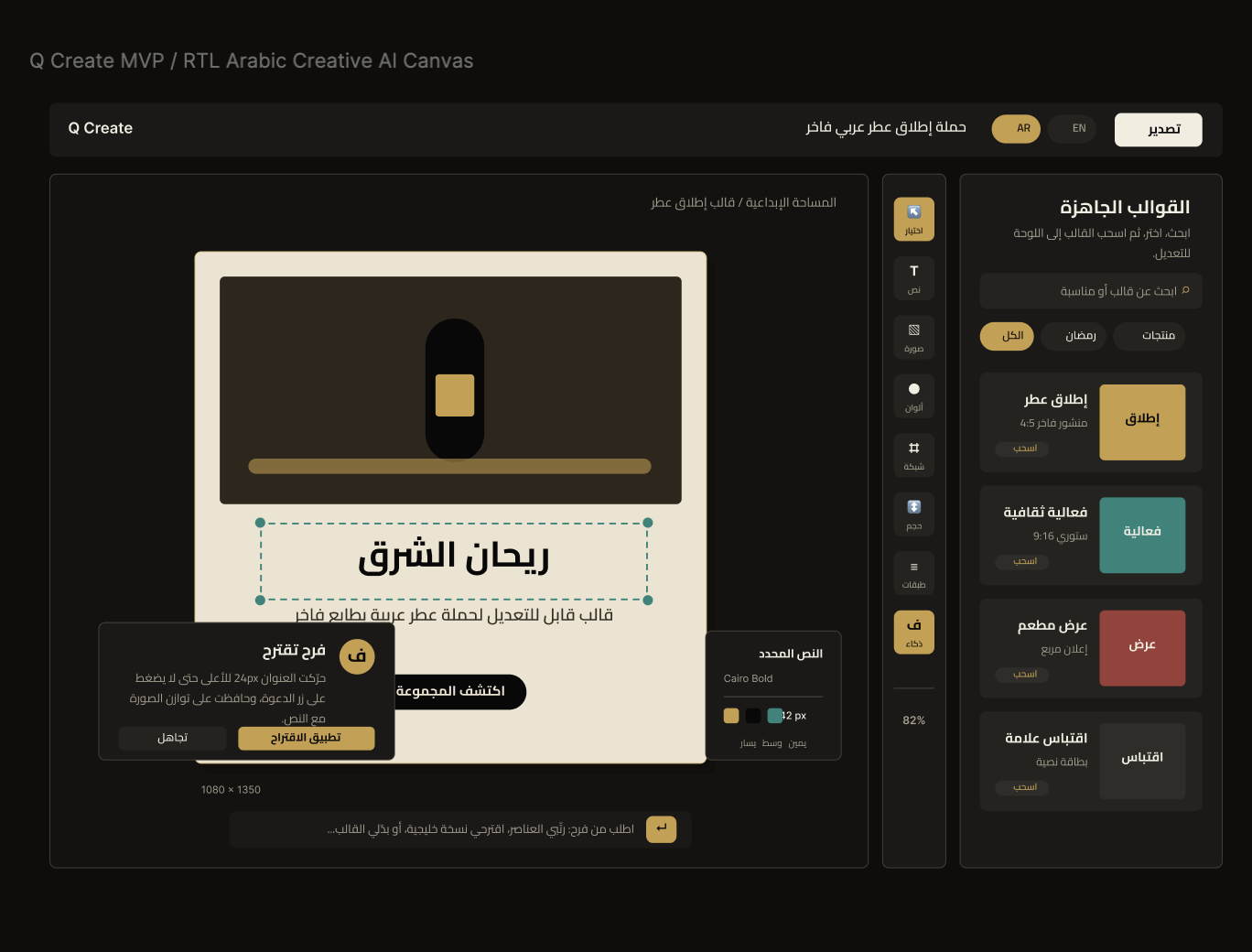
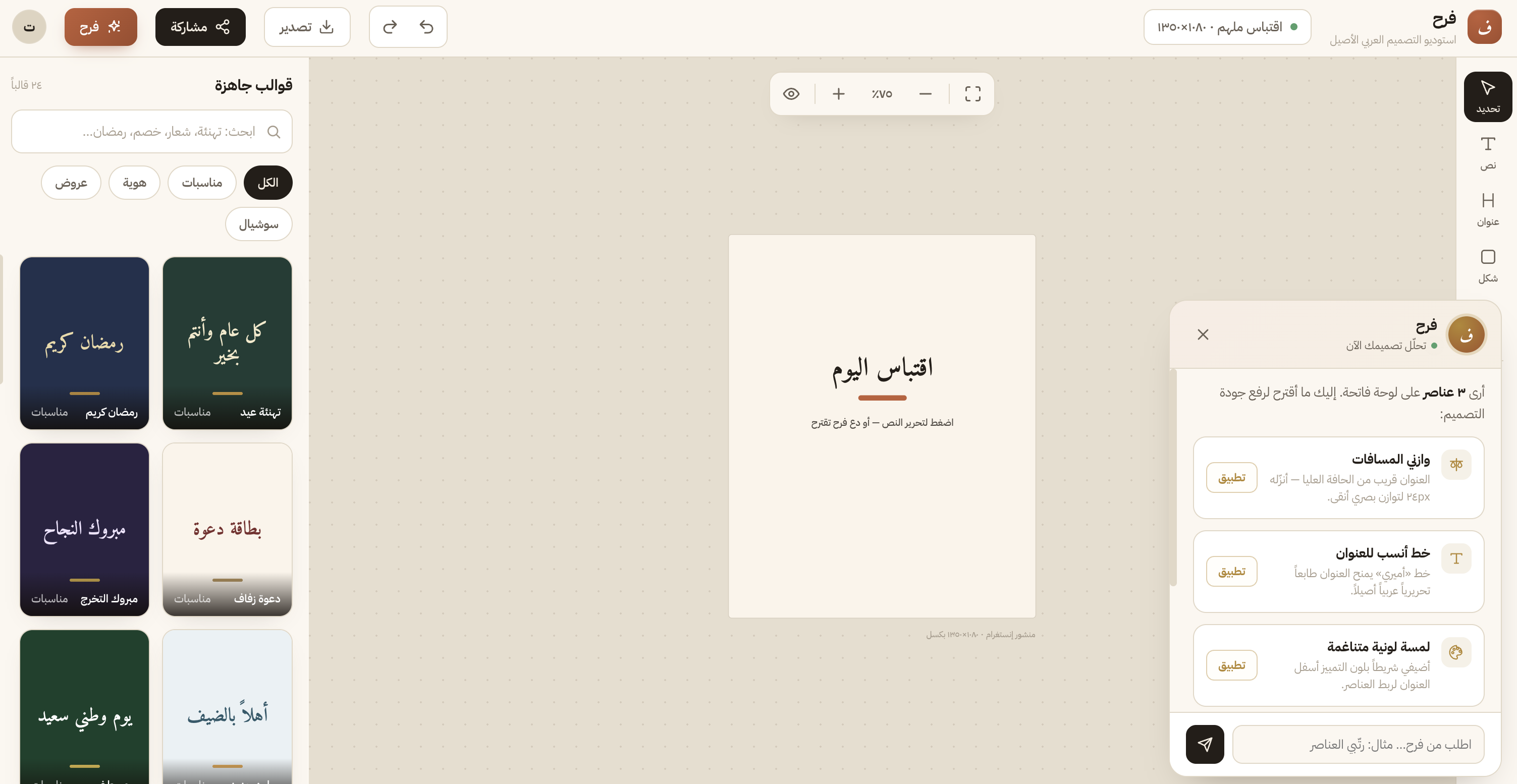
Built for Arabic, from the beginning.
Arabic is beautiful.
Not just as a language, but as a creative medium.
Its letters connect, stretch, reshape, balance, and completely change character depending on how they are composed. Honestly, playing with Arabic letters can sometimes feel much more expressive than designing in English.
And yet, most creative technology today was never really built around that reality.
Arabic is often treated as something to support later: translate the interface, add RTL, include a few Arabic fonts, and call it localization.
We wanted to start somewhere else.
What inspired us
I come from a deeply artistic background, and I’ve always believed that design is not decoration.
Design is everything around us.
The app you are reading this on was designed.
The laptop in front of you was designed.
The desk, the chair, the room, the architecture, the clothes you are wearing—every one of them exists because somebody made a design decision.
Where humans exist, design exists.
And yet design is still often treated as an extra layer added at the end.
I believe the opposite.
Design is infrastructure.
That belief sits at the center of what we are building at Quanta Creative Machines.
Not another subscription platform
We are not trying to build another app where users pay a monthly fee simply to generate content.
That is not the point.
The bigger vision is to create a safe house for Arabic creativity.
A place where Arab creators can protect, publish, license, collaborate around, and earn from their work.
A place where Arabic type foundries can present their typefaces properly, license them responsibly, and build sustainable businesses around their craft.
A workshop where creators can experiment with new tools.
A marketplace where the value flows back toward the people who actually created the assets.
And a stage that gives Arabic creative work the visibility it deserves.
Our place. Our creators. Our type. Our tools.
Why typography matters so much
Arabic typography sits at the heart of this vision.
Type is not simply another asset category.
It carries language, identity, history, expression, and culture.
Arabic type designers and foundries have spent years developing systems that many people interact with every day without ever knowing who designed them.
We want to help change that.
We want Arabic type foundries to have a stronger stage for discovery, licensing, collaboration, and commercial opportunity.
And we want creators to have access to Arabic typography in an environment that actually respects how Arabic type works.
The more we explore this space, the clearer it becomes that Arabic typography cannot be treated as an afterthought inside creative technology.
It deserves its own infrastructure.
Building with the creative community
We also realized something early:
We should not build this for the Arabic creative community without building it with them.
That is why we are beginning the Arabic 100 Creative Council—bringing together creators, type designers, foundries, creative leaders, educators, founders, and community builders from across the Arab world.
The purpose is simple:
Listen before assuming.
Understand where creators are currently underserved.
Learn how creative assets should be protected and licensed.
Understand how AI should support creativity without stripping away authorship, cultural identity, or economic value.
And give the people already shaping Arabic creativity a meaningful role in shaping what comes next.
What we have learned
One of the biggest lessons has been that Arabic-native design is not simply RTL.
It is typography.
Composition.
Cultural context.
Licensing.
Authorship.
How Arabic and Latin systems coexist.
How creators discover assets made for their own visual world.
And increasingly, how AI understands—or fails to understand—all of those differences.
There are deep technical, creative, licensing, and marketplace challenges behind this work.
Some of that work forms part of our IP, and we are intentionally keeping the deeper architecture private.
But the mission itself should be public.
Where we are going
We want to help build stronger infrastructure for the Arabic creative economy.
A place where type foundries are not invisible suppliers.
Where creators do not lose control of their assets.
Where technology supports human craft instead of replacing it.
Where Arabic designers can build businesses around what they create.
And where creative technology finally begins from our language, rather than asking our language to adapt to someone else's system.
Arabic is not a localization problem.
It is one of the richest creative canvases in the world.
And we believe it deserves its own stage, its own workshop, and its own safe house.

Log in or sign up for Devpost to join the conversation.