-
-
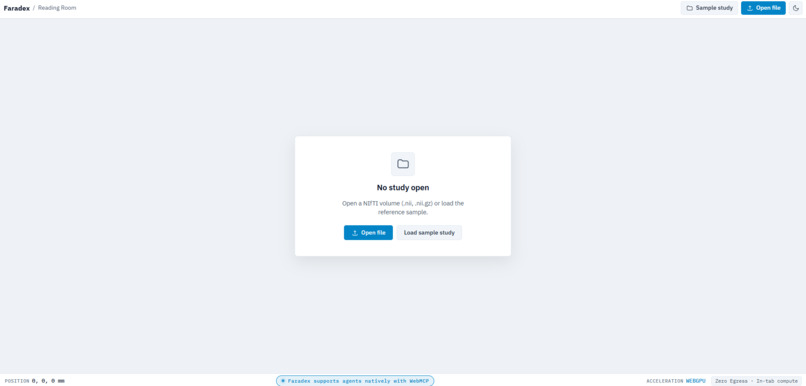
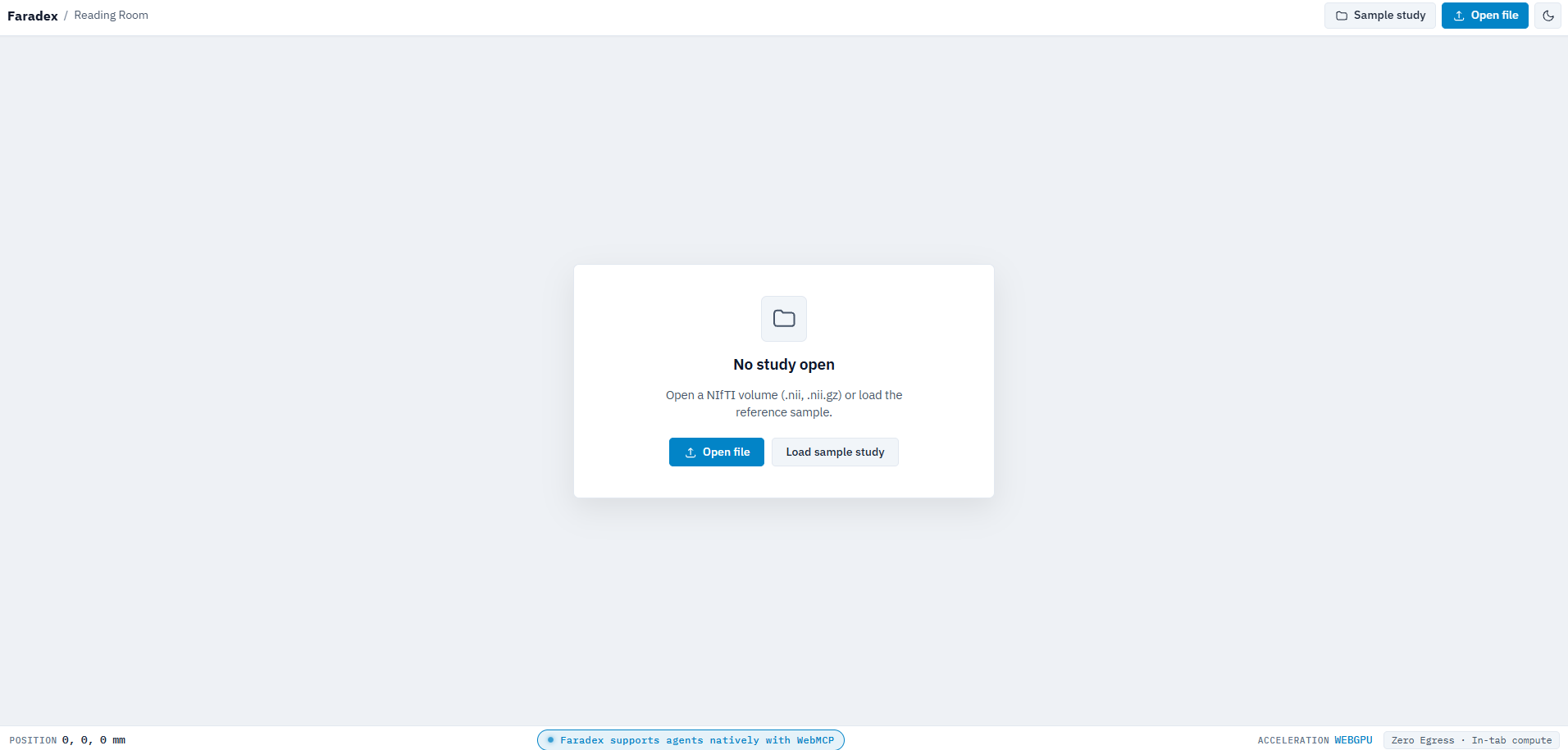
This is the home page
-
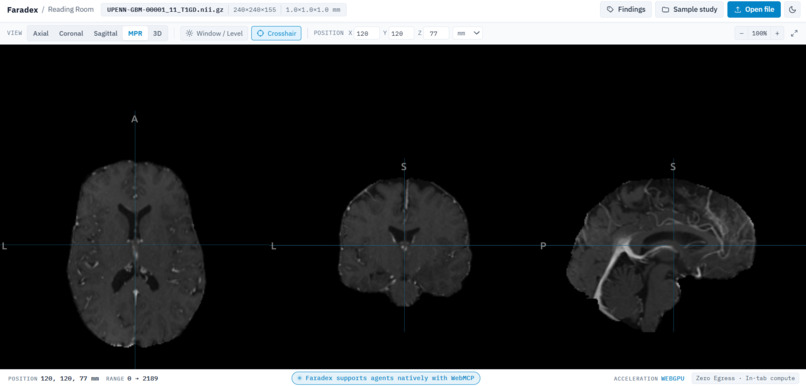
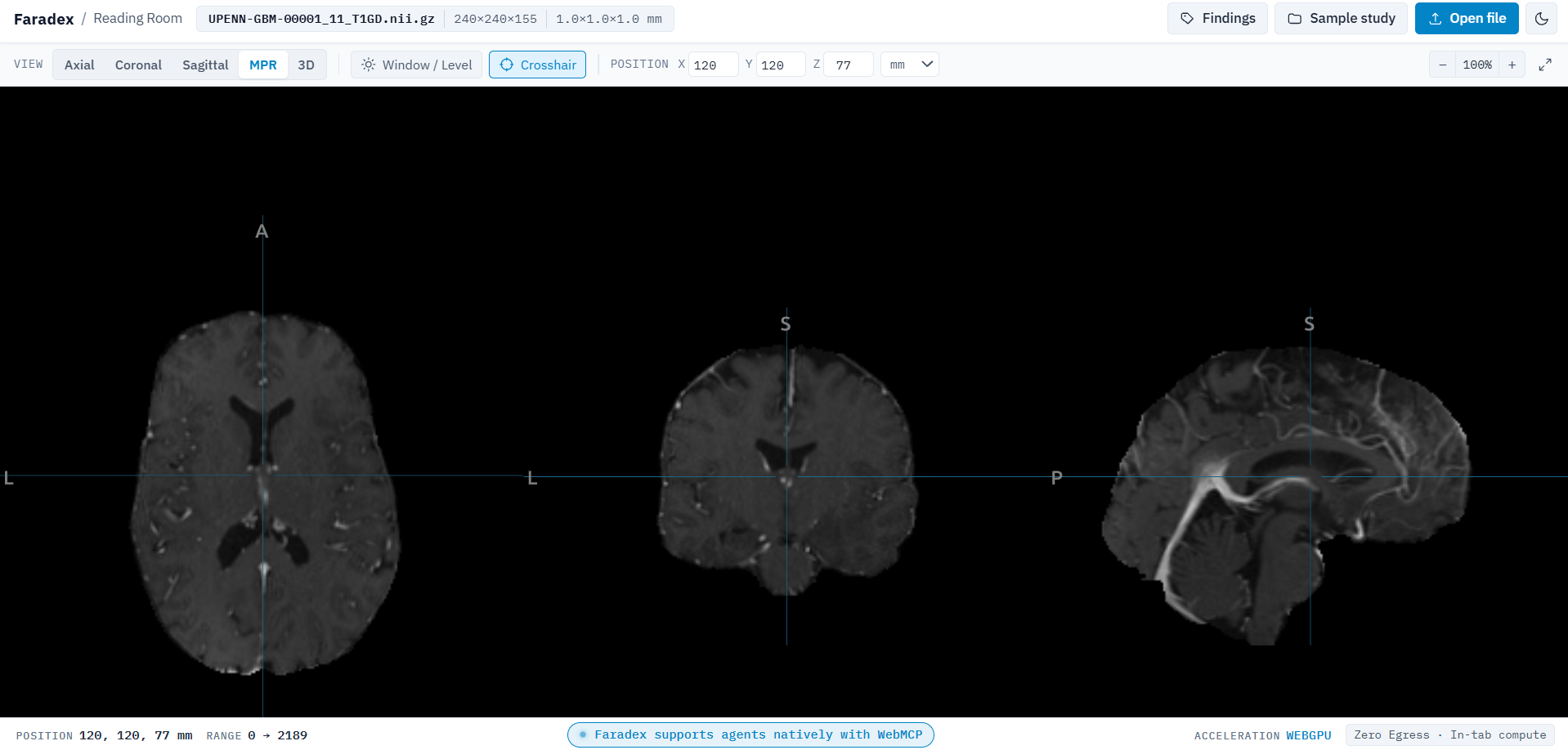
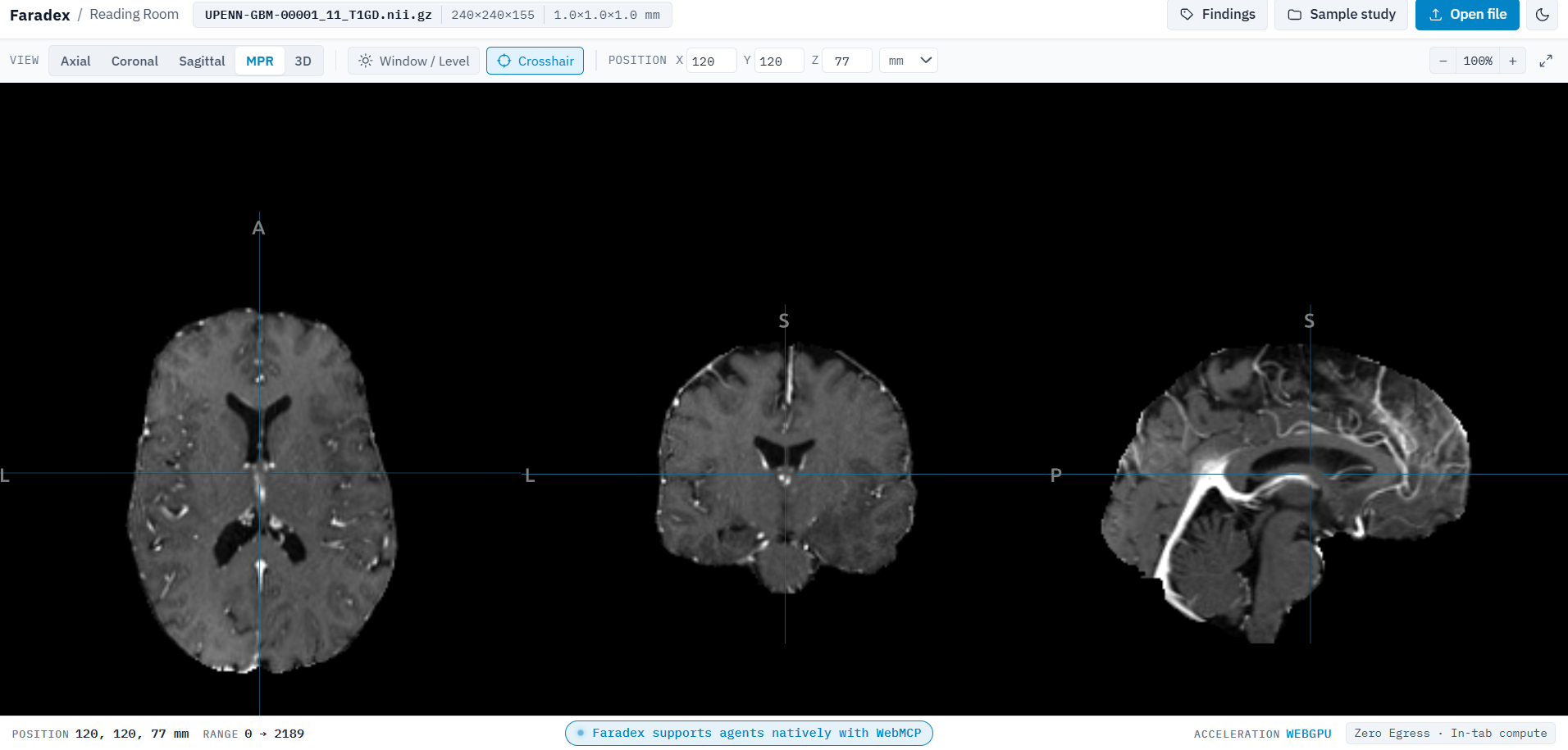
This is the MPR( Multiplanar Reformation or Reconstruction) view.
-
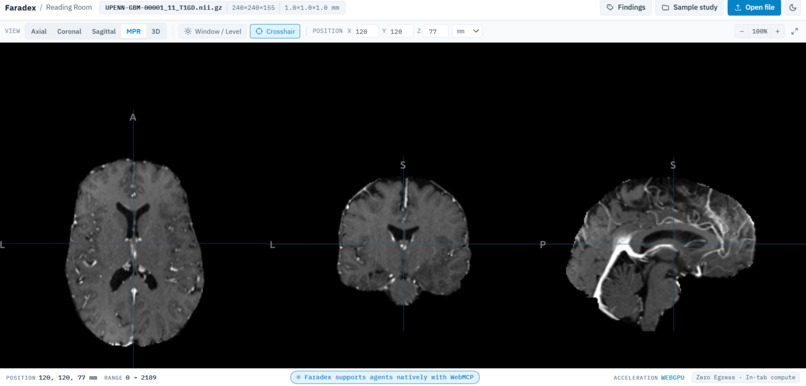
This is the density change of the same view as above
-
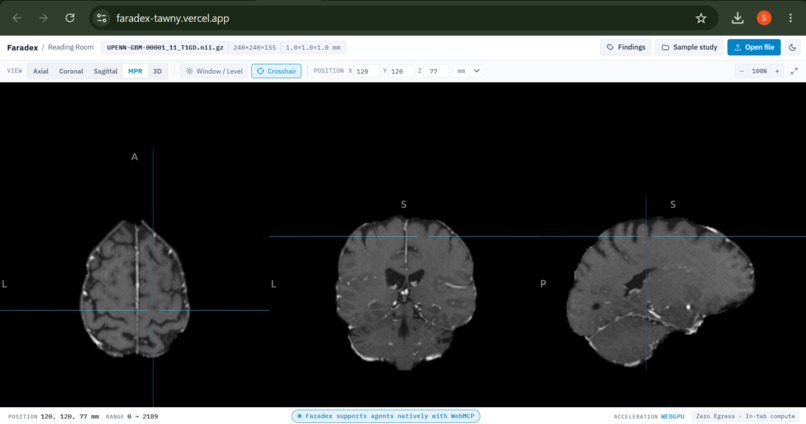
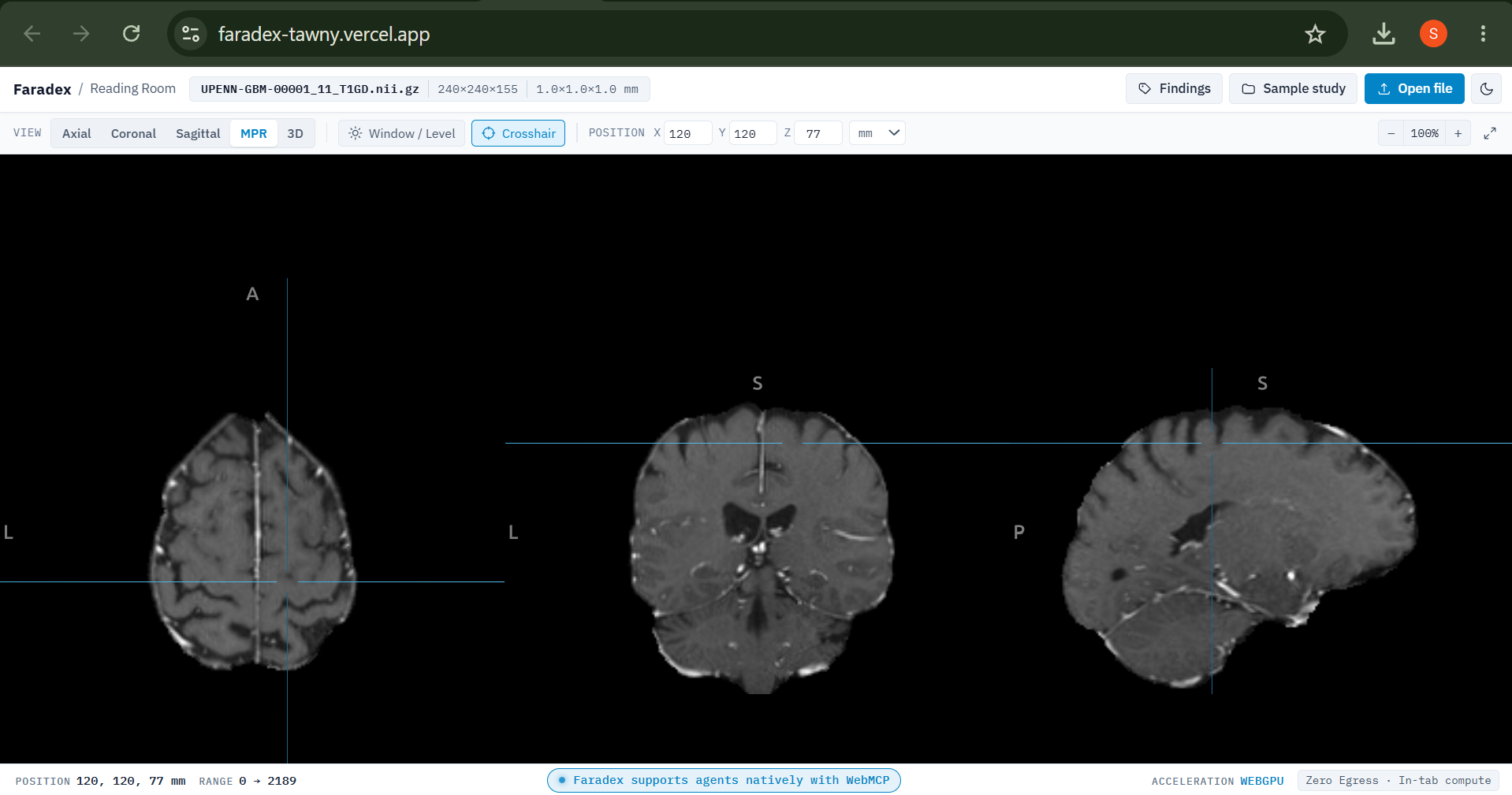
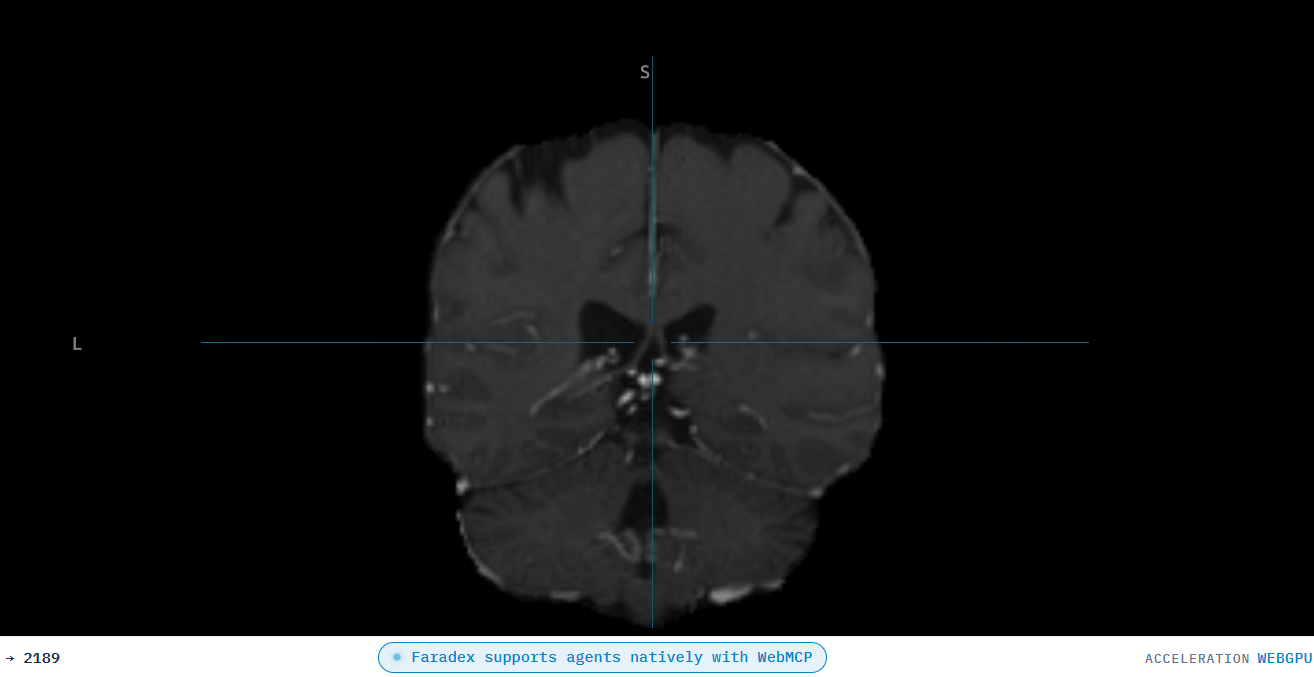
This is a different cross section
-
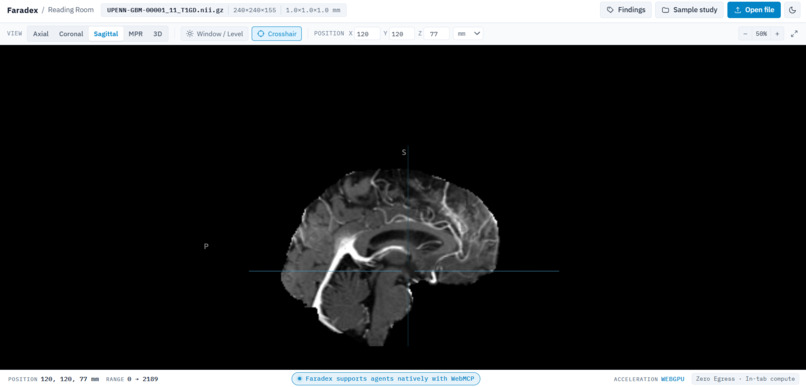
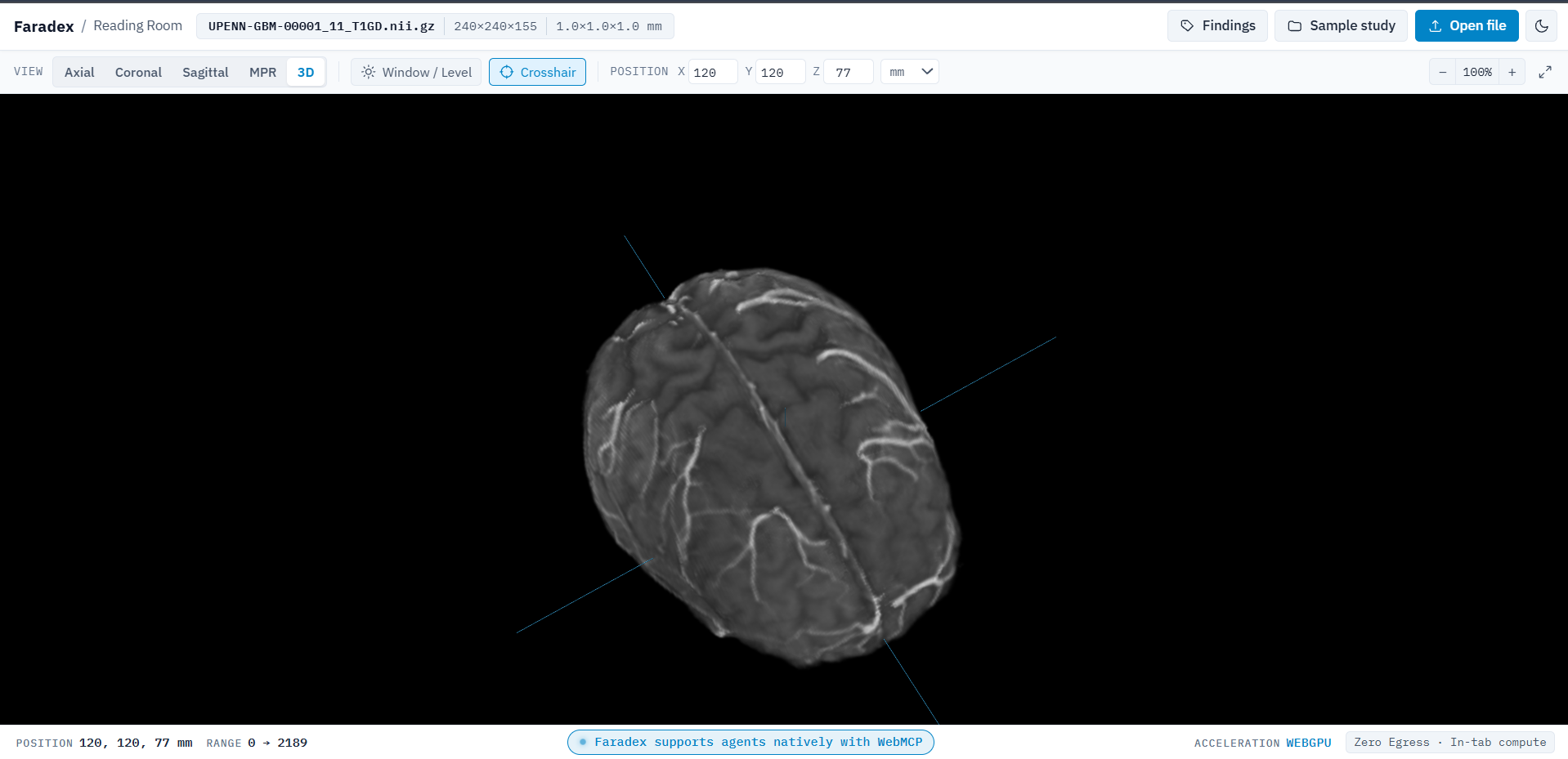
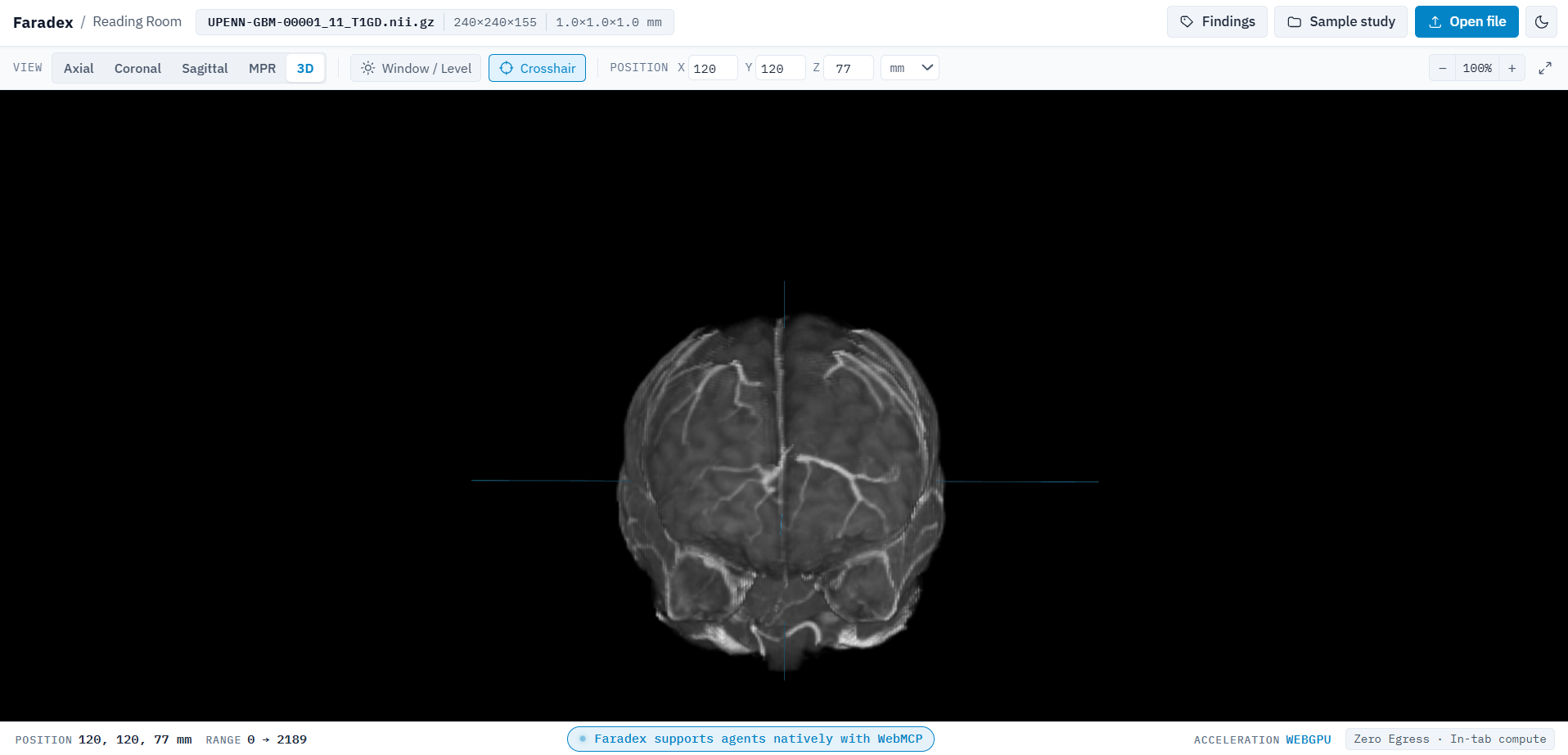
This is the 3D view of the brain MRI visualization
-
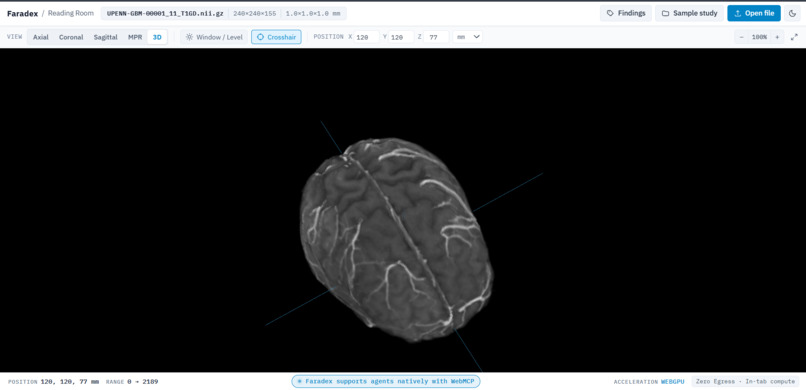
This is another angle or view
-
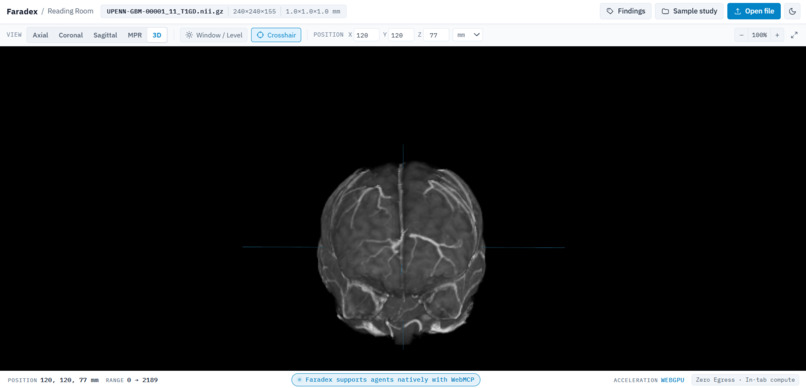
This is another angle or view
-
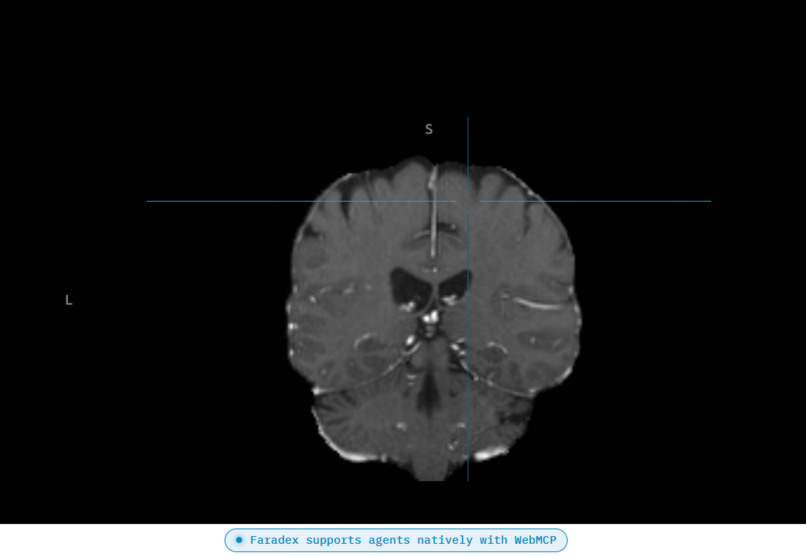
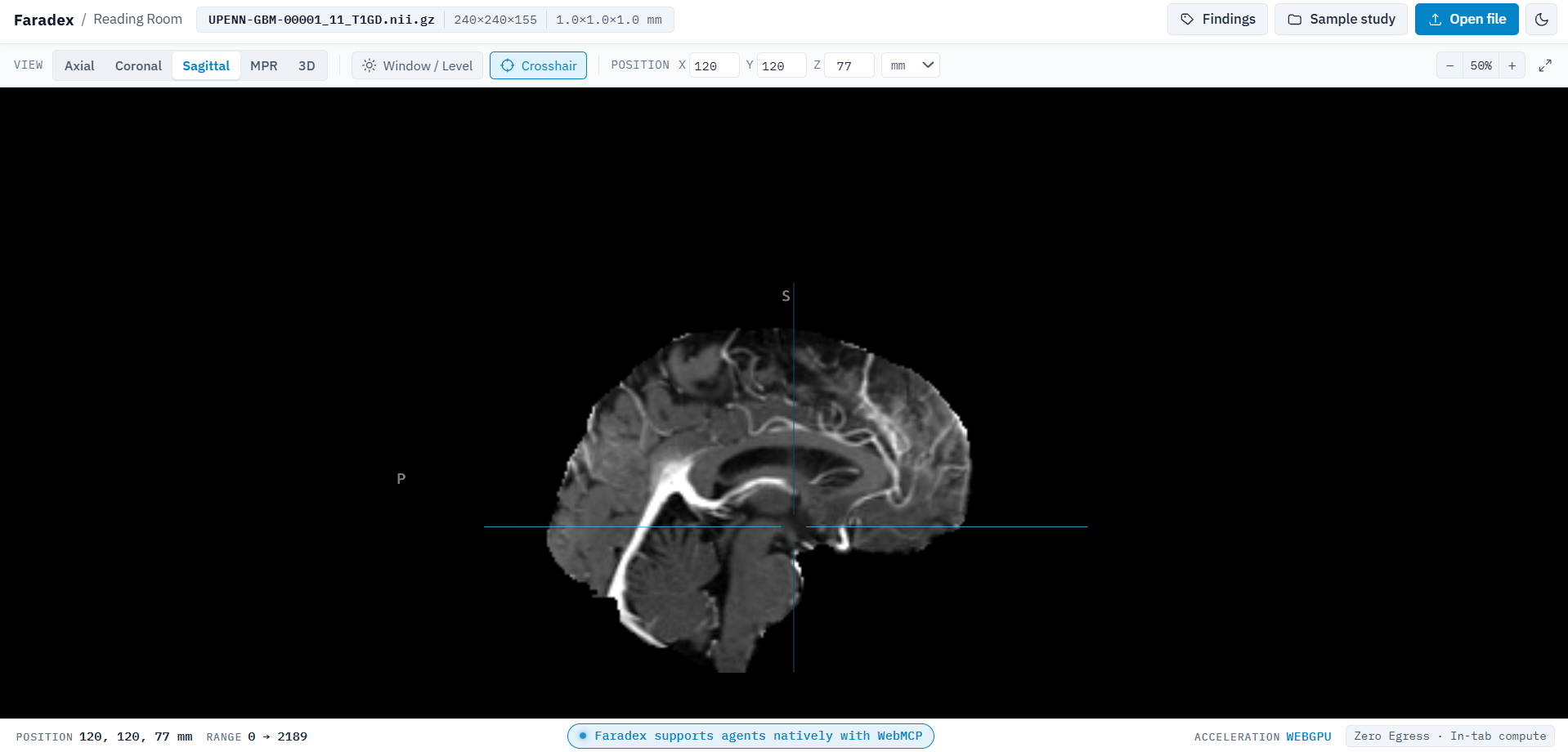
This is the individual Sagittal view
-
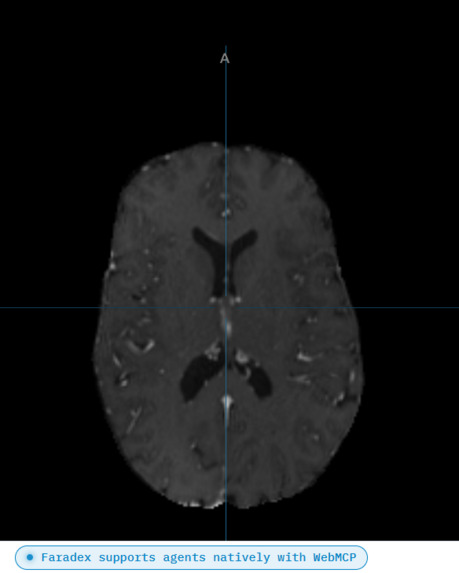
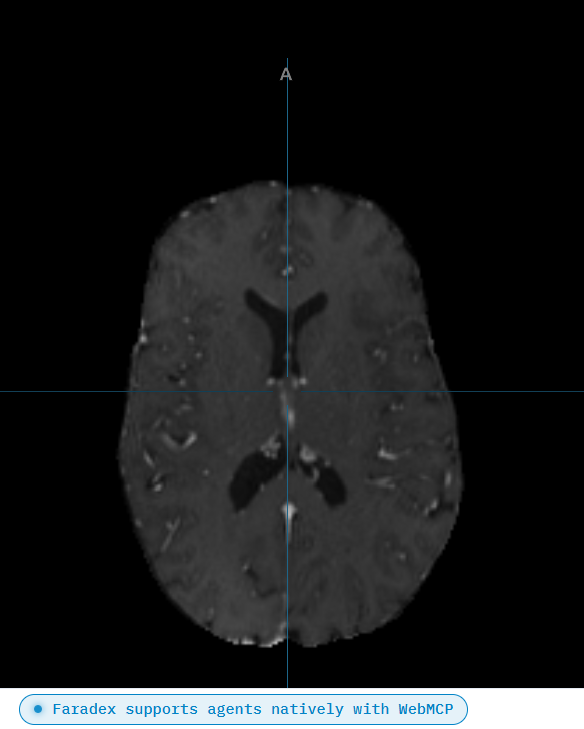
This is the Axial view
-
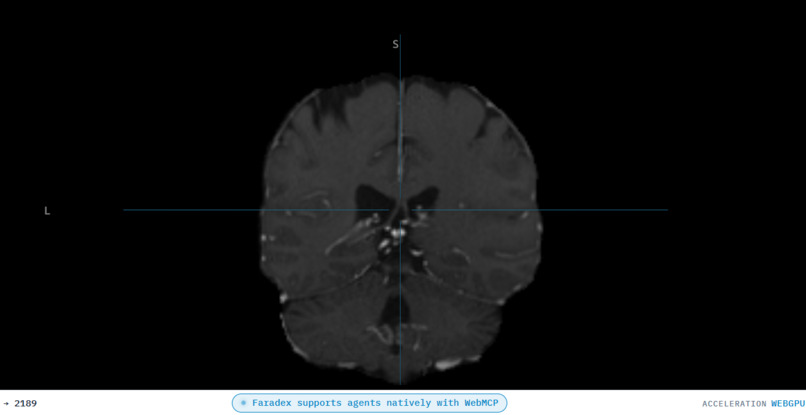
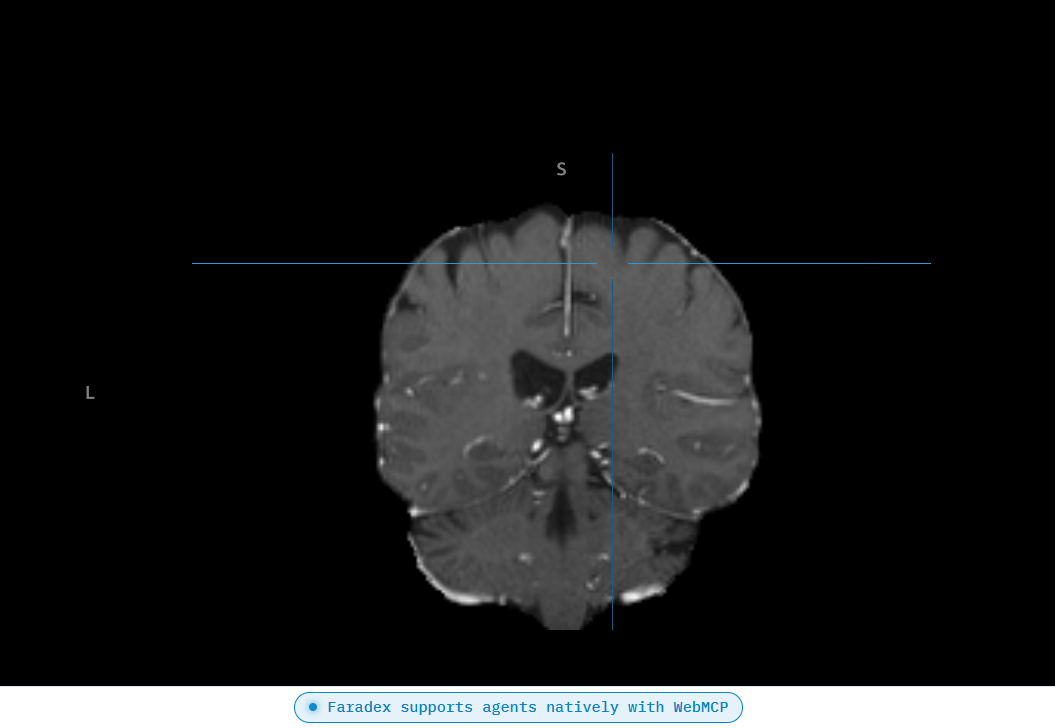
This is the Coronal view
Inspiration
It started with a real case. A neurological patient made 15 doctor visits and had 2 MRI scans, with months of trial-and-error medication, before an expert radiologist spent about 50 minutes scrolling through slices to find the anomaly. The valuable part of that hour was recognising the problem. The costly part was mentally assembling a 3D picture from hundreds of flat images.
We also saw why faster tools often go unused. Most 3D web viewers need scans uploaded to external servers, which conflicts with HIPAA, GDPR and India’s DPDP Act. We asked: could software take over the slow part of the review without the patient’s data going anywhere?
What it does
Faradex is a browser-based neuroimaging workspace. A clinician drags in a standard NIfTI (.nii) brain MRI and, within seconds, sees four linked views: axial, coronal and sagittal planes plus an interactive 3D volume render. All four share one crosshair, so clicking a suspicious area in 3D instantly moves the three planes to that exact point. Everything runs on the clinician’s own machine. No scan is uploaded, stored or logged, and the volume is discarded when the tab closes. There is nothing to install and no cloud GPU bill. Faradex is a visualization and review aid. It is not a diagnostic system.
How we built it
Faradex is a four-stage local pipeline: Ingestion: HTML5 File API reads the scan into local memory only. Parsing: a WebAssembly module decodes the NIfTI header and voxel data, including gzip and orientation matrices. Rendering: WebGL2 (with WebGPU where available) draws the slice views and a GPU ray-casting 3D render. Synchronized UI: one world-coordinate crosshair, derived through the scan’s affine transform, drives every view. Keeping a single source of truth for position means the planes and the 3D view can never disagree. A strict Content Security Policy and offline operation let an IT team verify that nothing leaves the device.
Challenges we ran into
Geometry and orientation: a left/right flip is a patient-safety issue, so we treated coordinate handling as safety-critical, with persistent orientation labels and voxel-accurate synchronization. Performance on ordinary hardware: hospital laptops often have integrated graphics, so we rely on a WebGL2 baseline and adaptive quality (coarser sampling while rotating, finer when still). Making privacy provable: a privacy claim only matters if it can be checked, so we designed for verification rather than trust. Honest positioning: browser NIfTI viewers already exist as open-source tools. We had to be clear that our contribution is a clinician-ready, zero-upload workflow, not the invention of browser rendering.
Accomplishments that we’re proud of
A working prototype (TRL 4) that ingests .nii files and renders synchronized 3D and multi-planar views, targeting 60 FPS. A true zero-egress architecture, where privacy comes from the absence of a data path rather than a policy promise. A cost model with ₹0 recurring cloud compute and an estimated first-year runway of about ₹3.3 to 4.0 lakh. A plan that treats safety, regulation and honest claims seriously from the start.
What we learned
The best privacy feature is data the system never receives. Clinical tools succeed on workflow, trust and safety, not just on rendering technology. Being upfront about what is established, what is ours and what is still a target makes the project stronger. Claims like “50 minutes to minutes” need to be measured in a pilot, not assumed.
What’s next for Faradex
Months 1 to 3: radiologist pilot measuring time to localise a finding, accuracy, usability and frame rates on real hospital hardware. Months 4 to 6: full DICOM series support and local PACS folder watchers. Months 7 to 9: on-device AI segmentation using ONNX Runtime Web, shown as an assistive overlay. Months 10 to 12: IEC 62304 and ISO 13485 documentation and multi-site rollout. Longer term: CT and follow-up scan comparison, multilingual interface, and federated learning across hospitals, all without patient data leaving the building.
Built With
- content-security-policy
- css3
- dicom
- edge-ai
- file-api
- html5
- javascript
- medical-imaging
- mri
- neuroimaging
- nifti
- onnx-runtime-web
- pwa
- ray-casting
- rust
- service-workers
- typescript
- volume-rendering
- web-workers
- webassembly
- webgl2
- webgpu

