Inspiration
Moving to another country can make ordinary life feel strangely high-stakes. A missing document, an unfamiliar office, or one badly timed payment can suddenly become the difference between staying and starting over.
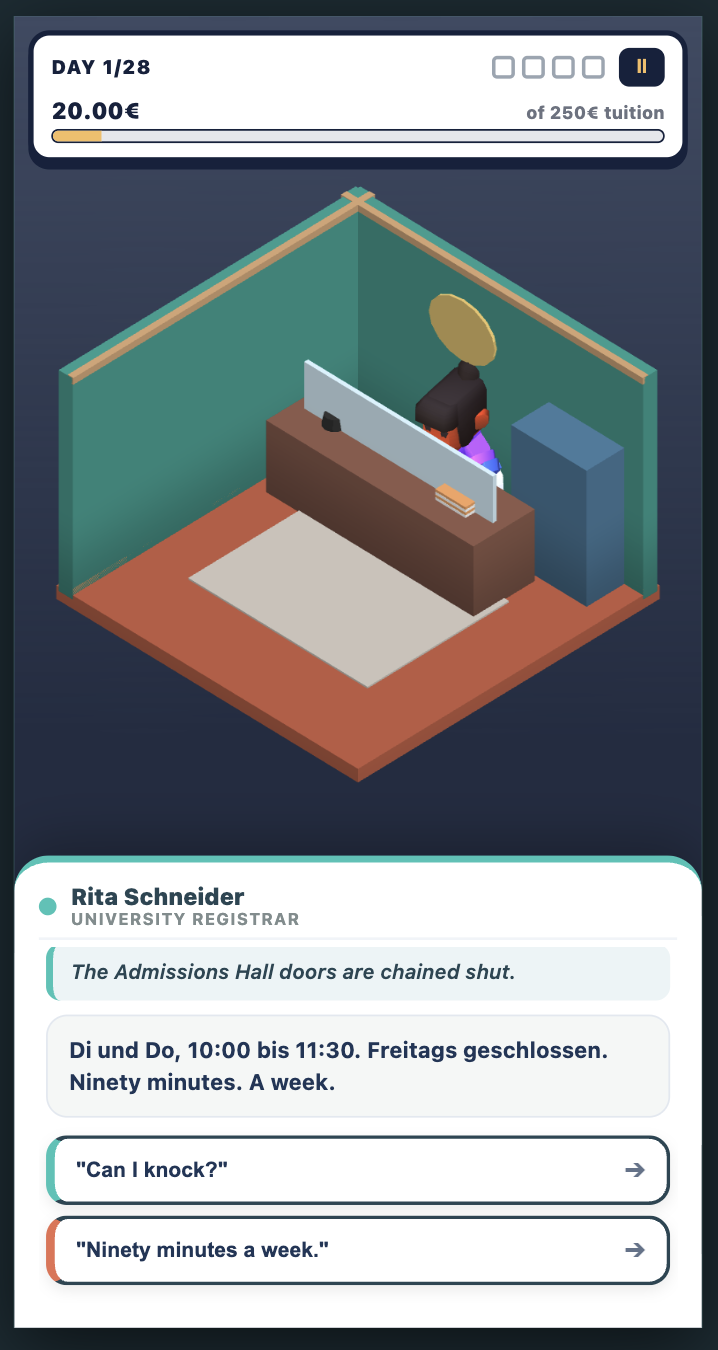
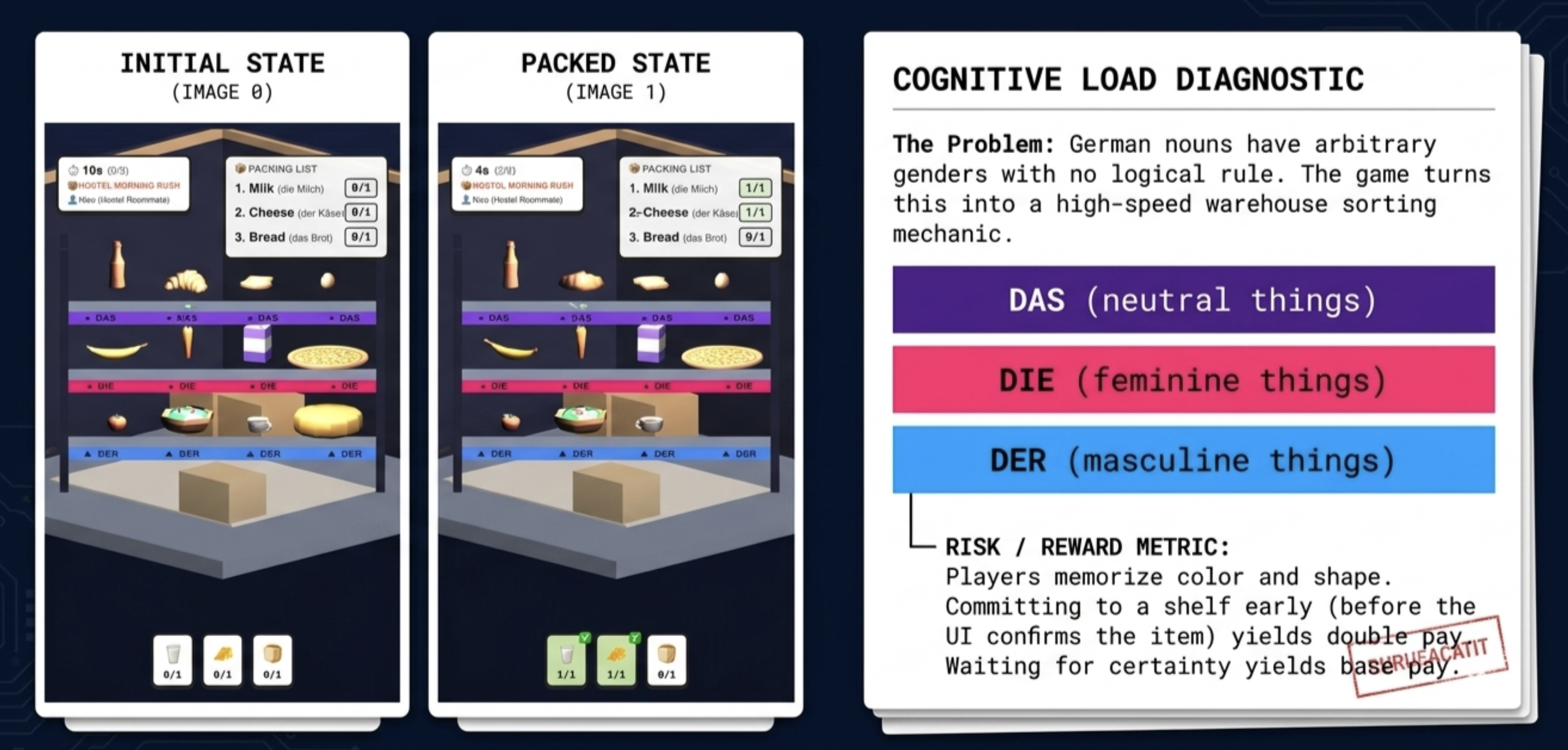
We wanted to turn that feeling into something warm, funny, and playable. The tone comes from the collision between British deadpan humour and German municipal precision: every rule is presented with complete seriousness, even when the rule is that an apple belongs on the “boy” shelf and a banana belongs on the “girl” shelf.
What it does
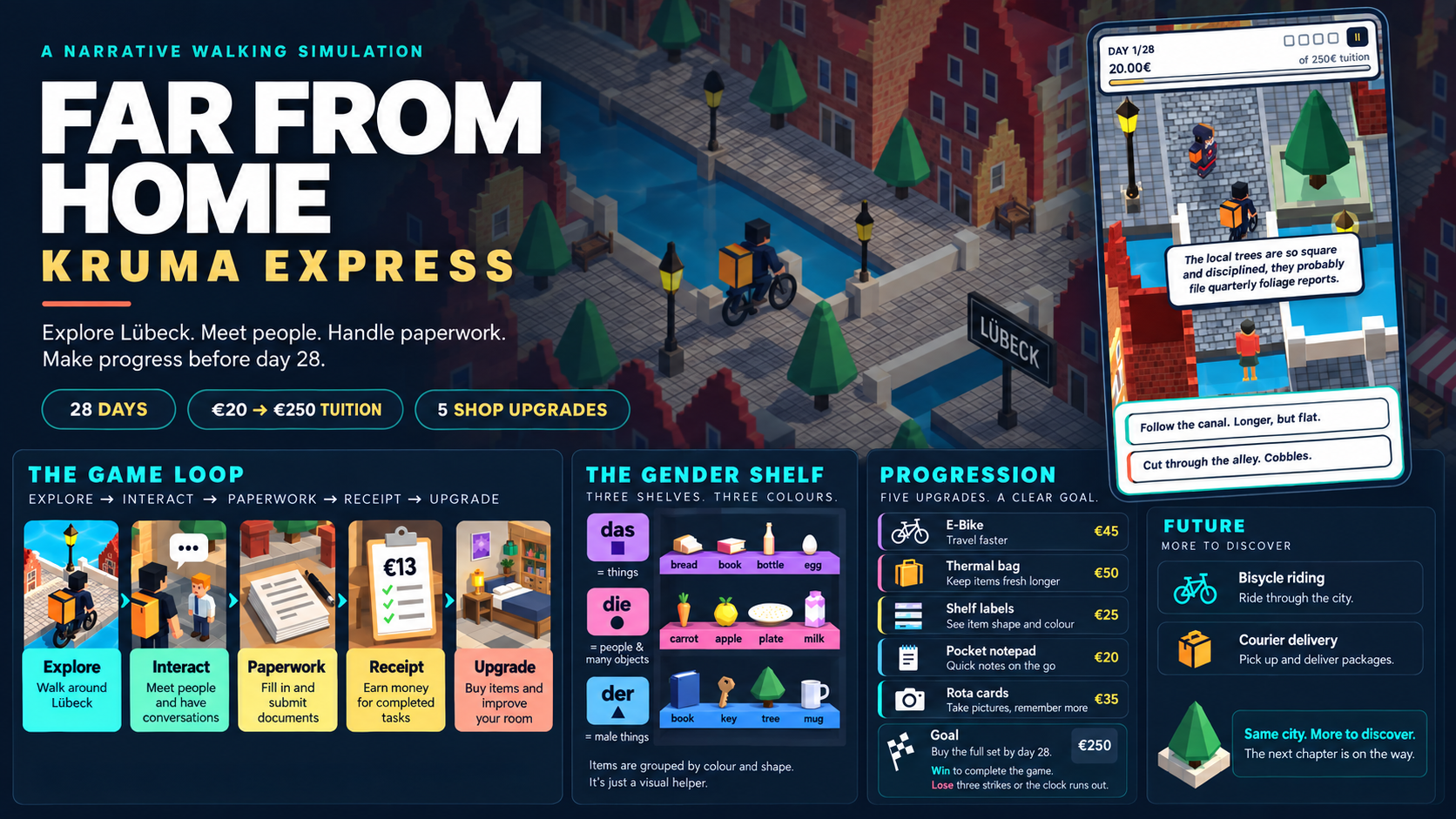
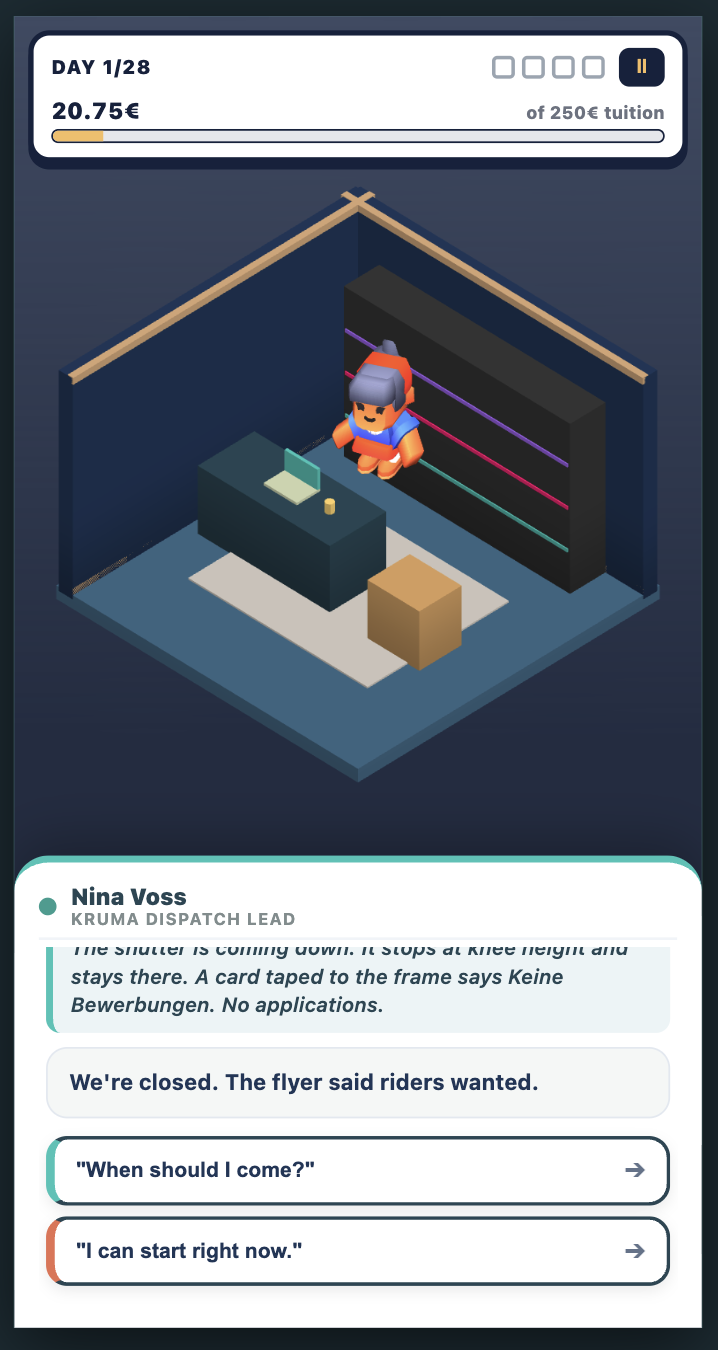
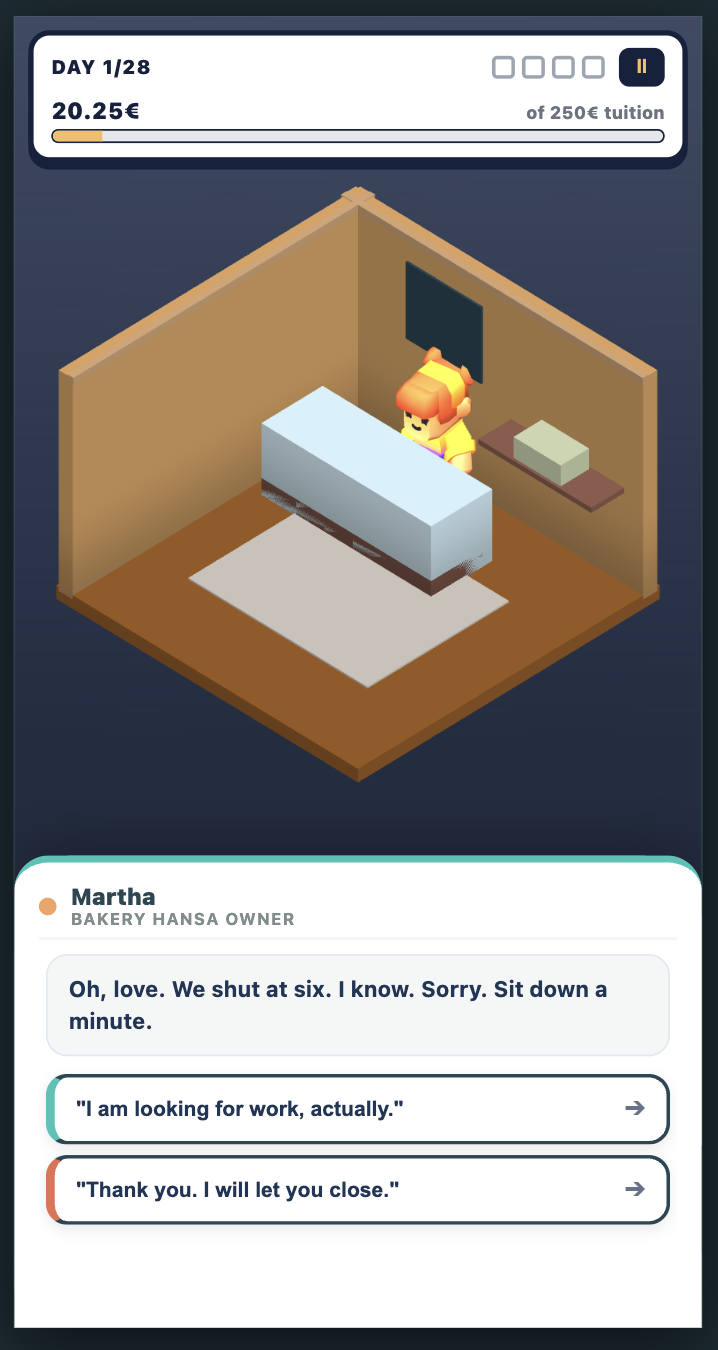
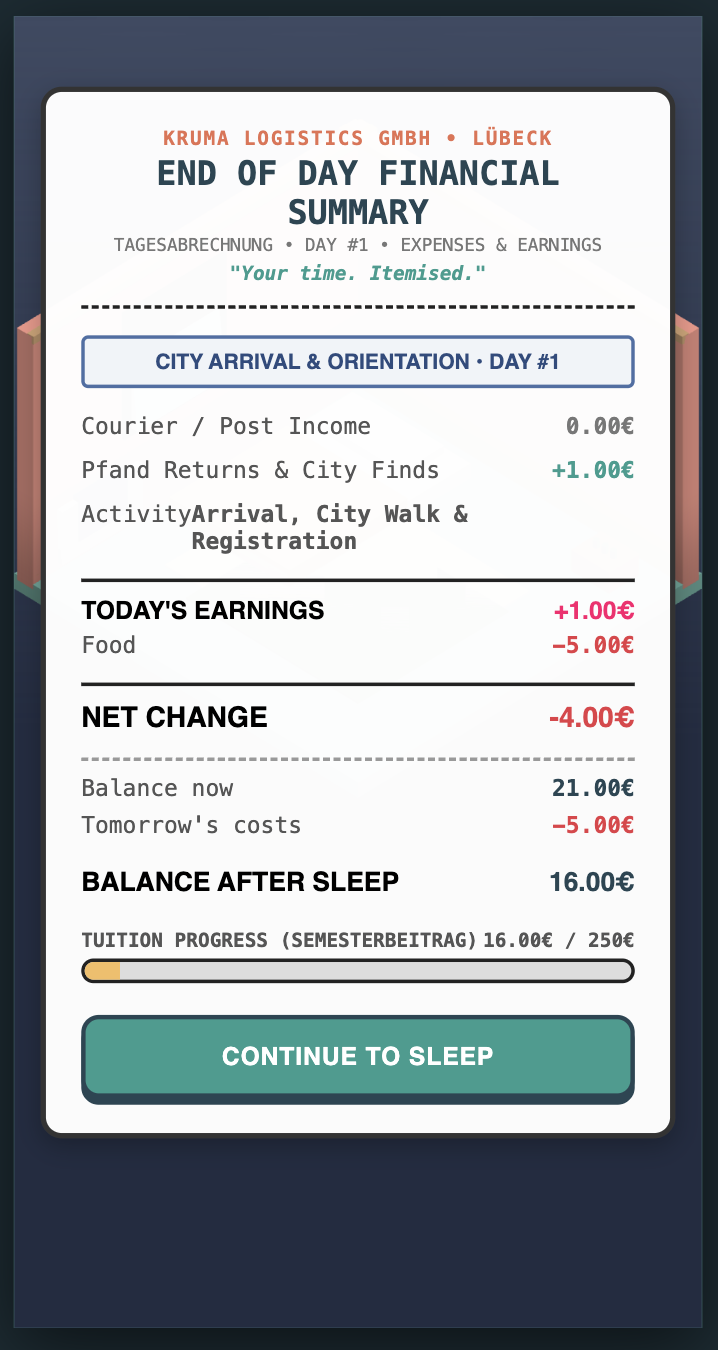
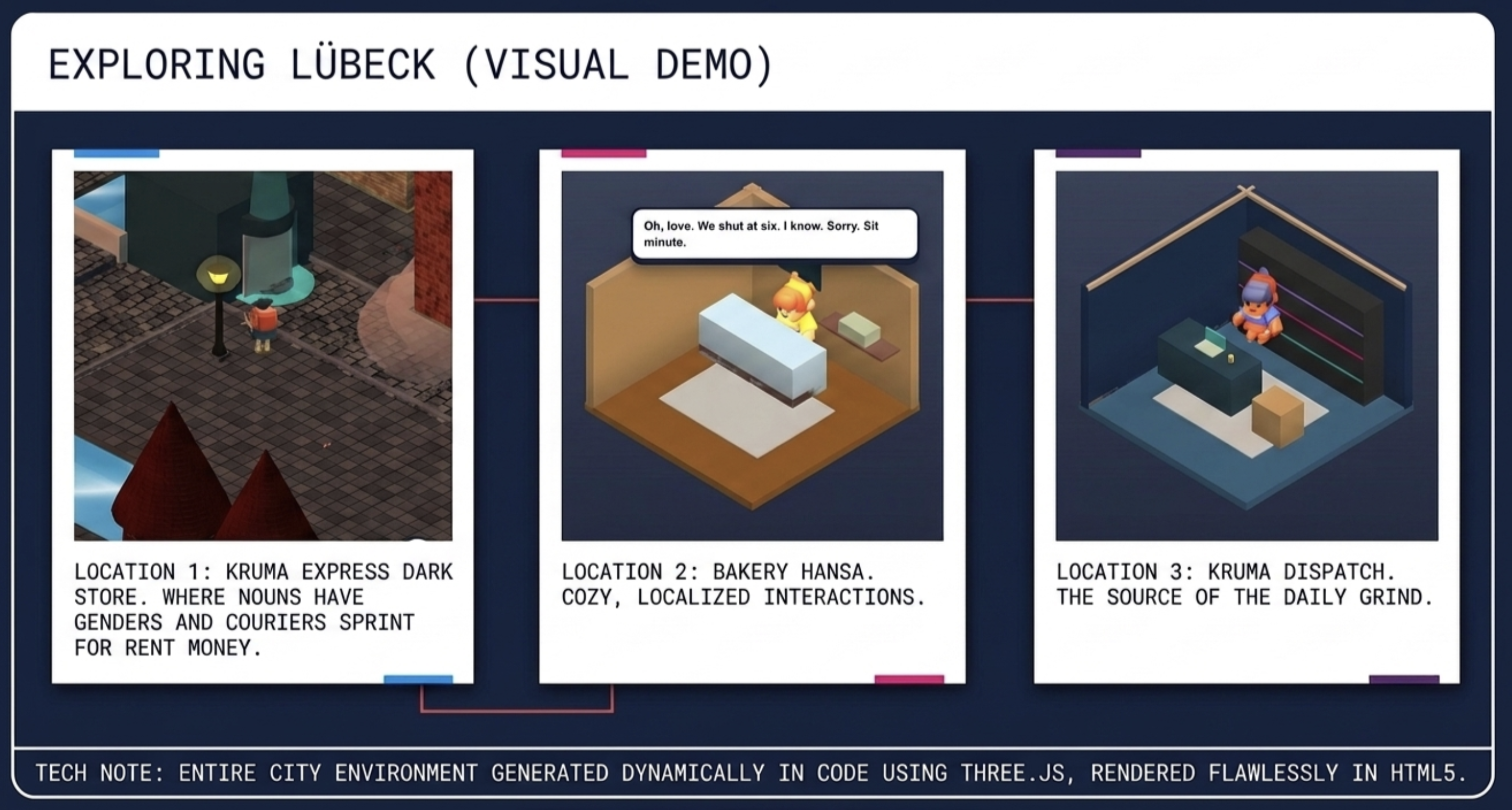
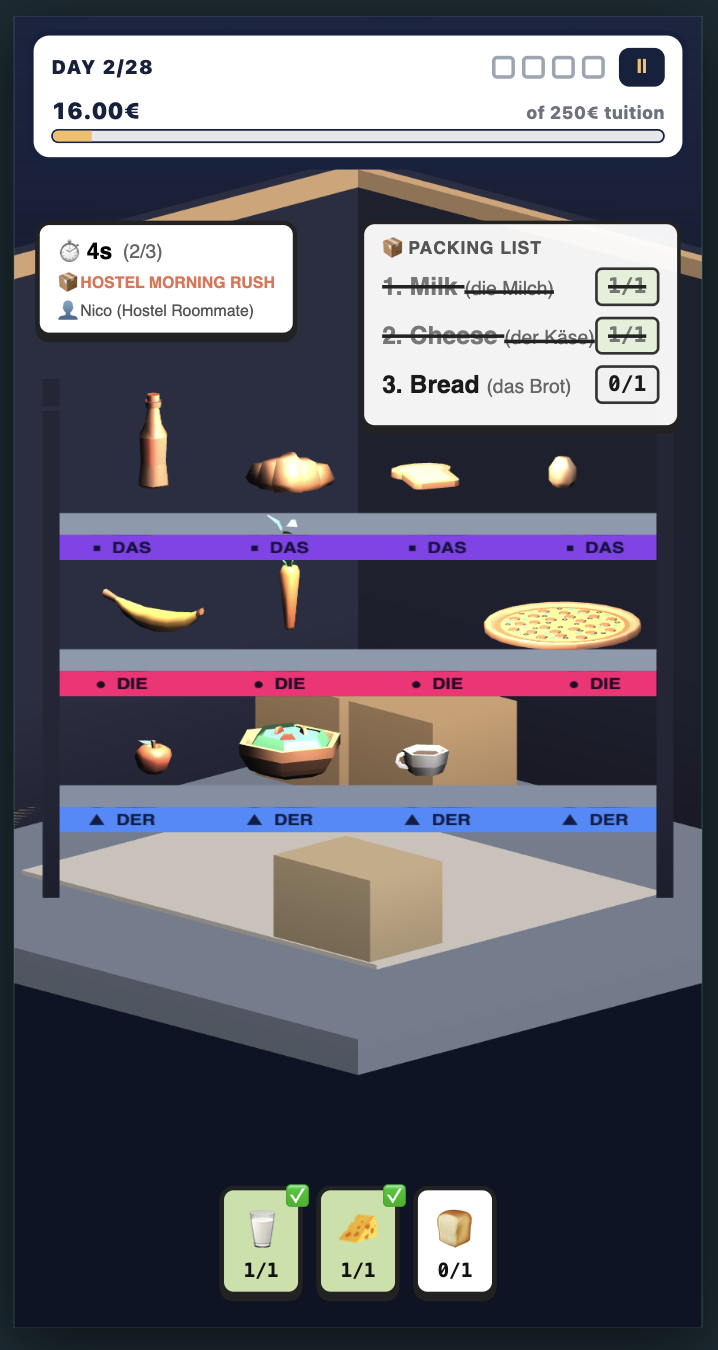
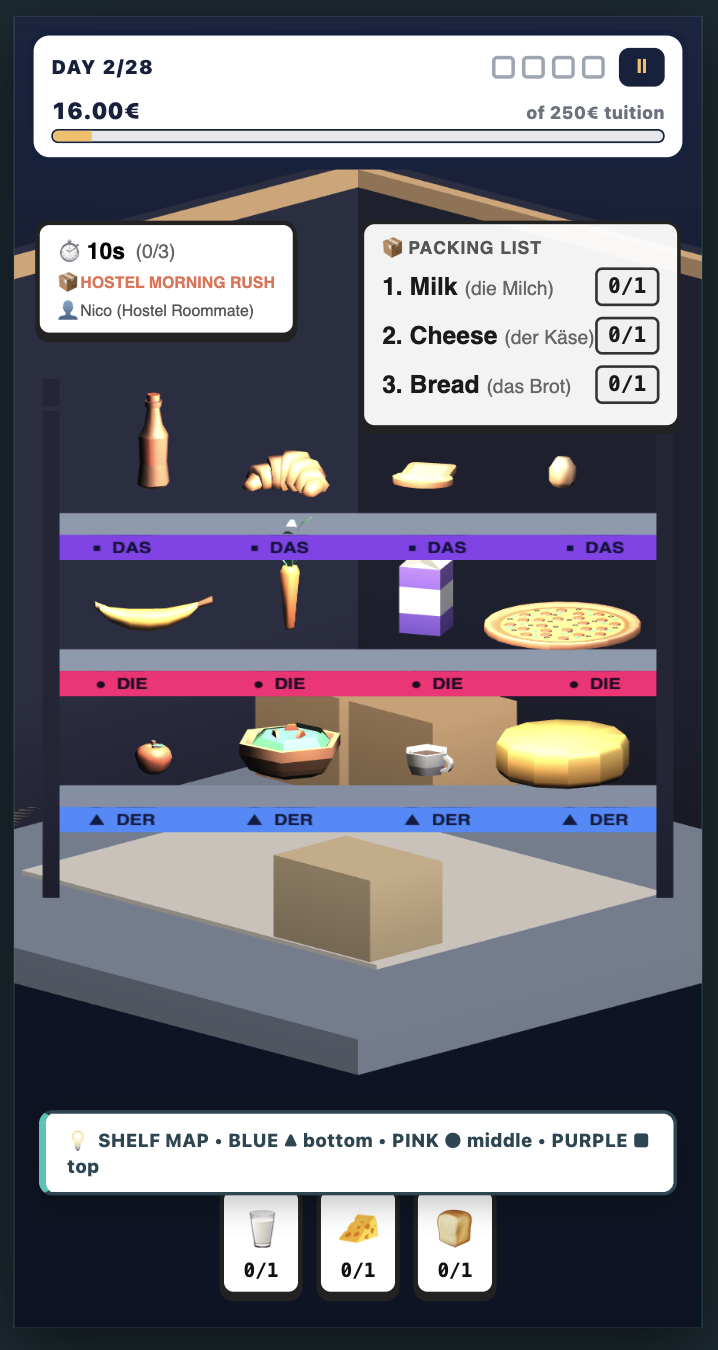
In Far From Home: Kruma Express, you arrive in Lübeck with €20, one suitcase, and 28 days to get your life in order. You work courier shifts, sort grocery orders in Kruma Express’s absurd three-tier warehouse, ride through the city, deliver to customers, and spend your earnings on upgrades.
The warehouse is organised by grammatical gender:
- Blue triangle:
der - Pink circle:
die - Purple square:
das
The item names are English-first, so the joke never becomes a language test. You are not learning German. You are simply trying to survive a filing system that takes itself very seriously.
How we built it
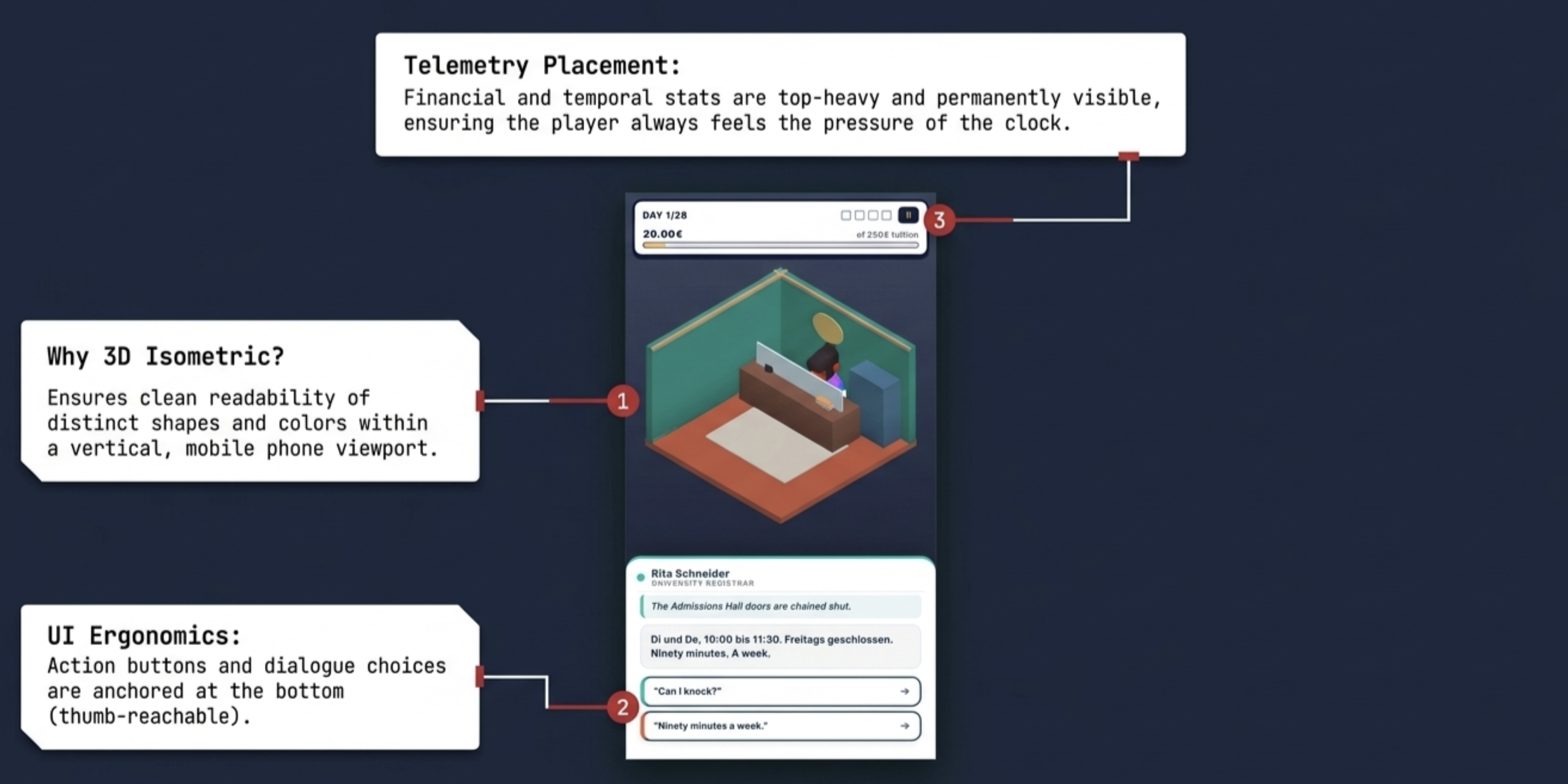
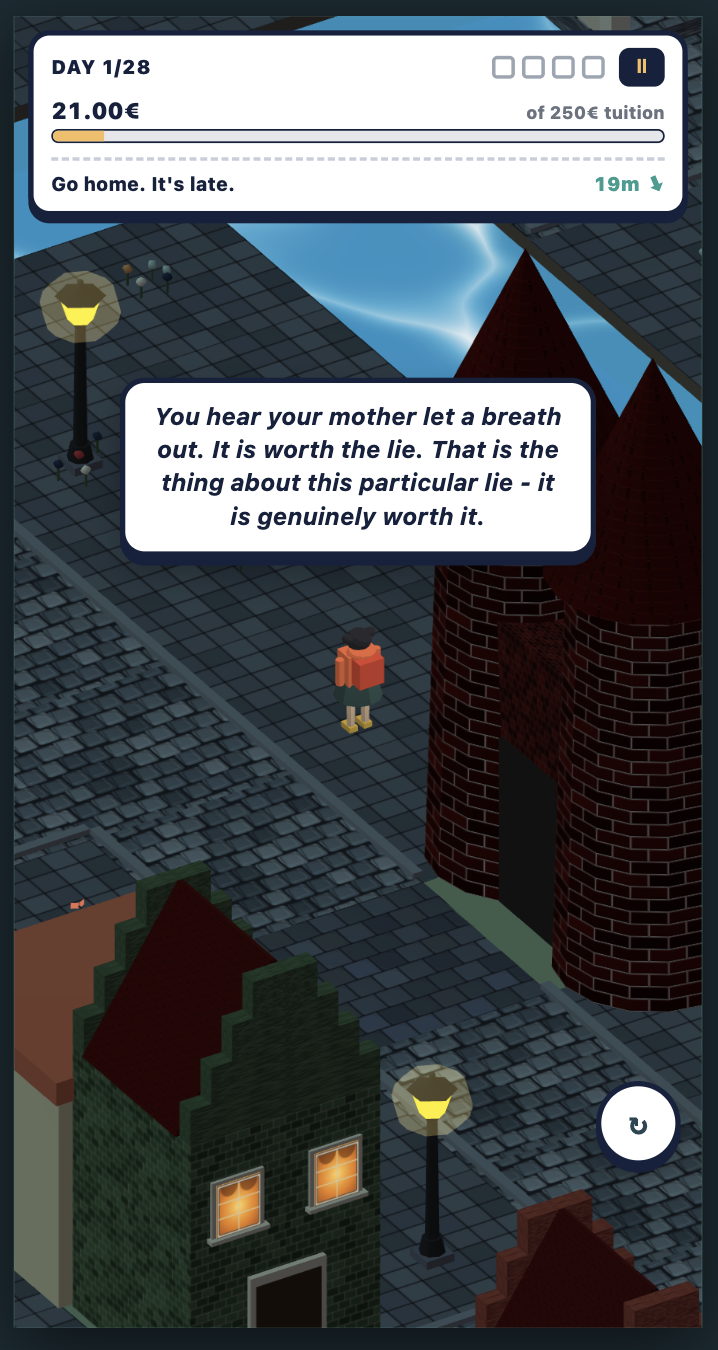
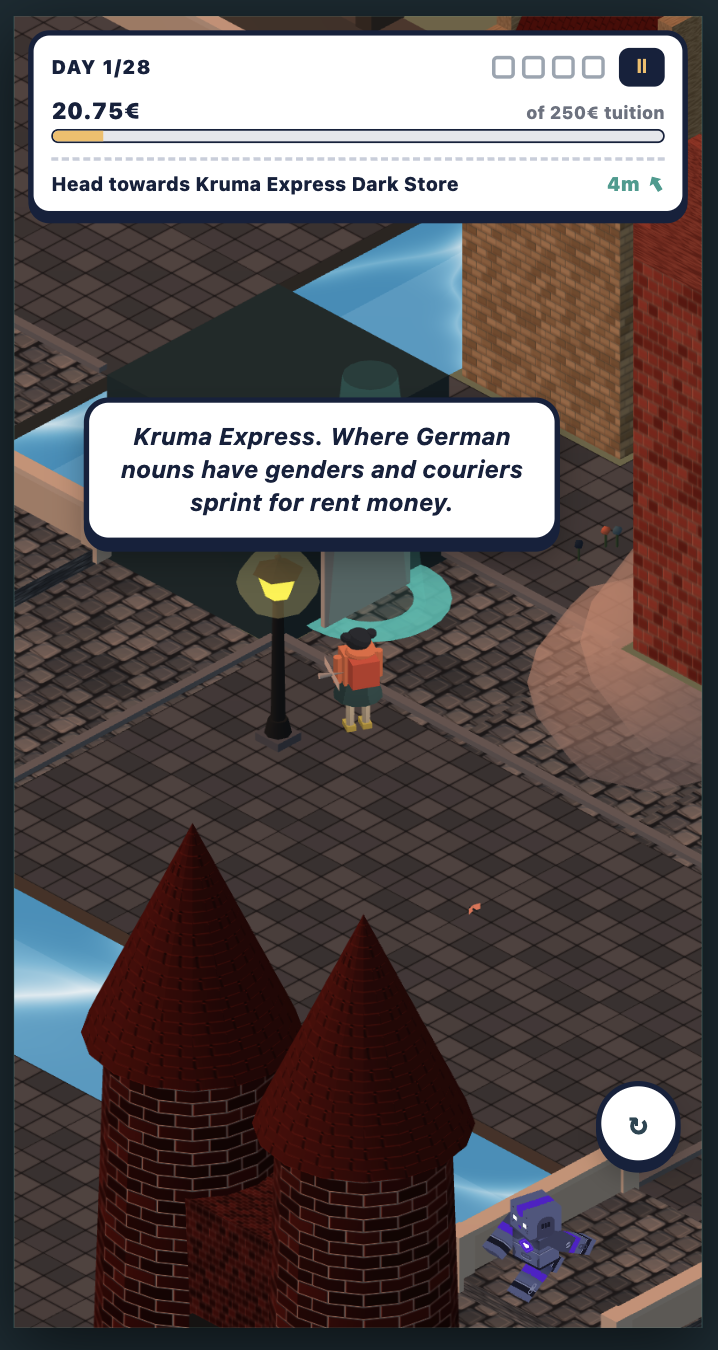
We built the game as a portrait-first Three.js experience designed around one-thumb play. The city, warehouse, rooms, characters, and courier routes are rendered from lightweight procedural and modular assets so the whole game can remain compact.
The final build is completely offline. Three.js and all game resources are bundled into a single release file, with no CDNs or external requests. Dialogue, economy, upgrades, delivery outcomes, and the document progression are data-driven so we could iterate on the story without scattering it across the codebase.
Challenges we ran into
Our biggest challenge was deciding what not to build.
The first version tried to be a vocabulary game, a quiz, a life simulator, and a courier game at the same time. It was technically more ambitious, but it was less clear and less fun. We cut the vocabulary and quiz systems and focused on the strongest idea: the warehouse shelf.
We also had to make the first interaction feel immediate without turning the game into an arcade score attack. The player should understand the joke quickly, but still feel that each shift is part of a larger struggle toward a stable home.
Accomplishments that we're proud of
We are proud that the central joke is also the central mechanic. The grammatical-gender shelves are funny the first time, useful the second time, and satisfying once the player starts reading the visual cues before the item appears.
We are also proud of the progression from €20 to the €250 tuition goal. Every upgrade changes both the numbers and the room, so the player can see their situation becoming slightly less desperate.
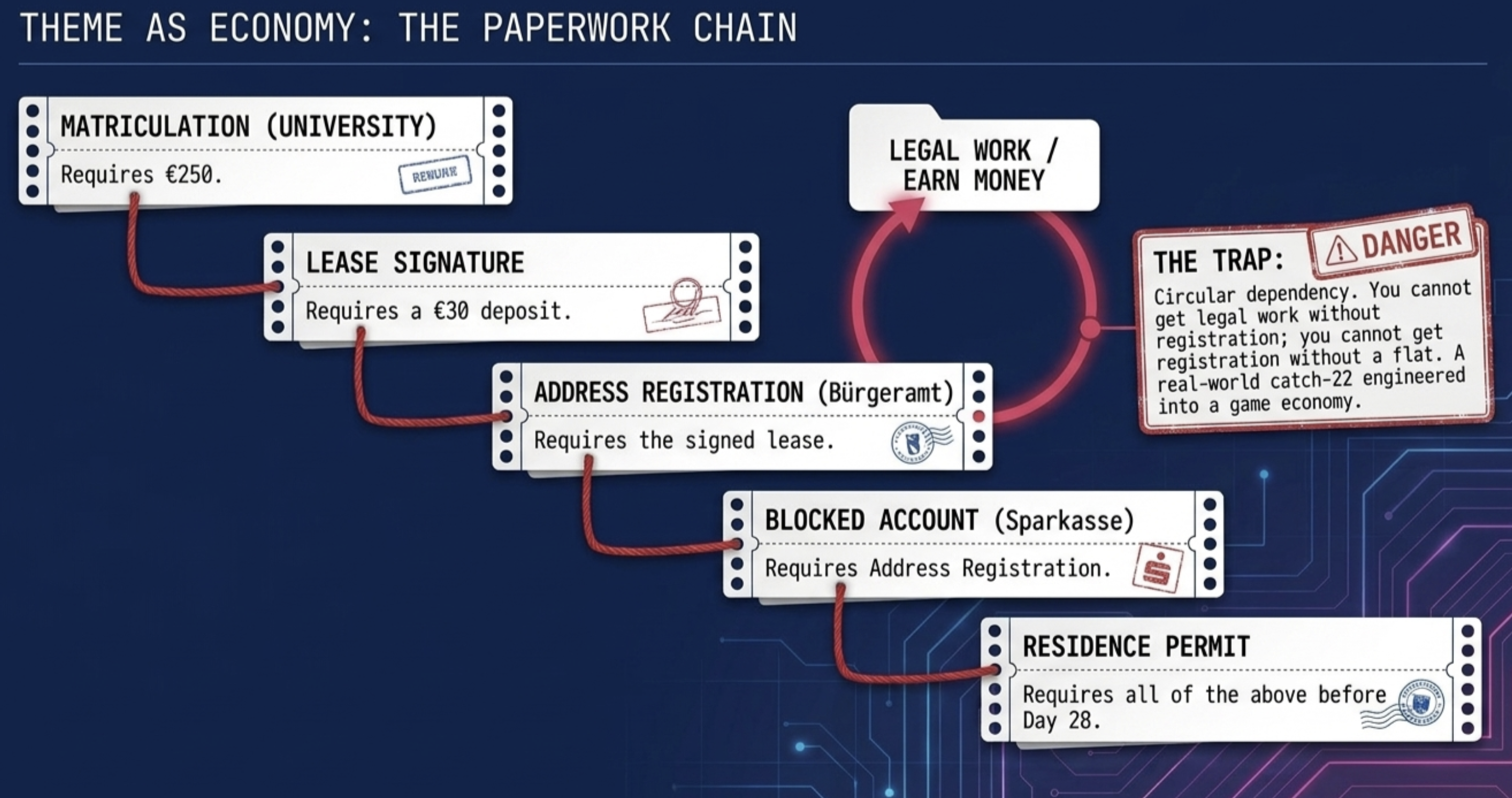
Most of all, we made a game about paperwork that does not feel like paperwork.
What we learned
We learned that a smaller idea can carry more weight when every system points back to it. Once we stopped trying to explain everything, the game became more confident.
We also learned that accessibility is not the same as removing character. The game can use German signs, official phrases, and cultural details while keeping the actual play readable through colour, shape, timing, and plain English.
What's next for Far From Home: Kruma Express
Our next step is to keep polishing the playable loop: making the first shift immediately legible, making each upgrade visibly worthwhile, and tightening the small moments between work, travel, and paperwork.
The game is about trying to build a home from very little. We want every successful delivery to feel like a tiny, ridiculous, genuinely meaningful step in that direction.
Built With
- css
- data-driven-narrative
- html
- javascript
- offline-web-game
- procedural-generation
- three.js


Log in or sign up for Devpost to join the conversation.