-
-
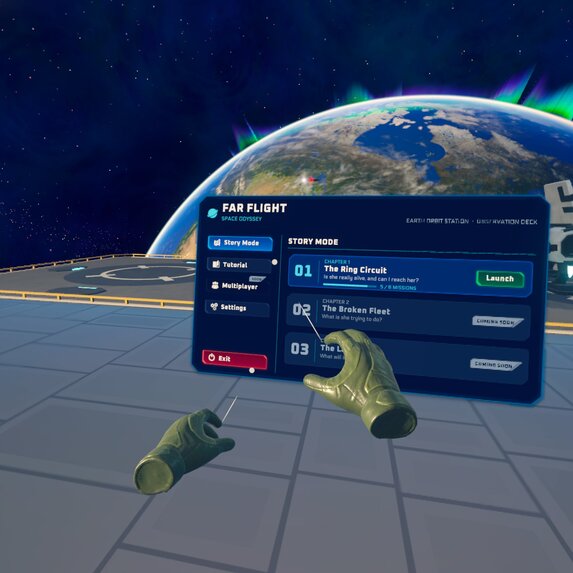
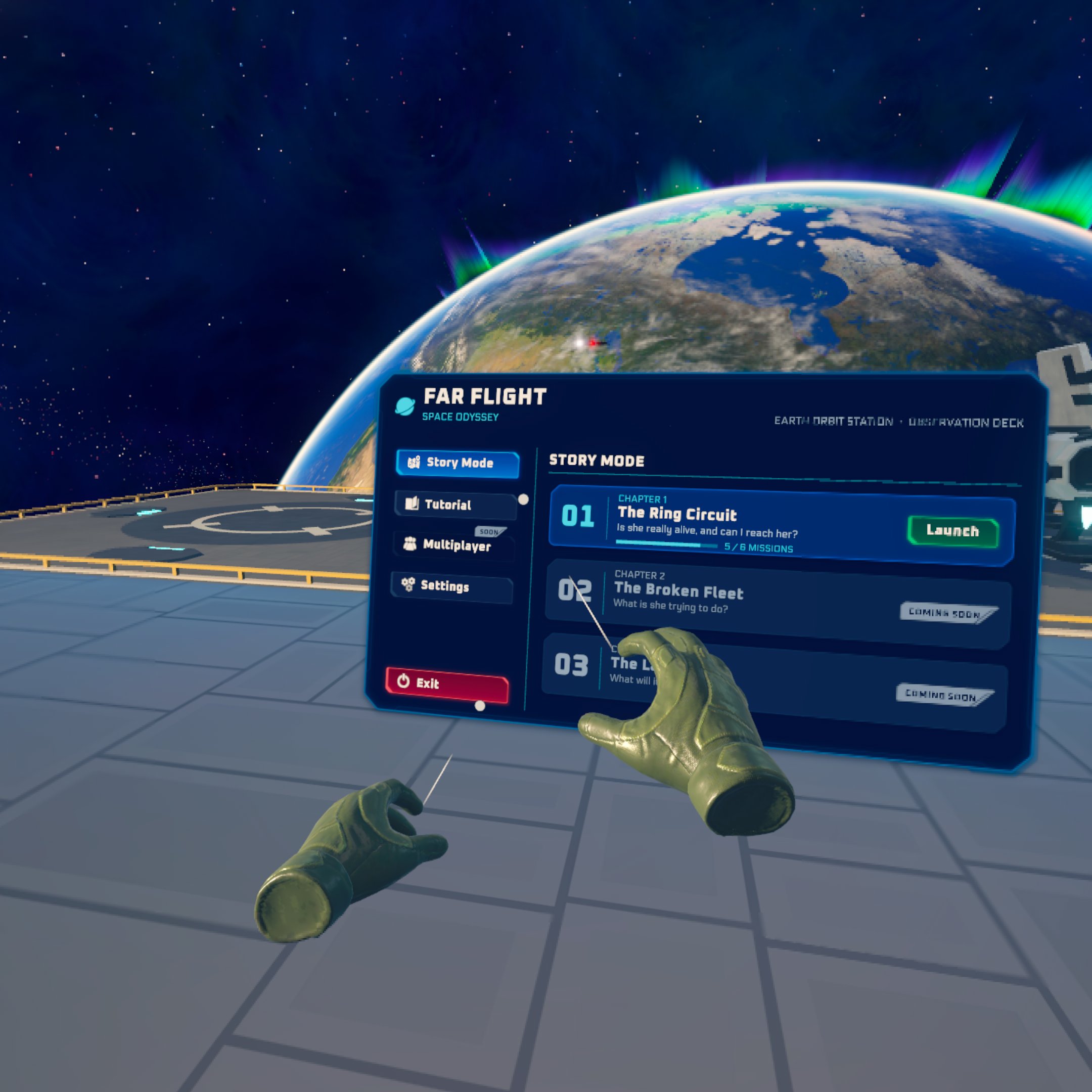
Station Menu UI
-
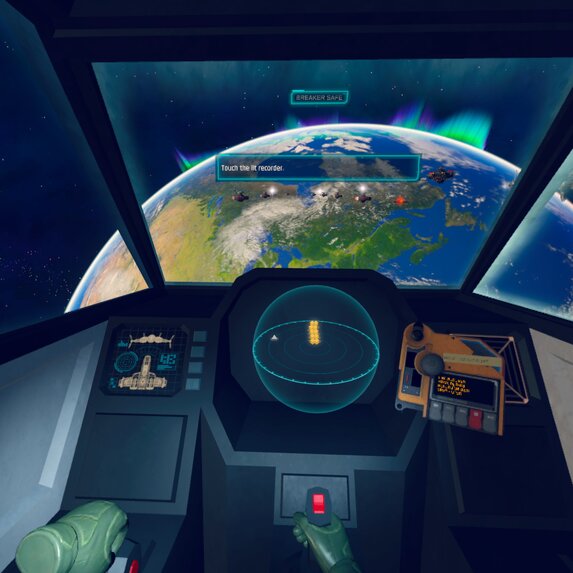
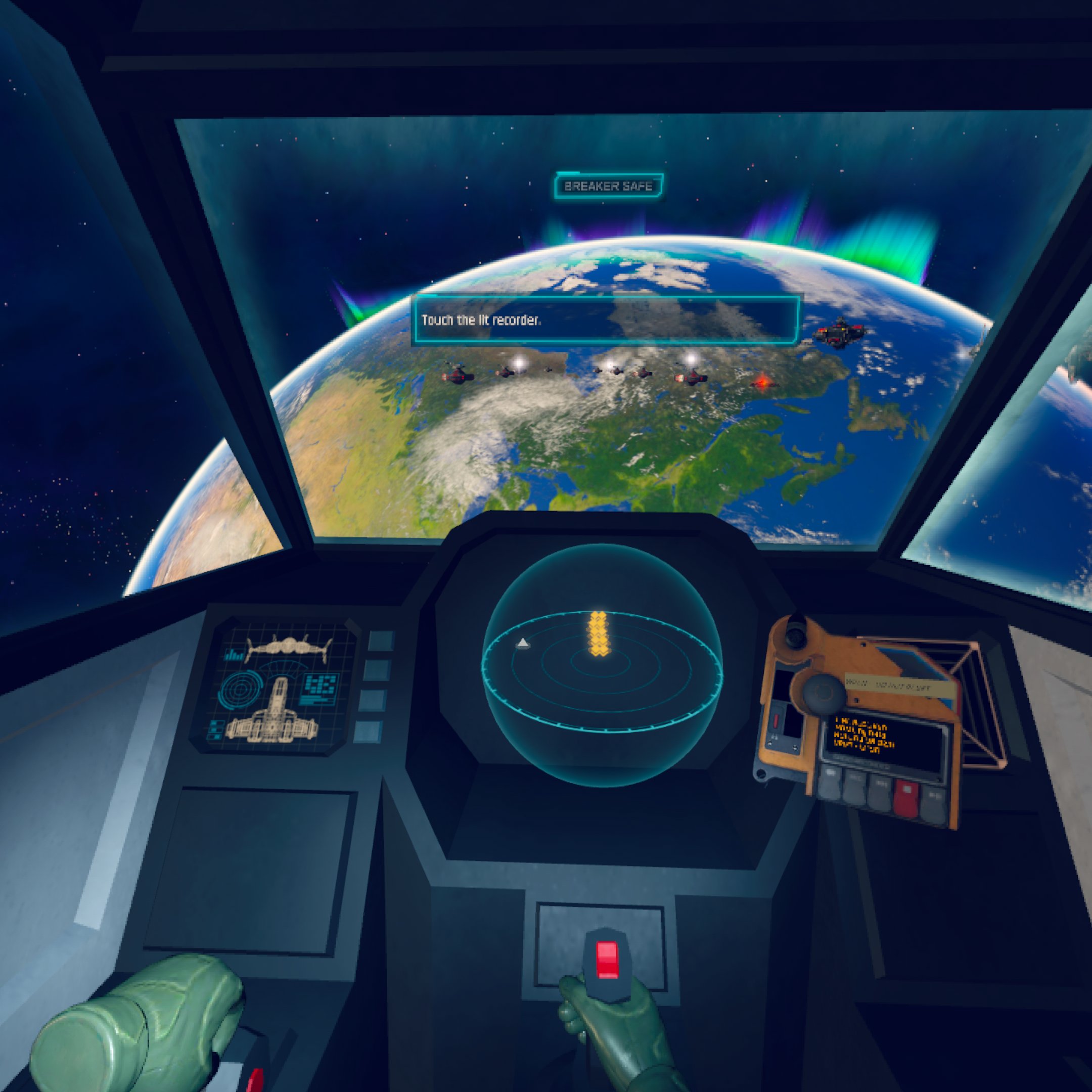
Earth Ascent - First mission
-
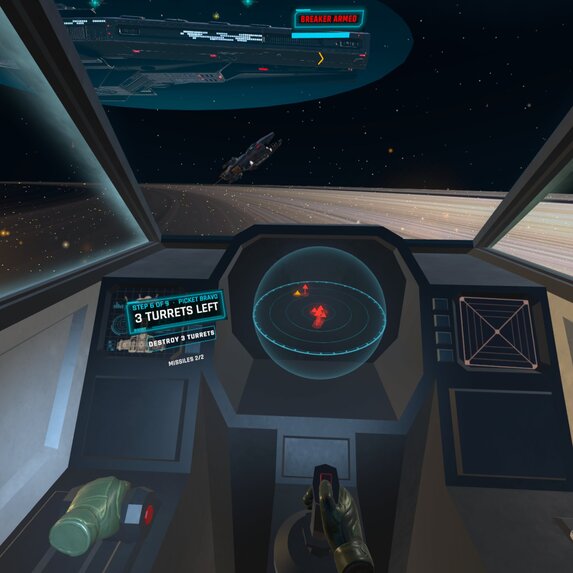
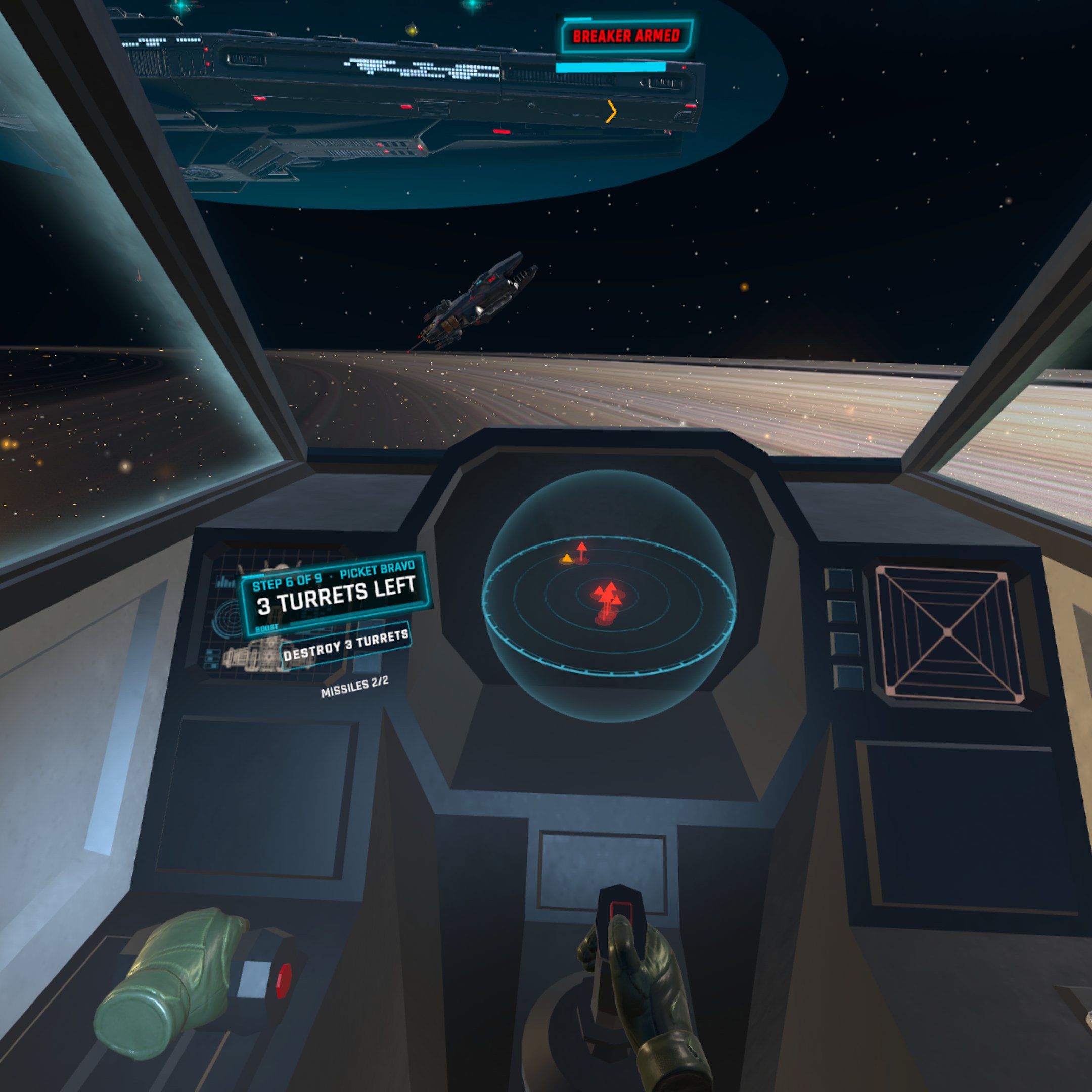
Combat near Saturn
-
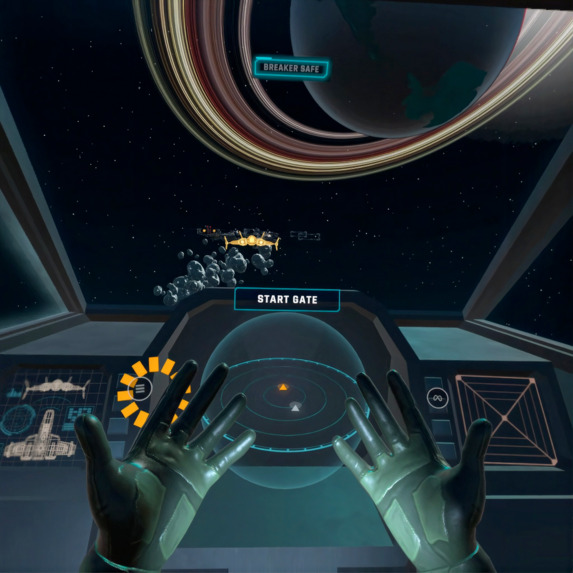
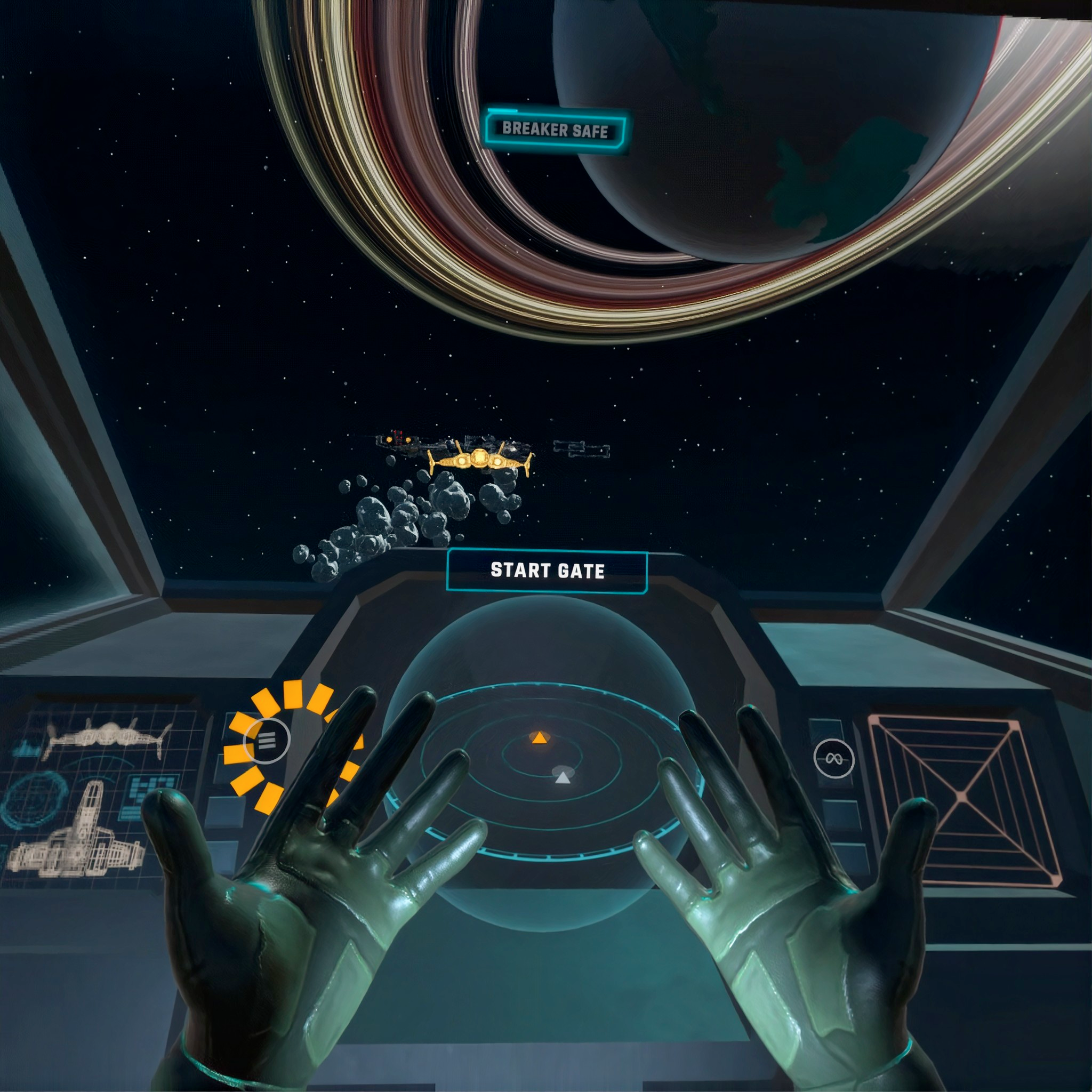
Faint rings
Inspiration
Interstellar's idea of love measured against time running at different speeds stayed with me, and I wanted to feel it from inside a cockpit. Most VR space games are about shooting. I wanted one about flying: hands on a stick and throttle, a planet filling the canopy, and a reason to fly that matters more than the next checkpoint.
That reason is Wren. Nine years ago she flew off a race course to answer a distress call and fell into a black hole's time well. For you, nine years have passed. For her, only a few hours. Then the sealed recorder in her spare ship writes a new line.
What it does
FAR FLIGHT: Space Odyssey is a hand tracked, seated mid-core space adventure for VR Glasses. You play as Theo, a former race engineer. You enter the Relay Cup to follow your wife's trail through the wonders of space and down into the black hole.
- No controllers. Your right hand grabs and steers a virtual flight stick. Your left hand sets a throttle that holds its position. To fire, you tap your thumb against the side of your index finger, and your glove presses the red button on the stick. The plane will keep cruising even if you remove your hands.
- Chapter 1, "The Ring Circuit", is fully playable (about 25 minutes). You start on an orbital station above Earth. Then you launch off a carrier, follow Wren's ghost off the course, and fight claim drones on Saturn's rings to save her buoy.
- Racing comes first Time trials, ghosts and quick retries. Only a few events are armed, and each fight has a story reason.
How we built it
- Unity 6 (URP 17) with OpenXR, XR Hands and the Meta XR SDK / Interaction SDK.
- Design came first. A GDD, a story bible, a technical design and a world/level design doc set the scope before scenes were built. Voice overs are generated with Deepgram text-to-speech.
Challenges we ran into
- Making a virtual grip feel real. With no physical controller, the stick has to feel solid while tracking jitters. Glove fit, finger poses, regrab behavior and seat height each took several headset builds before a sustained grip was comfortable for a whole race.
- Space at real scale on mobile hardware. Planets, rings and skyboxes have to fit inside the camera's far clip without popping, and still run at frame rate of 70 FPS on a standalone Quest.
- Readable guidance in VR. Markers and guide lines that look fine on a monitor feel bad at your face. They now fade out near the cockpit, and the combat HUD shows one thin target marker at a time.
Accomplishments that we're proud of
- I’m building the game in public, primarily on X (Twitter). My posts about the game average 4k views and 80+ reactions and they’ve helped me gather valuable feedback.
- A complete, hands-only flight model that feels like holding a real stick and throttle with using audio cues UX in place of controller haptics.
- A full first chapter, from the station deck to the memory scene, built in about a month.
- Spectacular moments: climbing out of Earth's atmosphere, and skimming Saturn's rings.
What we learned
- In hand-tracked VR, feel comes before content. One reliable grip mattered more than any number of levels.
- Combat works best as a short burst inside a story, not as the main loop.
- Writing the design docs first made it much faster to work with AI tools.
What's next for FAR FLIGHT - SPACE ODYSSEY
- I am working on the comfort and vignette settings to reduce motion sickness while flying.
- Launch the Chapter 1 on Meta Horizon store in Early Access by November 30.
- Chapters 2 and 3: The Broken Fleet and The Last Relay, ending with a flight into the black hole.
- Multiplayer mode.
- Support for the upcoming Meta VR Glasses and finding the right marketing channels.
