-
-
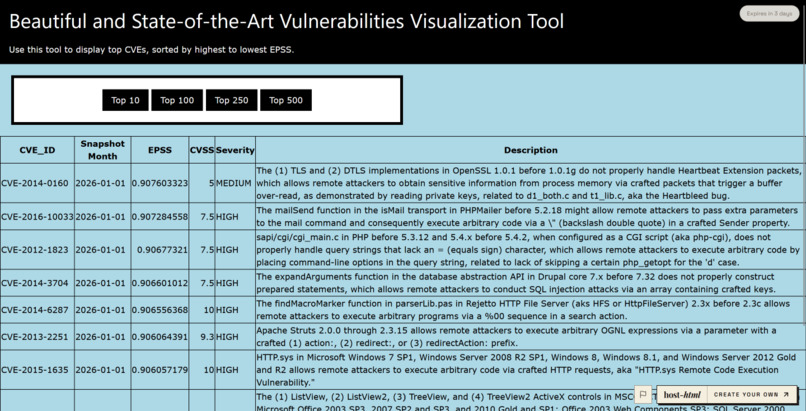
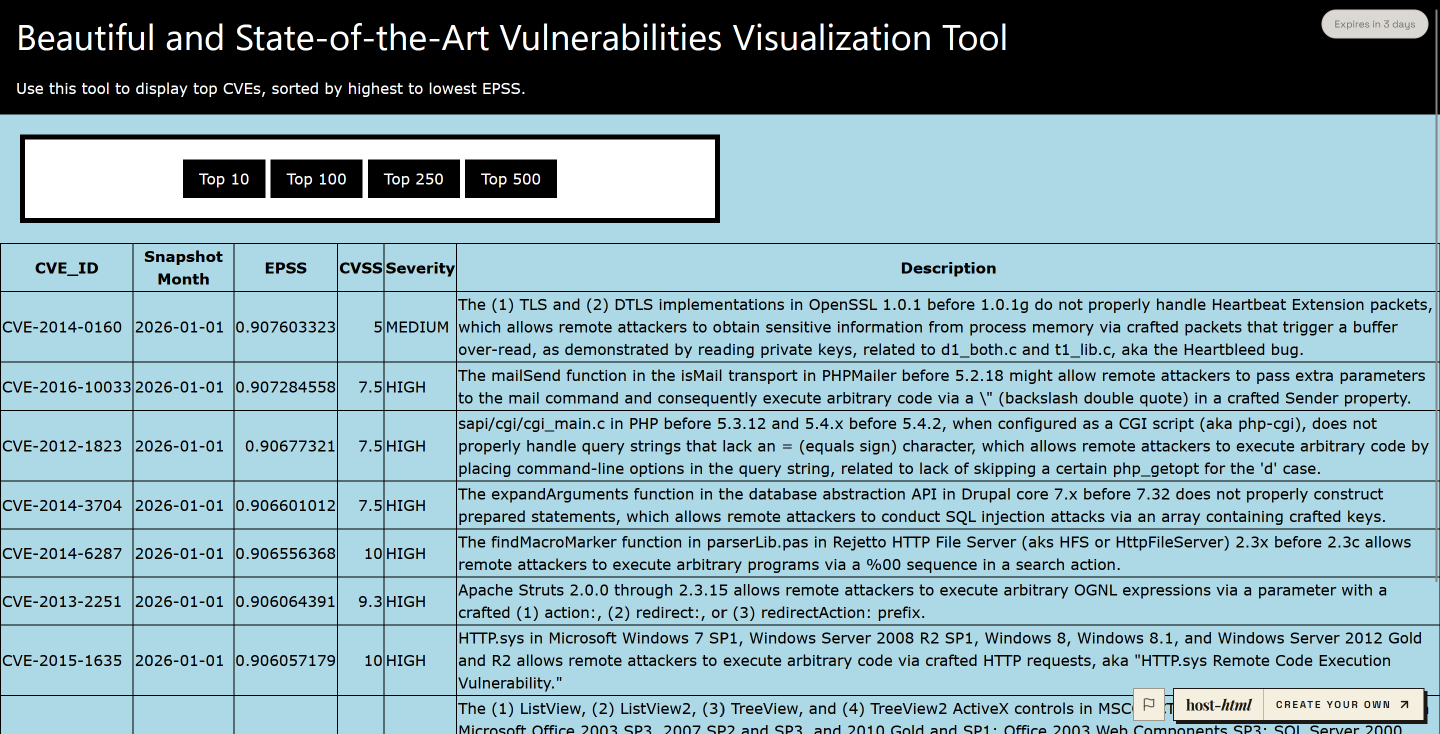
Screenshot of the site.
Inspiration
We were inspired by the promise of creating something that worked. We wanted to complete more of a data analysis/data science showcase rather than a showcase of pure CS knowledge as this is neither of our group members fields. We were interested to learn more of the industry that is cybersecurity as well.
What it does
The Vulnerability filtering tool predicts the EPSS value for each snapshot month of 2026, and then the data is showcased in a beautiful, state of the art html page.
How we built it
We started by examining the data in depth and identified how we wanted to build the architecture. We built a machine learning architecture/neural network to predict EPSS scores for future months given past data. We also combined the scoreboard_2026.csv data with the predictions. We then exported the data, and hosted it on an html website.
Challenges we ran into
The desired scope of this project had to be significantly cut down due to time constraints. We are in our mid to late twenties, we do not want to be staying up much later than midnight ever. We are so tired. There are many things that while I do not think are good/ideal implementations (one example is that there should have been more outputs to identify where the security breaches are more likely to happen), do work to provide valid and helpful insights for the security team.
Accomplishments that we're proud of
It has been 10 years since our one team member has done html, and roughly 2 years since our other team member (me) has concluded their masters in machine learning, so overall, there was some rust to shake off considering the brevity of the project. This all being said, we tapped into those loose braincells and got it together for the project, and have a completed product to showcase.
What we learned
This was my second time working with time-series data and utilizing machine learning, and last time I was using ANOVA to detect anomalies, so this project was a unique experience. Furthermore, the dataset in this Datathon had far more depth and detail than I have seen in academic datasets, and the usefulness of the dataset is significantly higher than I have seen of academic datasets (we did not have the chance to go into extreme detail with the dataset given the time constraints, but every file seemed useful in its own way, and offered unique identifying information rather than redundancies). Our other group member, having done front-end design 10 years ago, got to reintroduce themself to Javascript and HTML. Both group members found that the data terminology in the cybersecurity field was completely new to them, and both of us were able to learn a great deal of the world of cybersecurity through this project.
What's next for Vulnerability Filter Tool
So much needs to be done. I mentioned this earlier, but finding where the vulnerabilities are would be extremely valuable. Additionally, since we have the snapshot month and the epss values, we could filter by month to find data or vulnerabilities to focus on each month. Finding the specific services that are at risk would be helpful, and the architecture for the machine learning admittedly could be improved upon. More yearly data would help bring some stability to trends predicted, and utilizing more of the data provided might improve predictions (but more testing would be necessary).
Built With
- chatgpt
- excel
- html
- javascript
- python
