Inspiration
We were inspired by being players in the Fantasy sports scene for over 10 years, and experiencing firsthand the issues plaguing the industry, from centralizing of data, to prize winner manipulation, and fake contests, and handouts.
We were also concerned by the number of winners being declared, along with the huge profits being concentrated into the hands of a few very large companies, further exasperating the problem
What it does
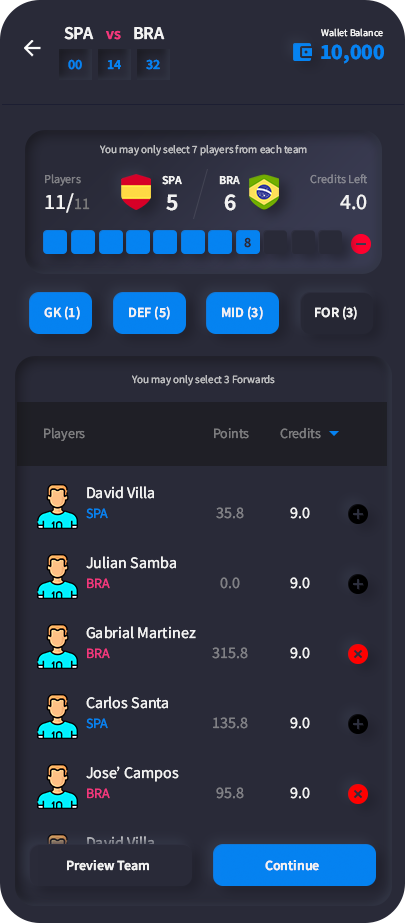
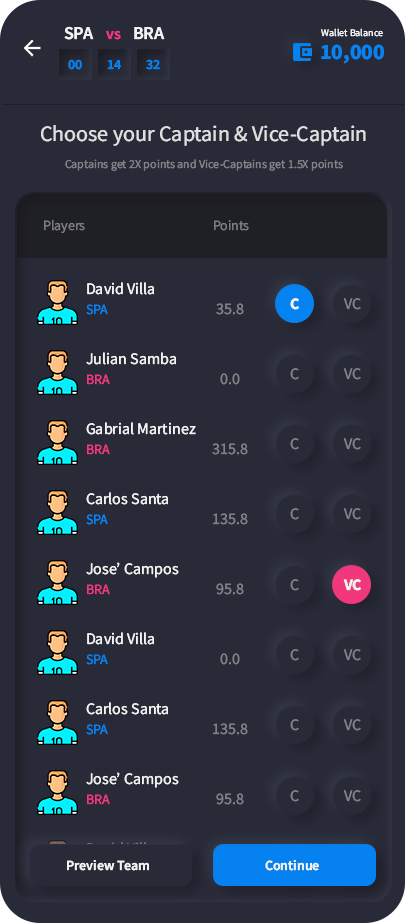
Fanfury uses multi-sourced data oracles, to mitigate against data manipulation while ensuring that all contest pools are created, managed, and paid out by smart contracts, that cannot be influenced by the participants or the platform.
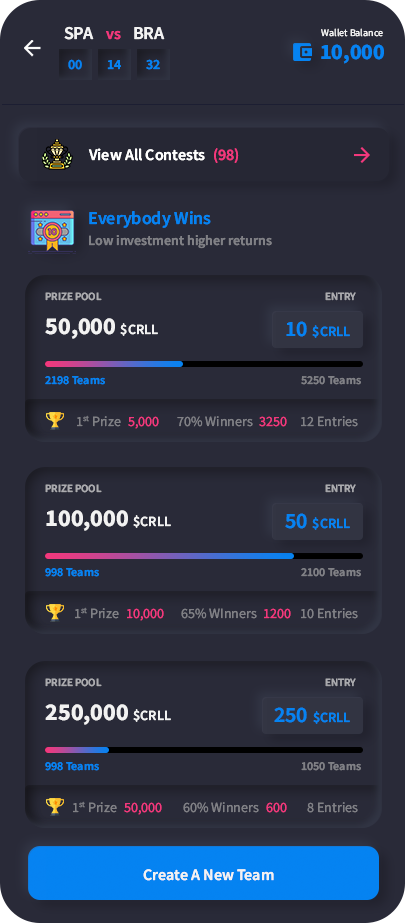
Platform Rake fees are capped at 5% on all contests, giving participants a larger share of the prize pool to share. There are also contest pool rules to prevent foul play by participants, by placing a limit on the number of teams/wallet/pool, allowing more participating teams to take part in winnings, without a single wallet being able to influence the final standings.
It then distributes 50% of the Rake Fee earned by the platform, equally between Stakers and Liquidity Providers, giving the community ownership over the platform, as well as a share of the profits.
The Value Accrual Mechanism: There is finally, a value accrual mechanism that burns 40% of the tokens from the total Rake Fee collected, thus creating a deflationary system, on the fixed 420m tokens. This mechanism is based on the price of the token itself and works by burning more tokens if the price is low, and less when the price is high.
Explanation
- All contest entry fees and prize pools are denominated in $UST
- Contest entry fees can be paid in $UST:
- Immediately swapped at oracle price ($d), for 'X' $Fury tokens, and then swapped back to $UST at oracle price ($d), and then moved to an Anchor Wallet (This generates ~20% interest, from the moment the first deposit hits the account - more on this later)
- Contest entry fees can be paid in $Fury:
- 'X' $Fury tokens, immediately swapped to $UST at oracle price ($d), and are moved to the Anchor Wallet
- When winners are declared, the principal prize money is withdrawn from Anchor and then converted to $Fury tokens. There can exist two scenarios at this point:
With a Prize Pool of $50,000 UST,
- Oracle price rises - Eg from $2 ($D) to $4 ($D*2) | UST Amount of Token Burn = 40% of $2,500 = $1000 worth of tokens = 1000/4 = 250 $Fury tokens
- Oracle price falls - Eg from $2 ($D) to $1 ($D*0.5) | UST Amount of Token Burn = 40% of $2,500 = $1000 worth of tokens = 1000/1 = 1000 $Fury tokens By inversely linking the burn mechanism to the price of the token itself, we bring stability by directly linking it to its fixed total diminishing supply.
- ~70% of all participating teams, will share in 95% of the prize pools. By also putting limits on the number of entries/wallets/contests, we are able to prevent mass manipulation of winners, ensuring that a larger amount of tokens are distributed to a more diverse number of winning teams.
How we built it
We built it using the Terra Blockchain for the smart contracts, and are using multiple oracle providers to source our sports data, from Band, Chainlink & Supra Oracles.
We use Anchor integration, to deposit prize pools, which in turn generates profit which the platform uses on a monthly basis to buy back and burn tokens.
Important We also use a banking partner to drive $UST adoption through integration, giving our customers access to white-labeled IBAN bank accounts, an International Visa Crypto Debit Card, Digital Wallets, and access to the worlds of both Defi and Tradefi - offering him the ability to hold his funds in crypto/fiat, move them freely between the two, and most importantly, **being able to spend his crypto in the real-world in over 180 countries, with payment methods as simple as Gpay, ApplyPay, and SamsungPay.
Challenges we ran into
There is, unfortunately, no native Terra Oracle source for sports data, so we had to work with the Band Team to source this data and then create the oracle that would deliver this data to us.
ChainLink however did have sports data, however since they didn't previously have integration with Terra, it wasn't possible to use them at the time. We also simultaneously had talks with Supra Oracles who were able to source the data however their integration with Terra will not be for another few months.
Accomplishments that we're proud of
Driving the integrations of sports data on the Terra blockchain, and creating our own one of a kind fantasy sports data feed, that will now be used to provide decentralised fantasy sports data to other protocols and blockchains. We are also driving an on/off ramp integration between a crypto card provider and the TFL team, that will see $UST listed through the provider, thus giving every other protocol that links to $UST access to it as well, along with over 18 exchanges
What we learned
One of the biggest learnings for us was how different the blockchain building process is compared to traditional Software/SaaS. Traditional business models also had to be thrown out because of the structure of the ecosystem itself, and this was not just learning, but more importantly, unlearning.
What's next for Fanfury
Fanfury is having its IDO with two launchpads on the Terra blockchain - StarTerra & Pylon. We will also be having our public sale and product launch with one sport by December, introducing more sports as their data becomes availabe or in some cases, the season starts e.g. Baseball which starts later next year.
We will be launching 3d Sports Voxels NFTs in March of 2022. These NFT's are linked to player performance data, will come with their own composing soundtracks, and have perpetual yield-bearing, through monthly payouts, for just holding the NFT itself.
This passive income comes from the interest on the deposits into Anchor from the initial NFT Sale (~70% of the total sales amount will be put into Anchor) and will continue to generate yield until either the holder sells his NFT, at which point the yield also transfers to the new owner, or Anchor stops providing interest at anything below 12%.
These NFT's are also gamified so that the rewards that are paid out are paid based on the players' actual real-life performance on-field, with good performances being rewarded, and poor ones dropping the player into a lower category.
We are also currently working with Top Star Athletes in multiple different sports, to launch an Athlete Social Token Exchange/Marketplace specifically targeted at the eSports and Sports markets. This platform will launch towards the latter part of 2022.
Built With
- amazon
- chainlink
- microsoft-band
- native
- node.js
- react
- rust
- sportsdata.io
- supra
- terra
- terra.js

Log in or sign up for Devpost to join the conversation.