-
-
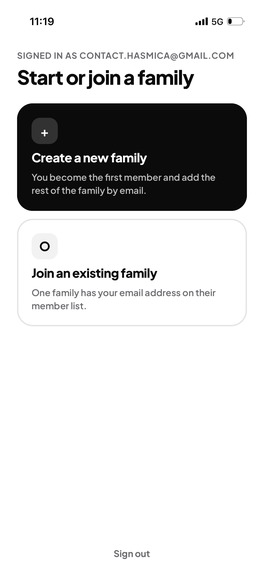
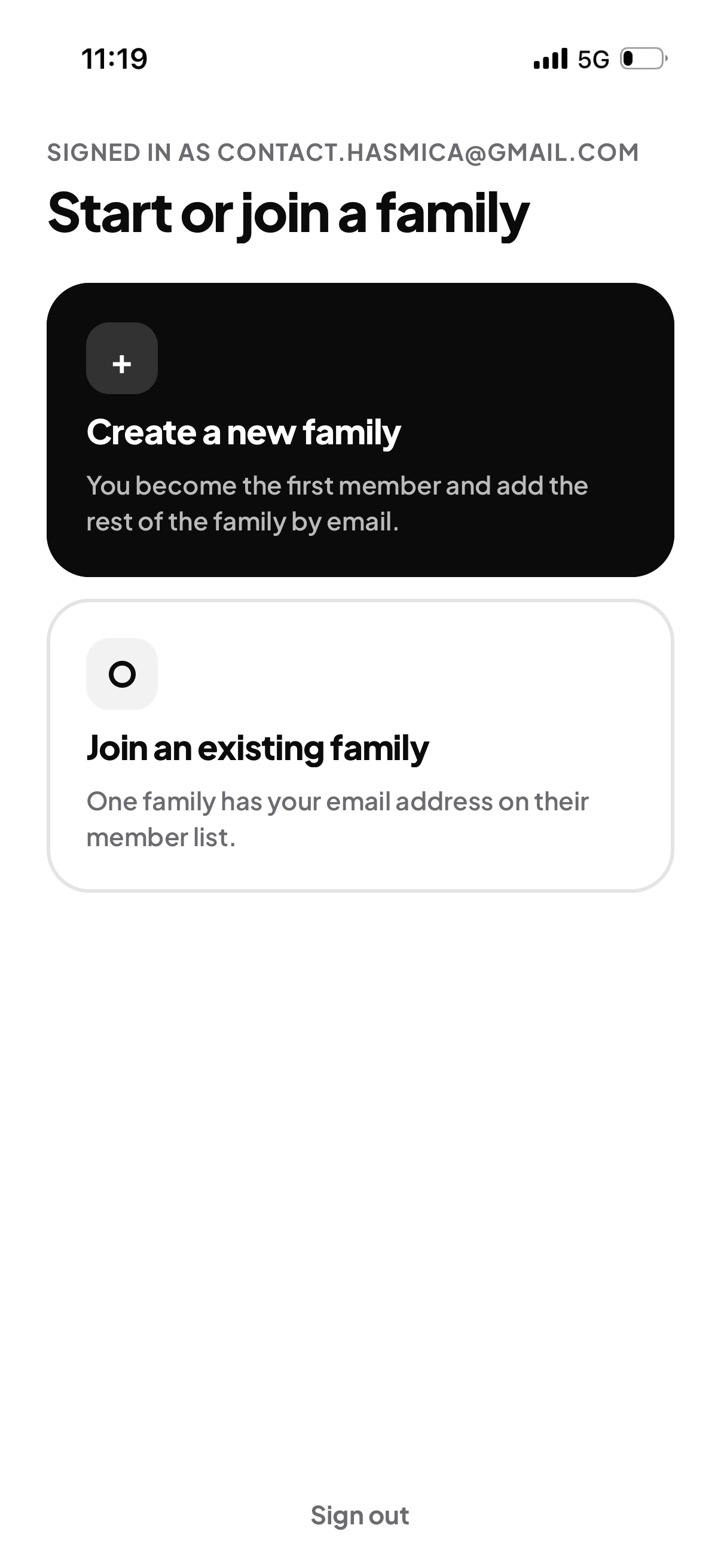
Onboarding: create a new family, or join one that already has your email on its member list.
-
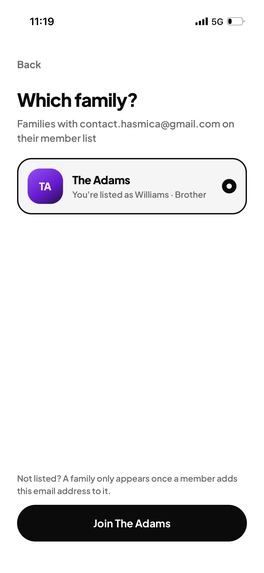
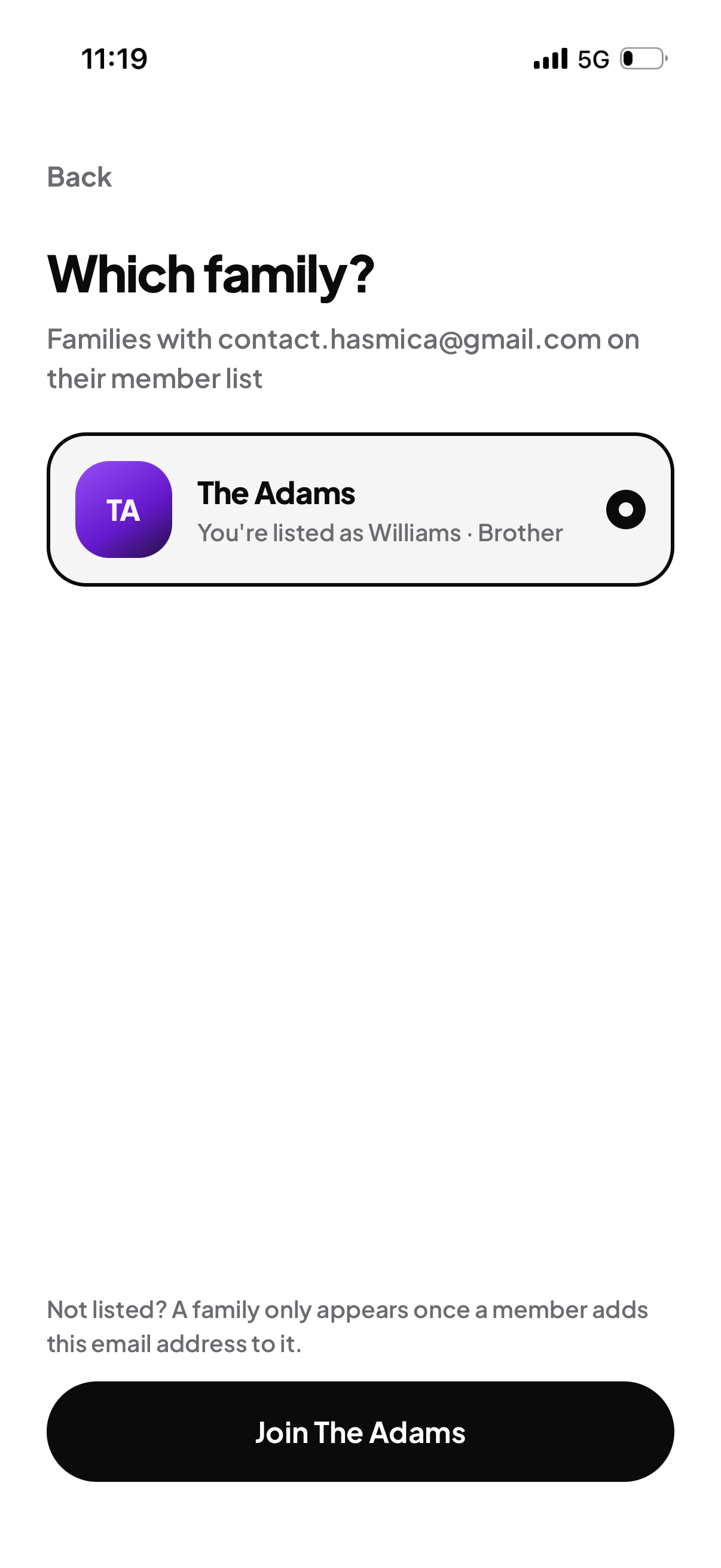
Join by email: the app finds any family that already listed you, matched to your real relationship.
-
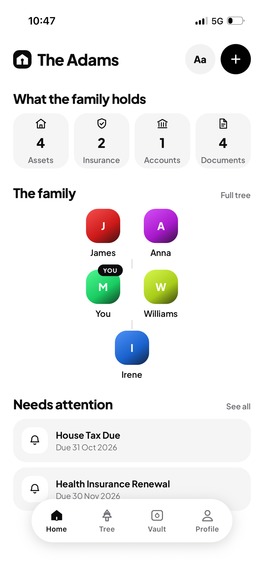
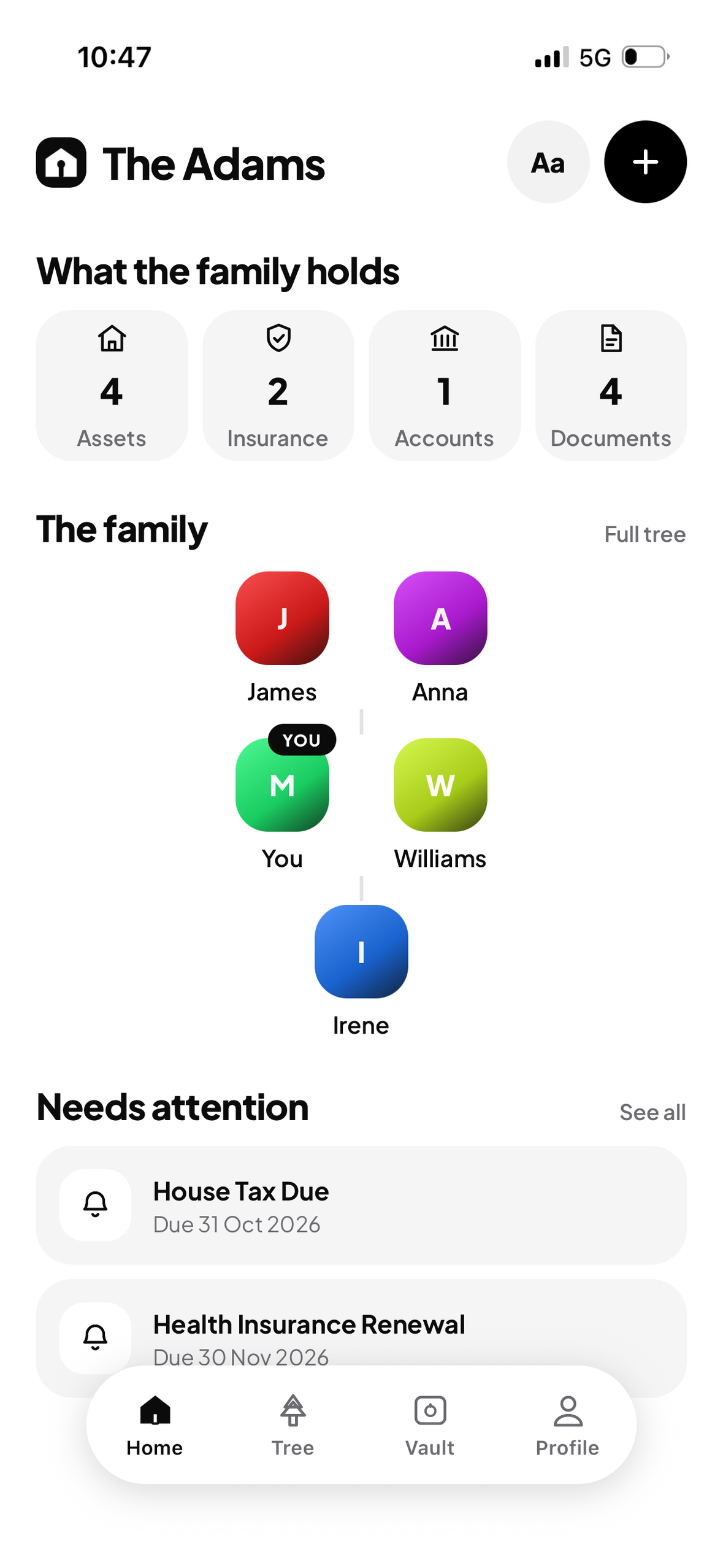
Home: at-a-glance has vault counts, family circle, and upcoming reminders like tax and insurance renewals.
-
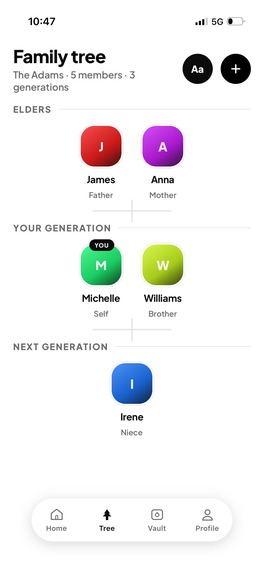
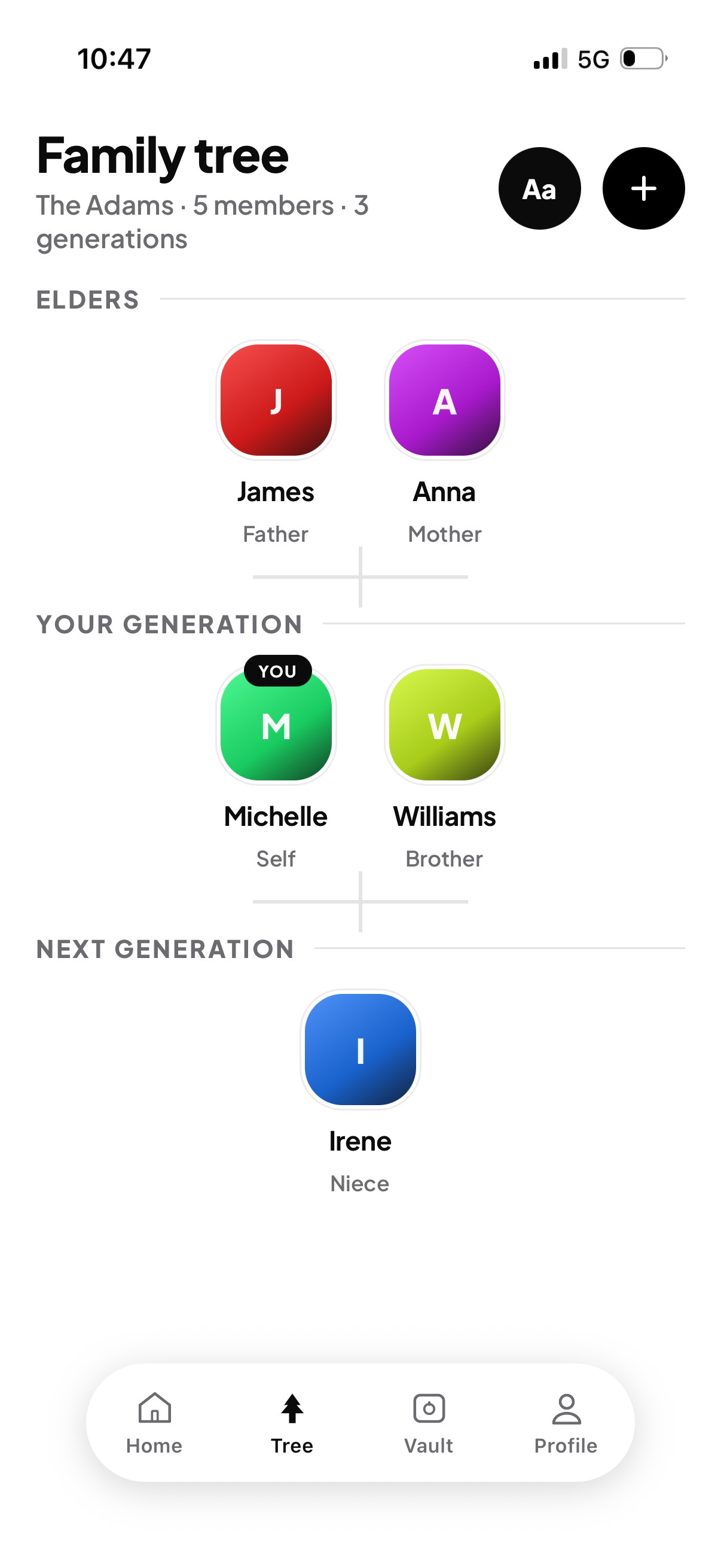
Family tree grouped by generation: Elders, Your Generation, Next Generation.
-
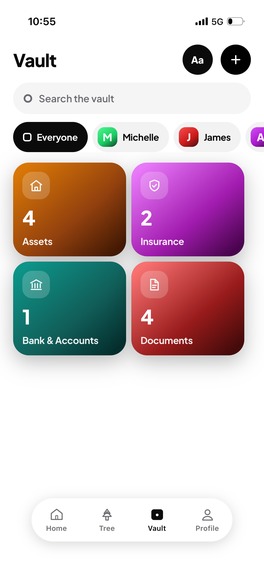
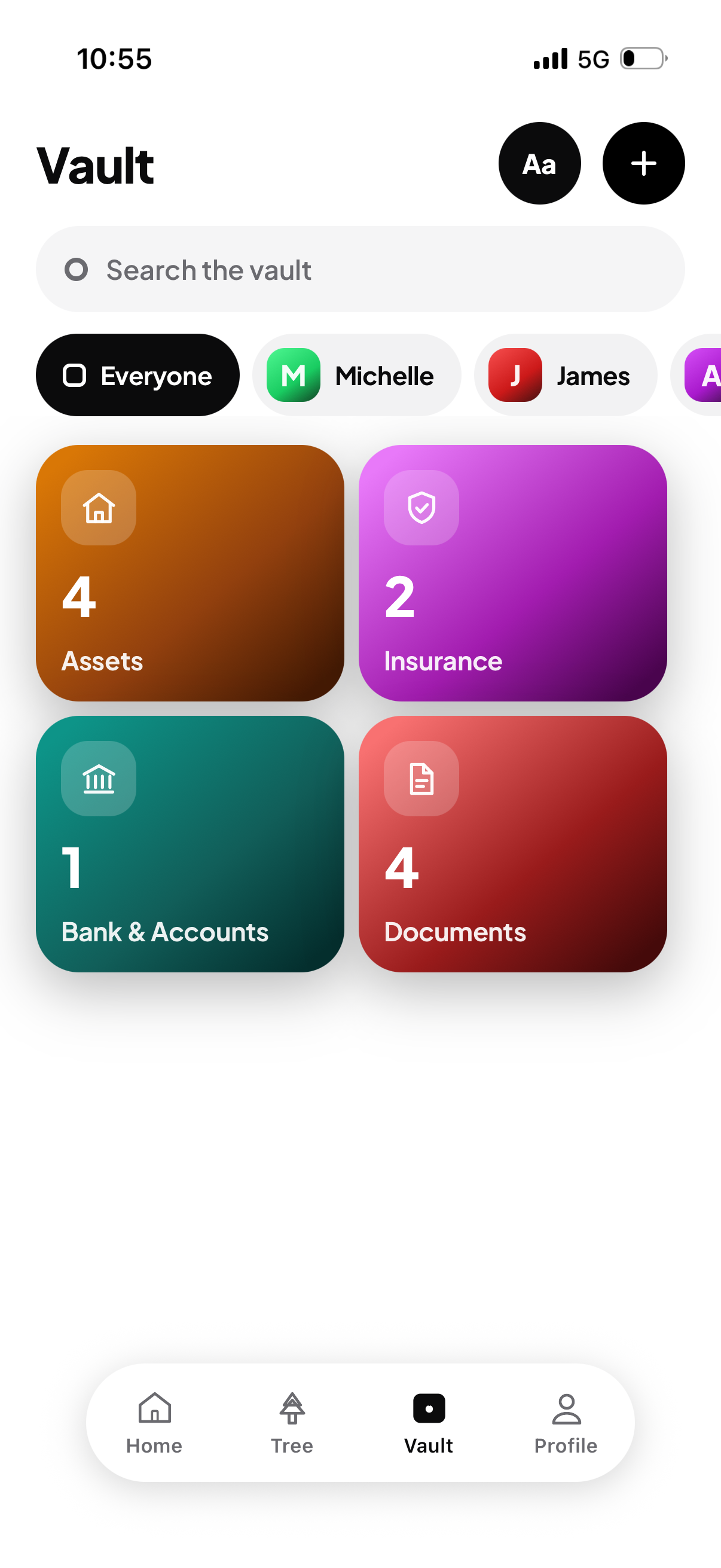
Vault: every asset, policy, account, and document organized by type and color.
-
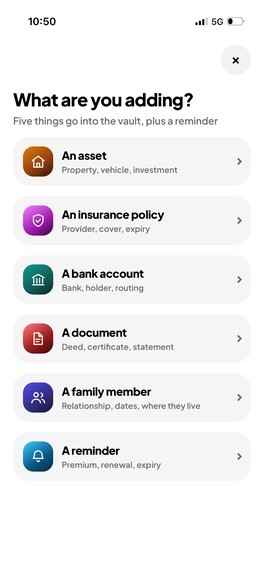
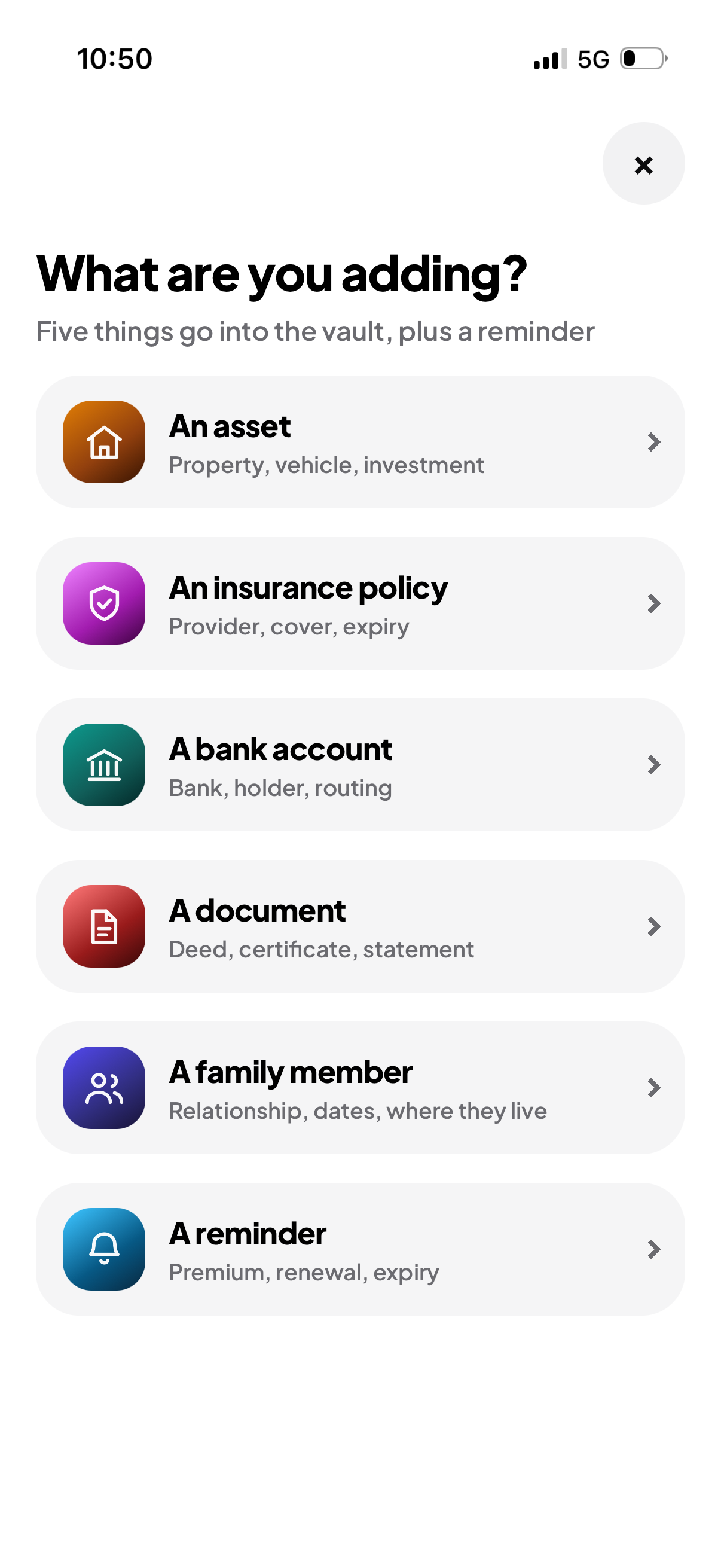
Add flow: one tap to create an asset, policy, bank account, document, family member, or reminder.
-
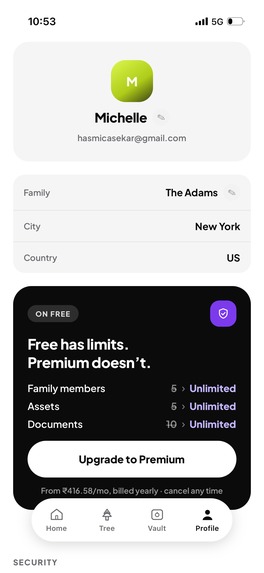
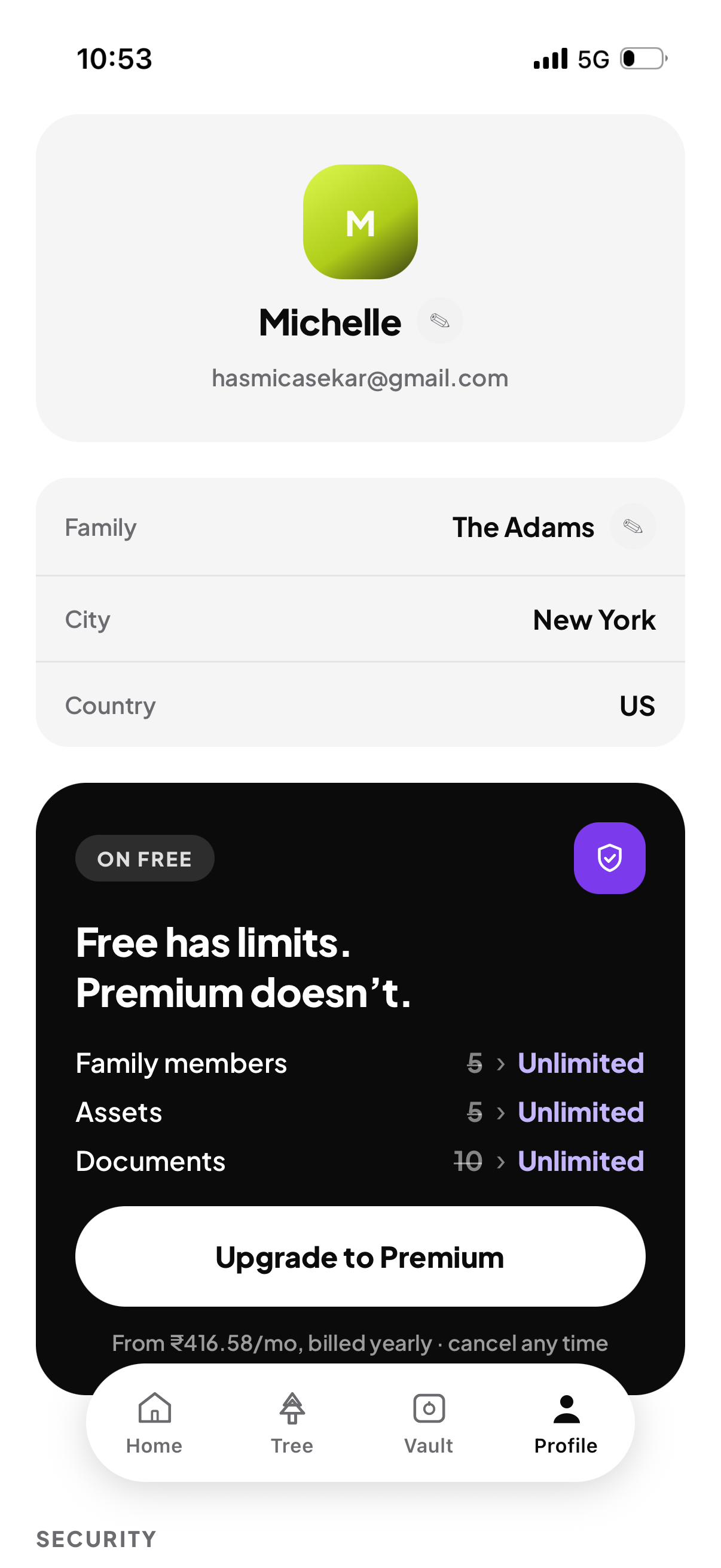
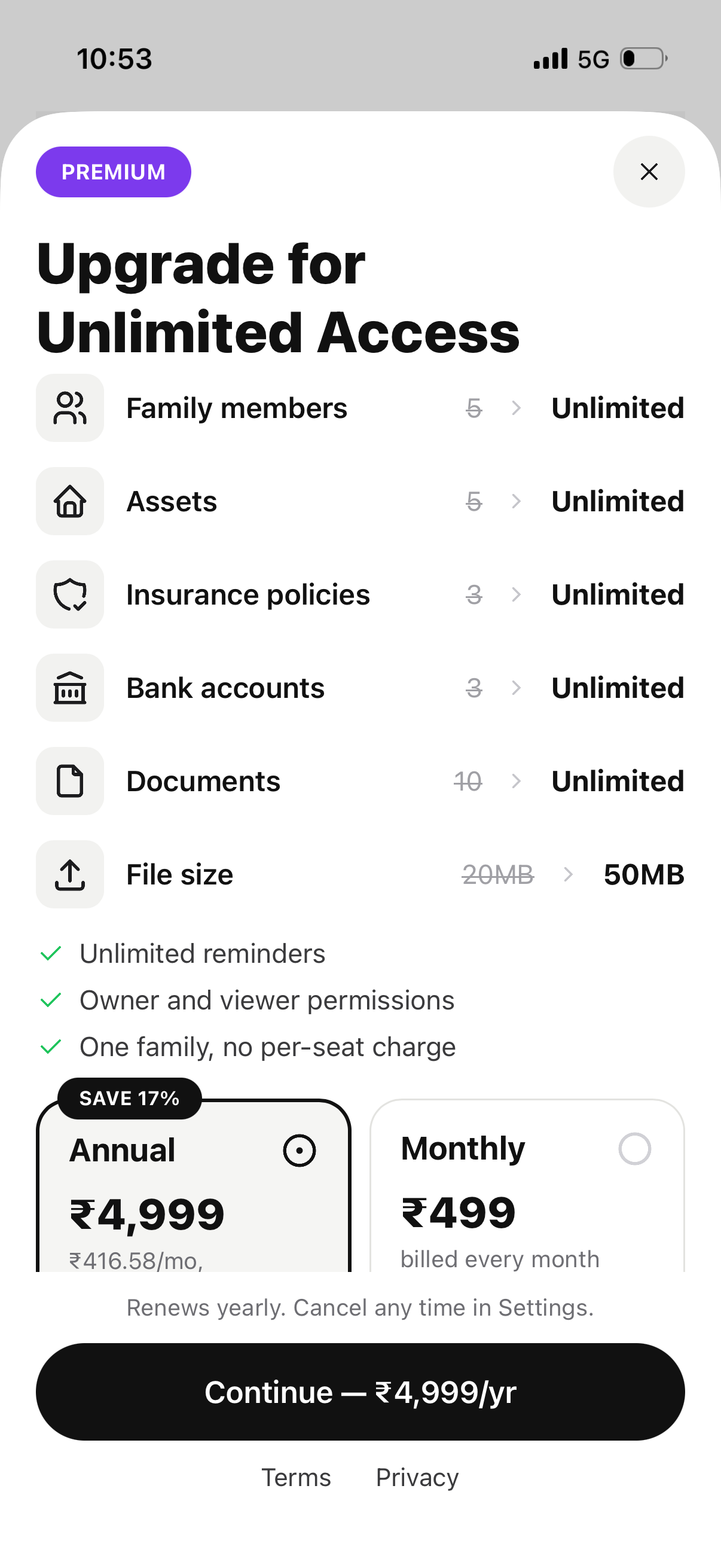
Profile shows the family's real plan status and a one-tap path to upgrade.
-
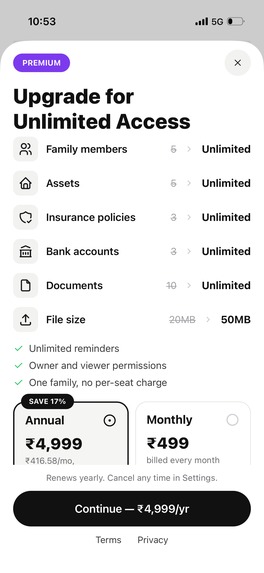
RevenueCat paywall: built from scratch via its AI builder, matching the app's custom design.
-
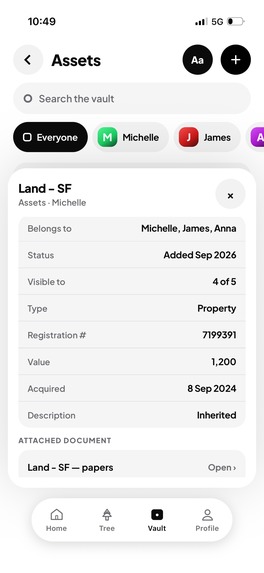
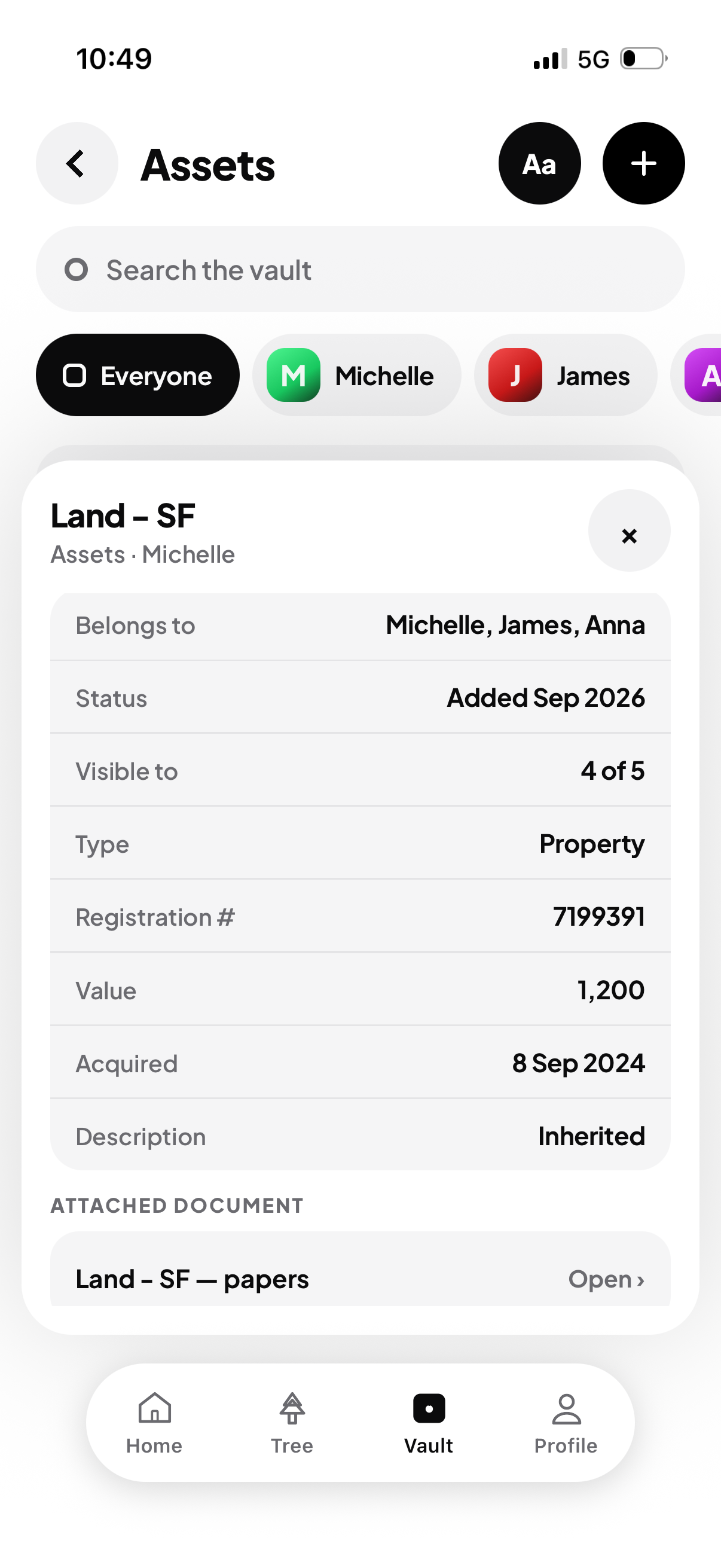
Asset detail: ownership, value, visibility, and the linked ownership document — all in one place.
-
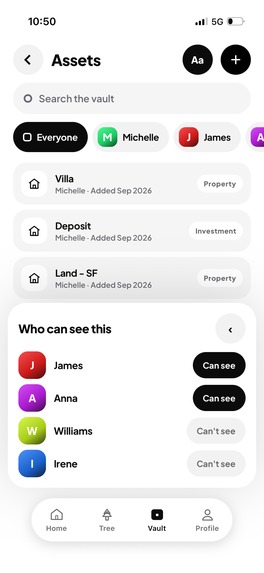
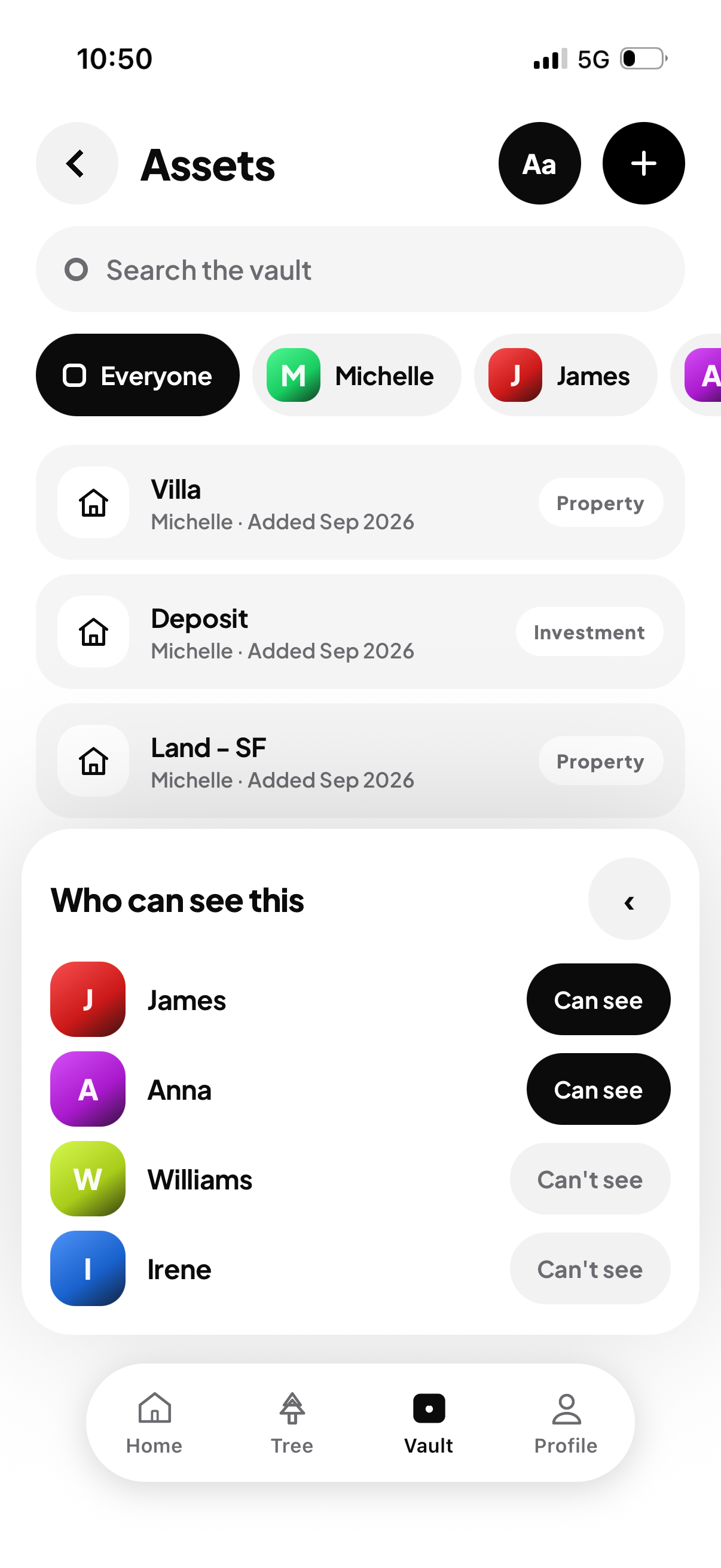
Real Owner/Viewer permissions enforced by the database, not just hidden in the UI.
-
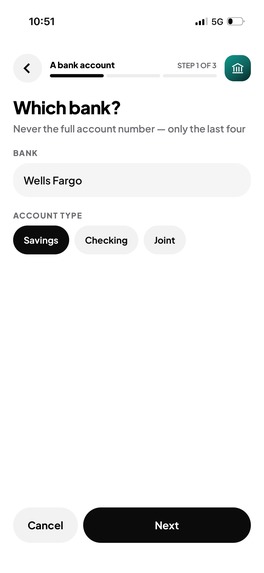
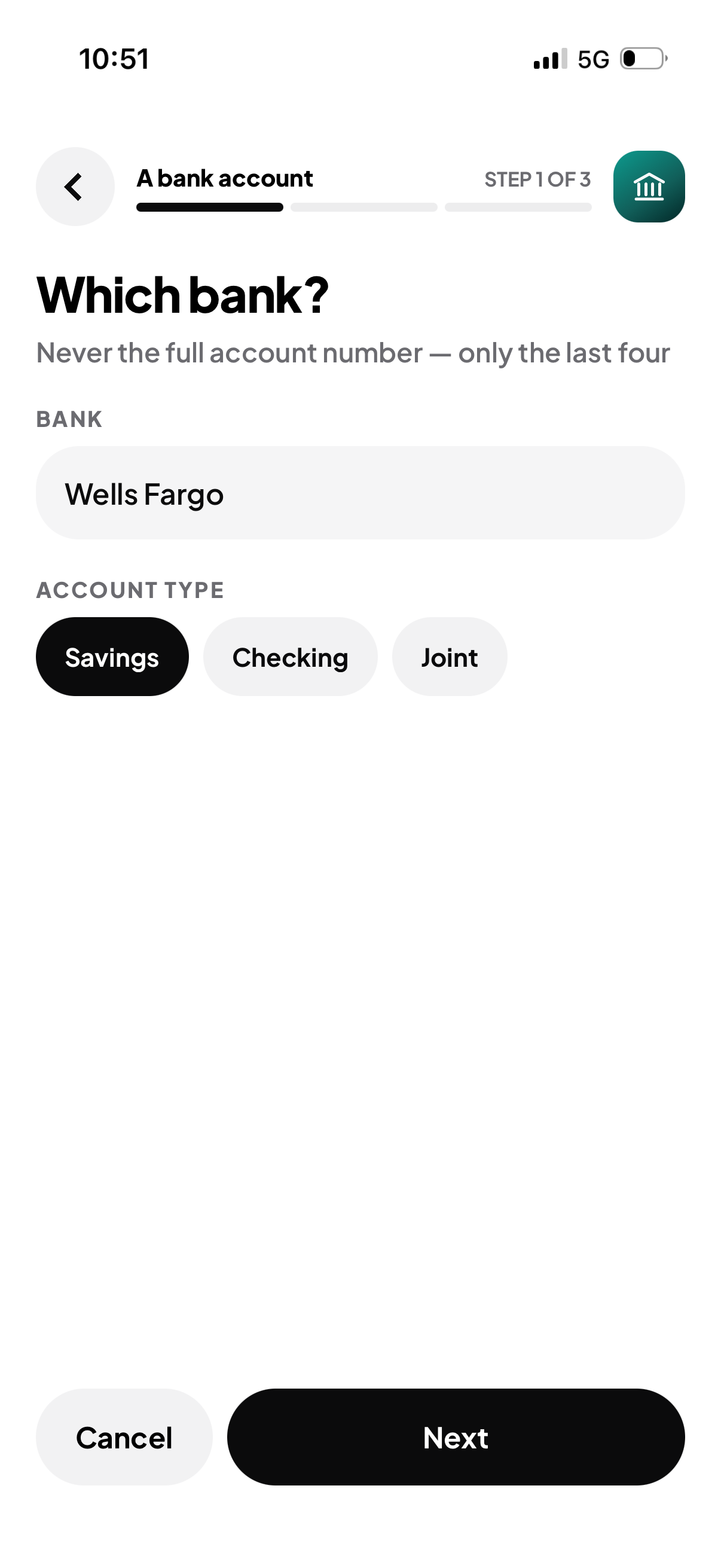
Adding a bank account with bank name and account type
-
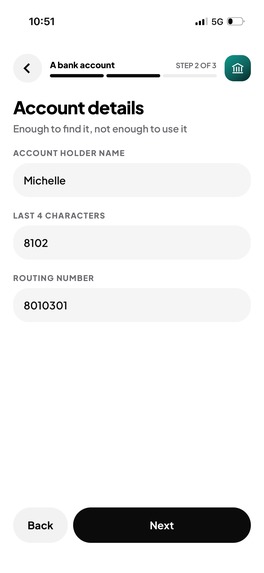
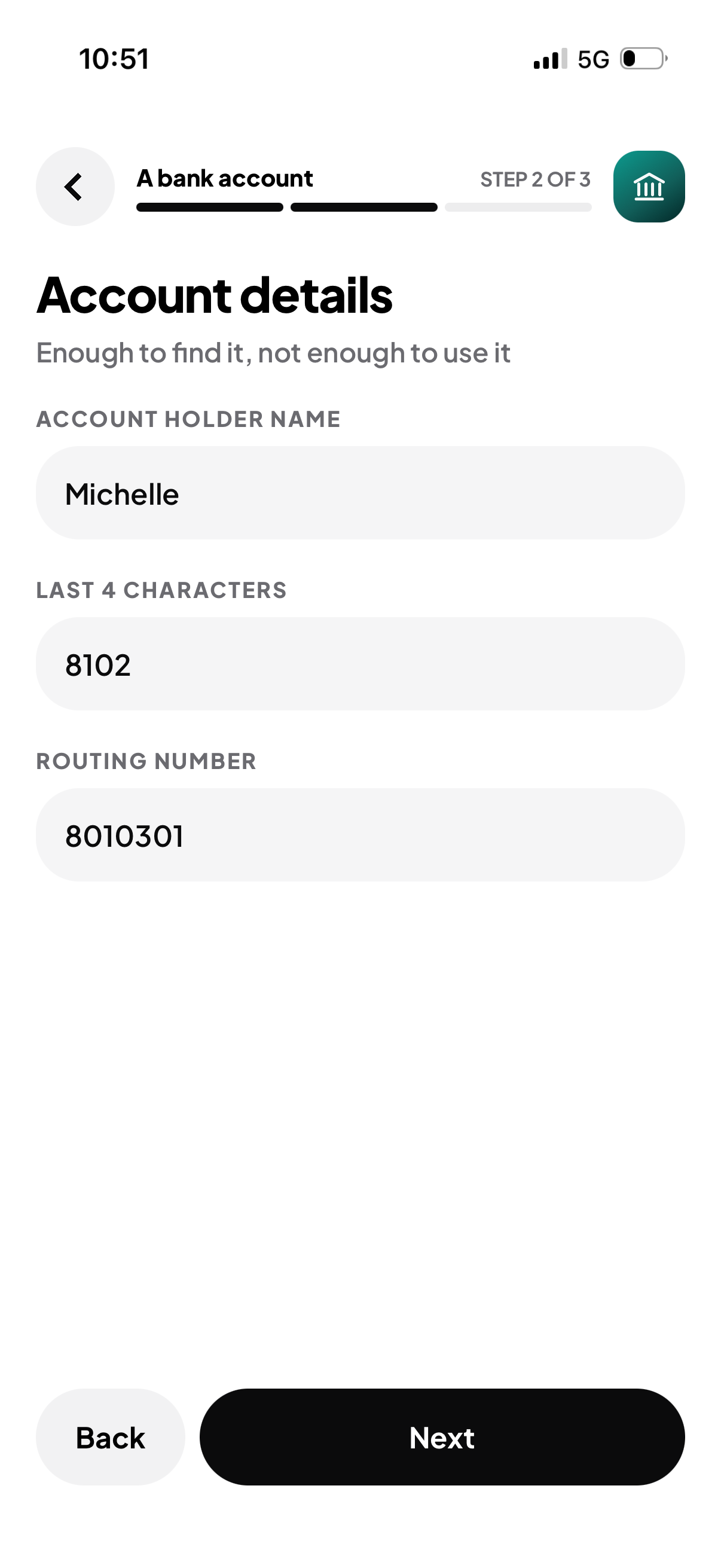
Account detail: only the last four digits are ever stored, never the full number.
-
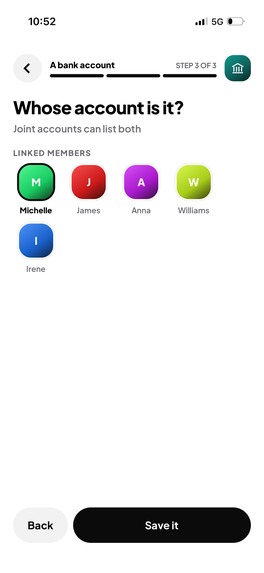
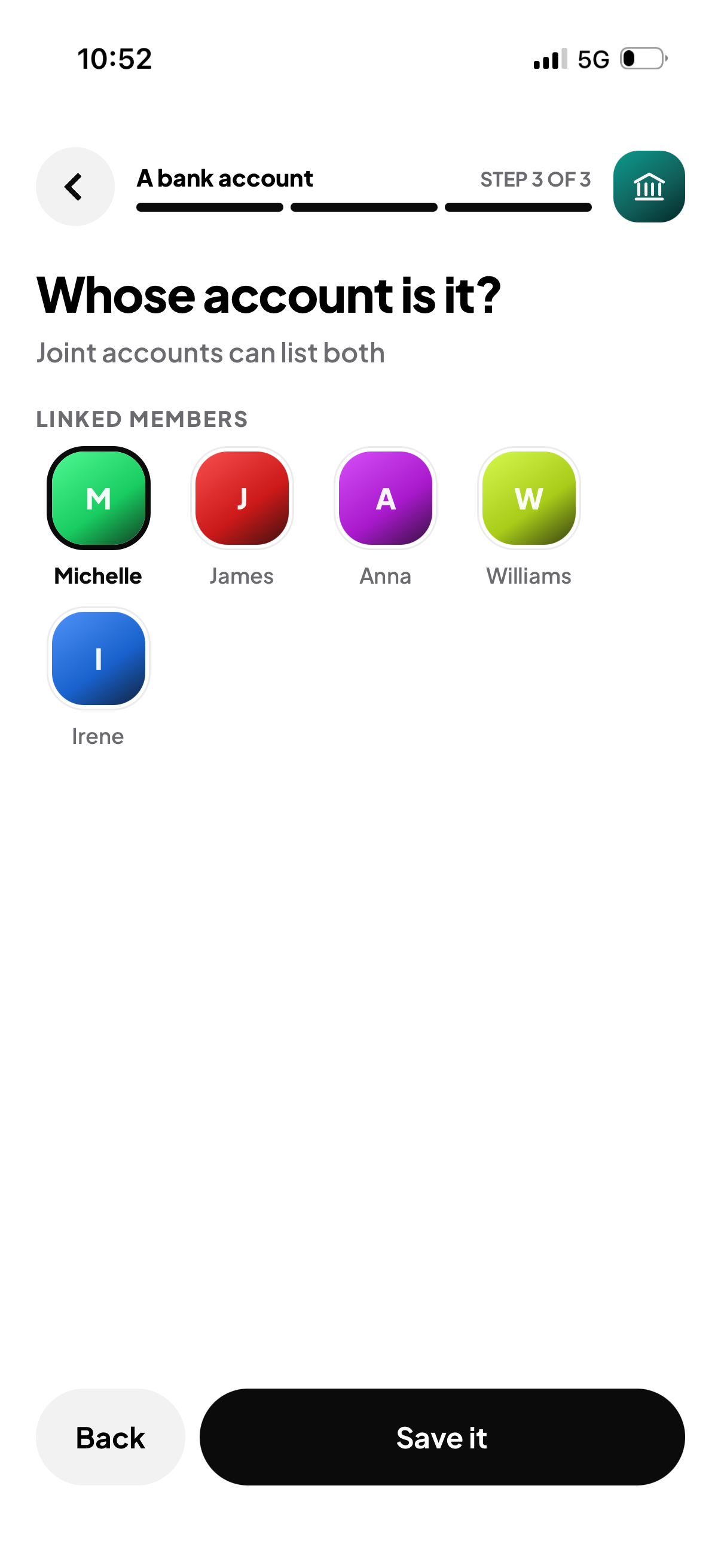
Linking a bank account to the family members it actually belongs to.
-

App Icon

Inspiration
I was looking to buy health insurance and contacted multiple insurance companies. The agent asked if I wanted to convert it into a family plan, and I realized I had no idea if my family already had one. Later I figured out, this is not just my case, but most of us have very little idea about what each of our family members hold. Also, a lot of important family information tends to live in people's heads, physical files, WhatsApp conversations, email inboxes, or scattered documents. This lack of knowledge and scattered informaiton can cost us exorbitant hospital bills, delayed property payments, and sometimes even assets being not inherited.
Famly Safe solves this problem and acts as a private, shared vault so a family can know and organize their records. It keeps record of the family's assets (with ownership splits), insurance policies, bank account references (last 4 digits only), and documents. The app also has powerful in-app reminders so that the next time the house tax is due, you're alerted and you don't end up paying fines. Considering the sensitivity of the information stored, the app offers clear owner and viewer permissions.
How I built it
I used the following tech stack to build the application:
- Figma (FigJam) - Used it for ideation and information architecture, to decide what entities go into the first version, their relationships and their permissions.
- DBDiagram - Used DBDiagram for datamodelling, converting the entities and relationships into tables.
- Claude Design - Used Claude Design for UI design. I spent a considerable amount of time here designing the onboarding flow, defining navigations, fonts, icons, and polishing every minute detail.
- ChatGPT - Once the architecture and UI designs were finalized, I used ChatGPT to prepare a Claude.md file with all the instructions. I used ChatGPT because it had the context of my application right from the beginning of ideation.
- Claude Code - I used Claude Code for the actual implementation. Here, I've used Expo, React Native, Typescript for the frontend, and Supabase (Postgres with row-level security(RLS), Auth, Storage, Edge Functions) for backend.
- RevenueCat - Finally, I used RevenueCat to process in-app purchases. Special mention to RevenueCat's AI builder through which I built the custom paywall within matter of minutes.
Challenges I ran into
- I spent 2-3 days debugging a family creation failure using Claude, because initially it looked like a Supabase platform bug. I even raised a support ticket to Supabase on this incident. But it later turned out to be a bug in the code, where there was a self-referencing RLS policy in the migrations that blocked family creation on insert. This was discovered by installing docker and reproducing it locally through Claude.
- I wanted to give the users the ability to open the uploaded documents within the app itself instead of redirecting them outside the app through a link. But initially uploaded documents rendered as text/plain in spite of explicitly mentioning the ContentType. Supabase client library silently ignored the ContentType. This was solved through ArrayBuffer.
- Before the implementation phase, there were some decision-making challenges such as defining the permissions scope, freezing MVP requirements, etc.
Accomplishments that I'm proud of
- The app was taken from idea to distribution within a span of 4 weeks, without missing any of the SDLC cycles including testing. (Spent two full days doing QA :/).
- I'm particularly proud of the UI/UX to keep it age-agnostic considering family members of diverse age groups will access the app.
- I'm also proud of the security aspects handled in the app. Every permission and limit is enforced at the database level, not in the UI. Owner/Viewer access via RLS, free-tier caps via triggers, and a column-level privilege lock that makes it impossible for a family to self-upgrade to Premium by calling the API directly.
What I've learned
- Consumer app design - I've designed B2B apps part of my work, but this is my second consumer app designing experience. I learned to prompt the desired output rather than accepting any AI-generated design. I did this by suggesting the colors, fonts, icons, widget placement using inspirations, own taste and judgement.
- Supabase - I got exposed to Supabase in my last two projects. Through Claude, I was able to learn and understand how the backend works including RLS, Auth, etc.
- Pricing - Deciding the pricing strategy was another big learning. Whether to keep it freemium, paid, etc and what features or limits go under free or paid. Finally, decided to keep pricing as freemium based on limits without restrictions to features.
What's next for Famly Safe
In terms of Product, here's the envisioned roadmap:
- Including additional record types such as will.
- Enhancing permissions to including manage/edit privileges for someone other than the owner.
- Researching about multi-family access for users.
- Enhancing reminders to include email or whatsapp notifications.
- UI/UX improvements based on user feedback.
In terms of GTM,
- Using social media to improve app traction and usage.
- Work on the pricing and monetization strategy.
Built With
- claude
- expo.io
- react-native
- supabase
- typescript


Log in or sign up for Devpost to join the conversation.