-
-
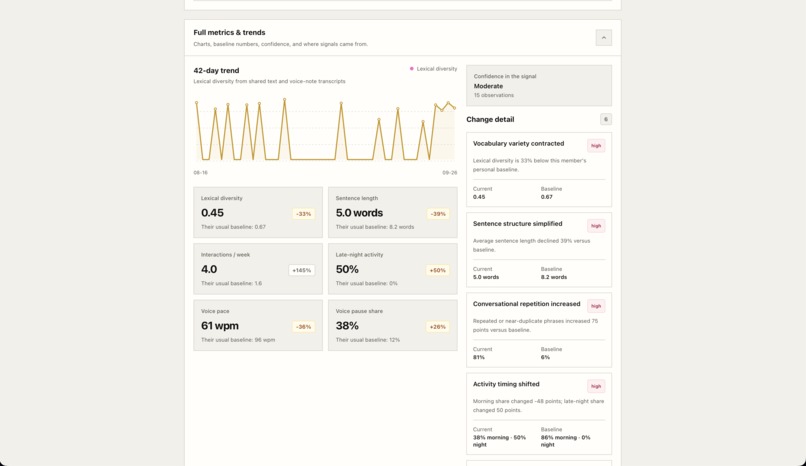
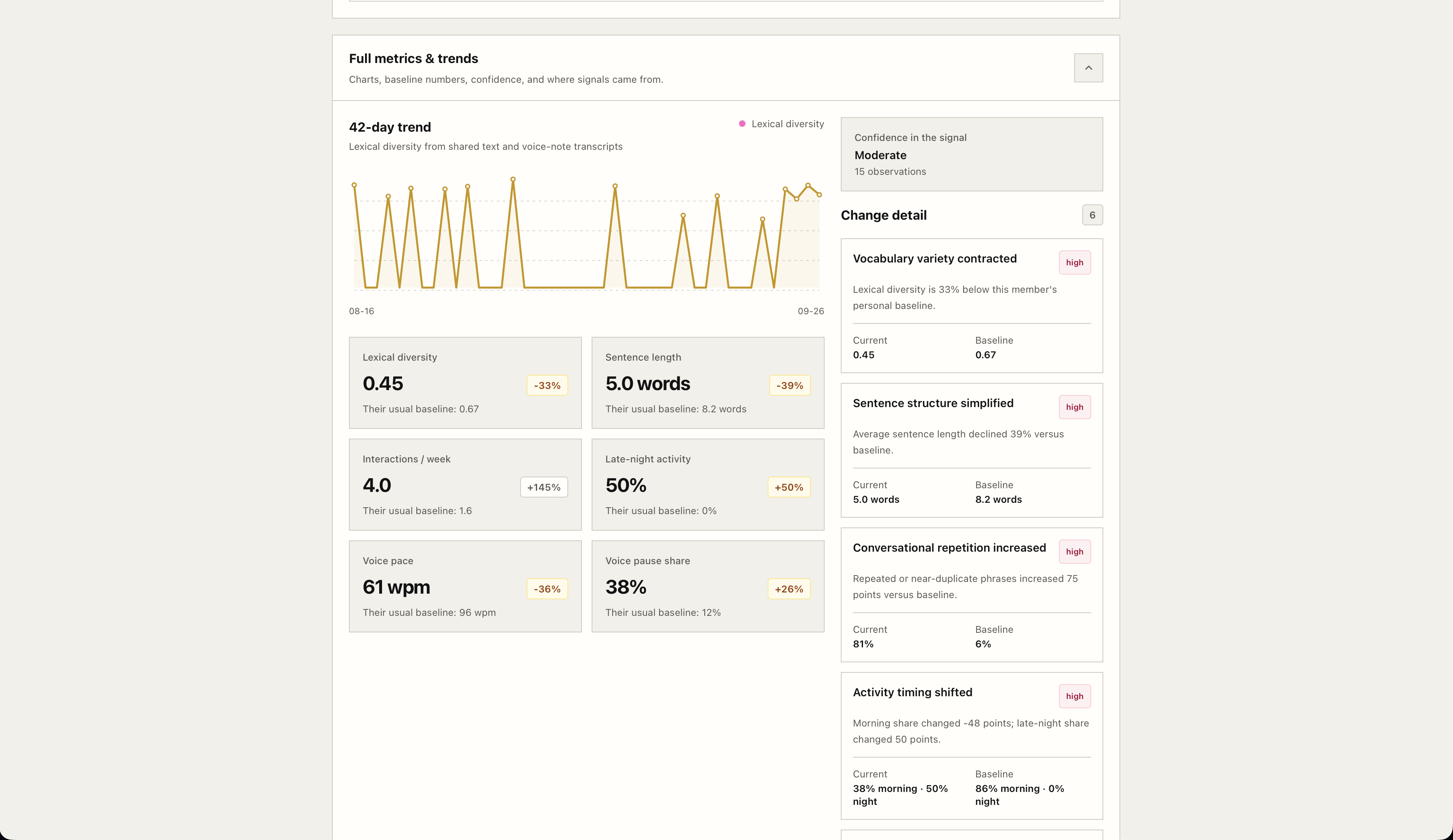
Full Patient Information
-
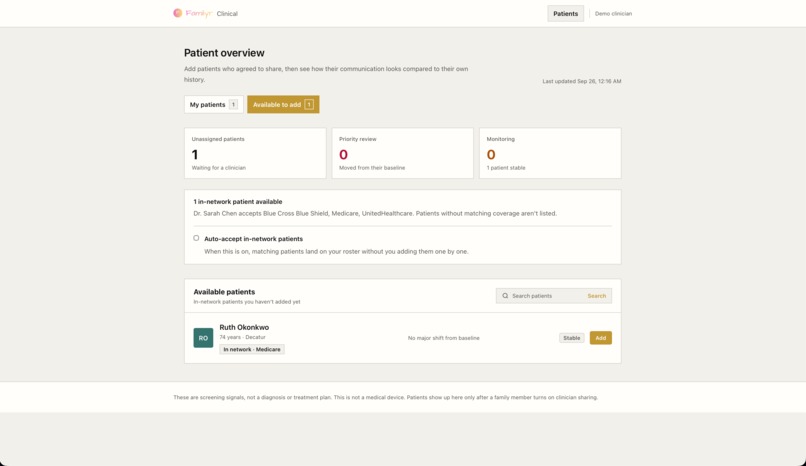
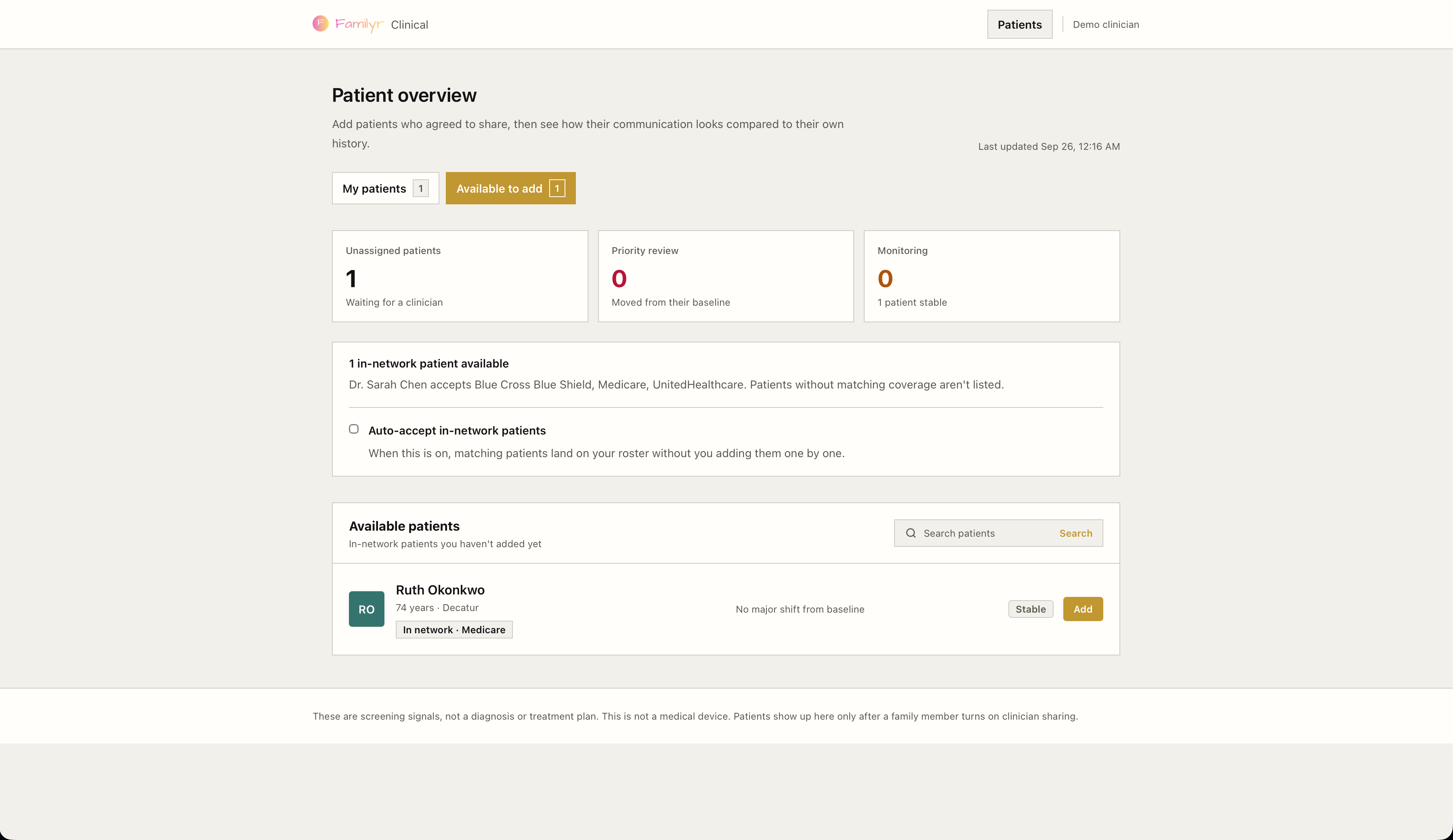
Adding Extra Patients
-
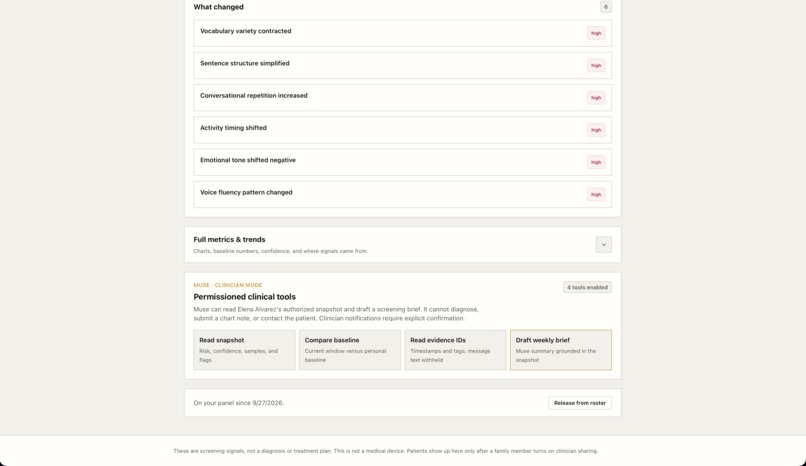
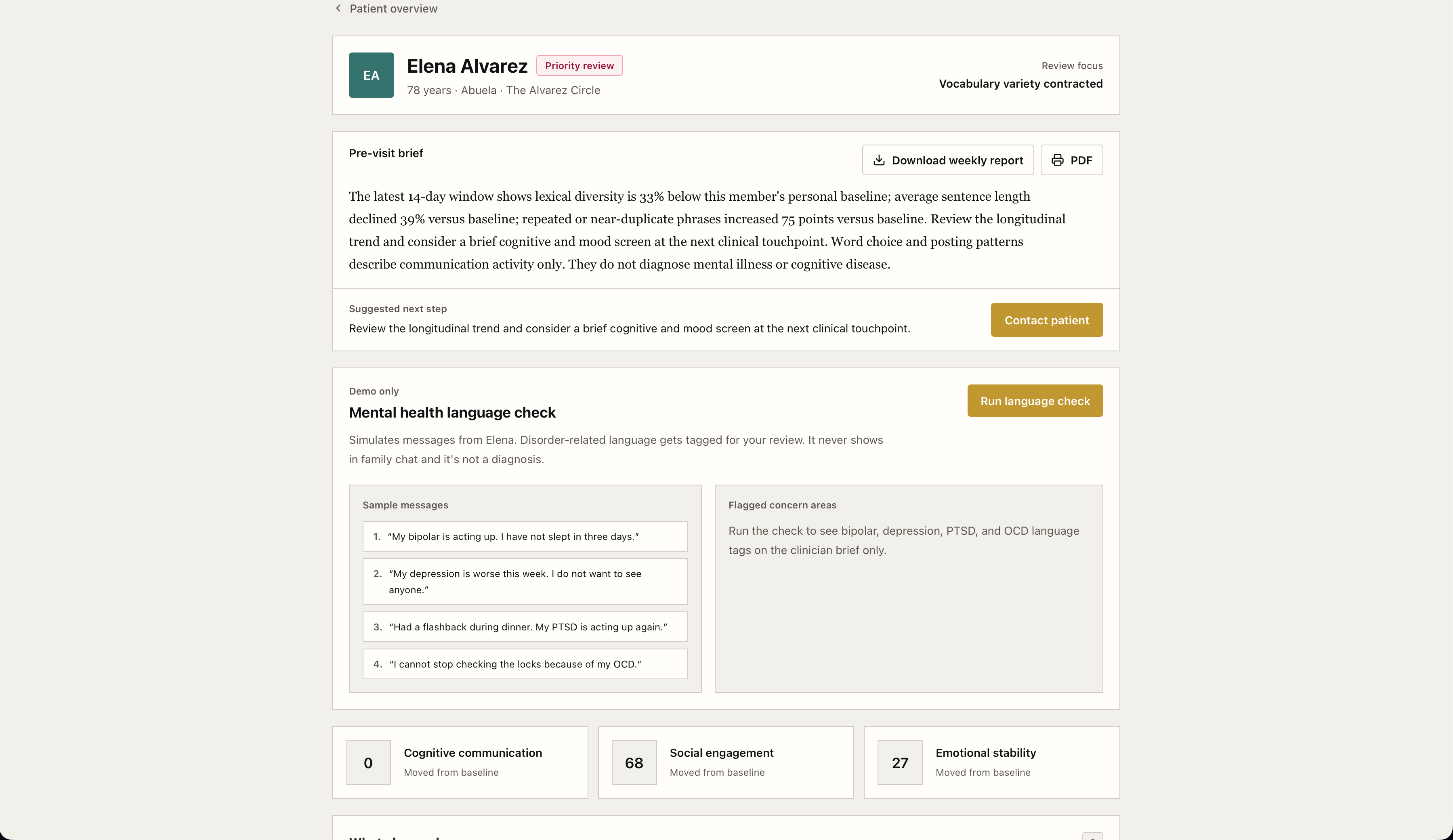
Patient Information 2
-
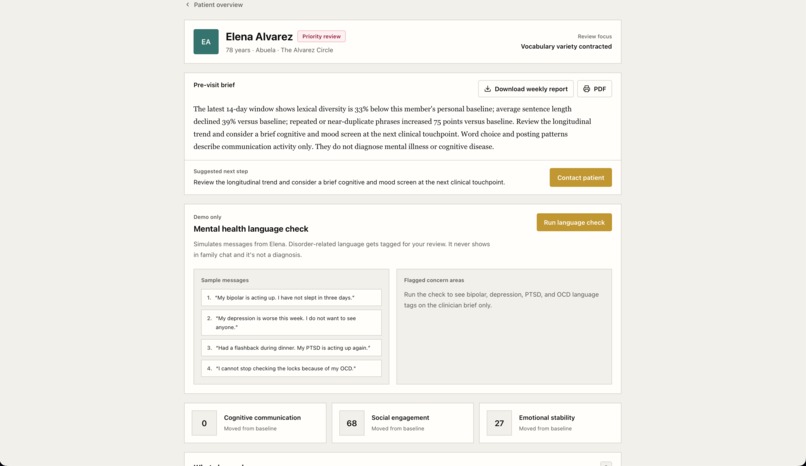
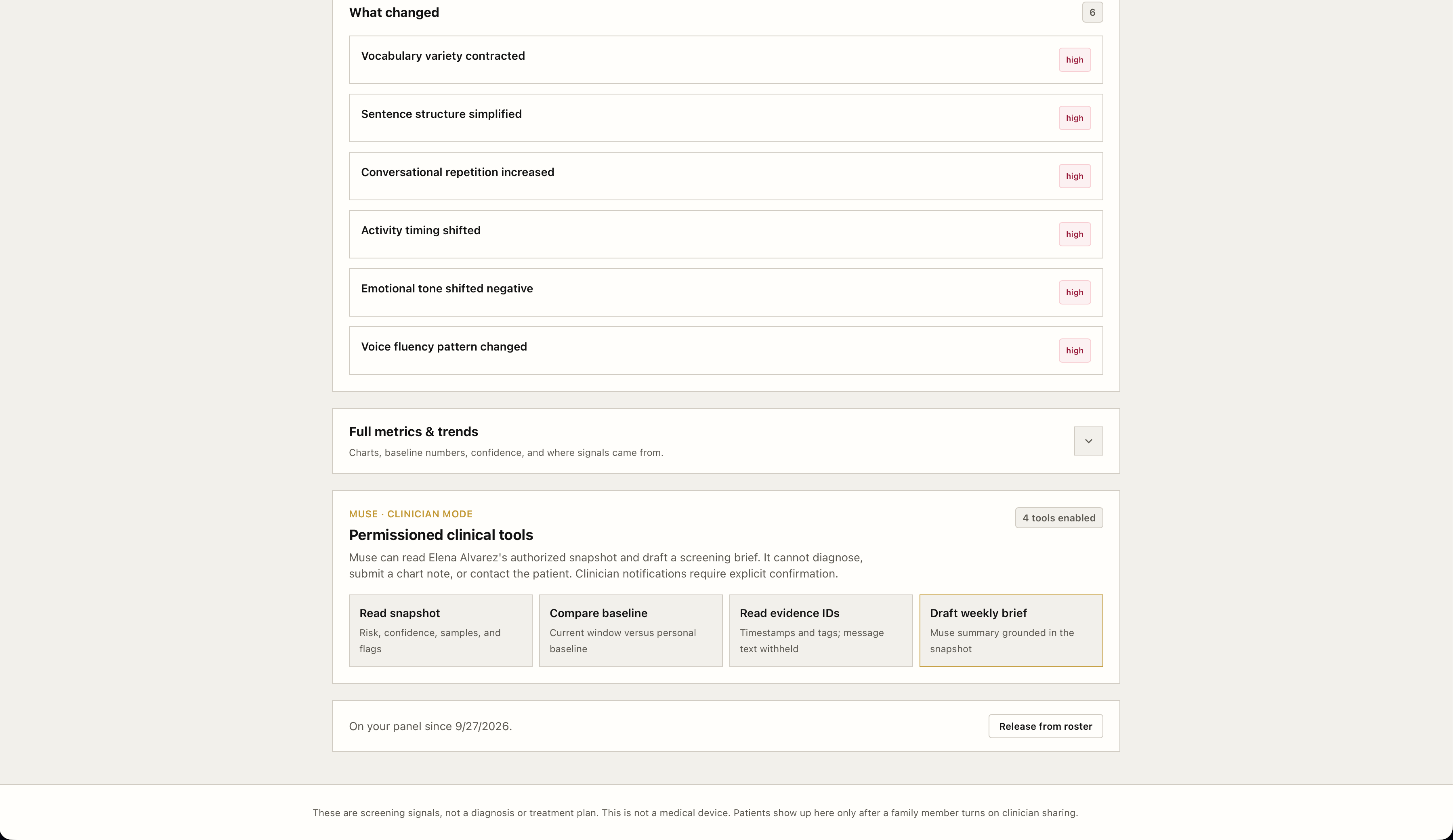
Patient Information 1
-
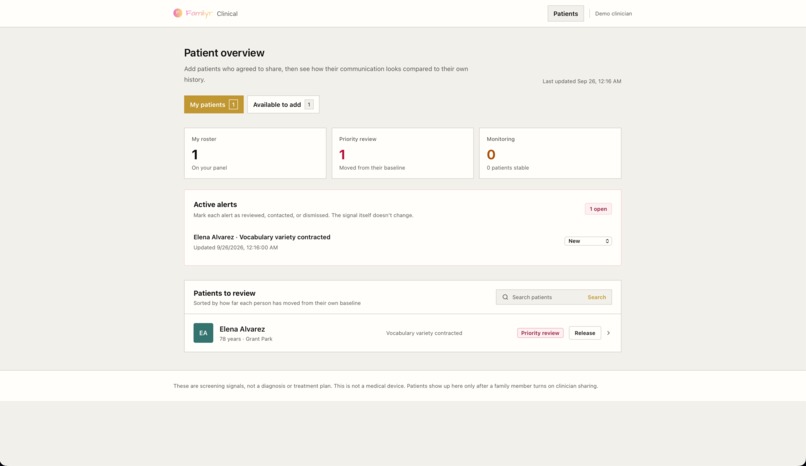
Current Patient Dashboard
-
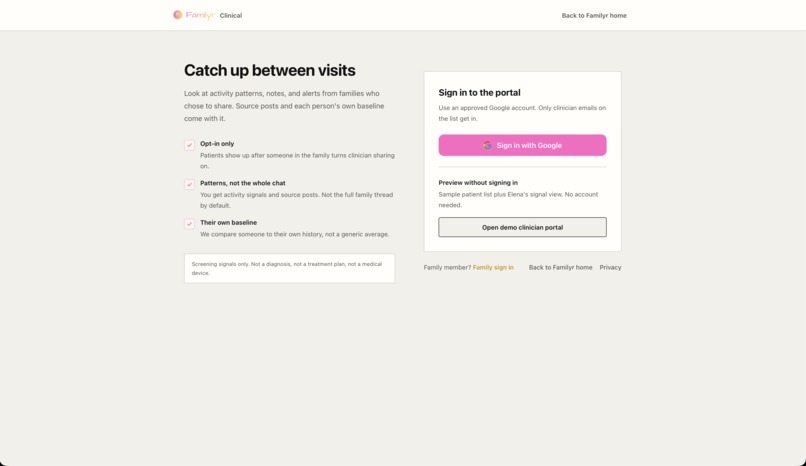
Physician Sign In
-
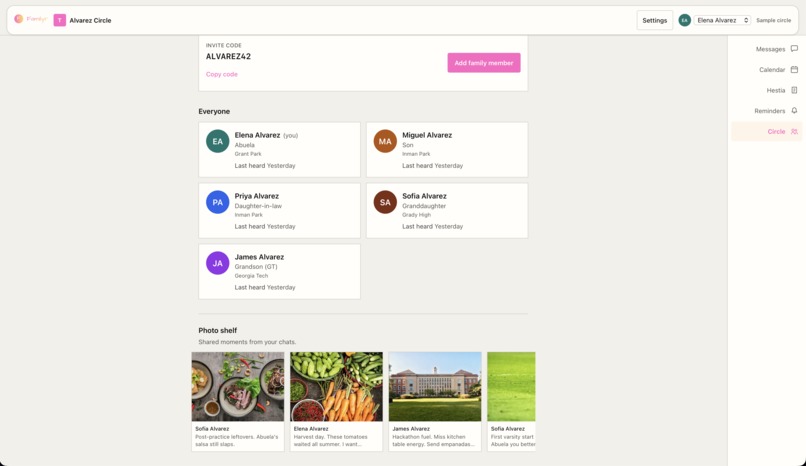
Circle Tab
-
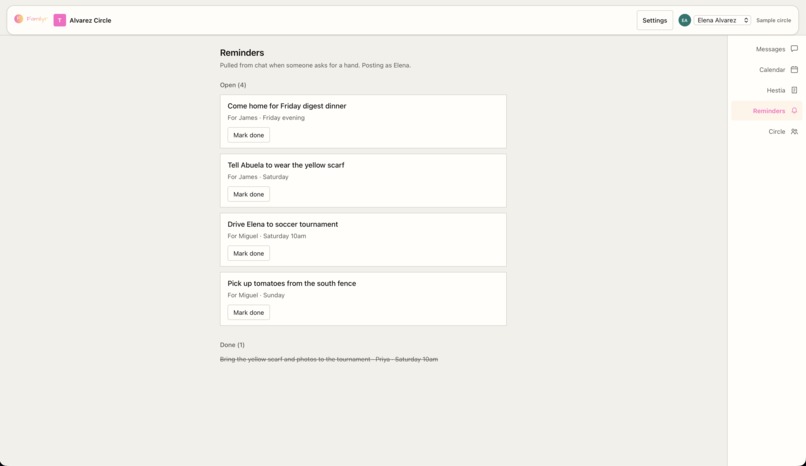
Reminders Tab
-
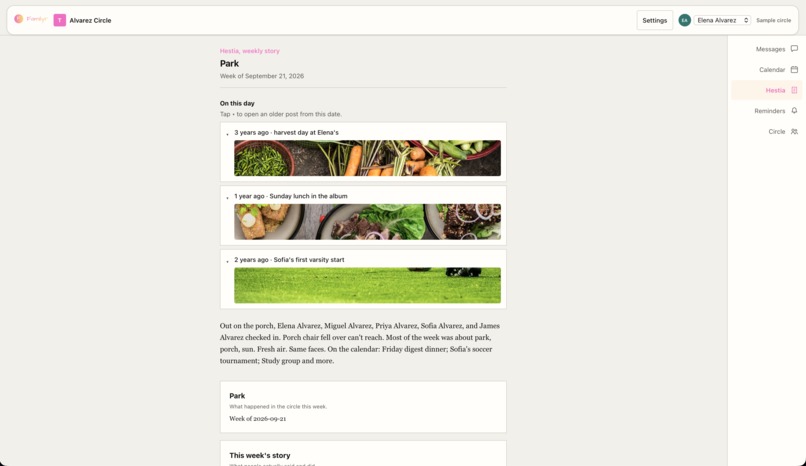
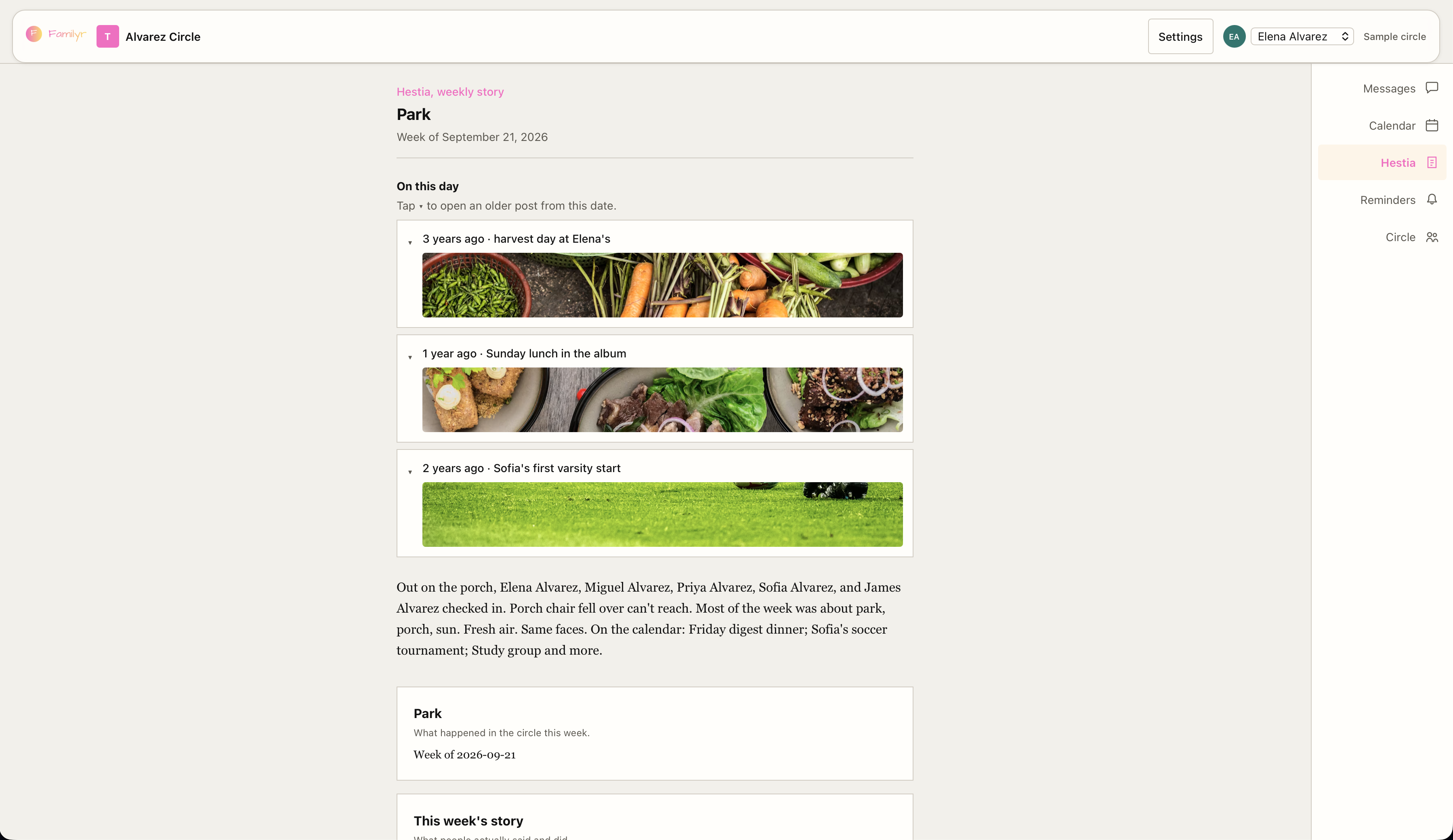
Hestia Tab
-
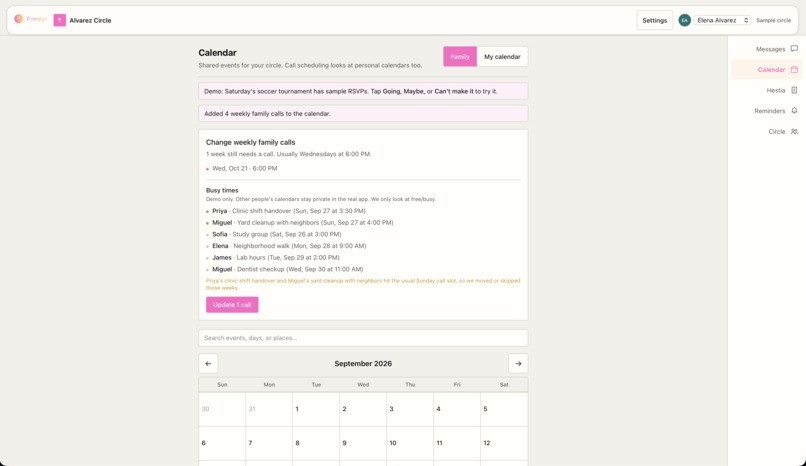
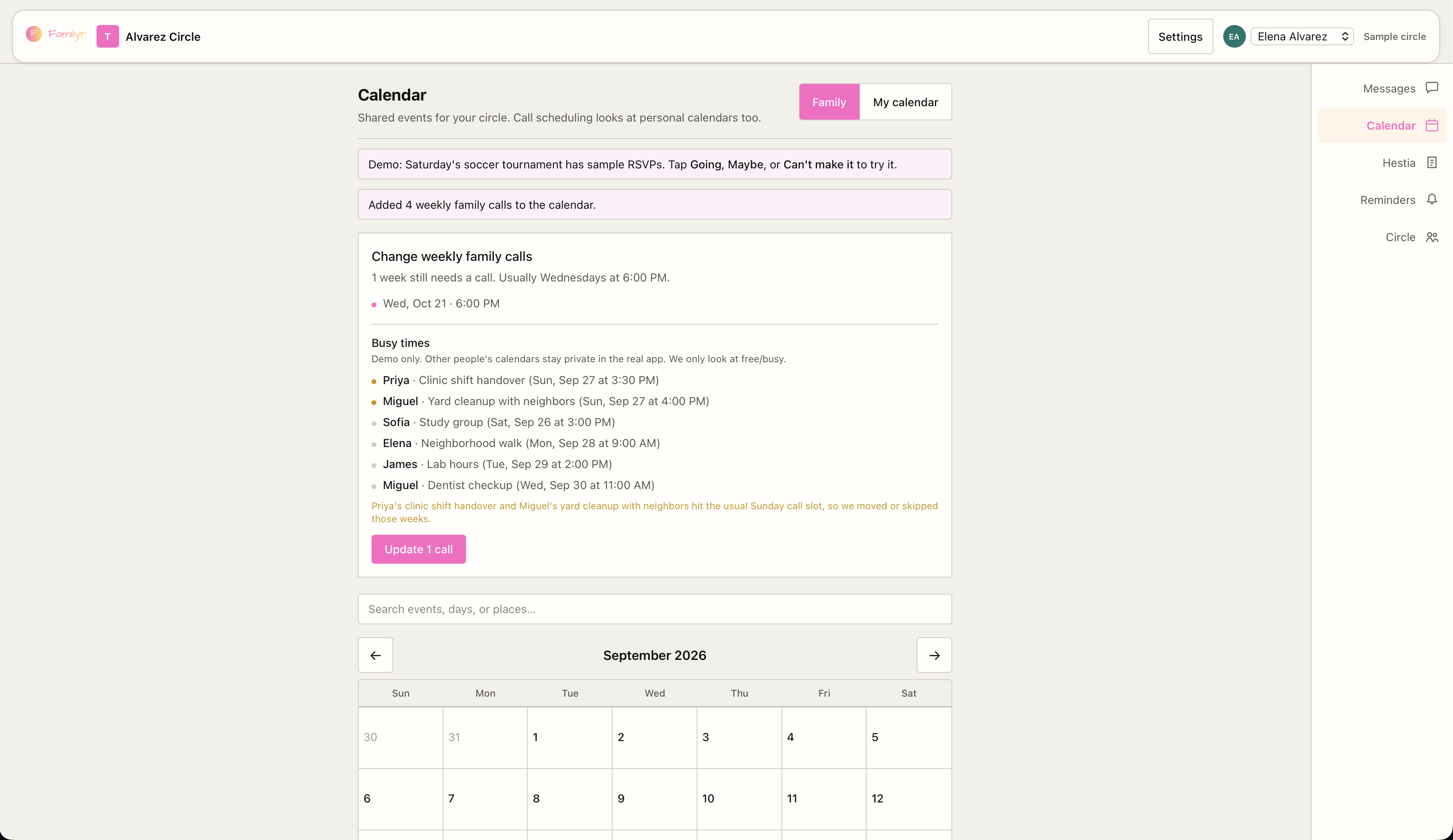
Calendar Tab
-
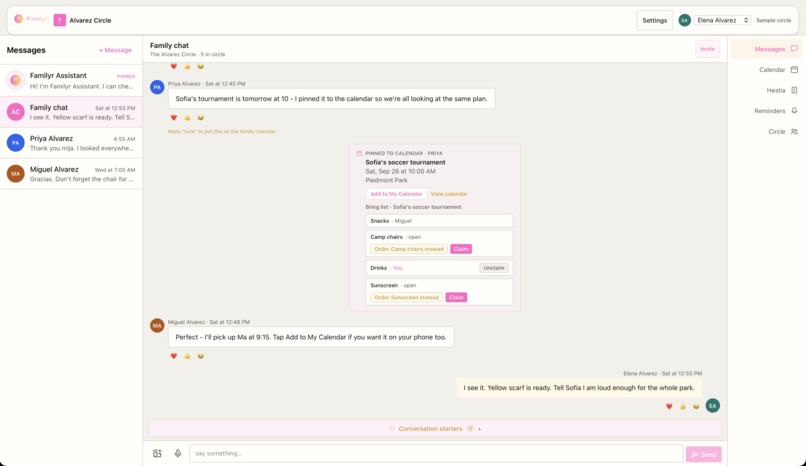
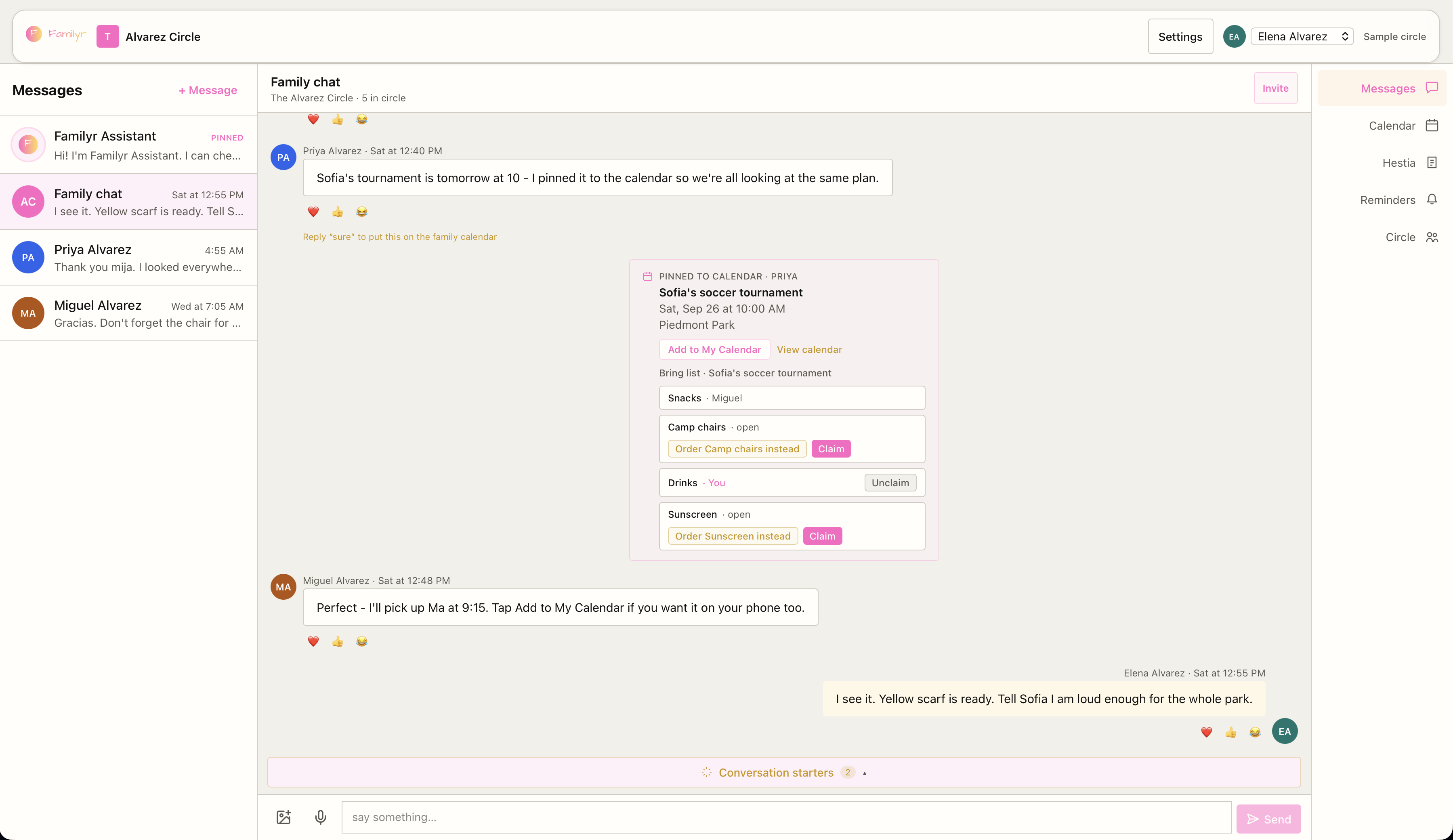
Chat Tab
-
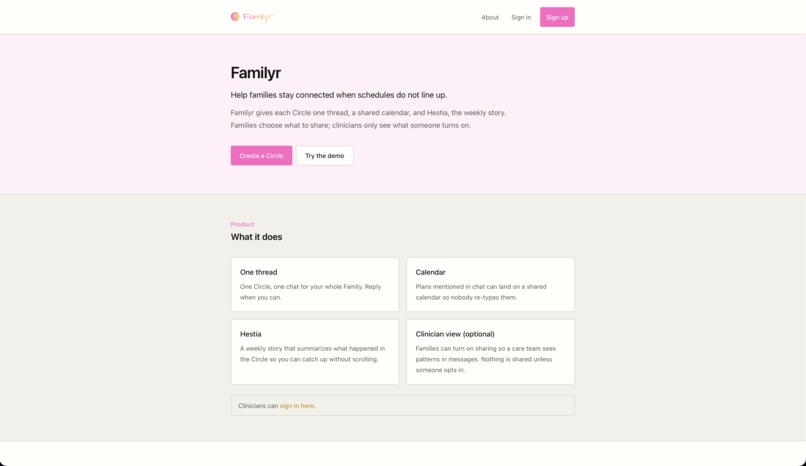
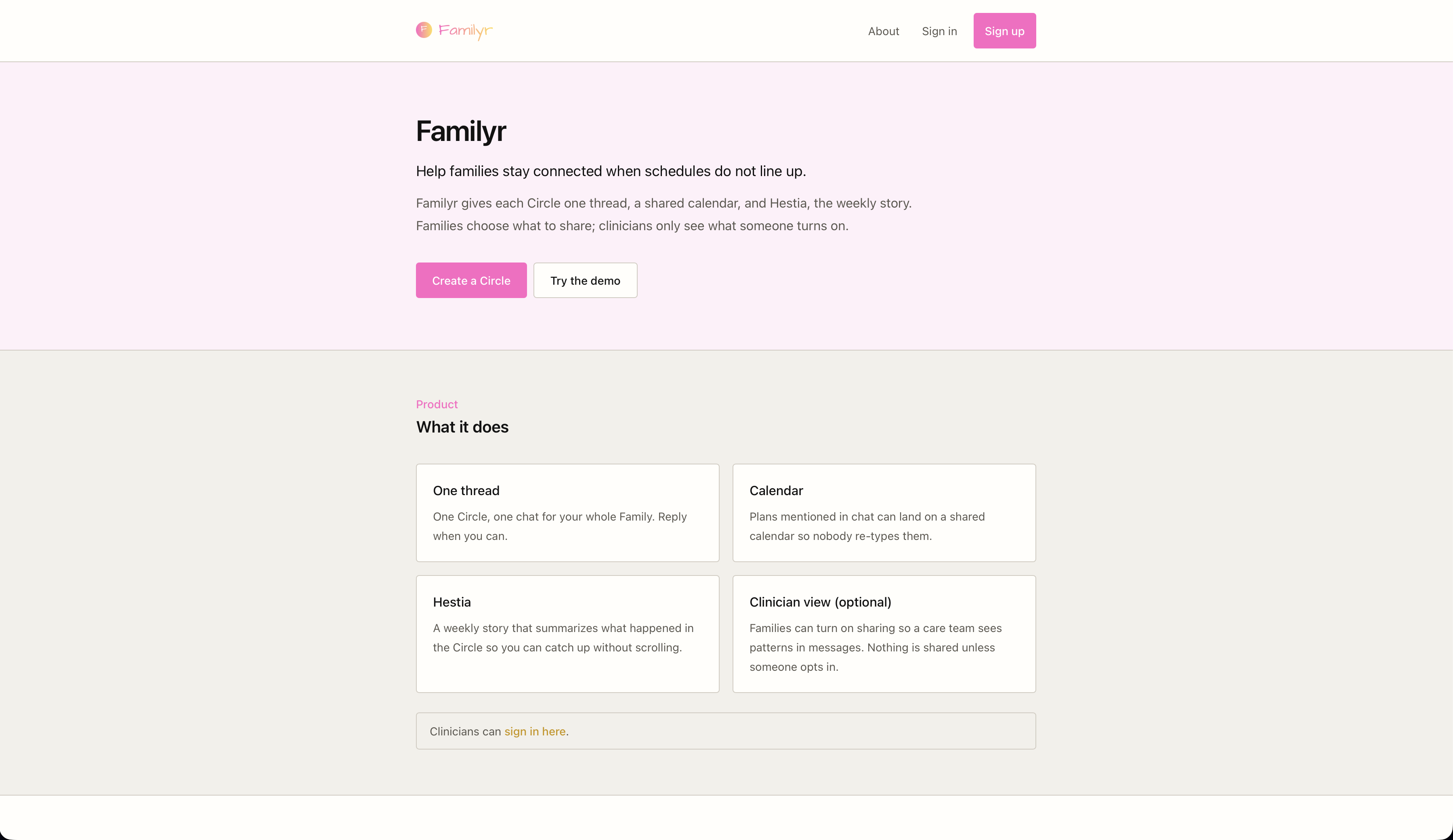
Familyr Home Page
Inspiration
Stay Connected with Our Family!
Our inspiration comes from our personal experiences with family and staying connected. Topher & Nish, and Olivia both live far from home, being from out-of-state and international places respectively. Staying connected, especially with parents and grandparents, is a struggle between schedules. We wanted Familyr to be easy to use and automatically schedule calls and add events to family calendars, synced with Google Calendar to further increase usability.
Keep Who We Love Safe and Healthy
Topher here. My grandmother recently (on Friday) moved into an assisted living facility. Her doctors recommended moving out of her house of over a decade due to rapidly progressing dementia. She's stable for now but like my grandfather 2 years prior, a rapid development can lead to injury or death. Looking back, there were telltale signs that both my family and doctors ignored due to frequent interactions with her. We never saw any formformer of decline because going from asking what I was doing once per conversation to twice wasn't alarming.
Motivated by my grandma’s circumstances, In order to help out those at-risk of cognitive and mental disorders, we use AI and machine learning to generate reports based on their chat information to provide to health care providers in order to help out those at-risk of cognitive and mental disorders. We makeincrease patient-physician interaction smoother and get the ball rolling earlier on help with diagnosing neurodegenerative diseases and mental health disorders that most people cannot tell a family member is struggling with.
What it does
Familyr has two main sides.
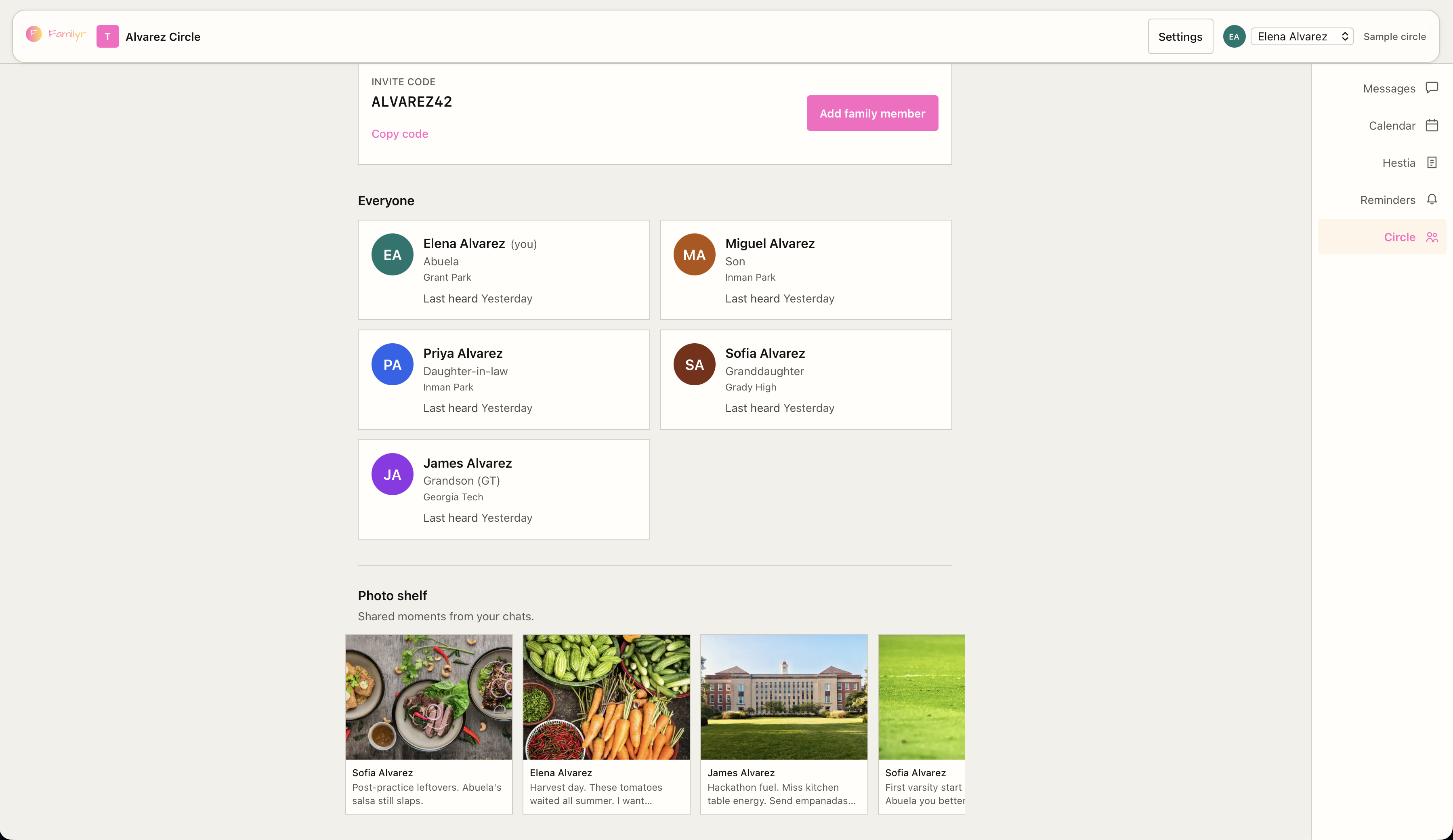
Messaging, Events, and Lots of Memory The first focuses on connection between families. It features a fully fledged chat functionality between a family and individual members.
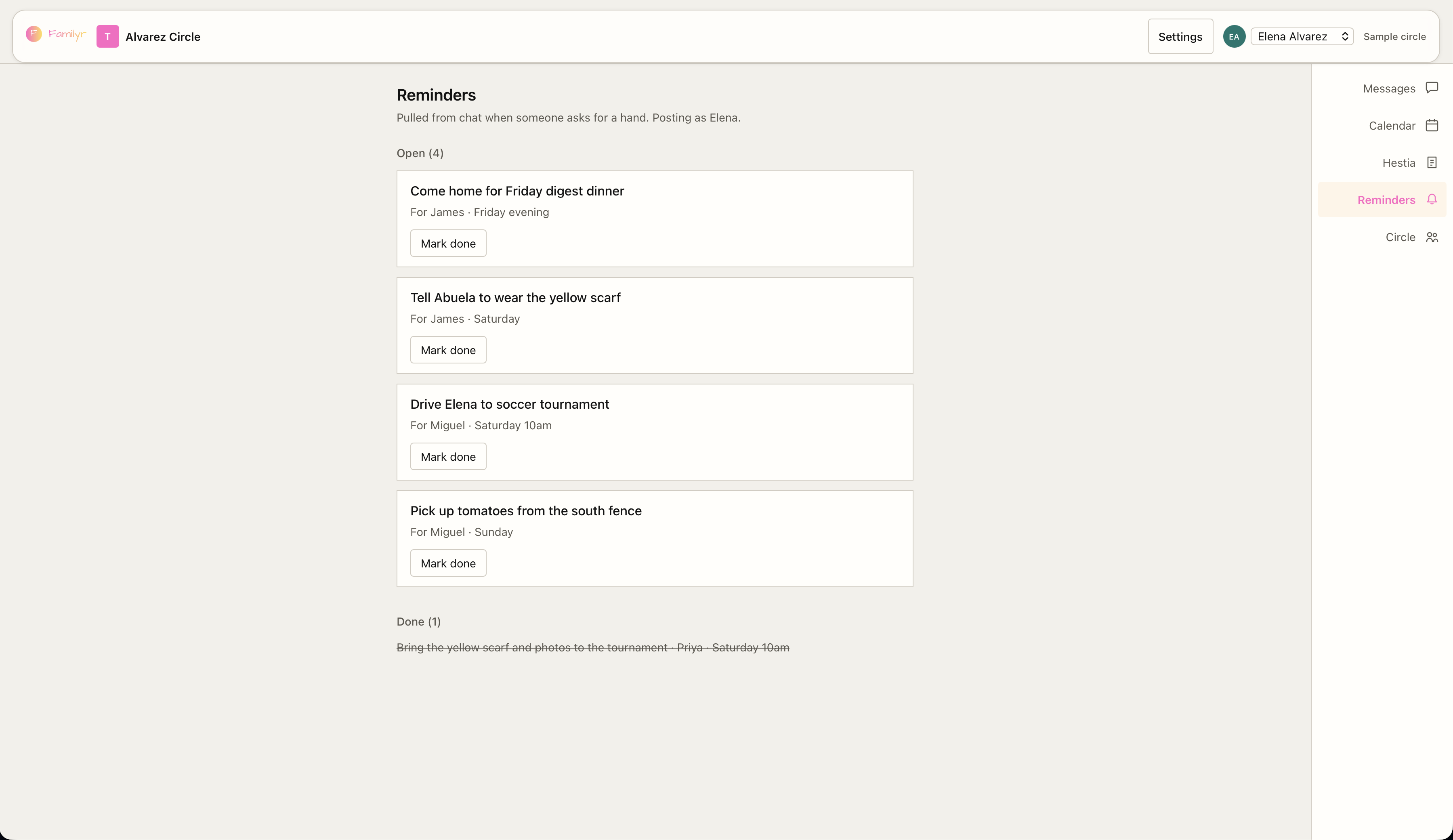
It uses pattern recognition in order to put events from the chat into the calendar automatically, as well as things like reminders and shopping detection. When users sign up they can pick a family call frequency, since many families want dedicated time to call but have trouble fitting in with busy schedules. Familyr will automatically find a good time for calls and auto-schedule them at a time that fits into everyone’s busy schedule. If there's a change or a conflict, it will alert the family so that theythat way they can move it or keep it if the scheduling works for multiple people. The calendar is synced with Google calendar, one of the most used calendars in the world, so that way it integrates seamlessly into people's lives. which is already familiar to people and lowers the entry threshold as much as possible for the elderly.
Our proudest feature is called Hestia, named after the Greek Goddess of family and the home. It uses Meta's Muse AI in order to take in chat logs and generate a weekly report that goes over everyone's week. It only uses family chats to keep individuals' messages private. Going a step beyond it also goes over memories if users use the app for long enough of events that happened in previous years.It preserves long-term memory so that it can call back to the day your daughter first entered school when she finally graduates.
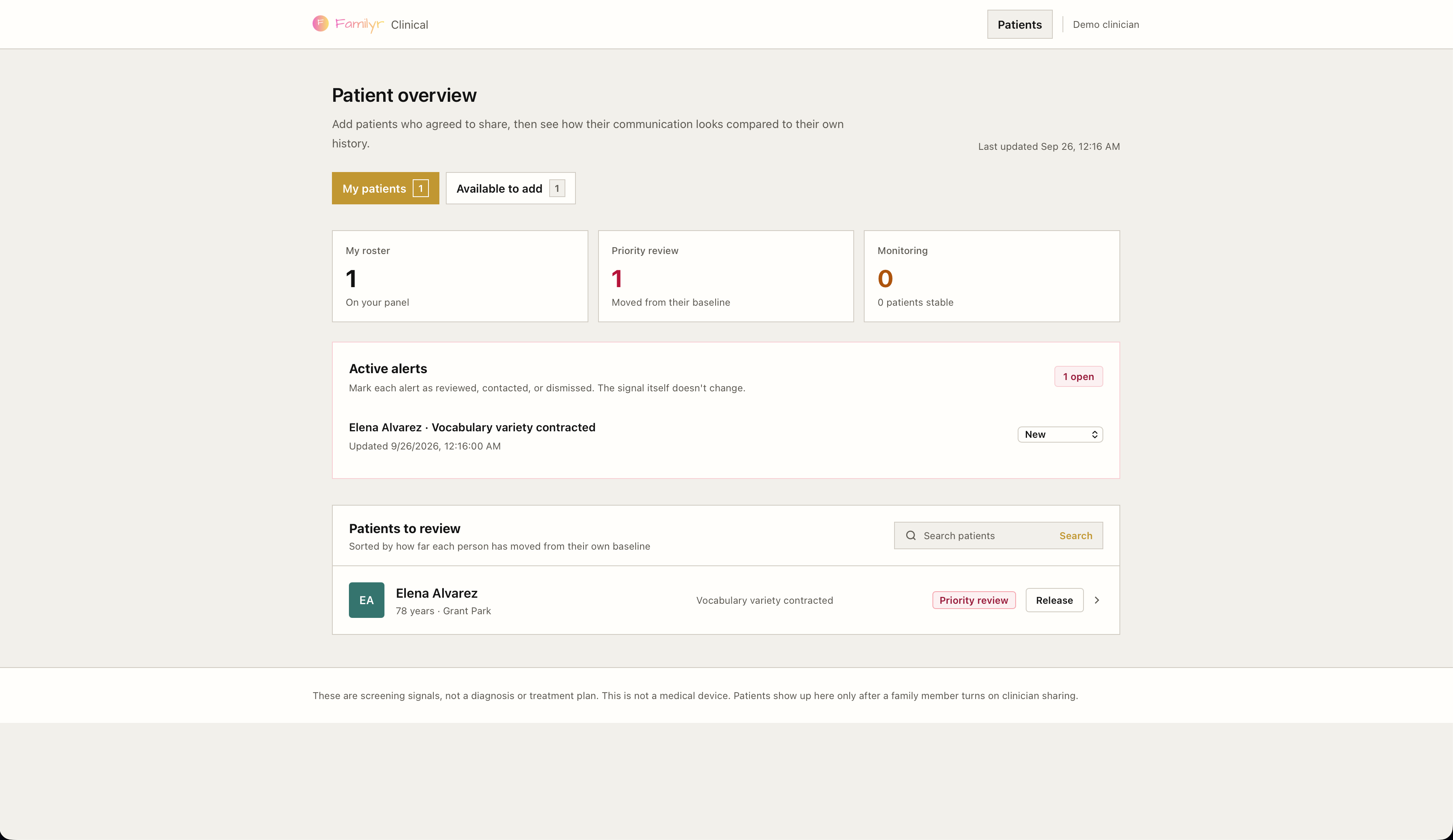
Doctors, Family Members, the Bridge is AI The second improvesfocuses on the connectionon connection between patient and physician. Using chat logs, we have a machine learning algorithm that parametrizes the raw data (such as word complexity, length, and more) into certain categories. It was trained on a medical database to then use those certain categories to find overlap between trends in chat logs and disorders. Trying to reduce misdiagnosis,Wwe don't track individual messages, we but track trends over months and years (specifically analyzing 2 week periods with a 1 month baseline) and they are saved in build a profile for that on a person. and notice d
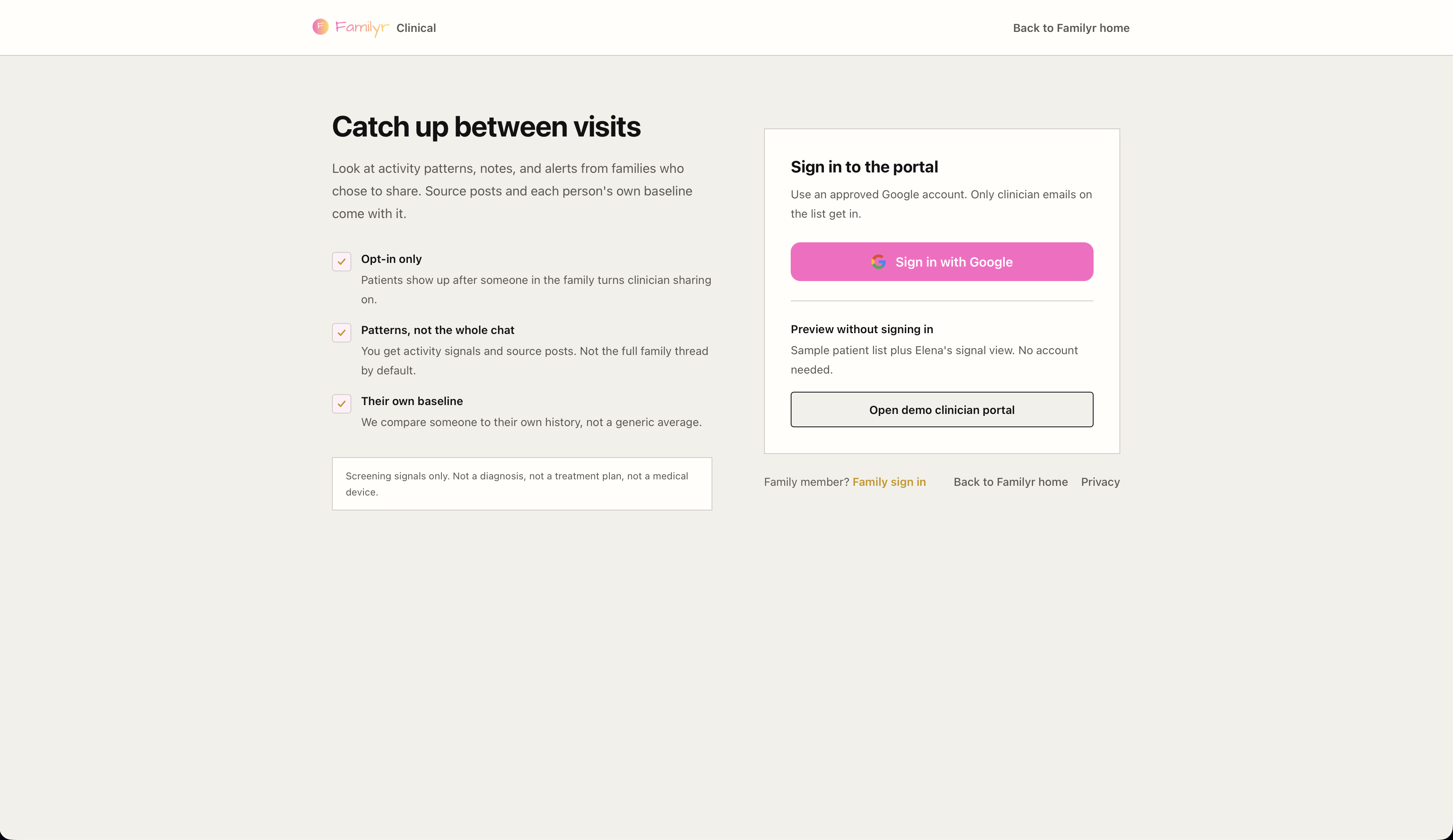
Based on our records, deviations over long periods of time will beto notified tonotify a physician. Physicians can select their patients and then if there is an issue can see a report that informs them of the patient'spatients condition. We use Meta's Muse AI to refine reports and double-check the machine learning algorithm, while succinctly giving a treatment plan and ideas to refine care. Physicians then can see a concisesimple report of information tracked and giventhen they have the option of diving further into the data to explore for themselves. Since the doctor may not have experience with that field of medicine, the treatment plan is a rough sketch to help them understand before doing their own independent research.
Even Faster?? Doctors can also add in-network patients easily, so this way there is a proper matching of clients to doctors that are seeking patients.This shortens the period and gives people more access to diagnosis and treatment.
How we built it
We used a combination of manually writing code and also smartly using AI agents to optimize code creation while letting us stay in control.
Frontend For our frontends (Familyr and Familyr Health) we wrote components then used AI agents with our Cursor Pro subscriptions which were further optimized to deliver a quality product.
Merging In order to make the process of merging as easy as possible since Olivia was focused on user input and the experience, Topher was locked in on the overall frontend, and Nish was handling the backend, we used a combination of hand merging in the beginning then as the code-base grew using Cursor agents to assist to make sure that our contributions were fairly making it into the project.
Database We wrote the entire database by hand. Nish worked diligently day and night in order to create an incredible Supabase database with PostreSQL that has only had to be tweaked a few times to adjust as we finalized our designs.
Machine Learning MachineThe machine learning was also implemented by Nish using data acquired from the National Institute of Aging, Dementia Testbank, and other related governmental databases. Our primary focus is on dementia and diseases afflicting the elderly, so we especially used information pertaining to that. After we finished a lot of the code, we used AI agents to smartly document the code base in its entirety to make sure that open-sourcing was possible.
After finishing the codebase, we deployed on a MLH .tech domain and are using technologies like Blackboard, Vultr and ElevenLabs in order to host and deploy our application.
Immediately after finishing the machine learning algorithms, Topher and Nish got to work on identifying the MLH tools that we could utilize to get our code working on a server and spent countless hours on research and setting up these new tools.
Deployment After finishing the codebase, we deployed on a MLH .tech domain and are using technologies like Blackboard and ElevenLabs in order to host and deploy our application.
To Make it Pretty In the meantime when her incredible teammates are coding, Olivia designed the logo and favicon with Canva with 0% AI!!! She made multiple versions of different fonts and designs and her teammates picked the best one.
She also came up with the platform name with 0% AI! It’s family+er, which means more like a family, because families are supposed to spend time with and care for each other! It’s pronounced the same as “familiar” by the way :)
Challenges we ran into
Google Calendar We ran into a lot of challenges, especially when it came to getting real-time two-way syncing with Google Calendar to work smoothly across multiple family members' schedules. Topher was working on the calendar functionality for 8 hours staying up until 3 am in order to finish the feature.
Your PRIVACY means EVERYTHING to us! On top of that, protecting family privacy while analyzing health trends was a massive hurdle. We wanted our machine learning model to detect subtle markers of cognitive decline, but we were strict about protecting personal privacy, so parameterizing text into raw metrics without exposing private messages required iteration. One of the ways we navigated this is by using family chat only to keep personal messages protected and by having information present during sign in.
And Your Consent! We also had to make sure that consent forms were filled out properly and that certain AI features of our app were easy to disable, and opt-out of even after creating an account.
AI is soooo Stupid :( Coordinating our Cursor agent workflows as a team also got tricky as the codebase grew rapidly, especially with Olivia on user experience, Topher locked in on the overall frontend, and Nish in the backendd,. mMerging AI assisted code required us to not just trust the AI but to also manually review merges on certain conflicts.
ML is only a Bit Better Finally, calibrating our machine learning model on clinical datasets from the National Institute on Aging and Dementia Bank took a lot of tuning to establish reliable baseline trends without triggering false positives on just normal chatting.
Accomplishments that we're proud of
Fully Functional! We are extremely proud of managing to design, wire up, and launch both Familyr for families and Familyr Health for physicians, completely synced through our custom Supabase database, live chat, and Google Calendar integration.
Tech, but Deepening Real Human Connections. Yay! Including Hestia is also something we're proud of, bringing AI into people's lives not as some harmful tool but a unifying force, giving families insight into moments that they have otherwise missed.
We the Best Gang Everrr We also executed a clean diversification of roles under tight hackathon deadlines. By having us specialize in certain areas, we were able to deliver an app we are incredibly proud of.
Built Something Meaningful to us ALL. So Proud! Most importantly, turning our actual personal experiences, from living far away from home to watching loved ones deal with sudden cognitive decline, into something that can genuinely help doctors catch diseases earlier, as well as connect families together, means everything to us.
What we learned
Details Tell us a Lot. That’s the Power of Data! We learned that early signs of cognitive decline rarely appear suddenly but rather show up as gradual shifts in communication patterns over time that only become visible across a multi-week and month baseline.
We Can Connect SO MANY PEOPLE! Building our entire Supabase and PostgreSQL database structure by hand taught us the immense value of deeply understanding our relational data flow, which made handling complex links that are everywhere in healthcare far easier.
Good AI We also learned that in healthcare technology, AI works best as a supportive tool rather than a replacement for clinical judgment. After talking to Impiricus employees, we were able to learn a lot of helpful information that resulted in the final iteration of our app.
The Rookies Survived! We all learned a lot of front-end programming as well, since Topher and Nish had previous experience working on backend code. Olivia and Topher in particular, who had no collegiate Hackathon experience, learnedexperience learned a lot about the process and how to go from prototyping to shipping an app in a weekend.
What's next for Familyr
What about Calling? Next for Familyr, we want to expand our machine learning models to analyze audio during scheduled family calls, looking for speech pauses, vocal strain, and tonal shifts as additional early indicators of cognitive changes.
More Info, More Holistic! We also plan to integrate Familyr Health with major electronic health record systems, while incorporating health metric data from Apple Health and Fitbit so doctors get a more complete picture of a patient's well-being.
To Avoid Serial Killers Pretending to Be My Doctor Beyond this we also want to add proper healthcare verification of doctors, using medical credentials checks, leveraging national provider identifier numbers and medical registries to confirm actively licensed physicians are seeing relevant information.
What?! Insurance too? Building off this we'd love to properly link insurance and patient information further so this way patient billing is easier and both patients and doctors don't have to worry about insurance claims.
Every Nation, Tongue and Tribe! Additionally, we want to train our ML models across different languages and cultural dialects to ensure word complexity and pattern detection remain completely accurate regardless of what language a family speaks. This hits especially close for Olivia, whosewho's family speaks only Chinese, and could benefit from this app.
Gotta Stay Professional Down the road, we hope to build specialized dashboards for specialists so this way they can view more accurate cases and treat them with a higher efficiency.
Everything above is for… Our primary goal is always to protect patients and ensure theirthem care, and having the ability to alertto give alert experienced doctors if a case requires their attention would ensure that goal is reached.
Built With
- .tech
- backboard
- eleven-lab
- meta
- next-js
- postgresql
- sql
- tiger-data
- typescript


Log in or sign up for Devpost to join the conversation.