-
-
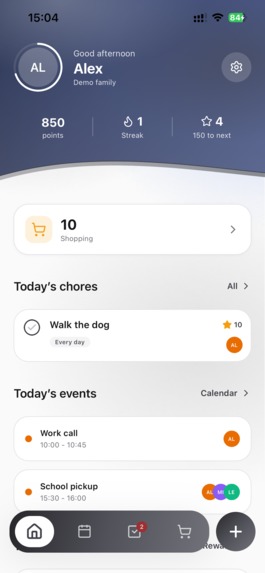
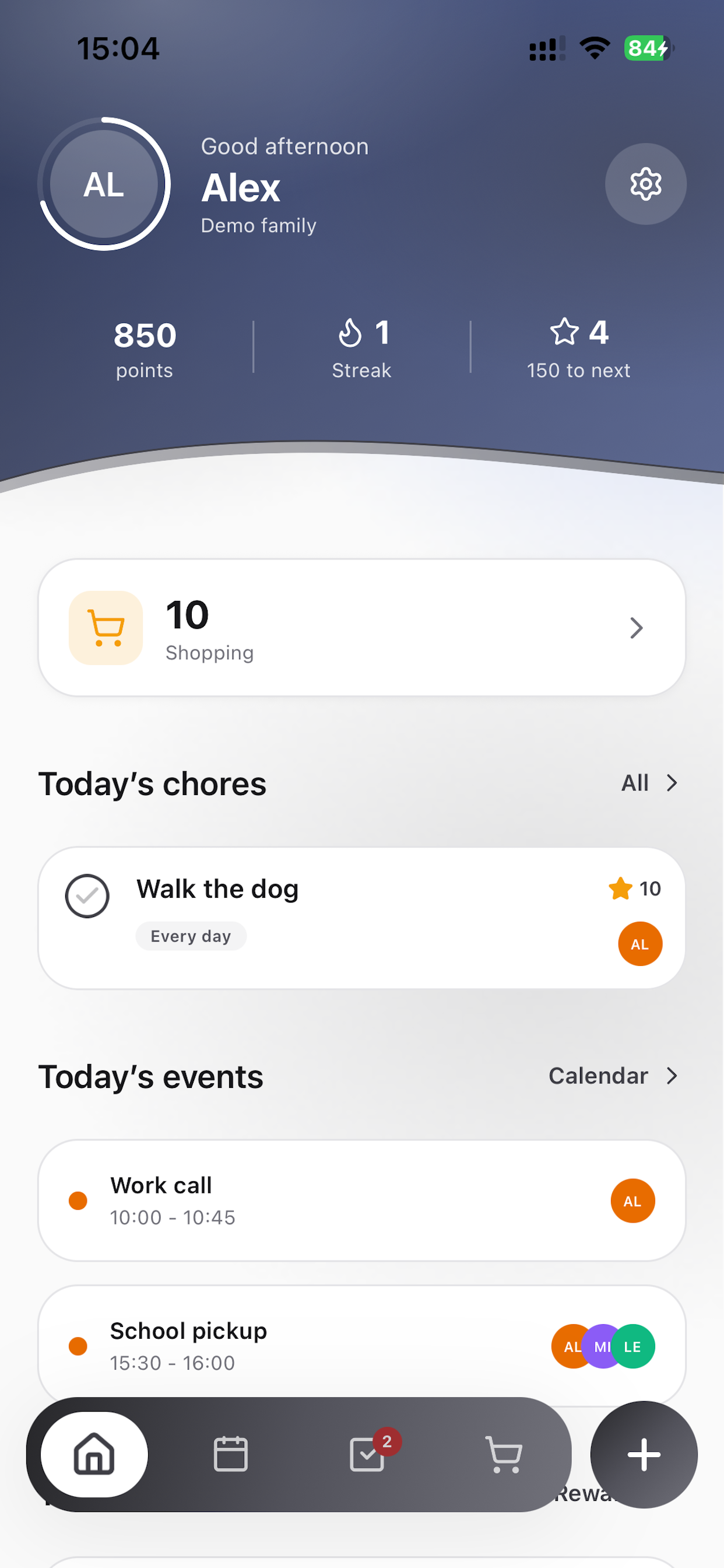
Dashbord
-
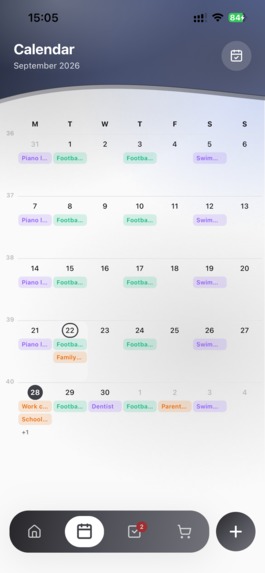
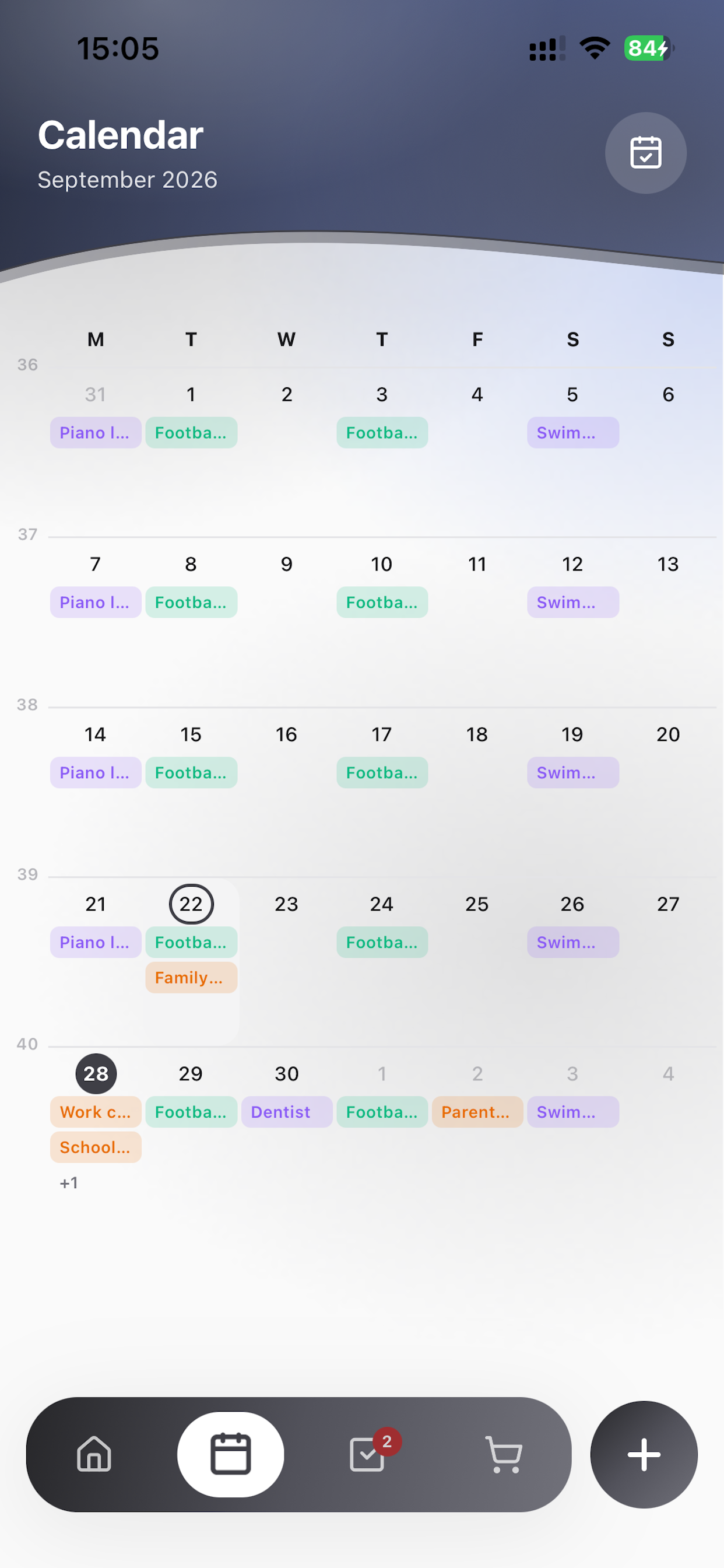
Shared calendar
-
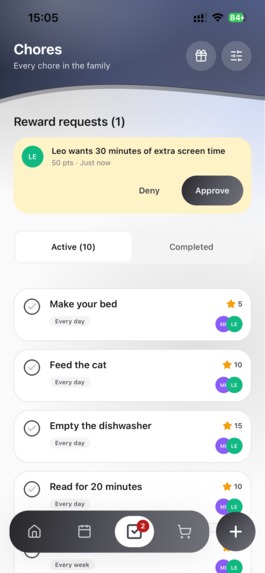
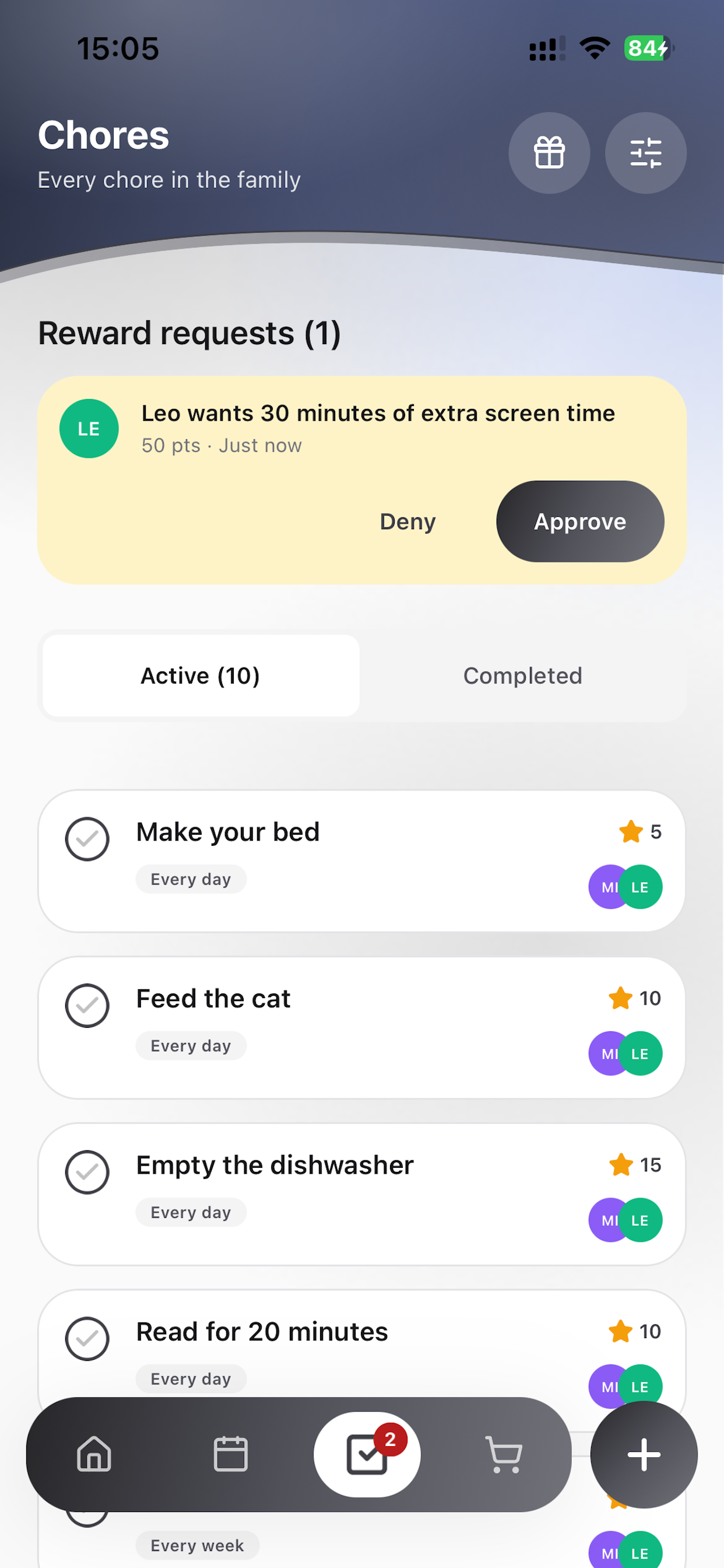
Chores, as a parent approves rewards & chores
-
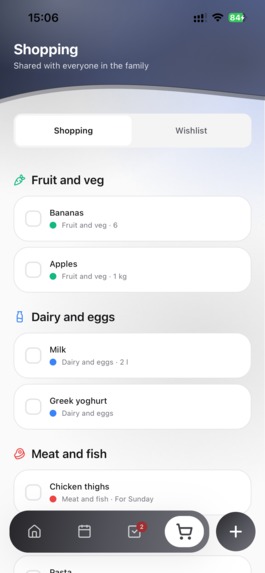
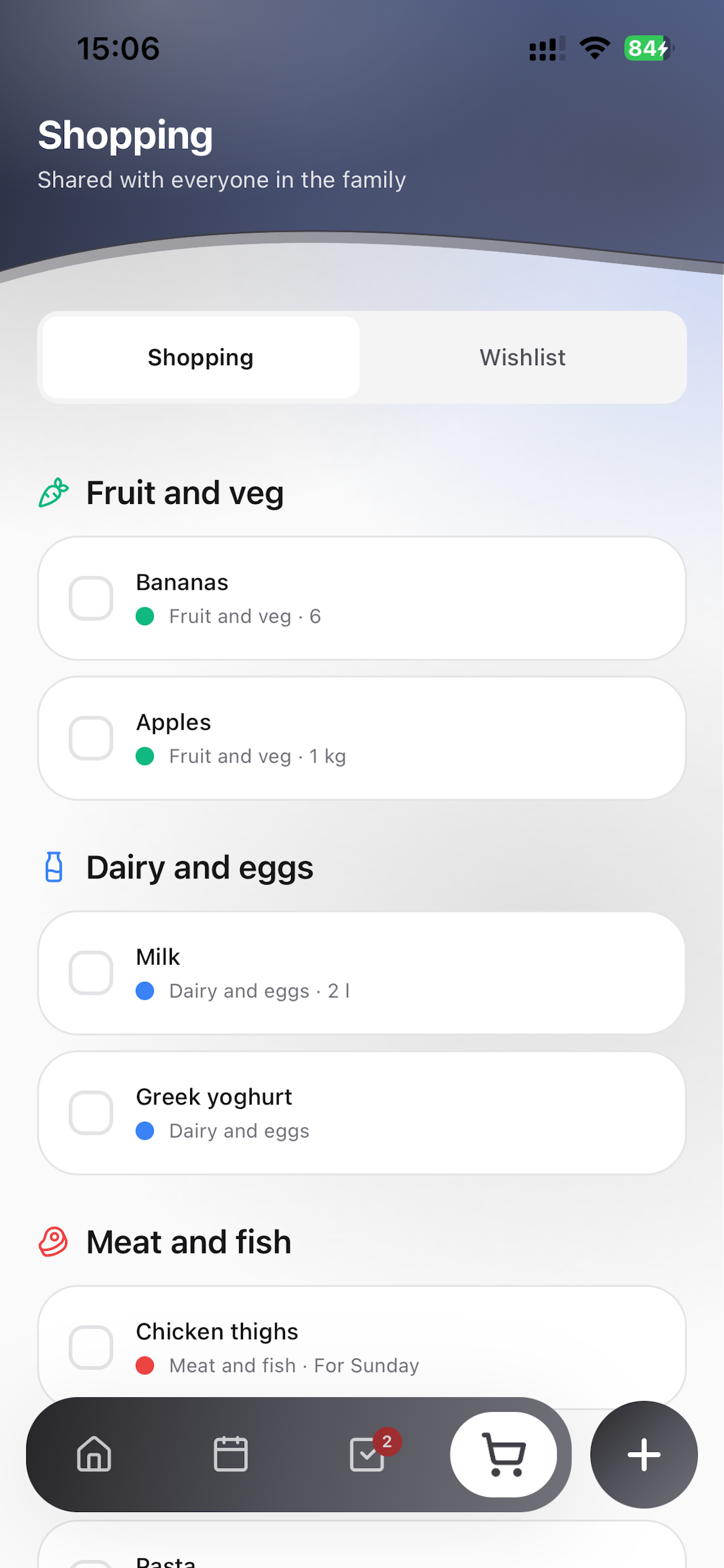
Shared shopping list & personal wishlist visible for all family members
-
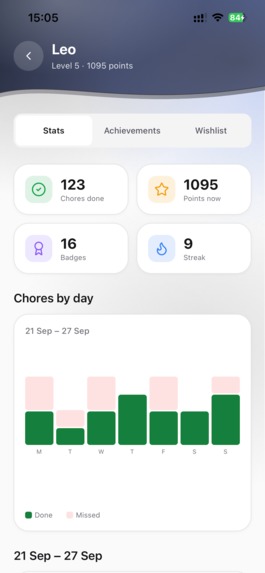
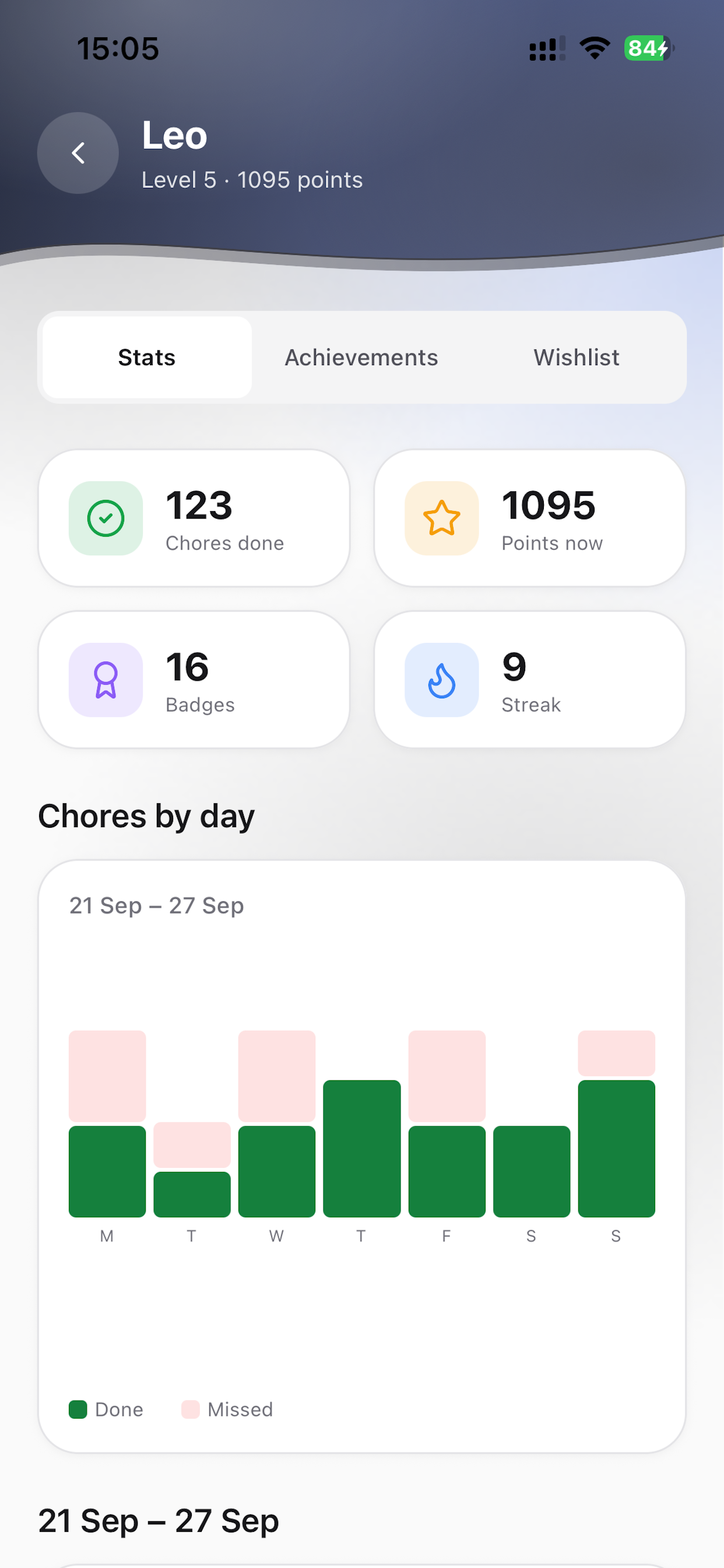
Profile stats
-
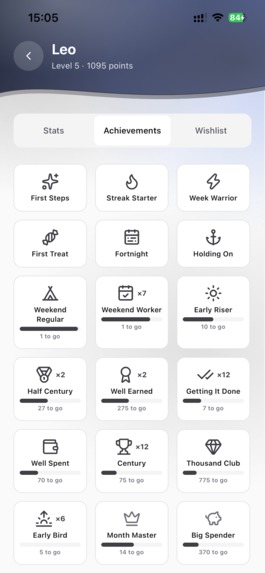
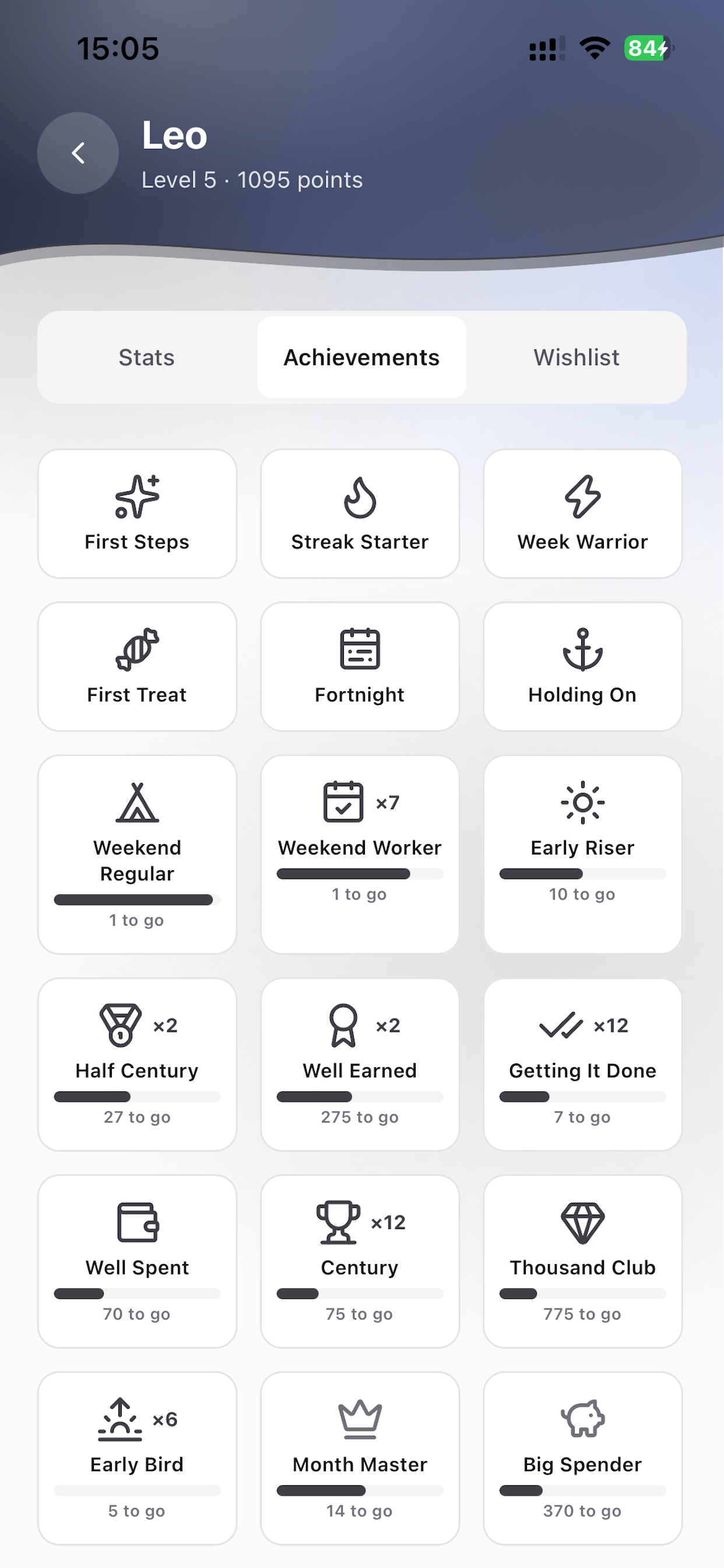
User achevemnets & status
-
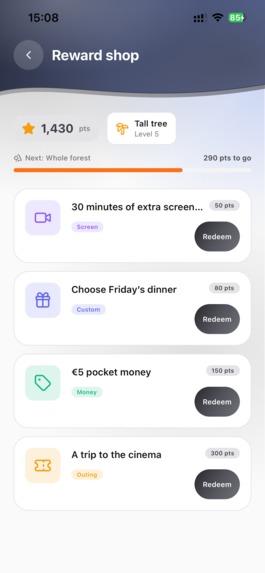
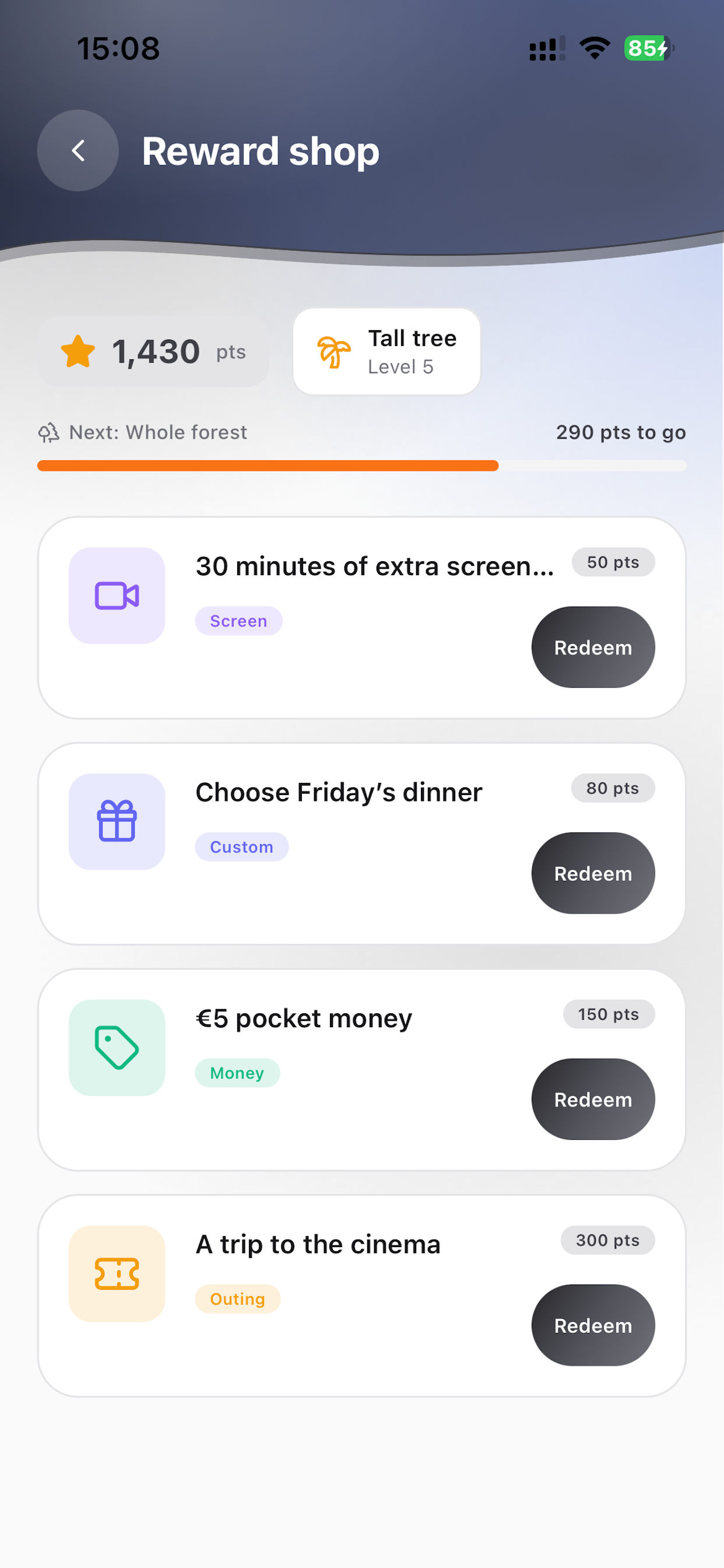
Kids view of reward store
-
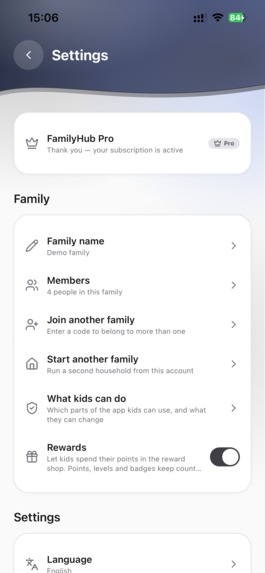
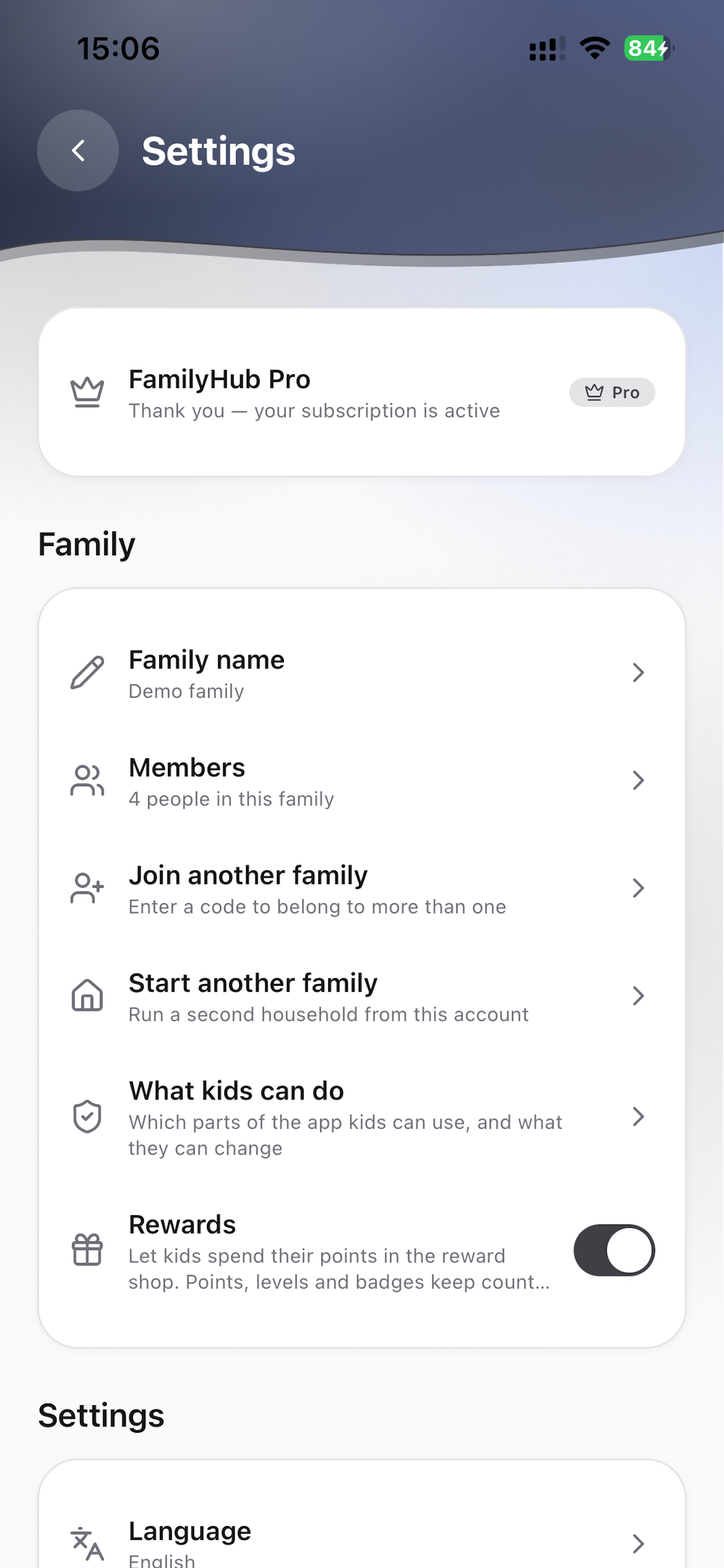
Settings as a parent, kids see less
-

App Icon

Most families run their home through a dozen different apps. There's a calendar only one parent looks at, a shopping list lost in a group chat, a chore chart on the fridge, and birthday wishlists scattered across people's phones. The kids, who most need to be involved, are usually left out, because almost every app asks them for an email address and a password.
I wanted one place the whole household could share. It had to be simple enough for a seven-year-old to use, and it had to make chores feel less like nagging and more like a game kids want to play.
FamilyHub is a phone app, for iPhone and Android (comming soon), that keeps a family organised in one place.
Chores that feel like a game. Parents set up chores and decide how many points each one is worth. Kids tick a chore off with a swipe and get a little celebration: a checkmark, confetti and a buzz. Points build streaks, unlock levels and earn badges. Kids can spend their points in a reward shop that parents fill with things like extra screen time or a trip out, and a parent approves each request. A shared family calendar. Everyone can see what's happening this week. Each person's events have their own colour, and events can repeat and send reminders. An event can also be kept private: the rest of the family only sees that the time is taken, not what it is. A shopping list for everyone. Anyone can add to it. Items are sorted by aisle automatically, and things you buy every week can be added back with one tap. Wishlists. Every family member has a list. Paste a link to something from an online shop and the app fills in the name, price and picture for you. That makes birthdays and holidays much easier. A home screen for the whole family. It shows what's happening today, what everyone has done lately, and how each kid's week is going. Kids don't need an email or a password. A parent sends a short invite code, the kid types it in, and they're in. Parents stay in control: they decide what kids can and can't change, and can set different rules for each child.
It also works without an internet connection, is available in 12 languages. It can be locked with Face ID or a fingerprint, and one person can be part of more than one family. That covers kids who split time between two homes, for example.
The app is free for small families. FamilyHub Pro is an optional subscription that covers the whole family. It allows bigger households and extra families, and adds more languages, syncing with the phone's own calendar, and a full history of chores.
I built FamilyHub as a single app that runs on both iPhone and Android, backed by an online service that keeps every family member's phone in step.
I made a few big choices early on: Your phone comes first. Everything is saved on your phone straight away, so the app is fast and keeps working on a plane or in a basement. When you're back online, it quietly shares your changes with the rest of the family. The rules live on our servers, not just in the app. Points, permissions and who can see what are all checked on our side. A kid can't give themselves extra points, and a private event stays private. I wrote every decision down. Each time I made a choice, I recorded what I decided and why. It grew into a detailed diary of the whole project and kept us consistent as the app got bigger. I used an AI coding assistant as a pair-programming partner throughout, which let a small team build a lot in a short time.
Keeping everyone's phones in agreement. When two people change the list at the same time, or one of them is offline, the app has to work out what the truth is. One early attempt to tidy things up deleted items that had never had a chance to be shared yet. I caught it, undid it, and rebuilt that part more carefully. Letting kids in without accounts, safely. Skipping the email and password for kids made the app far friendlier, but I still had to make it secure. I had to stop strangers from guessing a family's code, let a kid get back in after reinstalling the app, and keep their points when they later create a proper account. A slow app that looked fast on paper. On some Android phones, screens took a couple of seconds to open, yet our measurements said everything was fine. The cause turned out to be the soft coloured background, which was far more expensive to draw than it looked. Drawing it more cleverly fixed the delay. Time zones. A reminder at 8 a.m. has to mean 8 a.m. wherever each family lives, and a birthday has to stay on the right day when someone travels. Getting this right took more care than I expected.
Accomplishments that I'm proud of A kid can go from opening the app to finishing their first chore without typing an email or a password. The points and rules can't be cheated, because they're checked on our side and not just on the phone. It works fully offline and catches up on its own when the connection returns. It speaks 12 languages, and it won't let us release a version where any language is missing words. Privacy is built in from the start. Private events stay private, I ask before collecting any usage statistics, and deleting your account really deletes your data. I have a clear written record of why the app works the way it does, including the mistakes I made along the way.
Information that hasn't been shared yet is still precious. Just because something isn't on our servers yet doesn't mean it can be thrown away. Don't rely on the app alone to enforce the rules. Important rules should be checked somewhere they can't be bypassed. A half-finished check can be worse than no check, because it makes you feel safe when you aren't. Measure what people actually experience. Our numbers looked fine while real people were waiting. Write decisions down as you go. It was the single most useful habit for keeping a fast-moving project on track. What's next for FamilyHub A role for grandparents and babysitters, who can see the family's plans without having full control. Listening to families and improving, including what Pro offers, based on how people actually use the app.
Built With
- expo.io
- react-native
- revenuecat
- supabase
- typescript

