-
-
Application icon
-
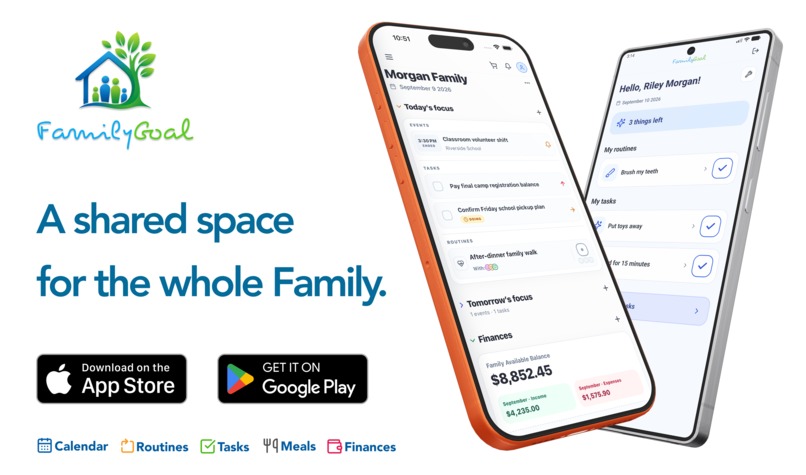
On the App Store and Play Store
-
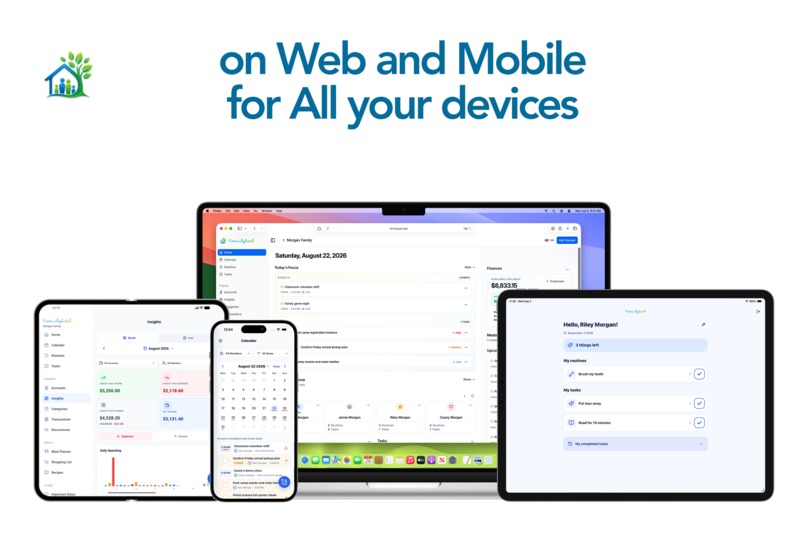
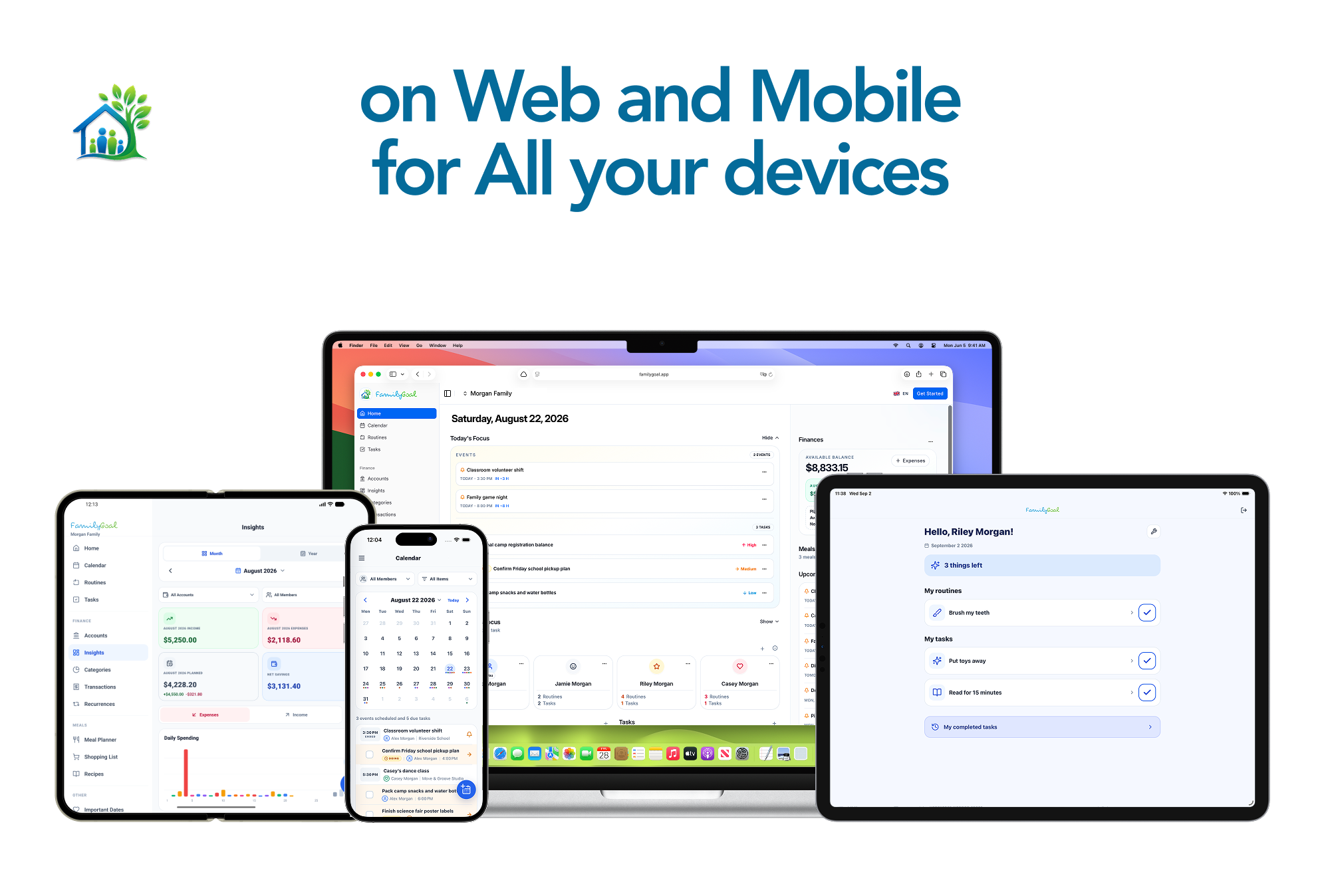
For Mobile and Web
-
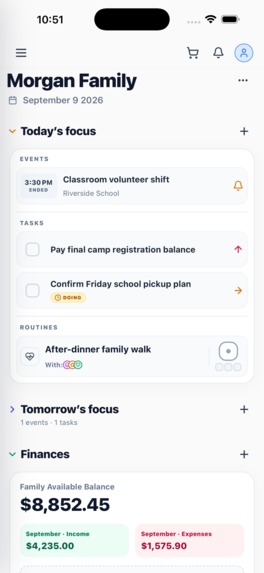
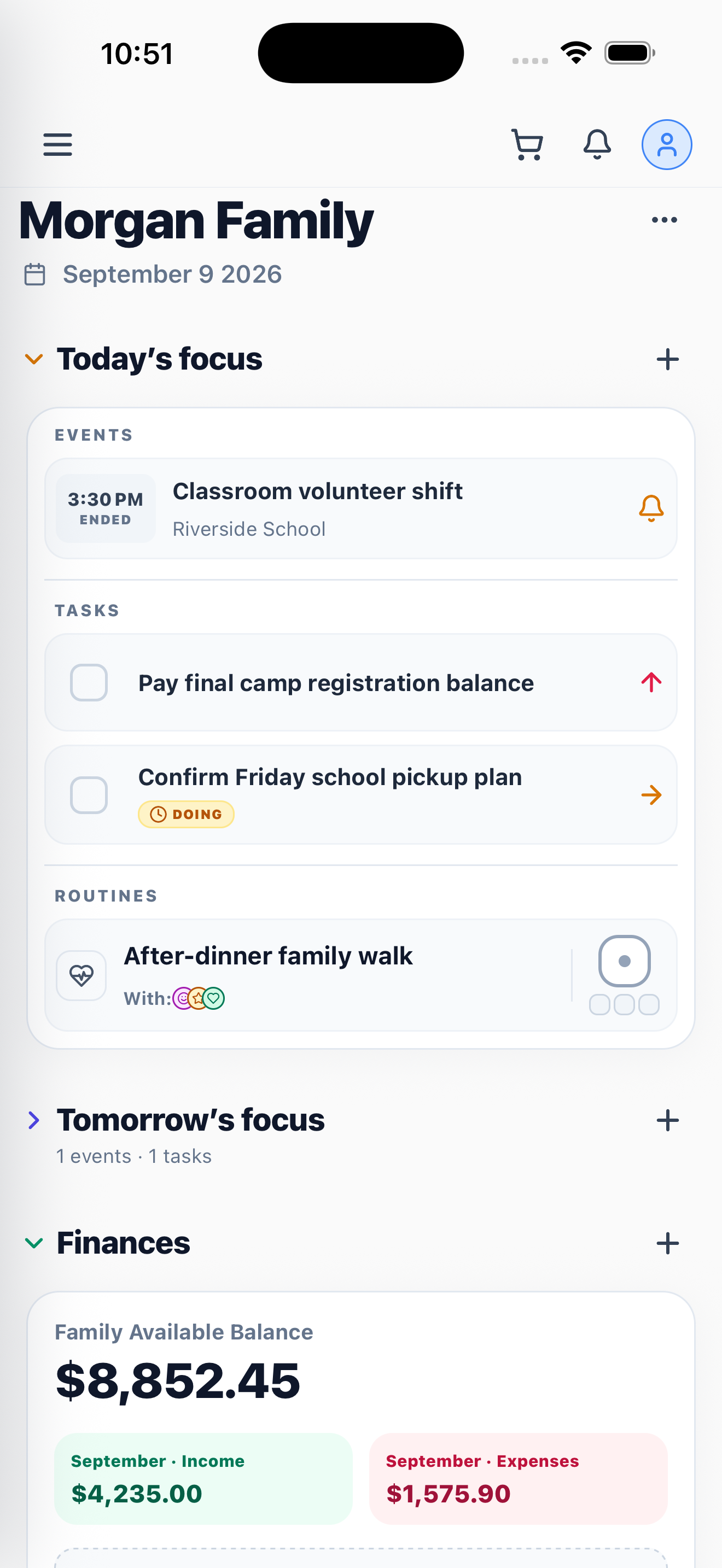
iPhone Home screen
-
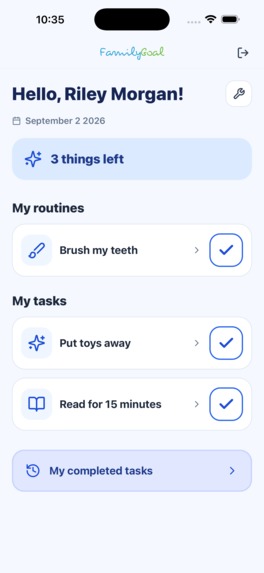
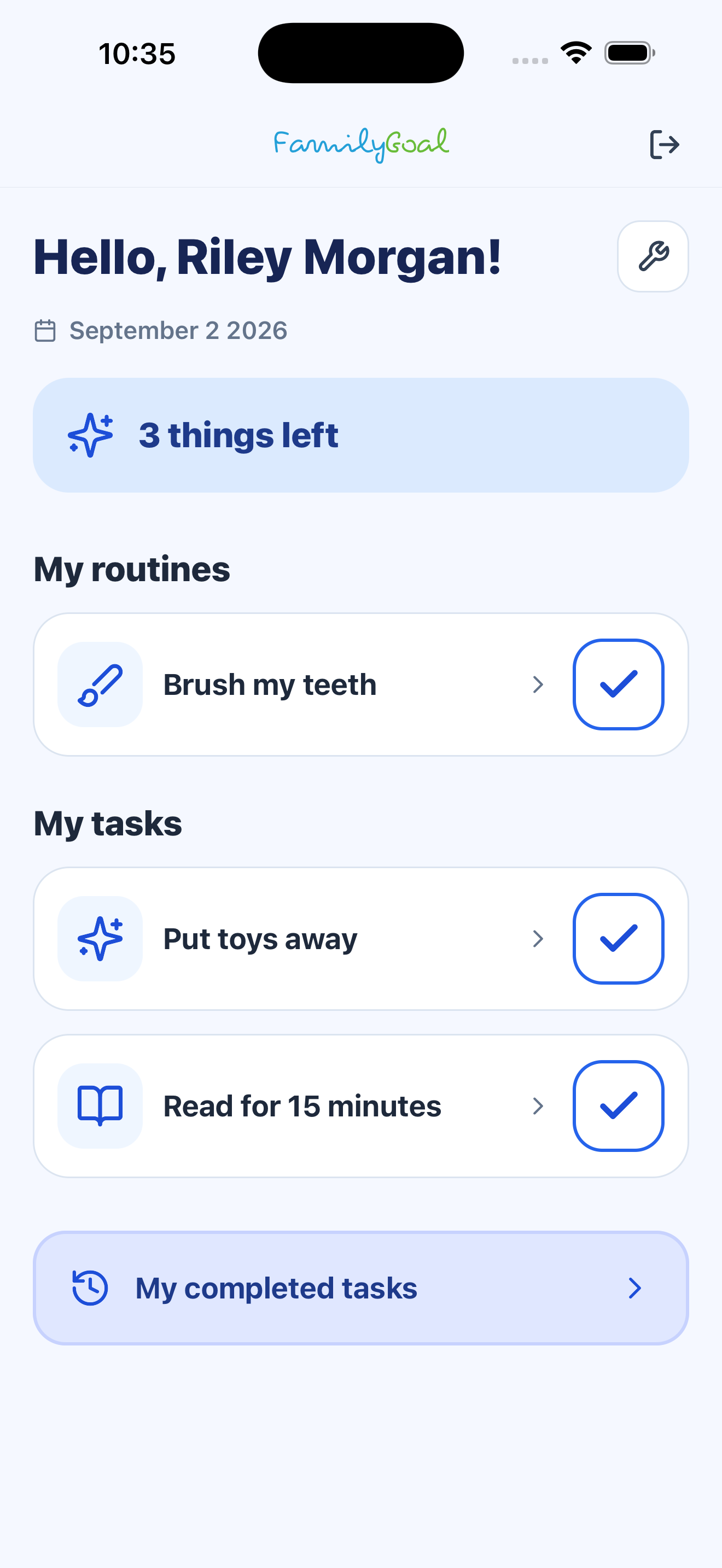
iPhone Kids view
-
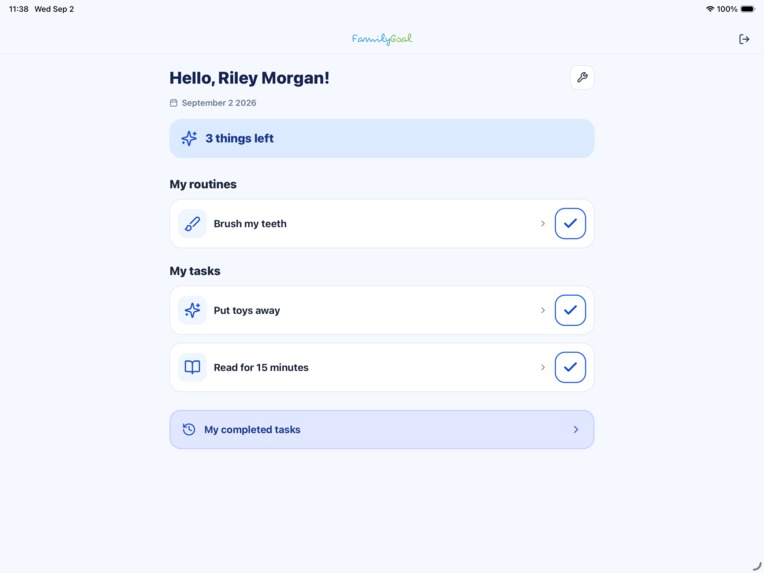
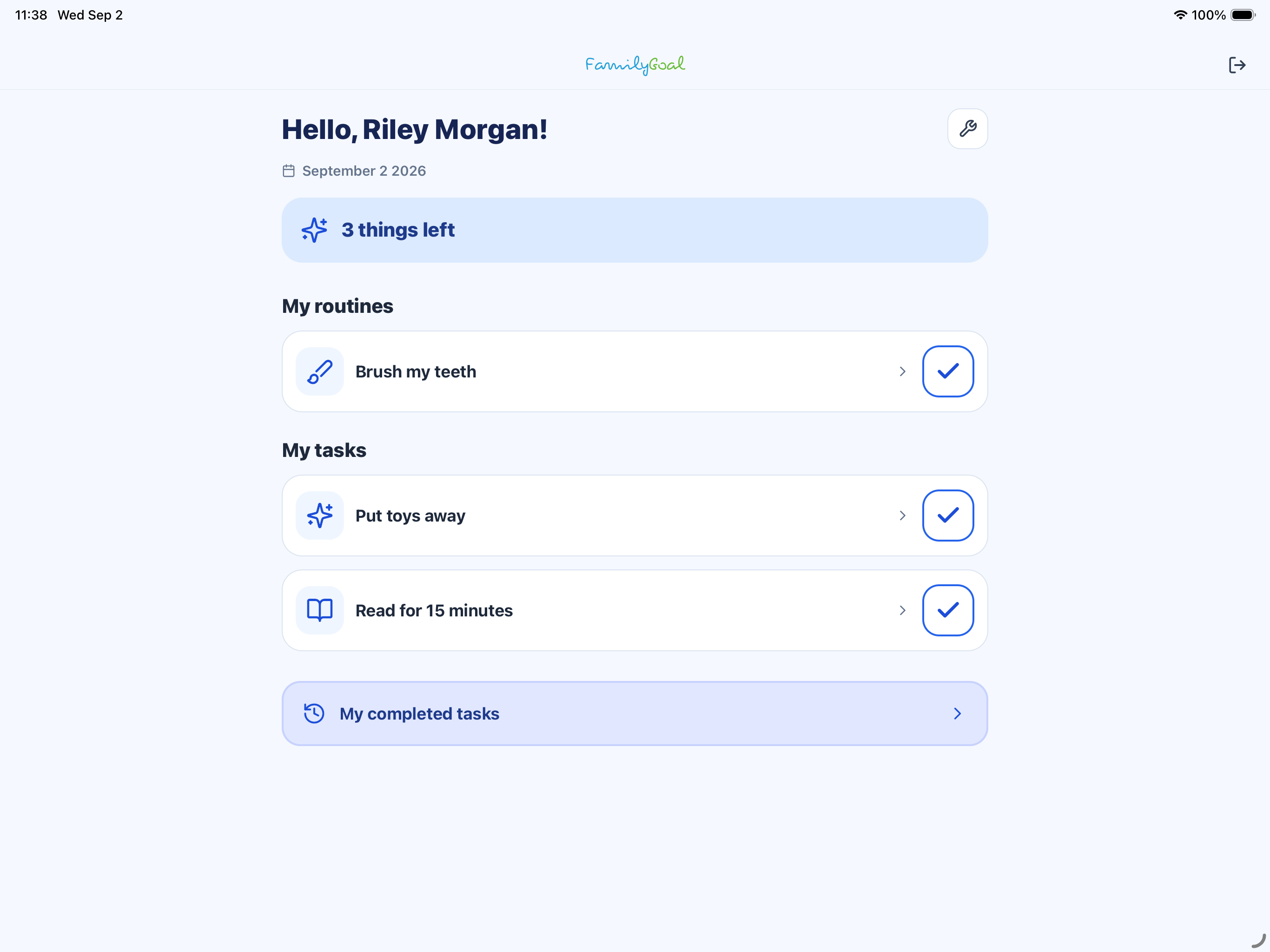
iPad Kids view
-
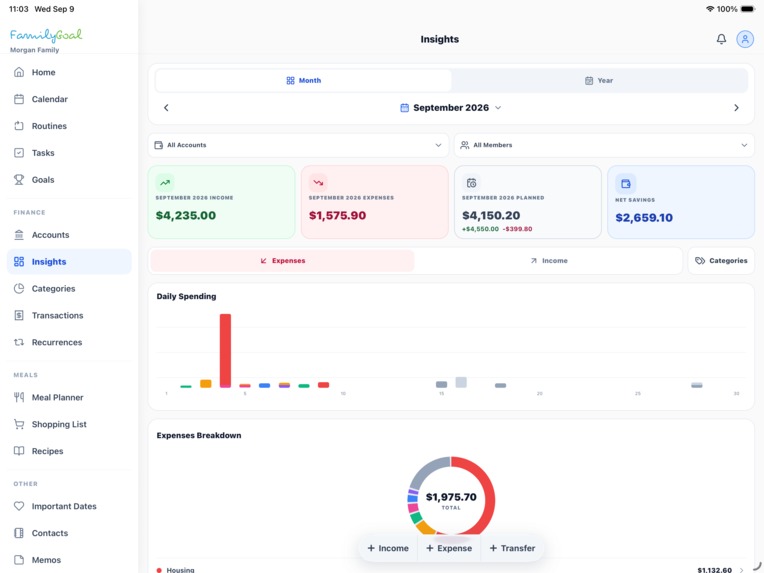
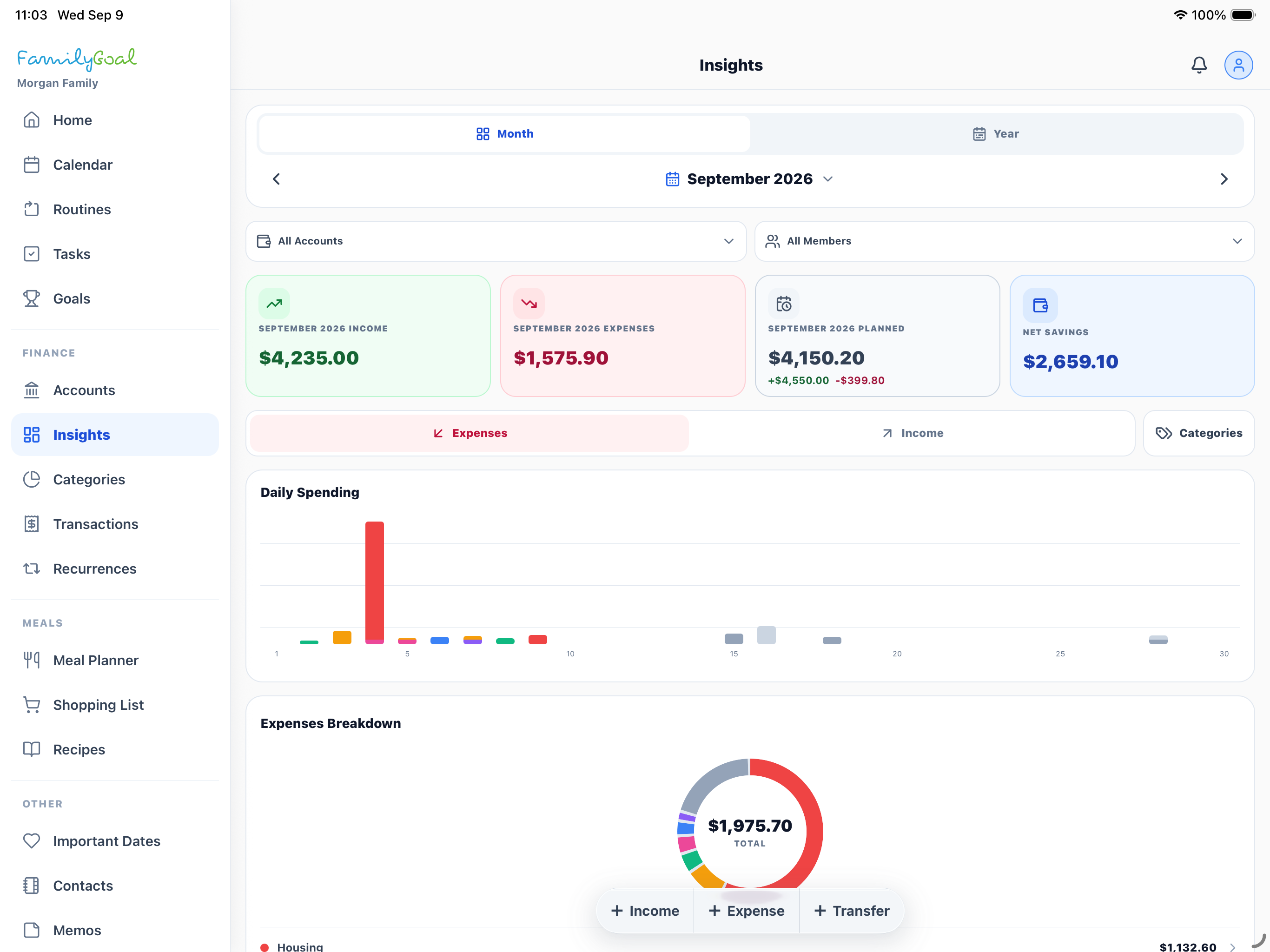
iPad Finances insights
-
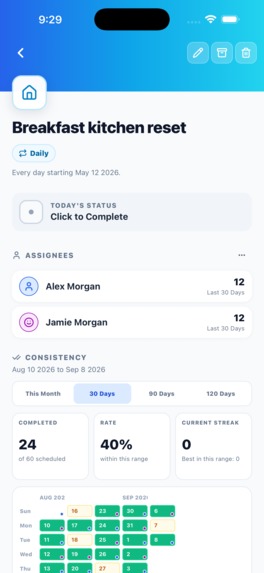
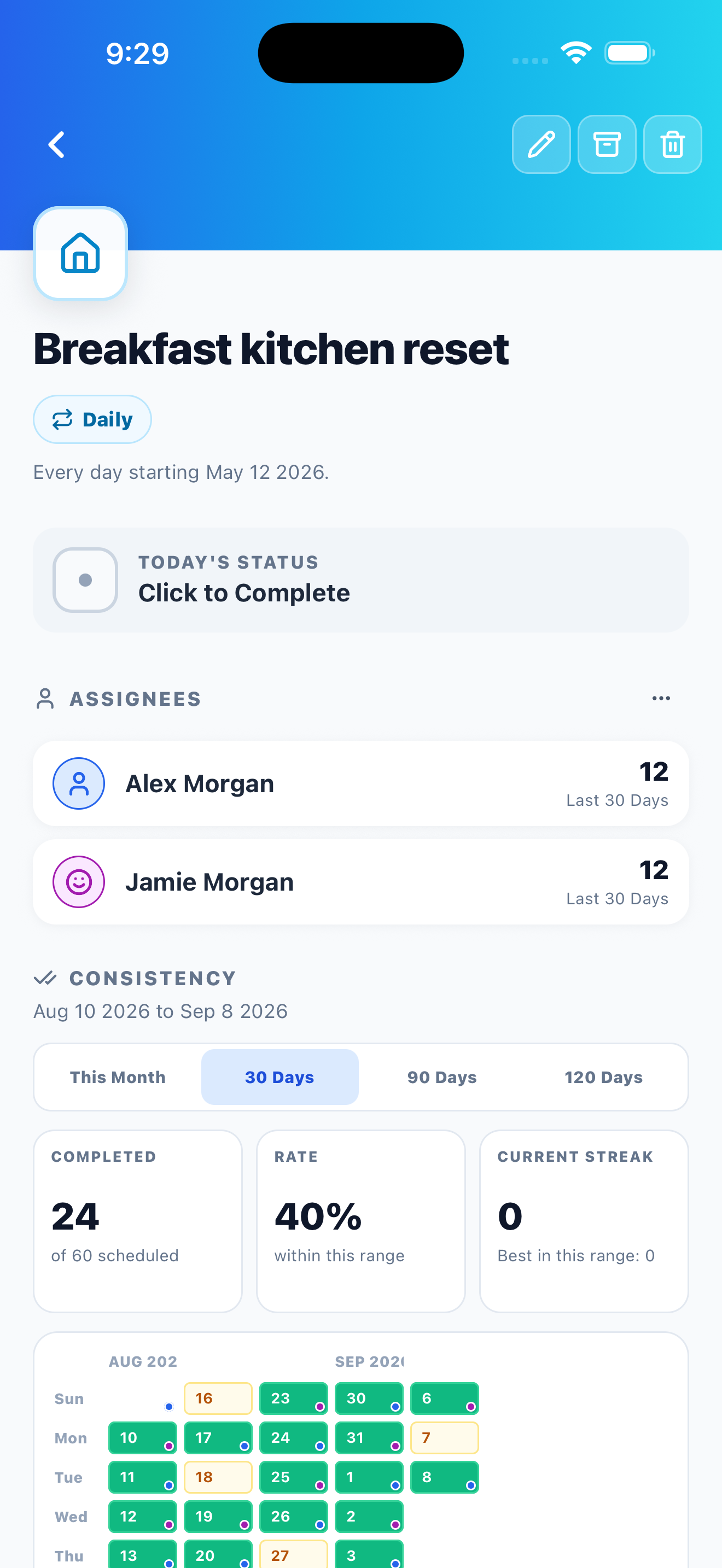
iPhone Routine details
Inspiration
I started building FamilyGoal this year because my family needed a better way to stay organized. My wife and I both work, we have two children, and we do not have family nearby to help with the everyday logistics.
Our family plans were spread across messages, calendars, reminders, spreadsheets, school information, and whatever one of us happened to remember. A medical appointment might be in one calendar, the shopping list somewhere else, and an upcoming bill in a spreadsheet. The problem was not that those tools were bad. None of them gave us a clear, shared picture of our family week.
I wanted one place where we could see what was happening, what needed attention, who was responsible, and what was coming next. I built FamilyGoal around what our household actually needed, adding and improving parts of the app as we used it in everyday life.
What it does
FamilyGoal is a household coordination app that brings schedules, responsibilities, meals, shopping, and household finances into shared Spaces.
The daily view puts relevant events, tasks, routines, meals, and upcoming financial activity together, so a family does not have to reconstruct the day from several apps. Events can include participants, locations, notes, links, and reminders. Tasks have clear owners, while routines handle work that repeats on a schedule.
Meal planning connects meals with recipes and ingredients, which can be added directly to the shared shopping list. The finance area supports private and shared accounts, transactions, budgets, planned expenses, recurring activity, forecasts, and savings goals.
FamilyGoal also recognizes that sharing a household does not mean everyone should see or manage everything. Members can have different permissions and visibility. On mobile, Kids View gives children a focused place to see and complete the tasks and routines assigned to them without presenting the full adult experience.
How I built it
I built the web application with React, TypeScript, and React Router. It runs on Cloudflare Workers and uses Convex for the backend, authentication, real-time updates, scheduled work, and data storage.
The native iOS and Android apps are built with Expo and React Native. They use the same Convex backend as the web app, along with shared localization and access rules. The mobile interface is built with native components and responds to the available width, using persistent navigation and multi-column layouts on larger screens.
Subscriptions are managed through RevenueCat using its web and React Native SDKs. Convex processes subscription events and applies the same entitlement and plan-limit rules across platforms. This lets someone sign in with the same FamilyGoal account on different devices without creating separate subscription state for each client.
One principle that helped throughout development was sharing the product rules and data model while allowing each platform to have an interface that suits it.
Challenges I ran into
The first challenge was deciding what belonged in FamilyGoal. It began with calendars and tasks, but daily use kept revealing connected problems. Meal planning led naturally to recipes and shopping. Recalling upcoming bills led to planned transactions, recurring activity, and forecasts.
The harder challenge was making those areas feel connected without turning the app into another complicated system for the family to maintain. Every addition had to answer a real household need and lead to a useful next action.
Permissions also became more complex than I initially expected. A family is not a team of identical users. Adults, teenagers, children, and other trusted members may need different access. Building those rules into features, records, financial visibility, and Kids View required careful work across the web app, mobile apps, and backend.
Accomplishments that we're proud of
The accomplishment I care about most is that my family actually uses FamilyGoal. It is now the place where we look for the family plan instead of trying to remember which message, calendar, or spreadsheet contains the answer.
I am particularly proud of the finance experience. It keeps actual balances separate from planned activity and makes upcoming expenses visible alongside the rest of the household plan. That has been more useful to us than treating budgeting as an isolated monthly exercise.
I am also proud of Kids View. Our children are not just names attached to events on an adult’s screen. They have a simpler experience where they can see their own responsibilities, complete them, and review their progress.
Finally, building web, iOS, and Android experiences on the same backend while preserving real-time updates, permissions, and subscription access was an important technical milestone for me.
What I learned
I learned that the most important parts of a product are not always visible in the first version. Finances were not part of my original plan, but they became one of the areas my wife and I rely on most.
I also learned that household coordination is less about adding more reminders and more about keeping the right context together. A task is more useful when its owner is clear. An event is more useful when the participants, location, and notes stay with it. A meal plan becomes actionable when its ingredients can move to the shopping list.
Most of all, building for my own family taught me to pay attention to small, repeated moments of friction. Those ordinary moments have guided the product better than a large feature roadmap ever could.
What's next for FamilyGoal App
My next goal is to learn from households beyond my own and keep improving the parts of FamilyGoal that help them understand their week without adding more planning work.
I am also exploring an AI planning assistant. The intention is for it to help turn a request into a clear proposal, such as preparing events, tasks, meals, or shopping items, while leaving the family in control of reviewing and confirming any changes.
Native widgets are another priority. I want upcoming events, responsibilities, meals, and other useful information to be available from the iOS and Android home screens without requiring someone to open the full app each time.
Built With
- cloudflare-turnstile
- cloudflare-workers
- convex
- convex-auth
- dnd-kit
- expo-router
- expo-secure-store
- expo.io
- google-sign-in
- i18next
- lucide
- radix-ui
- react
- react-i18next
- react-native
- react-native-purchases
- react-router
- recharts
- resend
- revenuecat
- tailwind-css
- typescript
- vite
