-
-
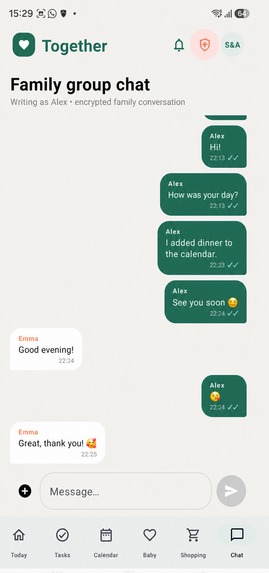
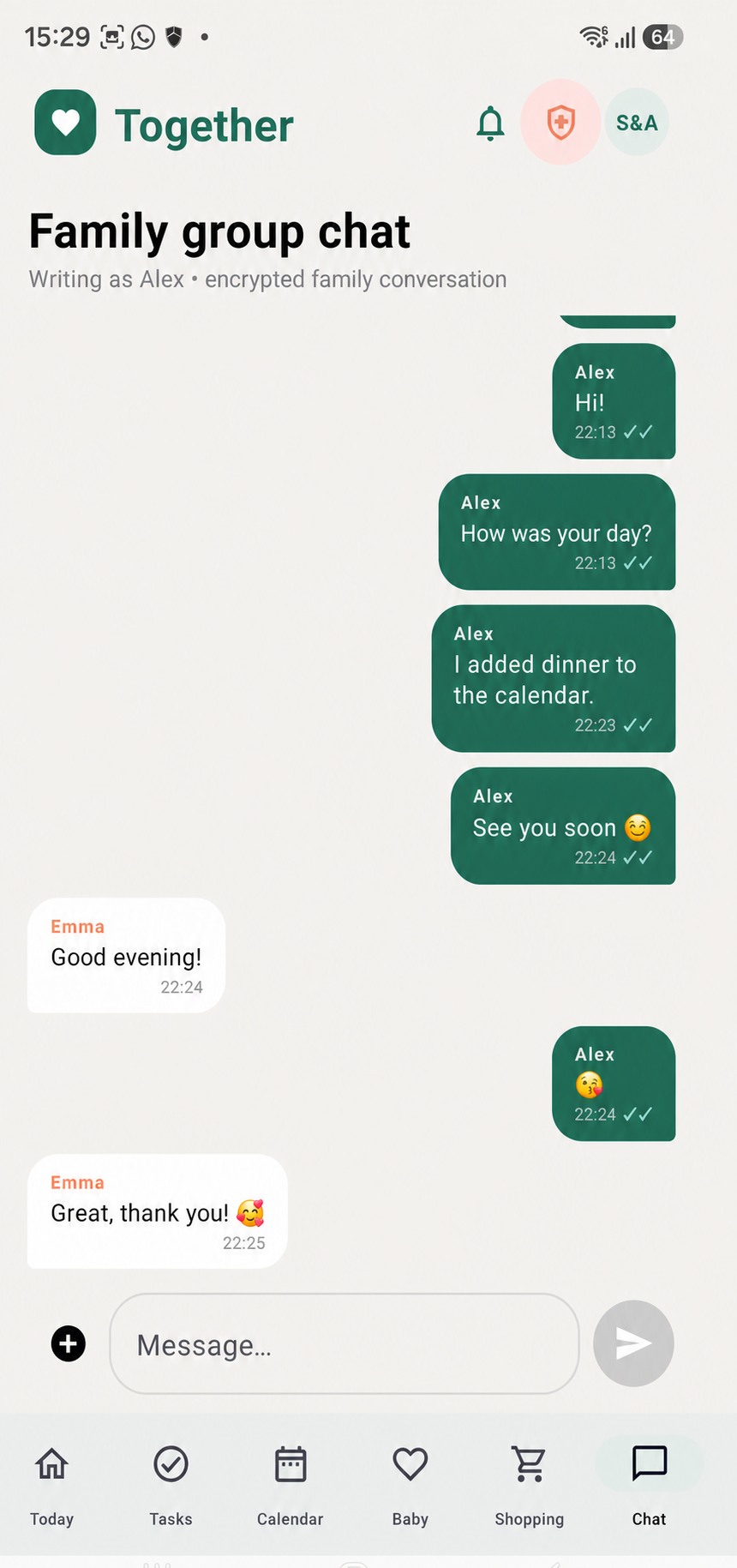
Family chat
-
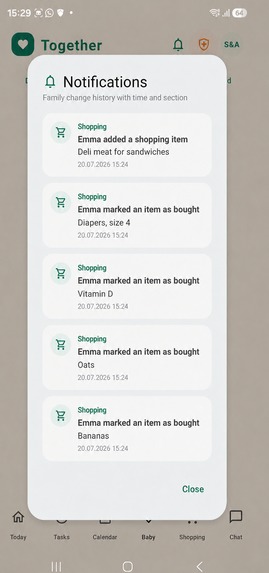
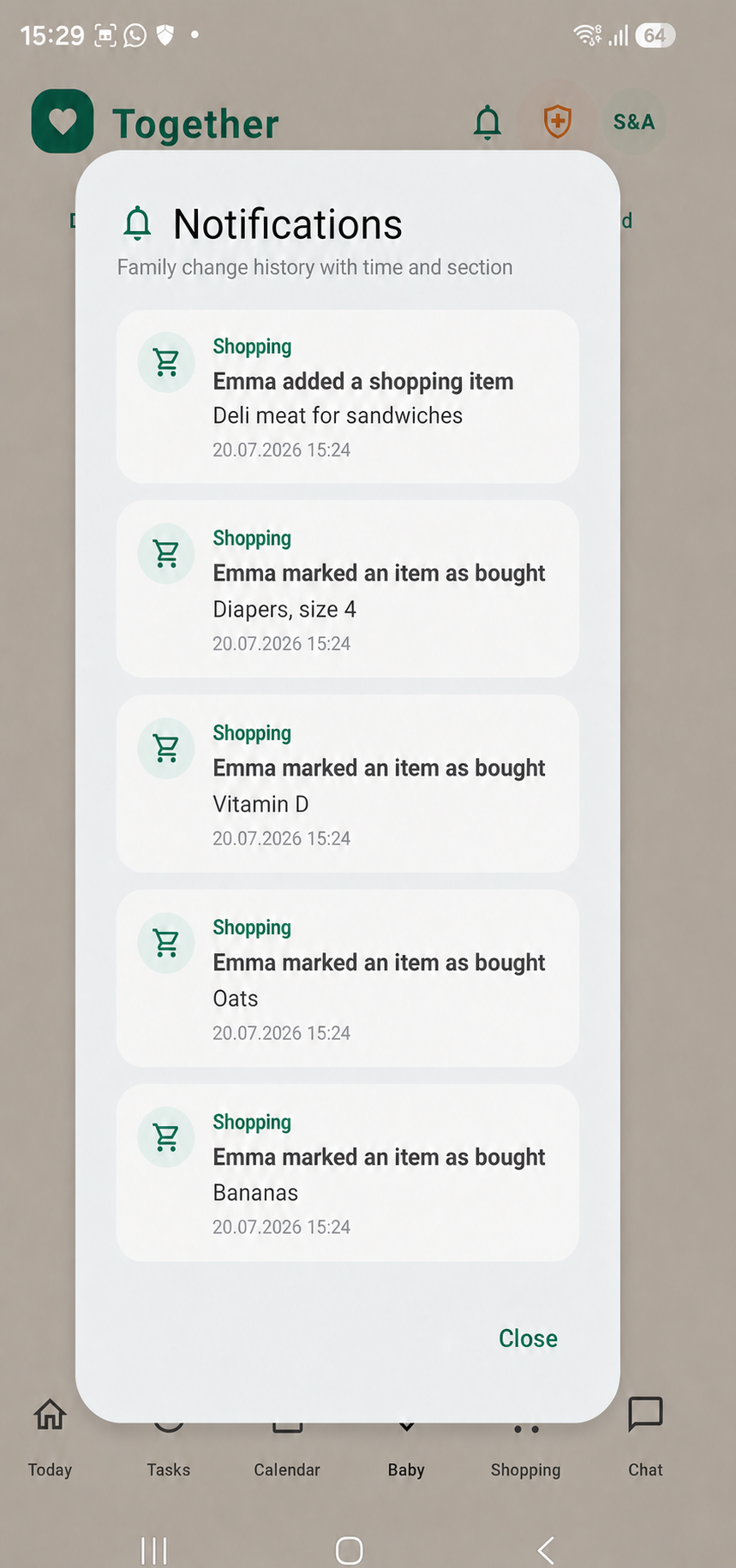
nortifications
-
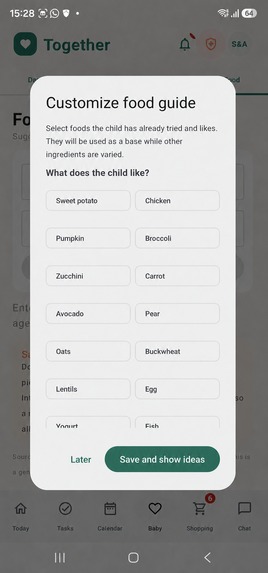
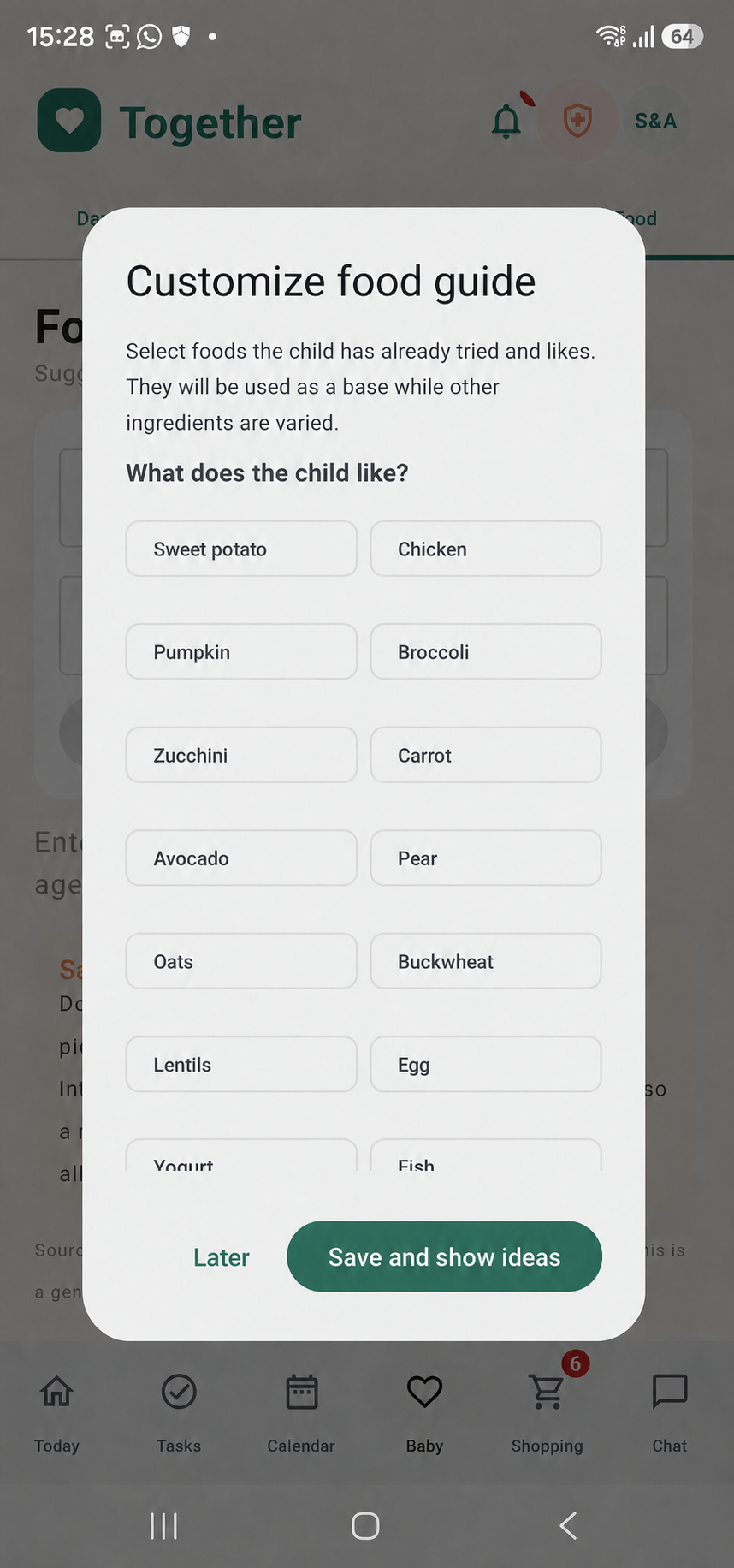
food guide
-
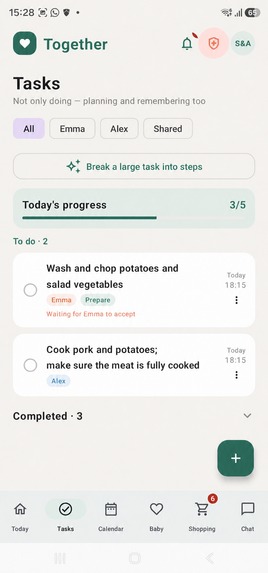
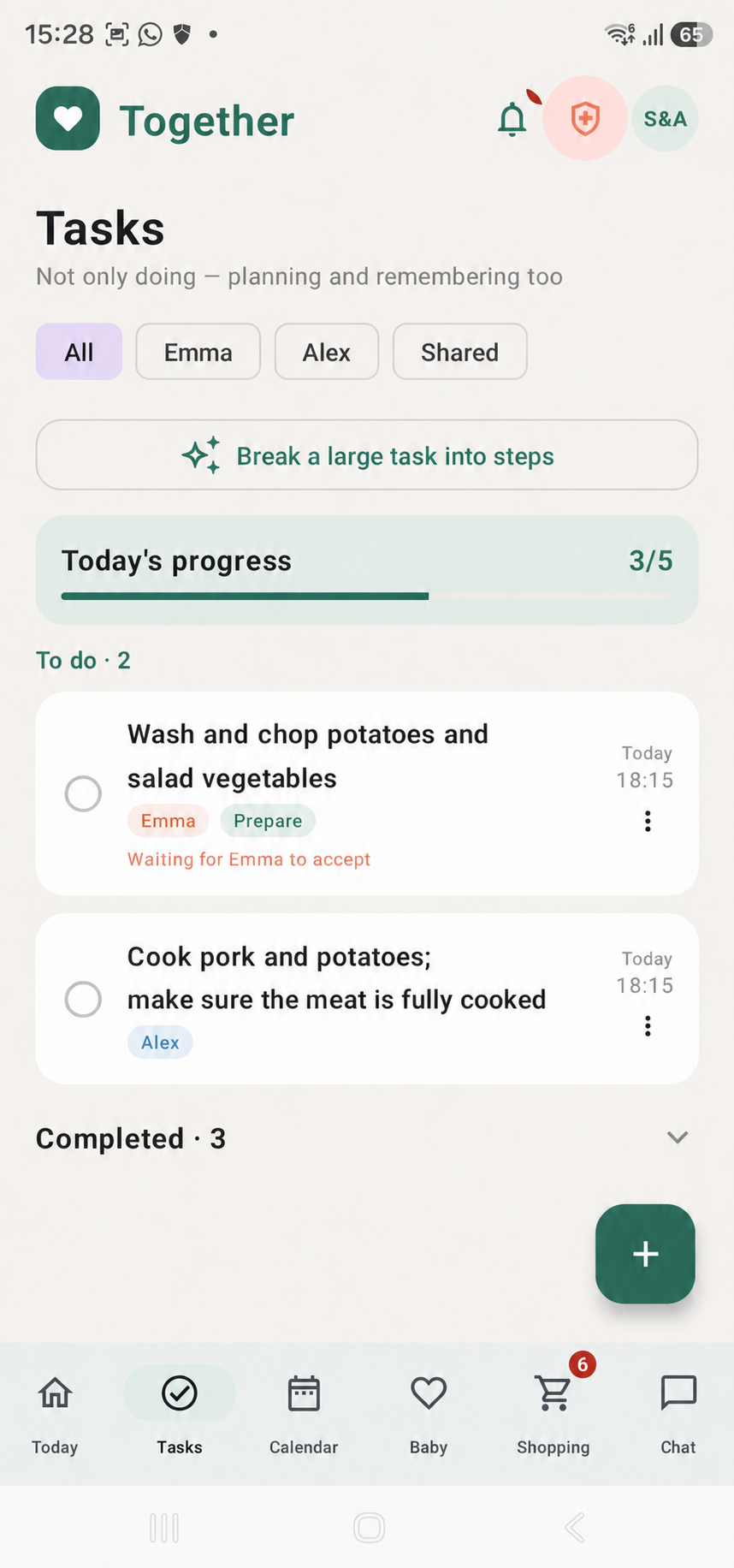
Tasks
-
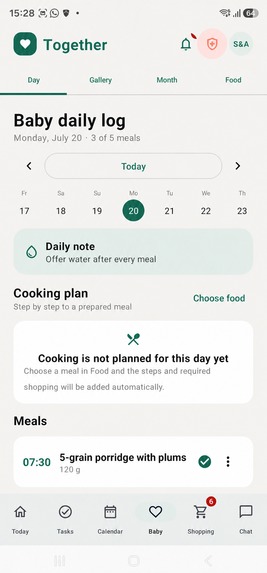
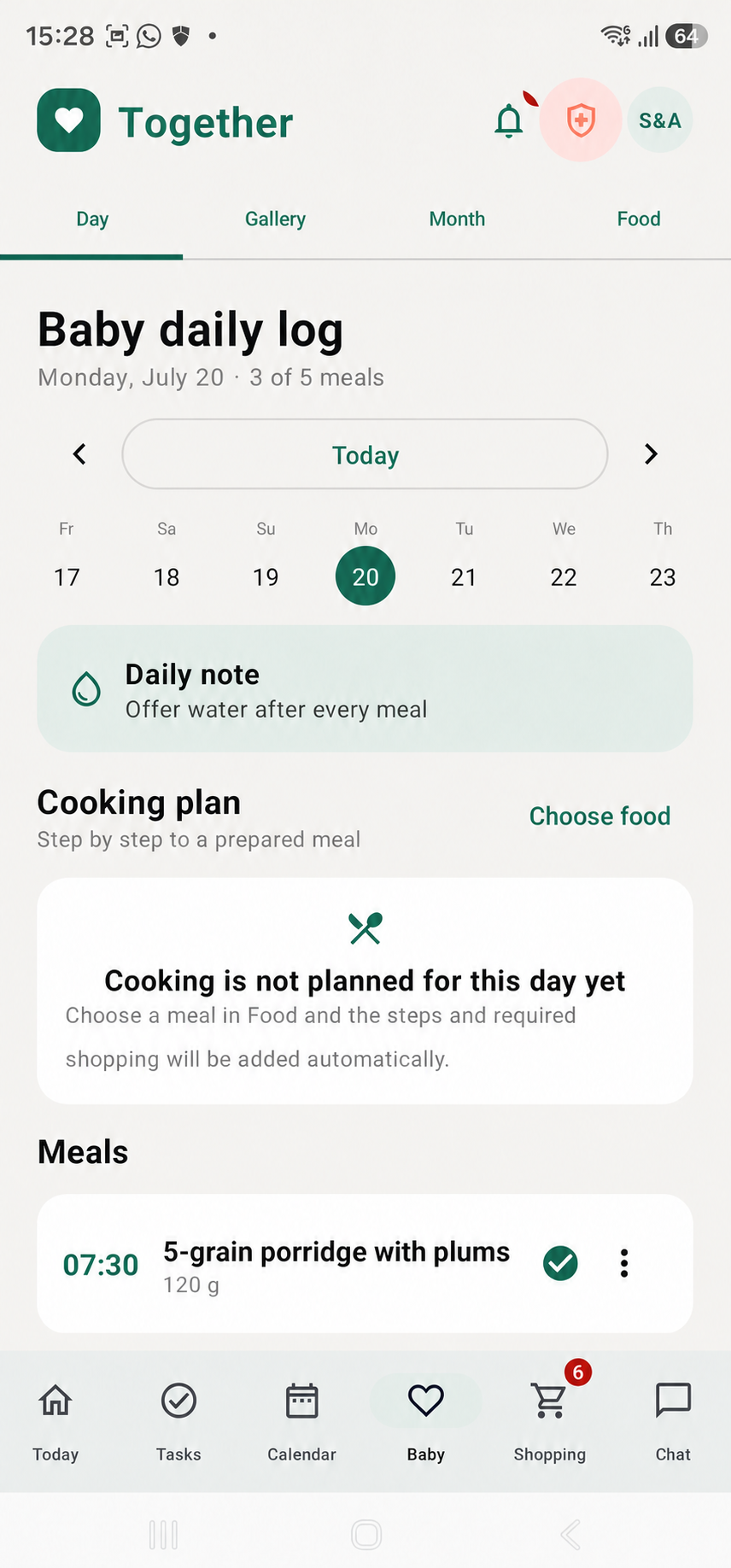
baby daily log
-
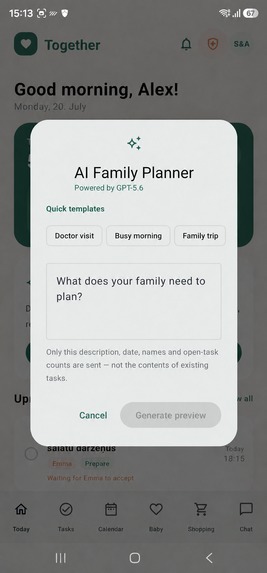
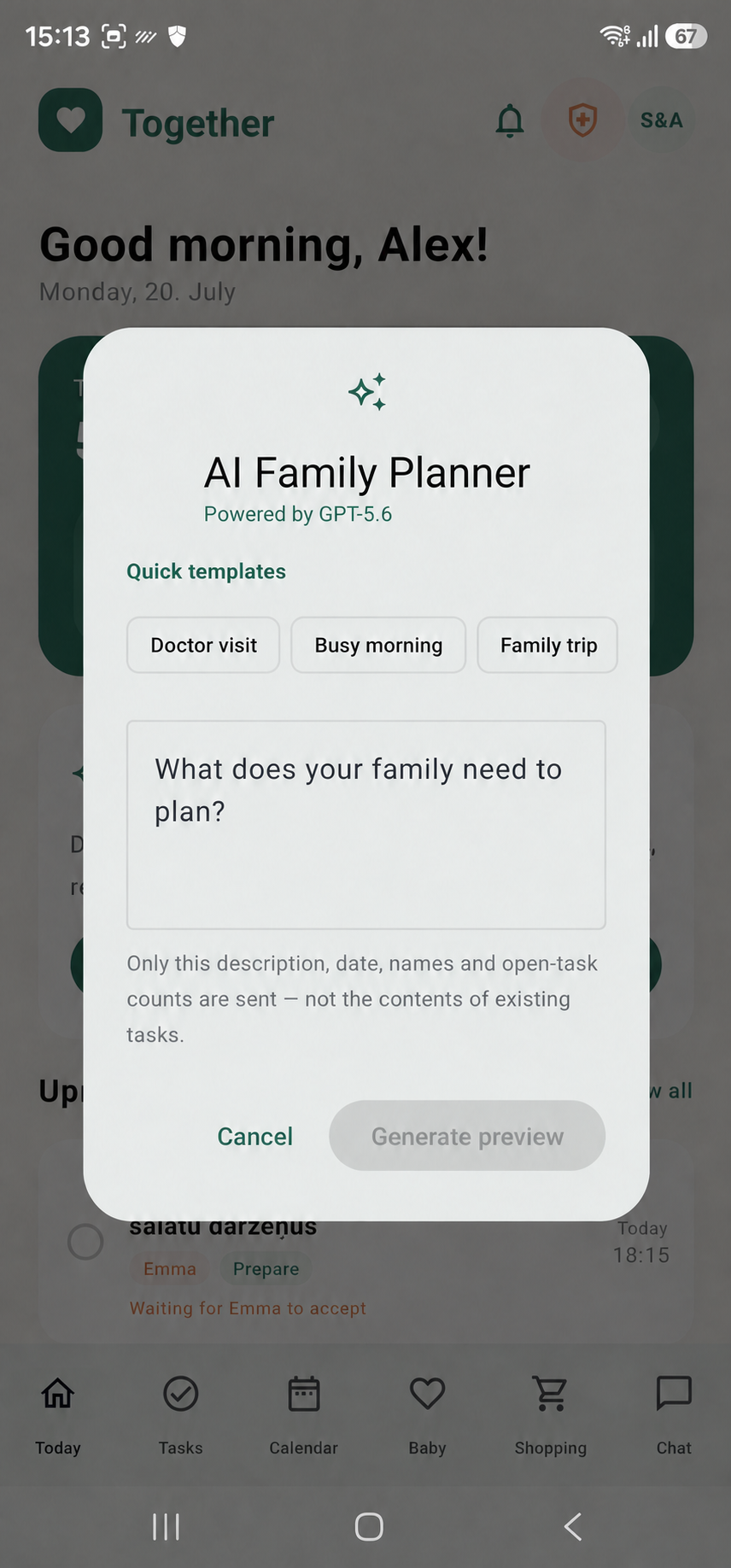
AI family planner
-
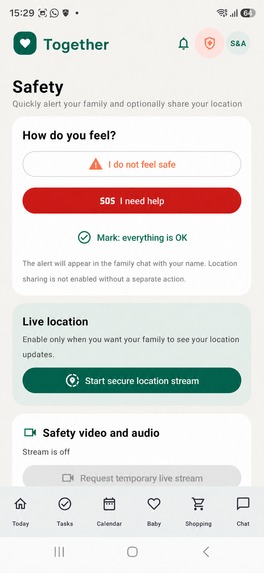
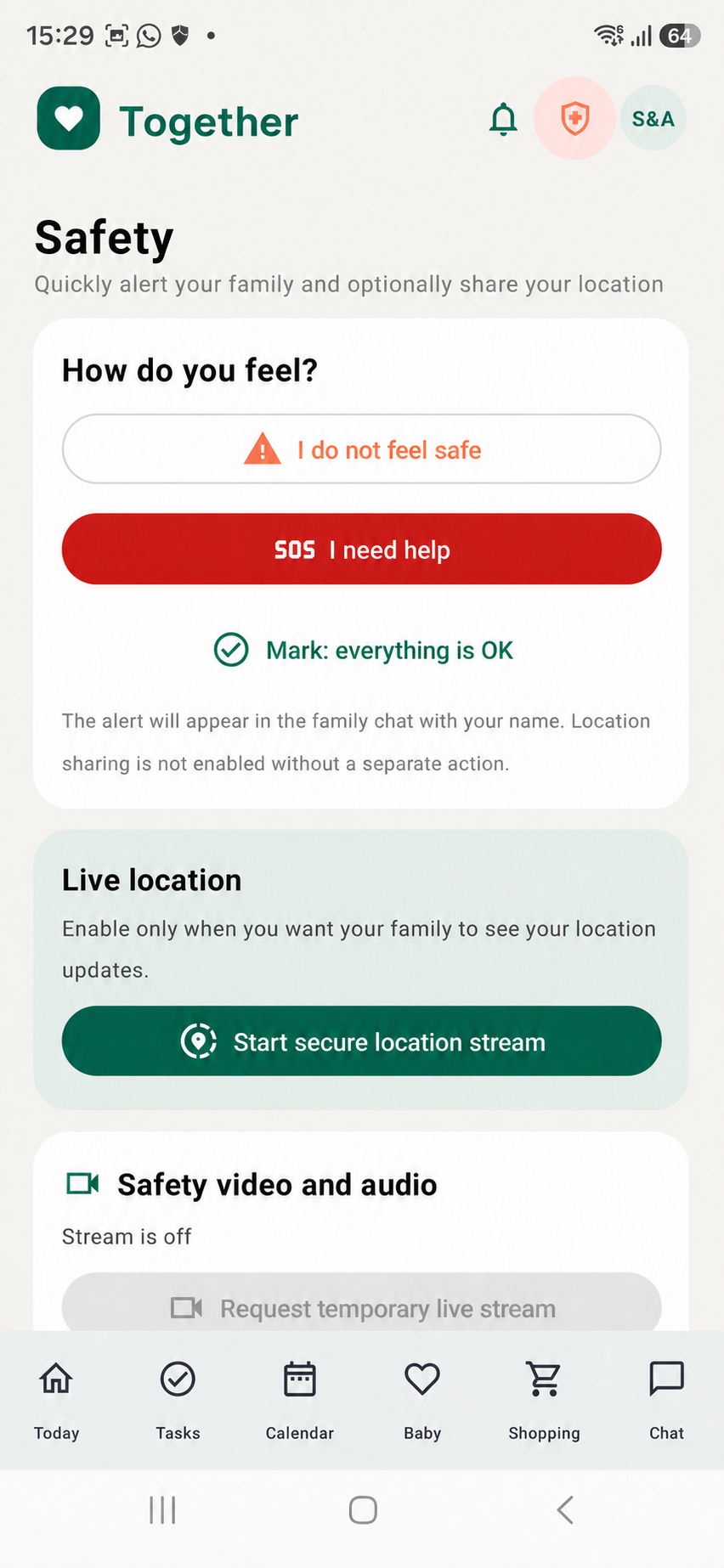
safety
-
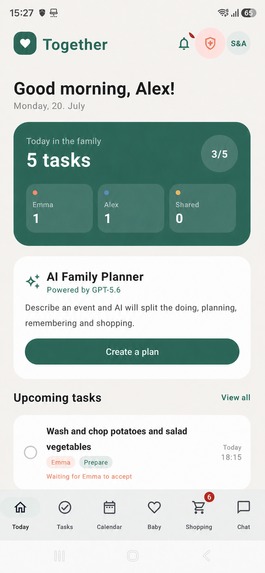
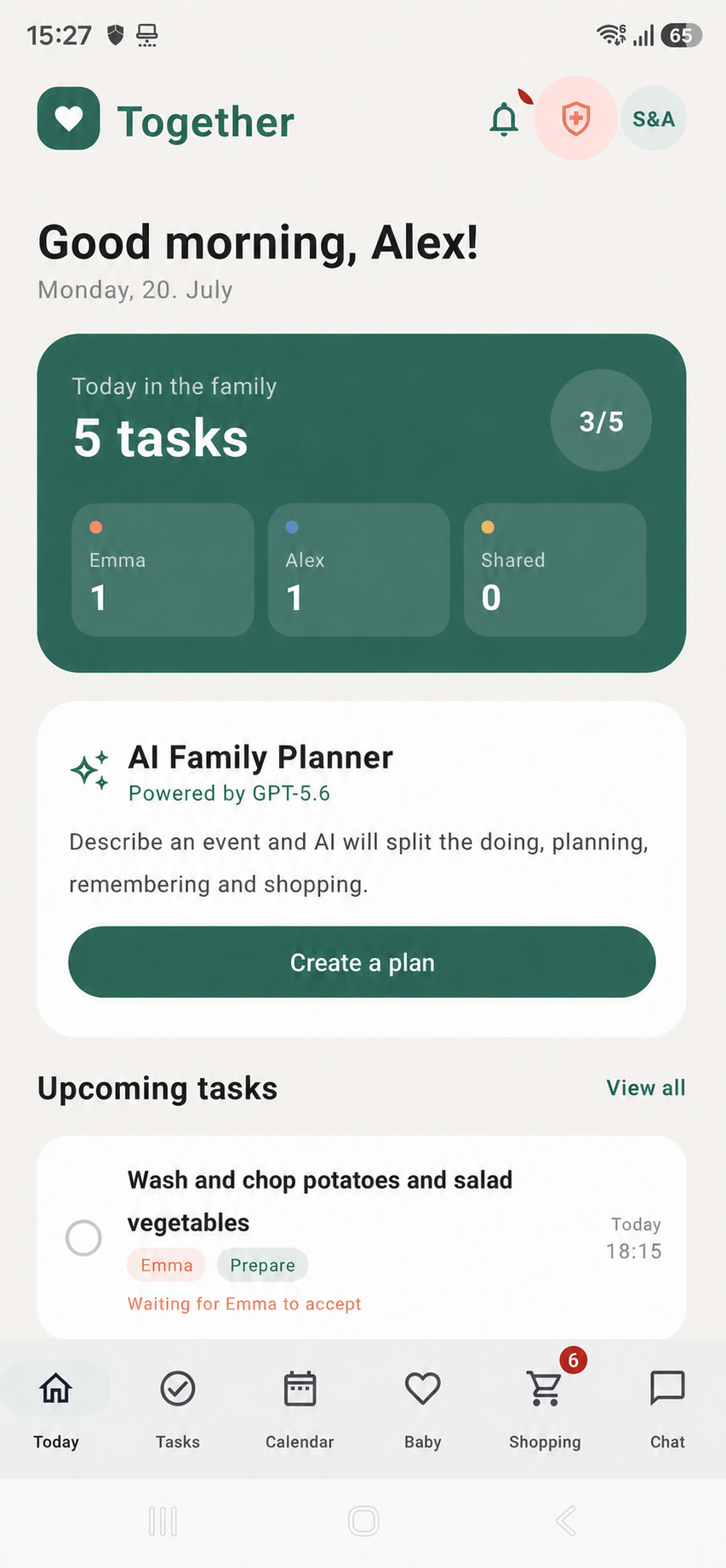
Dashboard
Inspiration
Family life is not only about completing visible chores. It also includes planning, remembering, preparing, checking, coordinating, and taking responsibility for the final result.
A task such as “take the baby to the doctor” is actually a chain of smaller responsibilities: book the appointment, add it to the calendar, prepare documents, pack the baby’s bag, remember the time, travel to the appointment, and buy anything needed afterward.
Kopā, which means “Together” in Latvian, was created to make this invisible mental load visible and easier to share across the whole family.
What it does
Kopā is a collaborative Android family assistant for up to 15 family members.
The app combines:
- Shared and recurring family tasks
- Task assignment and workload visibility
- A shared calendar
- Shopping lists
- A family group chat
- Activity notifications with timestamps and unread counters
- Baby meal planning and age-appropriate food suggestions
- A baby photo gallery synchronized between parents
- Daily and monthly family summaries
- Location sharing and safety alerts
- Family invitations through secure links
- Battery-friendly synchronization and an eco/night mode
The new notification center shows who changed something, what was changed, the relevant section, and the exact time. Each section has its own unread badge, which is cleared when the family member opens that section.
AI-powered planning
Kopā uses the OpenAI API to turn a large or mentally demanding family responsibility into a structured, actionable plan.
For example, instead of creating one vague task called “Take the baby to the doctor,” the AI planner can generate:
- Preparation tasks
- Calendar events
- Required shopping items
- Suggested responsibility assignments
- A practical sequence for completing everything
The generated result is returned as structured data that the user can review before adding it to the shared family plan.
The app clearly explains when AI is unavailable, when a free daily generation has already been used, or when a provider limit has been reached. It also supports an optional bring-your-own OpenAI API key flow. User-provided API keys are encrypted at rest and are never returned by the server.
How we built it
The Android application is written in Kotlin using Jetpack Compose and Material 3.
Room is used for local structured storage, while WorkManager handles background synchronization and scheduled work. The family relay is implemented in Node.js and deployed at ideaflow.ink.
The server acts as a lightweight coordination tower. It helps family devices discover each other, delivers encrypted synchronization data when direct communication is unavailable, and distributes signed APK updates.
For larger files, photos, video, live location, and safety streaming, the application can establish a direct WebRTC peer-to-peer connection. This reduces server storage requirements and keeps sensitive family media between participating devices whenever possible.
The application supports Latvian and English and can update itself securely through the family tower. Every release is verified using its version code, file size, APK structure, signature, and SHA-256 hash.
Challenges we ran into
One of the biggest challenges was reliable synchronization between multiple Android phones while keeping battery usage under control.
Fast chat delivery requires frequent communication, but continuous polling can drain the battery. Kopā therefore combines several strategies:
- Direct P2P delivery when both phones are available
- Relay-based fallback synchronization
- Faster refresh while the chat is open
- Slower refresh during normal usage
- Eco mode
- Optional night-time synchronization pause
Another challenge was designing a data model that could merge changes without losing completed tasks, chat delivery status, shopping updates, meal plans, or family activity history.
Building secure family invitations, update verification, encrypted API-key storage, and clear safety permissions also required careful attention.
Accomplishments that we are proud of
- Built a working Android family collaboration application
- Supports families of up to 15 members
- Created automatic synchronization between multiple phones
- Added direct WebRTC peer-to-peer communication
- Built secure invitation links that open the Android application
- Added a synchronized baby gallery and meal-planning workflow
- Implemented an OpenAI-powered family planning assistant
- Added a bring-your-own OpenAI API key option
- Created a secure self-hosted APK update system
- Added Latvian and English localization
- Designed an activity history and per-section unread notification system
What we learned
The project demonstrated that family organization is not just a traditional to-do-list problem. A useful family assistant must understand dependencies, preparation, reminders, communication, safety, and the mental load behind each task.
We also learned how important graceful failure is. When AI, P2P, or the relay is temporarily unavailable, the app must explain what happened and continue working with locally stored data.
What's next for Kopā
The next steps are:
- Improve conflict-free synchronization between many devices
- Add richer AI-generated meal and family routine plans
- Introduce optional encrypted backups
- Improve accessibility and tablet layouts
- Add more languages
- Expand the notification center with filters and search
- Complete production billing only if there is sufficient user demand
- Publish the application through an official Android app store
- Continue privacy and security testing
The long-term goal is to make Kopā a calm, private, and practical family operating system that reduces invisible mental load instead of creating more notifications and complexity.
Built With
- aes-256-gcm
- android
- android-studio
- gpt
- https
- javascript
- jetpack-compose
- json
- kotlin
- linux
- material3
- nginx
- node.js
- openai-api
- p2p
- rest-api
- room-database
- sha-256
- sqlite
- webrtc
- workmanager

Log in or sign up for Devpost to join the conversation.