-
-
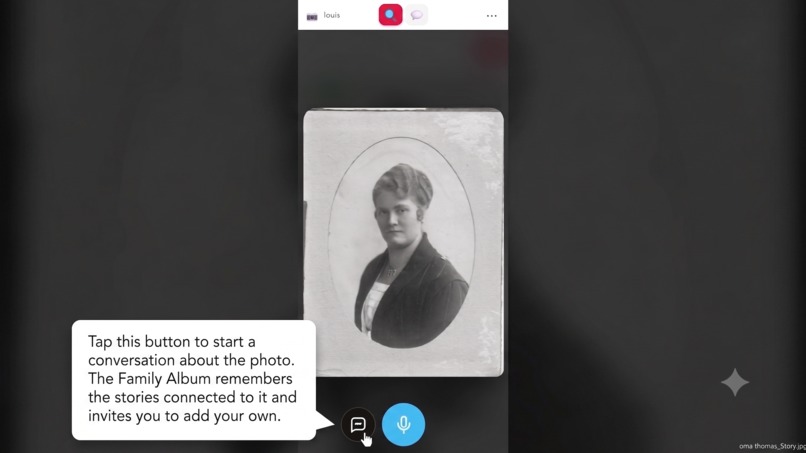
Send photo to chat
-
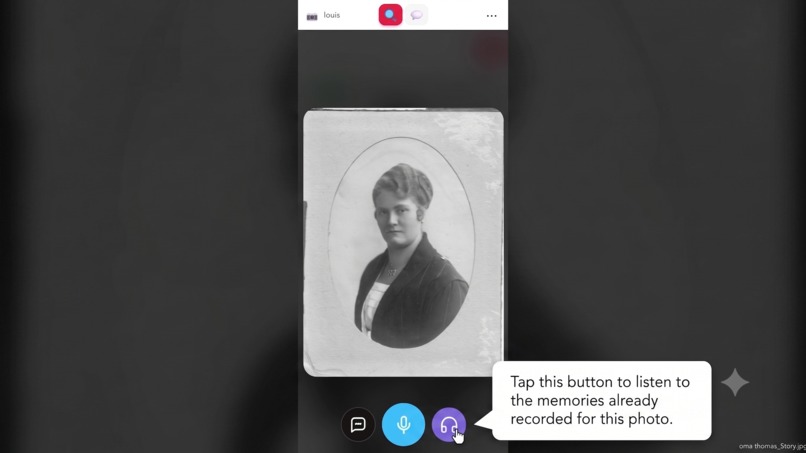
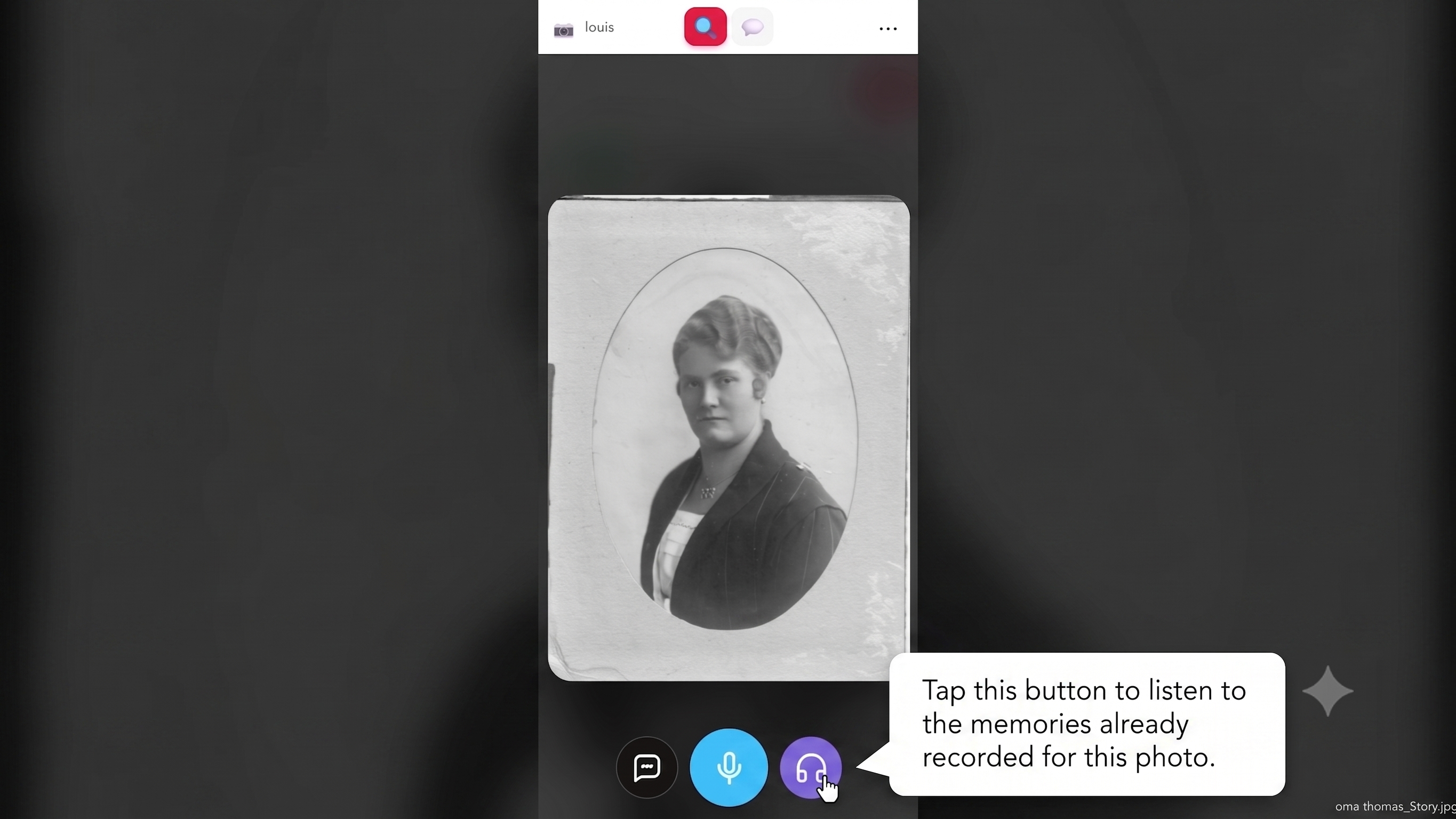
Listen to family story
-
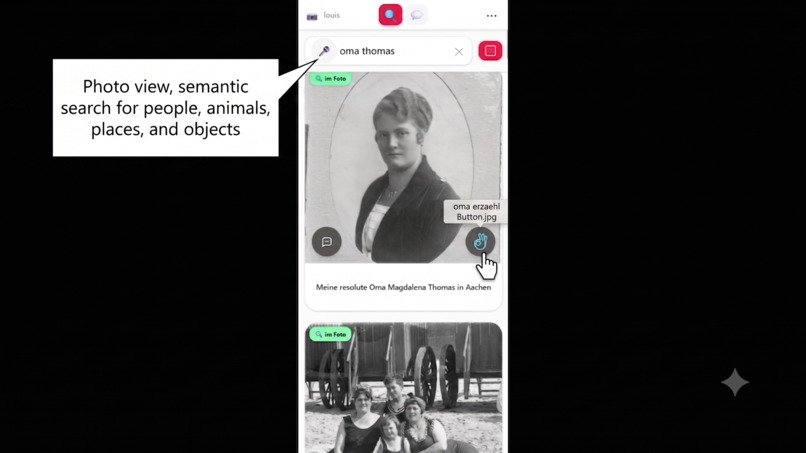
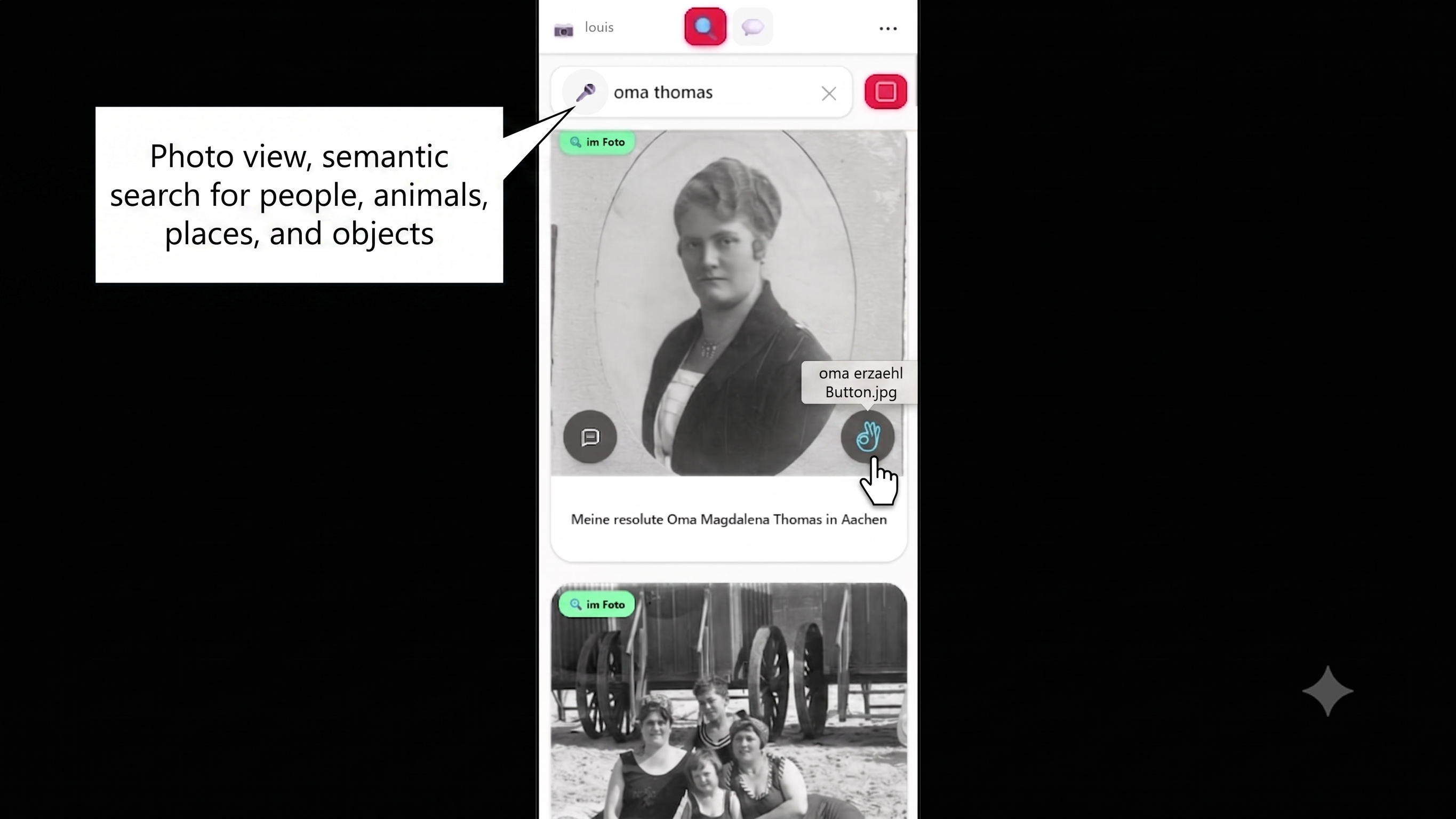
Semantic search
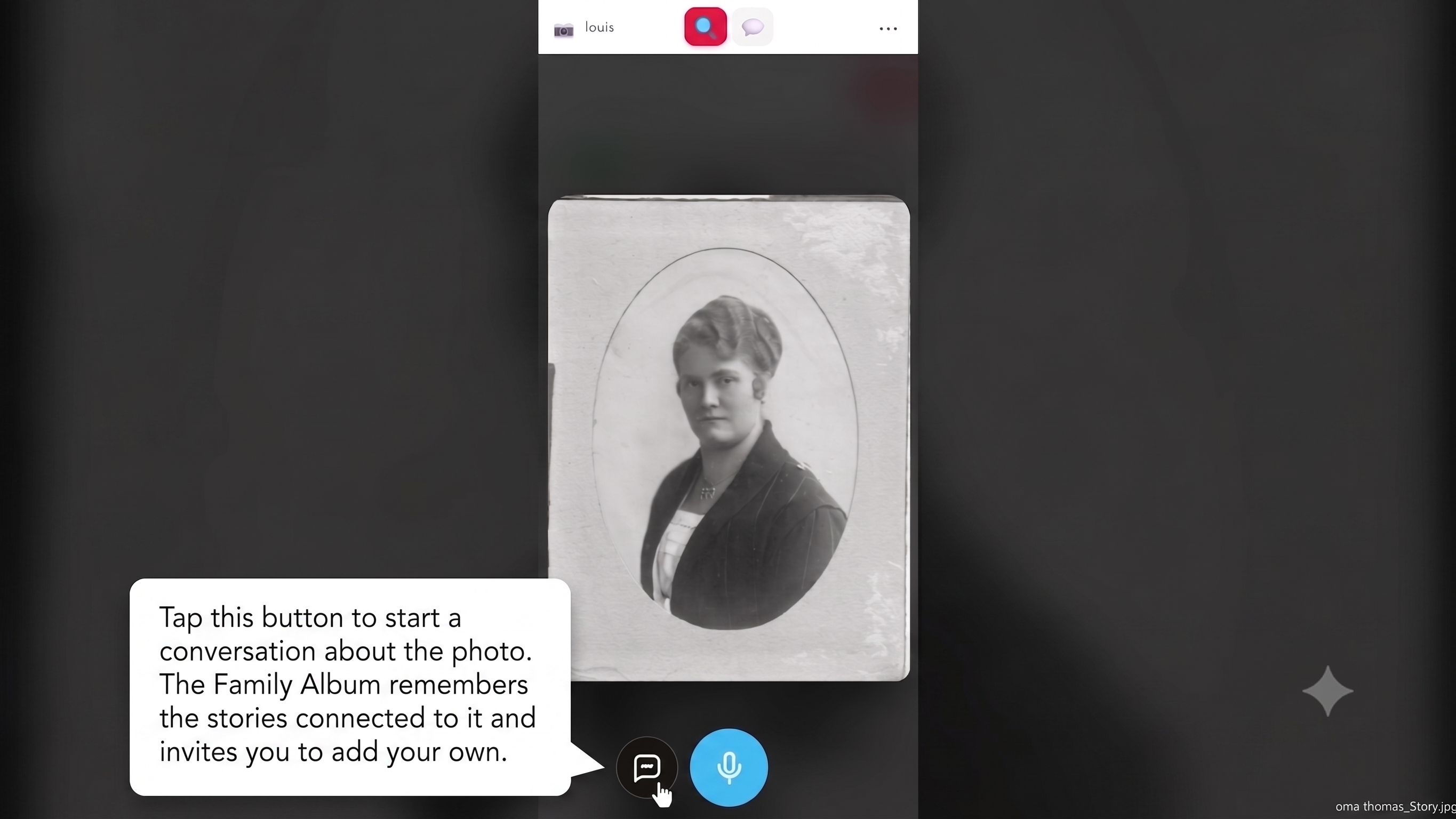
Inspiration
I am 81 years old and have been programming since 1970, and I still work for the University of St. Gallen. For many years, I had a private project in mind that always seemed too complex to build alone.
My family has photographs that are more than one hundred years old. I still know some of the people, places, and stories behind them. But if those stories are not recorded now, they may disappear with the people who remember them.
FamilyAlbum began with a simple question: how can a family preserve not only old photographs, but also the memories they awaken?
What it does
FamilyAlbum turns a photo collection into a living family memory.
In the Search view, every uploaded photograph receives an automatically generated question that invites someone to tell what they remember. As the family adds more information, the question can become more specific. A family member can record a memory with one tap; it is saved with the photograph and can be heard immediately.
With one click, a photograph moves into Chat. Chat immediately begins telling its story from the family memories already connected to it and shows accompanying photographs: people, places, and moments that belong to the same wider story.
The application is deliberately simple enough for older family members. It is designed for looking, listening, speaking, and remembering — not for learning complicated software.
FamilyAlbum does not merely preserve photographs and stories. A familiar picture can awaken emotions and help bring memories back to the person telling them.
How we built it
FamilyAlbum is a web application with a photo gallery, audio recording and playback, speech transcription, family-memory storage, semantic retrieval, and conversational photo exploration. Users can upload
Private, compute-intensive image work such as face recognition and manual face assignment runs locally on the family’s own computer. Text memories are stored with semantic embeddings so that related stories, people, places, and photographs can be found again.
During OpenAI Build Week, I used GPT‑5.6 and Codex to improve the semantic photo search. Complete spoken or typed questions are now ranked by their meaning first, while exact names and places remain strongly prioritized. This makes the Search view more useful for natural family questions, not only keyword searches.
Codex changed my way of building. I describe the goal in my own words; Codex helps turn it into a working feature. My personal workflow is simple: the left thumb controls the microphone and the right thumb presses Enter.
Challenges we ran into
The central challenge was not only technical. A family archive must be accurate, private, affordable, and easy enough for people who do not want to learn another application.
We had to make sure that:
- personal memories are preferred over generic AI descriptions;
- semantic search finds meaningful connections without hiding exact names;
- private family photos are handled carefully;
- the interface remains clear for older users;
- automation encourages a memory but never invents family history.
Accomplishments that we're proud of
We are proud that FamilyAlbum is a working personal application, not merely a concept.
A person can open an old photograph, receive a prompt, record what they remember, listen to it immediately, and then let the photograph open a larger family story in Chat.
We are also proud that Codex made it possible to build a project that had been waiting for years. It enabled an experienced programmer to spend less time reading manuals and writing every line by hand — and more time shaping the product that mattered.
What we learned
The best family technology becomes almost invisible. The important moment is not interacting with software; it is the moment someone sees a photograph and says, “I remember.”
We also learned that semantic search is most valuable when it respects the difference between a precise fact and a personal story. Names and places need exact matching, while memories need room for association and meaning.
What's next for FamilyAlbum
Next, we want to make FamilyAlbum even easier for more family members to use, refine the automatically generated memory prompts as the archive grows, and improve the way related stories and photographs are presented together.
The long-term goal is simple: every family should be able to save its photographs, voices, and memories before they are lost.
I also plan to add secure authentication and carefully controlled family access, so that each family can protect its archive while sharing memories safely with the people they choose.
Built With
- accessibility
- codex
- conversational-ai
- digital-preservation
- face-recognition
- family-history
- firebase
- firestore
- local-ai
- node.js
- older-adults
- ollama
- photo-archive
- privacy
- react
- semantic-search
- speech-to-text
- storytelling
- text-to-speech
- typescript
- vector-embeddings
- voice-recording

Log in or sign up for Devpost to join the conversation.