-
-
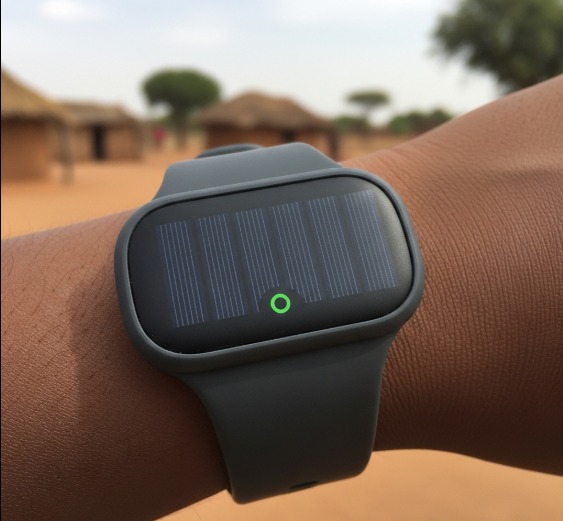
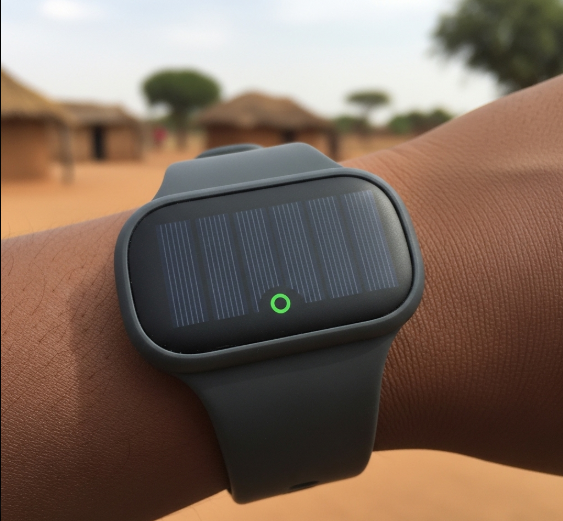
Ultra-minimalist wearble with a single LED and vibration worn by pregnant women to collect vitals and communicate urgent health alerts.
-
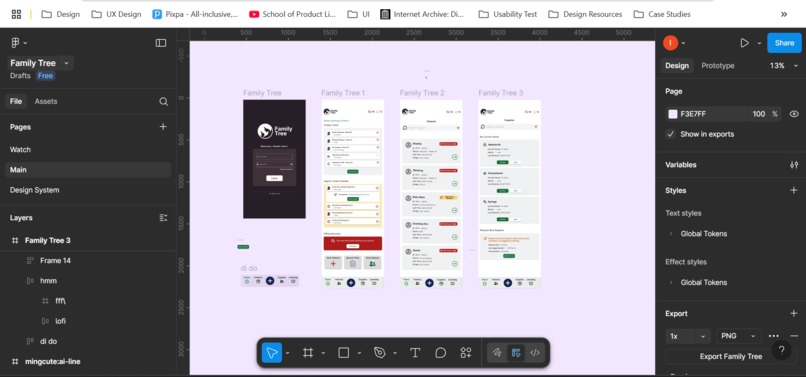
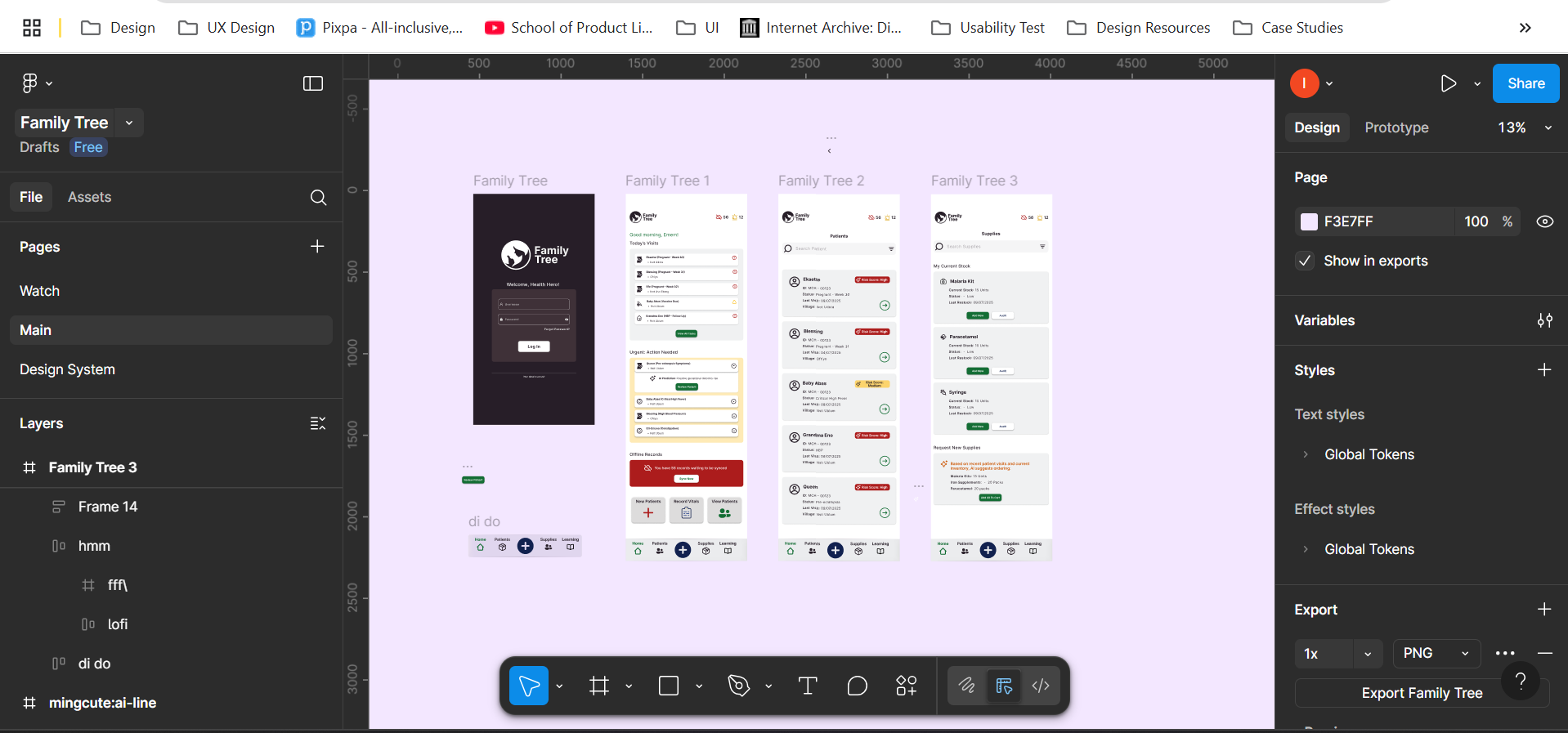
My work in progress building the family tree app on Figma.
Inspiration
✨ My inspiration for this project is maternal child success in Africa.
What it does
🏹 This Family Tree project intends to establish an AI-powered and resource-constrained digital health ecosystem for maternal and child care in Africa, where low-cost wearables continuously monitor vital signs of mothers and newborns. Data is synced from the wearable to the offline-first Family Tree app which uses on-device edge computing and AI to perform immediate risk analysis, empowering the community health workers with actionable insights and local patient management tools, while a central platform facilitates remote doctor consultations, efficient referrals, and an optimized supply chain for essential medical resources.
How we built it
🏗️ The Family Tree project leverages a diverse set of technologies across its complete value chain, specifically selected to enable edge computing, federated learning, and robust functionality in resource-constrained environments:
⌚ Wearable
Microcontrollers (e.g., ARM Cortex-M0/M0+): Chosen for their ultra-low power consumption and small footprint, crucial for battery-operated devices with prolonged use (supported by solar charging). C/C++ Firmware: Provides direct hardware control and optimizes performance for embedded systems, ensuring efficient data collection and processing at the lowest level. Sensors: Specific low-power, accurate sensors for vital signs (e.g., heart rate, temperature, potentially SpO2 for maternal health, movement for infants). Bluetooth Low Energy (BLE): The primary wireless communication protocol, ideal for short-range, low-power data transfer to the FT app, minimizing battery drain. Basic Edge AI (Thresholding & Signal Processing): Simple algorithms embedded in firmware to detect immediate critical anomalies (e.g., dangerously high temperature, irregular heartbeat) directly on the device, triggering alerts without continuous connectivity.
📱 Family Tree Mobile Application
Mobile Operating Systems: Primarily Android due to its prevalence in many African contexts, enabling wider accessibility on a range of devices (including lower-end smartphones). Cross-Platform Frameworks (e.g., React Native, Flutter, or Native Kotlin/Java for Android): Choice depends on development resources and need for future iOS scalability, with emphasis on performance on mid-range devices. Offline-First Data Storage: SQLite databases or similar embedded databases are critical for storing all patient data, visit records, AI models, and collected wearable data directly on the device, ensuring full functionality without internet access. Edge AI Framework: TensorFlow Lite is central here. It allows the deployment of compact, optimized machine learning models for on-device inference, performing real-time risk prediction, anomaly detection, and decision support (e.g., "AI predicts high pre-eclampsia risk," "AI flags potential stunting"). User Interface (UI) Frameworks: Native UI components or highly optimized cross-platform widgets for creating intuitive, high-contrast, and large-target interfaces suitable for users with varying tech literacy and potentially older screens.
🔗 Data Transfer & Synchronization
Bluetooth Low Energy (BLE): As mentioned, the primary method for short-range, direct device-to-app data transfer. Low-Bandwidth, Secure Protocols: For app-to-cloud synchronization, custom or optimized protocols that are resilient to intermittent and poor network conditions, minimizing data payload sizes and ensuring data integrity and security (e.g., using secure endpoints with HTTPS, potentially message queuing protocols for asynchronous reliable delivery). Data Compression Algorithms: Used to minimize the size of data packets transferred over limited bandwidth, reducing costs and transmission times.
🌟 AI in the Complete Value Chain
Edge AI (On Wearable): Basic thresholding, simple rule-based anomaly detection. Edge AI (On Family Tree App): TensorFlow Lite for more complex predictive models (e.g., risk scoring, growth curve analysis, symptom-to-condition mapping), enabling real-time, offline intelligence. This is the core of the "edge computing" capability for decision support. Federated Learning Frameworks (e.g., TensorFlow Federated): This is the strategic technology for continuous AI model improvement. It allows AI models to be trained on the distributed, localized datasets across Family Tree apps without the raw, sensitive patient data ever leaving the device. Only model updates are securely aggregated on the central server, ensuring privacy preservation and leveraging collective intelligence. Cloud-based Machine Learning Platforms: While federated learning handles training, the central platform might use cloud-based ML services for initial model development, validation, or to host aggregate analytics dashboards that consume the anonymized insights.
🖥️ Central Doctor/Supplier Platform
Web Development Frameworks (e.g., Django, Ruby on Rails, Node.js with Express, or modern JavaScript frameworks like React/Vue/Angular for front-end): For building the robust and scalable web-based interface. Cloud Infrastructure (e.g., AWS, Azure, Google Cloud, or regional providers): For hosting the platform, ensuring scalability, data storage, and compute resources for non-edge AI tasks and aggregated data analytics. Database Management Systems (e.g., PostgreSQL, MySQL): For secure and scalable storage of aggregated, anonymized patient data, supply chain information, and Family Tree records. Supply Chain Management (SCM) APIs/Modules: Integration with existing or custom modules for inventory tracking, supply request management, and delivery logistics, potentially incorporating AI for demand forecasting and route optimization. Secure Communication Protocols (HTTPS, VPNs): Ensuring all data synchronization and platform access is encrypted and protected.
Challenges we ran into
🤖 Designing for Extreme Resource Constraints
A primary challenge was designing a user experience that thrived under severe technical limitations. For the wearable, this meant creating an ultra-minimalist UI with a single LED and vibration to communicate urgent health alerts, a design choice directly dictated by the need for ultra-low power consumption and a battery life measured in months. For the mobile app, the design had to prioritize an offline-first experience, ensuring critical workflows for data entry, risk analysis, and patient management were fully functional without an internet connection. This required a fundamental shift from cloud-dependent design, focusing on local data storage and clear visual cues to manage user expectations about connectivity.
🌍 User Experience for Low-Literacy and Diverse Populations
A significant hurdle was creating an interface that was intuitive and accessible to community health workers and mothers with varying levels of technological proficiency. The design process demanded moving beyond traditional UI patterns to rely heavily on universally understood iconography, simplified language, and large, clear tap targets. Ensuring cultural appropriateness was also a key design consideration, from the physical design of the wearable to the imagery used within the app, to avoid any elements that could be misunderstood or cause discomfort within diverse African communities.
✨ Integrating AI and Edge Computing into the UI
Translating the complex capabilities of AI and edge computing into useful user experience was a major design challenge for me. The challenge was to communicate that AI was a helpful assistant without overwhelming the user. This involved designing UI elements like "AI-Powered Alerts" and "AI-Suggested Actions" with clear, concise language to build trust and provide transparency. Also, designing a subtle but effective feedback mechanism for the community health worker to validate AI suggestions was essential for the federated learning model, ensuring the AI could be continuously improved without adding significant burden to the user's workflow.
💥 Knowlegde of the Hackathon
All of these challenges were compounded by the severe time limitations caused by getting wind of the hackathon less than one week to the deadline. This necessitated making educated assumptions and relying on rapid prototyping to validate design choices. The pressure also demanded ruthless prioritization, focusing only on the most critical design elements that directly supported the core functionality and could be effectively demonstrated in the final prototype, while demonstrating my understanding of the tech needed to power this solution.
Accomplishments that we're proud of
🤎 Learning and researching deep tech on the go.
What we learned
💯 That federated learning is a model that African innovators should explore more especially in the use case of Edge Computing and IOT.
What's next for Family Tree
👀 Launching the MVP
Built With
- ai
- figma
- iot
- ml
- tensor

Log in or sign up for Devpost to join the conversation.