Inspiration
Running a household means constantly switching between apps and mental contexts — a calendar for scheduling, a notes app for meal planning, a separate moment of patience for helping a kid with homework. Every existing assistant treats these as unrelated tasks. We wanted to build toward a different idea: a household is one connected system, not a pile of separate apps, and an assistant should treat it that way.
What it does
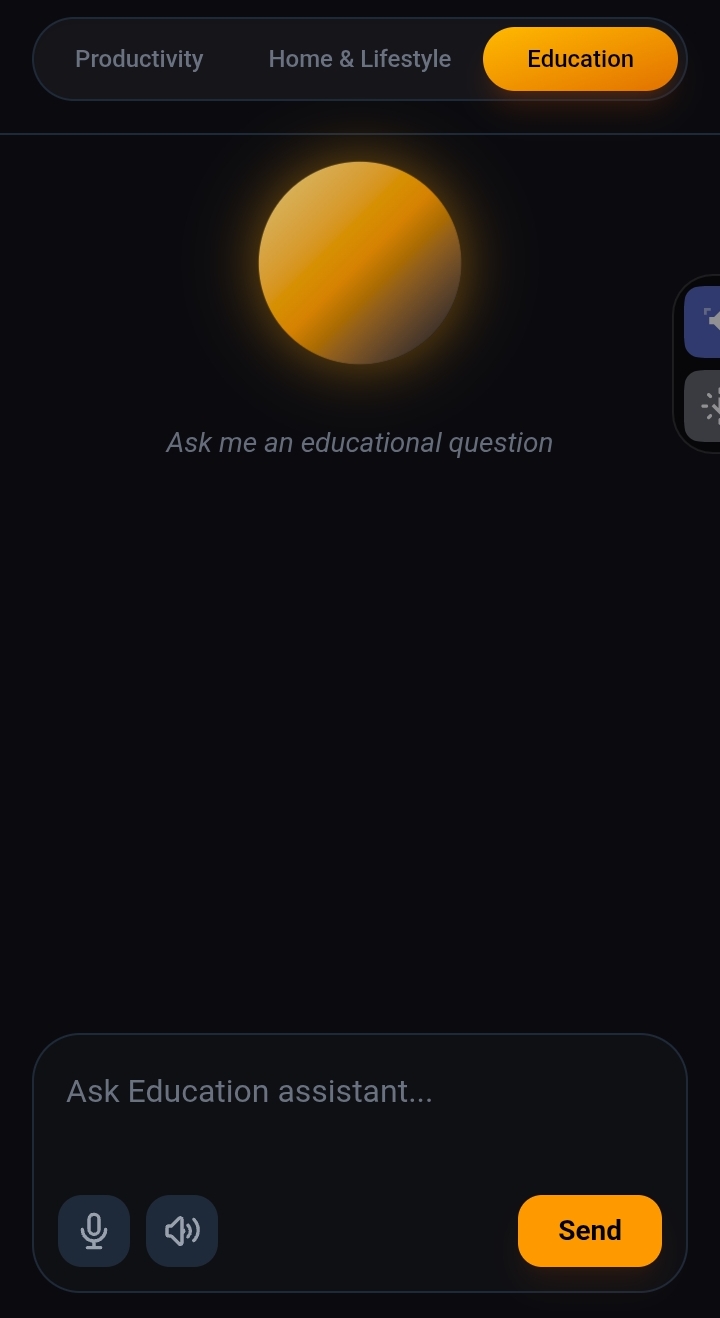
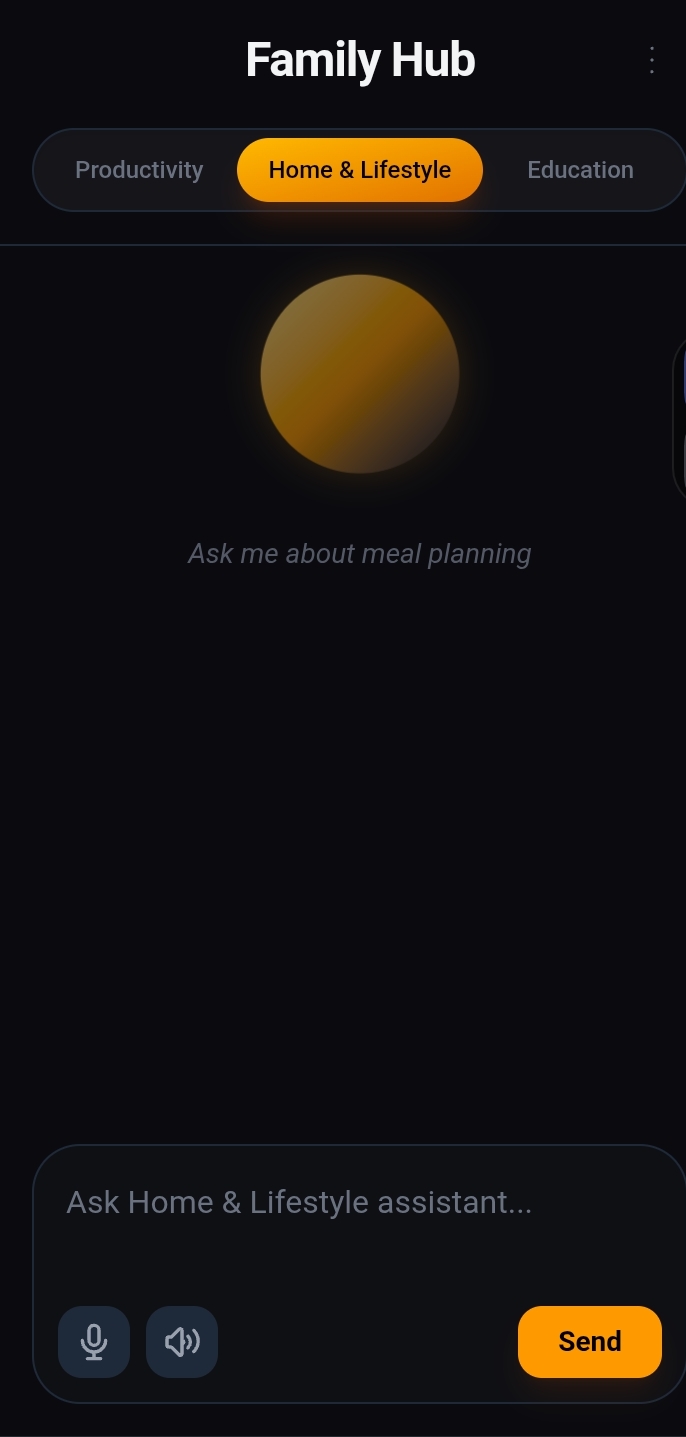
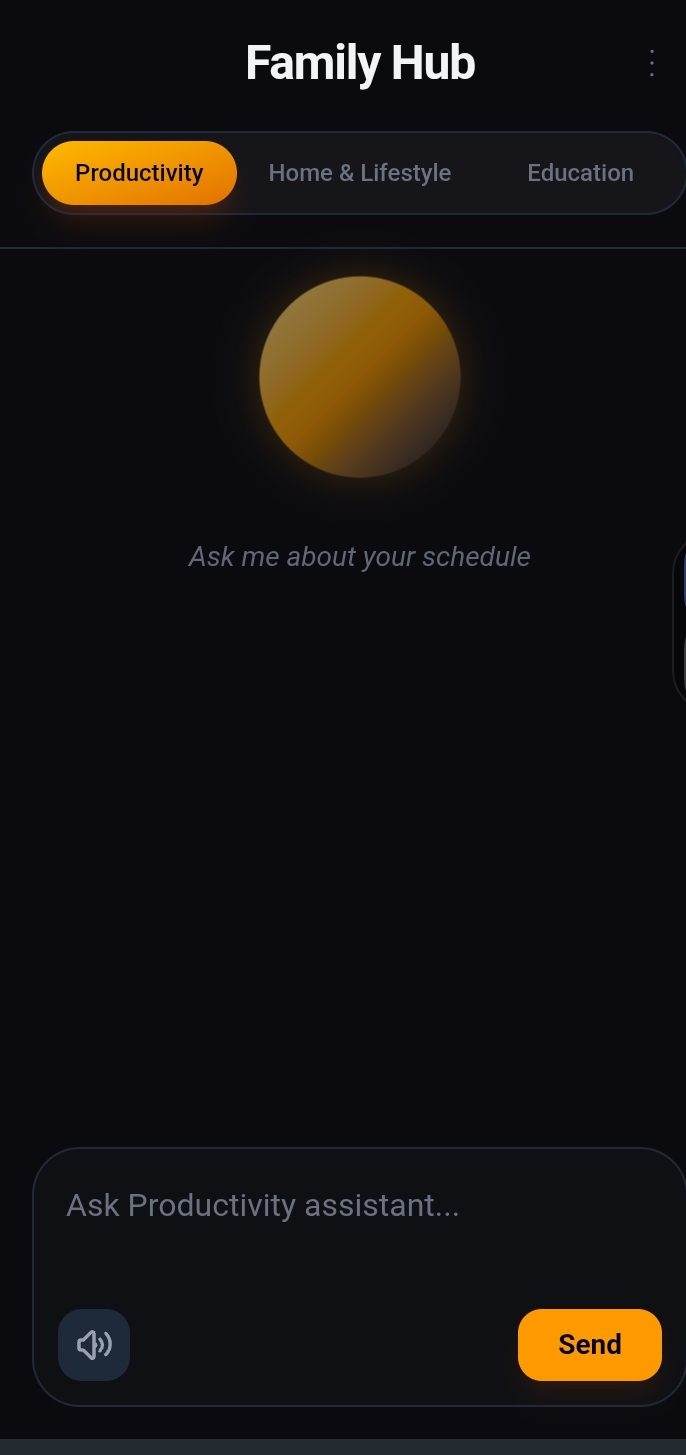
Family Hub is a simulated Alexa+ experience with three modes built around a single conversational interface a parent can talk or type to:
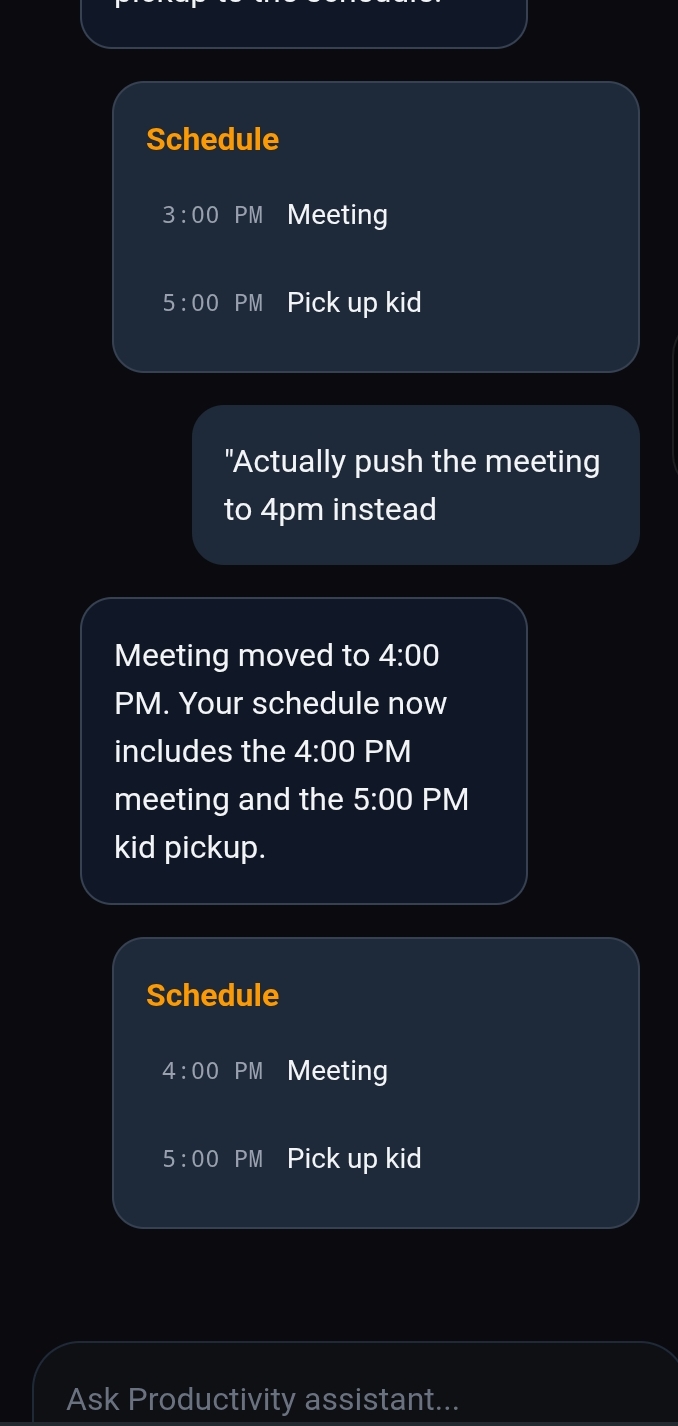
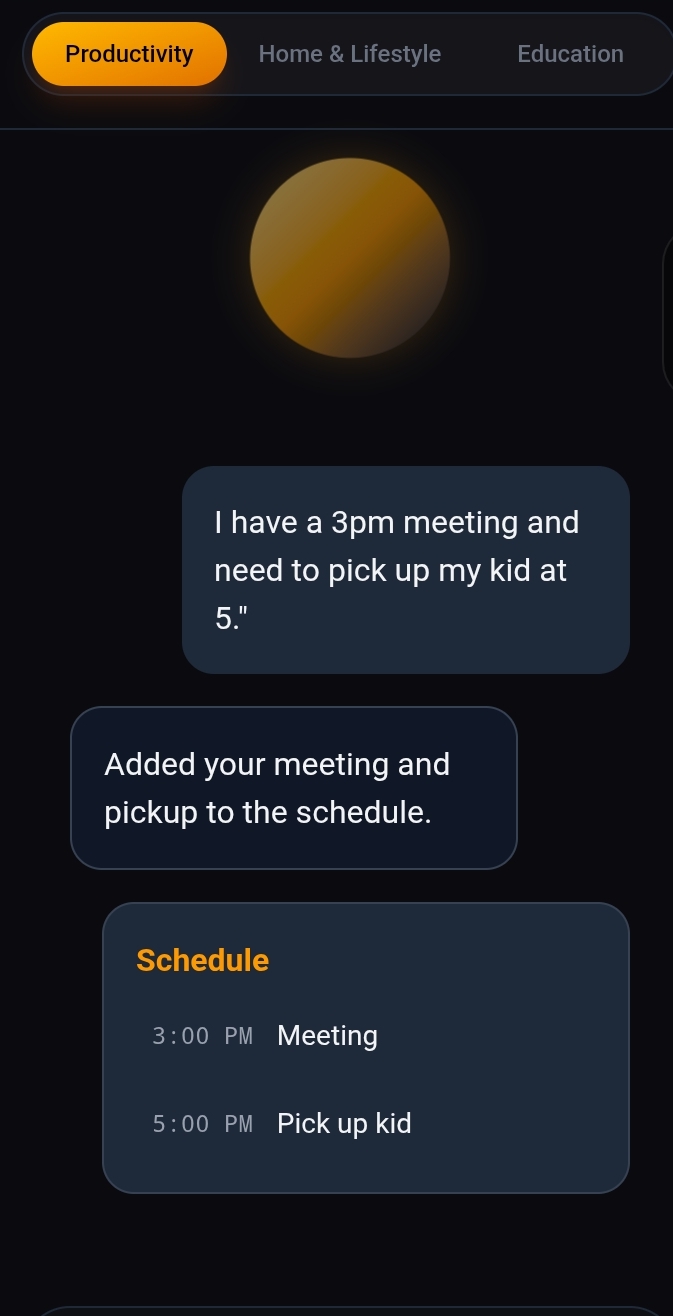
- Productivity manages scheduling and reminders conversationally, tracking appointments, flagging conflicts, and rescheduling on request — remembering context within a conversation, so "push the meeting to 4pm" correctly updates the existing schedule instead of starting over.
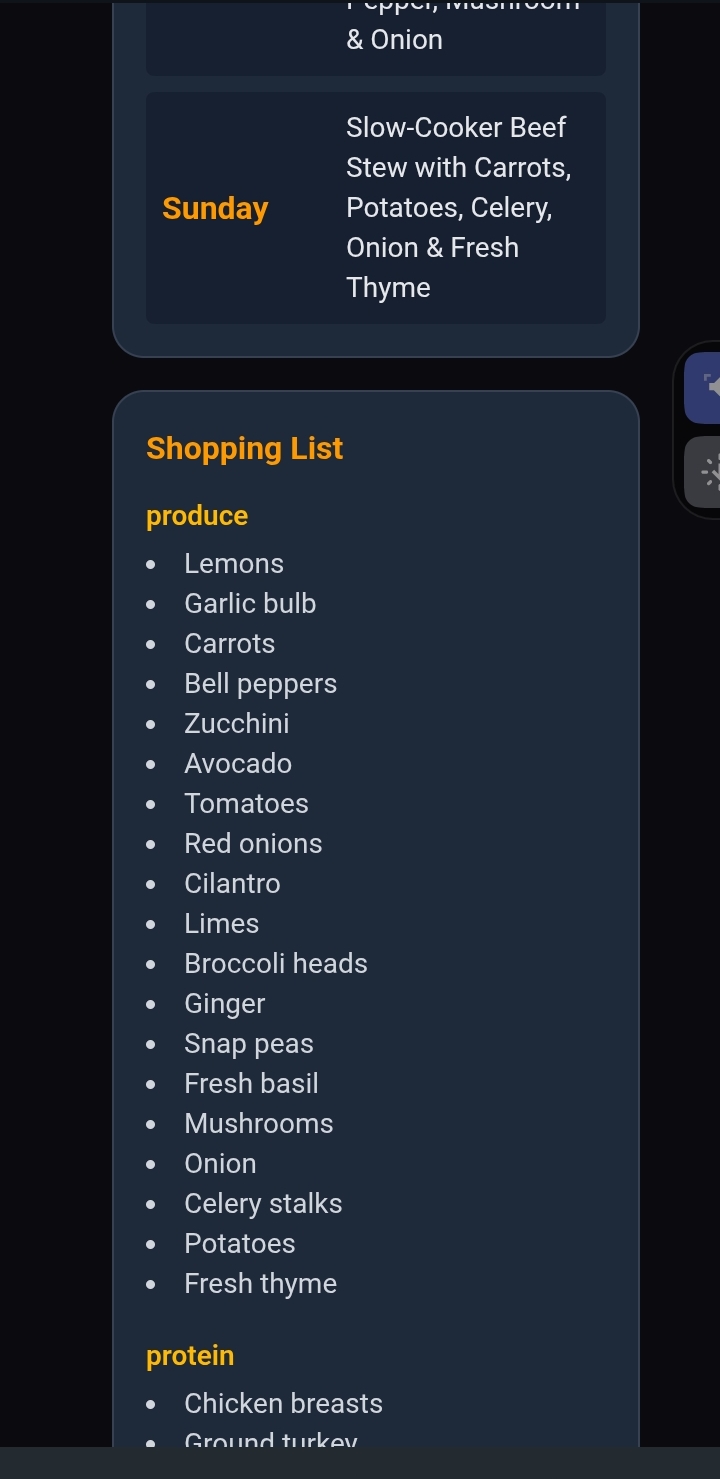
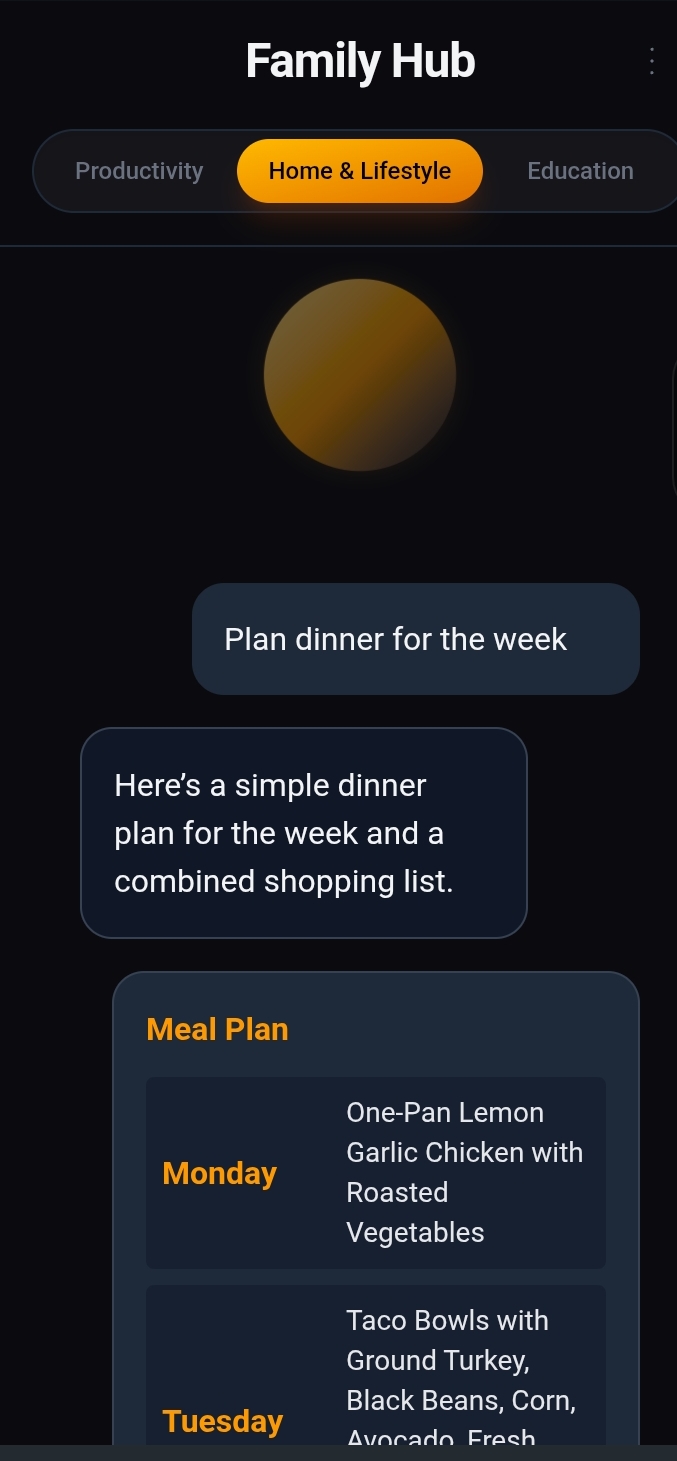
- Home & Lifestyle handles meal planning and grocery lists, generating a realistic weekly plan and a categorized shopping list, and adjusting cleanly to follow-up requests like dietary swaps.
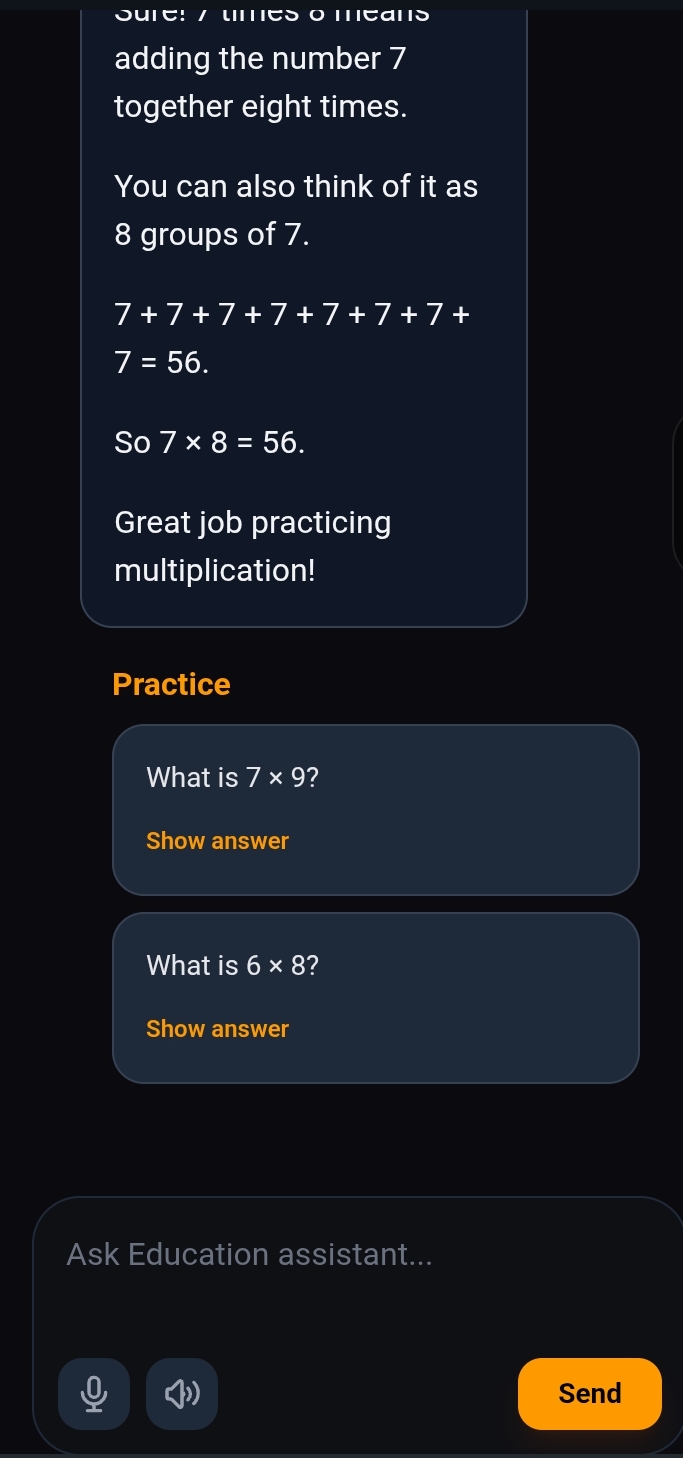
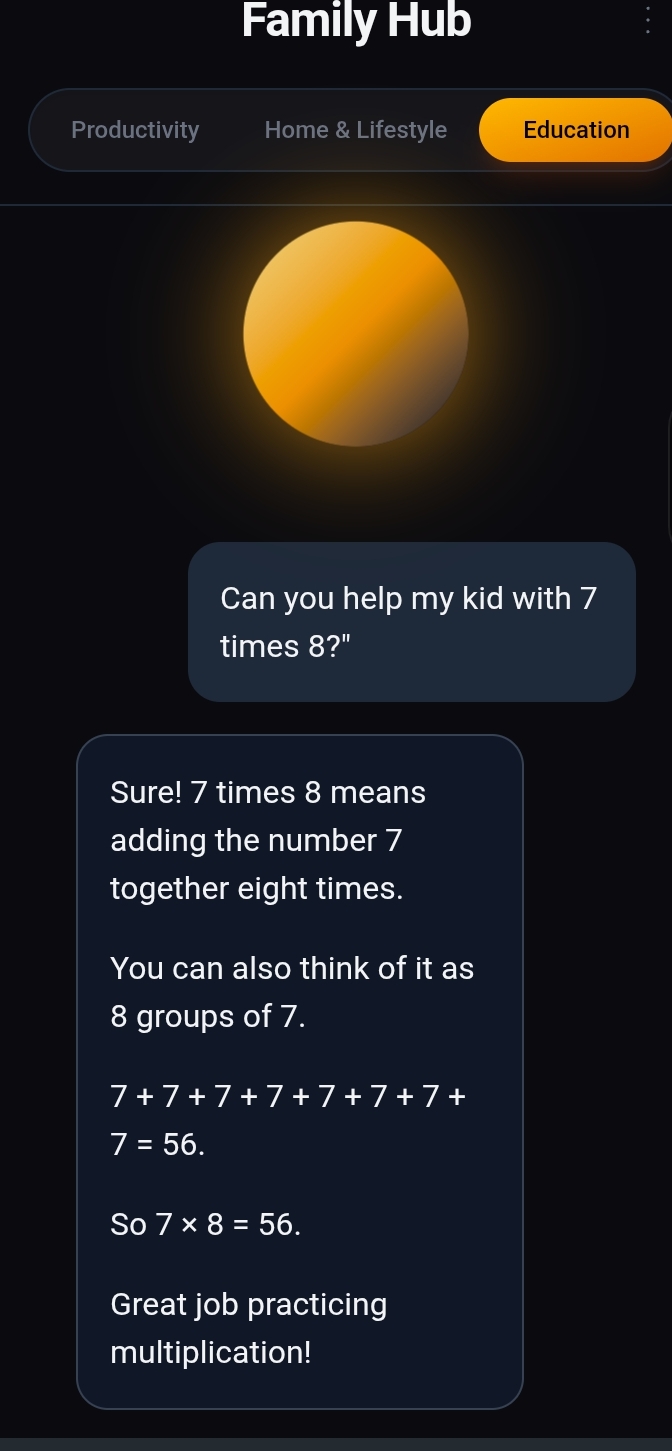
- Education acts as a patient tutor for kids' homework help, explaining concepts at an appropriate level with simple analogies and generating optional practice questions.
The assistant supports both voice and text — speech-to-text for input, spoken responses read back aloud — so it functions as an actual voice assistant, not just a chat window styled to look like one.
How we built it
The frontend is built in React and TypeScript with Tailwind CSS and Framer Motion, developed in Google AI Studio. Each mode sends conversation context to Groq's API (openai/gpt-oss-120b), with mode-specific system prompts constraining responses to structured JSON so the UI can reliably render schedule timelines, shopping lists, and practice-question cards. Each mode maintains its own short-term conversation memory client-side. Voice input/output uses the browser's native Web Speech API. The app runs entirely client-side against Groq directly — no backend required.
Challenges we ran into
- A model we initially built against (llama-3.3-70b-versatile) was deprecated by Groq mid-build, requiring a migration to openai/gpt-oss-120b.
- Getting follow-up requests (like "swap Tuesday for something vegetarian") to update only what was asked, rather than regenerating the whole plan, took several rounds of prompt refinement.
- Microphone access silently failed inside our dev preview's embedded iframe due to browser permission policy — resolved by testing in a standalone tab.
Accomplishments that we're proud of
Getting real conversation memory working across all three modes, so the assistant behaves like it's actually listening across a session instead of resetting with every message — plus full voice input and output that genuinely works, not just a themed UI.
What we learned
How much of a "premium" product experience comes down to small details most people won't notice directly but will feel immediately — time formats, verbatim consistency across edits, layout at real mobile widths.
What's next
Expanding Home & Lifestyle's context retention further, and exploring an AWS Bedrock integration as a next step.
Built With
- framer-motion
- google-ai-studio
- groq
- javascript
- react
- tailwindcss
- typescript
- vite
- web-speech-api

Log in or sign up for Devpost to join the conversation.