-
-
session-mode
-
research-trail
-
home
-
rosa-kit
-
walter-learned
-
mei-soundtrack
Inspiration
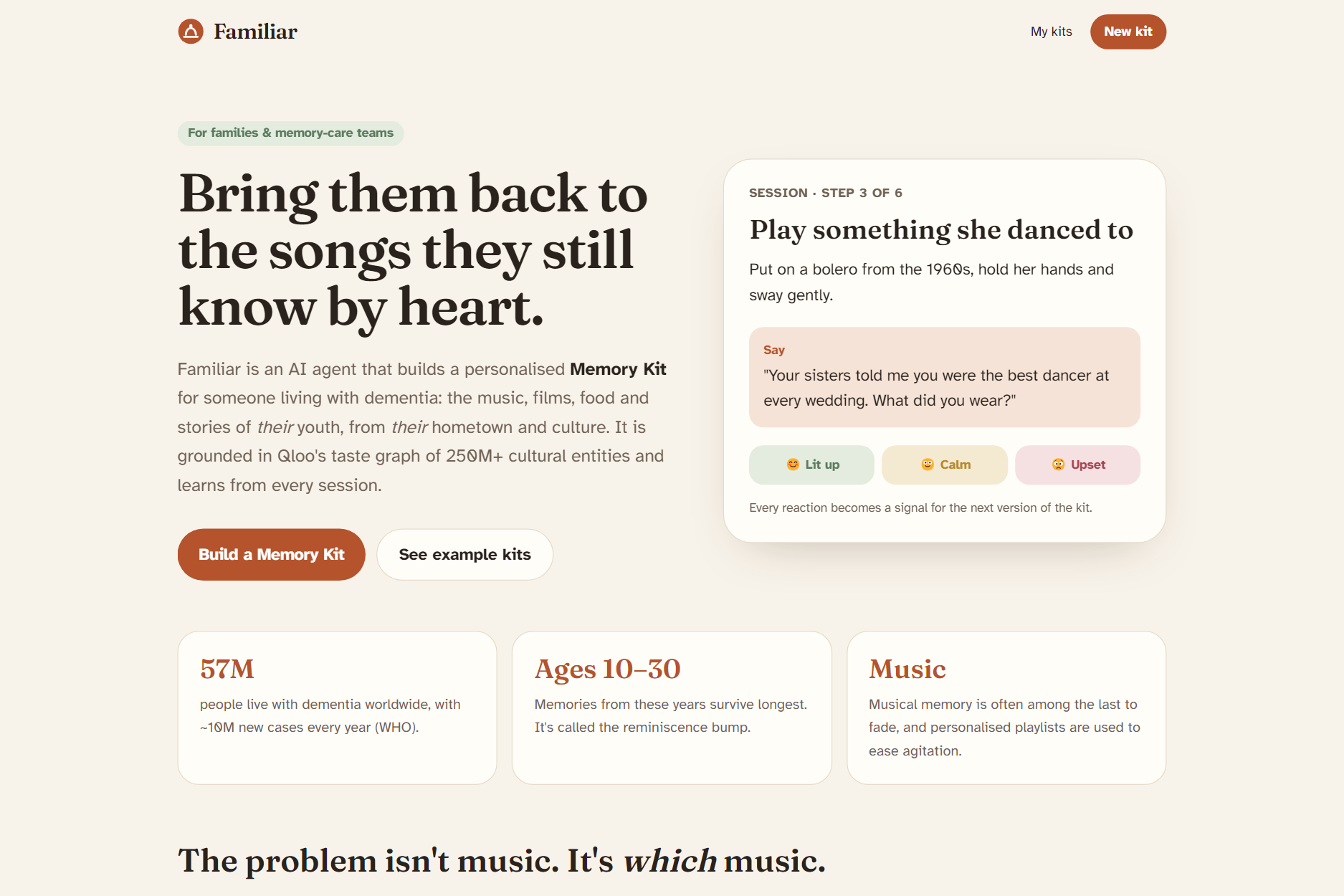
People living with dementia often still respond to the music of their youth, even when a lot else has faded. The songs, films and food from when they were 10 to 30 years old seem to stay the longest. Families and care homes know this, but the hard part is knowing which songs. A care home usually plays one "oldies" playlist for everyone born in the 1940s, and a chatbot does the same thing: it guesses based on age.
But two women born in 1946 can come from completely different worlds. We wanted to build something that finds the music, shows and food that would feel familiar to one specific person.
What it does
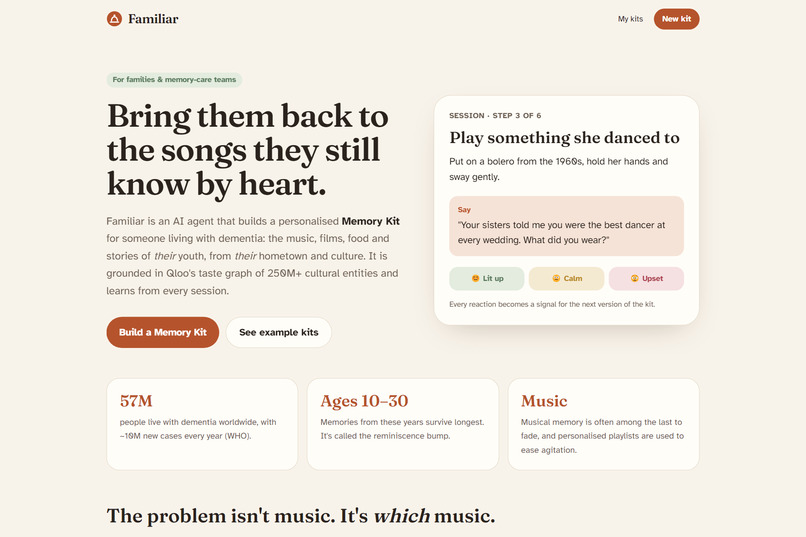
Familiar is an AI helper for caregivers.
- You tell it a bit about the person: birth year, where they grew up, their culture and language, a few things they've always loved, and anything to avoid.
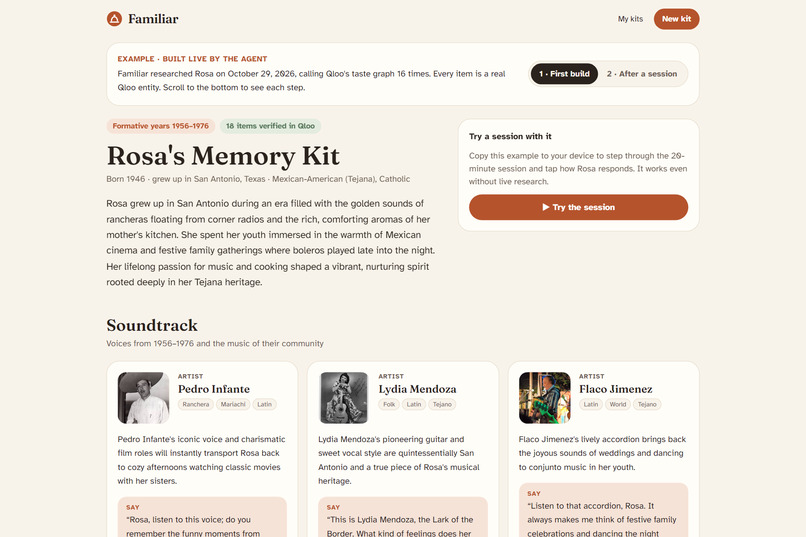
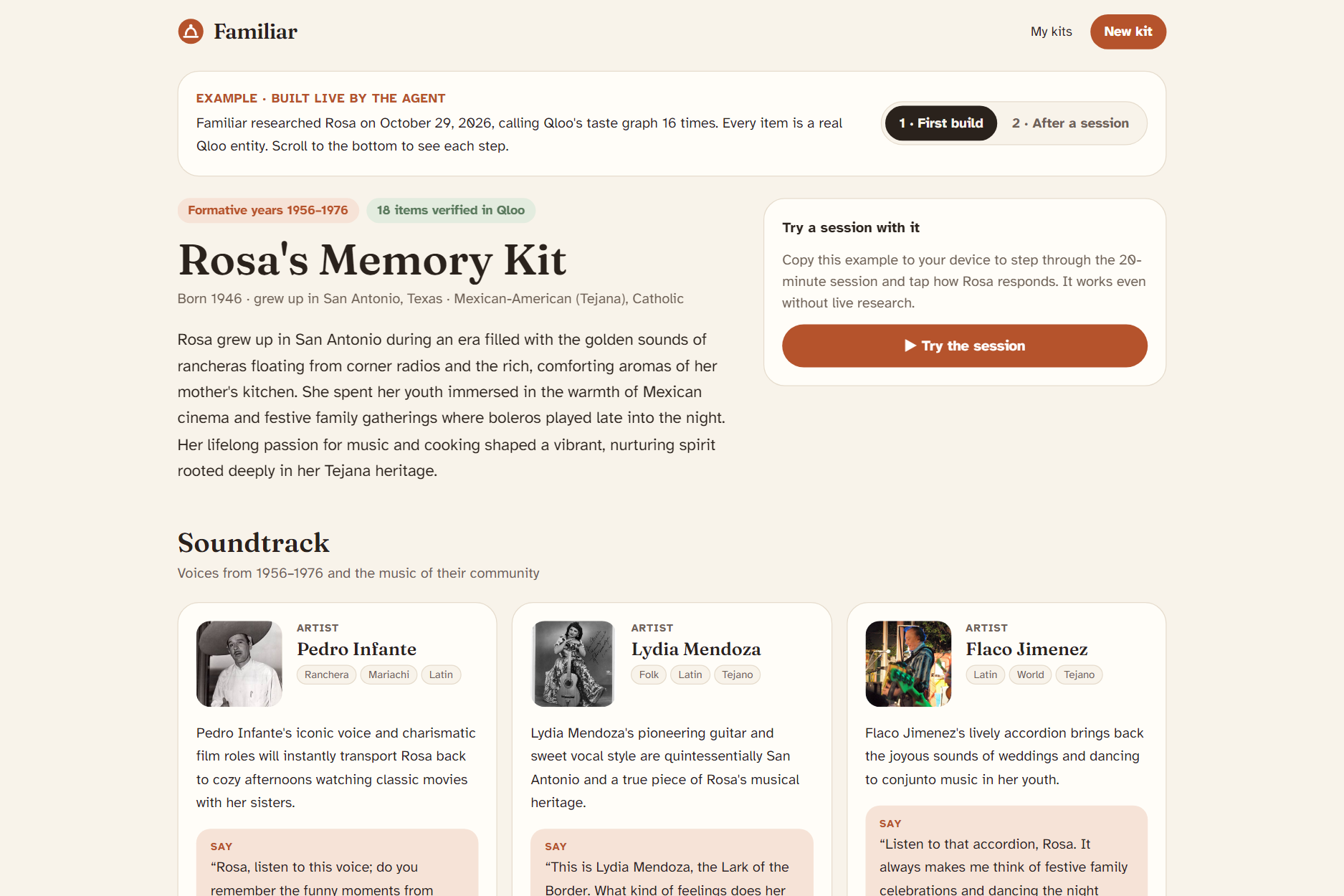
- An agent researches their world using Qloo's taste graph and builds a Memory Kit: music (with a song to start with), films and TV, home dishes adapted for eating needs, restaurants nearby that taste like home, conversation starters and a 20-minute session plan.
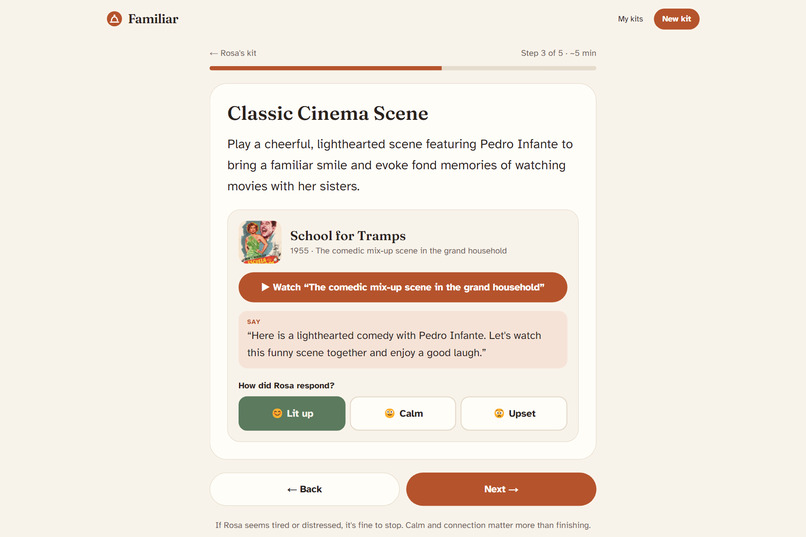
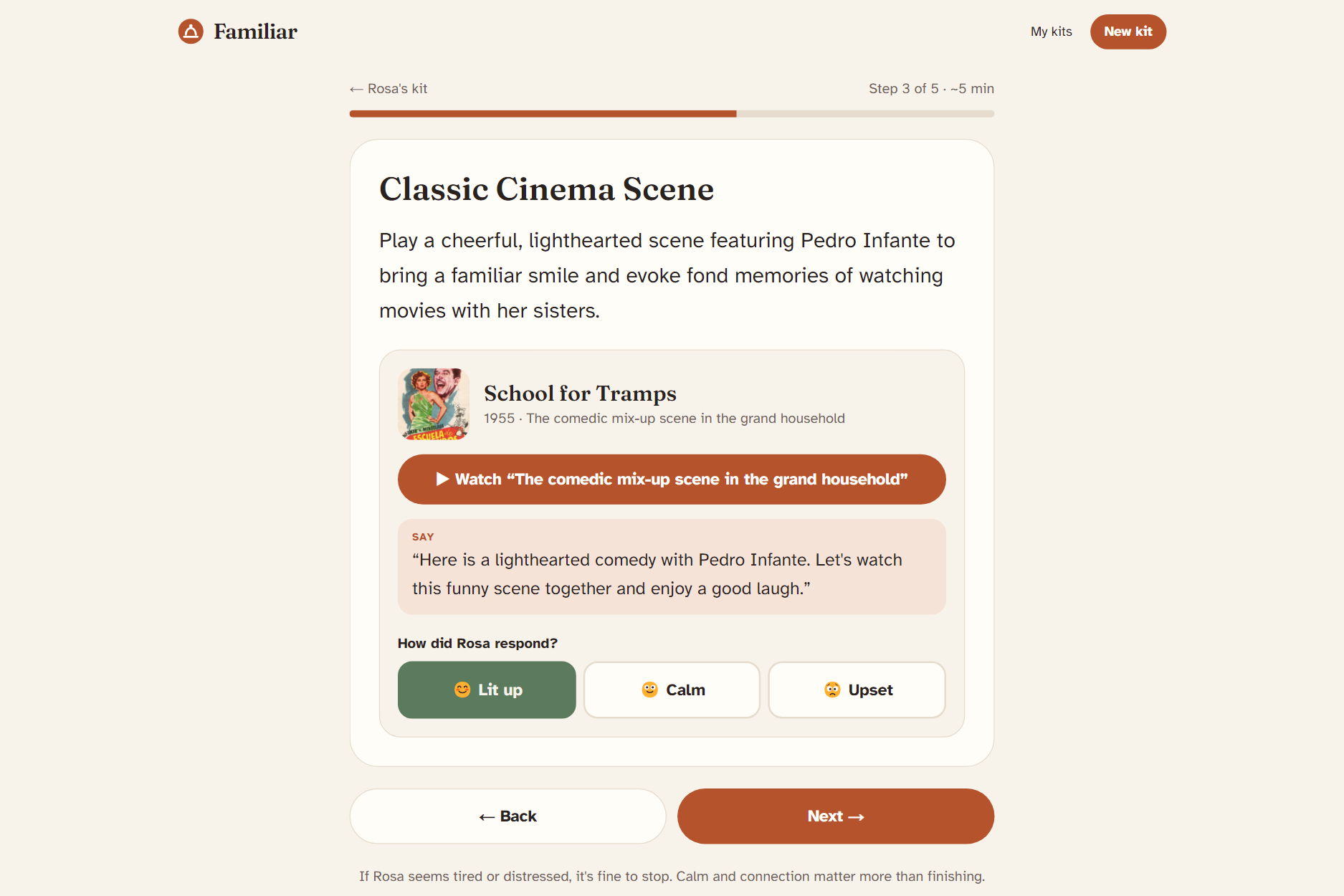
- The caregiver runs a calm, large-text session and taps how the person reacted: 😊 lit up, 🙂 calm or 😟 upset.
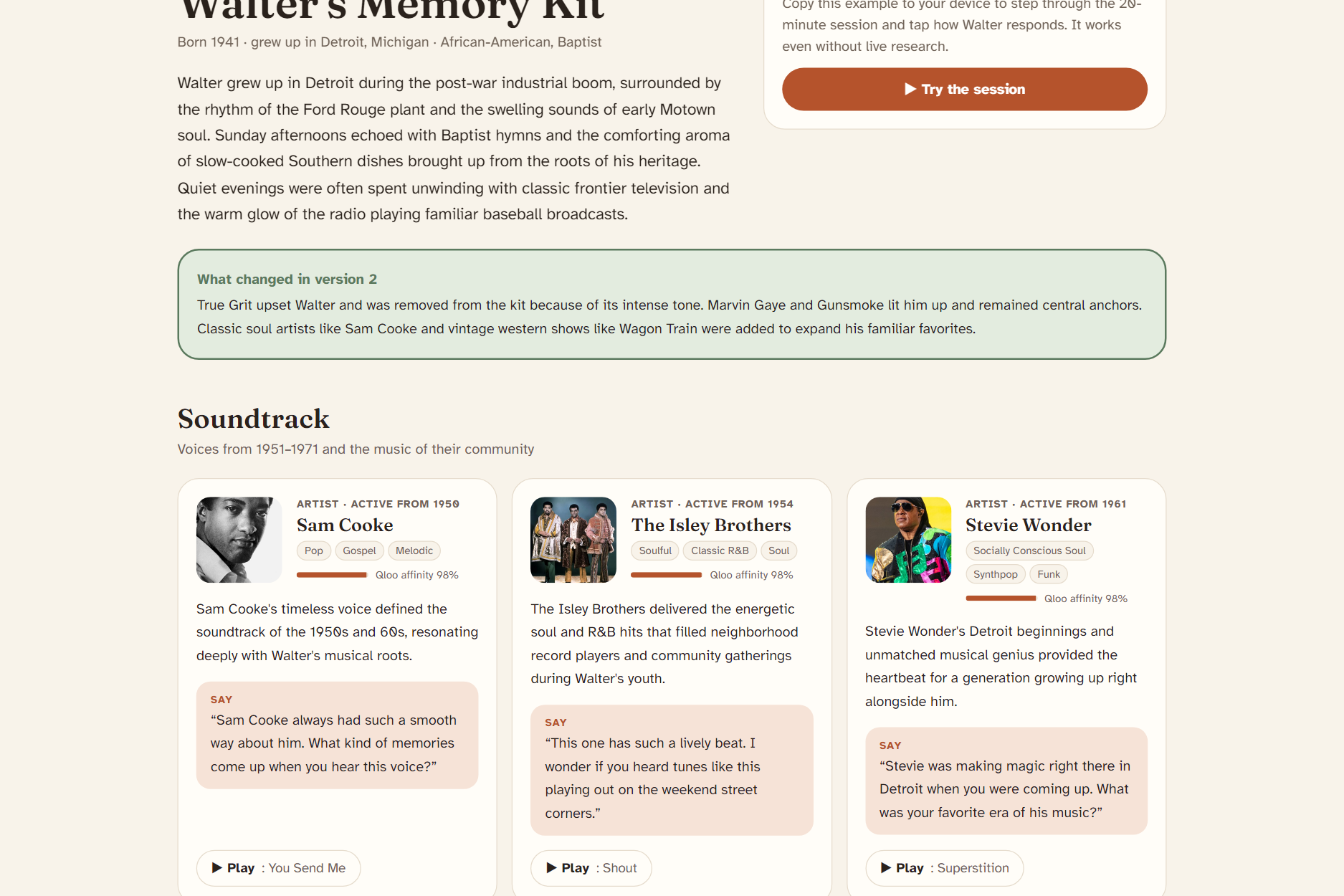
- Familiar uses those reactions to rebuild the kit. What made them smile becomes the next signal, and what upset them is removed for good. Then it explains in plain words what changed.
You can try it with three sample people: Rosa (Tejana, San Antonio), Walter (Detroit, Motown) and Mei (Hong Kong, then San Francisco).
How we built it
- Next.js and TypeScript, deployed on Vercel
- Gemini as the agent, using function calling, with three tools that wrap Qloo:
search,tagsandinsights - The agent first checks that each favourite really exists in Qloo, then asks Qloo's taste graph for related artists, films, shows and places, filtered by the person's age group, the years of their youth and their home country
- Only things Qloo actually returned can go into a kit. Anything else the model mentions is dropped.
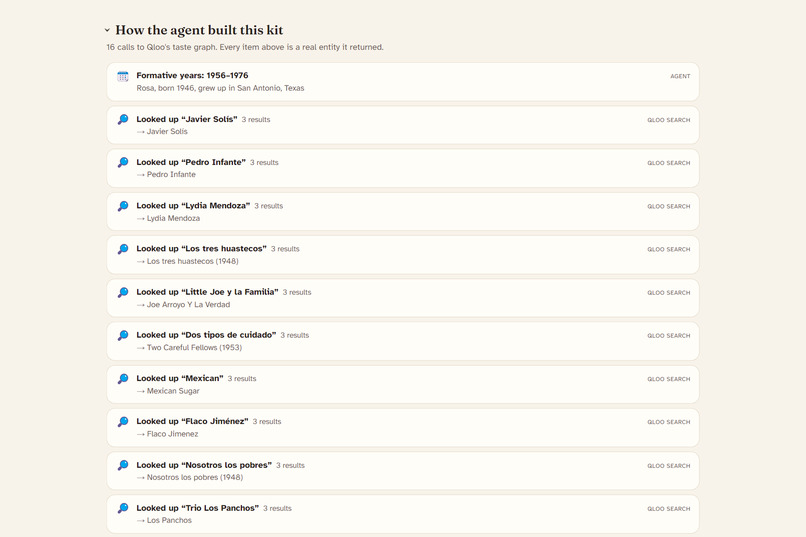
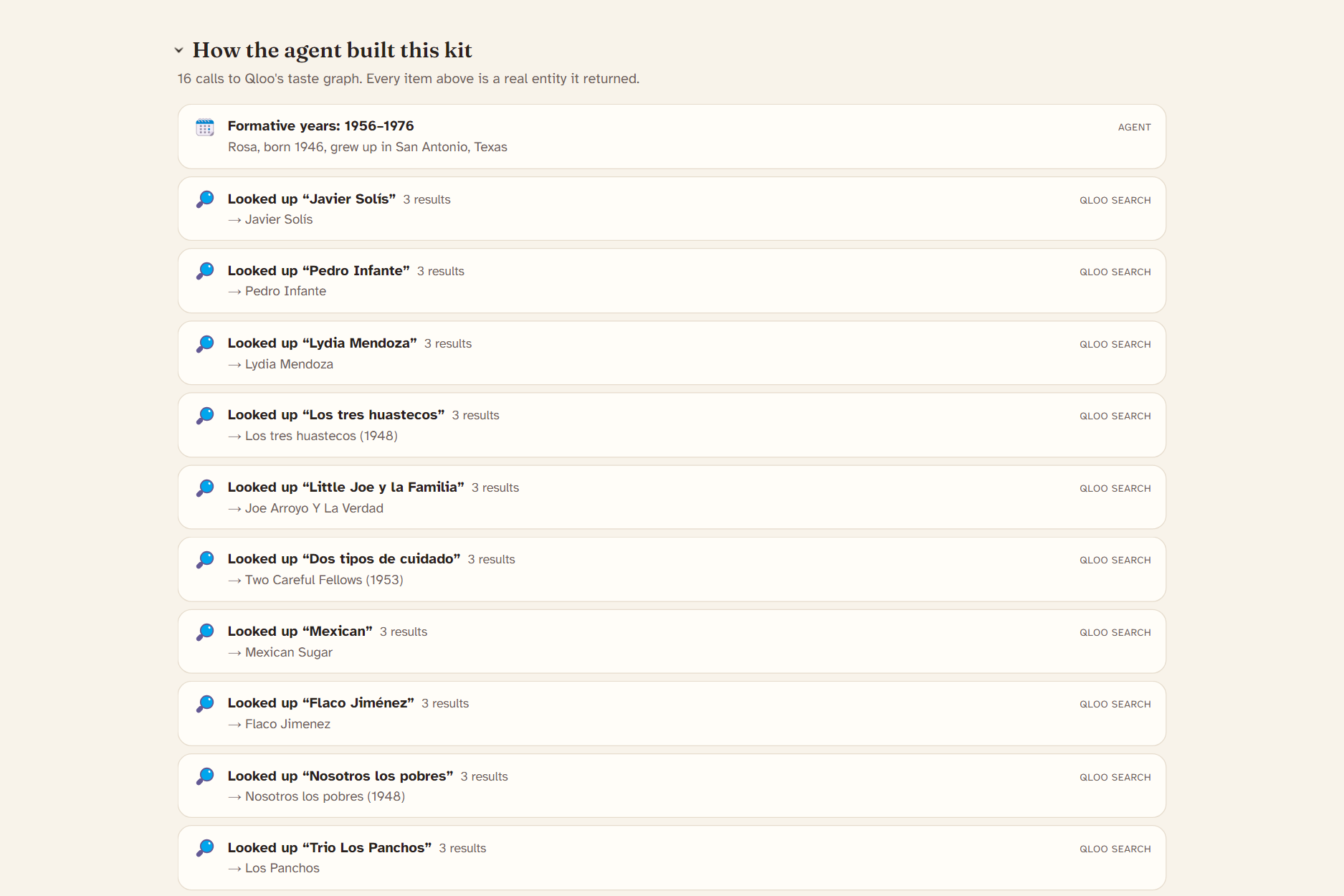
- Every Qloo call shows up live on screen, so you can see why each item is there
- Kits are saved only in the caregiver's own browser and can be shared with a link
Challenges we ran into
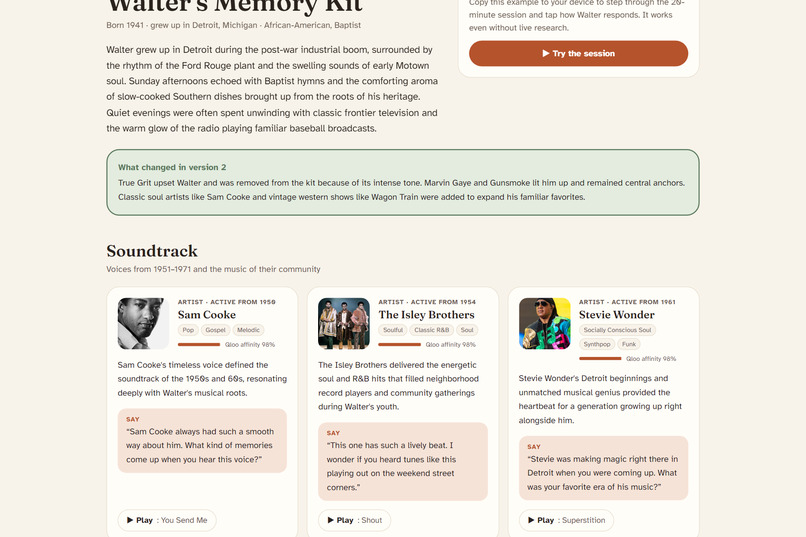
- The location signal made results too modern. We first passed "where they grew up" to Qloo, but that reflects what people there like today. A 1950s Detroit childhood came back with Yellowstone. We removed it and used favourites, age and year filters instead. Rosa now gets Pedro Infante films and El Chavo.
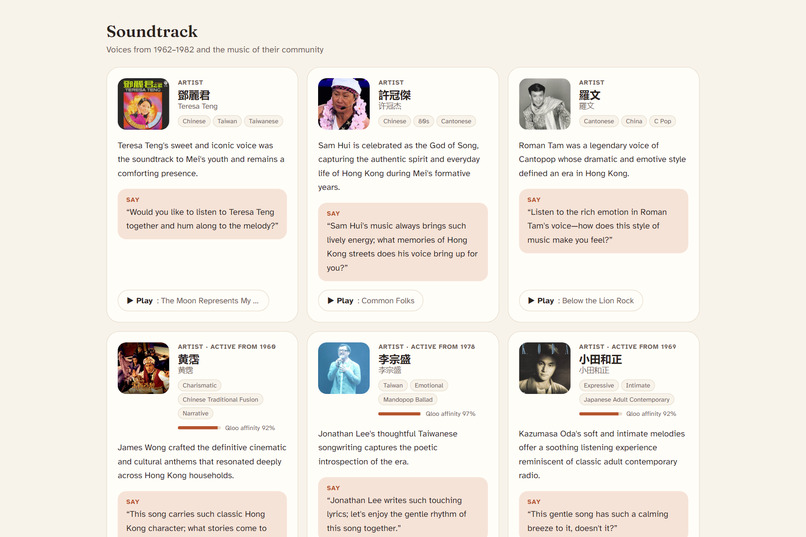
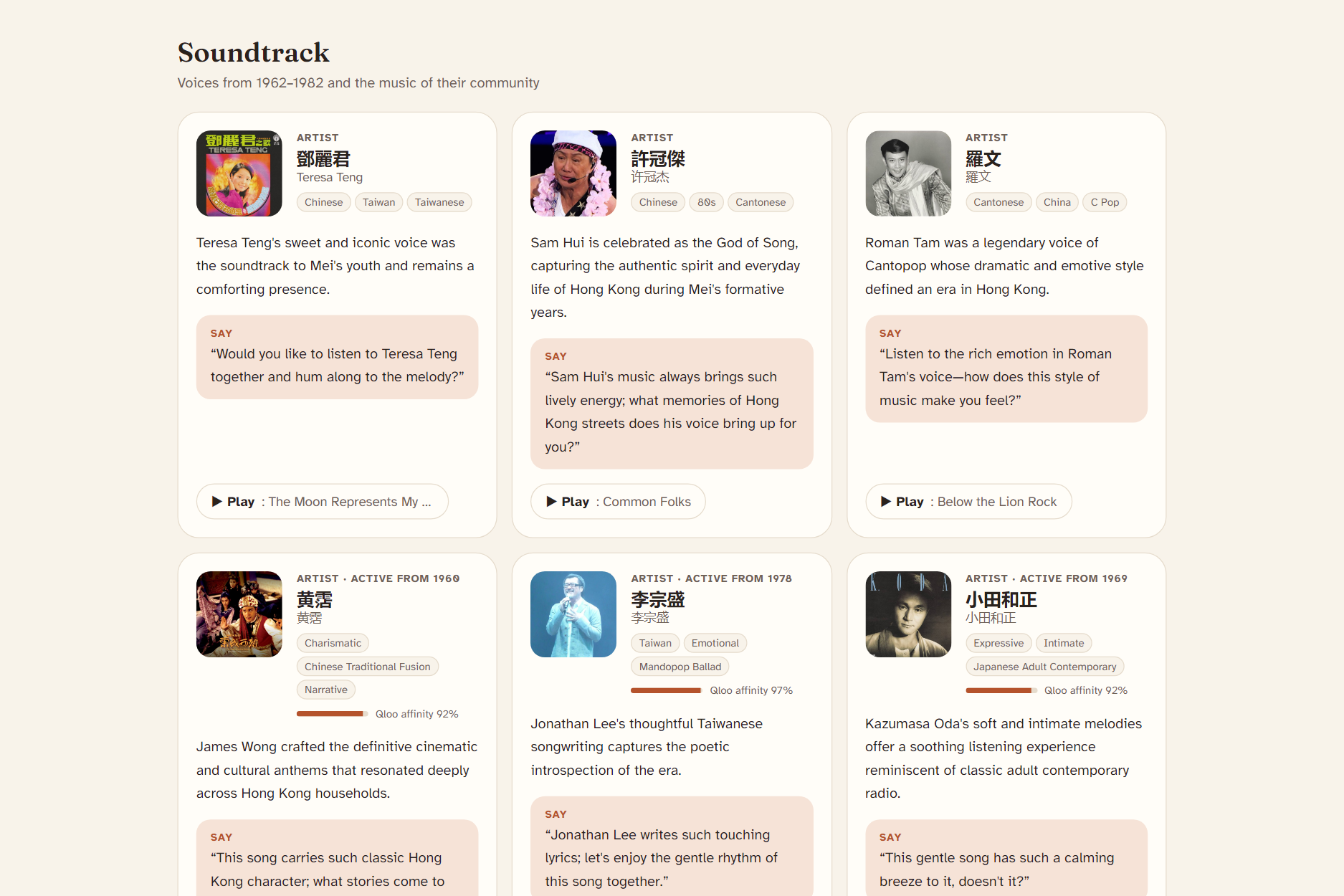
- Names in other languages. Searching "Teresa Teng" returned a different singer. Qloo lists her as 鄧麗君, so the agent now retries in the person's own script.
- Wrong matches. Searching "Lydia Mendoza" also returned "Lydia Lunch", a punk singer. We changed the agent so it only uses the exact match it meant.
- Safety. In one test, the agent picked "What's Going On" (a Vietnam song) for a Vietnam veteran with "avoid Vietnam" in his profile. Prompt instructions weren't enough, so we added a separate check that reviews every song and scene against the avoid list.
- Busy AI models. Gemini was often overloaded during testing, so we added timeouts and automatic switching to backup models.
- The hackathon key will expire. We wanted the app to still make sense afterwards, so example kits are saved privately and the app switches to an "examples" mode when Qloo isn't available.
Accomplishments that we're proud of
- Three people born within eleven years of each other get completely different kits: Mexican Golden Age cinema for Rosa, Motown and westerns for Walter, Teresa Teng and Hong Kong comedies for Mei.
- The learning loop works: after a session, the kit drops what upset the person, keeps what they loved, and explains the change.
- Every song, film, show and place in a kit is a real thing from Qloo, not something the AI made up.
- It's built for tired caregivers, with big readable text, simple steps, and a "Say" prompt on every item.
What we learned
- Real data beats assumptions. Most of our biggest improvements came from looking at what Qloo actually returned, not from changing prompts.
- For something used with vulnerable people, safety rules need to be enforced in code, not just written in a prompt.
- Small details matter a lot for caregivers: always knowing what to say or do next.
What's next for Familiar
- Testing it with real caregivers and memory-care staff
- A version for care homes, so a new aide gets a resident's whole world on their first day
- Adding family photos and voice notes to the kit
Built With
- gemini
- next.js
- node.js
- qloo
- react
- redis
- tailwind-css
- typescript
- upstash
- vercel

Log in or sign up for Devpost to join the conversation.