-
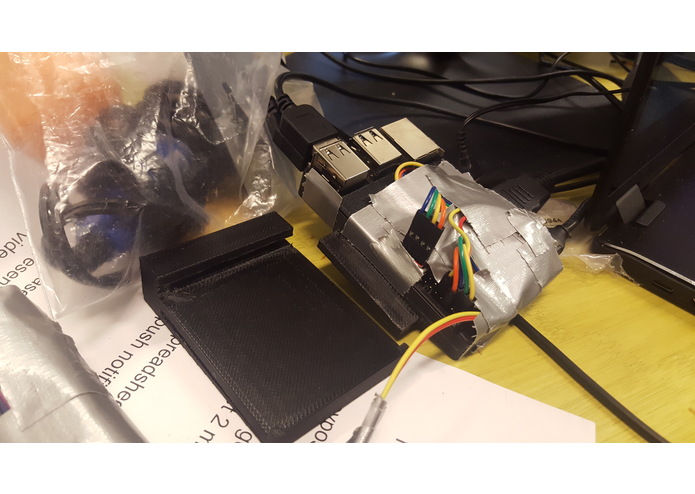
Belt clip and wearable
-
This image is currently processing. Please be patient...


Inspiration
Old people.
What it does
Using a 9 degrees of freedom IC (9DOF), raw data is processed in realtime (sampling rate = ~333 measurements/s or 1 measurement/3ms) to characterize various movements a person wearing the wearable is doing. Current movements being classified in our data is walking, resting, sitting regularly and FALLING.
A person who is falling is detected intelligently in realtime (must satisfy continuous data requirements to be considered falling rather than recording a random outlier data point) using probabilistic techniques (k-nearest-neighbours) and immediately alerted to a chain of emergency contacts via PagerDuty. The severity of the fall (e.g. force applied by user when falling) determines the type of message sent to the emergency contact.
How we built it
Using rasp pi and I2C protocol, we get realtime stream of 9DOF data that we monitor and classify in python to detect any triggers (e.g. falling). Triggers calls pagerduty api and alerts contact on their incident monitoring system.

Challenges we ran into
Classifications of the raw data at such a high sampling frequency took some time. Also figuring our how to implement probabilistic models in python using sklearn had a higher learning curve to it.
Accomplishments that we're proud of
Getting a working MVP, and having a plethora of ideas on how to move this project forward.
What we learned
Embedded programming in python, large data classification, KNN implementation.
What's next for fallsafe
Make a custom wearable (much smaller than using a raspberry pi) device that can have custom user profiles for organizations such a retirement homes. This will give an increased depth in insight to each individual using the wearable by incorporating biometric data with the wearable's data. The wearable would do all of the calculations on board.
Built With
- 9dof
- electronics
- embedded
- i2c
- iot
- k-nearest-neighbours
- pagerduty
- python
- raspberry-pi


Log in or sign up for Devpost to join the conversation.