Inspiration
Falls can be life-threatening, especially for elderly or vulnerable individuals who may be unable to call for help after an accident. We wanted to create a system that could automatically detect a fall, alert responders immediately, and reduce the risk of missed emergencies. At the same time, we also wanted to address the issue of false alarms by giving patients a simple way to indicate that they are safe.
What it does
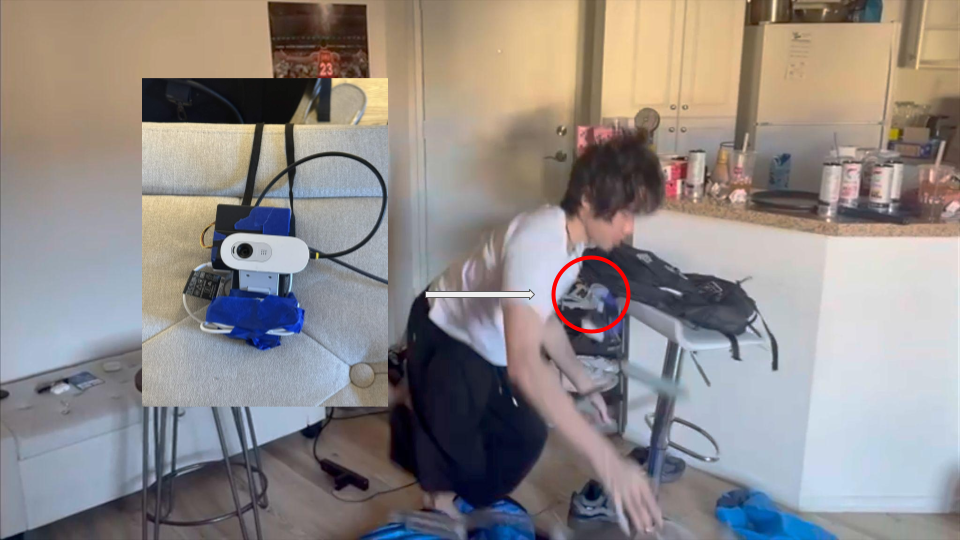
Fall Guardian is a wearable fall-detection system that monitors accelerometer data to detect when a fall occurs. When a fall is identified, the system automatically sends an alert without requiring any input from the patient. To reduce false alarms, the device also uses a computer vision model that recognizes a positive hand gesture, allowing the patient to cancel the alert if they are okay. In addition, the system provides a user interface that displays the device’s camera feed during alerts so responders can monitor the patient’s condition in real time.
How we built it
We built Fall Guardian by combining embedded hardware, machine learning, and a web-based monitoring interface. First, we trained a classification model on accelerometer data to detect falls with high accuracy. Then, we trained a computer vision model to recognize a positive hand gesture as a way for patients to indicate a false alarm. We deployed these models onto our hardware device and integrated them with a UI that streams the camera output when an alert is triggered. Together, these components create an end-to-end emergency monitoring system.
Challenges we ran into
One of our biggest challenges was balancing accuracy and reliability. We needed the fall-detection model to be sensitive enough to catch real emergencies without generating too many false positives. Another challenge was integrating the computer vision model with the live camera feed and making sure it ran correctly on-device. We also ran into difficulties with model deployment, compatibility, and debugging the pipeline between the device, machine learning models, and user interface.
Accomplishments that we're proud of
We are proud that we built a system that goes beyond simple fall detection by also addressing false alarms. Our accelerometer-based fall-detection model achieved strong accuracy, and our hand-gesture recognition model reached 96.94% accuracy. We also successfully created a UI that displays the device’s camera feed during alerts, making the system more useful for responders. Most importantly, we were able to combine hardware, ML, and software into one working prototype with real-world impact.
What we learned
Through this project, we learned how to train and deploy machine learning models on embedded or edge devices, as well as how to connect those models to a full application workflow. We also learned the importance of designing for real-world reliability, not just model accuracy, since false positives and false negatives can have serious consequences in emergency systems. Beyond the technical side, we learned how important teamwork, iteration, and fast debugging are when building under hackathon time constraints.
What's next for Fall Guardian
In the future, we want to improve the reliability of our fall-detection model with more training data and testing across a wider range of scenarios. We also want to expand the gesture-recognition system to support more patient responses, such as signaling distress or requesting help. Another next step is to make the alert system more robust by integrating text, call, or caregiver notification features. Ultimately, we want to develop Fall Guardian into a practical, accessible safety tool for real-world healthcare and assisted-living settings.
Built With
- arduino
- computer-vision
- edge-impulse
- linux
- machine-learning
- python

Log in or sign up for Devpost to join the conversation.