-
-
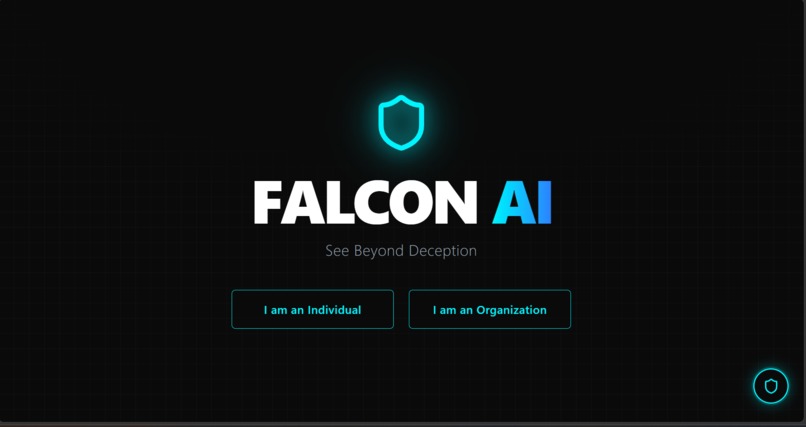
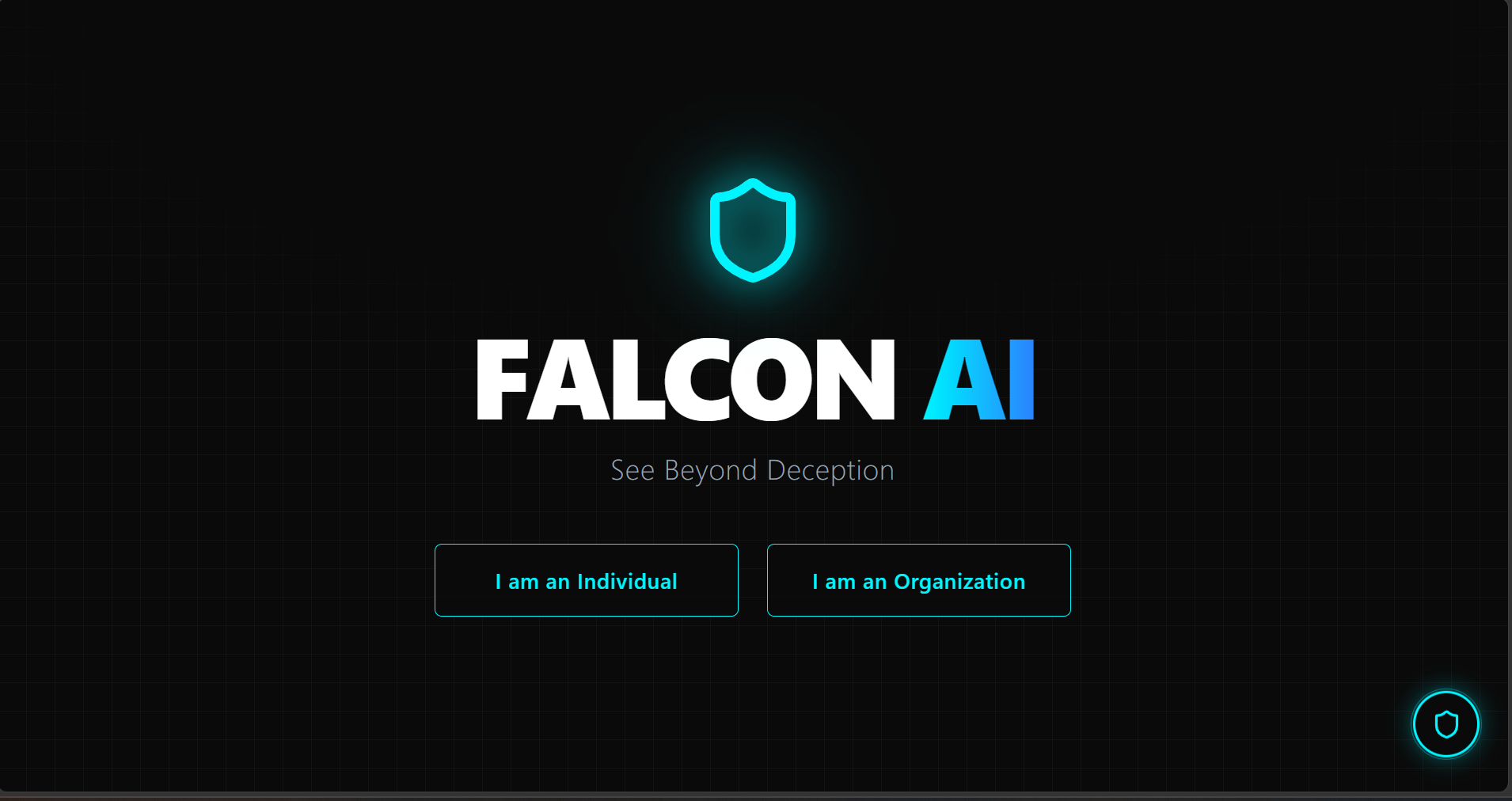
AI-powered fraud detection platform for verifying identities, resumes, and certificates in seconds.
-
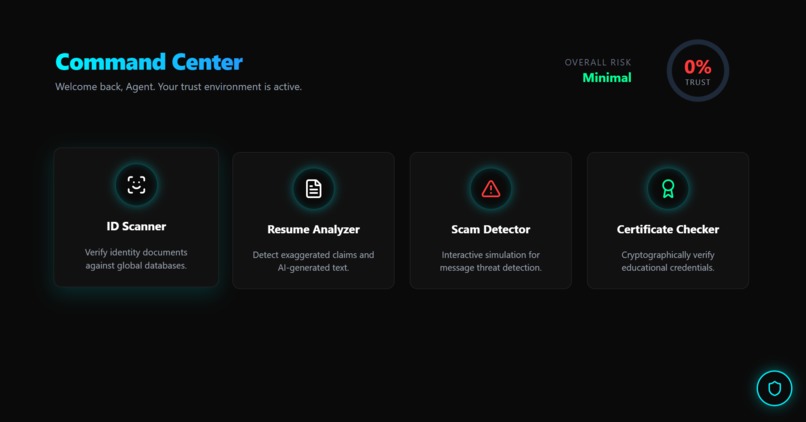
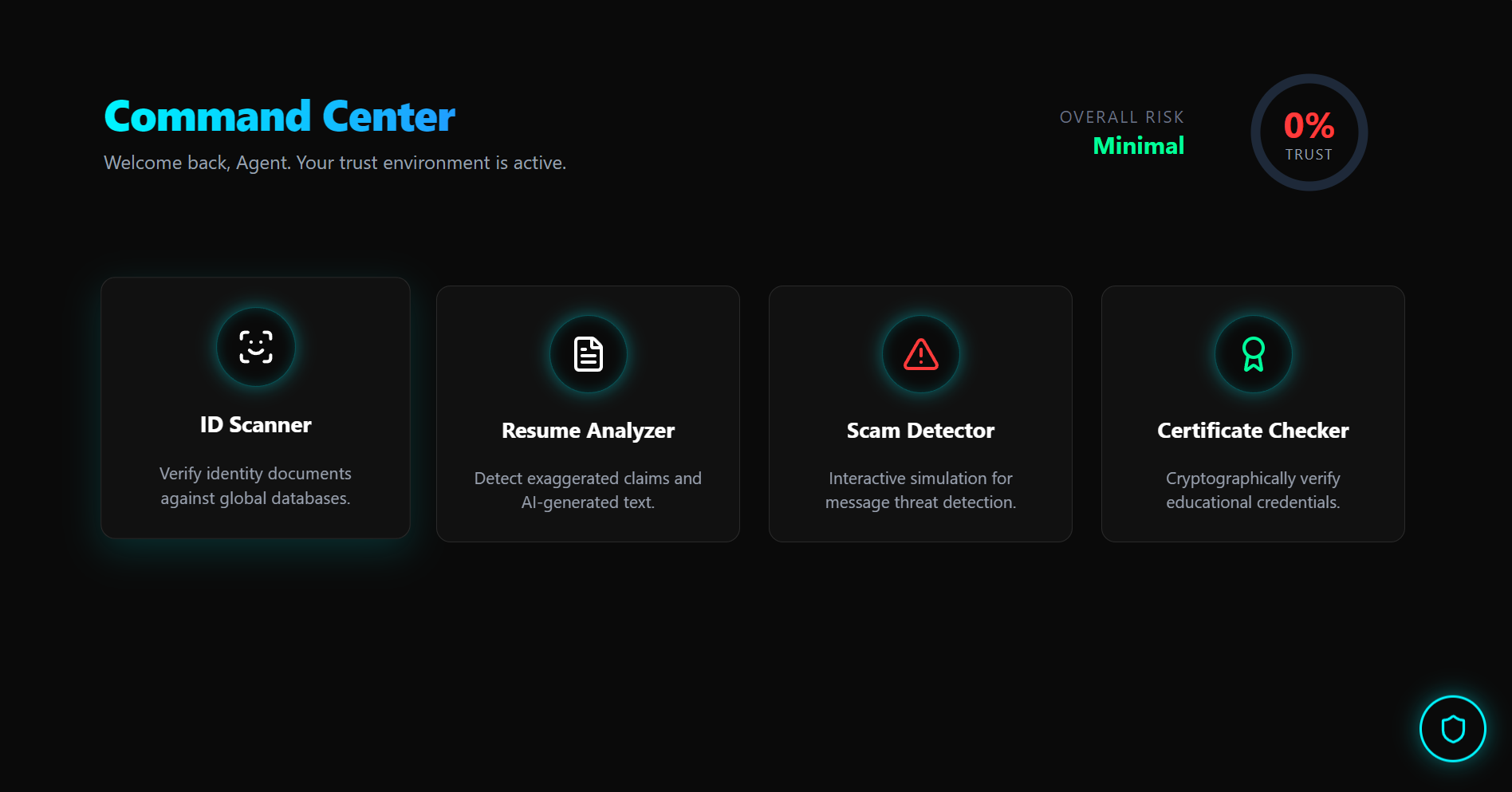
Central dashboard showing all detection modules for scam analysis, resume validation, and identity checks.
-
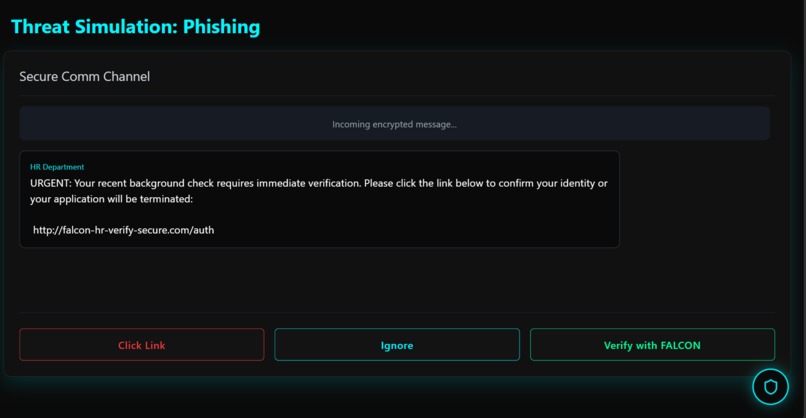
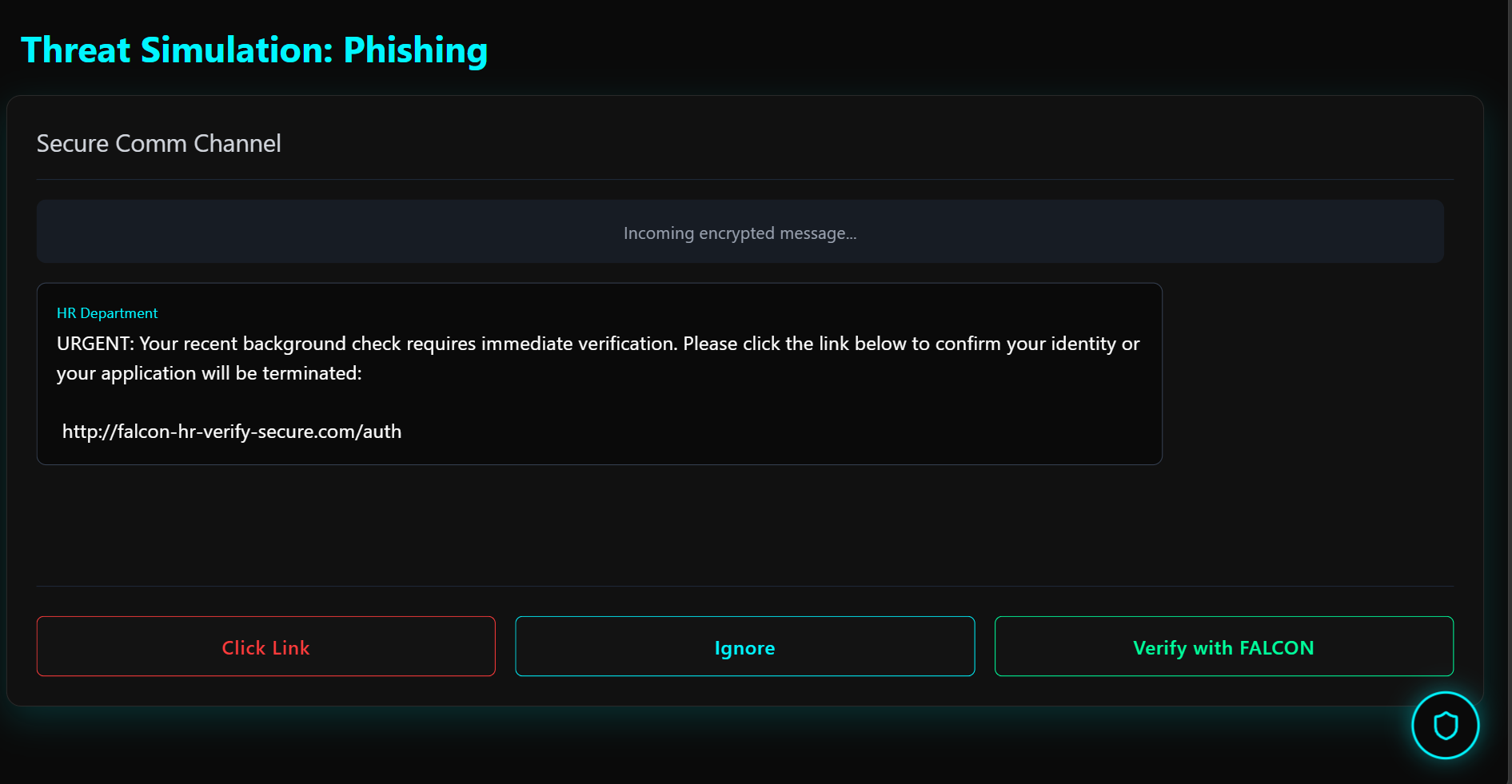
Upload documents like IDs, resumes, or certificates for instant AI-based fraud detection and verification.
-
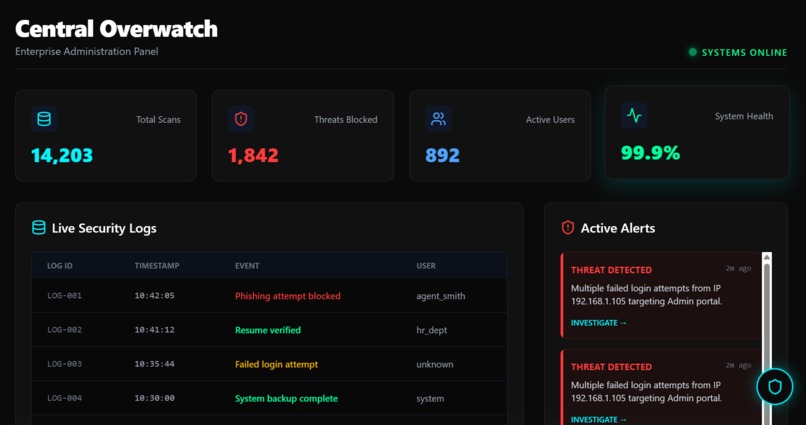
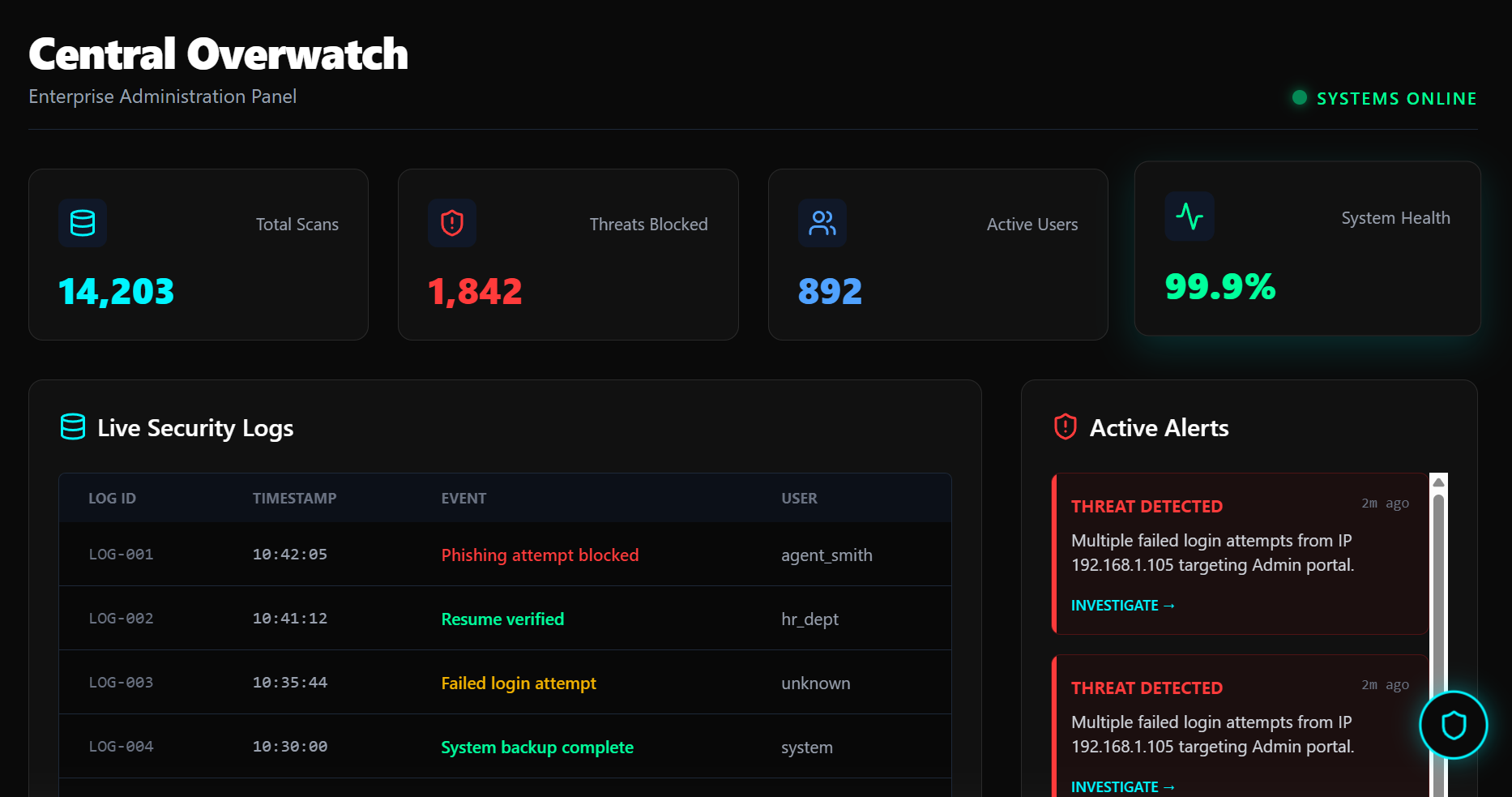
Detailed analysis report with fraud alerts, confidence scores, and insights for quick decision-making.
Inspiration
In today’s digital world, trust has become one of the biggest challenges. From fake job applicants and forged certificates to online scams and identity fraud, people and organizations constantly struggle to verify what is real and what is not. A single fake resume can lead to a bad hire, and a single scam can cause serious financial and reputational damage.
What it does
Falcon AI is a smart verification system that helps detect fraud and ensure authenticity in digital data. It analyzes user inputs such as identities, resumes, certificates, and online content to identify anything suspicious or fake.
How we built it
Falcon AI was developed as a full-stack AI-powered system that combines a fast backend, an interactive frontend, and a flexible database to deliver real-time fraud detection.
- Backend Development (FastAPI)
I built the backend using FastAPI to handle API requests efficiently and process data in real time. The backend is responsible for:
Receiving user inputs (IDs, resumes, certificates, scam text) Running AI models and validation logic Generating fraud scores and detection results Sending responses back to the frontend
FastAPI was chosen for its speed, async support, and easy integration with AI models.
- Frontend Development (React.js)
The user interface was developed using React.js to provide a clean and responsive experience. The frontend:
Allows users to upload documents or input data Displays verification results, fraud scores, and flagged issues Communicates with the backend through REST APIs
React helps in creating a smooth, real-time interactive UI.
- Database (MongoDB)
I used MongoDB to store:
User inputs and uploaded data Verification results and fraud scores Logs for analysis and improvement
MongoDB’s flexible schema makes it ideal for handling unstructured and semi-structured data like documents.
- AI & Detection Logic
The core intelligence of Falcon AI comes from:
Rule-based validation (e.g., date inconsistencies, format checks) AI/ML models for pattern recognition and anomaly detection Text analysis for detecting scam language and suspicious content
Challenges we ran into
Building Falcon AI wasn’t just about connecting tools—it required solving multiple real-world problems across AI, backend, and user experience.
- Handling Different Types of Data
Falcon AI deals with IDs, resumes, certificates, and scam text, all in different formats (structured and unstructured). 👉 Challenge: Designing a system that can process and analyze all of them consistently. 👉 Solution: Created a modular pipeline where each input type has its own validation and analysis logic.
- Ensuring Detection Accuracy
Detecting fraud isn’t always obvious—fake data can look very real. 👉 Challenge: Avoiding false positives and false negatives. 👉 Solution: Combined rule-based checks (logic) with AI models (pattern recognition) to improve reliability.
- Real-Time Performance
Users expect instant results, especially in verification systems. 👉 Challenge: Running AI analysis without slowing down the system. 👉 Solution: Used FastAPI’s async capabilities and optimized processing to keep responses fast.
- Designing a Scalable Backend
The system needs to handle multiple requests and growing data. 👉 Challenge: Making the backend efficient and scalable. 👉 Solution: Structured APIs cleanly and used MongoDB for flexible, scalable data storage.
- Making Results Easy to Understand
AI outputs can be complex and confusing. 👉 Challenge: Presenting results in a user-friendly way. 👉 Solution: Designed the frontend in React to show a fraud score, flags, and simple explanations.
- Lack of Reliable Datasets
Fraud detection requires good training data, which isn’t always publicly available. 👉 Challenge: Getting realistic data for testing and training. 👉 Solution: Used sample datasets, simulated scenarios, and rule-based logic to validate the system.
- Integration Between Components
Connecting frontend, backend, database, and AI models smoothly. 👉 Challenge: Ensuring everything works together without bugs or delays. 👉 Solution: Built and tested each module separately, then integrated step-by-step.
Accomplishments that we're proud of
One of my biggest accomplishments in building Falcon AI is successfully turning a complex, real-world problem—digital trust and fraud detection—into a working, end-to-end solution.
I’m especially proud of:
🚀 Building a full-stack system from scratch using FastAPI, React, and MongoDB 🧠 Combining AI with rule-based logic to create a more reliable fraud detection approach ⚡ Achieving real-time analysis, where users can get verification results instantly 🔗 Integrating multiple features into one platform—fake ID detection, resume analysis, certificate verification, and scam detection 💡 Simplifying complex AI outputs into clear fraud scores and actionable insights for users
What makes this meaningful is not just the technology, but the impact—Falcon AI addresses a real and growing problem by helping people and organizations make safer, more informed decisions.
What we learned
Building Falcon AI was more than just a technical project—it was a deep learning experience across development, AI, and problem-solving.
- Full-Stack Development in Practice
I learned how to build and connect a complete system using FastAPI, React, and MongoDB, understanding how frontend, backend, and database work together in real-world applications.
- Applying AI to Real Problems
Instead of just theory, I learned how to apply AI and data analysis to solve real-world issues like fraud detection, and how combining AI with rule-based logic improves results.
- Handling Complex and Unstructured Data
Working with resumes, IDs, and certificates taught me how to process and analyze different types of data formats, which is a key challenge in real systems.
- Importance of System Design
I understood how crucial it is to design a system that is scalable, efficient, and modular, especially when handling multiple features in one platform.
- Debugging and Problem-Solving
I faced multiple issues during integration and performance tuning, which improved my ability to debug, troubleshoot, and think critically.
- Building for Users, Not Just Code
I learned that even powerful AI is useless if users can’t understand it. Designing clear outputs like fraud scores and simple explanations was just as important as building the model.
- Working with Limited Resources
Due to limited datasets and time, I learned how to improvise, simulate data, and prioritize features, which is essential in hackathons and real-world development.
What's next for FalconAI
Falcon AI is just the beginning. The next phase is focused on making it more accurate, scalable, and widely usable in real-world scenarios.
- Advanced AI Models
Improve detection using deep learning and NLP models
Train on larger, real-world datasets for better accuracy
Reduce false positives with smarter decision systems
- Real-World Integrations
Integrate with job portals for resume verification
Connect with educational institutions for certificate validation
Support fintech platforms for fraud and scam detection
- API as a Service (SaaS)
Turn Falcon AI into a public API platform
Allow companies to integrate verification into their own systems
Enable scalable, subscription-based usage
- Document & Image Verification
Add OCR (Optical Character Recognition) for analyzing scanned documents
Enhance fake ID and certificate detection using image forensics
- Real-Time Monitoring System
Build a dashboard for continuous fraud monitoring
Alert users instantly when suspicious activity is detected
- Security & Privacy Enhancements
Implement stronger data encryption and access control
Ensure compliance with data protection standards
- Mobile Application
Develop a mobile app version for on-the-go verification
Make Falcon AI accessible to individuals, not just organizations
Big Vision To become a universal digital trust layer—where anything online can be verified instantly.
In One Line Next, Falcon AI evolves from a project into a scalable, real-world trust verification platform.
If you want to really impress judges, I can also give you:
Revenue model (how it makes money 💰)
Market opportunity + competitor comparison
“Why this will succeed” closing argument
Built With
- fastapi
- mongodb
- react.js
- vite

Log in or sign up for Devpost to join the conversation.