-
-
-
-
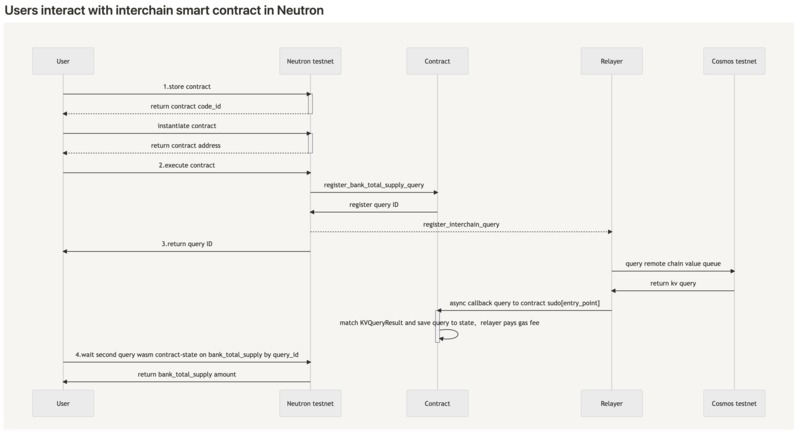
Premissionless DeFi Vault interface in Neutron
-
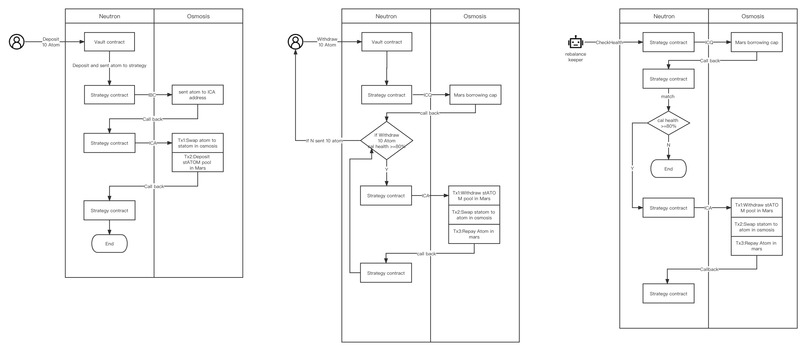
Falcon vault ICA/ICQ process in Neutron flowchart
-
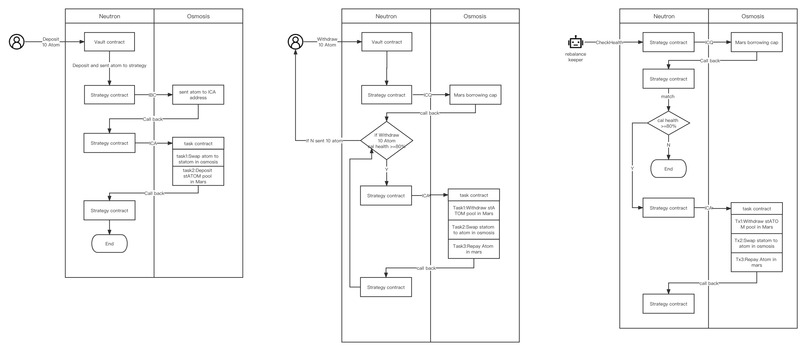
Falcon vault ICA/ICQ process deploy Osmosis version


Inspiration
Ethereum has a higher TVL in DeFi due to 40% of Ether being liquid, contributing billions of dollars to DeFi protocols. In comparison, Cosmos has a higher staking ratio but lacks basic tools for creating yield scenarios for LST, resulting in a lower contribution to DeFi compared to Ethereum.
With the release of the ICQ and ICA modules, we aim to create a unique flywheel by leveraging existing liquidity on Cosmos and addressing this gap in the ecosystem.
What it does
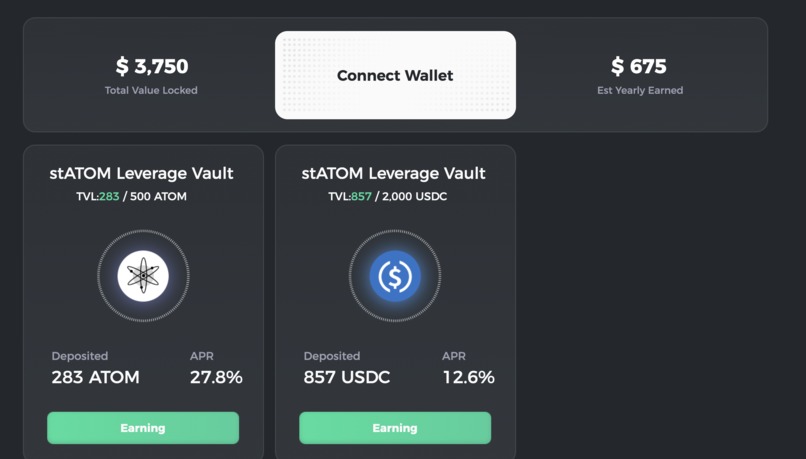
Falcon is a DeFi yield platform that provides users with a one-stop-shop for decentralized asset management. We deploy our permissionless smart contracts on Neutron to ensure smooth interoperability with other blockchains in the future. Currently, we offer liquid leveraged staking yield for $stATOM, the most advantageous interest-bearing asset in the ecosystem.
Leverage
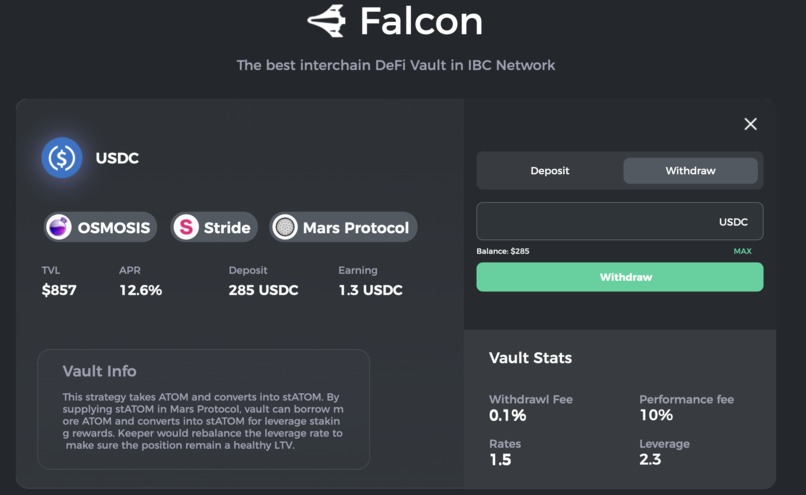
Users deposit $ATOM or $USDC, and the Vault converts them into $stATOM via Osmosis and deposits them into Mars. Vault then borrow $ATOM from Mars and exchange it back to $stATOM. This process can be repeated to increase leverage.
Deleverage
When a user initiates a withdrawal, the Vault first repays the corresponding loan position and then withdraws the assets to return to the user while maintaining a healthy LTV.
Rebalance
A keeper bot monitors price changes in Osmosis Pool (Until there is a widely used Oracle in IBC) and interest rate fluctuations, ensuring that the position remains healthy and able to handle large withdrawals.
How we built it
[Front-End]
- Typescript, React, CosmJS, NextJS, etc
- Javascript libraries Cosmwasm to interact with smart contracts and Keplr wallet and deployed smart contracts.
- We have designed our own user-friendly UX vault, which can be completed in just 3 steps. Headlessui Framework highly suitable for building DeFi web service.
[Back-End]
- Java, cosmos sdk, etc
- Automatically run Rebalance TX, Safe Deleverage TX while subscribing to Neutron block events and our contract events emit
- Automatically health factor monitoring robot, protecting the vault's funds from liquidation
[Contract]
- Rust, CosmWasm, ICA, ICQ Relayer
- We will conduct tests of related features on the testnet and deployed in NEUTRON testnet
[CI/CD tool]
- Github Action (yml)
- Automatic deployment scripts are written in Github Action yml files to support each module deployment
[Infrastructure]
- Docker, AWS ECS, etc
- Supported to build and deploy docker images(fontend and backend) to AWS ECS
Challenges we ran into
We faced challenges due to the lack of documentation resources and examples for deploying and there aren't many open-source projects in the entire ecosystem, so we may need to reinvent the wheel. We highly recommend that the foundation should grant a team to develop and maintain a technical documentation library which will ease the burden for developers who have just entered this ecosystem. During the technical research and feasibility study, we spent time sorting out the execution process of ICQ (refer to Figure 3) to ensure that it meets our requirements. However, there are still some uncertainties about stability on interchain transactions, so we have also developed an alternative plan (refer to Figure 5).
What we learned
ICA and ICQ are still in early development stages, and building projects in the early ecosystem can be challenging. (For the better UX, we also consider deploy contract on the target chain, in this case is Osmosis) However, Neutron's Interchain Queries and Transactions are advantageous for building Falcon. In future IBC development, we will prioritize implementing core functionalities.
What's next for Falcon
Firstly, we will focus on developing and delivering the product. Our next steps include integrating additional assets and protocols to expand revenue opportunities. Also, we will try to intergrade Rover credit accounts in the future.
Built With
- amazon-web-services
- cosmwasm
- graph
- mysql
- neutron
- spring


Log in or sign up for Devpost to join the conversation.