-
-
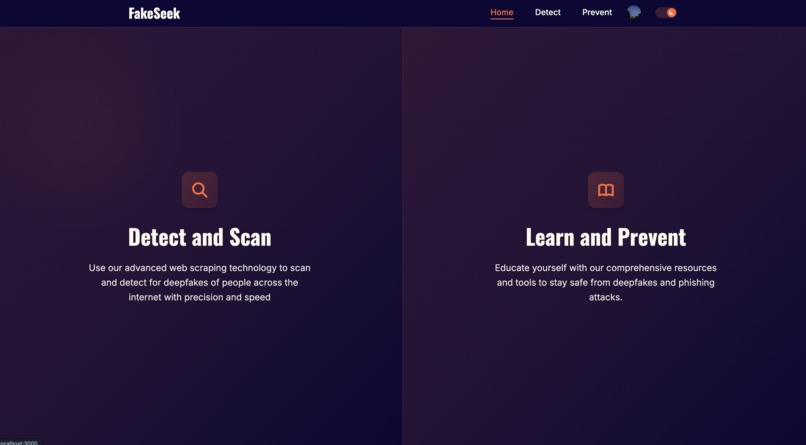
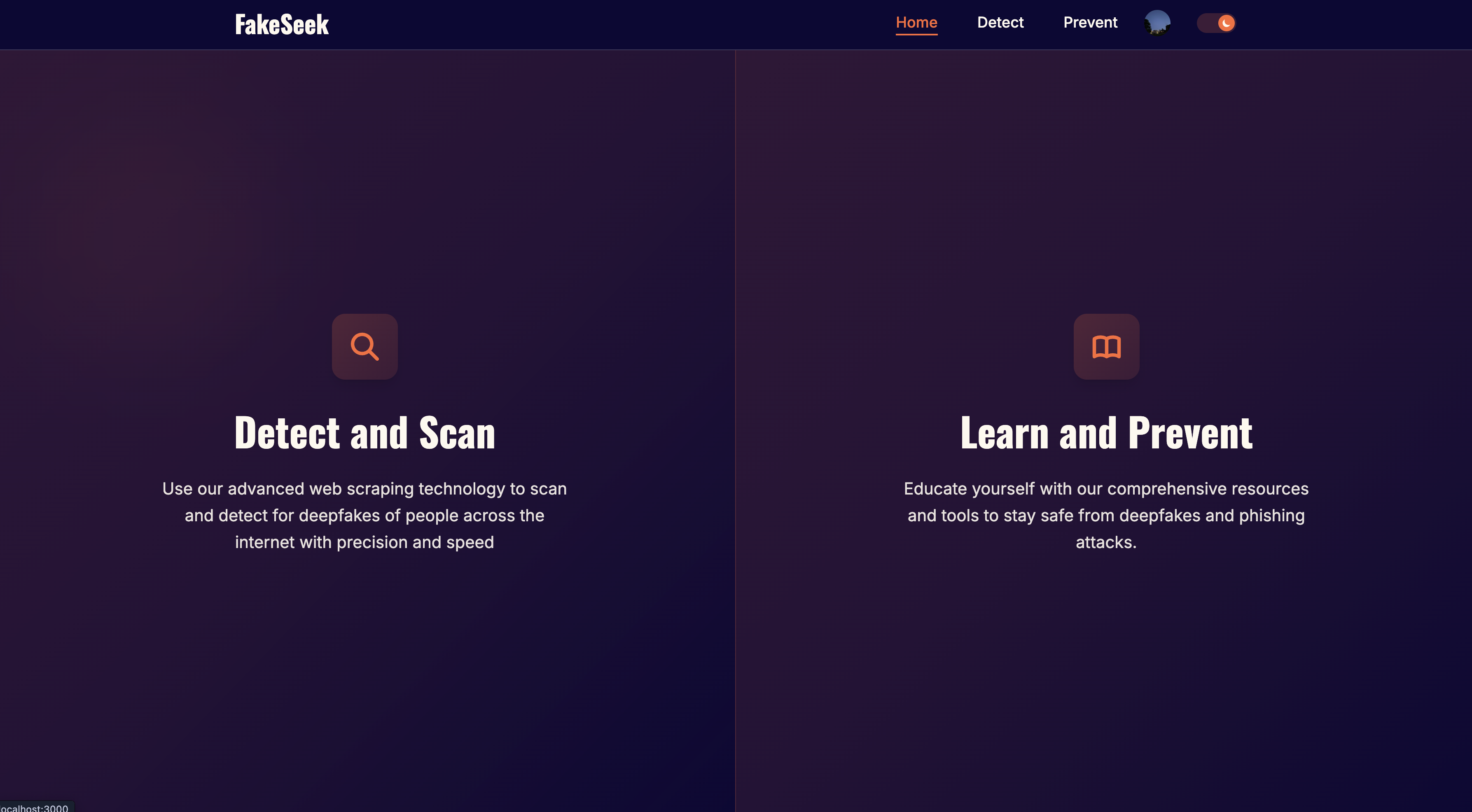
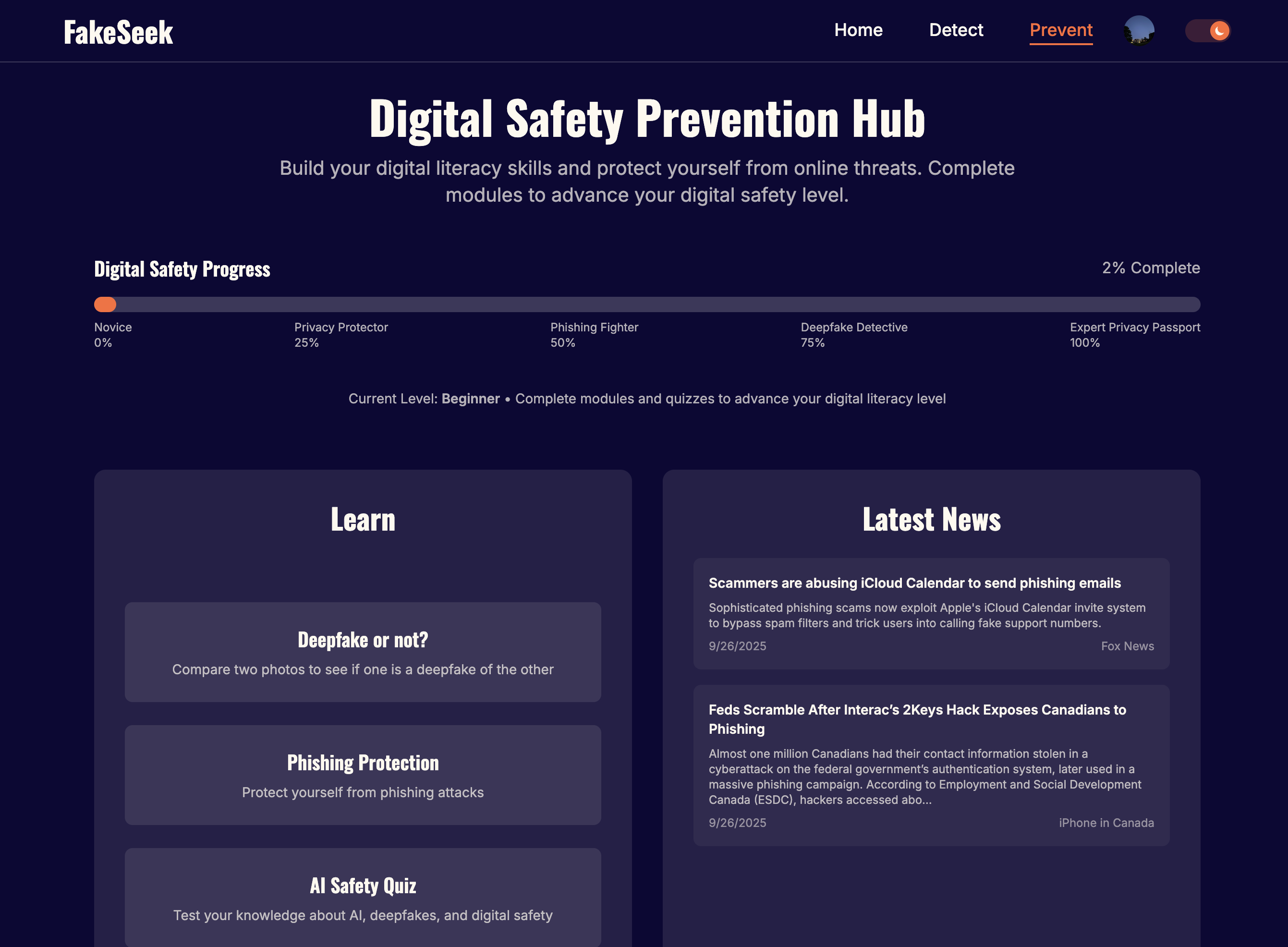
home page
-
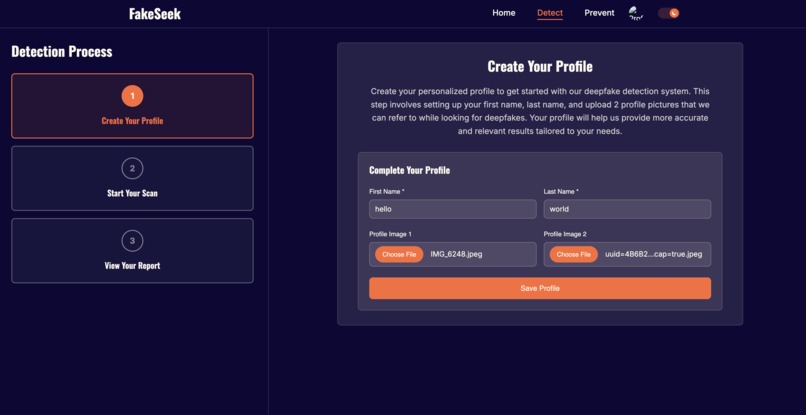
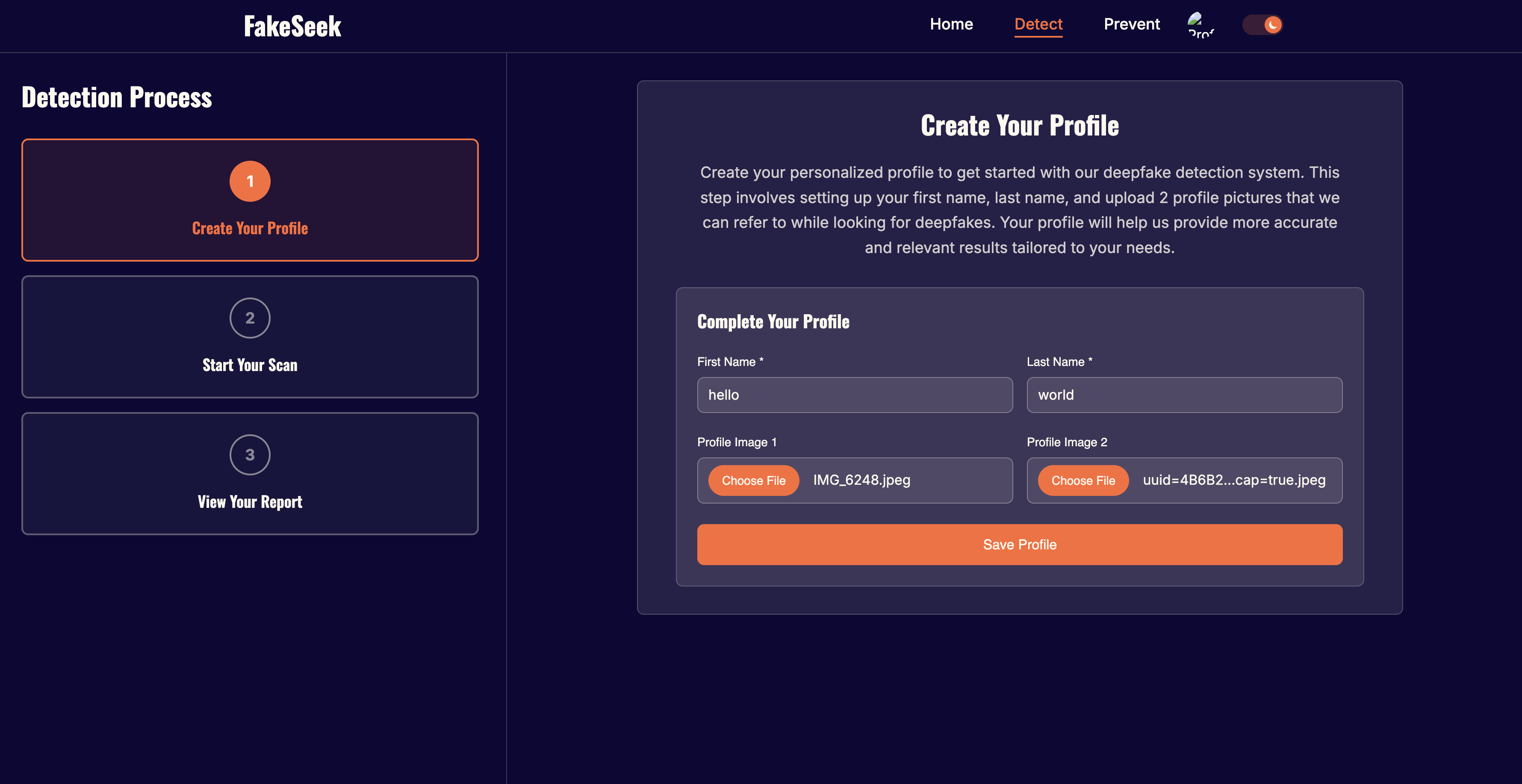
deepfake profile analyzer
-
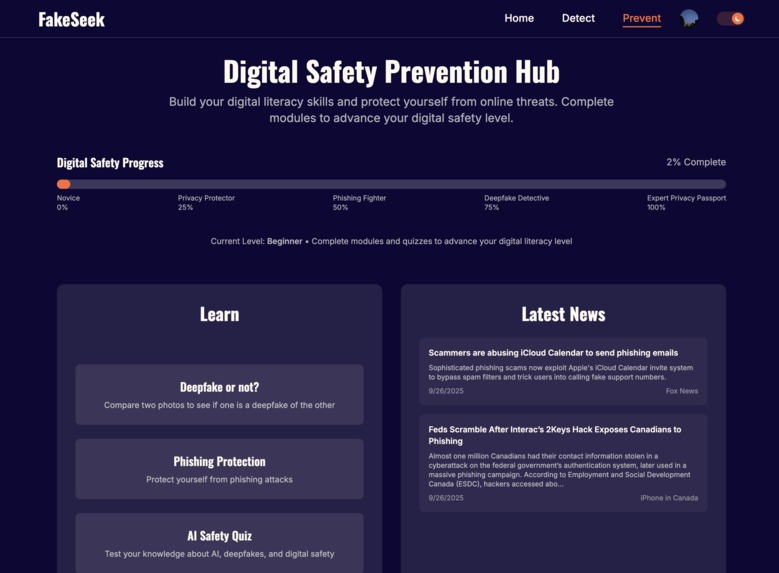
prevention section with educational modules
-
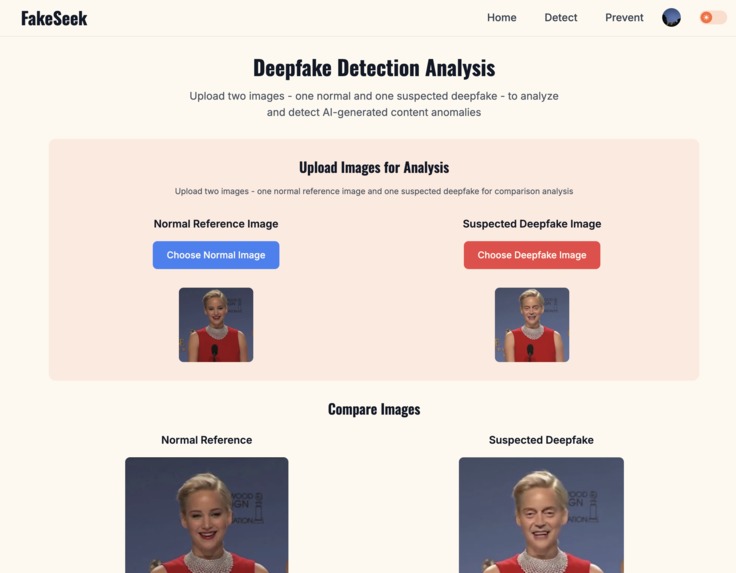
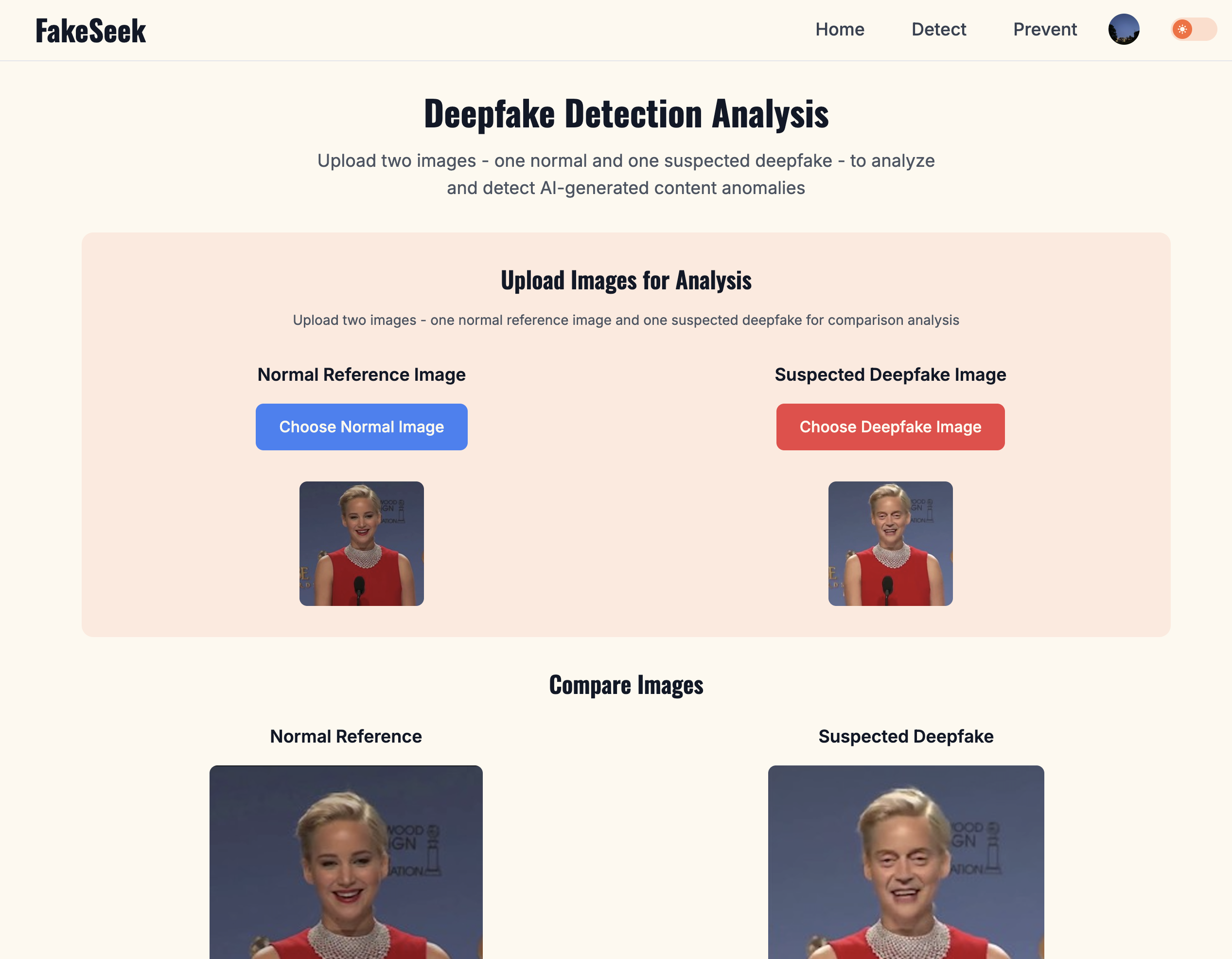
light mode + deepfake real vs fake module
-
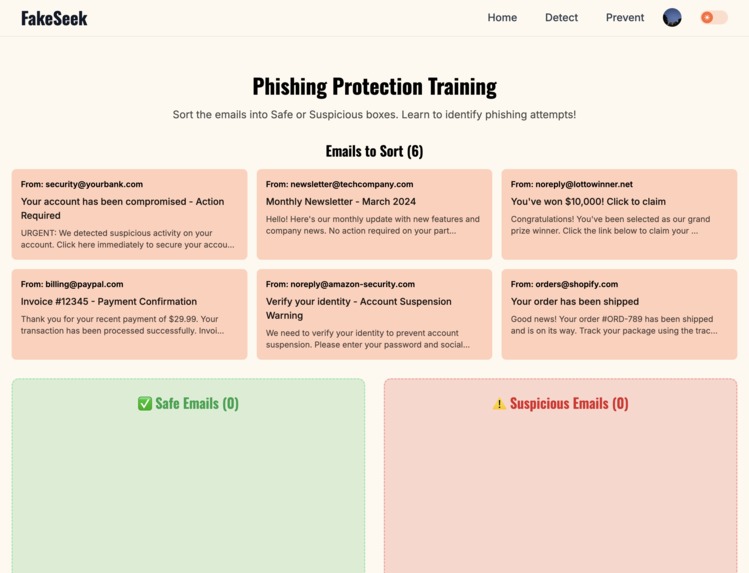
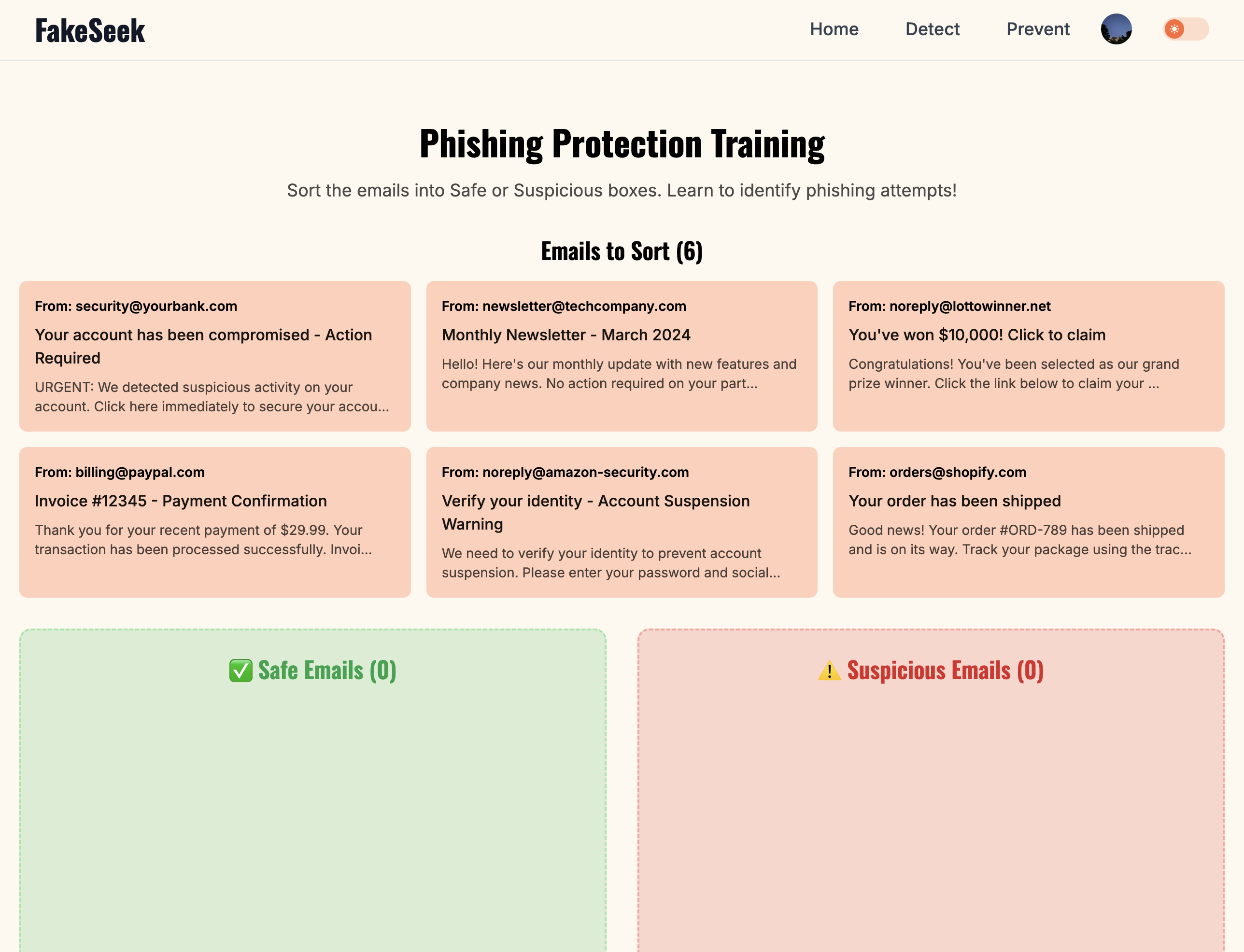
light mode + the phishing protection module
-
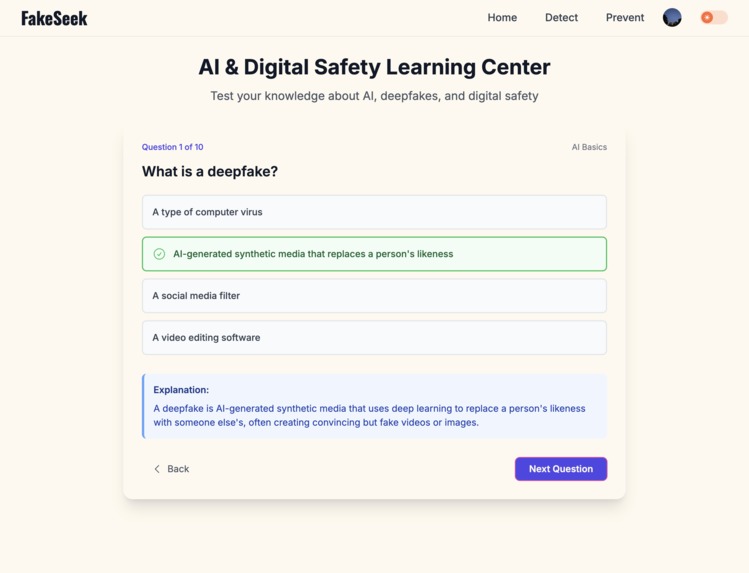
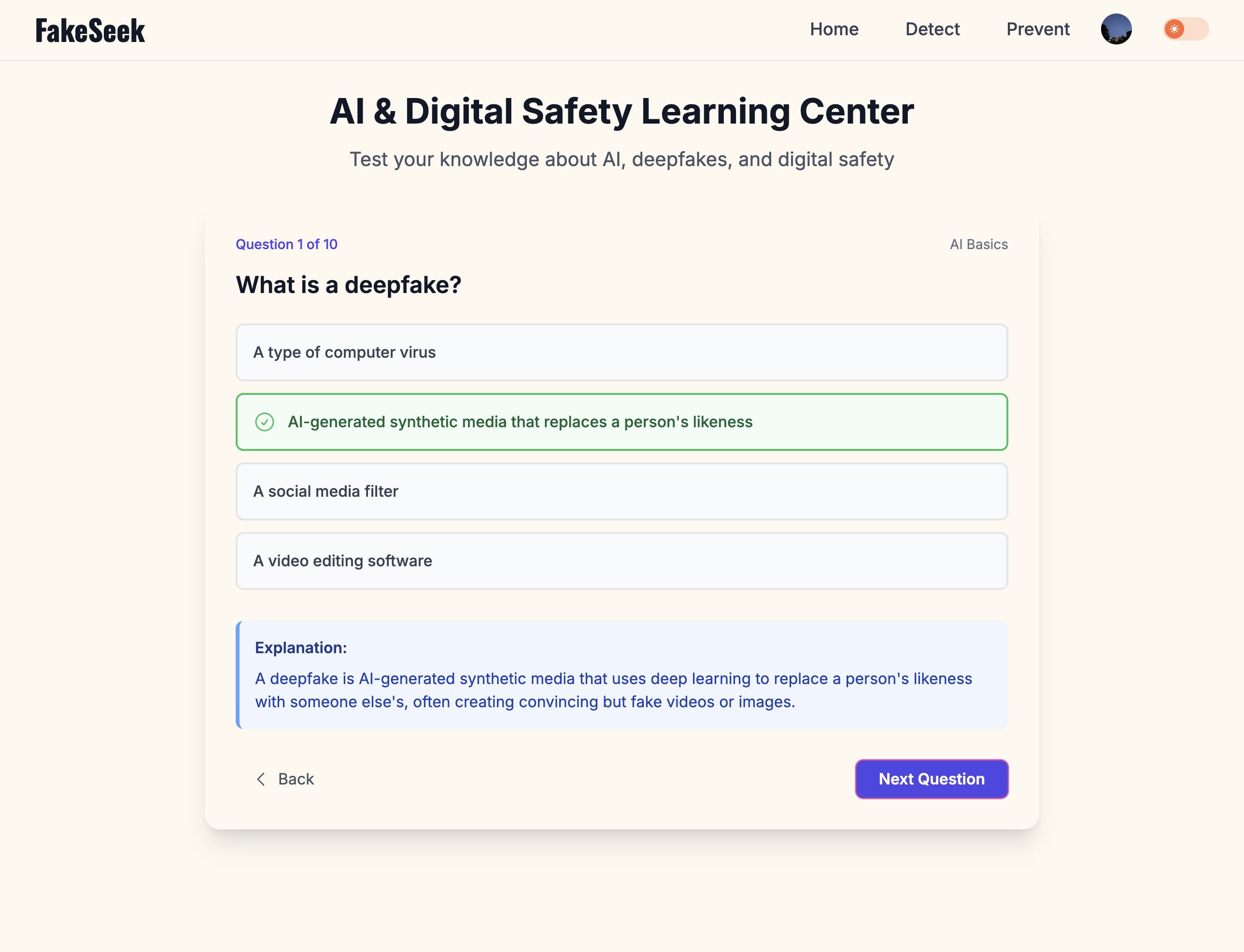
light mode + quiz module
Inspiration
What if one day you woke up and saw your face in a video or photo that you never made? And what if you had no control over the content or who could see it? This is the reality of the digital era.
The inspiration for FakeSeek comes from recognizing how vulnerable we all are to digital manipulation. Deepfakes overwhelmingly target women, particularly in cases of non-consensual explicit content, with over 90% of victims being women. Reports indicate a 900% increase in deepfake content over the past three years. With the emergence of advanced generative models like Veo 3 and other video generation tools, AI-generated media is becoming nearly indistinguishable from authentic content.
If anyone can impersonate you online, your reputation, safety, and security are at risk. This technology can be exploited for harassment, misinformation, and impersonation. We developed FakeSeek to address this issue: a tool that empowers individuals to actively monitor their online presence and detect when their identity is being misused. By combining real-time detection with educational tools, our mission is to create a tool that helps people see deepfakes before they see you.
What it does
FakeSeek is a platform that empowers users to protect their digital identity by scanning the web for manipulated media and impersonation risks. It has two main approaches: Prevent and Detect.
Prevention: Educates users about the risks of deepfakes and teaches them about phishing and other cyber threats. Users can take interactive quizzes, practice identifying phishing emails through hands-on drag-and-drop exercises, and upload two images to learn how to identify deepfakes in real time. The system has a gamified progress tracker with five achievement levels, from "Novice" to "Privacy Expert", to make the platform interactive for younger teens. Beside the learn modules, we have a latest news section that displays current news articles about deepfakes, phishing and AI scams. In addition, we have Mr. Goose, our chatbot, to walk us through the modules as well.
Detection: Scrapes search results from Google for potential impersonations and misinformation based on the user’s profile, which includes their full name and two high-quality reference photos. FakeSeek generates a threat report that informs users about their current exposure and potential risks.
How we built it
For the frontend, we used TypeScript, React, and Tailwind CSS to create a responsive UI that supports both dark and light modes. We incorporated Framer Motion for smooth animations and Auth0 for secure user authentication with Google OAuth integration.
The backend uses Node.js API routes to handle deepfake analysis, web scraping, and user profile management. We integrated the Google Gemini API for real-time image analysis and deepfake detection, examining facial distortions, colour inconsistencies, blur artifacts, lighting mismatches, edge artifacts, and texture inconsistencies. Gemini also powers Mr. Goose, our chatbot that guides users through our educational modules!
We use MongoDB Atlas to securely store user profiles, login history, and scan results. For web scraping, we built a Python script with Beautiful Soup to search Google for deepfake-related content and analyze potential impersonation threats.
Challenges we ran into
Before this hackathon, none of us had experience integrating APIs or using MongoDB or Gemini. We had to quickly learn API integration, resolve merge conflicts while building our first full-stack application, and work with Google Gemini API, NewsAPI, and Auth0 authentication. Managing frontend and backend at the same time was difficult, so we divided our work into two sections and merged our work periodically to minimize conflicts.
Accomplishments that we're proud of
Working together for 36 hours to build a full-stack application and learn new tools is something we are all really proud of! For half of our team, this was their first hackathon, so it was exciting to create something new together and participate in the events. One of our biggest accomplishments was implementing MongoDB Atlas to store user profiles. We initially struggled and tried multiple approaches, but none worked. After hours of debugging, we consulted our mentors, who helped us understand the issue, and finally got MongoDB Atlas running while learning how to integrate our other APIs.
What we learned
We learned how to set up APIs and prototype effectively so that the user flow makes sense (thank you to UWP's lounge for having whiteboards to storyboard with!!!). Also, we learned how to set up Google Auth, save user profiles, and create interactive frontend components using Framer/TypeScript. We also learned how to web scrape using Beautiful Soup and how to use Gemini to analyze images for anomalies.
What's next for FakeSeek
We hope to gain access to X (Twitter), TikTok, YouTube and Instagram APIs to monitor posts for more comprehensive deepfake detection, since Google search is generally more moderated than many social platforms. We also want to add continuous monitoring with email and SMS alerts so users receive immediate notifications when potential deepfakes are detected on any social media platform.
Built With
- autho
- gemini
- javascript
- mongodb
- newsapi
- python
- react
- tailwind
- typescript


