-
-
banner
-
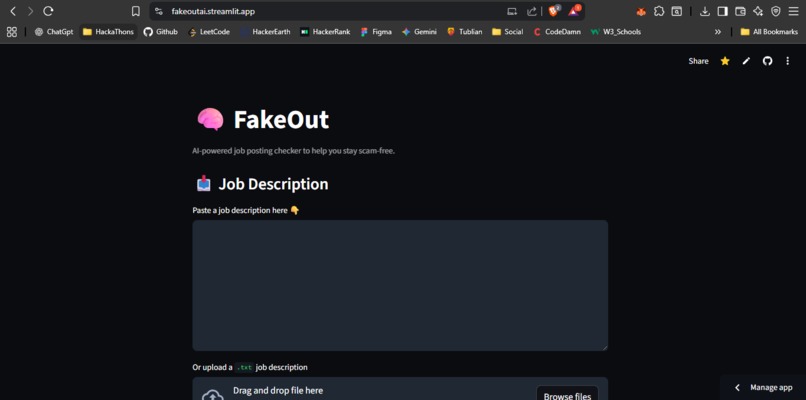
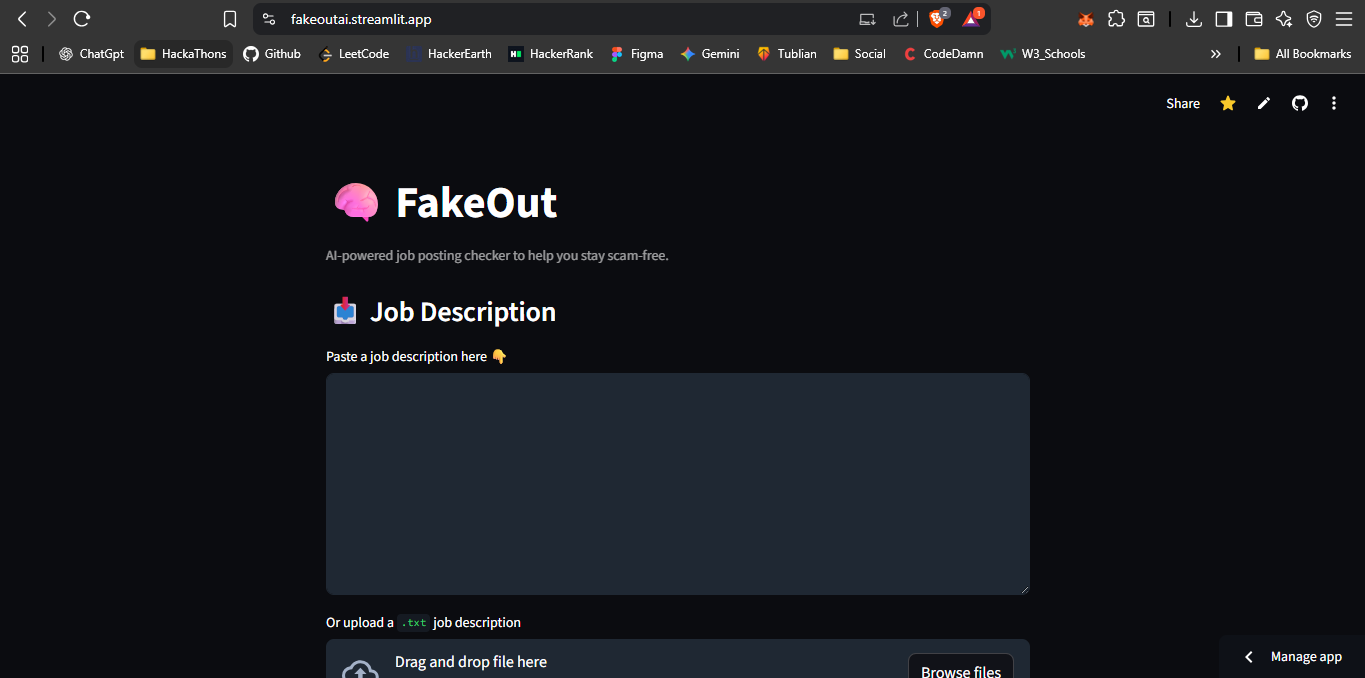
Home page UI
-
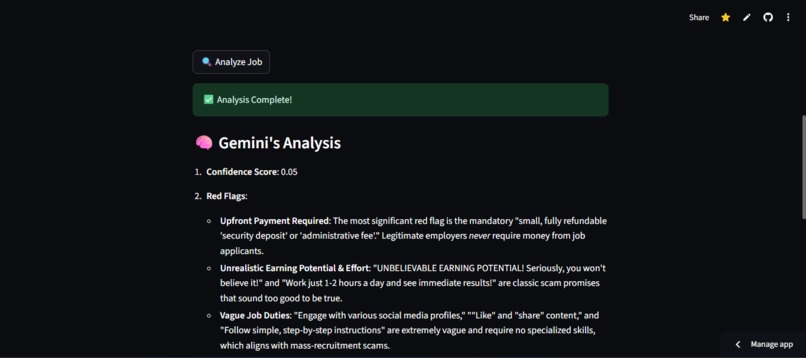
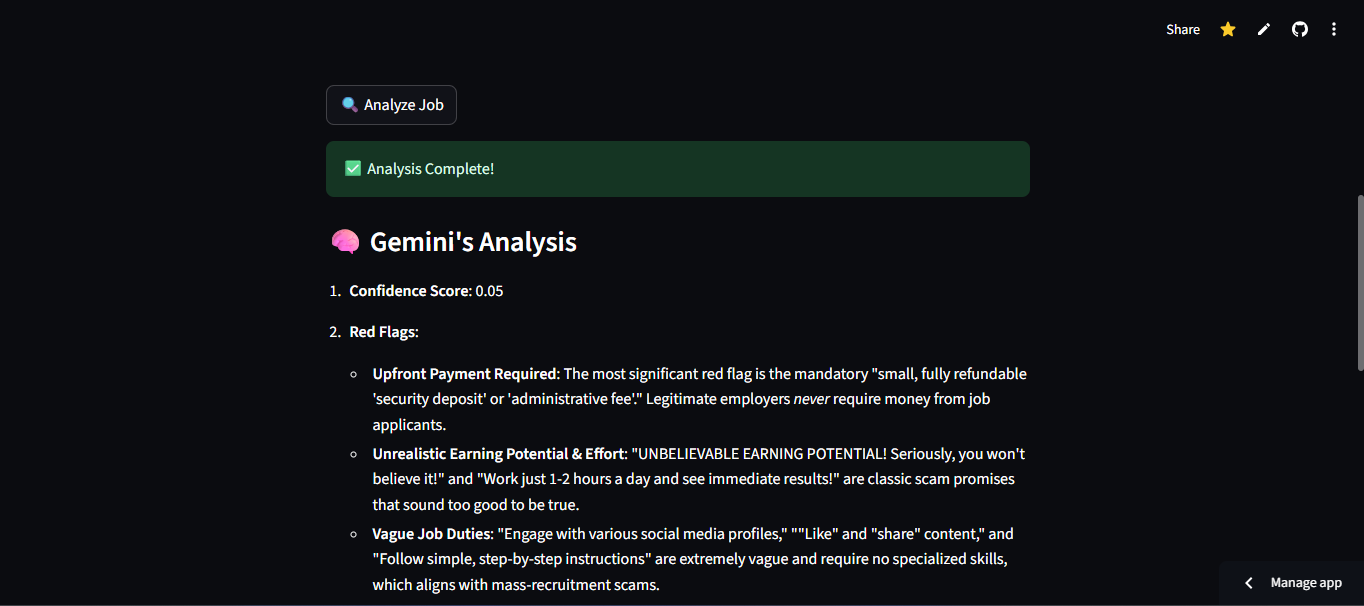
working
🧠 Inspiration
A few months back, I came across someone in my circle who fell victim to a fake job listing. They paid a registration fee and got ghosted. Since then, I started noticing how common these scammy job posts are — especially on WhatsApp groups, Telegram, and sketchy job boards. They often promise high pay, no experience, and ask for upfront fees. I felt like... someone should build a simple tool to catch this. So I decided — why not me?
That's how FakeOut started — not just as a hackathon idea, but as a personal itch to build something useful, something that could actually help people.
💡 What it does
FakeOut is an AI-powered tool that helps people detect fake or suspicious job listings. You just paste the job description (or upload a .txt file), and it analyzes it using Google’s Gemini AI. It then:
- Gives a confidence score
- Highlights any red flags
- Tells you whether to Apply, Avoid, or Proceed with caution
All this happens in a clean, minimal UI — accessible to anyone, even those who aren’t tech-savvy.
🛠️ How we built it
I built FakeOut solo using:
- Python + Streamlit for the frontend
- Google Gemini (via Generative AI API) for the brain behind it
- UV (ultra fast Python package manager) to set everything up quickly
- Hosted the final project on Streamlit Cloud
The logic is prompt-engineered carefully to make Gemini act cautiously, call out scam triggers, and even explain why a job post might be suspicious.
⚔️ Challenges we ran into
So many. I’ll be honest — it wasn’t always smooth:
- False positives and false negatives from the AI — at one point it marked a clearly fake job as “genuine with 1.0 confidence”! That forced me to rethink the prompt and scrap some rule-based scoring.
- Balancing LLM output and user trust — you can’t just say “AI said so”, you need to communicate risk smartly.
- Low specs laptop — no GPU, no fancy IDEs. I had to make everything work with minimal setup, lightweight tools, and zero bloat.
- Getting the UX just right so it doesn’t feel like a tech demo, but an actual product someone would use.
But I pushed through. Because I believed in the idea.
🏁 Accomplishments that we're proud of
- I built this end-to-end, solo, in just a few days.
- The AI response is accurate, well-explained, and actually useful.
- It’s already tested with real fake jobs — and it caught them!
- The entire app is deployed, polished, and ready to use.
- Honestly? Just seeing it go from an idea in my head to a working tool… that’s a win.
📚 What we learned
This project pushed me to:
- Think like a product builder, not just a coder.
- Work with AI prompt design seriously — which is honestly an art.
- Understand how to communicate risk to users in a way that feels helpful, not scary.
- Polish every detail — from config files to captions — because it all matters when you're building solo.
It taught me that even a single dev, with limited resources, can ship something meaningful.
🚀 What's next for FakeOut-AI
- Add a browser extension to scan job listings on websites instantly
- Train a fine-tuned model on thousands of scam vs real job listings for offline use
- Let users report scam jobs and crowdsource intelligence
- And maybe one day... turn it into a real product that saves people from losing money and trust
But for now — I’m proud of what I’ve built. And excited to show it here.
Thanks for reading. 🙏

Log in or sign up for Devpost to join the conversation.