-
-
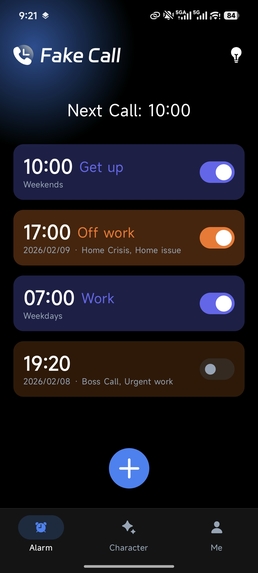
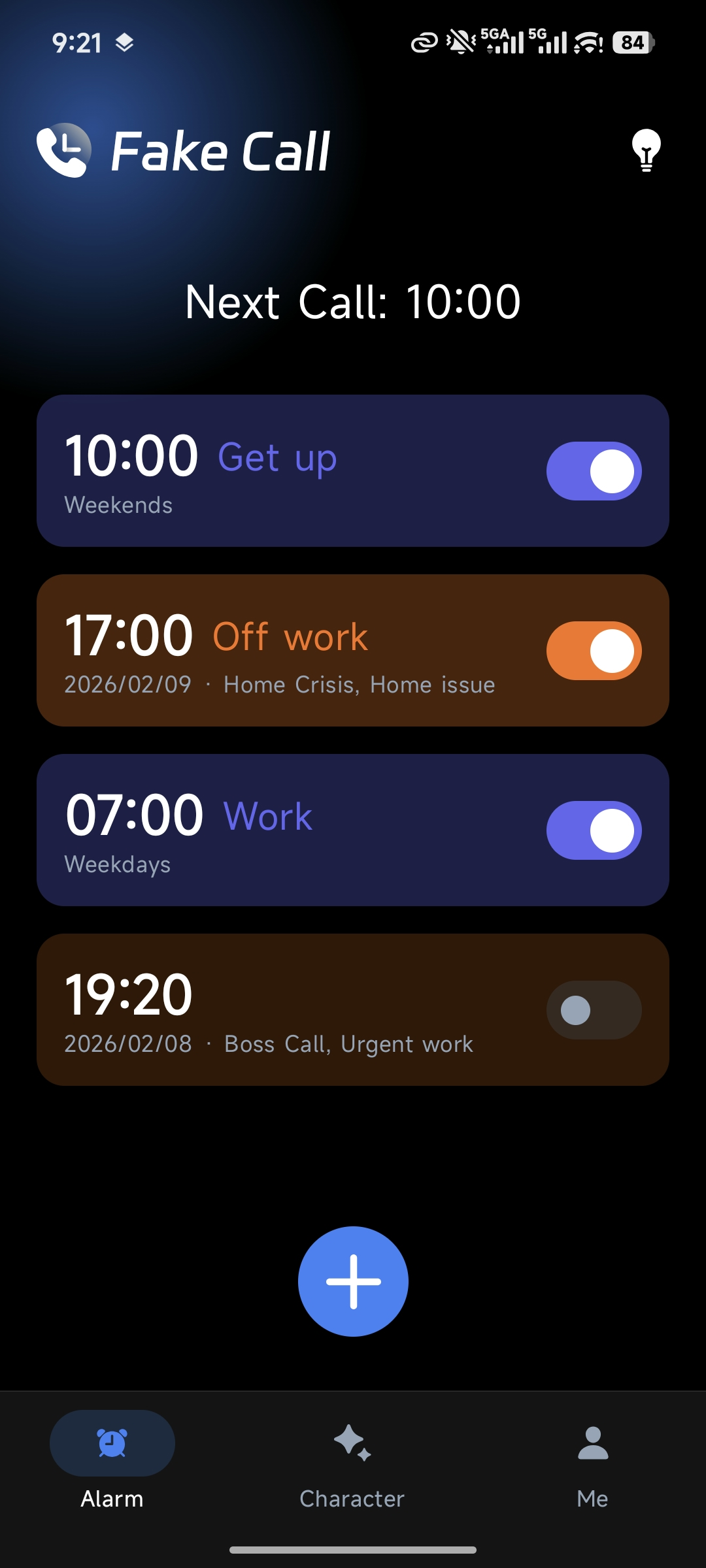
Alarm List
-
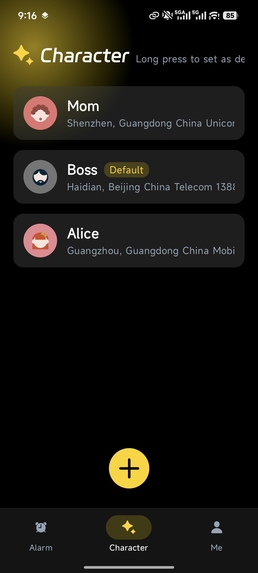
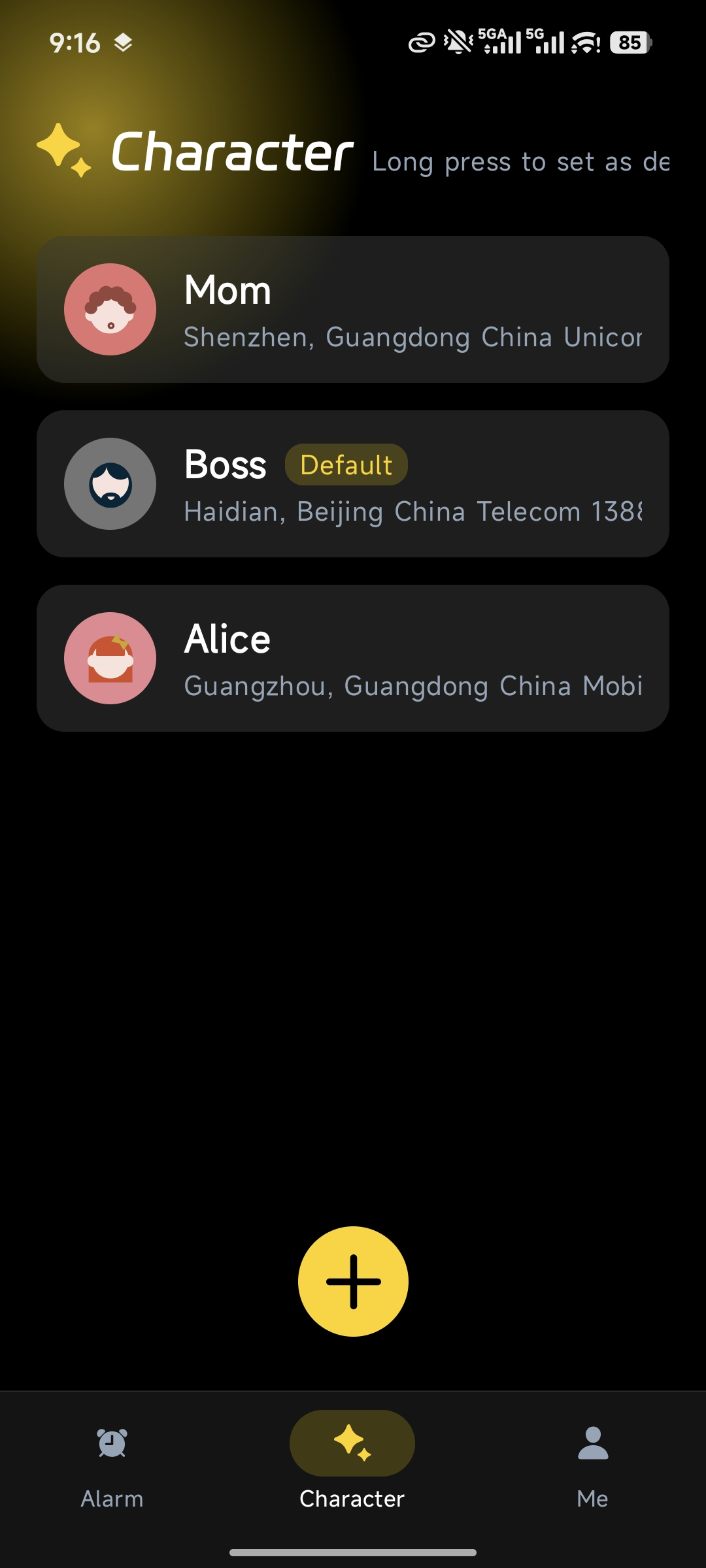
Character Card
-
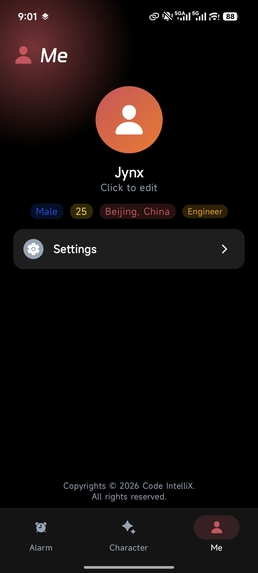
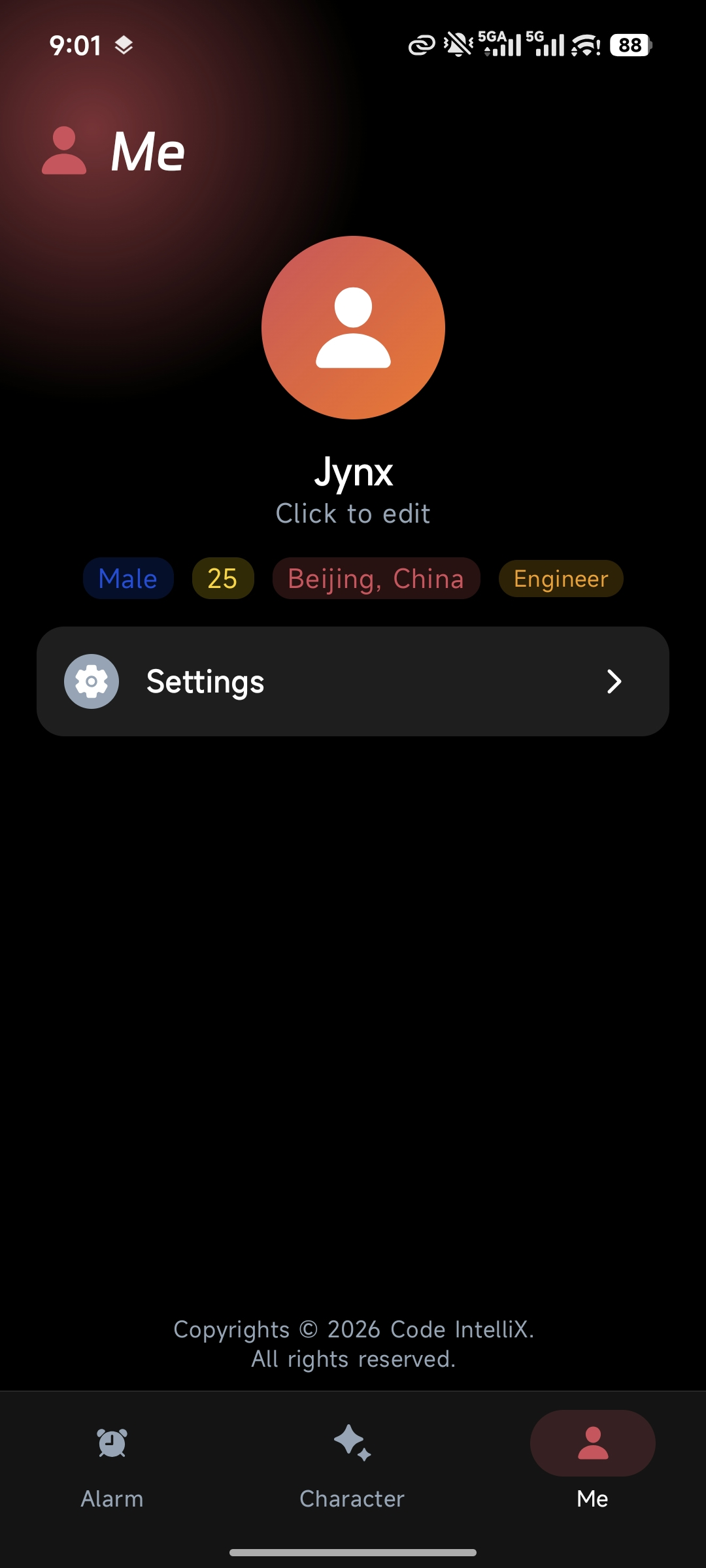
Personal Profile
-
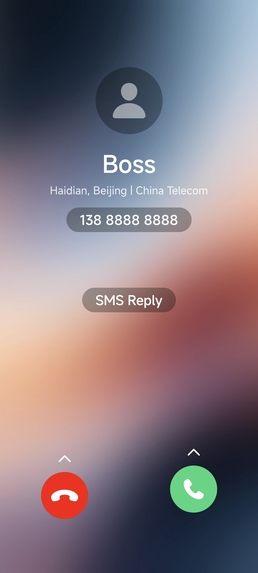
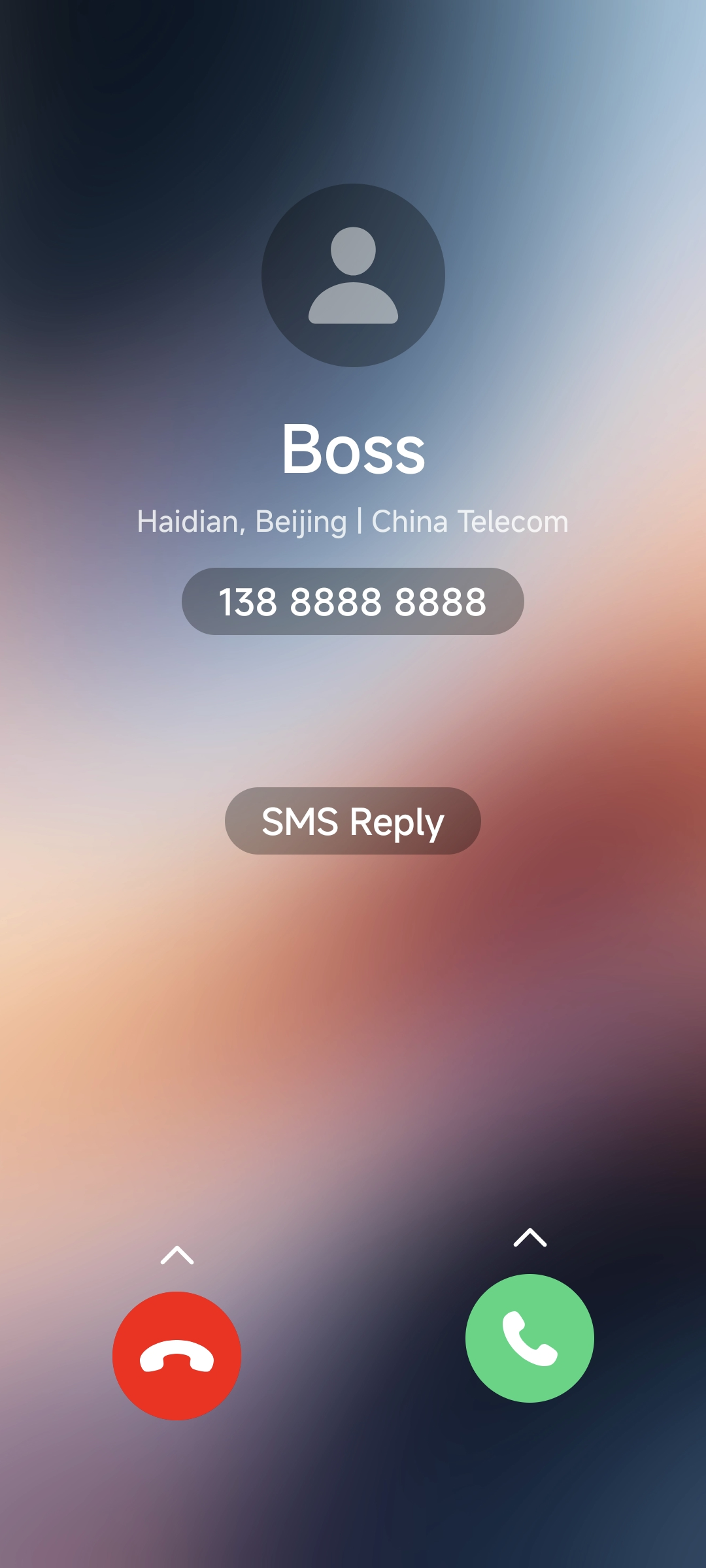
Ringing Interface
-
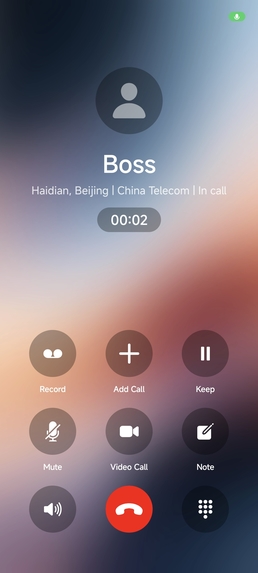
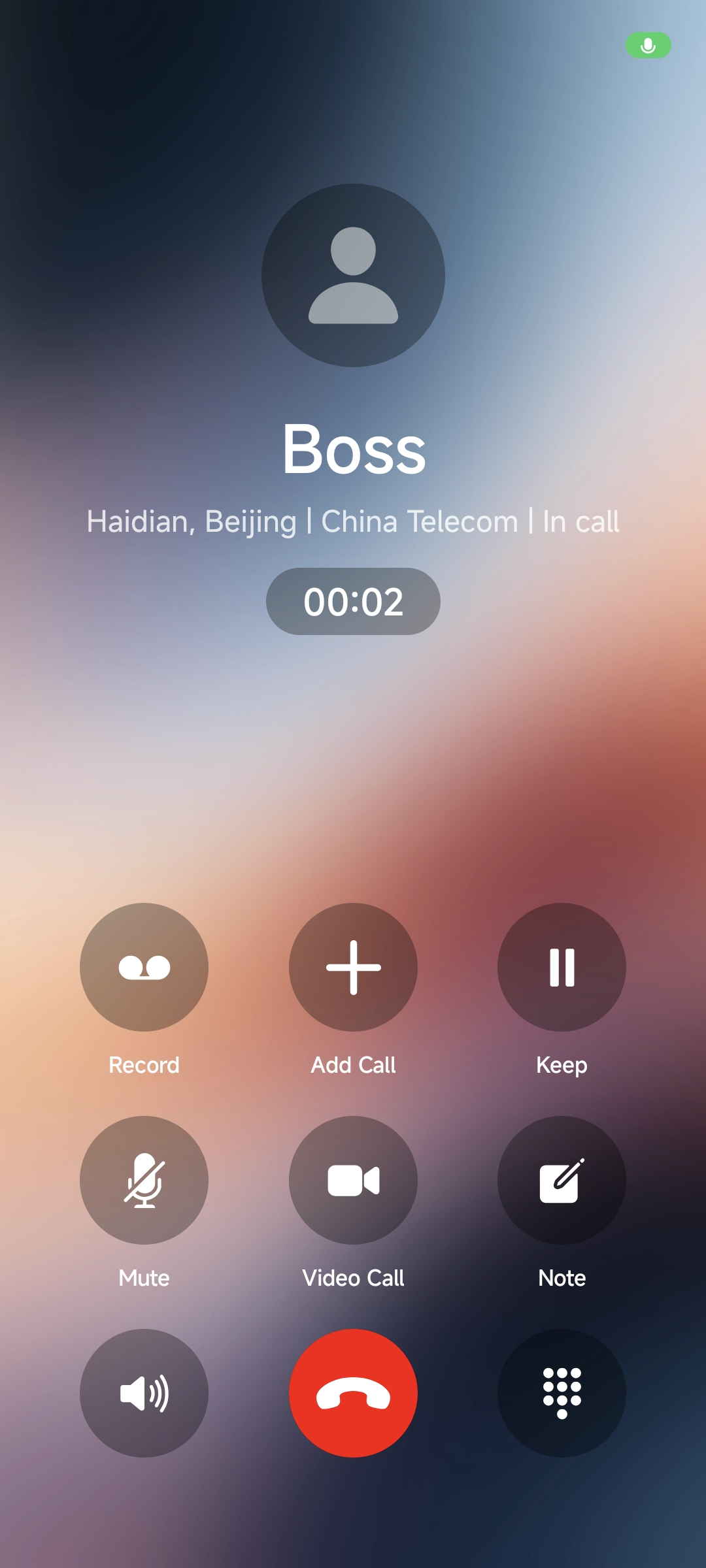
Call Interface
Inspiration
In many social scenarios, we often face the dilemma of a "graceful exit." Whether it is a blind date that has lost its spark or a professional gathering that has overstayed its purpose, people frequently rely on pre-set alarms as a pretext to leave. However, traditional alarms have two fatal "giveaways":
- Visual Discrepancy: The alarm interface looks nothing like a real incoming call, making it easily detectable.
- Auditory Absence: The silence or repetitive buzzing after "answering" makes the excuse feel hollow and unconvincing. This led to the birth of FakeCall—a "Social Escape Pod" designed to provide a high-fidelity, convincing exit strategy.
What it does
FakeCall is a high-simulation virtual calling application that allows users to regain control over their social schedule.
- Deep Customization: Users can define the "caller's" identity, such as a boss, a parent, or a roommate.
- Immersive Audio Feedback: By selecting specific persona cards and defining the conversational logic, the app plays realistic audio once the call is "answered," ensuring the excuse is bulletproof.
How we built it
As an automation student, I approached this project with an emphasis on system reliability and seamless integration.
- Core Framework: Developed in Android Studio, utilizing system APIs to mimic the native incoming call UI.
- AI-Assisted Development: Leveraged Gemini to co-pilot the complex logic implementation and design the brand’s visual identity.
- Voice Integration: Explored the integration of Text-to-Speech (TTS) and voice cloning parameters to create authentic vocal responses.
Challenges we ran into
The primary challenge was balancing Realism with Latency. A convincing fake call requires an immediate response once the trigger is activated. To ensure the experience felt natural, we focused on optimizing the data flow to minimize the total response time :
- The response time of the trigger mechanism.
- The time required for UI rendering.
- The loading and playback time of the audio stream.
Accomplishments that we're proud of
We successfully bridged the gap between visual and auditory deception. FakeCall is more than just a tool; it is a "Digital Shield" that empowers users to exit awkward situations gracefully without damaging social harmony.
What we learned
This project reinforced the idea that AI is not just a coding assistant but a bridge between technical potential and human emotional needs. My research into advanced AI architectures has shown me that there is vast potential for voice AI to create even more natural and real-time interactions.
What's next for FakeCall
- UX Enhancement: Introducing a wider variety of preset "scenario packs" for different social settings.
- Optimization: Further reducing latency and power consumption for smoother background operation.
- Local Deployment: Exploring lightweight, on-device models to reduce cloud dependency and costs.
- Community Outreach: Promoting the app to help more users reclaim their "freedom of exit" in social environments.
Built With
- accompanist
- android
- android-studio
- gemini3
- java
- jetpack-compose
- jetpack-lifecycle
- jetpack-navigation
- jetpack-room
- jetpack-viewmodel
- kotlin
- okhttp
- qwen
- sqlite
- viewmodel
- vosk


Log in or sign up for Devpost to join the conversation.