Fake News Detector: Combating Misinformation with ML
Inspiration
The spread of misinformation online has become one of the most pressing challenges of our digital age. As someone who values truth and factual reporting, I was inspired to create a tool that could help users quickly determine the credibility of news articles they encounter online. The 2020-2024 election cycles, COVID-19 pandemic, and various international conflicts showed how damaging fake news can be when it spreads unchecked through social media and messaging platforms.
My inspiration came from witnessing family members and friends sharing questionable news articles without verification. I wanted to build something accessible that could serve as a first line of defense against misinformation, empowering everyday internet users to become more discerning consumers of online content.
What It Does
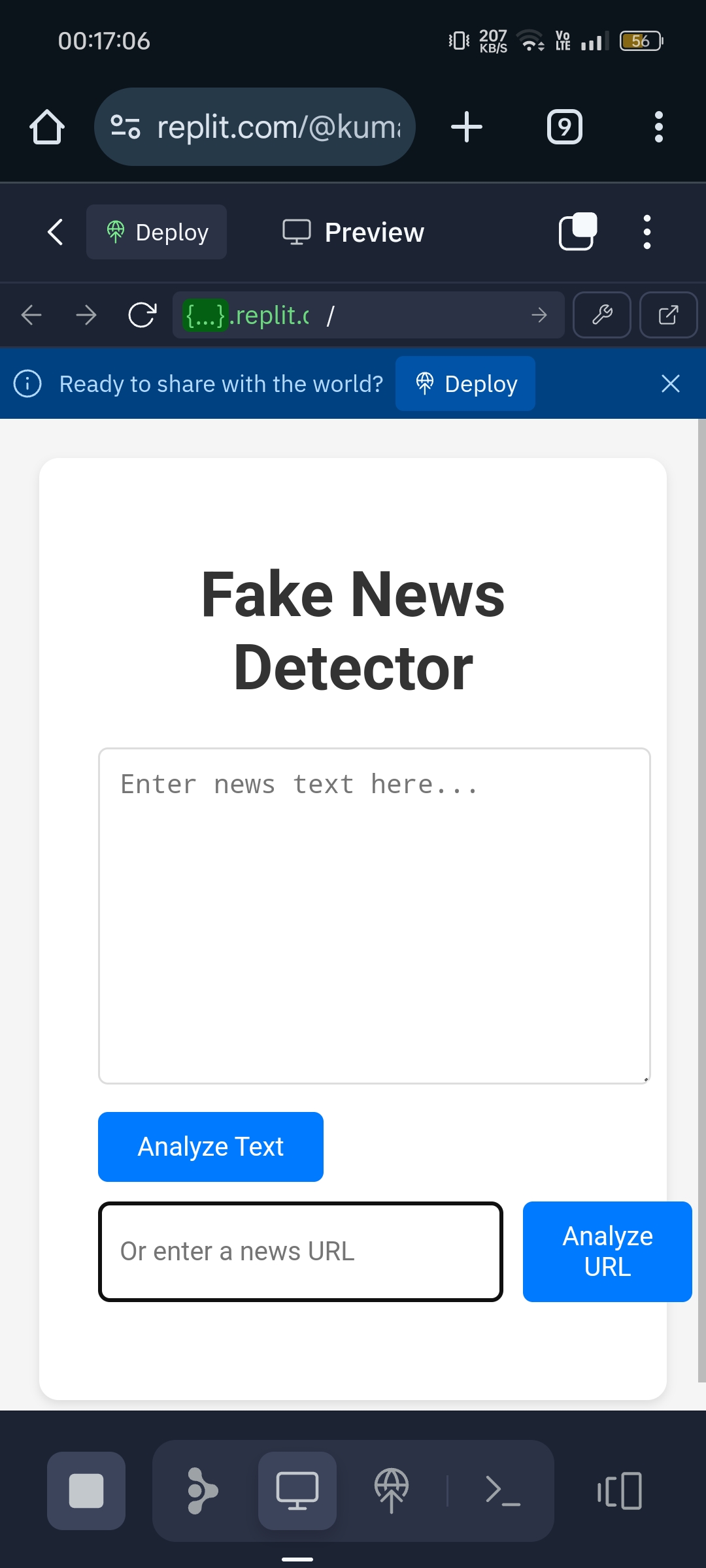
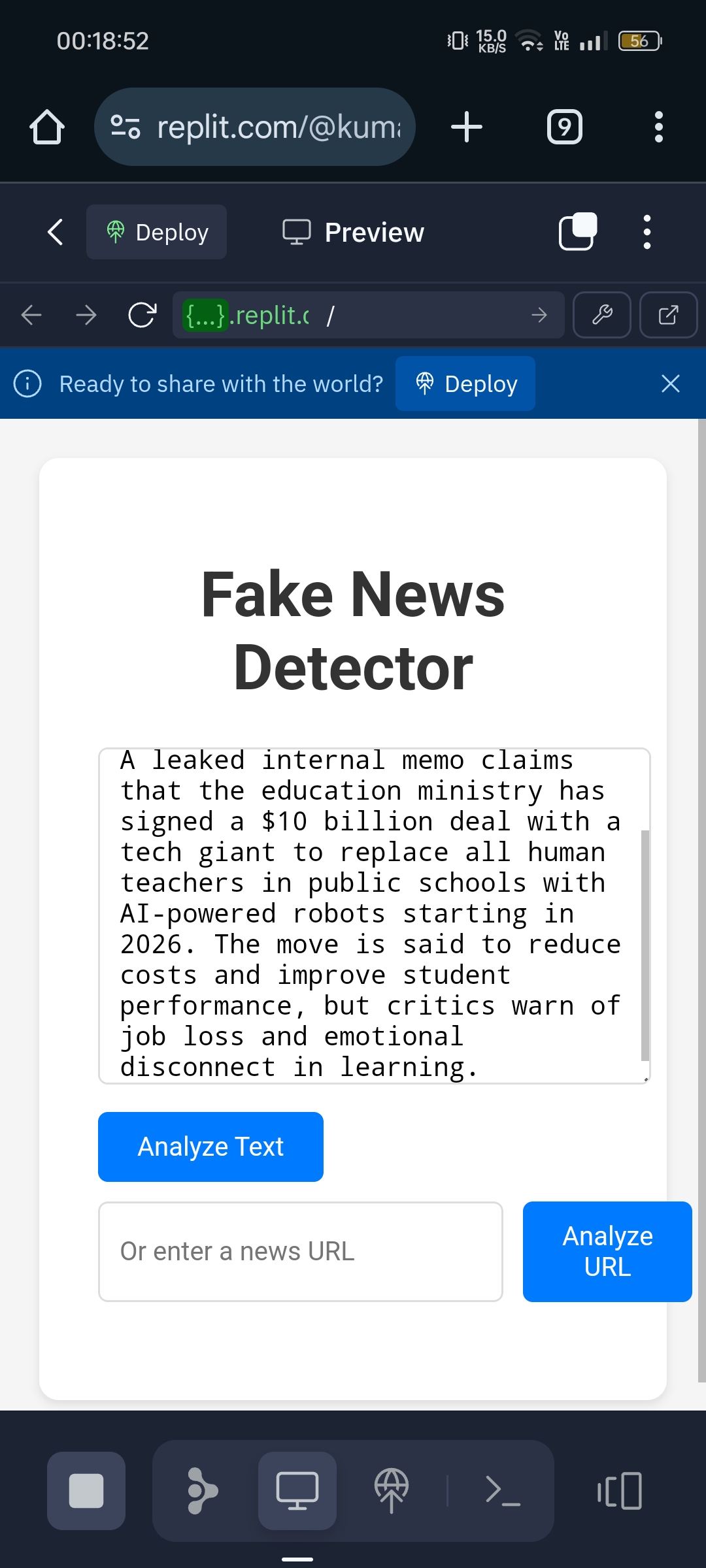
The Fake News Detector is a web application that uses natural language processing and machine learning to analyze news articles and determine their likelihood of being fake or misleading. Users can:
- Paste article text directly into the app
- Provide a URL to a news article for automatic extraction and analysis
- Receive a credibility score and classification (Real, Fake, or Needs Fact-Checking)
- View explanations of which textual features influenced the classification
- Get links to fact-checking resources related to the article's topic
The tool doesn't just provide a binary "real/fake" output—it offers context and explanations that help users understand why certain content might be suspicious, promoting critical thinking about media consumption.
How I Built It
The project consists of three main components:
1. Machine Learning Model
- Used Python with scikit-learn and NLTK for text processing
- Trained multiple classification models (Logistic Regression, Random Forest, and BERT)
- Experimented with TF-IDF and word embeddings for feature extraction
- Trained on datasets including LIAR, FakeNewsNet, and Kaggle's fake news collection
- Implemented feature importance extraction to explain model decisions
2. Flask Backend
- Developed a RESTful API with Flask to serve the ML model
- Created endpoints for text analysis and URL content extraction
- Implemented BeautifulSoup for web scraping article content
- Added preprocessing pipelines to clean and standardize text inputs
- Set up CORS handling for frontend-backend communication
3. React Frontend
- Built a responsive, user-friendly interface with React and Tailwind CSS
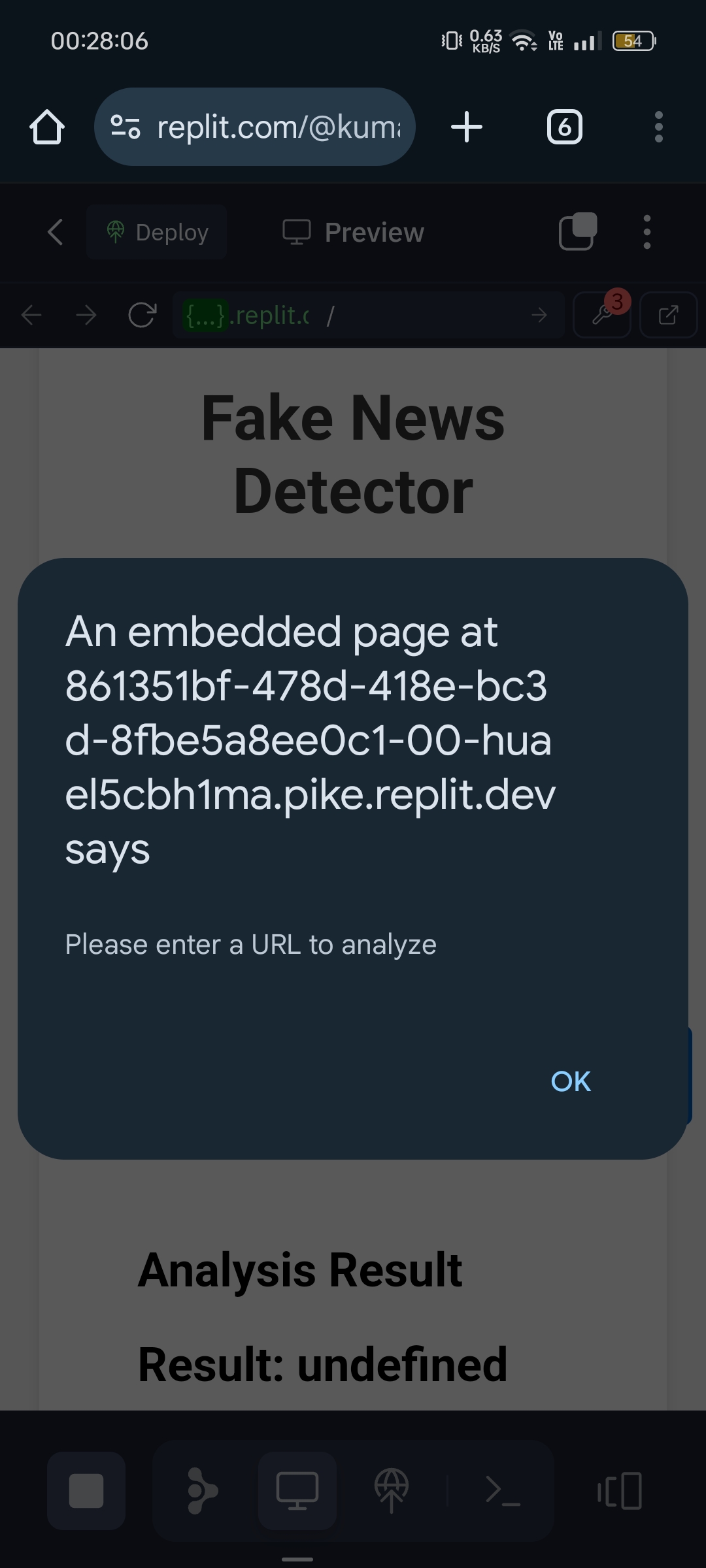
- Implemented form validation and error handling
- Created visualizations to display credibility scores and feature importance
- Added loading states and animations for better UX during analysis
- Designed a clean, intuitive interface accessible to non-technical users
Challenges I Faced
Data Quality and Bias
One of the biggest challenges was finding high-quality, balanced datasets. Many available fake news datasets are biased toward certain topics or time periods. I had to combine multiple sources and implement careful preprocessing to mitigate these biases.
Model Accuracy Trade-offs
Striking the right balance between precision and recall proved difficult. False positives (marking legitimate news as fake) could undermine user trust, while false negatives (missing fake news) would defeat the purpose of the tool. I ultimately optimized for precision at the expense of some recall, as I believed it was better to be conservative in labeling content as fake.
Content Extraction
News websites have vastly different structures, making automatic content extraction challenging. Some sites actively block scraping, while others embed content in complex JavaScript. I had to implement several fallback mechanisms and handle numerous edge cases to make URL analysis reliable.
Processing Speed
Initial versions of the model were too slow for a good user experience. I had to optimize the preprocessing pipeline and model inference to achieve acceptable response times without sacrificing accuracy.
Deployment Complexity
Deploying a full-stack application with an ML model proved more complex than anticipated. The model files were large, which created challenges for deployment platforms with size limitations. I ultimately used a combination of model quantization and cloud storage to overcome these limitations.
Accomplishments I'm Proud Of
- Achieving 89% accuracy on validation data while maintaining reasonable processing speeds
- Creating an intuitive UI that non-technical users can understand and benefit from
- Successfully implementing explainable AI features that help users understand why certain content was flagged
- Building a complete end-to-end solution from data collection to deployment
- Making the tool open source so others can contribute to fighting misinformation
What I Learned
This project deepened my understanding of NLP techniques and the challenges of text classification. I learned that machine learning is only part of the solution to fake news—context, explanation, and user education are equally important.
I also gained valuable experience in:
- Fine-tuning NLP models for specific domains
- Building responsive, accessible web interfaces
- Deploying ML models to production environments
- Handling user data responsibly
- Balancing technical capabilities with user needs
What's Next for Fake News Detector
I plan to continue improving the project in several ways:
- Implementing a browser extension for real-time analysis while browsing
- Adding multilingual support to combat fake news in various languages
- Creating an API that other developers can integrate into their applications
- Incorporating more sophisticated fact-checking through external API integrations
- Building a user feedback loop to continually improve the model
- Developing educational resources to help users better understand media literacy
The fight against misinformation is ongoing, and this tool is just one contribution to that larger effort. I hope it helps users become more critical consumers of online content and slows the spread of harmful fake news.
Built With
- backend
- fakenewsdetection
- flask
- frontend
- fullstack
- machine-learning
- mlmodel
- naturallanguageprocessing
- python
- react
- restapi
- textclassification

Log in or sign up for Devpost to join the conversation.