-
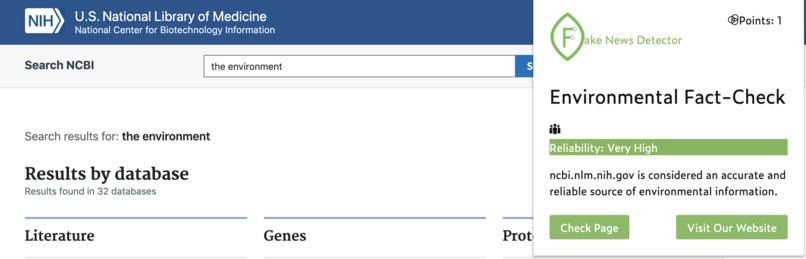
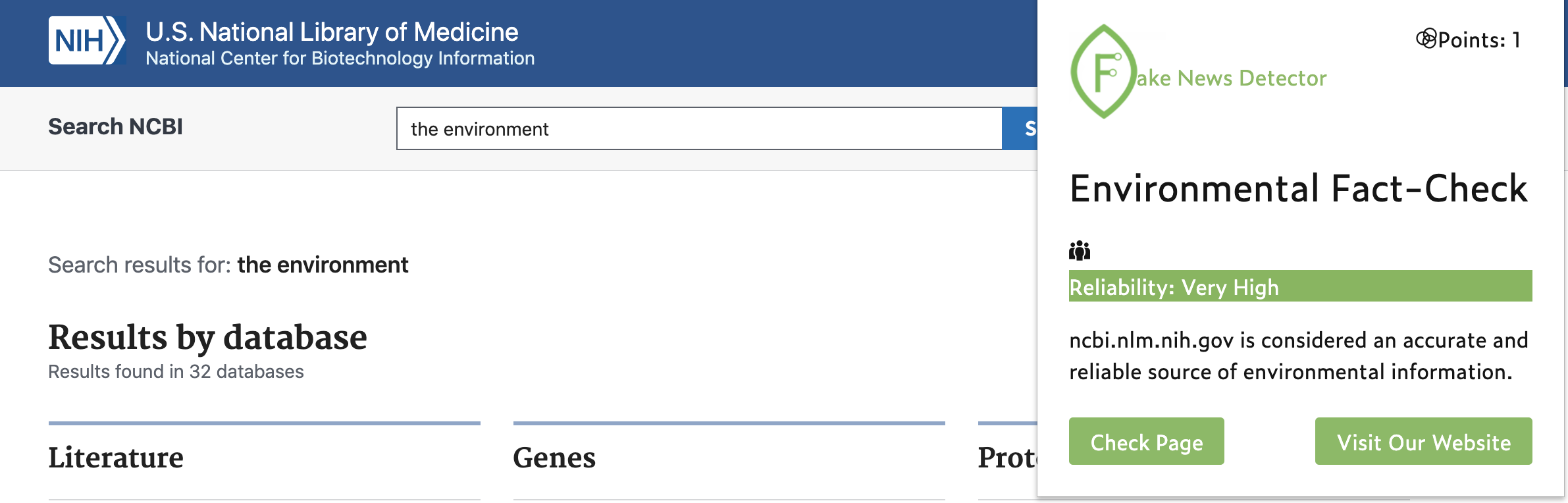
Websites like the National Center for Biotechnology Information generate a high rating and give the users a point for reading them.
-
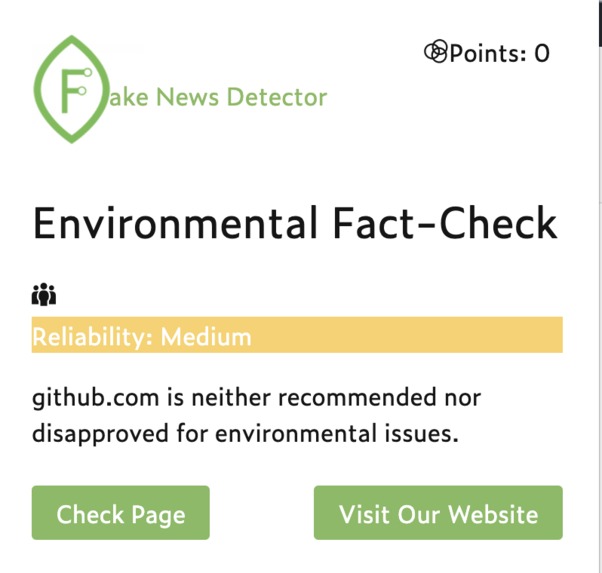
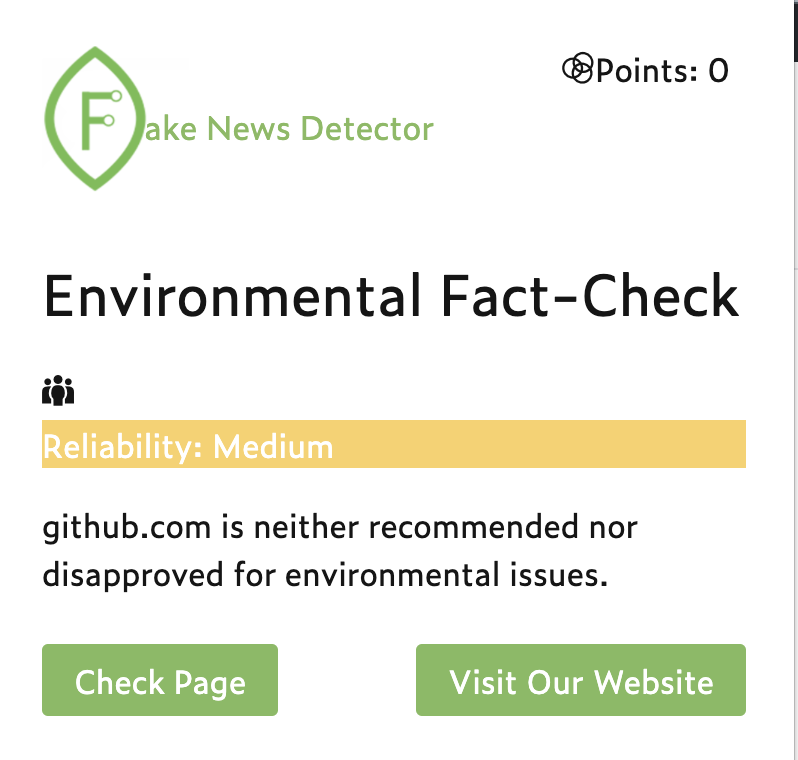
Websites like github generate a medium rating.
-
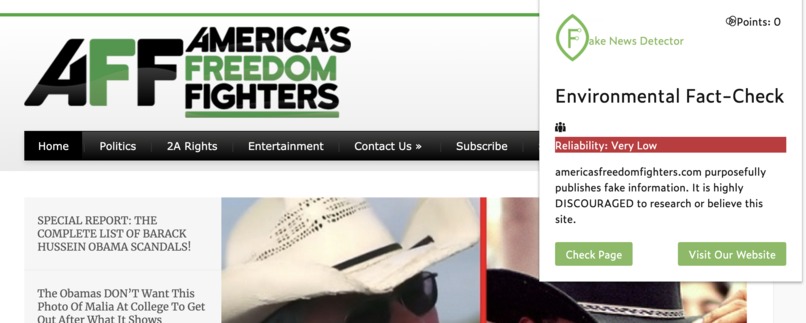
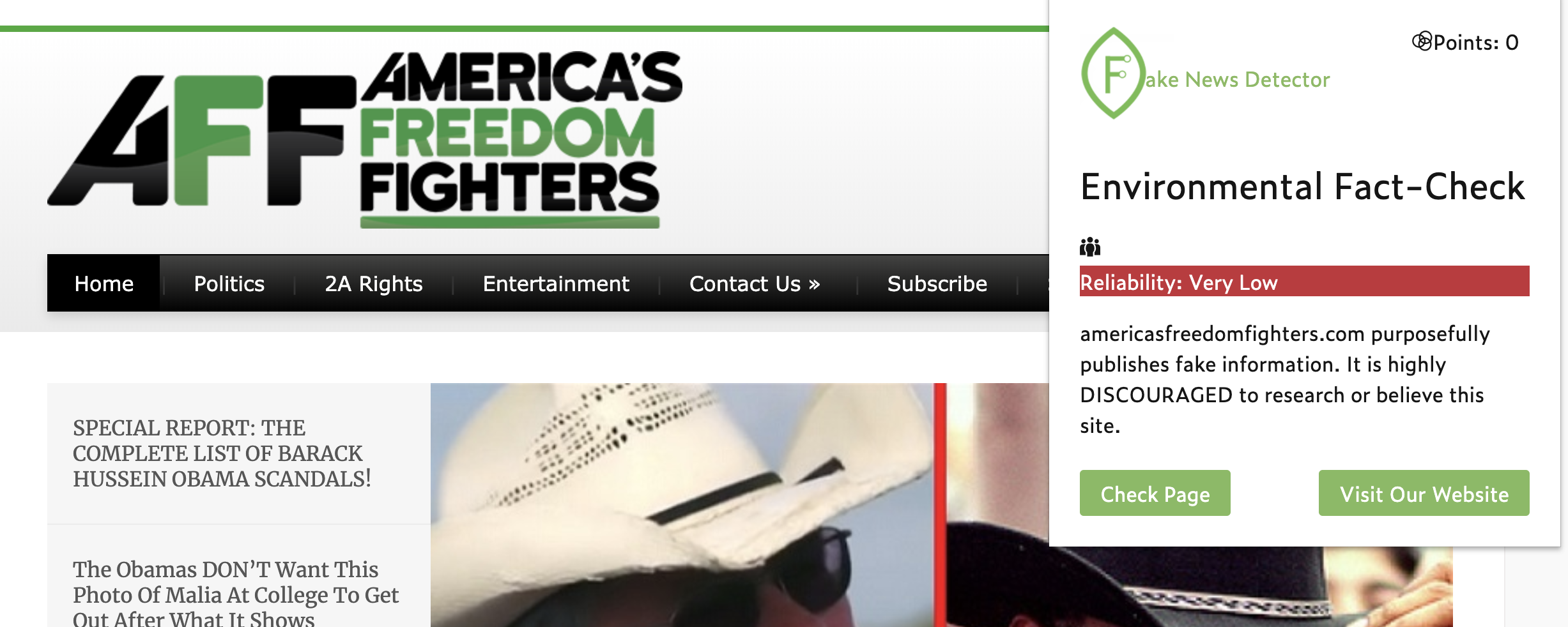
Websites like this one generate a low rating because they are known to publish misinformation.b
-
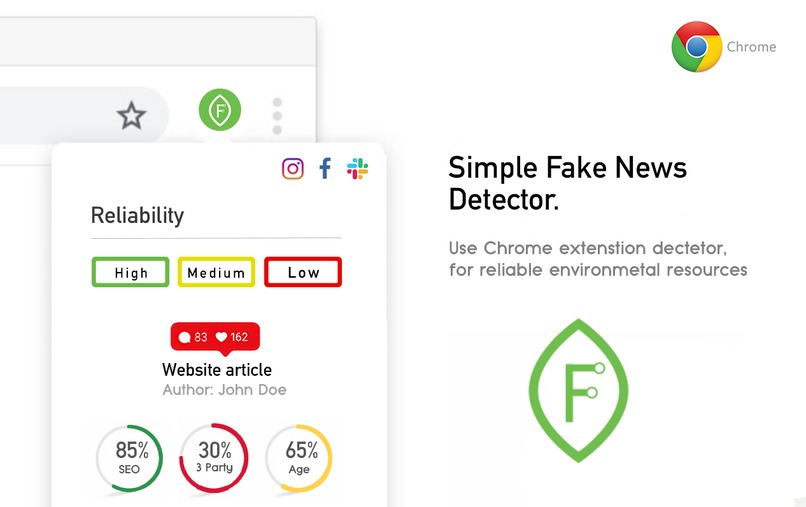
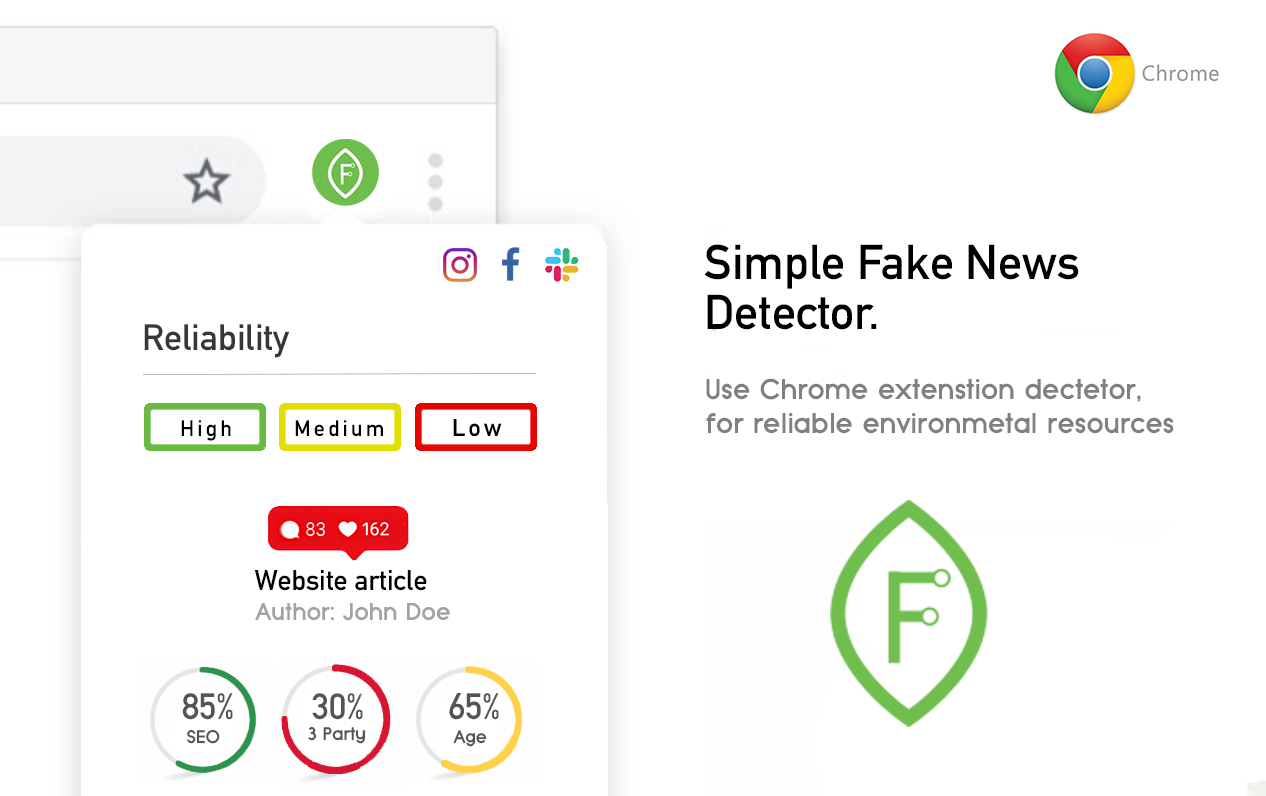
A mockup to show what a final product would look like
Inspiration
As we were all people who were interested in the environment, we wanted to create a more environmentally conscious society. One issue that we felt connected well and was unique was this goal of combating misinformation in regards to environmental issues. The prevalence of climate denialism on the internet has made it imperative that we address people's fundamental misunderstandings about our environment.
What it does
It looks at a webpage's address/name and displays one of three colors: red, green, and yellow. Red websites are those known to purposefully publish misinformation. Yellow websites are those that are reliable, but not extremely reputable, and green are well-known and reputable websites. Each time the user goes to a green website, their score increments, thus motivating them to seek out true information.
How we built it
As no one on our team had built a chrome extension before, we began by looking in to chrome extension tutorials and good design practices. We then began implementing each step in the process. First, we started by reading in URLs in the Javascript and comparing them to the list of fake news sites we had found in our research. Then we worked on changing the color of website based on whether it was fake or not. Once the mechanics of that process began to work, we began to build the popup interface, and added other features, like the link to the website.
The front-end members team spent this time designing logos and the website.
Challenges we ran into
It was difficult to interact with both the webpage and the popup window at the same time, especially since it meant that these two pages had different consoles, making it harder to debug. Because of how the window updates, the points for reading reliable sources were also a problem, as sometimes they would not increment at all, or increment by twos because the incrementing function was called in two different files.
Accomplishments that we're proud of
The fact that we completed our extension is the greatest accomplishment of our project, along the fact that it works and could be used in a real-world situation. In particular, the aesthetic design and the color and point based systems are aspects that we are particularly proud of.
What we learned
We learned that our plans, although overly ambitious at times, can result in a working product that could help a social cause that we're passionate about!
What's next for Fake News Detector: Environmental Fact Check
We have a lot of ideas for the future, some of which include:
- A point counter that automatically reloads
- Having a login/scoreboard feature
- Larger lists/datasets of websites
- Having a customizable pop-up window
- A wider range of reliability values (i.e. if they're reliable but biased because they're funded by certain companies, etc.)


Log in or sign up for Devpost to join the conversation.