Inspiration
This project was inspired by a research paper that I came across recently which uses a combination of naive Bayes, SVM, and semantic analysis to predict fake news.
What it does
My model takes the news as input and out says if the news is real/fake.
How we built it
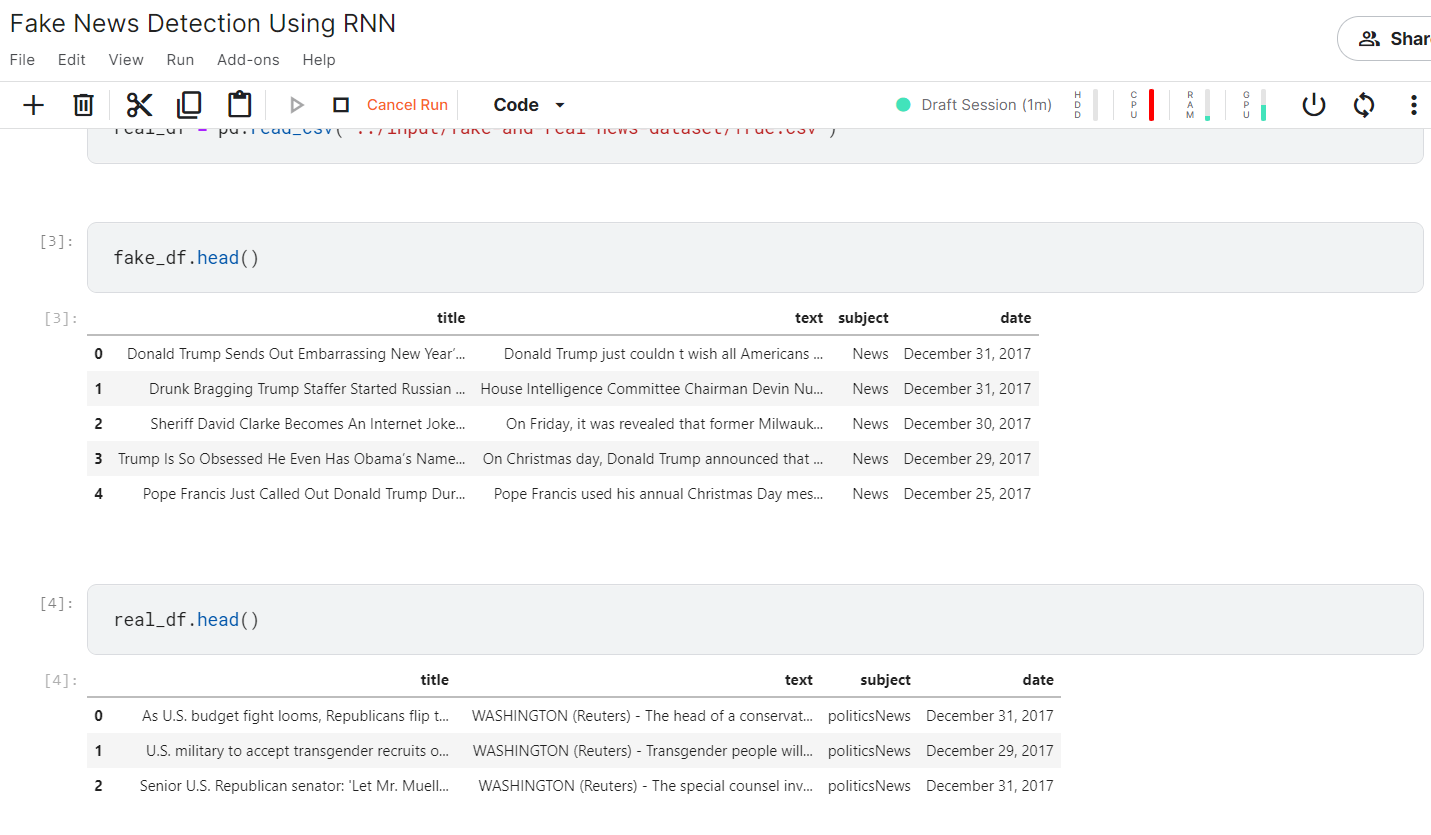
Dataset used I used the Kaggle dataset :link for training.
Preprocessing For text pre-processing, I used functions from Tensorflow. This includes removing unwanted words in the news like is, that, are, etc, and removing special characters like $, %, ! which doesn't make sense to the news. Then I did tokenization, stemming, etc that needs to be done before using any NLP model.
Selecting the model I collected few neural network algorithms like CNN, RNN, and ML algorithms like logistic regression, Multivariate Bayes classification (also tuned hyper-parameter), XGboost, random forest, and decision tree for the prediction. I tested it on the Kaggle dataset found that RNN gave a maximum accuracy of over 0.99
Challenges we ran into
It was difficult to first search for the best dataset. Since I am new to DL, it was difficult to understand neural networks and the way it works. Everything else was a cakewalk.
Accomplishments that we're proud of
I aim to develop this model further to help in national security.
What we learned
I learned more about neural networks like CNN, RNN and using a combination of ML algo like Naive Bayes and SVM.
What's next for Fake Content detection using RNN
I wish to enlarge my domain of fake news classification for social media posts and aim to achieve further accuracy

Log in or sign up for Devpost to join the conversation.