-
-
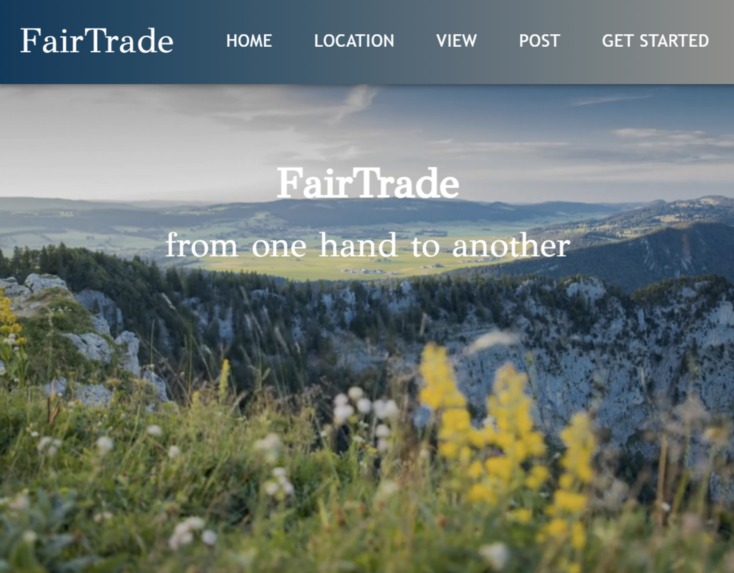
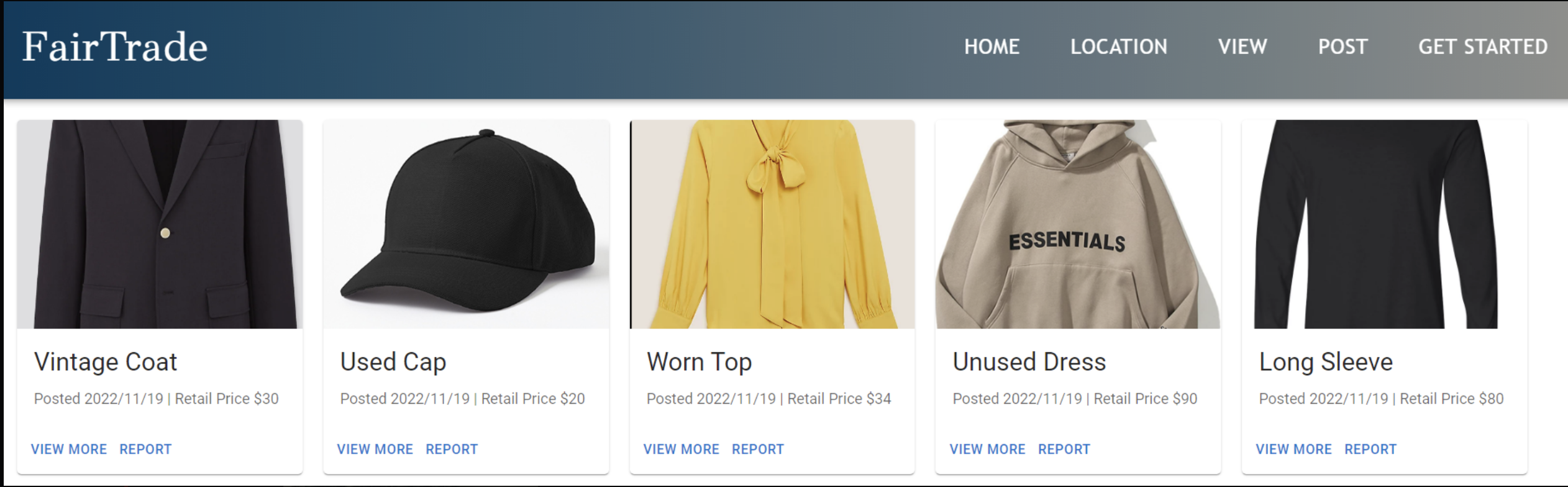
FairTrade Landing Page
-
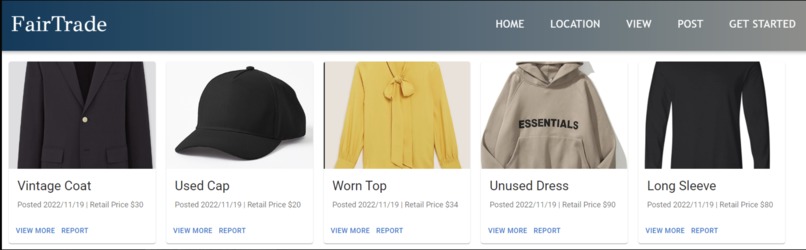
Product View Page
-
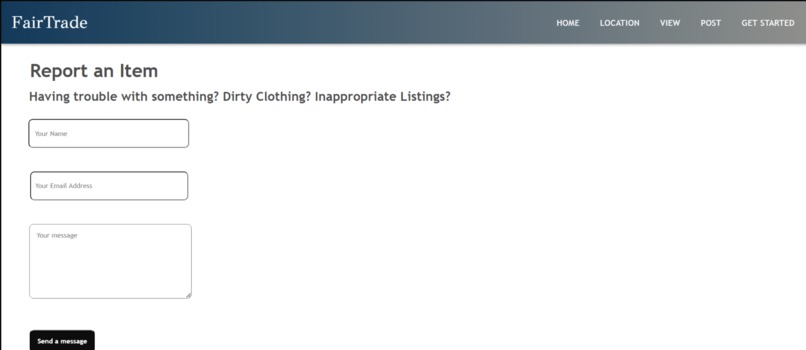
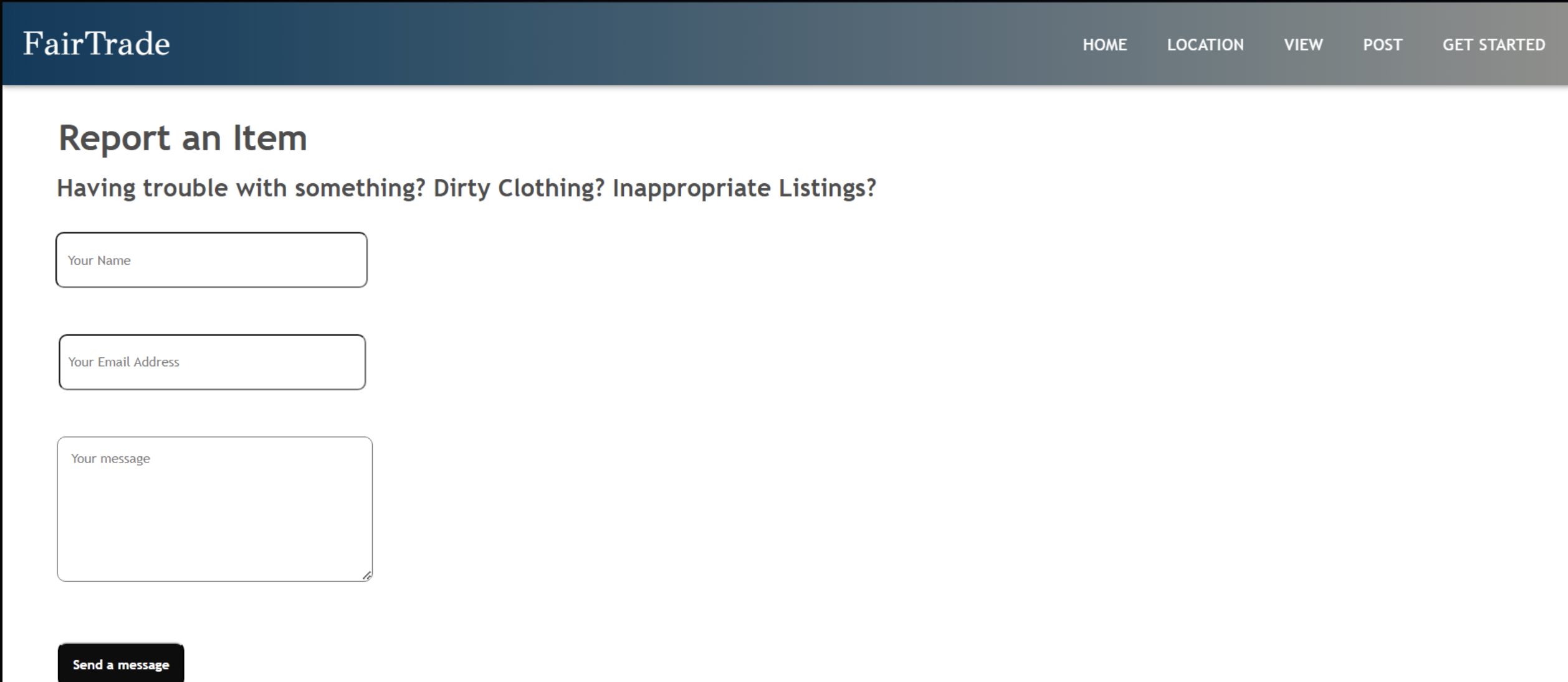
Report Page
Inspiration
Our main inspiration for this project was the sheer amount of clothing that is being put into the world. However, there isn't much that we ourselves could do when it comes to regulating the amount of clothing produced, so we decided to try and reduce the incenstive on the consumer side. By having a system that individuals could trade their clothing at no cost, we are able to hopefully reduce consumer waste.
What it does
Our full-stack web application FairTrade allows users to post items that they would like to trade through a submission page. On another page, all these items are uploaded and users check what items they would like to trade for their own items. They are also able to report on the web application if anything is wrong, whether it be the clothes they received are dirty or a replica of an item being traded.
How we built it
FairTrade is built on Python, FastAPI, and MongoDB in the back end with React, JavaScript, and CSS in the front end. The web application is connected through fetch calls from FastAPI connecting the MongoDB database with React.
Challenges we ran into
One of the main challenges we ran into was attempting to add too many elements to our web application without finishing basic necessities first. In an attempt to add more to the web application and scale it, certain additions would either be too hard to implement or not worth the time sink. In hindsight, with many of us trying out different frameworks and languages for the first time our project would've moved a lot smoother if we finished simple tasks first before getting onto larger ones.
Accomplishments that we're proud of
The biggest accomplishment we're proud of is being able to utilize an API to connect our front-end and back-end. Many of us realized that using FireAPI was not such an easy task as expected. However, because using the API was so unwieldy and difficult at times to use, the satisfaction and reward at the end felt that much better.
What we learned
Many of us learned how to connect a full-stack web application for the first time through this project, specifically through FastAPI. We also learned to properly utilize GitHub to divvy up tasks. In particular, we used branches to make the tasks even easier to partition.
What's next for FairTrade
The next thing for FairTrade is the scalability of our project, whether it be with additions of identifying what type of clothes users add with machine learning or allowing the user to have an easier time by adding a chat box.
Built With
- css
- fastapi
- google-maps
- jsx
- mongodb
- python
- react

Log in or sign up for Devpost to join the conversation.