-
-
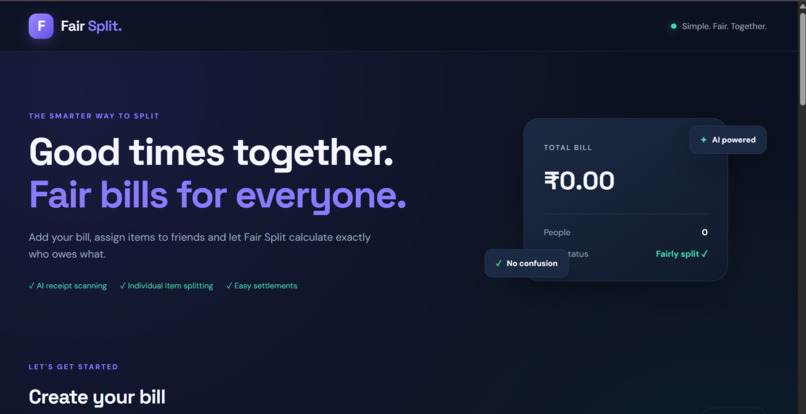
homepage
-
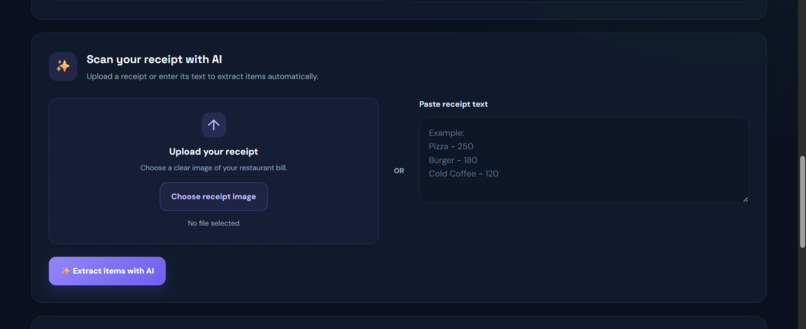
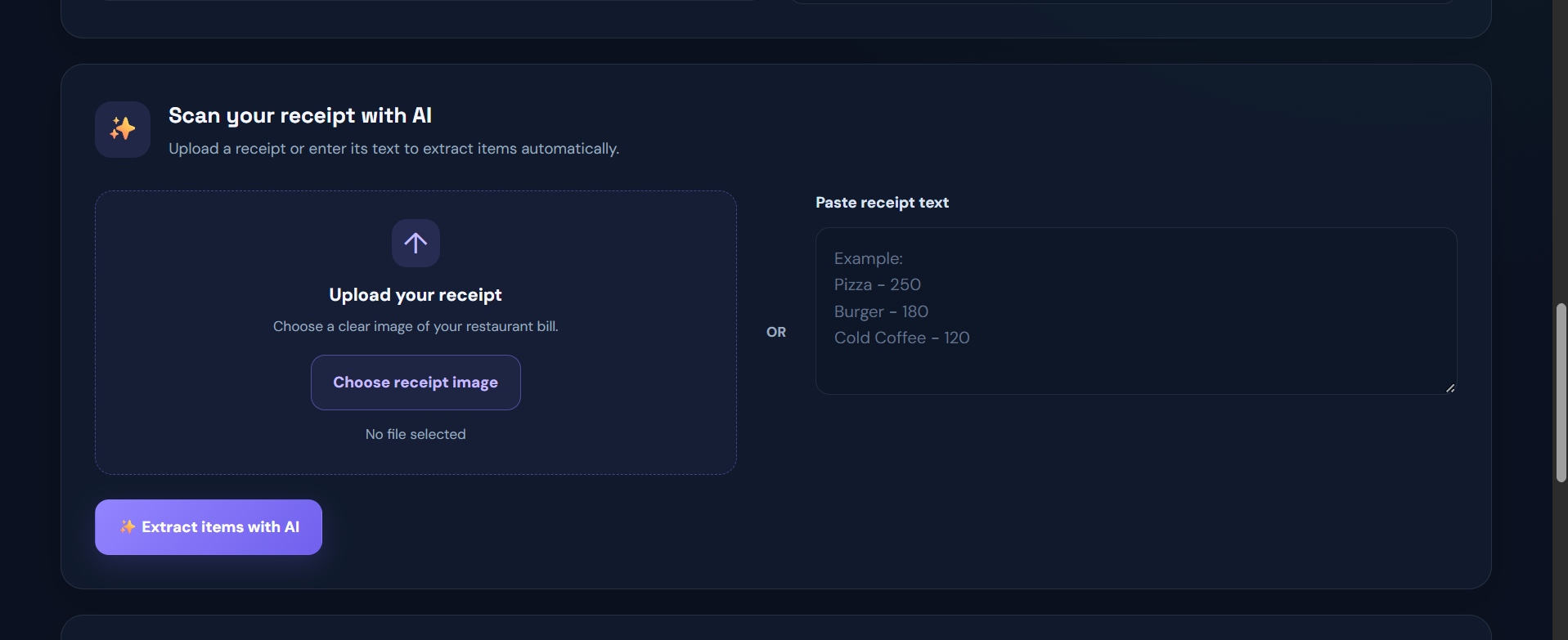
scan your receipt with AI
-
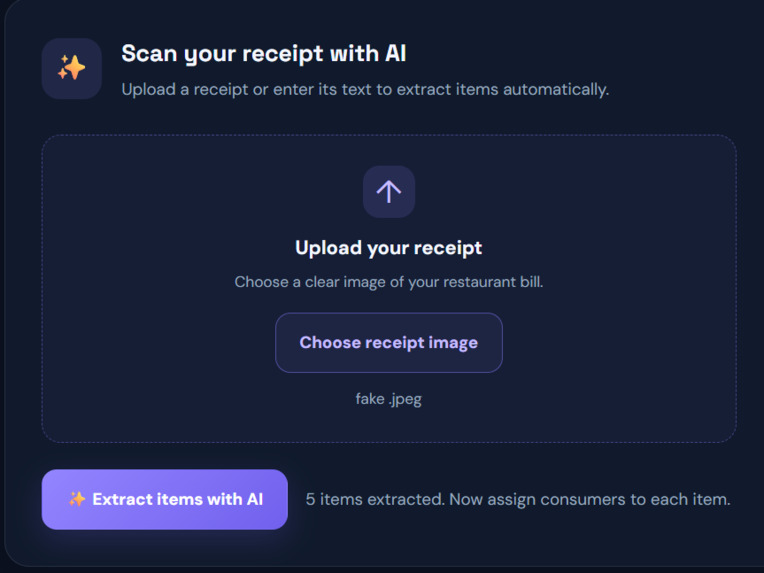
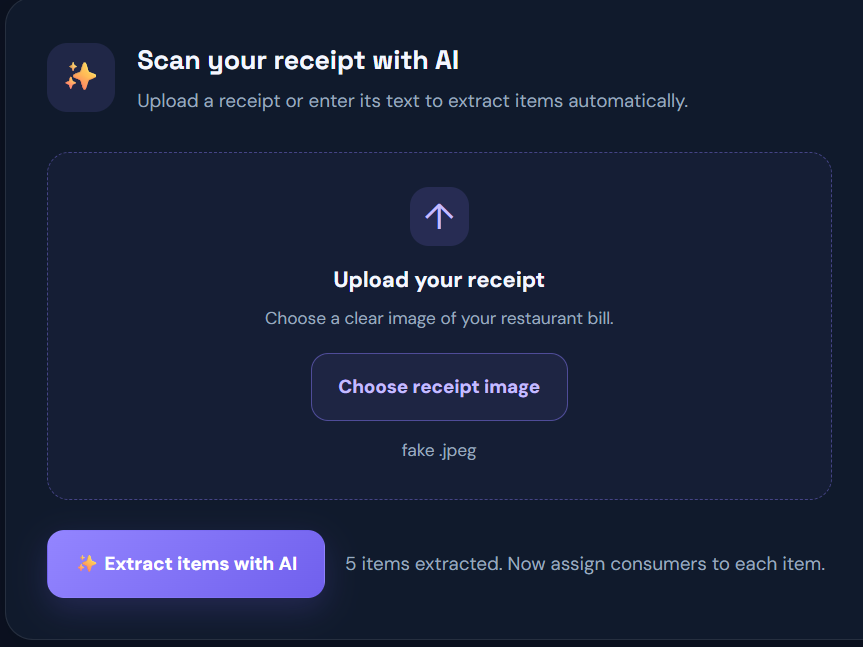
"Sample receipt uploaded for AI powered detection of 5 items"
-
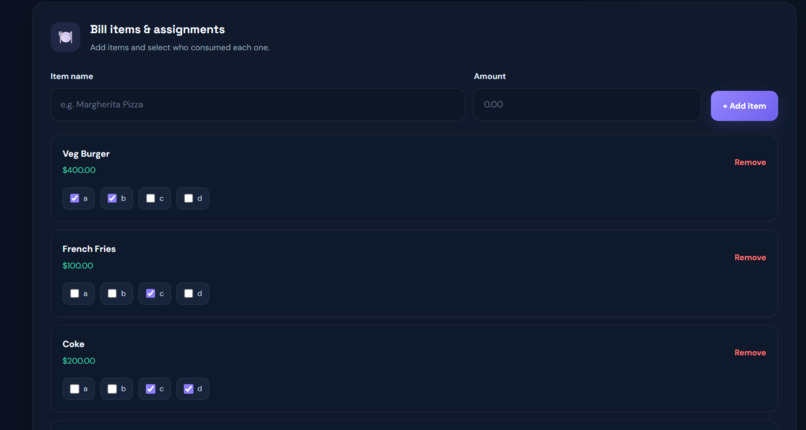
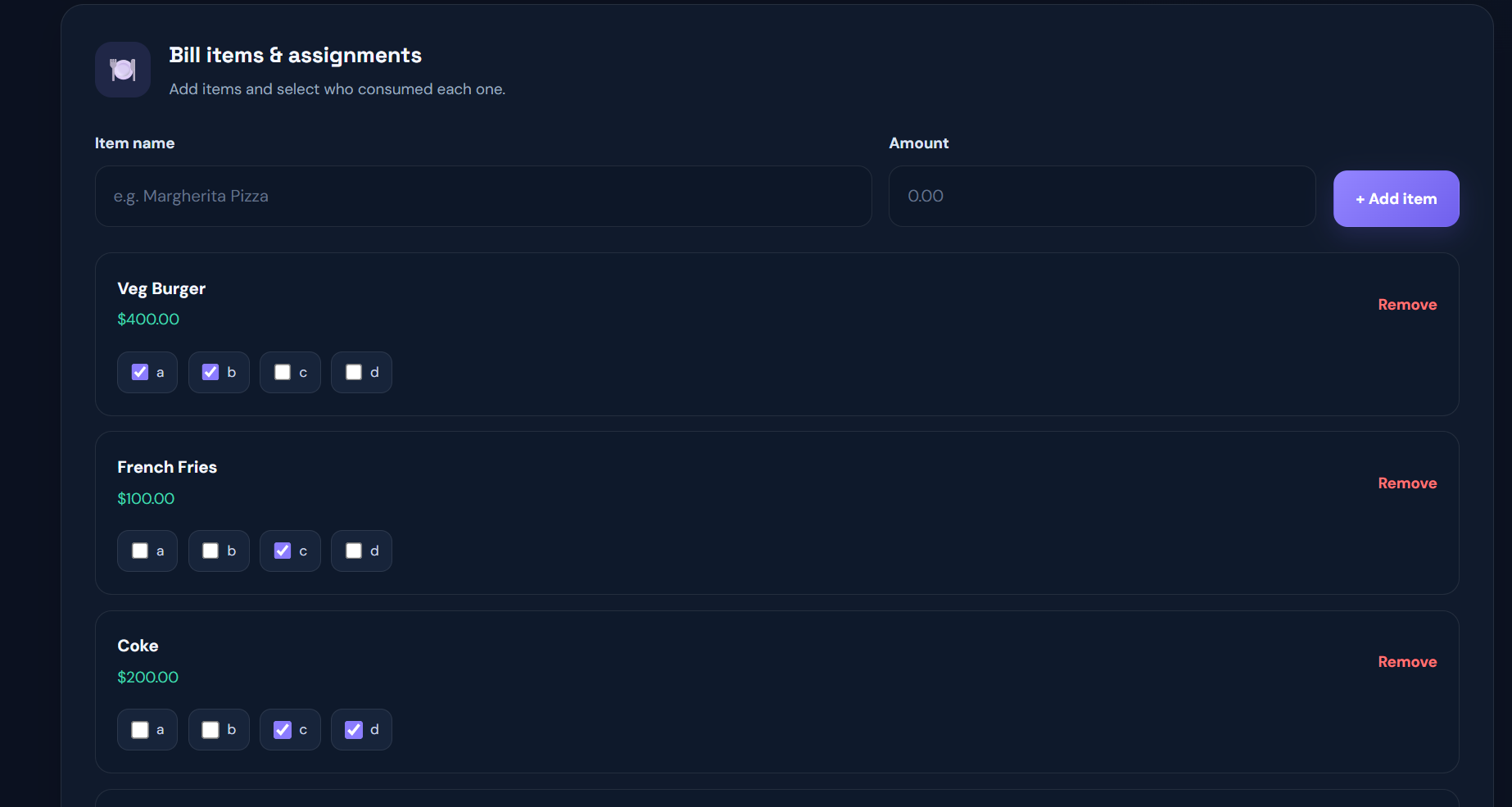
item assignment to consumers
-
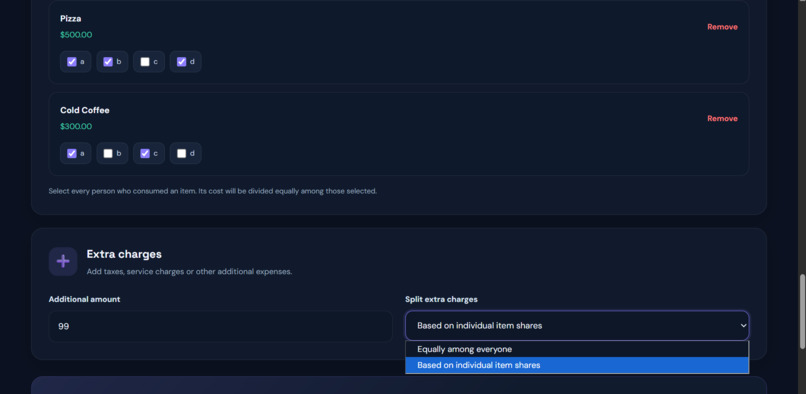
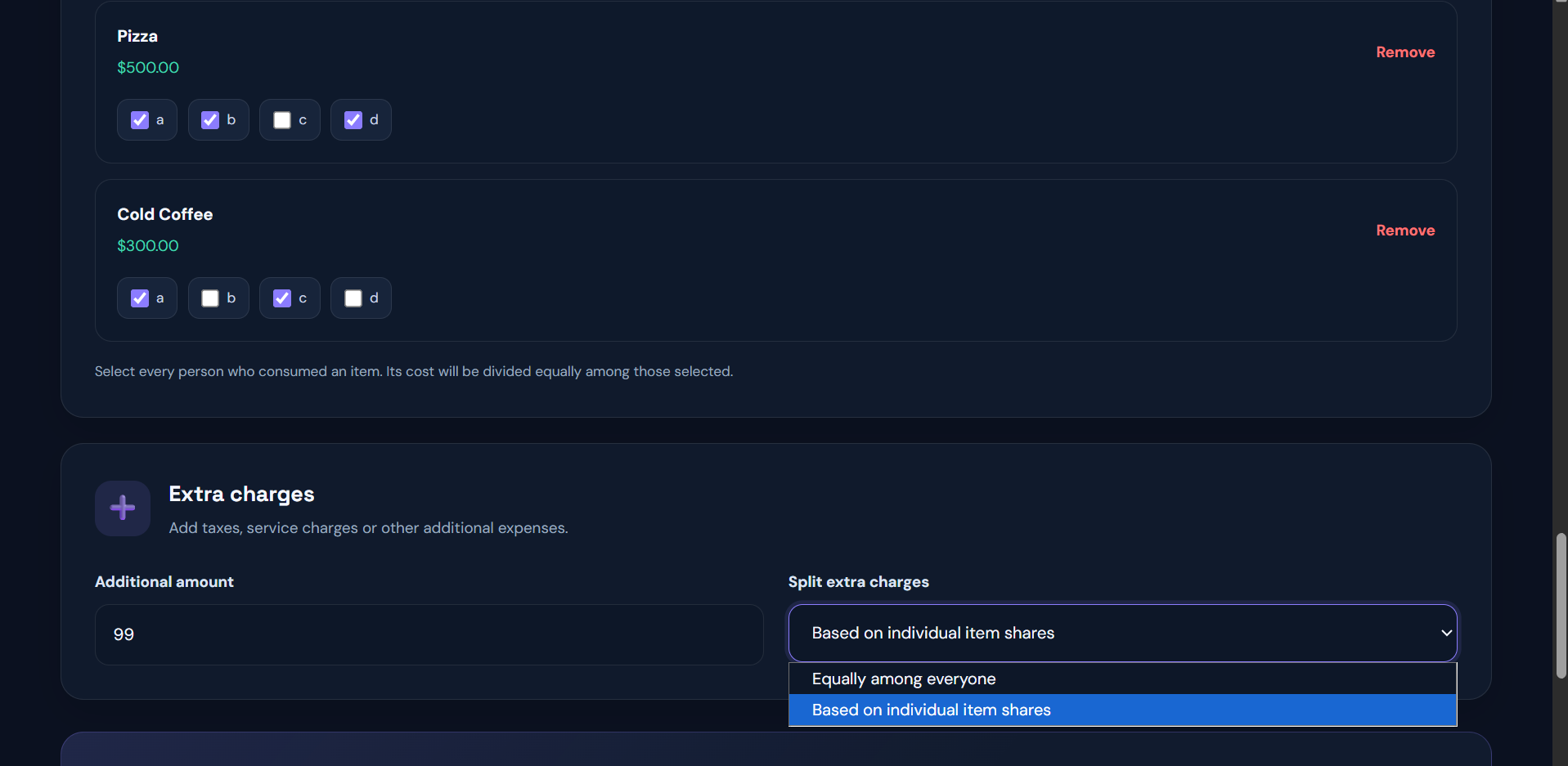
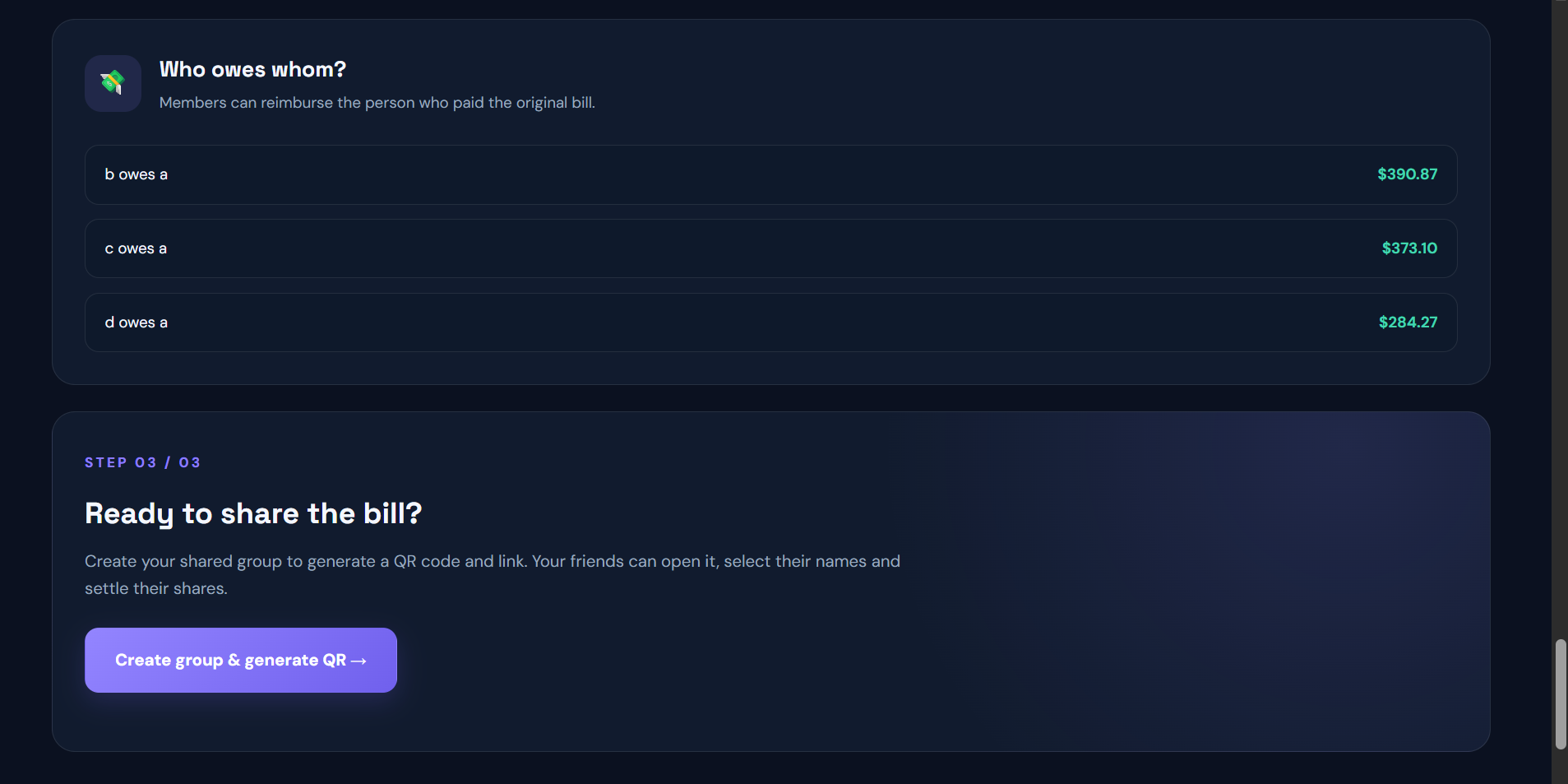
additional charges
-
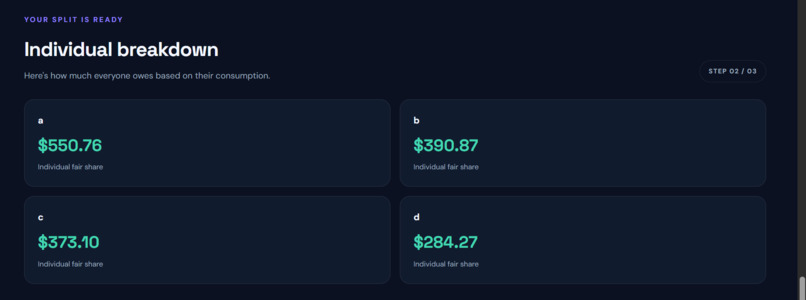
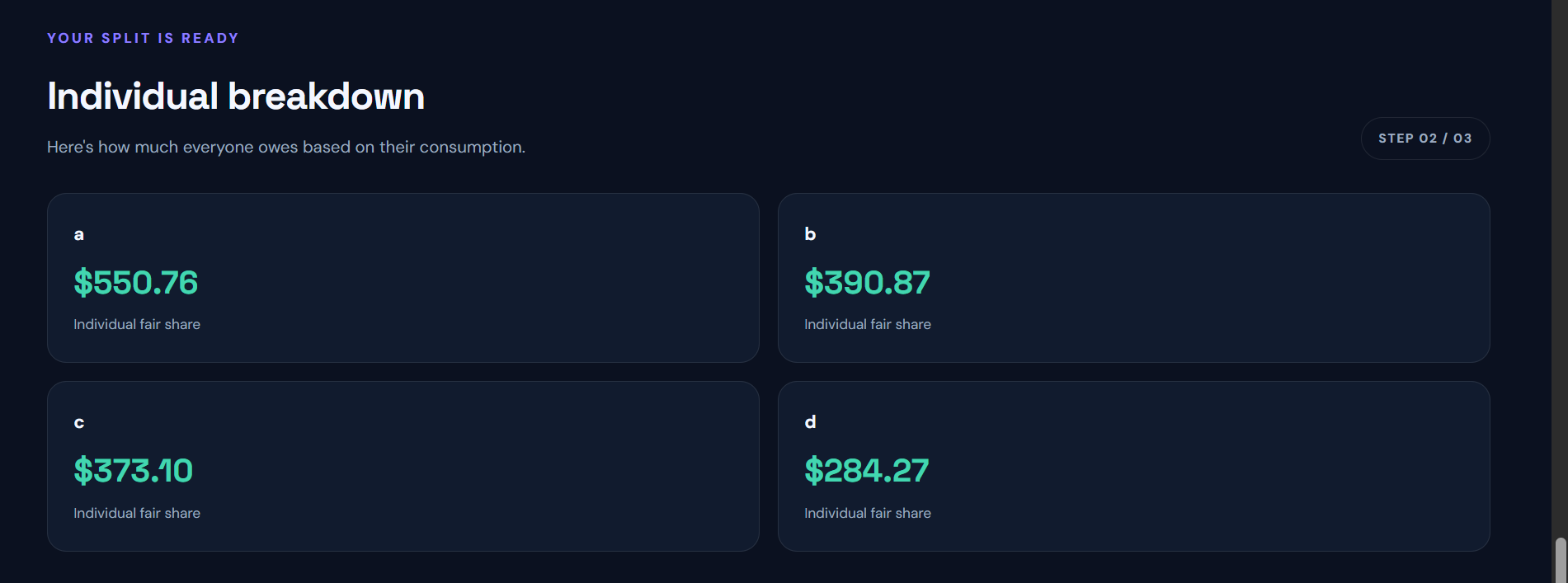
indivdual share breakdown
-
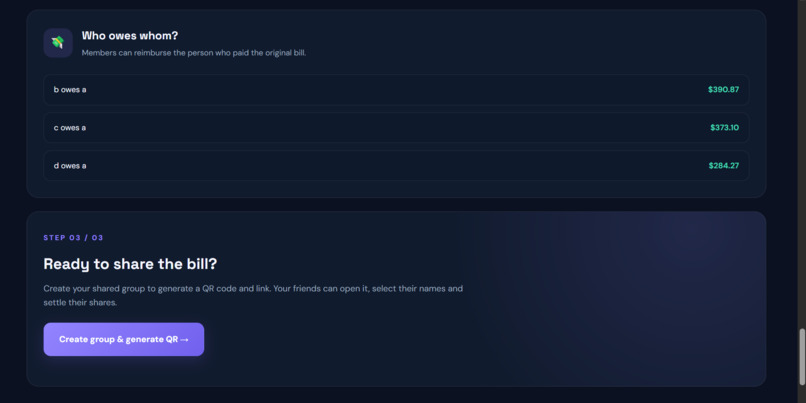
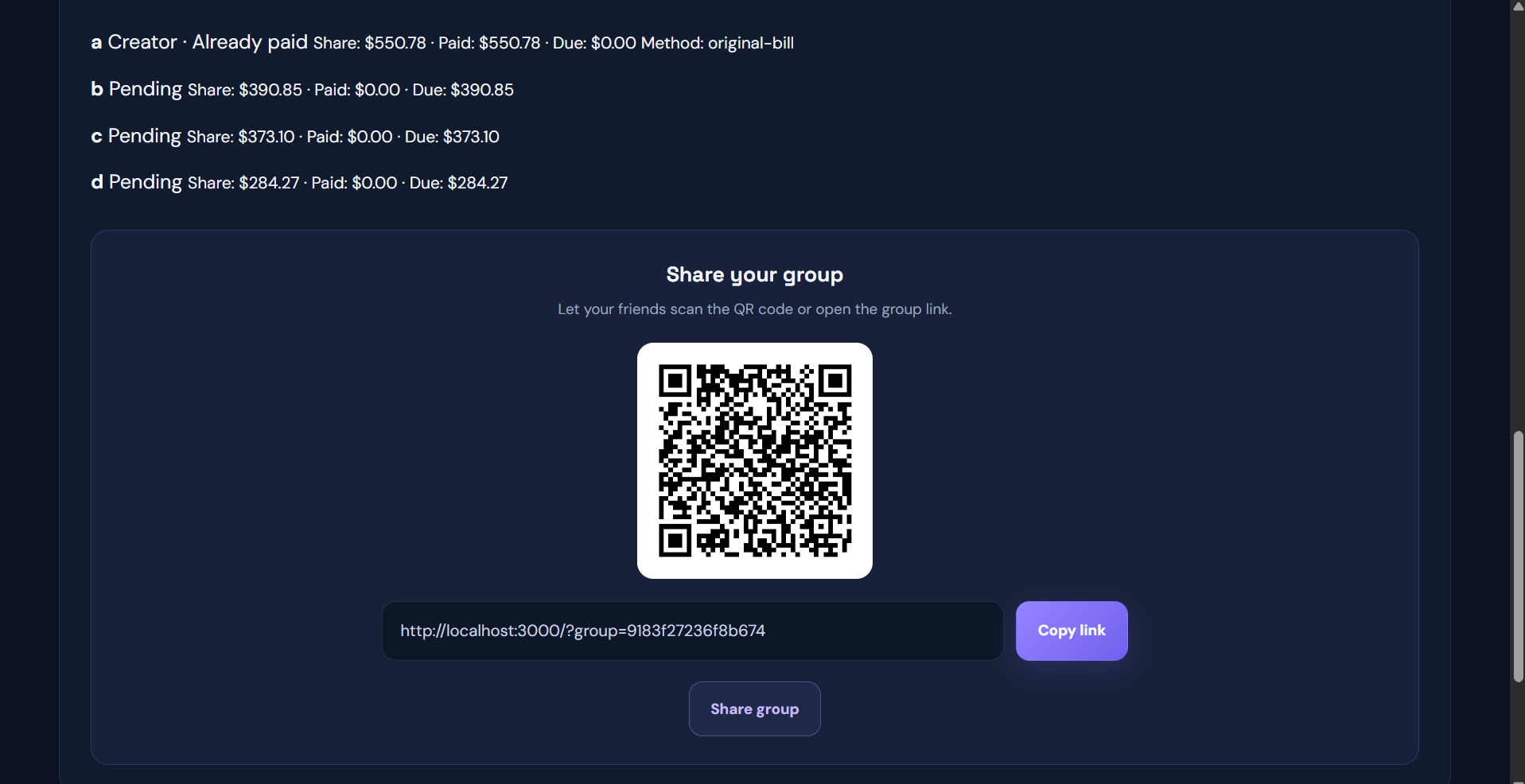
generate group sharing QR code
-
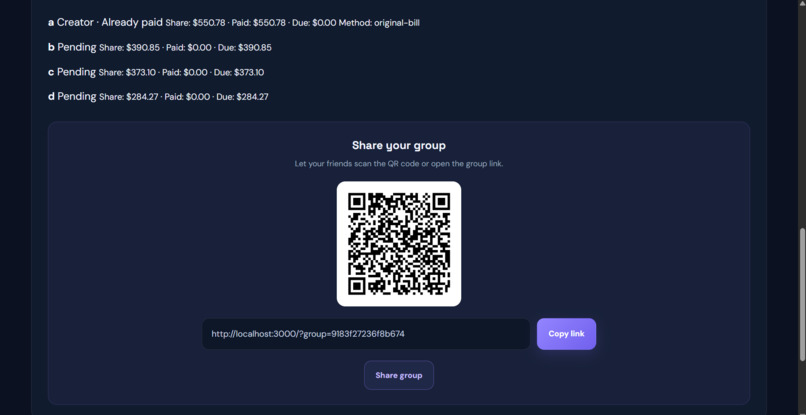
QR code & link
-
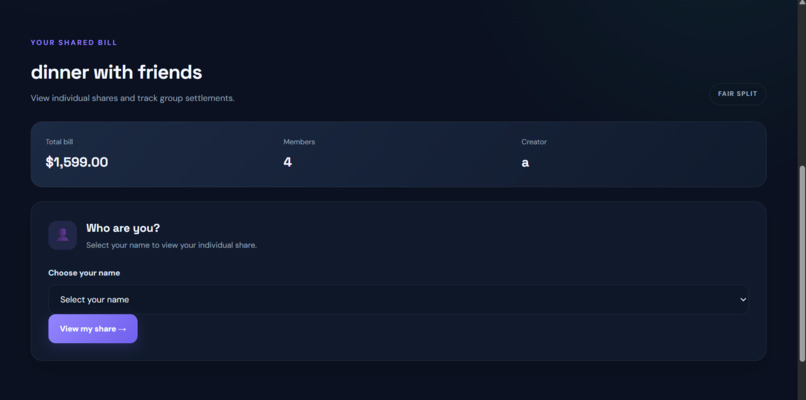
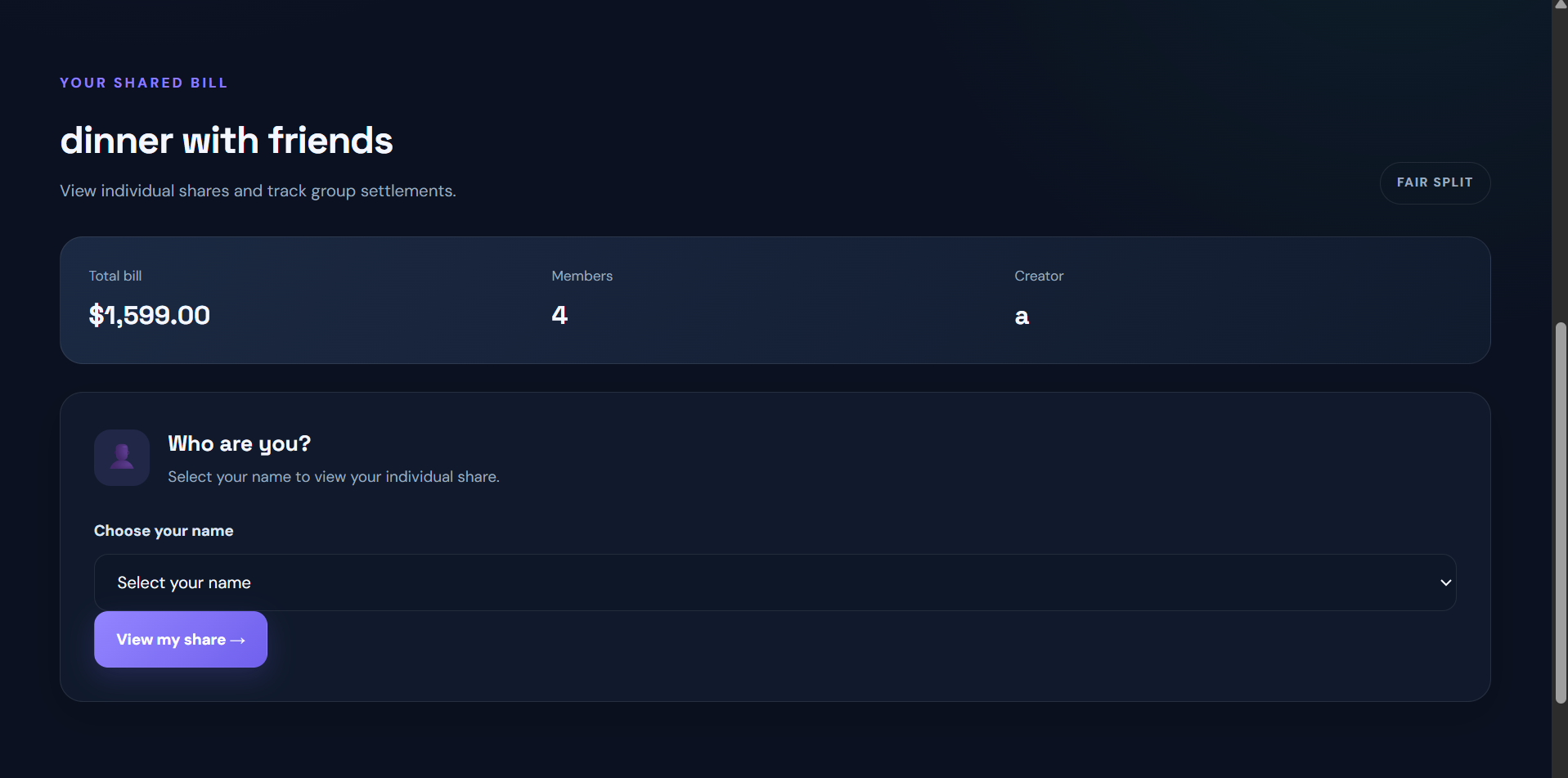
select your name as a member
-
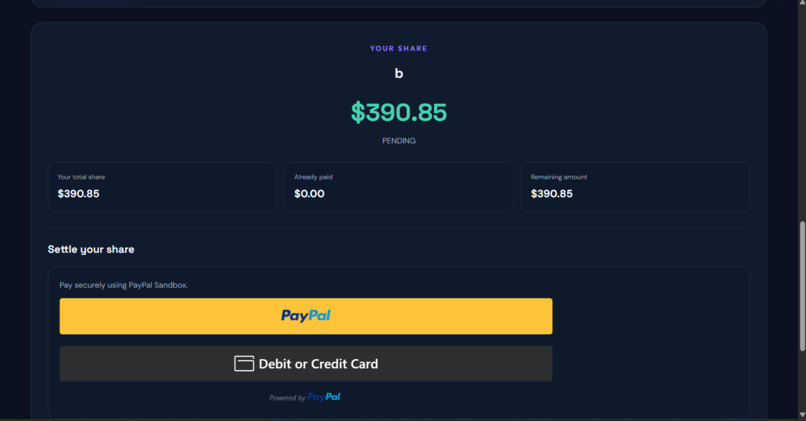
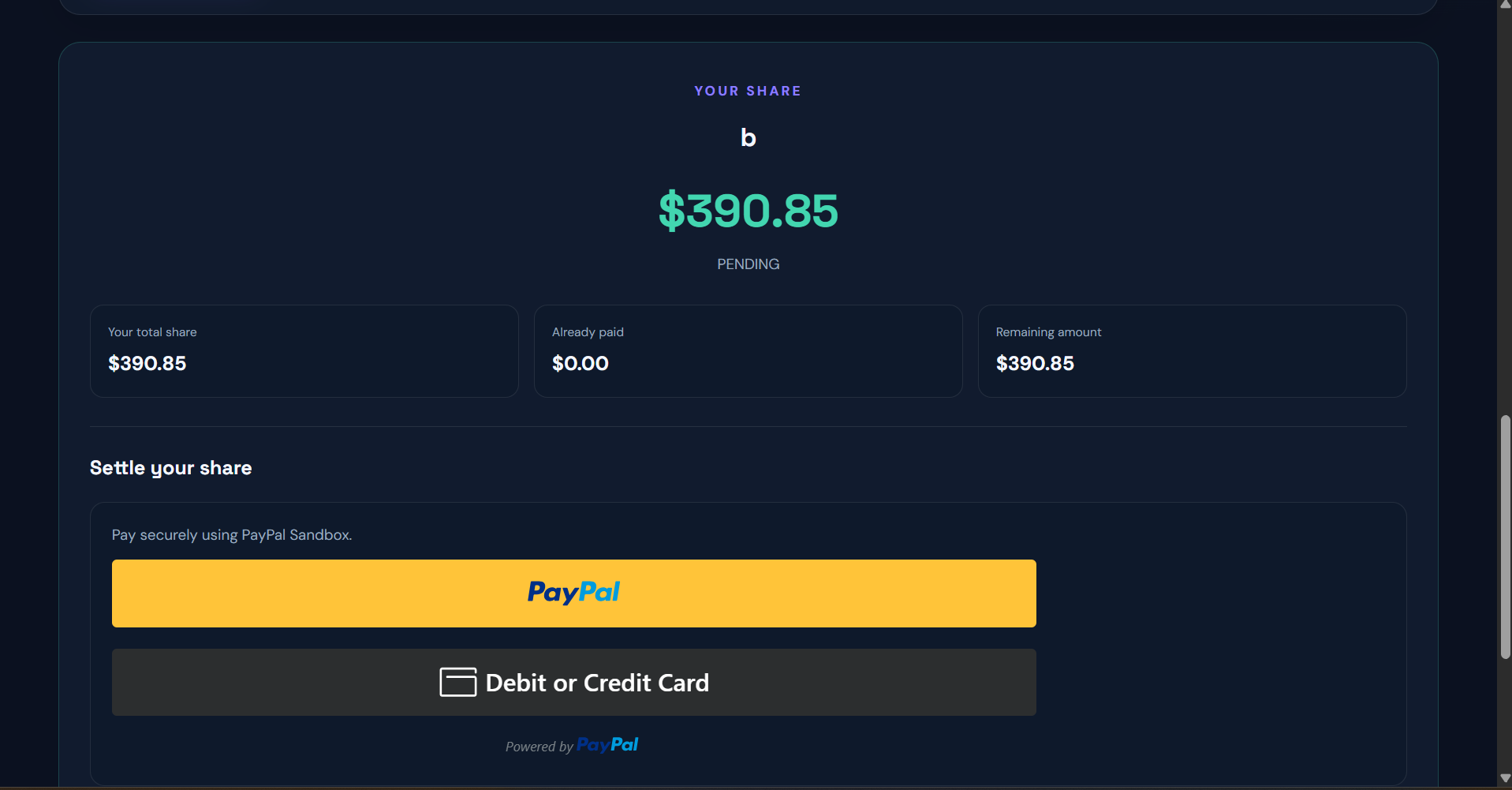
amount owned by that member, conveniently proceed with PayPal checkout to settle shares
-
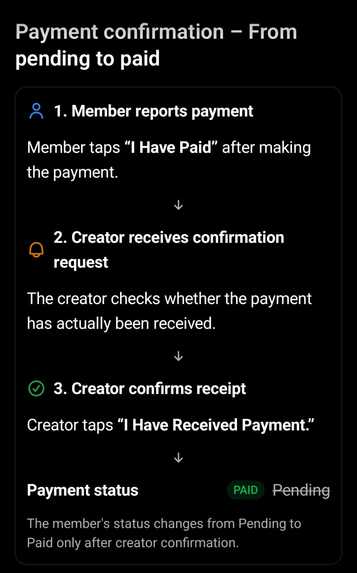
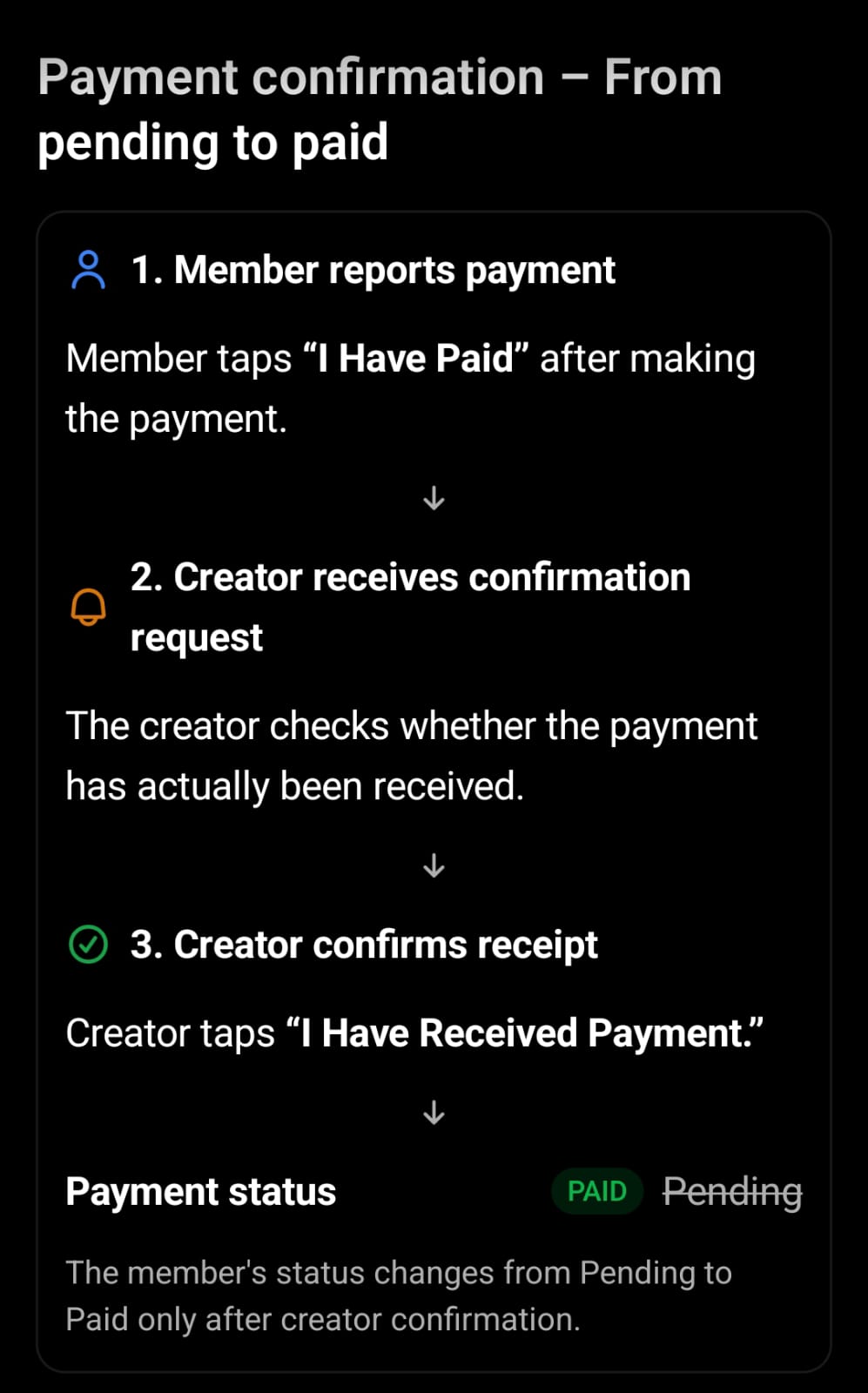
Members report payments, and the creator verifies receipt to update their status from Pending to Paid.
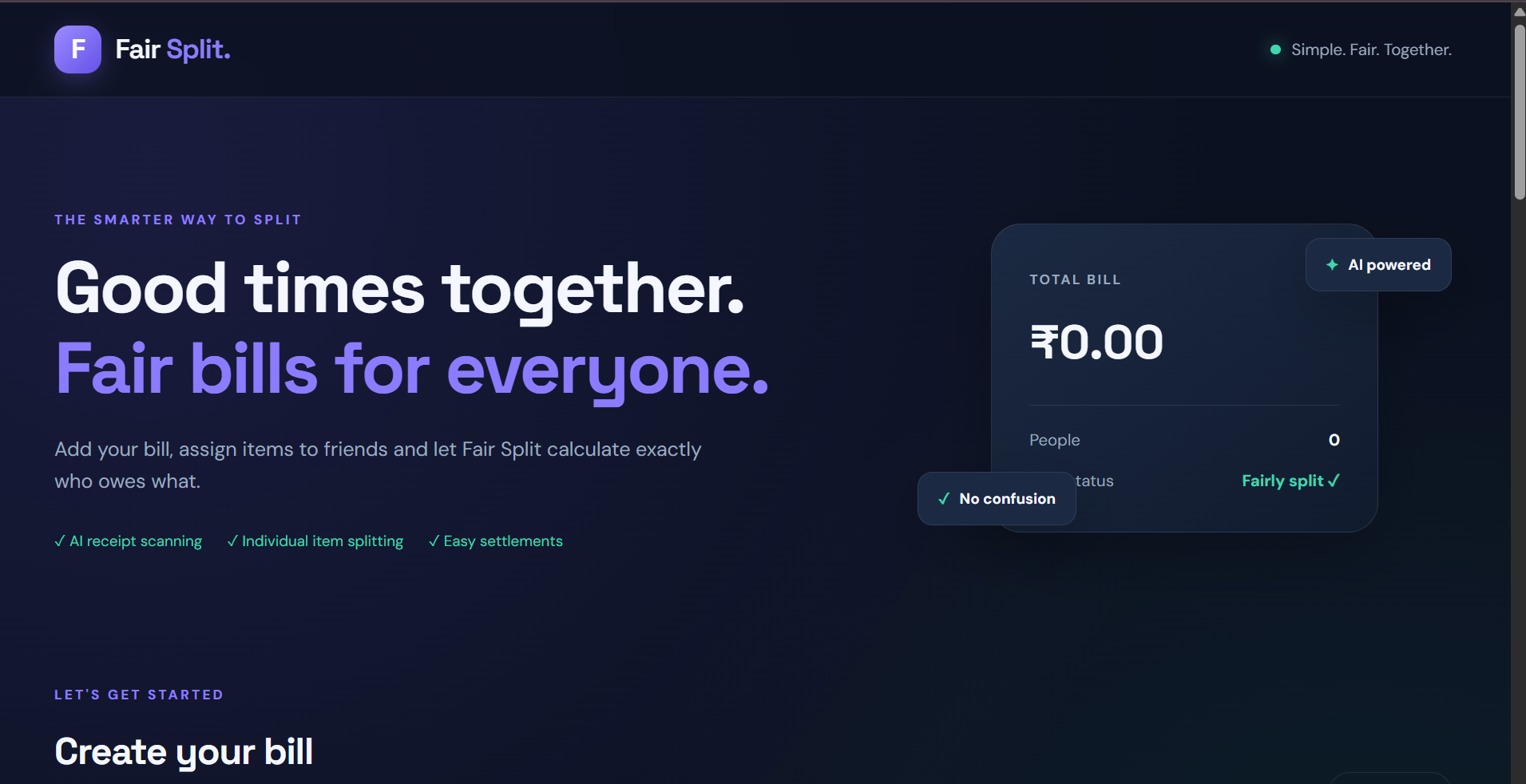
FairSplit – Scan. Split. Settle.
Inspiration
Splitting a bill after eating out with friends sounds simple, but it often becomes confusing. Someone has to calculate everyone's share, figure out who ordered what, account for shared items, and then follow up with everyone for payments.
I wanted to solve this everyday problem with a smarter and more transparent approach. That's how FairSplit was born – an AI-powered bill-splitting application that makes sharing expenses easier, fairer, and more organized.
The idea was to eliminate manual calculations and unnecessary confusion while making sure everyone pays only their fair share.
What It Does
FairSplit allows users to upload or scan a bill and automatically extract its items using Gemini AI. Users can then assign each item to the people who consumed it, calculate individual shares, and create a shared group.
Each group gets a unique shareable link and QR code. Members can open the group, select their names, view exactly how much they owe, and track their payment status.
The application also supports UPI-based payment reporting and PayPal Sandbox checkout for USD groups.
The core calculation is:
$$ \text{Person's Share} = \sum \text{Item Portions} + \text{Allocated Extra Charges} $$
This ensures that expenses are distributed according to actual consumption rather than simply dividing the entire bill equally.
How I Built It
I built FairSplit using HTML, CSS, and JavaScript for the frontend, with Node.js handling the backend and group-related operations.
Technologies and integrations used:
- Gemini AI: Extracts item names, prices, and receipt details from uploaded bill images.
- HTML and CSS: Build the user interface and visual design.
- JavaScript: Handles item selection, consumer assignments, fair-share calculations, and application interactions.
- Node.js: Manages API endpoints, group creation, shared links, and payment records.
- QR Code generation: Allows members to access a shared expense group easily.
- PayPal Sandbox: Integrates PayPal checkout for USD payments.
- UPI: Supports manual payment reporting and confirmation.
I focused on making the application practical and easy to use while maintaining accurate calculations and transparent payment tracking.
Challenges I Faced
One of the biggest challenges was making sure that every person was charged correctly, especially when multiple people shared different items. I had to handle individual item assignments, rounding differences, and additional charges without creating calculation errors.
Another challenge was implementing a shared group settlement system. Members needed to access the same group independently, see their own pending amounts, and allow the creator to track who had paid and who was still pending.
Integrating Gemini AI also required troubleshooting API model configuration before receipt extraction worked correctly.
PayPal Sandbox integration brought another learning experience. I had to configure API credentials, understand OAuth authentication, load the PayPal JavaScript SDK, and implement order creation and payment capture verification.
What I Learned
Building FairSplit taught me much more than just connecting different technologies. I learned how to structure a complete application, connect frontend and backend functionality, work with AI APIs, handle shared application data, and integrate a payment provider.
I also gained practical experience in debugging API errors, managing environment variables, testing payment workflows, and using Git and GitHub to maintain my project.
Most importantly, I learned that building a useful product is not just about making individual features work. It is about making all those features work together to solve a real problem.
What's Next
I envision FairSplit becoming a reliable everyday expense-sharing tool that makes group payments simpler, more transparent, and less stressful.
FairSplit – Because splitting a bill should be fair, not complicated.
Built With
- api-integration
- artificial-intelligence
- backend
- css
- expense-management
- expensesharing
- fintech
- frontend
- geminiapi
- generative-ai
- html
- javascript
- natural-language-processing
- node.js
- payment-processing
- paypal
- paypal-sandbox
- qrcode
- responsive-design
- scanning
- web-development

